Air Quality Testing in Robbinsville, NJ: A Musty Smell After a Thunderstorm
Cal HewittPublished
- air quality testing
- indoor air quality
- moisture source
- robbinsville nj
- new jersey
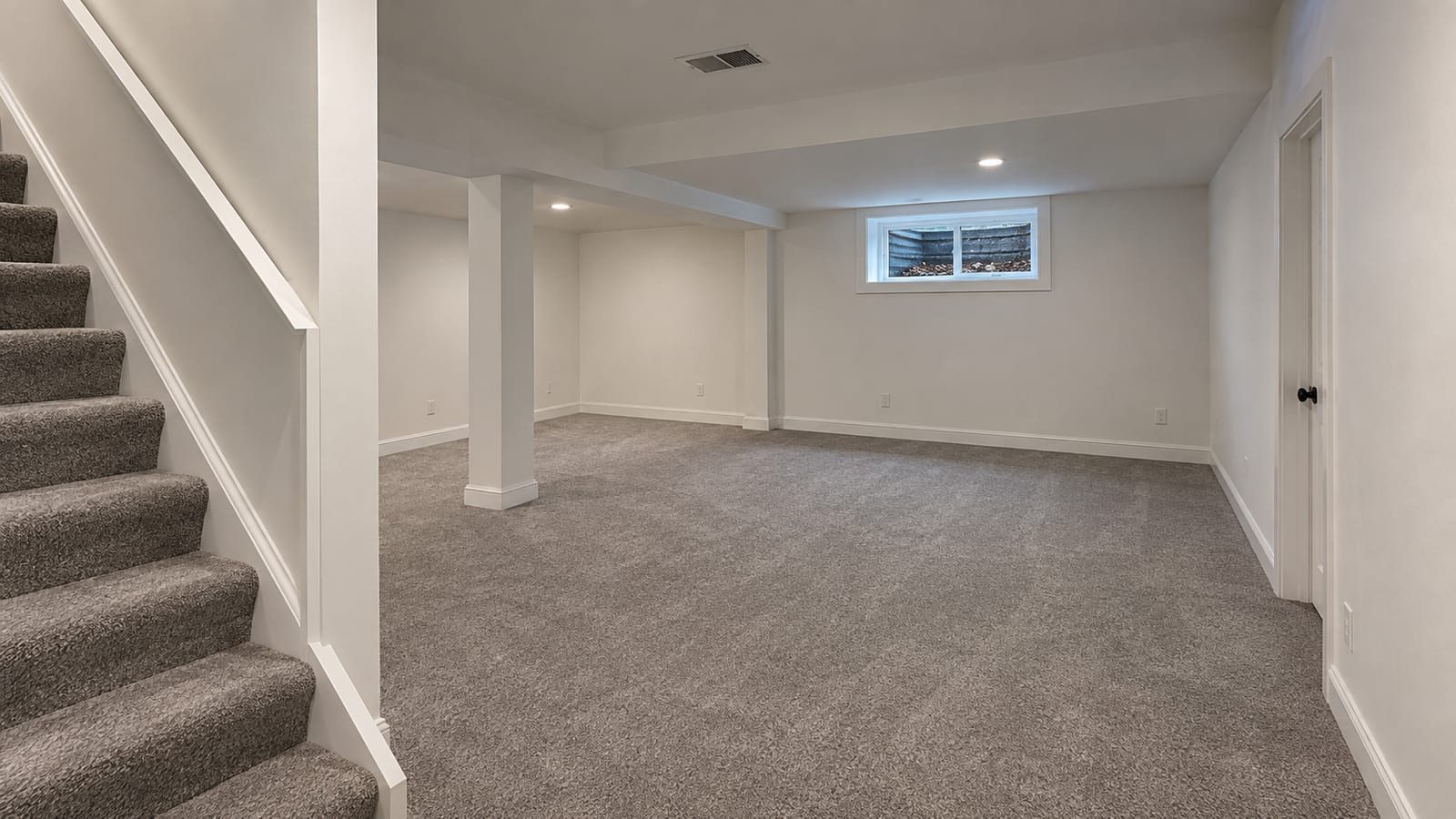
The finished basement smells musty, and it always seems worse the day after a heavy rain. Maybe someone in the house has headaches, a cough or allergies that ease when they leave, and you cannot see a single thing to point at. You are wondering whether air quality testing in Robbinsville, NJ will tell you anything, which test to ask for and what a visit will cost. A test can help in some situations and cannot help in others, and the difference is worth knowing before you pay for one. The first job is usually finding the moisture behind the smell. Then you can decide whether a sample would answer a question you actually have.
Key Takeaways
The smell points to moisture
A musty smell that returns after heavy rain can mean moisture below grade or behind finished walls, a sump that failed or an HVAC problem, so look for the water first.
A sample records one moment
An indoor air sample, compared with an outdoor sample taken around the same time, is not a pass or fail, because there are no federal limits for airborne mold.
Visible mold or a leak comes first
When mold or an active leak is already visible, fixing it comes before testing, and EPA says visible mold usually makes sampling unnecessary.
Ask for an itemized scope
A price should list what is being tested, the sample count, the laboratory, the turnaround, the report contents and whether the provider also does remediation.
Persistent symptoms belong with a clinician
A test cannot explain them, and people with allergies or lung conditions such as asthma may be more sensitive.
A Smell That Comes Back After Heavy Rain
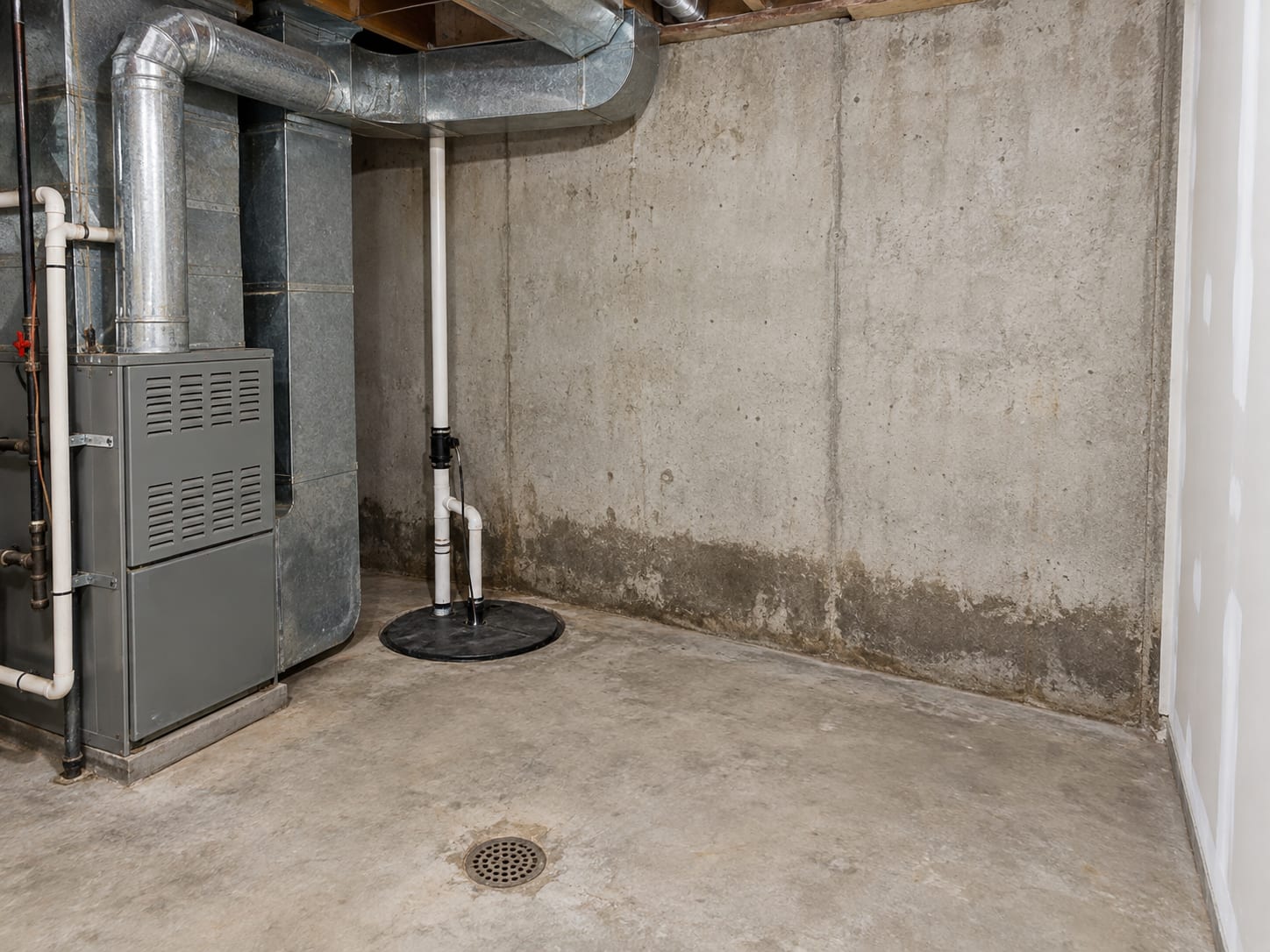
The pattern you are noticing is a clue. Mercer County's 2016 hazard mitigation plan says Robbinsville is prone to flooding after thunderstorms and longer-duration rainfall. That is a dated planning statement about the township, and it does not describe your address. It does explain why a smell that follows a storm deserves attention. A musty smell after rain often points to moisture coming in below grade or hiding behind finished walls, a sump pump that failed or an HVAC problem.
Most homes here were built from the 1980s through the 2000s, and many detached homes and townhouses have a finished lower level. In a house like that, water that gets behind drywall or under flooring can stay out of sight, so the smell arrives before any stain does. Flood status is parcel by parcel, so check your property with current FEMA and New Jersey maps if the question matters for your insurance or your plans.
Start looking today. Check the basement, the crawl space, the attic, the HVAC area and the rooms next to the smell, and look for water staining, condensation, leaks and visible mold. Write down the date, the room and the weather each time you notice it, and add any symptoms and when they ease. That log tells an inspector more than a general description will.
What to Write Down
Date
Write it down each time you notice the smell.
Room
Note which room the smell is in.
Weather
Note the weather, since the smell tends to be worse the day after a heavy rain.
Symptoms
Add any symptoms and when they ease.
Why it helps
The log tells an inspector more than a general description will.
In the meantime, stop disturbing any visibly moldy material, deal with active water if you can do it safely, photograph the affected areas, note any odors and symptoms and keep people away from wet spaces. If there is sewage, an electrical danger, major flooding or a vulnerable person in the house, call for emergency help.
Can a Test Tell You Anything, or Do You Need an Investigation First?
An investigation is more than a sample. A professional looks at the building, and a test is one tool inside that work. It typically combines a visual inspection, a moisture assessment, a look at the building's history and targeted sampling when the result will answer a defined question. Samples can be taken in living areas, basements, crawl spaces, attics, rooms affected by leaks and areas served by suspect HVAC equipment.
What an air sample can and cannot show is specific. An indoor sample may be compared with an outdoor sample taken around the same time, and the comparison can help show whether something unusual is going on indoors. It records one moment. It does not prove that no mold exists, and it is not a pass or a fail, because EPA states there are no federal standards or threshold limit values for airborne mold. CDC and NIOSH say short-term air-sample results, especially negative ones, may not represent actual exposure and cannot be read directly as a health risk. EPA adds that sampling should be designed and interpreted by experienced professionals.
Hover or tap a row to highlight it.
| Question | What a sample tells you |
|---|---|
| Is something unusual going on indoors? | An indoor sample compared with an outdoor sample taken around the same time can help show it |
| Does it prove that no mold exists? | No, because it records one moment |
| Is there a pass or fail? | No, because EPA states there are no federal standards or threshold limit values for airborne mold |
| Is the result a health risk reading? | No, because CDC and NIOSH say short-term results, especially negative ones, may not represent actual exposure |
| Does it replace finding the moisture? | No, because a standalone air sample does not replace looking at the building |
That is why a standalone air sample does not replace finding the moisture and looking at the building. Any mold growth in a building means there is a water or moisture problem, and CDC and NIOSH say that problem should be addressed. A sample can add to the picture, and it cannot stand in for the inspection.
You can also do some of the checking yourself. You can watch for odors, condensation, water staining, leaks, humidity, visible mold and the condition of the HVAC system. A consumer monitor can read selected things such as particles or carbon dioxide, but it cannot show whether mold is present and it cannot find where moisture is coming from. If the smell involves hidden moisture, a tenant dispute, several rooms, a transaction or people with symptoms that persist, a professional assessment is the right next step.
When Is Testing Worth It, and When Does Fixing the Moisture Come First?
Testing earns its cost when the result will change a decision. It can help you decide whether a hidden moisture problem needs more investigation, whether a buyer or a seller needs documented information, whether a tenant needs records for a complaint about the building, whether a commercial occupant needs a documented response or whether a remediation should be independently verified.
When a Test Earns Its Cost
Hidden moisture
A result can help decide whether a hidden moisture problem needs more investigation.
A sale
A buyer or a seller may need documented information.
A tenant complaint
A tenant may need records for a complaint about the building.
A commercial occupant
A documented response may be needed.
A finished cleanup
A remediation can be independently verified.
It helps less as a stand-in for repair. When mold or an active leak is already visible, fixing that comes before testing. EPA says visible mold usually makes sampling unnecessary, and CDC and NIOSH do not recommend routine mold air sampling. If you have found the leak, spend on the fix.
There is one more thing to do when you search the web for an answer. If a weather app's air-quality index shows a good number, do not read it as a statement about your basement. That index measures ozone and particle pollution in the outdoor air, as AirNow explains, and it says nothing about moisture, mold or HVAC contamination inside one house. The right next step for a musty basement is a moisture-first look indoors.
If a test does turn out to be the right tool, use our indoor air quality testing page to see what an assessment can include. If a buyer or seller is asking for proof, our Robbinsville post on mold testing covers what a sample records. If the question is where the water is coming in, our mold inspection post covers leaks, condensation and seepage.
What Do the Visit and the Laboratory Timeline Look Like?
Timing depends on who you call and what you ask for. The first response and the scheduling depend on the provider's availability and how urgent the situation is. The site inspection and sample collection are commonly done in one visit when access is available. Laboratory reporting depends on the lab and the analyses you choose, so ask for the turnaround before you agree. If moisture correction is needed, its schedule depends on the affected areas, material removal, drying, containment and rebuilding. When you need documentation that a cleanup worked, post-remediation verification is done after the cleanup and drying.
Access can shape the appointment. Finished basements, tenant-occupied units, common areas, attics, crawl spaces, locked mechanical rooms, HOA-controlled areas and commercial buildings with operating schedules all need someone to open the door. Confirm access and approval with the HOA, landlord, property manager or township before the appointment, so the visit is not wasted. If testing is ordered, also confirm the sample locations, the laboratory, the method and the report contents, and ask how the results will be interpreted, before the visit rather than after it.
What a Test Visit Costs Depends on What Is Being Tested
A visit is priced by what it covers, and it can cover very little or a lot. These are the things that move the number:
- Rooms or zones: How many areas are sampled and how large the building is.
- Inspection and moisture mapping: Whether a visual inspection and moisture mapping come with the sampling.
- Samples: The number and the type, whether air or surface.
- Targets: Mold, allergens, volatile organic compounds, particles, radon or other contaminants.
- Laboratory: The method and how detailed the report is.
- Access and scheduling: Difficult access to crawl spaces, attics, mechanical rooms or occupied units, and after-hours or multi-visit work.
- Timing in the project: Work before remediation costs differently from verification after it.
- Documentation: Extra reporting for an insurance claim or a sale.
Hover or tap a row to highlight it.
| Factor | What it covers |
|---|---|
| Rooms or zones | How many areas are sampled and how large the building is |
| Inspection and moisture mapping | Whether a visual inspection and moisture mapping come with the sampling |
| Samples | The number and the type, whether air or surface |
| Targets | Mold, allergens, volatile organic compounds, particles, radon or other contaminants |
| Laboratory | The method and how detailed the report is |
| Access and scheduling | Difficult access to crawl spaces, attics, mechanical rooms or occupied units, and after-hours or multi-visit work |
| Timing in the project | Work before remediation costs differently from verification after it |
| Documentation | Extra reporting for an insurance claim or a sale |
Ask for an itemized scope that names what is being tested, the sample count, the laboratory, the turnaround, the report contents and whether the provider also does remediation. That last item tells you whether the person recommending a cleanup also sells it. Testing can answer a defined question, and it may not be the best first expense when visible mold or an obvious leak already needs correction.
When you are choosing whom to hire, know that New Jersey has no state certification program for companies that do mold or general indoor-air services, according to the state health department. The department lists consultants, laboratories and remediation firms, and it does not endorse them. So, ask each provider about qualifications, insurance and laboratory details.
Which Readers and Symptoms Need a Different Next Step?
Health questions belong with a clinician. If symptoms persist, talk to one. New Jersey's Department of Health notes that people with allergies or lung conditions such as asthma or emphysema, very young infants and older adults may be more sensitive to mold and dampness. Testing cannot tell you the cause of a cough or a headache.
Renters and workplaces have their own next steps. A tenant should tell the landlord or property manager and keep records of the smell, the dates and any photographs. An occupant of a commercial building should ask what decision the documented result must support before ordering anything. In a townhouse or condominium, the wall or system behind the smell may be shared, so tell the association or property manager as well, and keep your own photographs and dates.
If a sale is involved, a report can help a buyer, seller, lender or insurer understand the condition of the property and document a remediation. It cannot guarantee that a property is mold-free, and it does not remove disclosure, repair or insurance obligations.
What Should You Do After the Report?
Read the findings against the decision in front of you, which may be remediation, reoccupancy, an insurance claim, a sale, a purchase or a tenant record. Ask the provider to explain what each result means for that decision, in plain words, before you spend more.
The usual sequence runs from inspection and testing to moisture correction or water restoration, then to mold remediation, then to post-remediation verification and finally to rebuilding. Our water damage restoration and mold remediation teams cover the middle of that sequence, and our build-back services cover the last step. Our Robbinsville mold remediation page covers the local options in full.
The Usual Sequence After a Musty Smell
- 1
Inspection and testing
A professional looks at the building, and a test is one tool inside that work.
- 2
Moisture correction or water restoration
The schedule depends on the affected areas, material removal, drying, containment and rebuilding.
- 3
Mold remediation
Cleanup of mold growth, when there is growth to deal with.
- 4
Post-remediation verification
Done after the cleanup and drying, when you need documentation that the cleanup worked.
- 5
Rebuilding
Build-back services cover the last step.
Frequently Asked Questions About Air Quality Testing in Robbinsville, NJ
How much does it cost to get the air quality tested in my home?
The price depends on the number of areas, the samples, the contaminants, the laboratory analysis, access, urgency and the report you need. Ask for a written scope and an itemized price before you authorize any work.
Is indoor air quality testing worth it?
It is worth it when the result will change a decision, such as whether hidden moisture needs more investigation, whether a buyer or seller needs documentation or whether a remediation should be independently verified. It is less useful as a substitute for fixing a visible leak or removing visible mold.
Is there a way to test the air quality in my house myself?
You can watch for odors, condensation, visible mold, water staining, leaks, humidity and HVAC conditions. A consumer monitor may read particles or carbon dioxide, but it cannot show whether mold is present or where moisture is coming from.
What should I do in the next day?
Identify the apparent water source, check the basement, crawl space, attic, HVAC area and adjacent rooms, document the date and location of the event and contact the landlord or property manager if you rent. Then get a written inspection and testing scope.
Will a test tell me if my house is safe?
No test gives a pass or fail for airborne mold, because there are no federal limits. A sample records one moment, so use it alongside an inspection of the moisture.
Air Quality Testing Quick Check
1. Are there federal limits for airborne mold?
2. What does the outdoor air quality index measure?
3. What does EPA say visible mold usually makes unnecessary?
4. What should an air sample be compared with?
5. Does New Jersey have a state certification program for mold or indoor-air companies?
Pick an answer to begin.
Wrapping Up
A musty smell that comes back after a thunderstorm is a reason to look for water. Check the basement, the attic, the HVAC area and the rooms beside the smell, write down what you see and when, and fix any leak you find. Ask for testing when the result will change a decision, and ask for an itemized scope so you know what you are buying.
That order keeps you from paying for numbers that cannot answer your question. It also leaves you with a moisture record that helps with an insurer, a sale or a landlord.
If you have a smell you cannot trace in Robbinsville, ExecPro Restoration & Cleaning can look at the building with you and help decide whether a sample would answer anything. Our residential air quality testing work starts with the moisture and the inspection, and you can contact us or call (888) 300-3772 to talk through what you are smelling.
Air Testing Terms
Tap a term to see what it means.
Air sample. A sample of indoor air that records one moment and is not a pass or fail.
Serving Robbinsville
ExecPro Restoration & Cleaning provides mold remediation services in Robbinsville, NJ, from inspection and testing through removal, drying, and post-remediation verification. Call (888) 300-3772 for 24/7 emergency response.
Related Articles
A Musty Smell With No Visible Mold: How to Track Down the Source
Musty smell but no visible mold? Check these places tonight, learn what a moisture inspection covers, and know when to call. A New Jersey guide.
Air Quality Testing in Trenton, NJ: Is the Smell Yours or Next Door's?
Rowhomes and twins share a party wall, so a musty smell or symptoms can start next door. See which air quality testing in Trenton fits and what it costs.
Air Quality Testing in Bridgewater, NJ: Odors, Symptoms and Which Test Fits
If the house smells musty after rain or symptoms ease when you leave, see which air quality testing in Bridgewater fits and what a result can change for you.