Mold Testing in Robbinsville, NJ: Air Samples, Swabs and the Moisture Behind Them
Cal HewittPublished Updated
- mold testing
- sampling
- indoor air quality
- robbinsville nj
- new jersey
In a house sale, a buyer or seller may want lab proof one way or the other, or a company may offer you a mold test, and you cannot tell whether a result will change what happens next. The goal is to pay only for a result that answers a real question. You also do not want to skip the one report you turn out to need for the sale, the insurer or the sign-off after a cleanup. Mold testing in Robbinsville, NJ is worth buying when you can say, before the sample is taken, what question it answers and who needs the answer. Sometimes the better purchase is an inspection, and sometimes it is neither, because the water has to be fixed first. What follows shows how to tell which situation you are in.
Key Takeaways
A sample records one moment in one place
It does not find the water source, it is not a permanent certification for the building, and with no federal limits for airborne mold, a result is not a pass or a fail.
Test when the answer will change a decision
Hidden mold you suspect, a buyer, seller, lender, insurer or dispute that needs documentation, and a before-and-after check on a cleanup are the situations where a sample earns its fee.
Ask what each sample answers before you pay
An itemized written quote should state the question behind every sample, plus the count, the lab and the report.
What a Sample Records, and Who Needs the Result
A mold sample is a snapshot. A technician collects air, a surface swab, a piece of material or a water sample, a lab analyzes it, and the report describes what was in that sample, at that moment, in that place. It does not tell you where the moisture is coming from, and it is not a permanent certification for the building. EPA says no federal limits have been set for mold or mold spores, so a result is not a pass-or-fail score against a government standard. It becomes useful when someone with a real decision to make reads it in that light.
That is why the question to settle first is who needs the result. The people who typically do are:
- A buyer or seller: Someone in a sale wants documentation of the house's condition at a point in time.
- A lender or insurer: A file may need a written record before a loan closes or a claim moves forward.
- Someone in a dispute: A landlord, tenant, neighbor or attorney may need a baseline that both sides can read.
- You, after a cleanup: A before-and-after check shows whether the work reached its goal.
- You, with a suspicion: Mold you cannot see, in a house that smells musty or has had water, may justify a sample once an inspection finds a credible hidden source.
If none of those describes you, a sample may not change your next step. If one does, tell the provider up front, because the purpose decides how many samples, of what type, in which rooms.
Hover or tap a row to highlight it.
| Who | What the result does for them |
|---|---|
| A buyer or seller | Documents the house's condition at a point in time |
| A lender or insurer | Puts a written record in the file before a loan closes or a claim moves forward |
| Someone in a dispute | Gives a landlord, tenant, neighbor or attorney a baseline both sides can read |
| You, after a cleanup | Shows whether the work reached its goal, as a before-and-after check |
| You, with a suspicion | May justify a sample once an inspection finds a credible hidden source |
A sale deserves its own note. If you are buying, a pre-purchase mold inspection can document what is visible and what is damp before you commit, and a sample can be added if the inspection points to a hidden source. If you are selling, gather any earlier inspection, repair and remediation records before a buyer asks. Testing gives a transaction documentation, but it cannot guarantee a sale, prove a house is free of all spores, or replace disclosure, repairs or advice from a real-estate professional.
A Township That Grew From 5,815 to 15,476 Residents Raises Newer-House Questions
Robbinsville's population was 5,815 in 1990 and 15,476 in 2020, according to the township's 2022 Municipal Stormwater Management Plan, which also says increased development likely affects stormwater runoff. New roads, roofs and lots change where runoff goes, and houses built during that growth are newer ones with their own moisture questions. Nothing here says how often any one problem occurs, so treat these as things to ask about at any sample visit and not as a local rate:
- Construction-phase moisture: Lumber, drywall or a slab that got wet or stayed damp while the house was being built.
- Finished lower levels: Drywall, carpet and insulation over a wall or floor that can hold water out of sight.
- Grading and drainage: Soil that slopes toward the house, and downspouts and drains that carry runoff to the foundation instead of away from it.
- HVAC: Condensate lines, ducts and equipment that produce or spread moisture.
- The building envelope: Roof, flashing, windows and siding, where water can enter.
A sample taken in a house with any of these does not answer them. A visual and moisture assessment does, and it should focus on your actual basement, attic, exterior drainage, HVAC areas and any additions or renovations. Flood status is a parcel question, so check yours with current FEMA and New Jersey maps.
Newer-House Questions to Raise at a Sample Visit
Construction-phase moisture
Lumber, drywall or a slab that got wet or stayed damp while the house was being built.
Finished lower levels
Drywall, carpet and insulation over a wall or floor that can hold water out of sight.
Grading and drainage
Soil that slopes toward the house, and downspouts and drains that carry runoff to the foundation instead of away from it.
HVAC
Condensate lines, ducts and equipment that produce or spread moisture.
The building envelope
Roof, flashing, windows and siding, where water can enter.
An Inspection Answers More Than a Sample When the Source Is Unknown
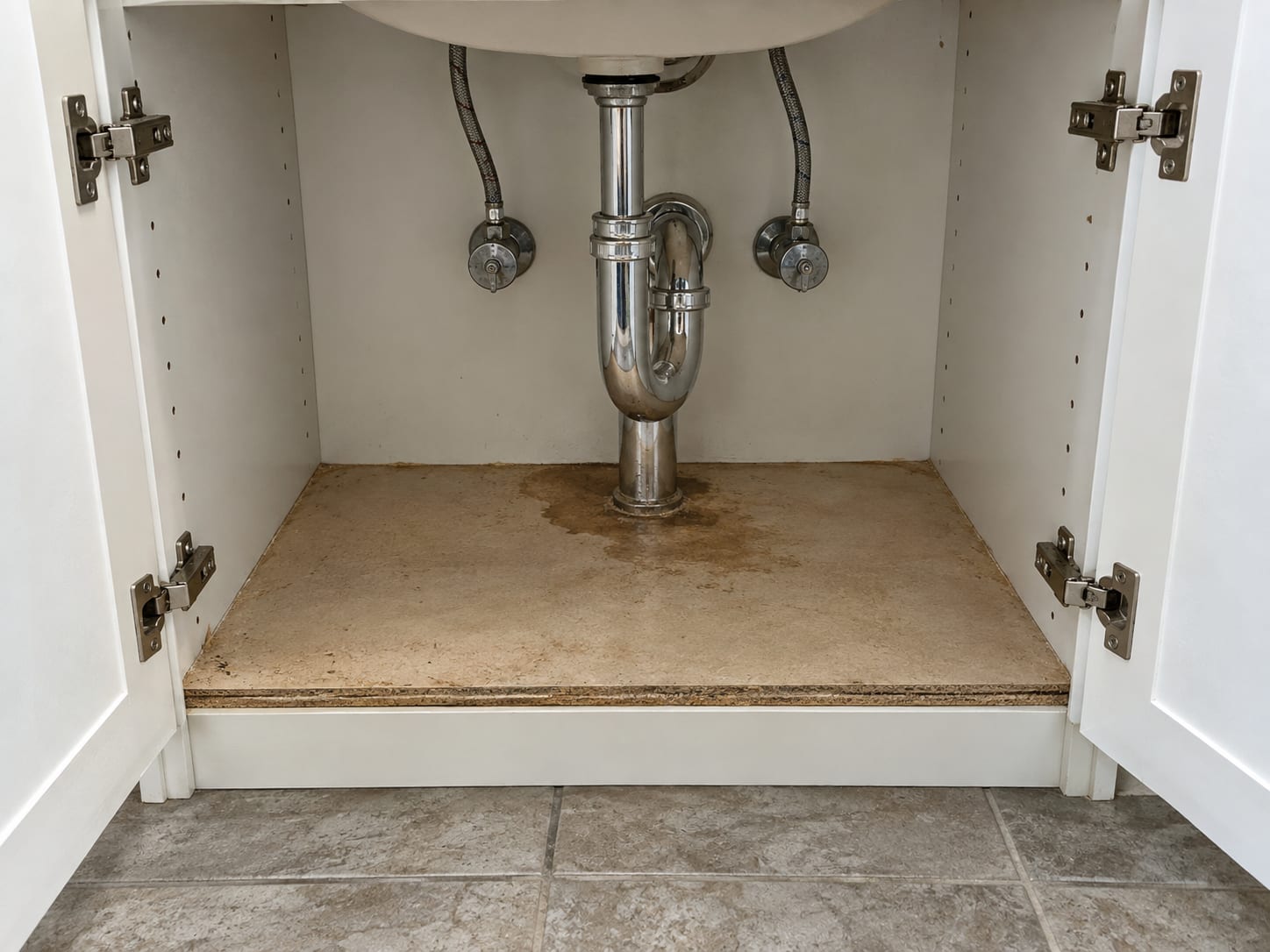
If you smell something musty and cannot find the mold, start with a visual and moisture investigation of basements, finished lower levels, attic areas, bathrooms, HVAC areas, spaces under sinks, exterior walls and any spot that has leaked before. An inspection identifies accessible problem areas, visible growth, water staining, moisture readings and likely sources, and it can tell you whether a sample would change anything. Our mold inspection service covers that visit, and our Robbinsville mold inspection guide walks through what an inspector checks.
At ExecPro Restoration & Cleaning, a typical residential inspection is one visit lasting roughly one to three hours, depending on property size and the number of areas involved. Lab turnaround, appointment availability and report timing vary, so ask each provider for its schedule.
One correction belongs here, because it changes what you spend. When mold is already visible, EPA says sampling is usually unnecessary, since the visible growth and the moisture source already show that the water has to be fixed and the material cleaned or removed. Put that money toward the repair and the cleanup. Keep sampling for the situations above, where a result changes what you do.
Air, Surface, Bulk and Water Samples Answer Different Questions
EPA lists four kinds of sampling, and knowing which one you are being offered tells you what it can say:
- Air samples: Capture what was floating in the air during the collection period. They describe conditions at the time of sampling and are not a lasting certification.
- Surface samples: A swab or tape lifted from a specific spot, which helps tell suspected mold from soot, dirt or staining.
- Bulk samples: A piece of material, such as drywall or insulation, sent to the lab.
- Water samples: Taken from standing or leaking water when the water itself is part of the question.
An outdoor comparison sample may be part of the plan, so the indoor result has something to be read against. EPA says a sampling plan should be designed and interpreted by professionals experienced in mold protocols, and that analysis should follow recognized professional methods. EPA also warns that an inadequate sampling plan can produce misleading or useless results. For a house sale, ask any provider offering a mold test before a purchase what question each sample answers, since that answer shows whether a plan was designed or only a kit was used.
Hover or tap a row to highlight it.
| Sample type | What it captures |
|---|---|
| Air sample | What was floating in the air during the collection period, not a lasting certification |
| Surface sample | A swab or tape lifted from a specific spot, which helps tell suspected mold from soot, dirt or staining |
| Bulk sample | A piece of material, such as drywall or insulation, sent to the lab |
| Water sample | Standing or leaking water, when the water itself is part of the question |
A test does not diagnose anyone's illness. The New Jersey Department of Health says health risk depends on the person exposed and on the extent and conditions of the growth. CDC advises people with asthma or other lung conditions to stay out of buildings with indoor water leaks or visible or smelled mold, and people with immune suppression should avoid them too. If someone in your home is in either group, talk with a health professional, and keep them away from the affected area while the source is dealt with.
Paying for Samples: Count, Lab and Report
The price of a mold test depends on your building and your purpose, so the useful question is what you are buying. The main drivers are:
- Purpose: Whether the engagement is an inspection, testing, or both.
- Sample count and type: How many samples, and whether they are air, surface, bulk or water.
- Outdoor comparison: Whether an outdoor sample is included.
- Rooms and floors: How many rooms, floors and suspected sources, and how many areas cannot be reached.
- Lab analysis: Chain-of-custody paperwork and the lab's fee.
- The report: Interpretation, photographs, moisture readings and how the report is written.
- Follow-up visits: Return trips after drying, repairs or remediation.
Ask for an itemized written quote that states the question each sample answers, the number of samples, the lab, what the report will contain, when you get it, and what follow-up costs. The New Jersey Department of Health advises getting a detailed written estimate and asking what services are included. EPA adds that sampling costs should not consume the money needed to correct the water or mold problem. If a provider cannot tell you what the result will change, the quote is not ready to sign.
What an Itemized Testing Quote Should State
The question each sample answers
If a provider cannot tell you what the result will change, the quote is not ready to sign.
The number of samples
And whether they are air, surface, bulk or water.
The lab
Which lab analyzes the samples.
What the report will contain
Interpretation, photographs and moisture readings, and how the report is written.
When you get it
The report timing, confirmed in writing.
What follow-up costs
Return trips after drying, repairs or remediation.
Choosing a Lab and a Company Comes Down to Their Documents
New Jersey has no state certification program for mold companies, so the paperwork does the sorting. The Department of Health publishes a list of laboratories that do microbiological analysis and notes that some hold AIHA accreditation, but it lists labs and consultants without endorsing or qualifying them. Judge a lab's accreditation and a company's qualifications separately.
For the company, ask about specialized mold-assessment training, experience with similar jobs, references, and liability insurance, including whether it covers mold or microbial work. Ask for a written report that names the areas inspected, the cause of the growth, the recommended corrective action and the sampling results. The Department of Health's resident guidelines recommend all of these.
Commercial Buildings and Rentals Ask the Same Question
The same rule holds in an office, a warehouse, a retail space or a multifamily building: decide what the result must answer and who reads it. A landlord, a tenant, a manager, an insurer or an attorney may each need a different report, and that shapes the plan and the price. If you manage a commercial property, our commercial mold testing service works from the same starting point, and a written scope keeps the sample count tied to the reason.
The Result Is Back, and Now the Next Step Depends on the Water
A result is one input. If it shows a problem, or if you had visible growth all along, the next step is the same: find and fix the moisture. EPA says mold will not grow without moisture, recommends drying water-damaged areas within 24 to 48 hours, and warns that cleaning mold without fixing the water source will likely let the problem return. A test cannot replace repairing a leaking roof, a plumbing failure, foundation intrusion, a grading or drainage problem, an HVAC condensation problem or high indoor humidity. Our Robbinsville mold remediation page lays out the whole sequence when cleanup is needed.
Insurance depends on the policy and the cause of the loss, so ask your insurer before you authorize a test. Testing itself is not a permit item in Robbinsville, but finishing a basement is, and the township construction office answers questions when you are unsure whether a repair needs a permit. Keep the report, the lab records, photographs, moisture readings and invoices together, since a buyer, a lender or an adjuster may ask for them.
From a Musty Smell to the Next Step
- 1
Start with an inspection
A visual and moisture investigation of lower levels, attic areas, bathrooms, HVAC areas and any place that has leaked.
- 2
Decide whether a sample would change anything
Sampling makes sense when the inspection finds a credible hidden source or the result will decide what happens next.
- 3
Read the result as one input
A result describes one moment in one place.
- 4
Find and fix the moisture
Dry water-damaged areas within 24 to 48 hours and repair the source.
- 5
Keep the records together
The report, lab records, photographs, moisture readings and invoices, in case a buyer, lender or adjuster asks.
Frequently Asked Questions About Mold Testing in Robbinsville, NJ
I smell something musty but cannot find mold. What should I do?
Start with a visual and moisture inspection of lower levels, attic areas, bathrooms, HVAC areas and any place that has leaked. A sample makes sense if the inspection finds a credible hidden source, or if the result will decide whether to investigate further or clean up.
Will insurance pay for a mold test?
Possibly, depending on the policy, the cause of the loss, the limits, the exclusions and the deductible. The state notes that homeowners policies exclude water damage caused by flood, so ask your insurer before authorizing any test.
How much does a mold test cost in New Jersey?
It depends on property size, access, suspected areas, sample count, lab analysis, reporting and the reason for the report. Request an itemized written estimate, and compare what each quote's samples are meant to answer.
How can I get a free mold inspection in New Jersey?
Some private companies offer them. Ask each provider whether an assessment fee is separate from later work, and contact your insurer about claim procedures if a covered loss may be involved.
Is a mold inspection worth it?
It is most useful when it can locate moisture, find hidden or hard-to-reach conditions, document a sale or dispute, support a claim, or show whether testing is warranted.
Can a test tell me my house is safe?
No. A result describes one moment in one place. It cannot certify the building or replace repairs, disclosure or a health professional's advice.
Check What You Know About Mold Testing
1. What does a mold sample record?
2. Does EPA set federal limits for mold or mold spores?
3. What does EPA say about sampling when mold is already visible?
4. Does New Jersey certify mold companies?
5. How soon should water-damaged areas be dried, per EPA?
Pick an answer to begin.
The Bottom Line
A mold sample records what was in one place at one moment, and it does not find the source of the water. It earns its fee when mold is suspected but hidden, when a buyer, seller, lender, insurer or dispute needs documentation, or when a cleanup needs a before-and-after check. When mold is already visible, the money usually does more good on the repair.
Before you pay, decide what question the sample answers and who needs the answer. That habit keeps you from buying numbers that settle nothing, and it keeps you from missing the one report a sale or a claim requires.
If you are weighing a test, an inspection or neither for a Robbinsville, NJ property, ExecPro Restoration & Cleaning can start with the visit that answers your question and put the plan in writing. Call us at (888) 300-3772 or contact us to talk it through, and see our mold testing service for what a sample plan includes.
Mold Testing Terms
Tap a term to see what it means.
Air sample. A sample of what was floating in the air during the collection period. It describes conditions at the time of sampling.
Serving Robbinsville
ExecPro Restoration & Cleaning provides mold remediation services in Robbinsville, NJ, from inspection and testing through removal, drying, and post-remediation verification. Call (888) 300-3772 for 24/7 emergency response.
Related Articles
Air Quality Testing in Robbinsville, NJ: A Musty Smell After a Thunderstorm
A musty smell that shows up after heavy rain often means hidden moisture. See what air quality testing in Robbinsville, NJ can tell you and what to check.
Air Quality Testing in Trenton, NJ: Is the Smell Yours or Next Door's?
Rowhomes and twins share a party wall, so a musty smell or symptoms can start next door. See which air quality testing in Trenton fits and what it costs.
Air Quality Testing in Bridgewater, NJ: Odors, Symptoms and Which Test Fits
If the house smells musty after rain or symptoms ease when you leave, see which air quality testing in Bridgewater fits and what a result can change for you.