Three Materials Decide It: Water Damage Restoration in Plainsboro, NJ
Cal HewittPublished
- water damage restoration
- water categories
- structural drying
- plainsboro nj
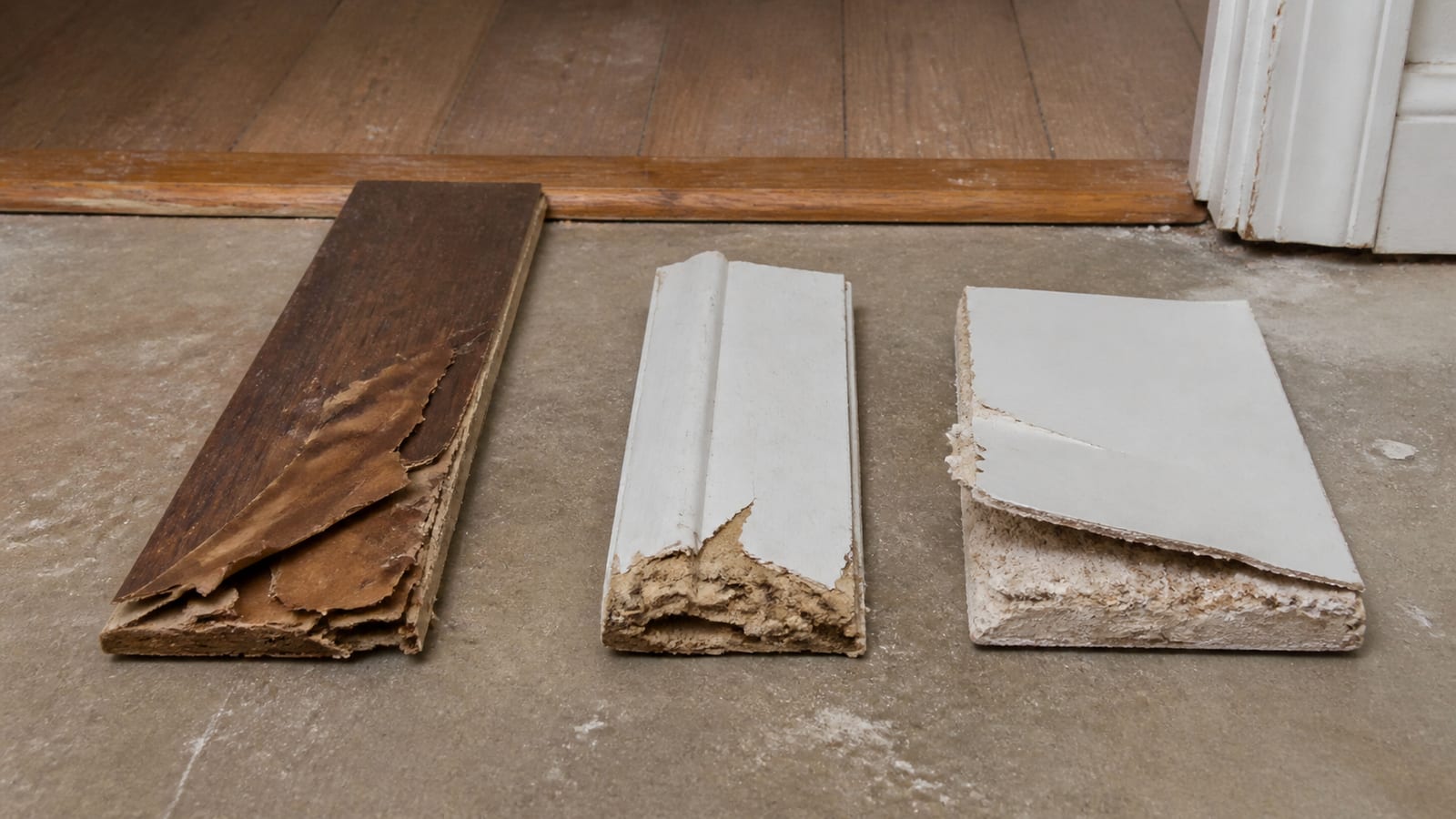
Three materials decide most of what a water loss costs in this township, and none of them is structural. Engineered flooring, MDF trim and paper faced drywall are what a late twentieth century building is finished with, and each one has a specific relationship with water that determines whether it dries or goes in a skip. The Township's June 2025 draft housing element, working from 2023 American Community Survey figures, puts the median year built at 1986 and reports that about 70.1 percent of Plainsboro's 10,710 units were built from 1980 onward. Only 151 units date from 1939 or earlier.
That matters because most water damage writing is implicitly about older buildings, where plaster holds water slowly and solid timber can be dried and kept. The finish materials in a 1986 townhouse behave differently, and the useful distinction on any job here is not how wet the room is. It is which layer is the finish and which layer is the structure, because the finish is often gone and the structure underneath is usually fine.
Key Takeaways
Category comes before equipment
What the water is decides what can be saved, and that decision is made before a single fan is placed.
The finish and the structure are two different scopes
A ruined floor covering comes out; the subfloor beneath it is dried and verified, not replaced by default.
24 to 48 hours is a prevention target, not a guarantee
EPA sets it as the window for drying to prevent mold, and says mold can occur even in material dried inside it.
The median Plainsboro home was built in 1986
About 70.1 percent of the township's 10,710 units date from 1980 onward, so late century finish materials dominate.
Do not run fans before you know what the water is
EPA says not to use fans until you have decided whether the water is clean and sanitary.
Power comes before pumping
CDC says never to turn power on or off, or use electrical tools, while standing in water.
The First Decision Is What the Water Is
Everything downstream depends on this and it takes about a minute to establish. Water from a clean source, once the source is stopped and the electrical situation is safe, can often be extracted and dried with much of the finish intact. Water that is significantly contaminated has to be treated as a cleaning and removal problem, not a drying problem. Water that arrived from a sewer backflow or from outside the building is presumed contaminated: EPA advises assuming floodwater carries raw sewage or hazardous chemicals.
The practical consequence is blunt. EPA's guidance is not to use fans until you have decided whether the water is clean and sanitary, because moving contaminated air around a building is how a contained problem becomes a whole house problem. Where sewage or chemical contamination is known or suspected, the same guidance calls for protective equipment, containment, and somebody experienced brought in.
That is the single most common shortcut in this trade: treating every loss as clean water because clean water is faster and cheaper to sell. A description that calls everything a dry out has skipped the only decision that changes the answer.
Why Those Three Materials Decide the Job
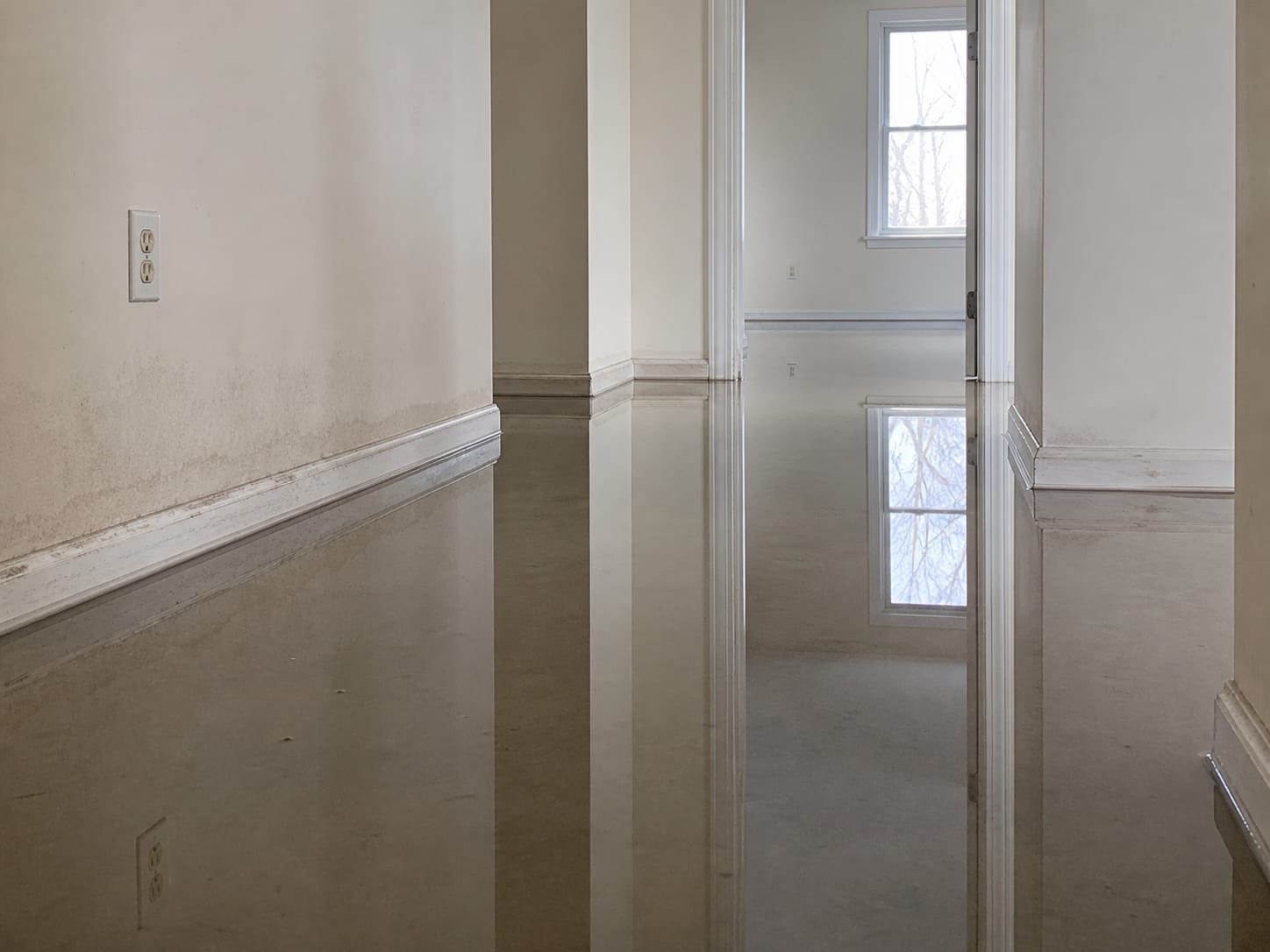
Engineered flooring is a thin wear layer over a manufactured core. Once water gets under it and into the core, the plank swells and delaminates, and it does not come back when it dries. It is also usually a floating floor, which means water travels sideways underneath it far past the visible damage. The plank is the finish. The subfloor below it is the structure, and those are two separate decisions.
MDF trim is compressed wood fibre and binder. It wicks water from the bottom edge upward, swells, and loses its profile permanently. Baseboard is almost always the first thing removed on a job here, partly because it is unsalvageable and partly because pulling it opens the bottom of the wall cavity so the space behind the drywall can actually dry.
Paper faced drywall is the interesting one, because it is sometimes saveable and sometimes not. EPA's own clean water guidance says wallboard may be dried in place only where there is no obvious swelling and the seams are intact. Swollen, crumbling, or contaminated board is removed. The paper facing is also organic, which is what makes wet drywall a mould substrate rather than just a wet building material.
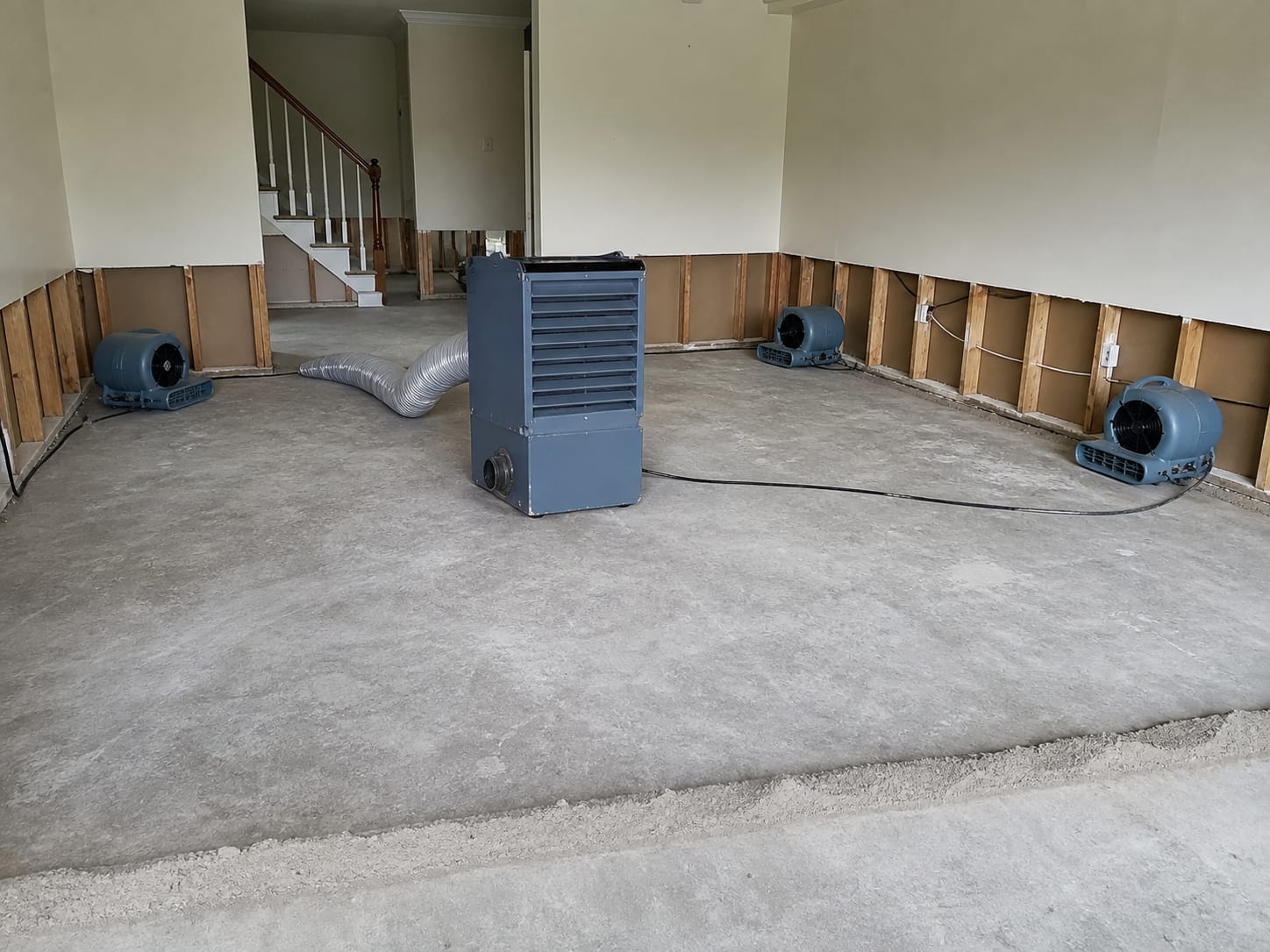
That table is the reason a restoration invoice can look alarming while the building is basically fine. Most of what leaves the property is finish, and most of what stays is structure. A contractor who proposes replacing the structure after an ordinary clean water loss is describing a bigger job than the loss requires.
The Clock, and What It Actually Promises
EPA's target is to dry water damaged areas and items within 24 to 48 hours to prevent mould growth. That number gets quoted constantly and misunderstood almost as often.
It is a prevention target, not a warranty. The same guidance says material still wet after 48 hours, or material where mould has already appeared, moves into the mould remediation guidance rather than the short duration clean water table. It also says mould can have occurred even where material was dried inside the window. So the clock tells you how urgently to act. It does not tell you the material survived.
What actually decides the outcome is the combination of discovery time, water category, which materials got wet, and whether the drying was verified with readings rather than declared finished because a room felt dry.
The Order a Loss Should Run In
- 1
Make the electrical situation safe
CDC says to turn main power off only from a dry location, and never to operate electrical equipment while standing in water. If that cannot be done safely, an electrician does it.
- 2
Stop the source
A supply valve, a building main, an appliance line. Extraction while water is still arriving is just an expensive way to keep the floor wet.
- 3
Establish the category
Clean, significantly contaminated, or grossly contaminated. This decides protective equipment, containment, and what can be saved.
- 4
Document before anything moves
Dated photographs and video of the water, the affected rooms and the contents, where it is safe to take them.
- 5
Extract the standing water
Removal first, evaporation second. Drying equipment placed into standing water accomplishes very little.
- 6
Remove what cannot be cleaned and dried
Ruined finish materials come out to a clean line, which also opens the assembly so the structure can dry.
- 7
Dry the structure and verify it
Readings logged per location until they come down and hold, not until the room feels right.
- 8
Rebuild, with permits where the work requires them
A separate decision from the mitigation, made once the space is verified dry.
Where Plainsboro's Own Geography Comes Into It
The Township's adopted flood hazard code names flood studies and maps for Cranbury Brook, the Millstone River and Big Bear Brook. The United States Geological Survey's Millstone River monitoring site at Plainsboro reports a drainage area of 65.8 square miles, with peak measurement records going back to 1938. The Plainsboro Preserve covers more than 1,000 acres of woodland and wetland around the 50 acre McCormack Lake. This is not an interchangeable inland suburb with no surface water to think about.
The part worth knowing is that the mapping is more complicated than a single FEMA lookup. Plainsboro's code states that New Jersey's flood hazard regulation can be broader and more restrictive than FEMA's Special Flood Hazard Area, because the state also regulates certain unstudied watersheds and riparian zones. The Township adopted the Middlesex County Flood Insurance Study and the FIRM panels effective July 6, 2010, and requires that newer or more restrictive federal and state information be compared so the most restrictive mapping controls. Plainsboro entered the National Flood Insurance Program on June 19, 1985.
None of that says your building floods. It says that if a loss here leads to regulated repair work near a waterway, the flood determination comes from the Township's records rather than from a single map lookup or a guess based on the street. Where the water arrived from outside rather than from a pipe, flood damage cleanup is the relevant scope and the contamination assumption applies from the first hour.
What It Costs, and What Moves the Number
There is no published Plainsboro price range for water damage work, and any figure presented as a local average is invented. What can be stated is what drives the scope.
The water category is the largest single lever, because suspected contamination adds protective equipment, containment, cleaning and disinfection, and controlled disposal to what would otherwise be extraction and drying. Time wet is the second, since the 24 to 48 hour fork changes the work from a rapid dry out into something that also has to address mould. Then it is what became wet rather than how many square feet: ceiling tiles and insulation are replace items, concrete and framing are dry and keep items, and the subfloor beneath a ruined floor covering has to be checked and dried regardless.
Property type matters too, and here it matters more than in most towns. The 2023 ACS figures reproduced by the Township show 5,239 renter occupied units against 4,942 owner occupied. Authorisation, contents ownership and access to common areas are real scope variables in a rented or managed unit, and none of them can be priced from a phone call.
Finally, mitigation and rebuild are separate jobs with separate rules. Plainsboro says a permit is generally required for new construction, additions and renovations affecting use, structure or egress, and specifically lists heating and cooling replacement, water heater work and structural deck or balcony repair. Township staff decide whether a given scope needs one. Emergency stabilisation does not require a permit and does not excuse skipping one later.
What You Can Do in the First Hour
Get the power question settled from a dry position, or get an electrician to do it. Stop the source if you can reach the valve safely. Photograph everything before it moves, including the water itself, because that record is the thing an adjuster cannot reconstruct later. Lift what you can off the wet floor. Do not start fans until somebody has established what the water is.
If the building has been closed up for several days after flooding, CDC's guidance is to assume mould is present and to have the electrical system inspected before power is restored. That is a different situation from a leak found within the hour, and it should be treated as one.
On the insurance side, New Jersey's required notice states plainly that a homeowners policy does not cover flood damage and that a separate flood policy may be available, with building and contents covered separately through the National Flood Insurance Program. State emergency management notes that a flood policy normally takes 30 days to take effect after purchase, which is why the time to think about it is never the week it rains. Keep the dated photographs, the source and cause information, the moisture readings and scope, the record of what was removed, the invoices, and any permit or inspection paperwork. Where a carrier is funding the work, insurance restoration services is where the scope and the documentation have to agree.
Frequently Asked Questions About Water Damage Restoration in Plainsboro NJ
Can my engineered floor be saved?
Sometimes, and the honest answer depends on how long water sat and whether it reached the core. A thin wear layer over a manufactured core swells and delaminates once saturated, and that change is permanent. Because most of these floors float, water also travels sideways well beyond the visible damage, so the extent is usually larger than the stain suggests. What matters more is the subfloor underneath, which is structure and is normally dried and kept rather than replaced.
The room feels dry. Why are the machines still running?
Because a room feeling dry and a material being dry are different claims. Air dries out long before framing, subfloor and the bottom of a wall cavity do. Drying is finished when readings at each location come down and hold, measured against comparable dry material in the same building. Pulling equipment early is the most common reason a job comes back as a mould problem six weeks later.
Water came up through the floor rather than from a pipe. Does that change anything?
It changes almost everything. Water arriving from outside is treated as contaminated, which changes the protective equipment, what can be salvaged and how material leaves the building. It also usually sits with a different insurance policy, since a homeowners policy does not cover flood damage in New Jersey. Establishing the source correctly on day one is worth more than anything done on day three.
Do I need a permit?
Not for emergency extraction and drying. Possibly for the rebuild afterward, since Plainsboro treats renovations affecting use, structure or egress as permit work and specifically includes items like heating and cooling replacement and water heater work. If the property sits in a regulated flood location, floodplain administration can also apply to the repair. Township staff make that call once the actual scope is known.
I rent. Who handles this?
The building owner or manager authorises work on the structure, and that is not something a contractor can decide for you. What you can do immediately is document: dated photographs before anything moves, written notice of what happened and when, and a record of what you were told. Contents are usually your side of the line and the structure is usually theirs, but the lease is what actually governs it.
How long does the whole thing take?
Mitigation and rebuild are two different clocks. Drying a structure is typically measured in days and ends when the readings say so, not on a fixed schedule. The rebuild afterward depends on the scope, the materials and whether permits are involved. Anyone quoting a single number for both before seeing the building is guessing.
Final Thoughts
The reason to lead with materials rather than with equipment is that the materials are what the decision is actually about. In a township where the median home dates from 1986 and seven in ten units were built from 1980 onward, the finish layer is engineered, compressed and paper faced, and it does not survive water the way a plaster and oak interior does. That is not bad news. It means the expensive looking part of the job is usually the disposable part, and the building itself normally dries and stays.
What that requires is doing the first decision properly. Establish what the water is, make the power safe, document before anything moves, take out what cannot be cleaned and dried, then dry the structure to a number rather than to a feeling. The town level picture is on our Plainsboro service area page, and where a loss ran past the drying window or growth has already appeared, mold remediation becomes part of the same conversation.
If you have water where water does not belong, ExecPro Restoration & Cleaning will establish the category before quoting a scope. Call (888) 300-3772 or reach us through the contact page. Emergency services are available 24/7.
Restoration Terms
Tap a term to see what it means.
Water category. A classification of how contaminated the water is, which decides protective measures and what material can be saved.
Serving Plainsboro
ExecPro Restoration & Cleaning provides mold remediation services in Plainsboro, NJ, from inspection and testing through removal, drying, and post-remediation verification. Call (888) 300-3772 for 24/7 emergency response.
Related Articles
Water Got Into Your New Jersey Home in the Nor'easter: The First 48 Hours
Water got into your New Jersey home in the September nor'easter? What is safe to touch, what to photograph, and how to start drying in the first 48 hours.
Water Damage Restoration in Warren, NJ: The First 72 Hours
After the water stops in a Warren, NJ home the clock starts. Extraction, drying, what gets removed, what the Township needs, and how the days actually run.
Classify the Water First: Water Damage Restoration in Alpine, NJ
What the water is decides what can be saved. On an Alpine lot with septic and high groundwater, that question is harder and more important than usual.