
Mold Remediation in Cranbury, NJ
Cranbury Township sits at the southern end of Middlesex County, where Cranbury Brook, Brainerd Lake and flat ground meet a mix of village-era and 1980s to 2000s houses. ExecPro Restoration & Cleaning finds the water first, then removes the growth and dries the building.
Mold Remediation Services in Cranbury, NJ
Mold remediation in Cranbury, Middlesex County, means finding the moisture that fed the growth, sealing off the affected area, removing what cannot be saved, cleaning and drying what can, and fixing the water route so it does not return. The size of the job depends on which materials stayed wet and for how long. Cranbury Township runs along Main Street and Cranbury Brook, borders Plainsboro to the west and South Brunswick to the north, and is crossed by U.S. Route 130 and the New Jersey Turnpike. ExecPro Restoration & Cleaning serves homes in Cranbury Village, Cranbury Green, Shadow Oaks and Four Seasons, and the farm and residential roads around them. If you can see growth or smell it, call and describe what you have; we will tell you what to do in the next few hours and what to leave alone.
Why do Cranbury properties get moisture problems?
Cranbury is relatively flat and has several named watercourses: Cranbury Brook, Cedar Brook and the Millstone River. Cranbury Brook drains to Brainerd Lake beside the village center, and Brainerd Dam, built in the nineteenth century to divert the brook for sawmill and gristmill power, still stands at Memorial Park. Flat ground means water that reaches a foundation has few places to go, so gutters, grading and window wells matter more here than they would on a slope.
The township's Environmental Resource Inventory identifies flood-prone areas and FEMA-derived flood-zone mapping, and Reinhardt Forest Preserve holds wetlands and vernal pools. Vernal pools are shallow seasonal ponds that fill in wet months and dry out later. Flood-prone areas are specific places, so your property's position relative to a brook, a lake or a low spot is worth knowing before you decide what caused a stain.
Then there are the buildings. The township's adopted Fourth Round Housing Element and Fair Share Plan, using 2019 to 2023 American Community Survey estimates, counts 1,447 housing units, 84.5% of them detached single-family homes. About 61.6% were built between 1980 and 2009, and 16.4% were built in 1939 or earlier. So a Cranbury property is most often either a house from the last forty years or an older village building, and the two dry out in different ways. Tell us the age of your building when you call.
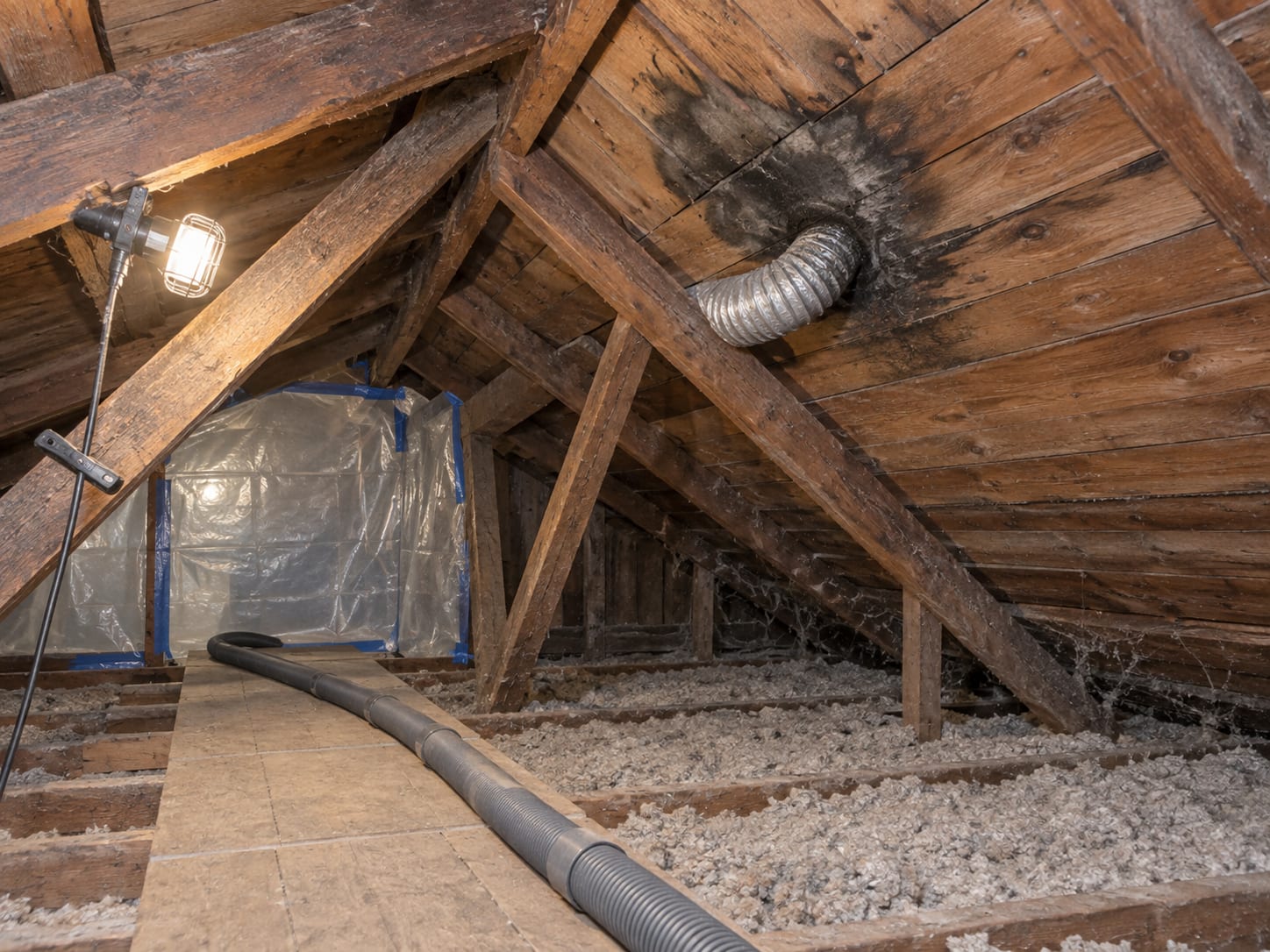
What are the signs of a moisture problem in a Cranbury home, and what should you do first?
If you see any of these, stop the water first. Shut off the supply to a leaking fixture, redirect a downspout away from the house, and run a dehumidifier in the room. Take photos of the area with a date on them before you clean anything, because your insurer will want to see the condition as it was.
Leave suspected growth alone. Scrubbing or bleaching a patch can spread spores through the house and does not reach the material behind it. Keep the door to that room closed, turn off any fan that pulls air through it, and call us. A mold inspection finds where the moisture is and how far it has traveled. If you need to know what species is present or how airborne levels compare inside and out, mold testing can answer that, and we will tell you whether the result would change what you do.
A musty smell in a closed room
A smell that returns after you air the room out usually means something behind a wall, under a floor or above a ceiling is still damp. If your home has a finished basement, a closed lower-level room is a common place for this.
Staining on ceilings and wall bases
Rings on a ceiling point toward the roof, a bathroom above or a pipe. Staining or bubbling paint at the bottom of a wall points toward ground water, a gutter that dumps at the foundation or a leak at a window.
Warped floors, baseboards or trim
Cupping in wood flooring and swelling at baseboards mean moisture has been present for some time, not just after one spill.
Condensation on windows and cold surfaces
Regular condensation in a room with poor airflow can feed growth on window frames, closet walls and the backs of furniture set against exterior walls.
Flaking or chalky masonry
White powder on a foundation wall or a cracked, damp block wall in an older village building shows water is moving through the masonry, which is worth checking if your building has a block or stone foundation.
What does professional mold remediation involve in Cranbury?
Every Cranbury job follows the same order, whether it is a bathroom ceiling in Shadow Oaks or a lower level in an older Main Street building.
Find the water route
We trace the growth back to its moisture source: a roof leak, a foundation seep, a failed supply line, a bathroom fan venting into the attic or a dryer duct dumping humid air indoors. Removing growth without closing that route means it returns.
Contain the work area
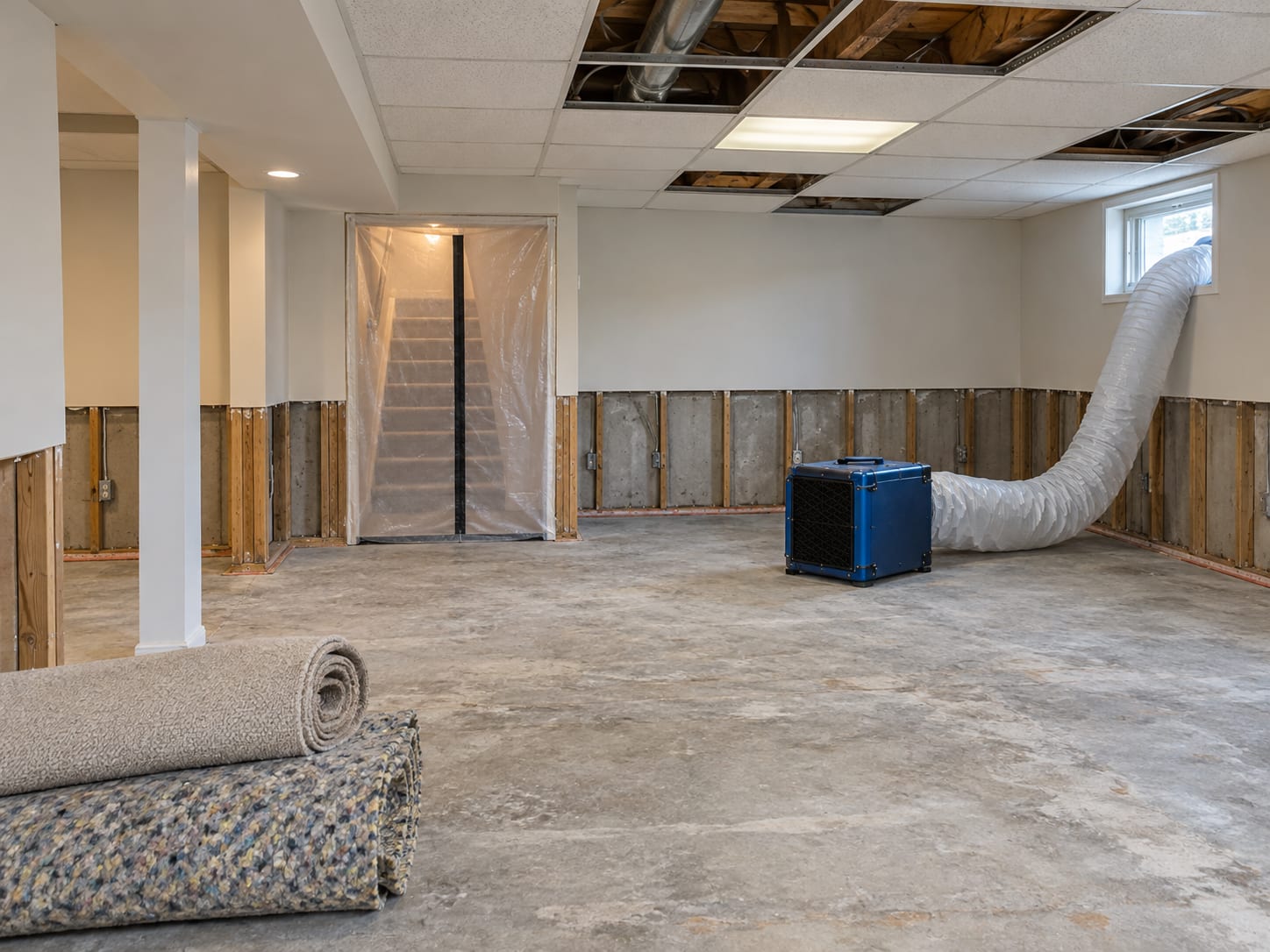
We seal the affected area with plastic sheeting and run air filtration so disturbed spores stay in the room being treated and out of the rest of the house.
Remove what cannot be saved
Porous materials such as wet drywall, insulation and carpet padding are cut out and bagged. Wood framing and other solid materials are cleaned and, where the surface allows, dried and treated in place.
Dry the structure
Moisture that stays in framing or a slab will grow mold again. We use structural drying equipment and check the materials until they are dry, not just the air around them.
Verify and rebuild
When the work is done, post-remediation verification can confirm the area is clean. If drywall, flooring or trim came out, our build-back team can close the walls back up.
What sets the scope and cost of mold remediation in Cranbury?
Price follows the damage, not the town. The main things that set it are how much area is affected, which materials are involved, how hard the space is to reach, what containment it needs, and how much rebuilding follows. A patch on one bathroom ceiling and a wet, finished lower level are different jobs even when the mold looks similar from the doorway.
Cranbury's mix of houses changes the questions we ask. In a detached home from the 1980s to 2000s, we look at any finished lower level first: drywall, carpet and ceiling panels soak up water, and they have to come out if they stayed wet. About 62.6% of Cranbury homes have four or more bedrooms, and larger homes usually mean more bathrooms, laundry rooms and mechanical spaces, each one another place a slow leak can hide.
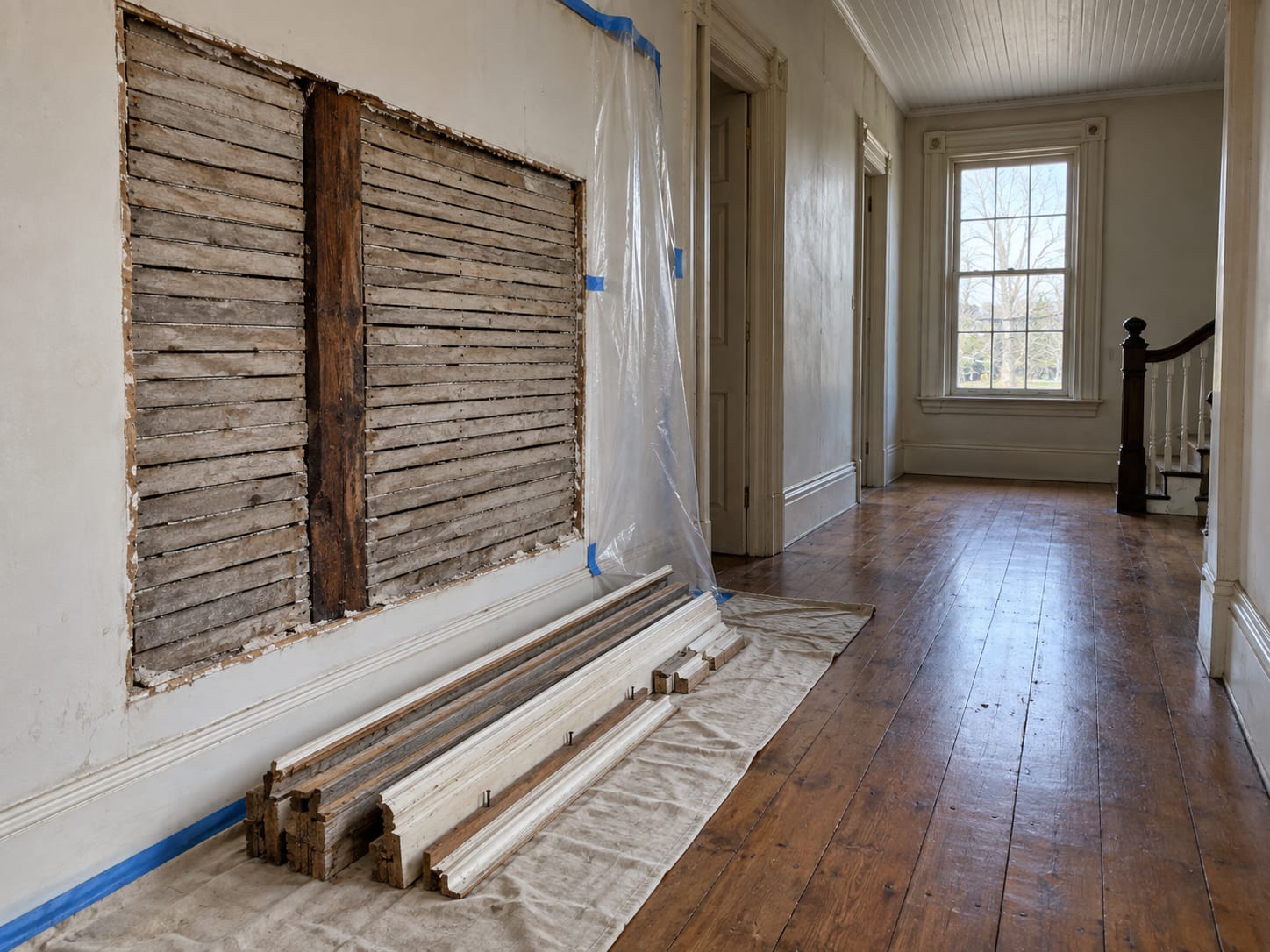
Older village buildings raise a different set of questions, starting with what the walls, floors and foundation are made of. Access can be tight, and the choice between removing a material and drying it in place matters more. When we look at a Cranbury property, we tell you what we see, what we plan to do and what it involves before work starts. Tell us the foundation type when you call; a slab, a crawl space and a full basement each dry differently.
Do Cranbury Village and historic district rules affect the work?
Cranbury Village is the historic center of the township, built densely along Main Street, and the Cranbury Village Historic District includes buildings from the eighteenth and nineteenth centuries. If your property is in the district, a mold or water job can bring the township's rules into it.
Interior work does not need Historic Preservation Commission review. That means removing wet drywall, drying a floor or cleaning framing inside the building can proceed on its own schedule. Exterior repairs or alterations in a designated historic district may need a Certificate of Approval from the commission before they start, and the township zoning department says a zoning permit is the first step for covered construction, reconstruction or alteration work.
That matters when the fix for a moisture problem is outside: replacing damaged siding, repairing a roof edge, rebuilding a porch or changing how a foundation drains. We plan the interior cleanup and drying so it does not wait on that approval, and we tell you early if the repair that stops the water will need one. Call the township zoning office before you schedule exterior work, and bring photos and a description of what needs repair.
If your water problem started with a burst pipe or a leak that has soaked more than one room, tell us that on the first call. Insurance paperwork and township approvals often run in parallel, and our insurance restoration services team can help document the loss.
How do you keep moisture from coming back near streams, wetlands and older homes?
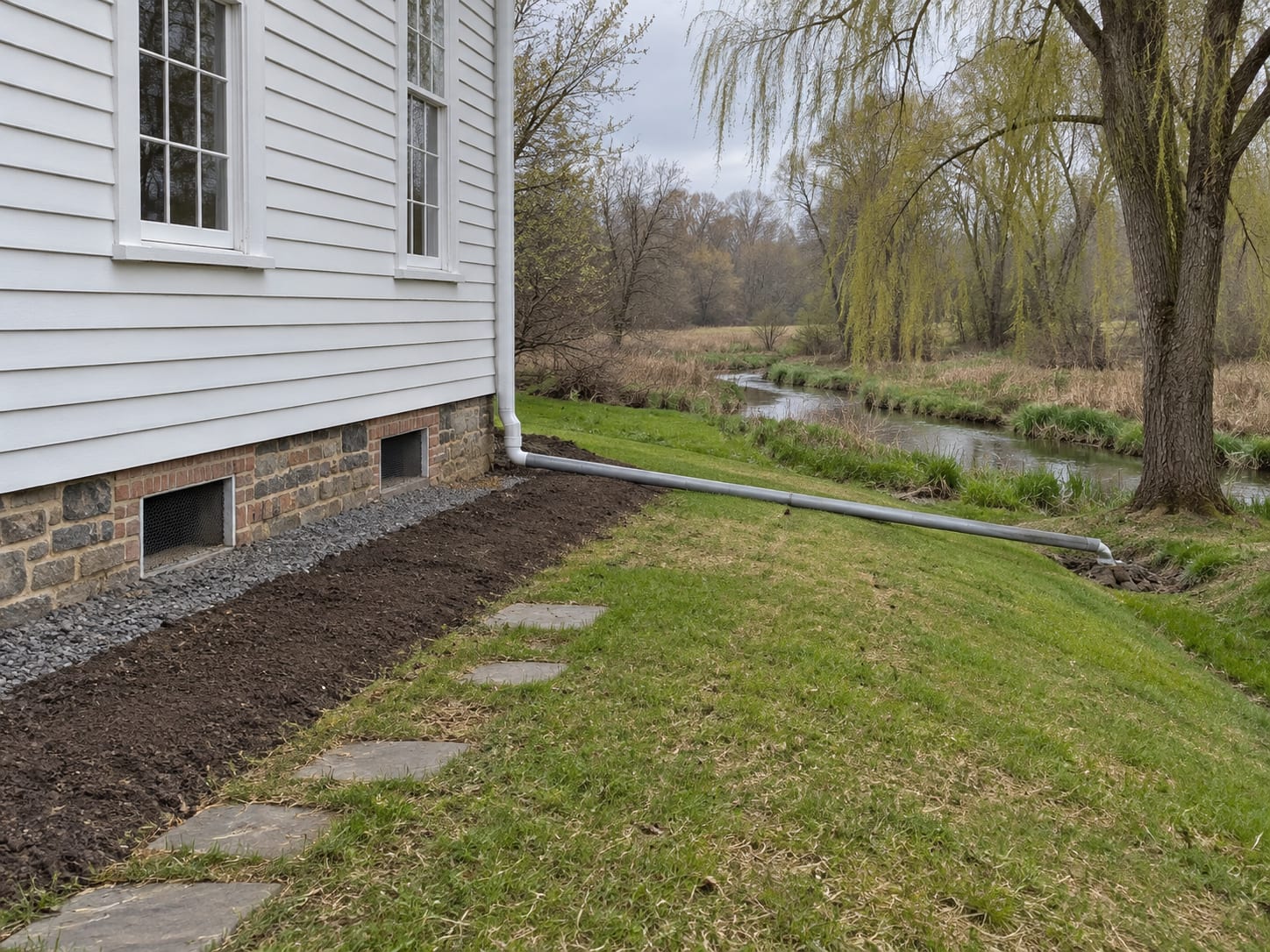
The lasting fix is almost always about where water goes outside. Extend downspouts several feet from the foundation, and check that the ground slopes away from the house rather than toward it. On flat Cranbury lots, a small dip along the foundation holds water after every storm.
If your property sits near Cranbury Brook, Cedar Brook, the Millstone River, Brainerd Lake or one of the wetland areas around Reinhardt Forest Preserve, check the parcel against current FEMA and NJDEP flood mapping. New Jersey flood-hazard rules regulate development near waterways, and stream buffers may be 25 or 50 feet under those rules, so ask the township before you add a patio, regrade a yard or build near a stream bank.
Inside, keep humidity in check. A dehumidifier in a finished basement, bathroom fans that vent outside rather than into the attic, and a dryer duct that runs clear to an exterior wall all reduce the damp air that feeds growth. If your basement takes on water after heavy rain, basement drying and basement flood cleanup are the first calls; a musty crawl space or under-floor area is a job for crawl space mold remediation.
Where do we work in and around Cranbury, NJ?
Cranbury Township, ZIP code 08512, includes Cranbury Village, Cranbury Green, Shadow Oaks, the Four Seasons community along Old Cranbury Road, and the residential streets around Main Street, South Main Street, Stockton Drive, Bergen Drive and Parkview Road. We also work in neighboring towns. Cranbury borders Plainsboro to the west, South Brunswick to the north, Monroe to the east and East Windsor to the south.
Frequently Asked Questions About Mold Remediation in Cranbury, NJ
The price depends on the size of the affected area, which materials are involved, how easy the space is to reach, the containment needed and any rebuilding afterward. We inspect first and explain the scope and price before work begins.
Talk to ExecPro Restoration & Cleaning about mold in Cranbury
About Cranbury, NJ
Cranbury is a township at the southern end of Middlesex County, in Central New Jersey, with Cranbury Village as its historic center along Main Street. The homes here fall into two groups. The township's housing plan counts 1,447 housing units, 84.5% of them detached single-family homes, and about 61.6% were built between 1980 and 2009, while 16.4% date from 1939 or earlier. That means a Cranbury property is most often either a house from the last forty years or an older village building. Before you call about a stain or a smell, it helps to know which one you have, because the two dry out in different ways. Larger homes are common, with 62.6% of units having four or more bedrooms, and more bathrooms, laundry rooms and mechanical spaces mean more places for a slow leak to hide.
The ground is relatively flat and crossed by water. Cranbury Brook runs through the village to Brainerd Lake, Cedar Brook and the Millstone River cross the township, and Reinhardt Forest Preserve holds wetlands and vernal pools. The township's Environmental Resource Inventory maps flood-prone areas, so check your parcel against current FEMA and NJDEP flood maps and look at where your downspouts and grading send water. If you live in the historic district, note that interior cleanup and drying do not need Historic Preservation Commission review, while exterior repairs or alterations may need a Certificate of Approval, and a zoning permit is the first step for covered construction work. Ask the township zoning department before you schedule exterior repairs.
Neighborhoods We Serve in Cranbury
Around Cranbury
Do not see your neighborhood? We serve all of Cranbury and the surrounding area. Reach out and we will confirm coverage.