Two Gates Before the Wall Closes: Post Mold Remediation Rebuild in Alpine, NJ
Cal HewittPublished
- post mold remediation rebuild
- build back
- site review
- alpine nj
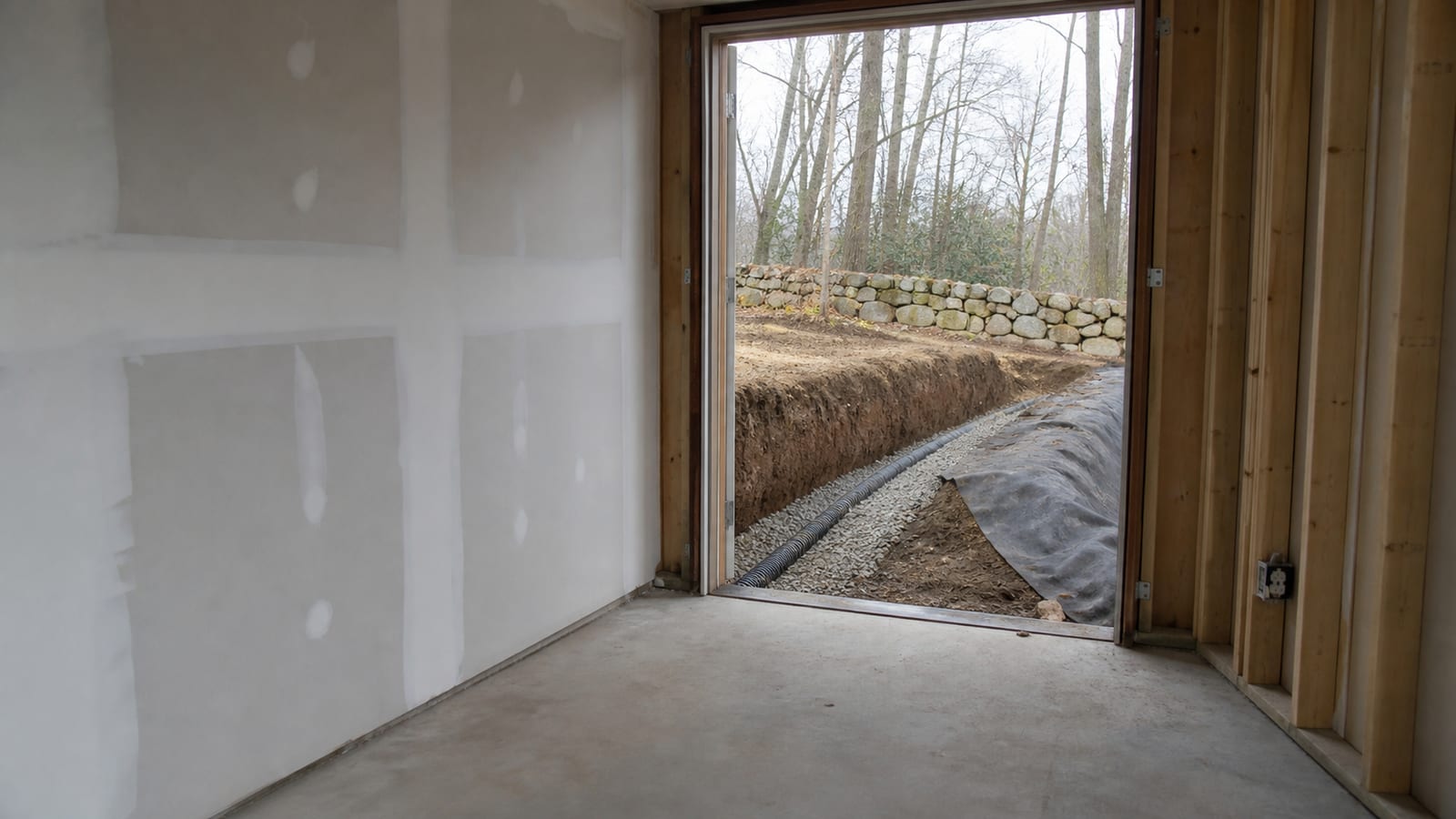
The room is cleared, the material is gone, the framing is open and everyone wants to put it back. That impulse is right, and it is early by two questions. The first is the one everybody knows about: is the space actually in the condition that allows a wall to be closed. The second gets skipped, and in Alpine it is the one that costs weeks when it is missed.
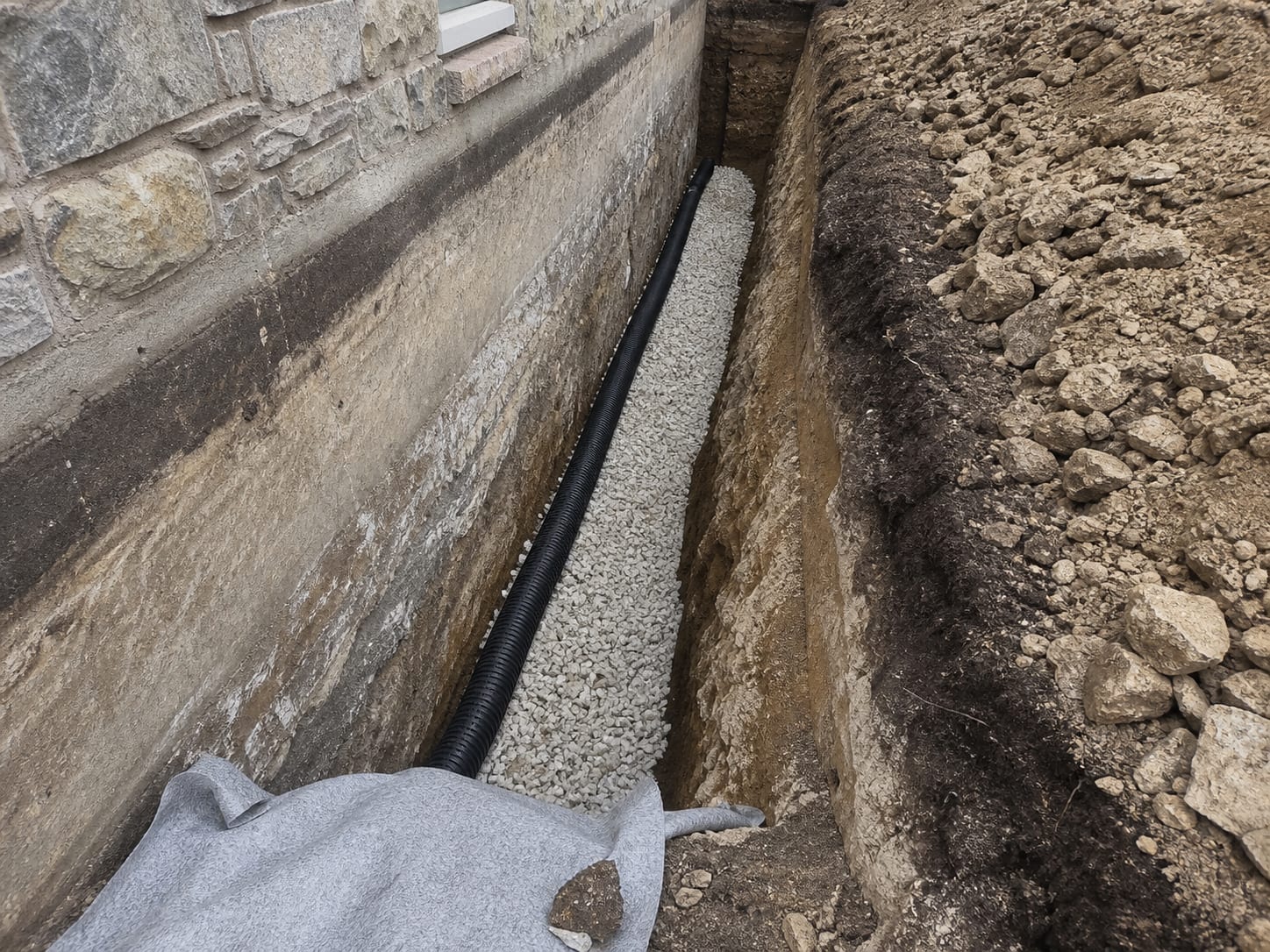
That second gate is about what the rebuild has become. A finish replacement is one thing. A rebuild that also corrects a drainage path, touches a septic served system, alters framing, or turns into an addition is a different category of work with its own review, and none of that announces itself. It just looks like putting the room back.
Key Takeaways
The completion condition is described, not scored
Federal guidance frames it as the moisture problem fixed, no visible mold or mold damaged material, no musty odor, and no later sign of water damage.
A negative sample does not replace looking
The same guidance says air sampling is usually unnecessary to judge whether remediation worked, and a negative report is not a substitute for a visual inspection.
Dry comes before construction, not alongside it
State guidance is to correct the source and ensure the area is completely dry before renovation or construction begins.
A rebuild can cross into site work
Drainage correction, septic, structural members, an addition or qualifying reconstruction each change what the project is.
Alpine has a 50 year storm clause
New construction and additions in the borough's residential districts require an engineered drainage, erosion and stormwater submission designed for that storm.
Rehabilitation rules do not remove permits
State guidance is explicit that the rehabilitation subcode governs technical requirements without erasing permit requirements.
Gate One: What Actually Lets a Wall Close
The completion standard for remediation is a description rather than a number, which frustrates people who want a certificate. Federal guidance puts it as: the moisture problem has been fixed, there is no visible mold, mold damaged material or moldy odor left, and a follow up shows no indication of water damage or mold growth returning. Where the site was sampled, the comparison is that post cleanup spores are similar in kinds and concentrations to the outdoor air.
Two clarifications matter here more than anything else on the page. Federal guidance says air sampling is usually not necessary to determine whether remediation was effective, and that a negative sampling report does not replace a visual inspection. And state guidance is direct that the moisture source must be corrected and the area completely dry before renovation or construction starts, not while it is happening. Those two together rule out the most common rebuild failure, which is a clean laboratory sheet used as permission to close a wall over material that is still damp. Where documentation of the finished condition is wanted, post remediation verification is the step that produces it.
Dry, in that sentence, means measured. Readings taken at the same points across several days, holding at a dry standard, are what distinguish an assembly that reached dry from one that stopped feeling wet. If drying is still the active phase, structural drying is not finished and the rebuild has not started.
Gate Two: Is This Still Interior Work
Here is the part that is specific to a borough like this one. A rebuild that stays inside the finish line is straightforward. A rebuild that reaches past it changes category, and there are six ways that happens in Alpine.
None of those is a reason to abandon a repair. Each is a reason to establish it in the first week rather than the last. The borough's own plan notes that only a select few properties have public sewer while most households use private septic tanks, which is why a plumbing change during a rebuild here is worth a moment's thought that it would not get elsewhere. Where the rebuild reaches framing, structural mold repair is a separate scope with its own classification.
The 50 Year Storm Clause
This is the local provision most likely to surprise somebody mid project. Alpine's code observes that its residential districts carry slope and rocky soil conditions creating liability for flooding, erosion and sedimentation when new buildings go up, and it requires a design engineer's drainage, erosion and sedimentation and stormwater management plan to accompany a building permit application for new construction or an addition in those districts, designed to accommodate a 50 year design storm.
That is not triggered by replacing drywall. It is triggered by building something new, and a rebuild that expands a footprint, adds a structure or reconfigures the site is building something new no matter what caused it. The related provision applies steep slope controls to reconstruction where more than half a structure has been destroyed and the entire footprint sits on ground at 15 percent grade or greater, which is the clause that matters after a severe loss rather than after a contained mold job.
The practical use of knowing this is sequencing. If any part of the intended work is going to need engineered submissions, that is a design task with a lead time, and it belongs at the start of the project rather than discovered at the permit counter. Broader local context is on the Alpine service area page.
How a Rebuild Should Be Sequenced
- 1
Confirm the source is corrected
Not scheduled, not intended, actually repaired and documented.
- 2
Confirm the space is measured dry
Readings at the same locations, held over days, not a judgment by feel.
- 3
Record the open condition
Photograph the framing, the cavities and the systems while everything is visible.
- 4
Classify the scope
Decide honestly whether this is finish work or has crossed into permitted or site reviewed work.
- 5
File what needs filing
Permits, and any engineered submission, before material starts arriving.
- 6
Rebuild in order
Insulation and systems first, with inspections taken while the work is still open.
- 7
Close and close out
Finishes last, with the permits, inspections and verification collected into one file.
Putting Back What Was Actually There
Alpine's housing profile makes finish matching a real line item rather than an afterthought. The borough's plan, drawing on the 2023 five year estimate, puts 556 of 593 units at one unit detached, records that more than three quarters of units have four or more bedrooms, and shows around 43 percent of the counted stock built before 1980, with the single largest cohort from the 1980s.
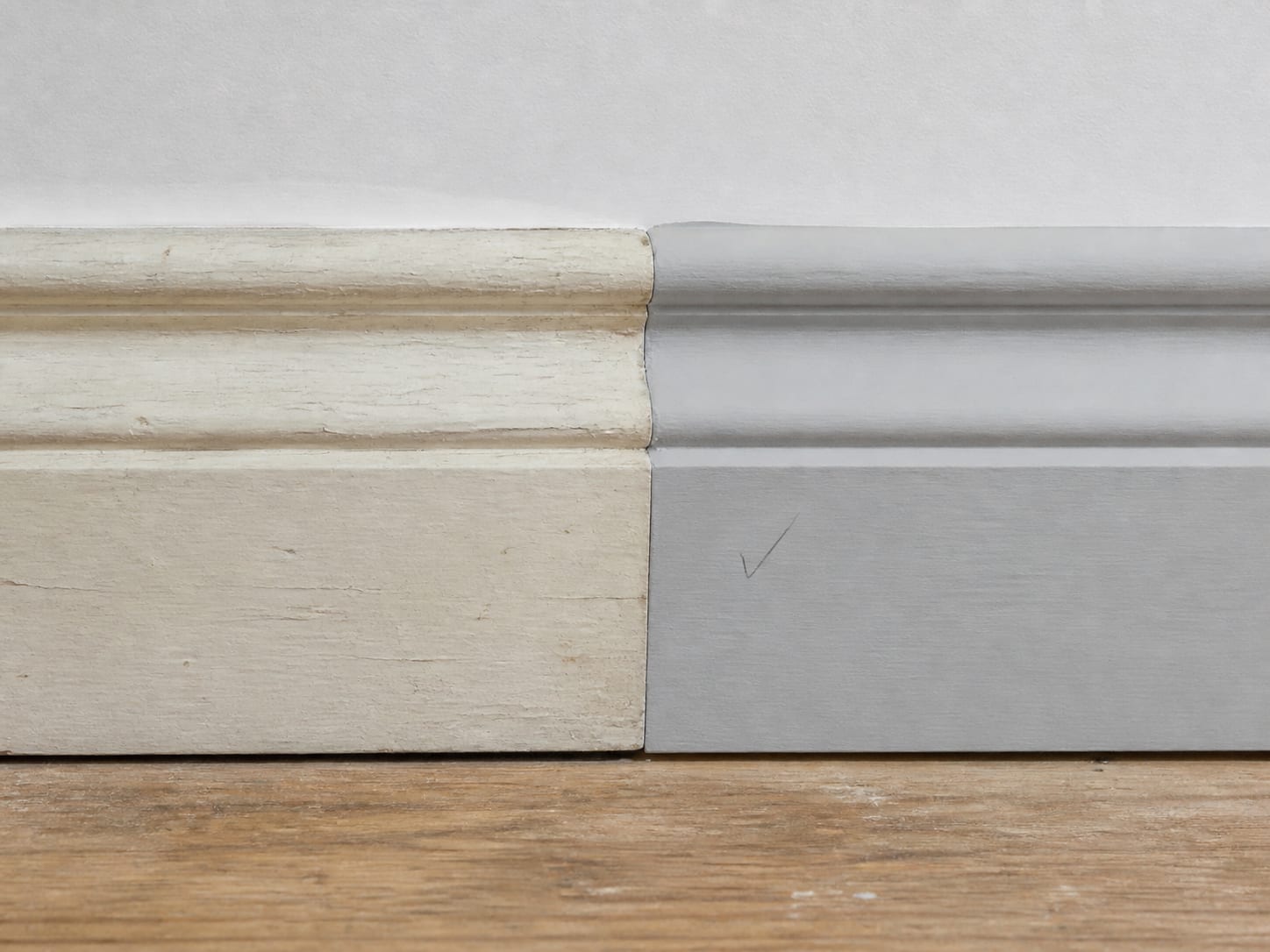
Older and larger houses mean assemblies that were not built to today's standard details and finishes that are not on a shelf. Wall thickness, trim profiles, plaster against board, flooring runs that continue into adjacent rooms, and cabinetry built for the space all decide whether a repair reads as invisible or as a patch. A rebuild scope that says replace drywall and paint, in a house like that, is describing a smaller job than the one that exists. Our post mold remediation rebuild page covers what the phase includes, and the wider build back services hub sets out where it fits.
Rehabilitation Does Not Mean Permit Free
There is a persistent misreading of New Jersey's rehabilitation rules worth correcting. Those rules govern the technical requirements that apply when working on an existing building, and state guidance is explicit that they do not remove permit requirements: work that needed a permit before still needs one. Rehabilitation changes what standard the work is held to, not whether it is reviewed.
Alpine administers that locally through its building department, with its construction, electrical, plumbing, fire, zoning, septic and drainage functions each routed to the right place, and inspections scheduled on set days by appointment. The single most useful thing an owner can do is describe the whole intended scope once, early, and ask what applies. It takes one conversation and it prevents the version of this project where the walls go up and then come back down.
Frequently Asked Questions About Rebuilding After Mold Remediation in Alpine NJ
The clearance test came back clean. Can we rebuild?
Not on that alone. Federal guidance says air sampling is usually not necessary to judge whether remediation was effective and that a negative report is not a substitute for a visual inspection. What supports closing a wall is the combination: the moisture source corrected, no visible mold or mold damaged material, no musty odor, and moisture readings showing the assembly reached dry and held there.
How dry is dry enough?
Dry enough to be demonstrated. That means readings taken at defined locations over consecutive days that reach and hold a dry standard for those materials, rather than a surface that feels fine. State guidance puts it plainly by requiring the area to be completely dry before renovation or construction, which is a sequence instruction as much as a condition.
Do I need a permit to put the room back?
It depends on what the room needs. Replacing finishes is often ordinary work, while anything touching structure, electrical, plumbing or mechanical systems generally is not, and the rehabilitation rules do not waive permit requirements for existing buildings. Alpine's construction office classifies the specific scope, and asking before material is ordered is the cheap version of finding out.
We want to take the opportunity to expand the room. Does that change things?
Considerably. An addition or new construction in the borough's residential districts requires a design engineer's drainage, erosion and sedimentation and stormwater management plan with the permit application, designed for a 50 year storm. That is a real design task with its own timeline. It is entirely doable, and it is not something to discover after the framing is ordered.
We are on septic. Does that affect a rebuild?
It can, where the work touches plumbing or where the footprint changes. Most properties in the borough use private septic rather than public sewer, so a change that would be routine on a municipal connection needs to be evaluated against the actual system on the parcel. Septic questions have their own local route rather than going through the construction office alone.
Will the repair be visible?
That depends on how carefully the existing assembly was recorded before it came out, and on how much of the scope allowed for matching. In older or larger houses, matching trim profiles, wall thickness, flooring runs and finish transitions is the work. A scope that priced only board and paint will produce a repair you can find from across the room.
Final Thoughts
The rebuild phase is where a good remediation gets protected or wasted. Protected, if the source is corrected, the space is measured dry, the open condition is recorded and the scope has been honestly classified before anything is filed. Wasted, if the wall closes on a hopeful reading and a scope that turned out to include work nobody declared.
In Alpine the second gate is the one to watch, because the borough's rules attach to site conditions rather than to the word mold. Slopes, drainage, stormwater design, septic systems and historic designation all sit in the background of a project that looks like carpentry. Checking which of them apply takes one conversation at the start and saves the version of the story where the finished room has to be opened again.
If your property is cleared and open and you want the rebuild scoped against both gates rather than just the visible one, ExecPro Restoration & Cleaning will tell you which category the work is actually in. Call (888) 300-3772 or reach us through the contact page, and photograph the open framing before anything covers it.
Rebuild Terms
Tap a term to see what it means.
Completion condition. The described state that allows a rebuild to start, based on source correction, absence of growth and odor, and verified dryness.
Serving Alpine
ExecPro Restoration & Cleaning provides mold remediation services in Alpine, NJ, from inspection and testing through removal, drying, and post-remediation verification. Call (888) 300-3772 for 24/7 emergency response.
Related Articles
Where Remediation Ends and Construction Begins: Post-Mold Rebuild in Livingston, NJ
Containment comes down and a Livingston, NJ property stops being a remediation site and becomes a construction one. That handoff has its own rules.
Proving It Is Dry: Post-Mold Remediation Rebuild in East Windsor, NJ
New drywall in an East Windsor home earns its place only after the water route is corrected and the opened framing is measured dry, not merely looked at.
Post-Mold Rebuild in Deal NJ: Planning the Build-Back Around the Summer Moratorium
After mold clears in a Deal NJ home, the build-back begins. Learn to schedule regulated construction around the summer moratorium and match high-value finishes.