Proving It Is Dry: Post-Mold Remediation Rebuild in East Windsor, NJ
Cal HewittPublished
- post mold remediation rebuild
- build back
- structural drying
- east windsor nj
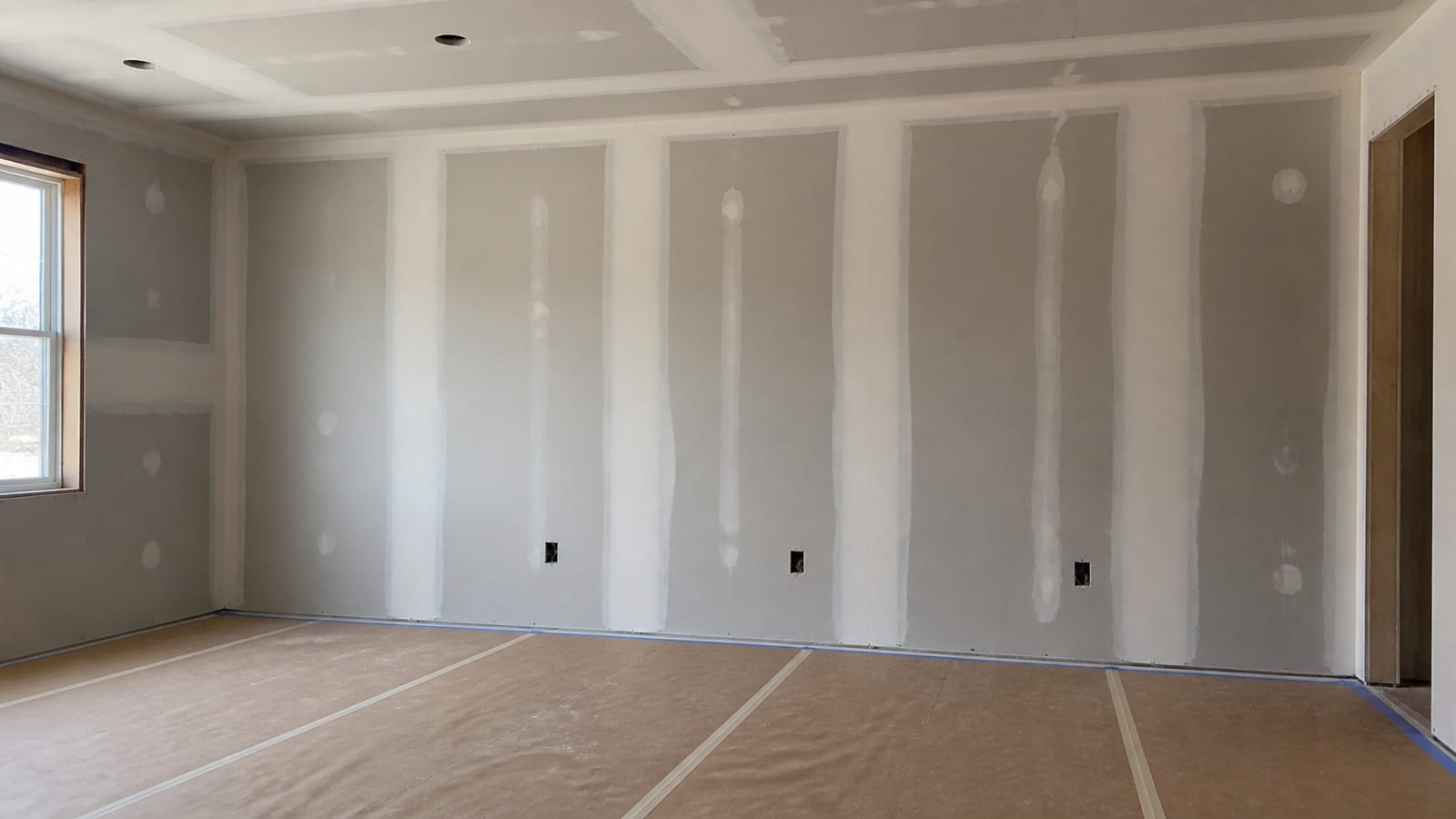
The first question most people ask when mold remediation finishes is when the room can go back together. That is a fair question, and it is the wrong place to start. The question that controls every other decision is narrower and less comfortable: what evidence shows that the wall, floor, or ceiling cavity about to be closed is dry, and that the water which made it wet is no longer arriving?
Everything else in a rebuild follows from the answer. New drywall, new insulation, new trim, and fresh paint all do the same thing to an assembly. They make it impossible to see. If the framing behind that finish still holds moisture, or if the roof detail or supply line that wet it in the first place has not been repaired, the finish becomes a lid rather than a repair. The EPA is direct on the underlying principle: fixing the water problem is what prevents mold from coming back, and moisture control is the key to mold control. A rebuild that starts before that is not a rebuild. It is a delay with a paint color.
East Windsor Township sits inland in Mercer County, in central New Jersey. That matters for a rebuild because the water routes that drive local material loss are plumbing failures, roof and window entry, exterior drainage, foundation seepage, condensation on cold surfaces, and inland flooding. It also matters because East Windsor is its own enforcing agency for construction work, separate from Hightstown, the borough the township surrounds, and separate from West Windsor, the adjacent township with a similar name and a different code office.
Key Takeaways
Dry is a measurement, not an impression
A surface that feels dry to the hand can sit against framing that still holds moisture, which is why readings on the actual material matter more than a visual check.
Source repair comes before finish material
The EPA is clear that mold returns when the water problem is left unfixed, so closing an assembly over an active water route recreates the original condition.
Verification is separate from construction
Confirming a remediated space was addressed properly is its own reporting step and should not be folded into the contractor's build back scope.
The scope is set by what was removed
A defensible rebuild restores the documented removal boundary and the corrected assembly, not a general remodeling wish list.
Ownership can split the work
In attached homes, rentals, and planned communities, the unit interior and the shared component causing the moisture may belong to different parties.
Records outlive the finishes
Photos of the open assembly, the source repair, the drying record, and any permits stay useful to owners, buyers, and insurers long after the paint dries.
The Proof That Has to Come First
Before any material goes back, three things need to be settled in writing: where the water came from, what was done about it, and what the affected materials now read. Those are separate findings, and skipping any one of them leaves a gap that only shows up later. A repaired pipe with no drying record still leaves wet framing. A dry reading with no source repair means the assembly will be wet again by the next heavy rain or the next freeze.
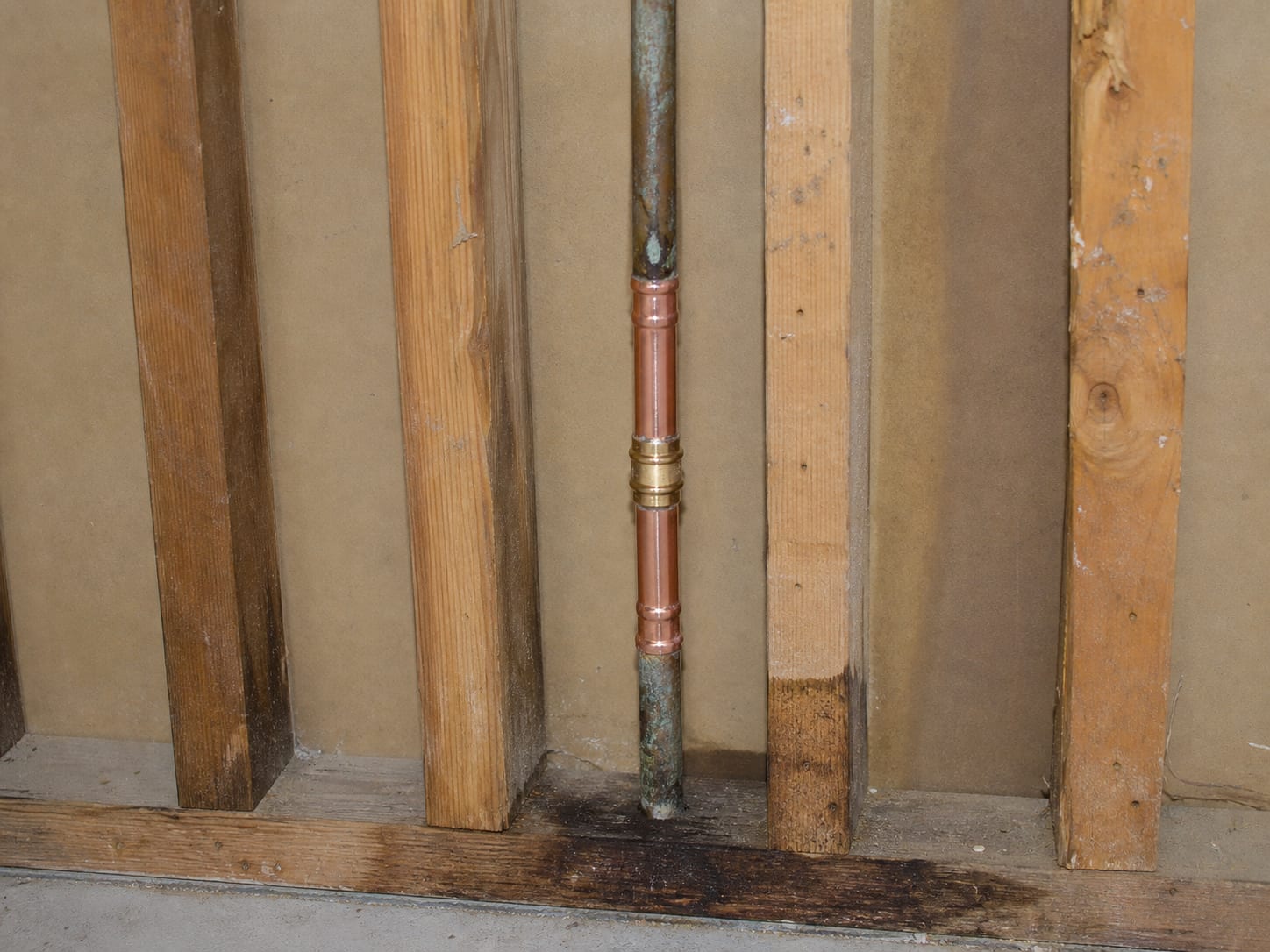
"Dry" on a construction site is often used loosely. It gets applied to anything that no longer looks or feels damp, which is a low bar. Wood and gypsum both hold water well past the point where the surface feels normal, and an insulated cavity dries far more slowly than the face of the board in front of it. That is why structural drying is treated as its own stage with its own equipment and its own end point, rather than as something that happens in the background while other trades work.
The practical version of the standard is simple to state. Readings are taken on the affected material, in the same locations, over enough time to show a trend rather than a single number. When those readings level off in line with comparable unaffected material in the same building, the assembly has reached a stable condition. Until then, it stays open. A schedule can be adjusted. A closed wall cannot be un-closed without cutting it back apart.
Verification Belongs on Its Own Page
There is a second kind of proof that people sometimes confuse with the first. Confirming that a remediated area was properly addressed is an environmental review, not a construction task, and it is best reported separately from the contractor's scope. Post-remediation verification documents the condition of the cleaned space on its own terms. Keeping it separate protects the value of both records, because a document that mixes the party doing the work with the party confirming the work is worth less to everyone who reads it later.
It is also worth noting what verification is not. The EPA points out that visible mold generally does not require routine sampling, since seeing it already establishes it is there. Verification is about the condition of the cleaned area and the corrected source, not a number that certifies a building.
What Counts as Proof, and What Does Not
A rebuild file is only as good as what it can show. The following items are the ones that actually carry weight when an owner, a buyer, a manager, an insurer, or a township inspector reads the record two years from now.
Hover or tap a row to highlight it.
| Item | What it establishes | Why it matters later |
|---|---|---|
| Source finding and repair | Where water entered and what was done to stop it | Without it, new material sits over an unresolved water route |
| Removal boundary | Exactly how far material was taken back, wall by wall | Sets the rebuild scope and shows what was never opened |
| Drying record on affected material | That readings stabilized before close-up, not that a surface felt dry | Distinguishes a measured condition from an impression |
| Photographs of the open assembly | Framing, cavities, wiring, and plumbing before finishes | The only chance to see behind the finish, ever |
| Verification reporting | That the remediated area was reviewed on its own terms | Keeps the confirming record independent of the build back |
| Permits and inspection records where required | That regulated work was reviewed by the township | Answers the question a future owner or lender will ask |
| Written exclusions | What was inaccessible, deferred, or not part of the scope | An honest gap is more useful than a silent one |
Notice what is missing from that list. There is no price benchmark, because there is no credible standard cost for a post-remediation rebuild in East Windsor or anywhere else. The drivers are the materials actually removed, the source repair, the number of rooms and their access, whether plumbing, electrical, or mechanical work is involved, whether structural members need attention, and whether any part of the assembly is shared with another party. A single mold label cannot price any of that, and an estimate that arrives before the scope is defined is a guess wearing a letterhead.
Sequencing a Rebuild in East Windsor
Once the drying question is answered honestly, the rest of the sequence becomes ordinary construction management. The order is not flexible, though, because each step depends on the one before it.
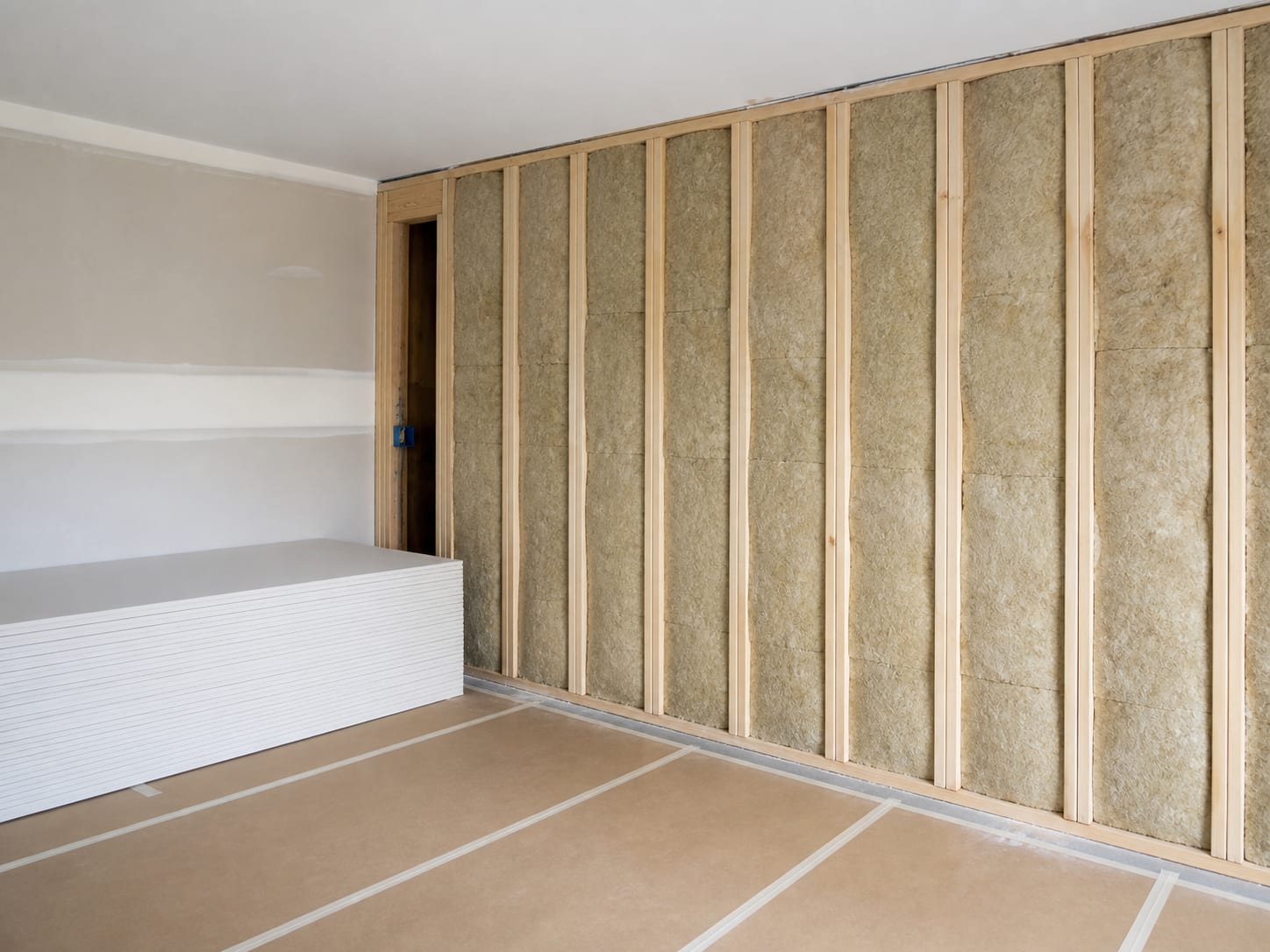
From Remediated Space to Finished Room
- 1
Confirm the source is corrected
The roof detail, supply line, drain, grading condition, or condensation path that wet the assembly is repaired and documented before any restoration material is considered.
- 2
Establish and record dry
Readings on affected framing and remaining materials stabilize against comparable dry material in the same building, and the record shows the trend, not one spot check.
- 3
Define the scope from the removal boundary
What was taken out sets what goes back, including insulation, vapor control, board, flooring, trim, and any systems that were opened.
- 4
Sort out authority
Determine whether the owner, a landlord, an association, or a common element controls each part of the work, especially anything on the exterior or in a shared system.
- 5
Handle review where the work requires it
New Jersey's construction code covers repair, renovation, alteration, and reconstruction, so regulated portions of the scope go through the township before they proceed.
- 6
Build back and document
Materials are installed, inspections happen where they apply, and the file closes with photos, invoices, and a plain statement of anything excluded.
East Windsor administers the Uniform Construction Code through its own Construction Department, which processes applications and performs inspections across the building, electrical, fire protection, mechanical, and plumbing subcodes. Township permit fees are calculated as the sum of the applicable subcode fees, which is a useful reminder in itself: a rebuild that touches more than one trade is a project with more than one review path. Whether a given scope needs review depends on the actual construction work involved, not on the word "restoration," and that determination belongs with the township rather than with a contractor's assumption.
One local wrinkle is worth naming. East Windsor maintains a flood damage prevention ordinance with its own definitions, including a substantial damage test that compares restoration cost against pre-damage market value at a 50 percent threshold. That framework applies to properties in flood hazard areas, and any determination under it belongs to the Floodplain Administrator with the actual project facts in hand. Most post-mold rebuilds in the township have nothing to do with it. The point is not to assume it applies, and equally not to assume it cannot.
Who Has the Authority to Close the Wall
East Windsor is not a township of identical detached houses. Census Reporter estimates roughly 12,422 housing units, of which about 54 percent are single-unit structures, and Census QuickFacts puts owner occupancy near 61 percent. That leaves a substantial share of local residents in attached homes, apartments, rentals, and managed communities. Twin Rivers, which the township identifies as a Planned Unit Development, is the clearest local example of a place where the inside of a unit and the component causing the moisture can belong to different parties.
The consequence for a rebuild is concrete. A tenant or unit owner may fully control the drywall, flooring, and trim inside their space while having no authority at all over the roof, the exterior wall, the common plumbing riser, or the shared mechanical system that put water into that space. Rebuilding the interior in that situation is possible and sometimes necessary, but it is only a partial answer if the source sits on the other side of an ownership line. Sorting that out before scheduling is far cheaper than discovering it after the finishes are in.
Rental settings add a documentation angle. East Windsor requires a certificate of inspection before occupancy in multiple-dwelling situations, which is not a new requirement triggered by every repair, but it does illustrate why a landlord or manager benefits from a clean file showing what happened, what was corrected, and what was reviewed.
Where Rebuilds Go Wrong
The single most consequential mistake is installing new material before the water route is fixed. It is also the easiest one to make, because the pressure to get a room back into service is real and the source repair is often the least visible part of the job. Nothing about new drywall stops water. It just makes the next round of damage harder to find.
A close second is treating remediation and reconstruction as one undifferentiated task. They may run back to back, and the same company may perform both, but they have different acceptance criteria, different documentation, and sometimes different review requirements. Blending them produces a file where nobody can tell what was cleaned, what was repaired, and what was simply covered.
Two smaller errors show up often enough to name. One is treating a dated mold report as a building plan. A report describes a condition on a date; a rebuild scope describes materials, boundaries, and assemblies. The other is assuming that because work is called restoration, no municipal review applies. The state's code speaks to the nature of the work, not to what it is called.
Frequently Asked Questions About Rebuilding After Mold Remediation in East Windsor NJ
How do I know the space is dry enough to close up?
Dry is established by readings taken on the affected materials over time, compared against similar unaffected material in the same building, not by how a surface feels or looks. A single reading on one day says very little; a trend that flattens out says a great deal. If the record cannot show that trend, the assembly is not ready to be covered, no matter how the schedule reads.
Does a post-mold rebuild in East Windsor need a permit?
It depends entirely on the construction work involved. New Jersey's Uniform Construction Code applies to construction, repair, renovation, alteration, reconstruction, and demolition within its scope, and East Windsor's Construction Department is the local enforcing agency. Replacing exactly what was removed in a small area is a different question from reworking framing or relocating plumbing.
Can rebuilding start before the moisture source is repaired?
It should not. The EPA's position is that the water problem has to be fixed or mold growth will recur, which makes source repair a precondition rather than a parallel task. There are narrow cases where a temporary protective measure is put in place while a permanent repair is scheduled, but that is a stabilization step, not the start of a rebuild, and it belongs in the record as such.
What if the water is coming from a shared roof, wall, or pipe?
Then the rebuild has two owners and needs two decisions. The interior finishes may be entirely within your control while the source repair sits with a landlord, an association, or a common element. Getting that in writing before work is scheduled prevents the common outcome where a finished room is handed back with the original water route still active on the other side of the assembly.
Is a rebuild the same as post-remediation verification?
No, and keeping them separate is deliberate. Verification is an environmental review documenting the condition of the remediated area. A rebuild is construction that restores materials and assemblies. They inform each other, but a document that combines the party doing the work with the party confirming the work is weaker evidence than two independent records.
How long does a post-mold rebuild take?
There is no honest fixed answer, because the timeline is the sum of source repair, drying to a stable condition, scope definition, ownership decisions where they apply, any required review, material availability, trade scheduling, and inspections. Any of those can be the long pole. A firm number quoted before the scope exists is a sales figure, not a schedule.
Final Thoughts
A rebuild after mold remediation is the point where an owner stops managing a problem and starts making a room again. That shift feels like progress, which is exactly why it deserves one deliberate pause. The pause is short: confirm the source is corrected, confirm the material is dry by measurement, write the scope against what was actually removed, and settle who has authority over each piece.
East Windsor property owners who take that pause end up with two things. The first is a room that stays finished, because nothing behind the new surface is still working against it. The second is a record that still makes sense years later, when a buyer, an insurer, or a future contractor asks what happened in that space and what was done about it. Neither of those is guaranteed by a nice paint job.
When you are ready to move a remediated space back to a finished one, our team at ExecPro Restoration & Cleaning writes the scope against the documented removal and the corrected source, not against a template. You can read more about our post-mold remediation rebuild service, call (888) 300-3772 to talk through what was opened in your building, or reach our restoration team online and we will walk the space with you before anything gets closed up.
Rebuild Terms Worth Knowing
Tap a term to see what it means.
Source correction. The repair that stops the original water route, such as a roof or window entry point, a plumbing failure, exterior drainage, foundation seepage, or a condensation path.
Serving East Windsor
ExecPro Restoration & Cleaning provides mold remediation services in East Windsor, NJ, from inspection and testing through removal, drying, and post-remediation verification. Call (888) 300-3772 for 24/7 emergency response.
Related Articles
Two Gates Before the Wall Closes: Post Mold Remediation Rebuild in Alpine, NJ
Dry enough to rebuild is the first gate. The second is whether the work is still interior finish restoration, or has quietly become site work the borough reviews.
Where Remediation Ends and Construction Begins: Post-Mold Rebuild in Livingston, NJ
Containment comes down and a Livingston, NJ property stops being a remediation site and becomes a construction one. That handoff has its own rules.
The Finished Room, in Reverse: Water Damage Restoration in East Windsor, NJ
Water damage restoration in East Windsor, NJ ends in a rebuilt room. What that room costs and how long it waits was decided in the first 24 to 48 hours.