The Finished Room, in Reverse: Water Damage Restoration in East Windsor, NJ
Cal HewittPublished
- water damage restoration
- east windsor nj
- mercer county
- structural drying
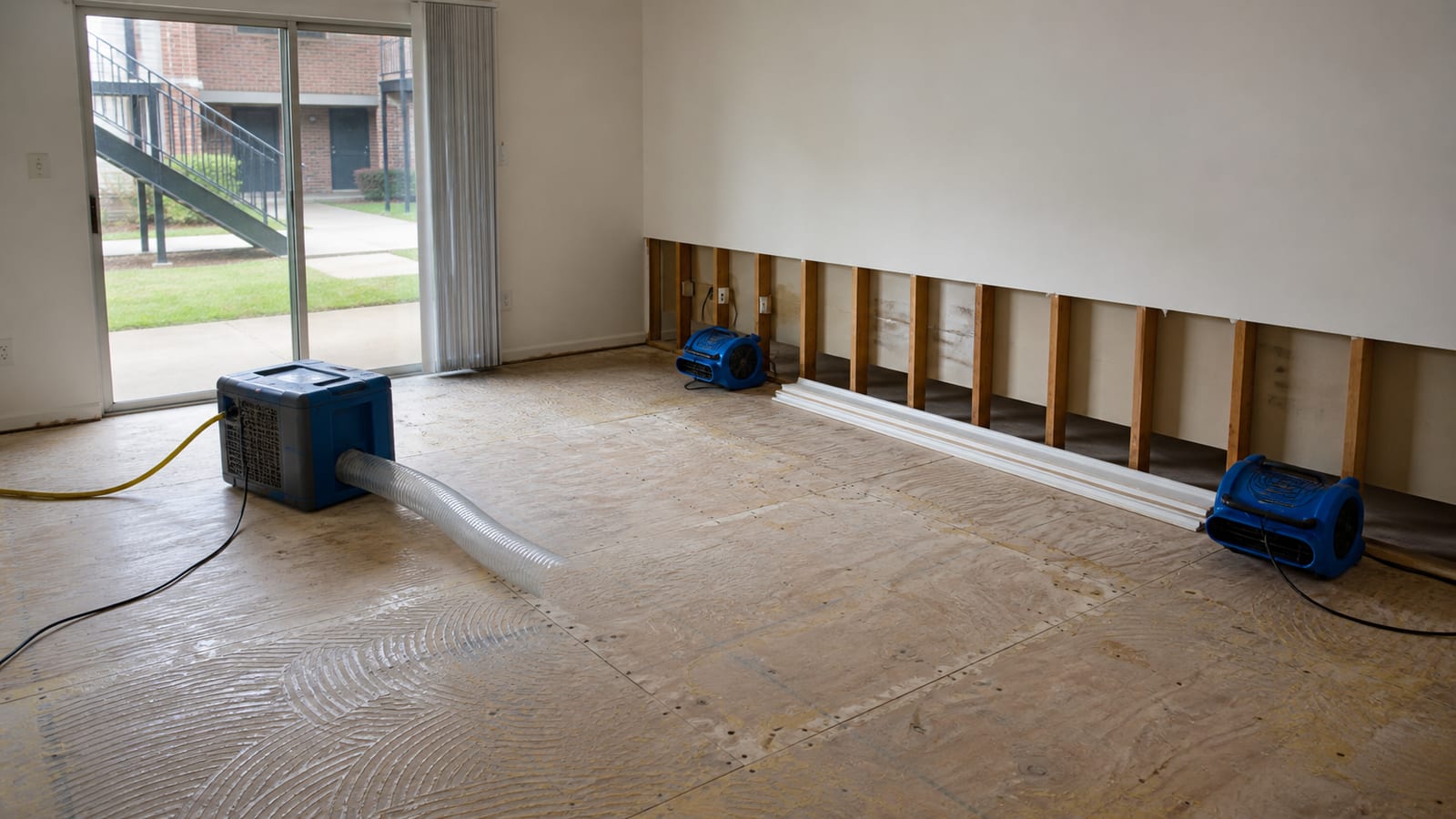
Picture the end of the job instead of the beginning. New baseboard, fresh paint, flooring that matches the hallway, a room an East Windsor family walks back into and stops thinking about. That finished room is what everyone actually wants from water damage restoration. It is also the last thing that happens, and almost nothing about it was decided on the day it was installed.
Work backwards from that room and the whole project becomes legible. Every visible thing about it, how long it took to get there, what it cost, whether it needed a Township review, whether an insurer had enough information to evaluate it, traces back to choices made in the first day or two after the water arrived. Most property owners meet a restoration job in forward order and have to trust each step as it comes. Reading it in reverse is more useful, because it shows you which early decisions are load bearing.
Hover or tap a row to highlight it.
| What you see at the end | What actually decided it | When that decision got made |
|---|---|---|
| Which materials are new versus original | Whether each material could be dried in place or had to come out | During assessment, usually in the first day or two |
| Whether the work needed a Township permit | Whether the repair reached regulated building, electrical, plumbing or fire protection elements | When the repair scope was defined, not when work started |
| How long the room sat unusable | Source control, access, drying progress and any pending approvals | Across the whole job, but set in motion at hour one |
| Whether an insurer had a clear picture | The quality of the loss record: source, dates, photos, affected areas, mitigation | At the very start, and it cannot be recreated later |
| Whether the problem stays fixed | Whether the water pathway itself was corrected, not just the wet material removed | Source investigation, before anything was replaced |
The End of the Job: Repair Is Its Own Scope
The last phase of a water loss is reconstruction, and it is worth separating from everything before it. Extraction and drying are stabilization. Replacing finishes, repairing systems and rebuilding assemblies is construction work, and in East Windsor Township it may run through a different process than the mitigation did.
The Township's Construction Department administers the State Uniform Construction Code and receives permit applications. It identifies building, electrical, fire protection, plumbing and zoning functions, which is a useful list when you are trying to work out whether your repair crosses a line. The Township also publishes a demolition of structure checklist, tying structure removal activity to construction code permitting. None of that establishes that every water damage project needs a permit. It establishes why a scope that reaches those components should be reviewed locally rather than treated as an oversized carpet cleaning.
Cost follows the same logic. East Windsor states that a construction permit fee is the sum of the applicable subcode fees, not one universal restoration charge. So a proposal that folds mitigation, source repair and reconstruction into a single number has flattened three different scopes, each with its own approvals, into one figure you cannot check. A credible estimate names what was observed, what source repair is included or excluded, and which reconstruction elements are still waiting on review. When the rebuild is genuinely the next step, post water damage reconstruction after the drying is verified belongs on its own line with its own record.
Rewind One Step: Was It Dry Before It Was Closed?
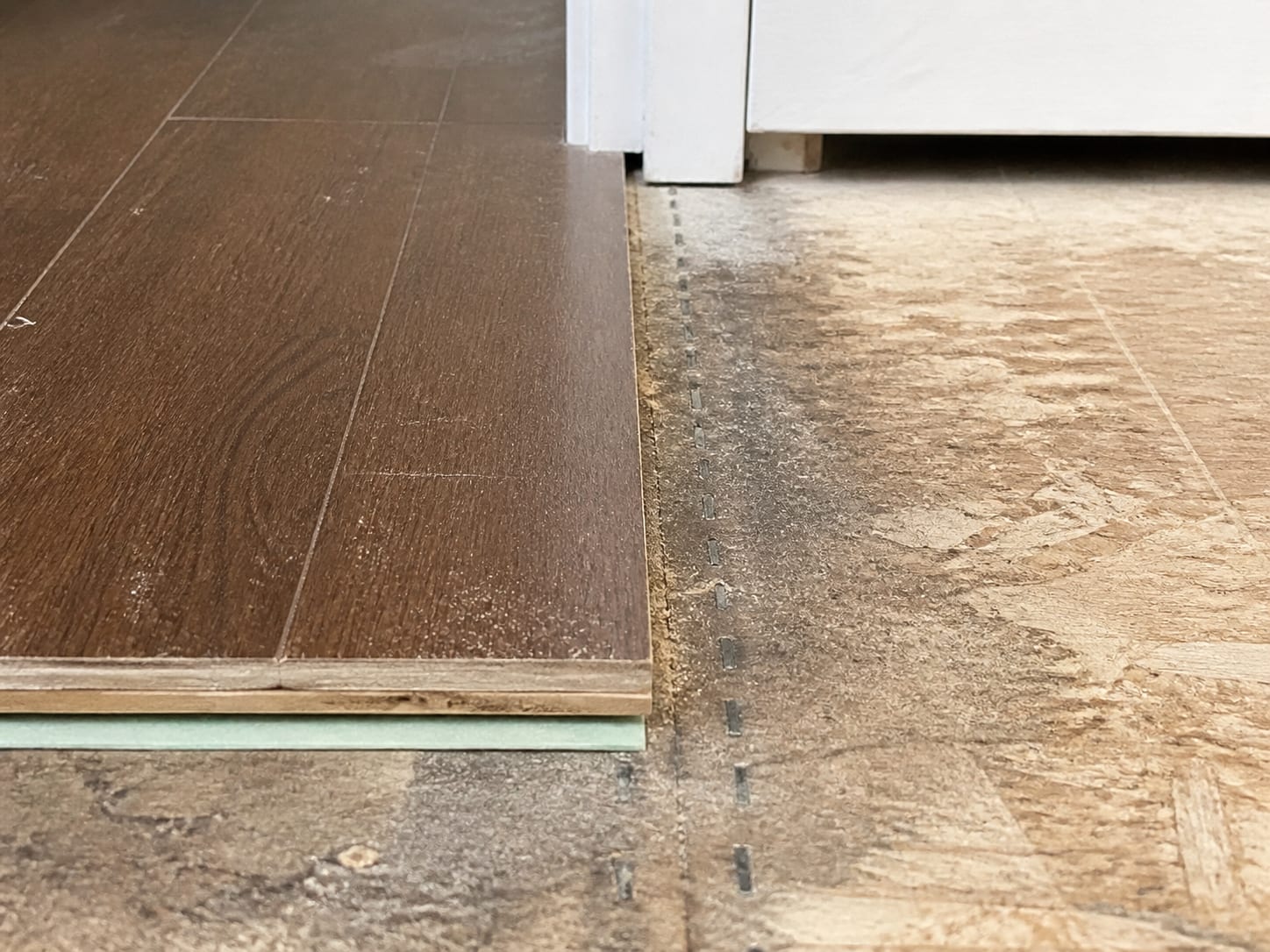
Nothing should go back on a wall until the material behind it is dry, and dry is a measurement rather than an impression. A room can feel comfortable while the bottom of a stud, the back of a subfloor or the inside of a wall cavity is still holding water. Close it up in that condition and the finished room you were picturing becomes the reason the wall gets opened again.
EPA's guidance on getting rid of mold is direct that water damaged areas and items should be dried within 24 to 48 hours to help prevent mold growth. That window is why a water loss is a different kind of problem from a remodeling project. It is not that everything must be finished in two days. It is that the clock on the materials starts immediately, and a delay in assessment quietly changes what can be saved.
Drying at depth is deliberate work with measured endpoints, which is why structural drying to documented moisture readings is a distinct phase rather than a fan left running in the corner. What you want in the record is not "the area was dried" but what was measured, where, and against what target.
Rewind Again: Which Materials Stayed and Which Left
The mix of new and original material in a finished room is the visible trace of a set of decisions made much earlier. Porous materials hold water inside their bodies rather than shedding it, so a wet surface is not necessarily the whole story and a dry looking one is not necessarily fine. EPA's mold remediation guide for schools and commercial buildings sets out material specific response considerations, including for items like carpet and its backing, where the layer underneath behaves differently from the layer you can see.
Two errors sit on either side of this decision. The first is treating visible water removal as the entire restoration, which leaves wet materials and concealed migration to become a larger loss. The second is the opposite: claiming every wall, floor and room has to come out without documenting a reason. A credible scope identifies the source, records the observed conditions, and explains why a particular material is retained, dried, cleaned or removed. A wet surface is not automatically the full extent of the damage, and an unopened cavity is not automatically affected without evidence.
The water type belongs in this decision too. Ready.gov notes that floodwater may be contaminated, which is why an inland flood event can create a different cleaning, disposal and documentation scope from a clean supply line failure, even when the wet floor looks identical.
Rewind Again: The Source, and Who Controls It
Every decision above depends on knowing where the water came from. That sounds obvious until the source turns out to sit outside the room, or outside the unit, or outside the property line of the person who called.
East Windsor is not a single style housing market. Census Reporter estimates 12,422 housing units in the township, with about 54 percent in single unit structures. The rest are attached and multifamily buildings, where an overflowing fixture, a roof intrusion, a supply line failure or a drain leak can affect another unit or a common element. Census QuickFacts puts owner occupancy at 61.1 percent for the 2020 to 2024 period, leaving a substantial renter and managed property context. The Township's parks material documents the Twin Rivers Planned Unit Development and its 3.5 mile walking path, an official record of a planned residential setting inside East Windsor where association rules, shared infrastructure and authorization can influence a schedule.
It is also worth saying which municipality this is. A report of water damage "in Windsor" does not identify the applicable town. East Windsor Township is in Mercer County, inland central New Jersey. Hightstown is a separate borough that East Windsor surrounds. West Windsor is a different adjacent township with its own process. That distinction is not pedantry. It determines which Construction Department reviews the repair and which flood ordinance applies.
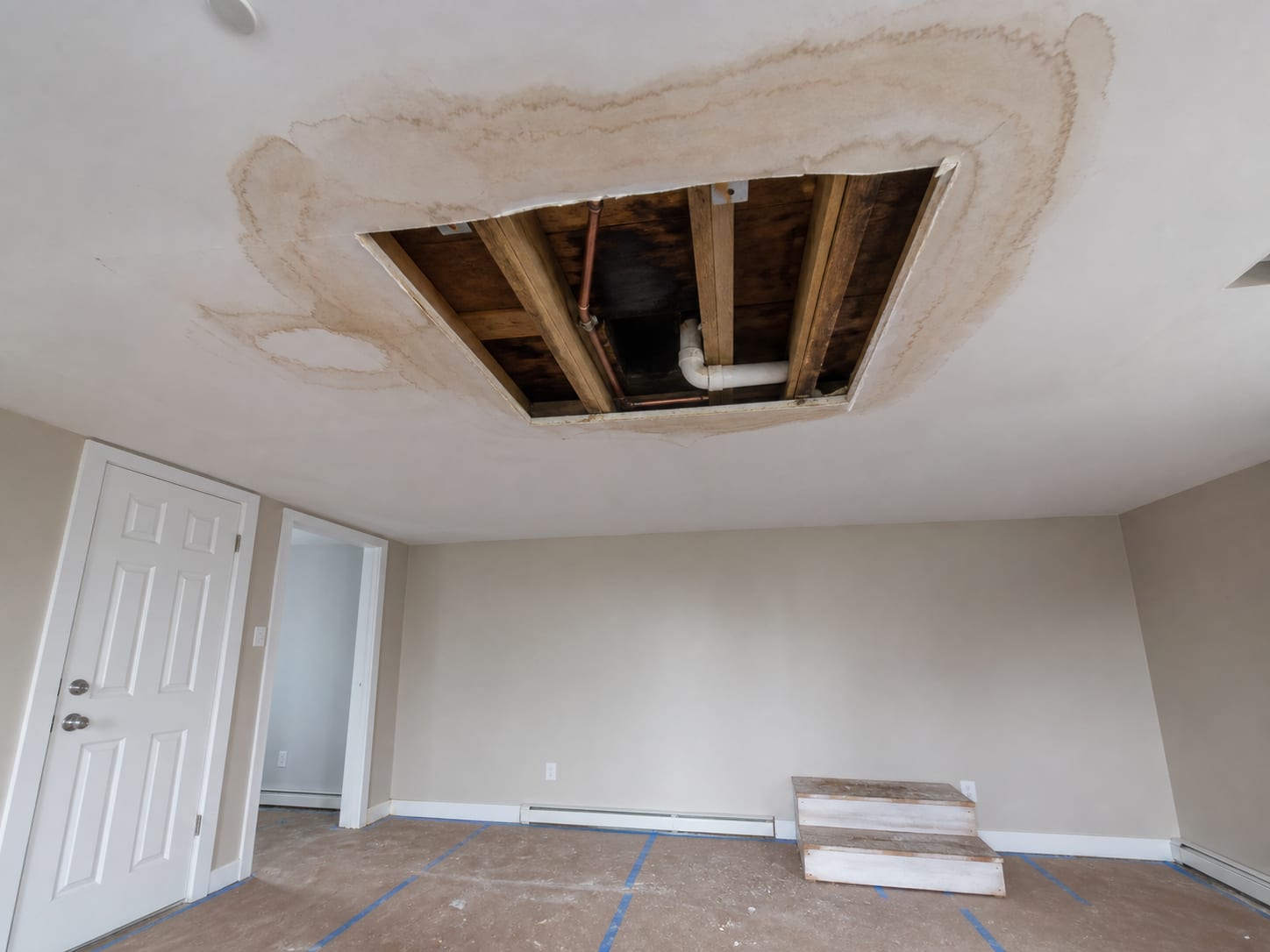
Source tracing has to account for the actual assembly rather than a template: roof and exterior wall, slab or lower level, appliance connection, supply or drain piping, heating and cooling condensate, or a neighboring or common area. When water is still arriving or standing, that is a stabilization problem first, and emergency water extraction to stop the loss from spreading comes before any of the material decisions above.
The Same Job, Read Forward
- 1
Stop and identify the source
Isolate the water where it is safe to do so and establish what failed, because everything downstream is scoped from this.
- 2
Document the condition first
Photograph the affected areas, note dates and the observed water path, and record what was accessible before anything is moved or removed.
- 3
Remove water and standing moisture
Extraction is the fastest lever on total damage, and it belongs inside the 24 to 48 hour window rather than after an approval cycle.
- 4
Decide material by material
Retain, dry, clean or remove each material on documented grounds, taking water type and contact time into account.
- 5
Dry to a measured endpoint
Confirm the materials that stayed have reached a target moisture condition, and record the readings rather than the impression.
- 6
Define the repair scope
Establish whether reconstruction reaches regulated elements and take that question to the Township before scheduling the rebuild.
- 7
Rebuild and close the file
Replace finishes only over corrected conditions, and keep the record intact for the insurer, the manager or the next owner.
The Record Is What Makes Any of This Reviewable
A restoration file is not paperwork for its own sake. It is the only thing that can answer, months later, what the water was, where it went, what was removed and why.
Insurance vocabulary needs care here. The New Jersey Department of Banking and Insurance states that all homeowners policies exclude water damage caused by flood. That does not mean every water event is excluded, and it does not create coverage for any particular loss. Water source, endorsements, policy wording, deductibles and the claim review decide that. New Jersey's storm claims guidance advises policyholders to report a loss promptly and to preserve key information such as the claim number and adjuster contact. So a policyholder should not equate every indoor water event with "flood," and should not presume all storm related water is covered either.
What Belongs in a Water Loss Record
The observed water source
What failed, where it is located, and who owns or controls that component, recorded before repairs alter the evidence.
Dates and duration
When the water was discovered, how long materials were wet, and when mitigation began, since the 24 to 48 hour window shapes material outcomes.
Photographs of the affected areas
Wide shots that establish the room and close shots that establish the material condition, taken before removal.
The affected area list
Which rooms, assemblies and contents were involved, and equally which areas were checked and found unaffected.
Material handling and the reason
What was retained, dried, cleaned or removed, with the documented basis for each call rather than a blanket decision.
Drying data
The readings and targets used to establish that materials reached a dry condition, not just a statement that drying occurred.
Access and authorization limits
Anything that could not be reached or approved, and which party controlled it, so gaps in the scope are visible rather than silent.
Invoices and correspondence
The financial and communication trail that lets an insurer, buyer or manager reconstruct the event without relying on memory.
Frequently Asked Questions About Water Damage Restoration in East Windsor, NJ
How fast do I actually have to move?
Faster than most people expect. EPA advises drying water damaged areas and items within 24 to 48 hours to help prevent mold growth. That does not mean the whole project finishes in two days. It means the material outcomes, which things can be saved and which cannot, are being decided during that window whether or not anyone is on site. Delay mostly costs you materials.
Does my homeowners policy cover this?
That depends on the water source, the policy wording, endorsements and the claim decision, so it is not something a contractor can answer. What New Jersey's insurance authority does state clearly is that all homeowners policies exclude damage caused by flood. Report the loss promptly, record the claim number and adjuster contact, and keep the documentation. Records support a factual conversation. They do not decide coverage.
Do I need a permit to put the room back?
Sometimes. Extraction and drying do not by themselves establish a permit requirement, but repairs that reach building, electrical, plumbing or fire protection work can. East Windsor's Construction Department administers the State Uniform Construction Code and is the correct local authority to ask. Its posted demolition checklist is a reminder that removal activity can also be tied to permitting.
The floor is dry to the touch. Can we skip the drying equipment?
Surface dryness is a poor proxy for material dryness. Water migrates into subfloor layers, wall cavities, insulation and the bottom of framing, where it can sit for weeks while the room feels normal. The point of measured drying is to establish the condition of the materials that stayed in the building, which is what determines whether closing the wall is safe.
What if the leak started in another unit?
Then the source correction sits with whoever controls that space, and the scope needs to say so. Work inside your own boundary can often proceed, but a leak repaired only on your side of the wall is not repaired. In attached, condominium or managed property, identifying the responsible party early is part of the restoration, not an administrative afterthought.
Was this a flood or just water damage?
The distinction matters more than it sounds. An interior supply line leak, a roof leak, a sewer related backup and exterior floodwater produce different cleaning, disposal, safety and documentation questions, because Ready.gov identifies floodwater as potentially contaminated. It also matters for insurance language, given the standard flood exclusion. The answer comes from investigating the actual water path, not from how the room looks.
Why does the estimate separate mitigation from rebuild?
Because they are different work under different rules. Mitigation stabilizes the loss and is driven by the clock. Reconstruction restores the building and may be subject to municipal review, with permit fees that East Windsor describes as the sum of the applicable subcode fees. Bundling them into one number hides which part is urgent, which part is pending approval, and which part you are actually paying for.
The Practical Takeaway
The finished room is the part of a water loss that people picture and the part that carries the least information. Everything meaningful about it was set earlier: how quickly the water was found and removed, whether the source was traced to the component and the party that controls it, whether material decisions were documented instead of assumed, whether drying was measured, and whether the repair scope was checked against East Windsor's construction process before the rebuild was scheduled.
Read your own project backwards from the room you want and you will know what to ask for on day one. Ask for a documented source, a material by material basis, measured drying, a separated repair scope, and a record complete enough that an insurer or a future owner can follow it without you in the room explaining.
If water has reached an East Windsor property and you want the source, the material decisions and the rebuild boundary written down from the start, the team at ExecPro Restoration & Cleaning documents the job that way. Call (888) 300-3772 or tell us what happened at your East Windsor property and we will start with the source rather than the finish.
Terms in an East Windsor Water Loss File
Tap a term to see what it means.
Mitigation. The stabilization phase of a water loss, covering source isolation, water removal, material assessment and drying, as distinct from repair.
Serving East Windsor
ExecPro Restoration & Cleaning provides mold remediation services in East Windsor, NJ, from inspection and testing through removal, drying, and post-remediation verification. Call (888) 300-3772 for 24/7 emergency response.
Related Articles
Water Got Into Your New Jersey Home in the Nor'easter: The First 48 Hours
Water got into your New Jersey home in the September nor'easter? What is safe to touch, what to photograph, and how to start drying in the first 48 hours.
Water Damage Restoration in Warren, NJ: The First 72 Hours
After the water stops in a Warren, NJ home the clock starts. Extraction, drying, what gets removed, what the Township needs, and how the days actually run.
Classify the Water First: Water Damage Restoration in Alpine, NJ
What the water is decides what can be saved. On an Alpine lot with septic and high groundwater, that question is harder and more important than usual.