What an Inspection Will Actually Tell You: Mold Inspection in Plainsboro, NJ
Cal HewittPublished
- mold inspection
- multi unit
- moisture assessment
- plainsboro nj
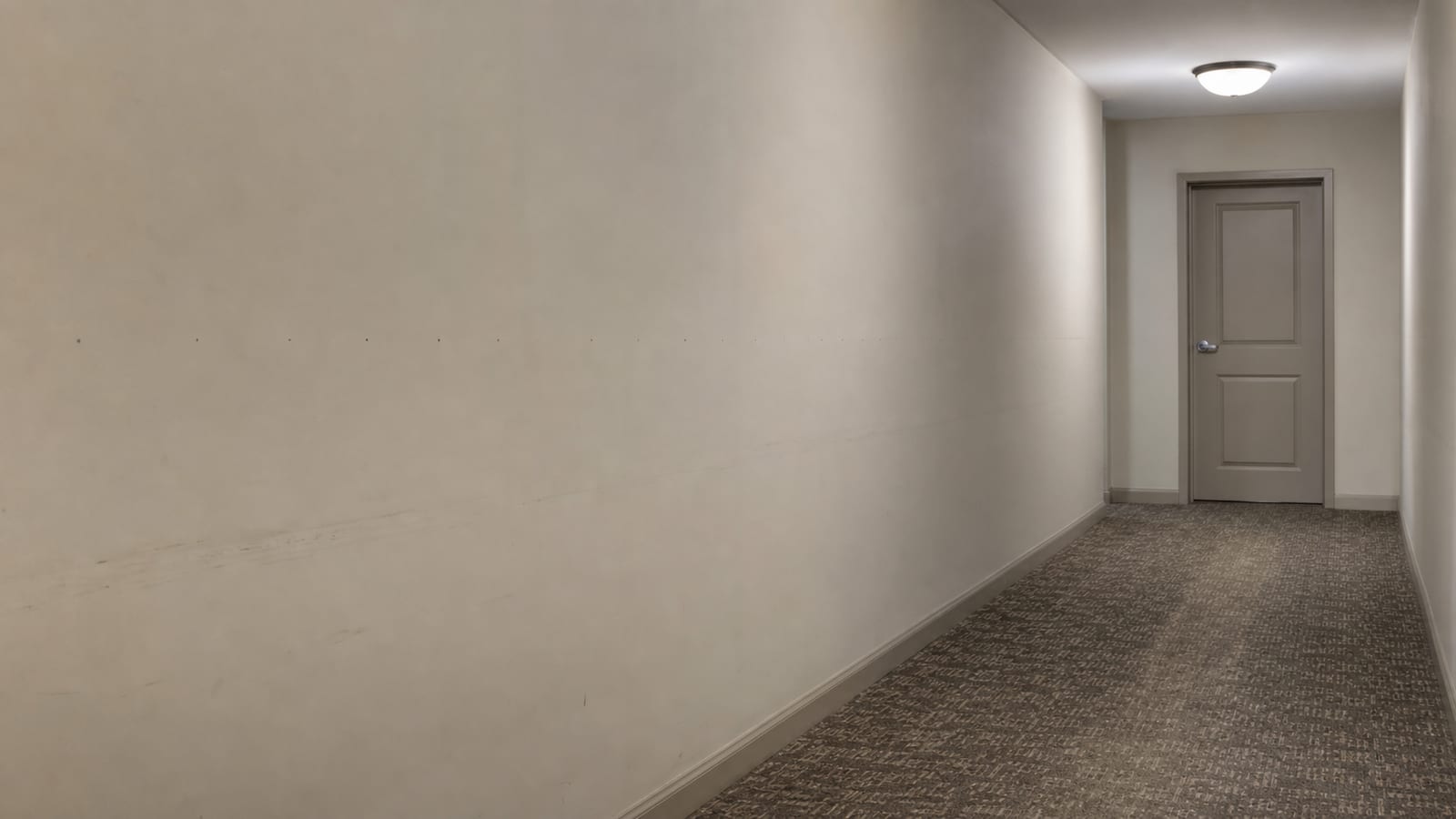
Something smells musty, or a stain has appeared, and the question is whether paying somebody to come and look at it will actually tell you anything you can use. Fair question. Here is what an inspection finds, what it costs, what it can and cannot reach, and what the report is good for afterward.
The short version: a useful inspection tells you where the water is coming from, how far it has already travelled, and what it reached on the way. That is the information a repair gets scoped from, and it is the thing you cannot get by looking at the stain. What it will not do is hand you a verdict on whether the building is safe, because no inspection or laboratory result can.
Key Takeaways
The inspection is a dated record of accessible conditions
Visible growth, staining, odor, water damaged materials, moisture readings and apparent water paths, as they were on the day of the visit.
The limits are part of the finding
A closed wall cavity, a neighbouring unit, a locked common mechanical room or a stored-full closet all belong in the report by name.
Roughly 37.8 percent of Plainsboro units sit in five to nineteen unit buildings
The Township's draft housing element puts 1,716 units in five to nine unit structures and 1,926 in ten to nineteen unit structures.
Looking is more reliable than sampling for finding dampness
NIOSH states that thorough visual inspection or musty odor detection is more reliable than air sampling for identifying a dampness and mold problem.
There is no number to pass
EPA states that no federal airborne mold standards or limits exist, so no report can certify a building as safe.
New Jersey does not certify mold companies
The state health department says there is no state certification program for firms performing mold services, and that its informational lists are not inclusive.
What You Get for the Money
A competent inspection produces a dated record of what was accessible: visible growth or staining, musty odor, water damaged materials, moisture readings taken at suspect surfaces and at comparable dry ones, the apparent route the water took, and photographs of all of it. NIOSH is direct that this kind of thorough visual work, along with detecting a musty odor, is more reliable than air sampling for identifying a dampness and mold problem in the first place.
The part that separates a useful report from a decorative one is the limitations section: the areas the inspector could not see or reach, named. Stored contents that could not be moved, a wall cavity that was not opened, a locked mechanical room, an attic reached only through a hatch, a crawl area nobody could enter. Each of those is a real edge on the map, and writing them down is what lets somebody else pick the report up in two years and act on it.
In a building of five to nineteen units, that edge is often somebody else's front door, and it is worth knowing before you book. An inspection of your unit covers your unit. It covers the association's common elements, the shared mechanical spaces or the apartment above only if those areas were actually included and access was actually granted, which is a thing to arrange in advance rather than discover on the day.

The Water Paths a Plainsboro Building Actually Has
The Township's stormwater plan, revised in January 2025, is the most useful local grounding available. It identifies five named streams inside Plainsboro, the Millstone River, Devils Brook, Shallow Brook, Bee Brook and Cranbury Brook, along with Carnegie Lake, and notes that the Delaware and Raritan Canal forms the western boundary while the Millstone River forms the southern one. It describes how development, grading, compacted soil and connected impervious cover make the rainfall runoff response faster and higher across a developed township of 12.18 square miles, and it states flood damage reduction among its purposes.
None of that establishes anything about your specific parcel, and the plan does not pretend to. What it does establish is that ground adjacent and post storm water entry are sensible things to investigate here rather than afterthoughts. Whether a given building has a basement, a crawl space, a slab, a sump or a vapor barrier is a site visit question and a building records question, not something township wide data can answer.
That last row is the one a generic checklist never has. In a township where more than a third of the housing is in mid sized multi unit buildings, an unexplained damp condition with nothing behind it inside your own walls is a legitimate finding, and the honest next sentence is that the investigation needs access somebody else controls.
Inspection and Testing Are Two Different Purchases
They are sold together often enough that people assume they are one product. They are not. An inspection establishes observed conditions and a moisture source hypothesis. A laboratory analyses the specific material collected and reports what its method found, at that location, at that time.
EPA's guidance is that where growth is already visible, sampling is usually unnecessary, because the growth is the finding and the correction does not change with a species name. The same guidance states plainly that neither EPA nor any other federal body has set airborne mold or spore limits. That single fact disposes of a whole category of marketing: there is no threshold to be under, so nothing can be certified as passing one. CDC likewise does not recommend routine home mold testing, on the basis that a result cannot tell you whether a person will become ill and there are no standards for acceptable quantities.
Where a sample does earn its cost is when there is a specific unanswered question. An odor with no visible source. A hypothesis that the air handling system has moved a local problem. A comparison against outdoor air. Documentation at the end of a cleanup. Our mold testing page covers what those samples involve, and the honest order is inspection first, question second, sample third. Where documentation of a finished condition is what you actually need, post remediation verification is its own separate step.
How the Visit Should Run
- 1
Take the history first
When it started, how often it happens, what the weather was doing and what changed, because the pattern eliminates routes faster than any instrument.
- 2
Establish the boundary of the job
Which unit, which shared assemblies, which common areas, and who has authorised access to each.
- 3
Walk the exterior where it is reachable
Grade, discharge, downspouts and any low ground against the building, before anything indoors is touched.
- 4
Survey the interior systematically
Room by room, with attention to ceilings under wet areas, mechanical closets, exterior walls and the underside of built ins.
- 5
Read moisture, not appearance
Take readings at the suspect surfaces and at comparable dry ones in the same unit, so a number has something to be measured against.
- 6
Check the air handling equipment
Ducts and equipment can carry a local problem through a whole dwelling, and EPA's checklist includes them.
- 7
Write the limits down
Every area not seen or not reached, named, because that boundary is part of the finding rather than a gap in it.
What Drives the Cost
There is no published Plainsboro price range for a mold inspection, and any figure presented as a local average is somebody's guess dressed up. What can be stated honestly is what moves the number: how many rooms and suspect locations are involved, the size and layout, whether the property is a detached house or a unit inside a managed building, how much access there is to attics, crawl spaces and mechanical rooms, whether moisture diagnostics or thermal imaging are in scope, whether any sampling is needed, how many samples and of what type, the laboratory analysis and its turnaround, and how detailed the report has to be.
The purpose matters too. A pre purchase inspection, a tenant's documentation of a reported condition, an insurance record and a post remediation verification are four different assignments with four different levels of detail.
The practical protection is an itemised estimate. Inspection, sample collection, laboratory analysis, interpretation and reporting, and any remediation should each appear as their own line. A quote that folds sampling into the word inspection, or that presents a laboratory number as a clearance, is describing something the method cannot deliver.
What You Can Do Before Anyone Arrives
Some of the most valuable material in an inspection is not collected by the inspector. Photograph the condition before anything is moved or cleaned, with dates. Write down when you first noticed it and what the weather or the household was doing at the time. Keep any correspondence, and if you rent, keep the written notice you gave and how you sent it. The state's habitability bulletin describes written notice by certified mail with return receipt requested as the step that precedes the legal remedies it lists.
Move stored contents away from the walls you want examined, if it is safe to do so. Clear access to mechanical closets and to any hatch. If you are in a managed building, ask the manager in advance whether the inspector may enter the common mechanical areas, because that answer decides how much of the picture the report can contain.
What not to do is paint over it. NIOSH identifies painting over water damaged or mouldy material as inappropriate remediation, and beyond being ineffective it destroys the record you may need. If there is active water, do not wait to document before drying: EPA's guidance is to dry wet areas within 48 hours, and CDC says the same about drying within 24 to 48 hours after flooding. Emergency drying comes first, and where that is the situation, emergency services rather than a scheduled inspection is the right call.
Where the Township Comes Into It
Looking at a building is not construction. Repairing one can be. Plainsboro's Building Division enforces the New Jersey Uniform Construction Code, issues permits for work on new and existing buildings, and carries out the required code inspections. Under the Township's floodplain ordinance, development that requires a permit is subject to inspection, and flood hazard development carries additional inspections on top of that.
None of that makes a non destructive private mold inspection a municipal code inspection, a certificate of occupancy or a clearance. The reason it belongs in this conversation is sequencing. If the water route turns out to be a plumbing failure, a mechanical problem or a repair that becomes covered construction, the fix carries a process, and knowing that on day one is cheaper than discovering it once the wall is open.
One more thing worth knowing before you hire anyone: New Jersey has no state certification programme for companies performing mold services. The Department of Health says so directly, and adds that the informational lists it maintains are not inclusive. That places the whole burden of vetting on the buyer, which makes the itemised estimate and the written scope the two documents that matter most.
Frequently Asked Questions About Mold Inspection in Plainsboro NJ
The leak is obviously coming from the unit above me. Can the inspector go up there?
Only with that owner's or the manager's permission, which is not the inspector's to grant. What the inspection can do is document the condition in your unit, take readings that show where the moisture is highest and how far it extends, and state the evidence for a source above. That record is usually what gets the conversation with the manager or the association moving, because it replaces an assertion with a dated finding.
I rent. Is an inspection worth paying for myself?
It can be, and the reason is documentation rather than diagnosis. A dated report describing the observed condition, the moisture readings and the access limits is a record that exists independently of anyone's memory. The state's habitability bulletin describes tenants' right to safe, sanitary and decent housing and sets out a notice process, and it notes that buildings with three or more rental units fall under the Bureau of Housing Inspection's regime. A report documents conditions; it does not decide habitability or liability.
Can an inspection find mold inside a wall?
Not directly, and any report claiming otherwise is overstating its instruments. What it can do is read elevated moisture through a surface, follow the staining pattern, reason from the water route and recommend a small inspection opening where the evidence points. EPA treats hidden mold as something to approach carefully, partly because disturbing it without containment spreads it into rooms that were fine.
Will the inspection tell me whether it is safe to stay here?
No, and no laboratory test will either. EPA states that no federal airborne mold standards or limits exist, so there is no threshold to be measured against. CDC notes that health effects of damp and mouldy environments vary between people and that there are no standards for acceptable quantities in a home. An inspection tells you what conditions exist and where the water is. Health questions belong with a clinician who knows the people living there.
Do I need a township permit for a mold inspection?
No reviewed Plainsboro source treats a stand alone, non destructive mold inspection as permitted work. What can require a permit is the repair that follows, if it becomes alteration, reconstruction or flood hazard development, and the Building Division is the right place to confirm once the actual scope is known rather than before.
Should I just get an air sample instead? It is cheaper.
It answers a different question, and often not the one you have. NIOSH's position is that visual inspection and musty odor detection are more reliable for identifying a dampness and mold problem than air sampling is. A sample is a snapshot from one place at one moment; it cannot look inside a wall cavity, into the next unit, or into a common mechanical space. A clean result from a location that was never the problem tells you very little.
Final Thoughts
The value of a Plainsboro inspection is in how much it rules out and how honestly it draws its own edges. In a township where the median home was built in 1986 and better than a third of the housing sits in mid sized multi unit buildings, the useful question is rarely whether mold exists. It is where the water is coming from, how far it has already gone, and which parts of that answer live on the other side of a wall you do not own.
What you should end up holding is a dated record: the unit inspected, the conditions observed, the readings and where they were taken, the areas that could not be examined and why, the water route the evidence supports, and a clear line between what was measured and what was concluded. That document scopes the repair, survives a change of contractor, and answers the question a manager, an insurer or a buyer asks later. The town level picture is on our Plainsboro service area page, and the assessment itself is covered on our residential mold inspection page.
If something smells wrong, looks wrong, or got wet once and nobody ever established how far it went, ExecPro Restoration & Cleaning will map it before recommending anything. Call (888) 300-3772 or reach us through the contact page. If you are in a managed building, tell us that when you call, because access is the first thing we have to sort out.
Inspection Terms
Tap a term to see what it means.
Demising wall. The wall separating one dwelling unit from another, which is where an inspection of your unit physically and legally stops.
Serving Plainsboro
ExecPro Restoration & Cleaning provides mold remediation services in Plainsboro, NJ, from inspection and testing through removal, drying, and post-remediation verification. Call (888) 300-3772 for 24/7 emergency response.
Related Articles
A Map of the Water: Mold Inspection in Alpine, NJ
An inspection here is worth what it establishes about where water enters and travels, which on a large Alpine lot with shallow rock and a septic field is a longer list than most people expect.
Mold Inspection in Livingston, NJ: What It Can Confirm and What It Cannot
An inspection confirms what is visible, reachable and measurable in a Livingston, NJ home. No honest report calls a house mold free, because none can.
Mold Inspection in East Windsor, NJ: Mapping Moisture a Sample Cannot Find
A walk through the building locates stains, odor and dampness that no laboratory result explains. It also stops at doors it cannot open. East Windsor, NJ.