Mold Inspection in East Windsor, NJ: Mapping Moisture a Sample Cannot Find
Cal HewittPublished
- mold inspection
- moisture assessment
- east windsor
- new jersey
- mercer county
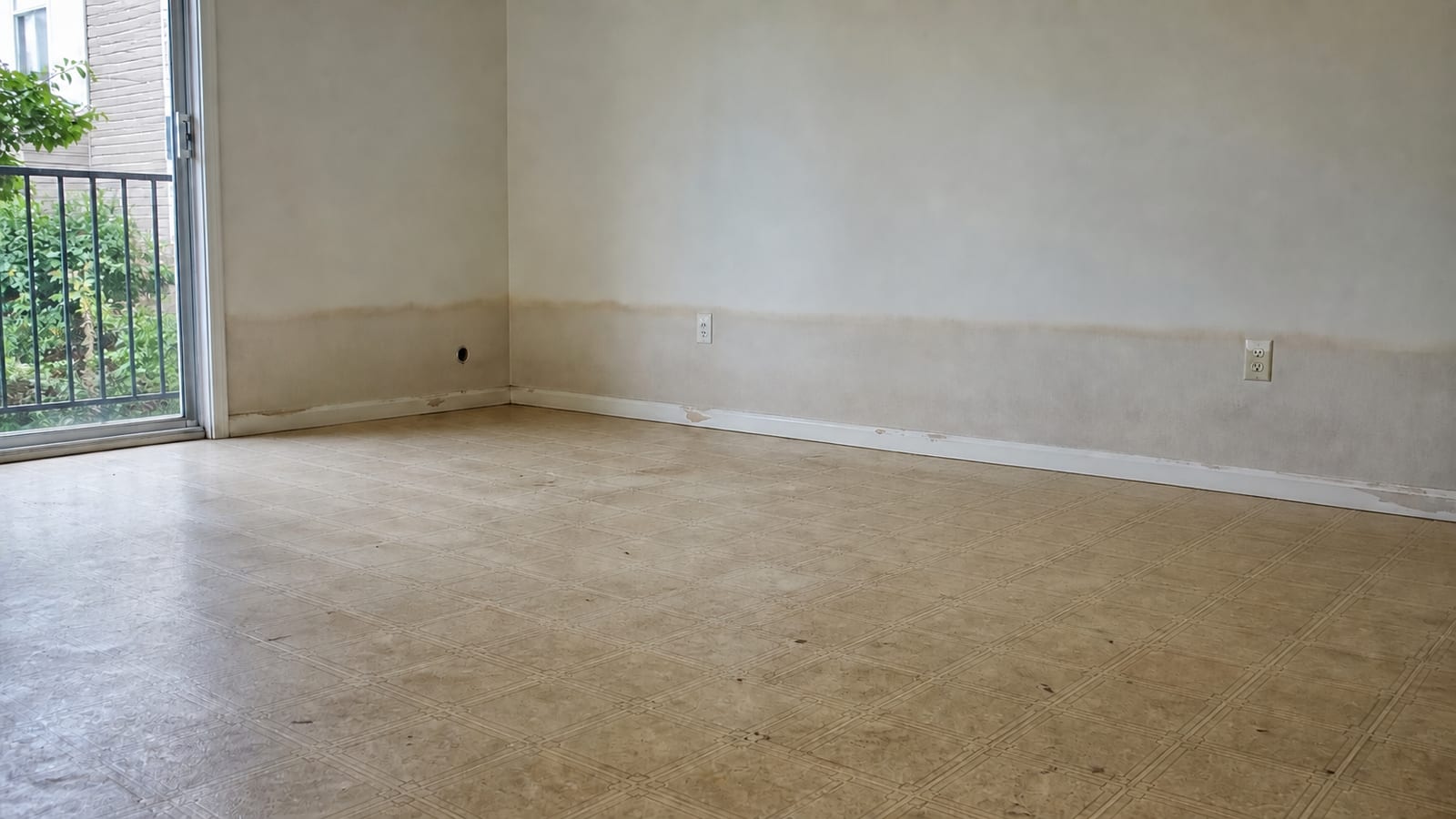
A laboratory report tells you what was on a swab or in a volume of air at one moment. A building inspection tells you something a report structurally cannot: where the water has been, which components it touched, how far the affected area extends, and who owns the part of the building it came from. One produces a number. The other produces a map. For most East Windsor property owners trying to decide what to do next, the map is the document that makes the decision.
That is not a marketing preference. NIOSH built its Dampness and Mold Assessment Tool around visual and olfactory observation, mold odor, water damage or staining, visible growth, and wetness or dampness, recorded across the components of each room. The agency treats thorough visual inspection and musty odor detection as more reliable indicators of dampness and mold related damage than routine air sampling. The EPA reduces the whole subject to one sentence worth memorizing: mold cannot grow without water or moisture. An inspection is the process of finding that water.
Key Takeaways
An inspection maps the building, not the air
It records where moisture is, which components are affected, and what the water history has been, none of which a single sample provides.
Observation is the recognized method
NIOSH structures dampness assessment around odor, staining, visible growth, and dampness, scored across room components rather than around laboratory results.
Moisture is the whole subject
The EPA states that mold cannot grow without water, so an inspection that does not explain the water has not finished its work.
Tools extend the eye, carefully
Moisture meters and borescopes can help locate concealed problems, and the EPA cautions that disturbing materials can release spores.
Access is a real boundary
In attached and managed East Windsor housing, the suspected source may sit in space the inspection has no authority to enter.
No visit produces a safe or unsafe label
No federal mold standard exists, and no inspection can speak to an individual's health; those are limits worth knowing up front.
What the Walk Actually Records
An inspection worth paying for is systematic rather than impressionistic. The NIOSH approach organizes observations by the parts of a room: ceilings, walls, windows, floors, furnishings, ventilation systems, pipes, and stored supplies or materials. Each component gets checked for the same four things, and the pattern across components is what turns scattered observations into a source.
That structure matters in East Windsor specifically because the housing here is not one thing. Census Reporter estimates 12,422 housing units in the township, with roughly 54 percent in single unit structures. The remainder includes attached and multifamily buildings where the ceiling in question is somebody else's floor. Assuming every case is a basement condition, or every case is a roof condition, produces the wrong walk. Checking components in order produces the right one regardless of building type.
Hover or tap a row to highlight it.
| Component | What is looked for | What it can indicate |
|---|---|---|
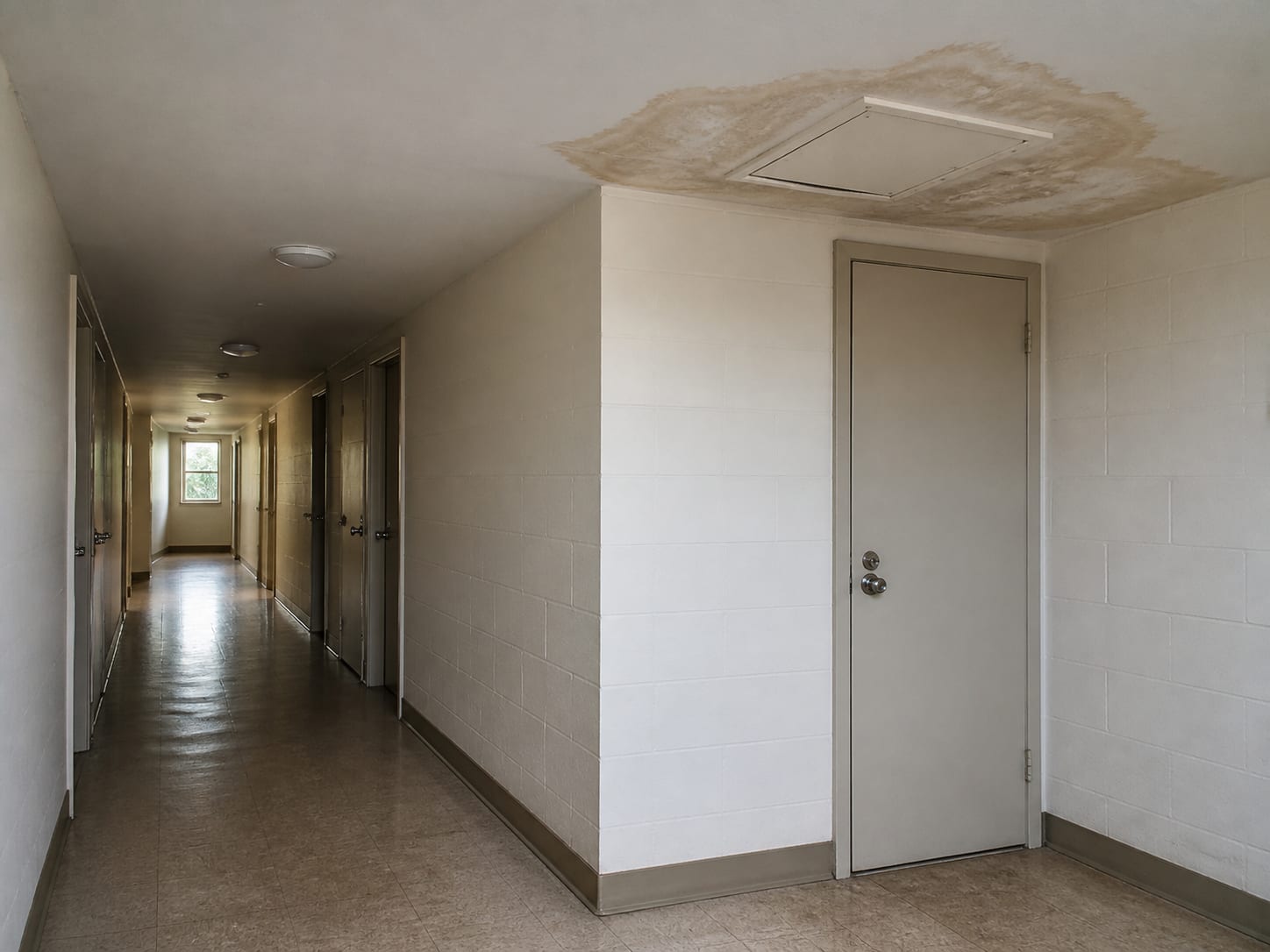
| Ceilings | Staining, sagging, rings, discoloration around fixtures and penetrations | Water arriving from above, whether a roof, a plumbing run, or an upper unit |
| Walls | Staining, bubbling, soft or cool areas, growth at baseboards and corners | Water tracking down inside the assembly, or moisture wicking up from below |
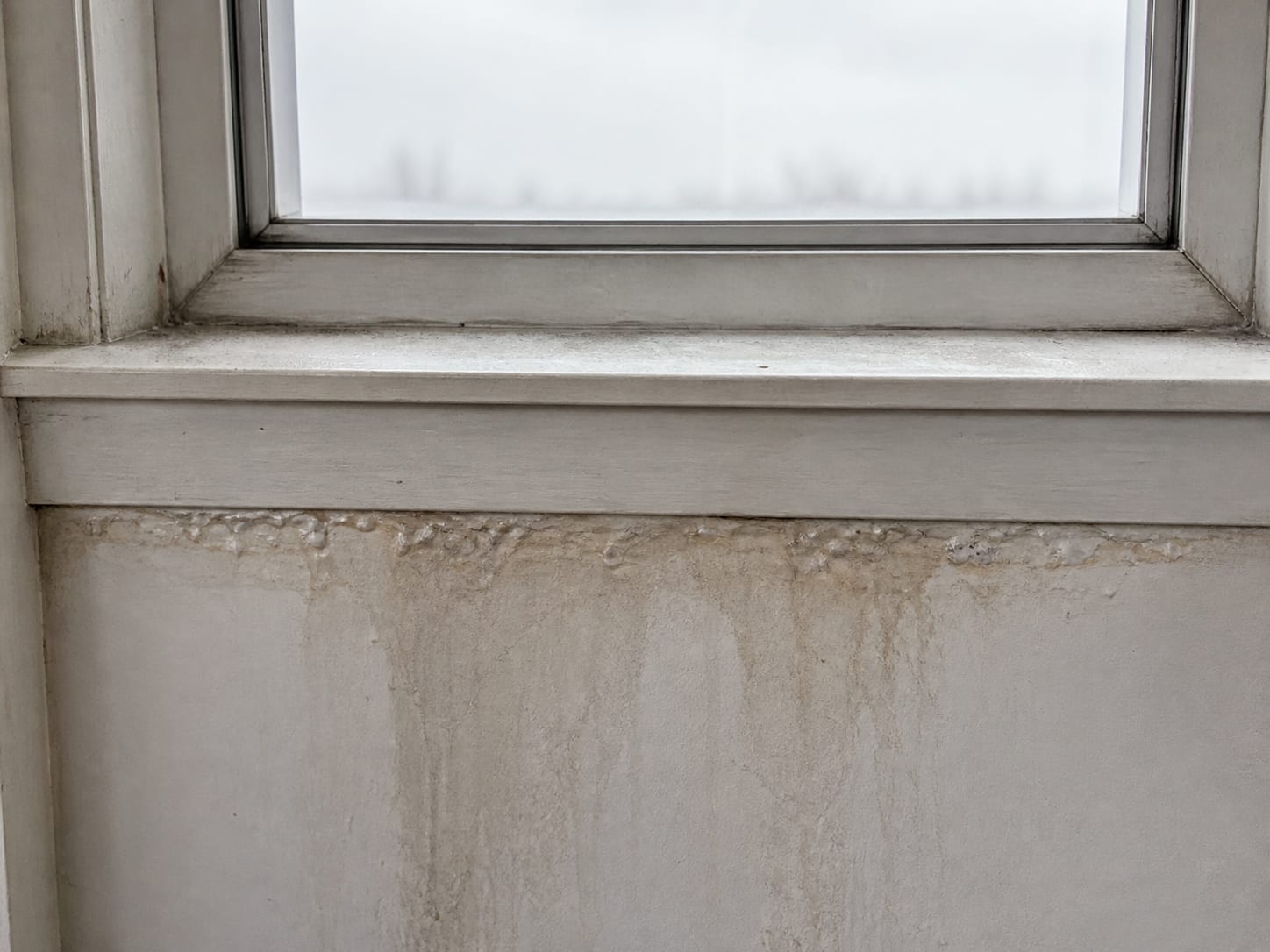
| Windows and frames | Staining below the stool, damaged finish, condensation history | Envelope intrusion or persistent condensation at a cold surface |
| Floors and subfloor | Cupping, dampness, staining, separation at seams | Water that pooled or traveled at floor level, often larger than what is visible |
| Ventilation and mechanical | Condensate paths, ductwork, equipment pans, air handling spaces | Moisture generated and distributed by the building's own systems |
| Pipes and plumbing | Active drips, sweating lines, staining along runs | An ongoing source that will defeat any cleanup until it is corrected |
| Stored materials | Dampness in cardboard, paper, fabric, and porous goods | Elevated moisture conditions in the space, sometimes before the structure shows it |
The four observations, odor, staining or water damage, visible growth, and dampness, are recorded rather than interpreted on the spot. One damp ceiling tile is a data point. A damp ceiling tile above a wet pipe chase, under an upstairs bathroom, with a musty odor that strengthens near a closet, is a source hypothesis.
Where the Map Stops
An honest inspection report is as clear about what it could not see as about what it could, and this is where a lot of reports quietly fail. Three limits are real and permanent: concealment, authority, and interpretation.
The first is concealment. The EPA notes that hidden mold may be suspected when a building smells moldy but no source is visible, or after known water damage, and that specialized equipment such as moisture meters and borescopes may help locate hidden problem areas. The same guidance cautions that hidden investigations require care, because disturbing material such as wallpaper can release spores into the air. So the tools extend what an inspection can reach, and they do not make every cavity visible without opening something.
The second limit is authority. Census QuickFacts reports 61.1 percent owner occupancy in East Windsor for the 2020 to 2024 period, so a large share of the township lives in housing where somebody else controls part of the building. Twin Rivers, documented by the township as a Planned Unit Development, is a concrete local example of that arrangement. If the evidence points into a shared wall, a common plumbing run, a roof, a corridor, or a neighboring unit, the inspection can say so and can document why, but it cannot walk through a door it has no right to open. That is not a shortcoming of the method. It is a fact about the building, and naming it in the report is what lets the right party act.
The third limit is interpretation. There are no EPA or other federal limits for mold or mold spores, so no inspection and no sample can declare a property compliant. An inspector can record visible growth, odor, dampness, staining, and water paths. Those observations cannot establish what any occupant's symptoms are caused by. Health questions belong with a clinician, and a building report that presents itself as a medical conclusion is overreaching. New Jersey's Department of Health provides mold information to residents and lists private firms while stating that it does not endorse or qualify them, which is another reason to read credentials carefully rather than assume them.
Why the Map Usually Comes Before Any Sampling
Because observation is the stronger tool for locating dampness, it is also the cheaper starting point. The EPA says that in most cases where mold growth is visible, sampling is unnecessary, since the response is to remove the growth and correct the moisture either way. Paying a laboratory to confirm what is already on the wall does not move a project forward.
How an Assessment Progresses
- 1
Establish the water history
Known leaks, past flooding, repairs, appliance failures, and condensation complaints are collected before anything is looked at, because they shape where to look.
- 2
Walk the components in order
Ceilings, walls, windows, floors, mechanical systems, pipes, and stored materials are each checked for odor, staining, visible growth, and dampness.
- 3
Measure rather than guess
Moisture meters and thermal imaging are used to compare readings across surfaces, separating a stain that has dried from an area still actively wet.
- 4
Trace toward the source
Findings are connected into a probable water path, which may lead within the space, into an assembly, or beyond the owner's boundary.
- 5
Define what remains unresolved
Anything the walk could not settle is written down as an open question, which is the only sound basis for deciding whether sampling would help.
- 6
Hand off to the correct next step
Source repair, cleanup, further investigation, or municipal review each get named separately rather than bundled into one service.
Sampling enters the picture only where the walk leaves a genuine question standing. That is the boundary between this work and what a laboratory does, and it is covered in more detail in the companion piece on when a mold sample earns its cost in East Windsor. A related distinction is worth keeping straight as well: indoor air quality testing is its own service with its own interpretation limits, not a synonym for a building assessment.
When the Findings Reach the Township
An inspection is an observation record, not a code determination, and a good report says so. East Windsor Township, in Mercer County, operates its own Construction Department, which receives applications and performs plan review and inspections for building, electric, fire, mechanical, and plumbing work. Its Code Enforcement Department serves as the local Uniform Construction Code agency and also carries fire prevention, zoning, and commercial maintenance functions. The township's commercial and industrial maintenance code sets minimum exterior maintenance standards and creates inspection procedures for covered commercial and industrial premises.
None of that makes a residential mold inspection a township enforcement action. It matters at one specific moment: when findings lead to opening or replacing regulated components, that repair runs through East Windsor's process. Two neighboring names cause repeated confusion here. Hightstown is a separate borough that East Windsor surrounds, and West Windsor is a different township with its own offices. A repair scoped against the wrong municipality's process stalls at exactly the point when the owner wants it moving.
The local water context also belongs in the report rather than in a template paragraph. East Windsor is inland. The moisture that shows up here comes from roofs, windows, plumbing, condensation, drainage, foundations, and inland flooding, not from shore or storm surge conditions. The township administers a flood damage prevention ordinance, and the New Jersey Department of Health local profile reports a 2021 indicator of 3.2 percent of the township's urban land use area flooded. That justifies asking about water entry and drainage at a specific property. It does not establish that any given building is flood prone, and no honest inspection infers a condition from a zip code.
What a Good Report Leaves You Holding
The output of a thorough mold inspection should be usable by someone who was not there. That means locations, affected components and materials, the observations recorded at each, the water history, the access limitations encountered, a stated source hypothesis, the date, and a clear separation between what was observed and what is inferred.
For an owner, that record scopes the repair. For a tenant, it is the document that makes a maintenance conversation concrete instead of anecdotal. For a manager or association, it identifies whose system is implicated. For a contractor, it defines the work. And for the township, if regulated repair follows, it explains why. What it does not do is promise an insurance outcome, a property value, a legal result, or the discovery of every hidden condition in the building. A report that claims those things is claiming more than the method supports.
Frequently Asked Questions About Mold Inspection in East Windsor, NJ
What is the difference between a mold inspection and a mold test?
An inspection assesses the building: components, moisture, staining, odor, water history, and access. A test analyzes a sample of air or material for what is present in it. NIOSH treats visual inspection and musty odor detection as more reliable than routine air sampling for identifying dampness and mold related damage, which is why the assessment normally comes first and testing follows only where a defined question remains.
Do I need an inspection if I can already see the mold?
Often yes, but not to confirm the growth. You need it to find the water. The EPA states that mold cannot grow without moisture, so the useful question is where that moisture is coming from and how far it has traveled. Visible growth on a wall says nothing about whether the assembly behind it is wet or how large the affected area actually is.
Can an inspection find mold inside a wall?
It can find evidence that points there. Moisture meters and thermal comparison identify areas reading wet, and the EPA notes that borescopes may help locate hidden problem areas. Confirming what is inside a cavity generally means opening it, and the EPA cautions that disturbing materials can release spores, so that step is planned rather than improvised.
Will an inspection tell me whether my home is safe?
No, and no assessment can. There are no federal limits for mold or mold spores, so there is no threshold to declare a property above or below. An inspection documents building conditions and moisture sources. Questions about a person's health belong with a clinician rather than with a building report.
I rent in East Windsor. Is an inspection still useful?
Frequently it is the most useful thing available to you. With 61.1 percent owner occupancy in the township, many residents can document a condition but cannot repair it. A written record of components, observations, and water history gives a landlord, association, or manager something specific to act on, and it establishes when the condition was identified.
What if the source turns out to be in another unit?
The report should say that plainly and explain the evidence for it. Inspecting only the space where the staining appears can confirm the effect without reaching the cause, and access to a common area or an adjacent unit requires permission from whoever controls it. Documenting the boundary is what moves the matter to the party who can actually resolve it.
Does East Windsor require a permit for a mold inspection?
An assessment visit is not listed among the township's permitted construction activities. Permits become relevant when the response includes regulated work such as alterations, plumbing, HVAC, electrical, roofing, or structural member repair, handled by the East Windsor Construction Department. Hightstown and West Windsor are separate municipalities and do not administer East Windsor's processes.
Final Thoughts
The strongest reason to start with an inspection is not that it is cheaper than testing, although it often is. It is that a map answers the questions you actually have. Where is the water coming from. How far has it gone. Which materials are involved. Whose part of the building is the source in. What has to happen first. A laboratory result, however precise, does not touch any of those.
The second reason is honesty about limits. A good assessment tells you where it could not go and what it could not settle, and those gaps are useful information rather than a failure. An inspection that reports only what it found, with no account of what it could not reach, is describing a smaller building than the one you own.
When you want an East Windsor property mapped rather than merely sampled, ExecPro Restoration & Cleaning can walk the components, measure the moisture, trace the water history, and give you a record that names both the findings and the boundaries. Call (888) 300-3772 or get in touch through our contact page to get the assessment done before any decisions are made on guesswork.
Mold Inspection Terms
Tap a term to see what it means.
Dampness assessment. A structured record of odor, staining, visible growth, and wetness across the components of each room, the approach NIOSH built its assessment tool around.
Serving East Windsor
ExecPro Restoration & Cleaning provides mold remediation services in East Windsor, NJ, from inspection and testing through removal, drying, and post-remediation verification. Call (888) 300-3772 for 24/7 emergency response.
Related Articles
Paying for Mold Testing in East Windsor, NJ: When a Sample Earns Its Cost
A sample is worth paying for when it settles a question the building itself cannot. When growth is already visible, it usually is not. East Windsor, NJ.
Commercial Mold Remediation in East Windsor, NJ: Occupancy Decides the Plan
Commercial mold remediation in East Windsor, NJ: how the work is staged around people who cannot be sent home, what the lease decides, and what it costs.
The First Hours After Water Is Found in East Windsor, NJ: Extraction in Order
Standing water starts a clock in an East Windsor, NJ building. Power and safety come first, then the source, then removal, then proof it is actually dry.