
The First Hours After Water Is Found in East Windsor, NJ: Extraction in Order
Cal HewittPublished
- emergency water extraction
- water damage
- east windsor
- new jersey
- mercer county
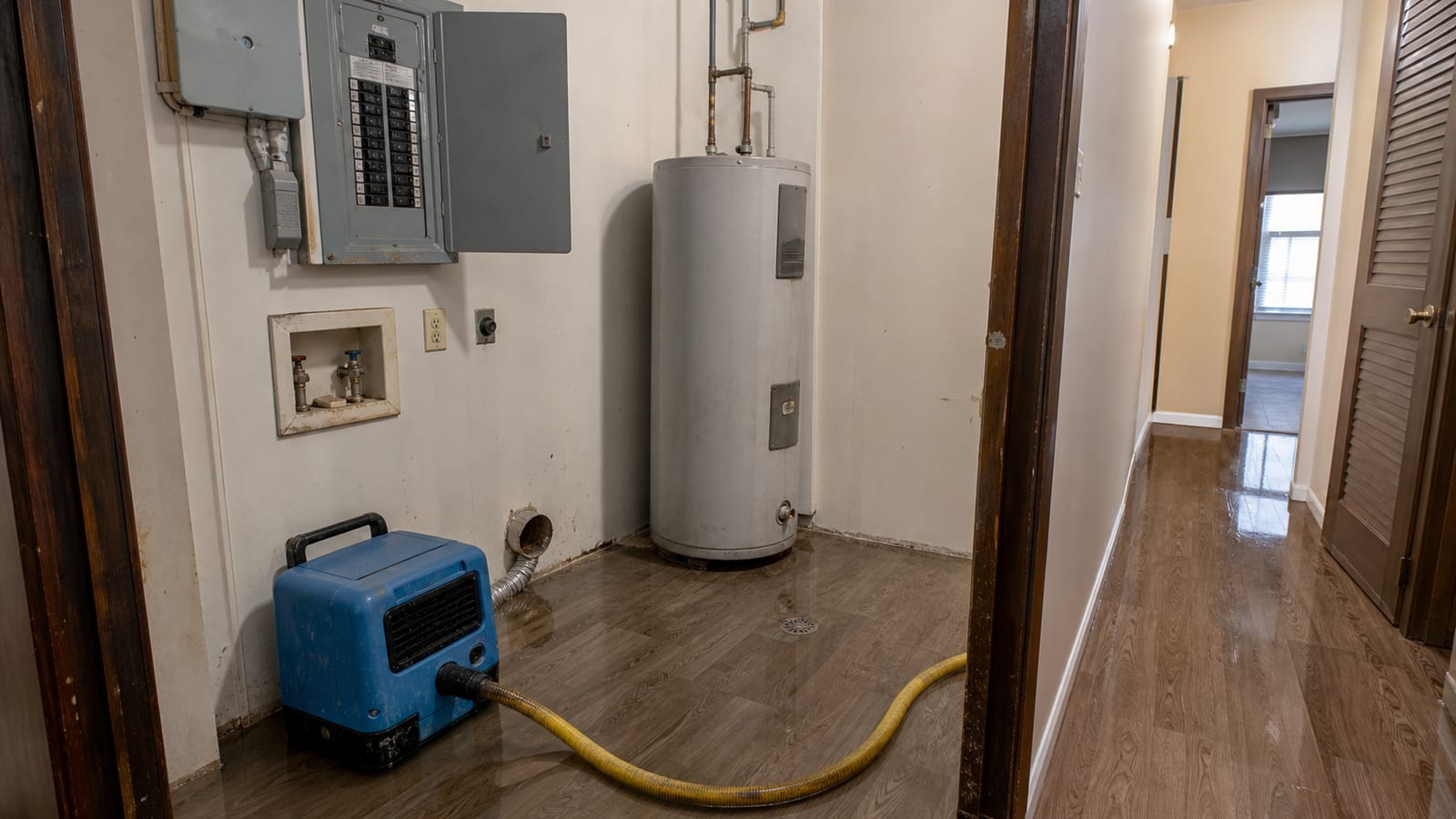
You open a door, or come down a set of stairs, and there is water where water does not belong. It might be an inch across a finished lower level, a spreading edge under a laundry alcove, or a ceiling that has started to hold weight. Whatever the volume, the next few hours have an order to them, and getting the order wrong is what turns a contained loss into an expensive one. The instinct is to start moving water immediately. That is almost right, and it is the second step, not the first.
East Windsor Township sits inland in Mercer County, and the water that shows up in local buildings arrives through ordinary paths: supply lines and appliances, roof and window intrusion, drainage and runoff, condensation, sewer backups, and inland flooding. The township's own stormwater page identifies polluted runoff as a significant contributor to poor water quality and flooding, and East Windsor administers a flood damage prevention ordinance adopted in 2023. None of that predicts what happened in your building. It does mean the source has to be established rather than assumed, because the source changes almost every decision that follows.
Key Takeaways
Safety comes before the shop vacuum
New Jersey's Office of Emergency Management warns that electric current passes easily through water, so power and electrical conditions are assessed before anyone wades in.
The source decides the response
A clean supply line failure, a roof leak, a sewer backup, and floodwater are not interchangeable, and they call for different handling and different disposal.
Drying has a window
The CDC advises cleaning, drying, or removing wet items within 24 to 48 hours to help prevent mold growth, which is why speed matters.
Extraction is not proof of dryness
Removing standing water reduces the load, but materials, cavities, and framing can stay wet long after the floor looks clear.
Access can control the timeline
In attached or managed housing, the source may sit in a shared pipe, a roof, or a neighboring unit that someone else has to open.
Repairs may re-enter the township process
East Windsor's Construction Department handles permits and inspections when recovery reaches regulated building work.
Before Anything Gets Pumped
The first decision is whether the space is safe to enter, and the deciding factor is usually electricity. NJOEM warns that electric current passes easily through water and advises staying away from downed power lines and electrical wires. Indoors, the same physics applies to energized outlets, extension cords, submerged appliances, and panels in a wet lower level. Water that looks clear and shallow is not automatically safe, and neither is water that has been sitting for a while.
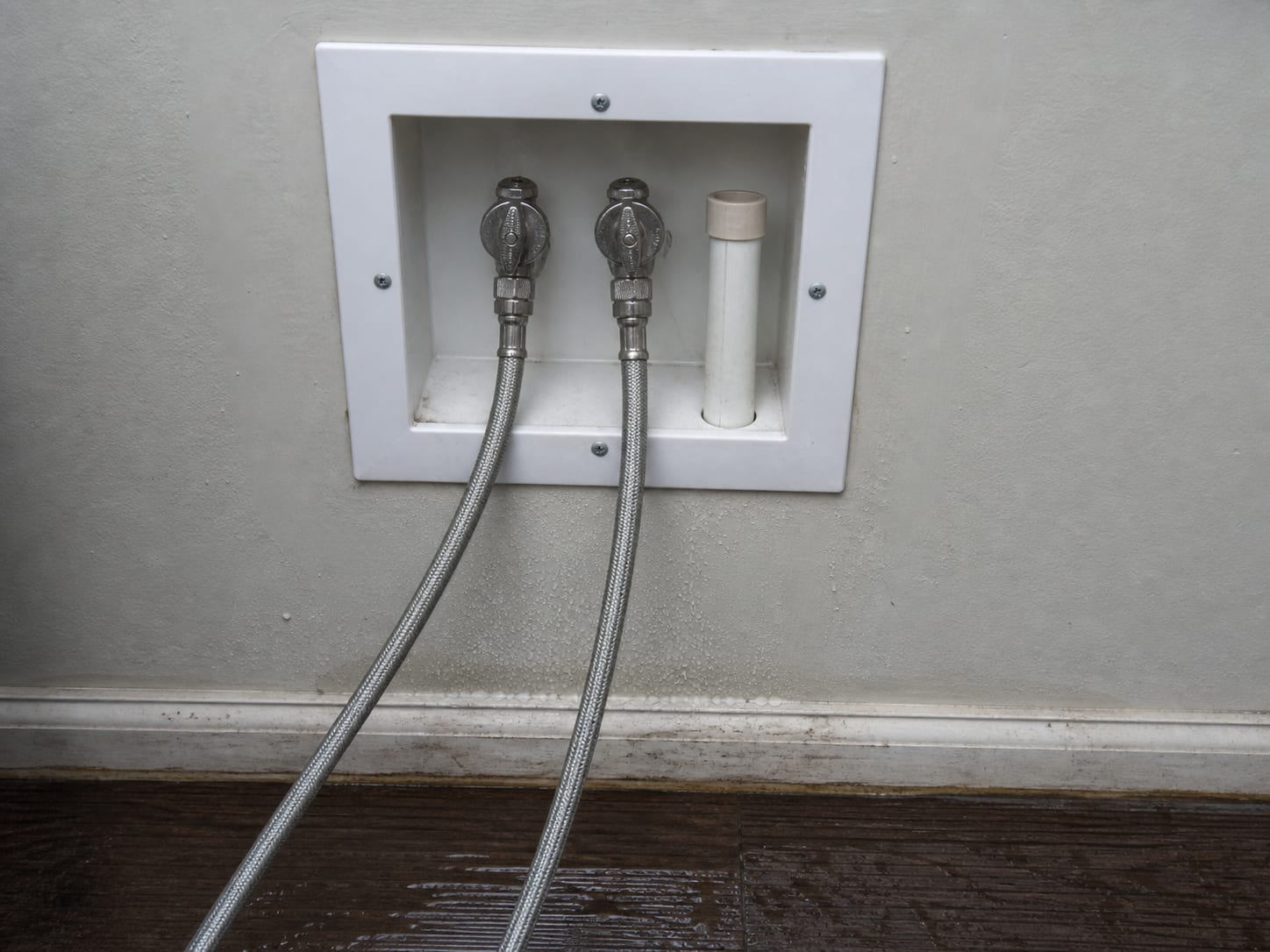
If power can be shut off safely from a dry location, that is the move. If reaching the panel means standing in water, it is not. That is a call for the utility or for emergency services, not for a homeowner with a flashlight. East Windsor's Building Subcode Official responds to emergency and fire calls at the request of local fire companies and police on a 24 hour basis, which is a municipal emergency function worth knowing about. It is not a substitute for calling 911 when there is an immediate hazard, and it is not a promise that any private company will arrive at a particular hour.
The same pause applies to what the water might carry. The EPA notes that floodwater can contain bacteria, chemicals, and other hazards. A sewer backup carries its own set of concerns. Neither is a job for household gloves and a bucket. Deciding what you are standing in comes before deciding how to remove it.
Finding the Source Before Removing the Symptom
Once entry is safe, the next task is stopping the water rather than chasing it. A supply line that is still open will refill a room faster than any equipment empties it. Shutting a fixture valve, a laundry supply, a water heater, or the main is usually the highest value action available in the first fifteen minutes, and it is worth knowing where those valves are before an emergency rather than during one.
Some sources cannot be shut off from inside the affected room. Roof and envelope intrusion continues until the weather stops. Drainage and runoff conditions run their course. In East Windsor's attached and multifamily housing, and the township has 12,422 housing units with roughly 54 percent in single unit structures, the source may sit in an upstairs unit, a common plumbing run, a shared roof, or a mechanical space. Census QuickFacts puts owner occupancy at 61.1 percent for 2020 to 2024, so a large share of the people who first find the water do not hold the authority to open the wall it came from. Twin Rivers, which the township documents as a Planned Unit Development, is one clear example of that arrangement locally.
When the source belongs to someone else, the immediate work splits in two. You stabilize what you can reach, and you notify whoever controls the rest, in writing, with the time it was found. That record matters later.
The First Hours, In Order
- 1
Assess safety and power
Determine whether the space can be entered, keep away from energized equipment and submerged cords, and shut off power only if it can be done from a dry position.
- 2
Stop or isolate the source
Close the fixture, appliance, or main valve where possible; where the source is a roof, a shared line, or an adjacent unit, notify the party who controls it immediately.
- 3
Document the starting condition
Photograph the water line, affected rooms, materials, and contents before anything is moved, and note the time the water was discovered.
- 4
Remove standing water
Extraction equipment pulls free water from floors, carpet, and pad, which is the step that stops the loss from spreading further into materials.
- 5
Open, remove, and separate wet materials
Wet contents are moved out, and saturated porous materials are evaluated for removal rather than assumed salvageable.
- 6
Dry and verify
Air movement and dehumidification bring materials back to a dry standard, confirmed by moisture readings rather than by appearance.
- 7
Repair the source and rebuild
Source repair and any regulated reconstruction are handled as separate work, with township review where the scope requires it.
What the Water Is Changes What Happens to It
Restoration work sorts water by what is in it, and that sorting drives everything from personal protection to whether carpet pad can stay. A clean supply line break, a roof leak that has traveled through insulation and drywall, a sanitary backup, and floodwater from outside the building are four different conditions. The EPA treats floodwater as potentially carrying bacteria, chemicals, and other hazards, and its disaster guidance is to remove standing water and wet materials after a flood rather than attempt to dry them in place.
Hover or tap a row to highlight it.
| Water source | Main immediate concern | What it usually changes |
|---|---|---|
| Supply line or appliance failure | Volume and how long it ran before discovery | Often the most salvageable category, but saturated pad and cavities still need removal or drying |
| Roof, window, or envelope intrusion | Water traveling inside assemblies away from the visible stain | The wet area is frequently larger than what is seen, so materials get opened to find the edge |
| Sewer or drain backup | Contamination and disposal requirements | Porous materials in the affected area generally come out rather than being cleaned in place |
| Inland flooding or runoff entry | EPA notes floodwater may carry bacteria, chemicals, and other hazards | Handling, protection, and disposal change, and the township flood ordinance can apply to the repair |
| Source in another unit or common system | Access and authority to stop the water | Timeline depends on the owner, manager, or association who controls the source |
This is also where honesty about timing belongs. There is no universal number of hours in which a building can be emptied of water, and there is no responsible way to advertise one, because volume, access, safety conditions, equipment, and the source all vary. What can be stated is the drying window that the guidance actually supports. The CDC advises cleaning, drying, or removing wet items within 24 to 48 hours to help reduce the chance of mold growth. That window is the reason urgency is real. It is not a guarantee that acting fast prevents every problem.
Extraction Is the Beginning of Drying, Not the End of It
The most common misunderstanding after a water loss is that a dry looking floor means a dry building. It does not. Extraction removes free standing water, and the EPA's own water damage response guidance identifies extraction vacuum use as one measure among several, with prompt drying as the goal. Water that has already moved into carpet pad, subfloor, drywall, insulation, cabinet bases, and framing is still there when the surface reads dry to the touch.
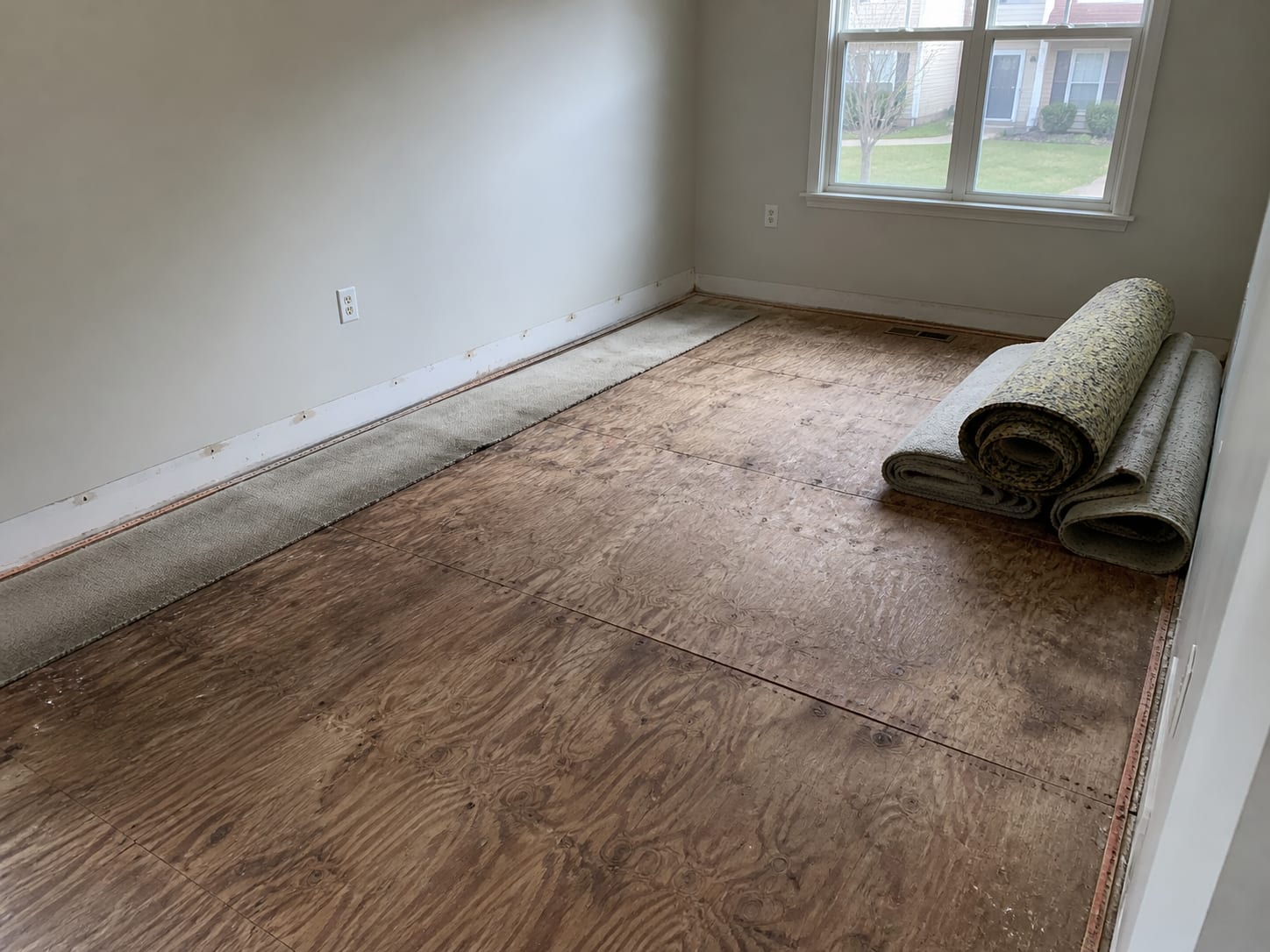
That is why structural drying with monitored equipment follows extraction as its own phase, with readings that show whether materials are actually returning to a dry standard. It is also why a water loss should never be closed out on the strength of appearance. Skipping verification is how a building gets rebuilt over wet framing, and it is the most expensive mistake available in the entire sequence.
Our emergency water extraction work is scoped as stabilization: making the space safe, stopping what can be stopped, pulling the free water, and documenting the condition. Where the source turns out to be actual floodwater, the handling shifts and flood damage cleanup takes over, because contamination and disposal requirements are different.
Where East Windsor Comes Back Into It
Pumping water out of a room is not a construction project, and the township does not treat it as one. Rebuilding after the loss can be a different matter. East Windsor's Construction Department receives applications, reviews plans, and schedules inspections for building, electrical, fire, mechanical, and plumbing work, and township resident guidance lists permits for alterations, plumbing rearrangement, HVAC work, electrical replacement, roofing, and structural member repair. If your recovery includes replacing a water heater, rerouting plumbing, or repairing framing, that is the office involved. Permit charges there are the sum of the applicable subcode fees rather than one flat water loss fee.
Two local details are worth stating plainly, because they cause real confusion. East Windsor Township surrounds the separate borough of Hightstown, and West Windsor is a different township with its own offices. Applying the wrong municipality's process to your repair costs time you do not have after a loss.
Insurance deserves the same care. New Jersey's Department of Banking and Insurance notes that homeowners policies exclude water damage caused by flood, which is why "water damage" is not a coverage answer by itself. What helps is a factual record: the source, the time of discovery, photographs before anything moved, the affected rooms and materials, the safety conditions, the mitigation performed, and the invoices. Good records make a claim conversation clearer. They do not decide it, and no restoration company can promise an outcome from an insurer.
Frequently Asked Questions About Emergency Water Extraction in East Windsor, NJ
What should I do in the first ten minutes after finding standing water?
Judge whether the space is safe before entering. NJOEM warns that electricity passes easily through water, so stay clear of energized outlets, cords, and equipment, and shut power off only if the panel can be reached from a dry position. If it cannot, treat it as an emergency services call. Once entry is safe, stop the source if a valve is reachable, then photograph the condition before moving anything.
How fast does water have to be removed?
There is no single required number, and any company advertising a guaranteed arrival window is promising something it cannot control. What guidance does support is the drying window: the CDC advises cleaning, drying, or removing wet items within 24 to 48 hours to help prevent mold. That window is why the work is treated as urgent.
Can I just use a shop vacuum and fans myself?
For a small, clean water spill on a hard surface that you caught immediately, sometimes. It becomes a poor idea when the water is contaminated, when it has reached carpet pad or wall cavities, when the volume is significant, or when electrical conditions are uncertain. The EPA notes that floodwater may contain bacteria, chemicals, and other hazards, and sewer backups carry their own concerns.
The water came from the unit above mine. What can I actually do?
You can stabilize your own space, document everything with timestamps, and notify the owner, landlord, association, or manager in writing right away. You generally cannot enter or repair the source. With 61.1 percent owner occupancy in East Windsor, a considerable number of local residents face this exact split between the person affected and the person who controls the fix.
Do I need a permit from East Windsor for water removal?
Emergency water removal is not listed among the township's permitted construction activities. Permits become relevant when the recovery includes regulated work such as alterations, plumbing, HVAC, electrical, roofing, or structural member repairs, all handled by the East Windsor Construction Department. Hightstown and West Windsor are separate municipalities with their own processes.
Will my homeowners policy cover this?
That depends on the cause and the policy language. New Jersey's Department of Banking and Insurance notes that homeowners policies exclude water damage caused by flood, so a flood event and a burst supply line are not treated the same way. Document the source and the condition thoroughly and let the insurer make the determination on the facts.
How do I know the building is actually dry?
By measurement, not by appearance or by smell. Moisture readings taken on the affected materials over the course of drying are what show whether framing, subfloor, and wall assemblies have returned to a dry standard. A floor that feels dry underfoot tells you almost nothing about the pad, the cavity, or the sill plate beneath it.
Final Thoughts
The first hours after water is found are not really about equipment. They are about sequence. Safety, then source, then documentation, then removal, then drying, then repair. Every one of those steps protects the one after it, and the ones people skip most often are the first and the last: checking the electrical conditions before wading in, and verifying that materials are dry before closing anything up.
East Windsor's mix of detached homes, attached housing, and planned communities means the source is not always inside the room you are standing in, and the person who finds the water is not always the person who can stop it. That is worth planning for now, while nothing is wet: know where your shut off valves are, know who to call if the source is shared, and know that a photograph taken in the first five minutes is worth more later than any recollection.
When water shows up in an East Windsor property and you need it handled in the right order, ExecPro Restoration & Cleaning can stabilize the space, remove the standing water, and document the condition from the beginning. Call (888) 300-3772 or send us the details through our contact page so the next steps can be scoped against what the building is actually doing.
Water Emergency Terms
Tap a term to see what it means.
Extraction. Mechanical removal of free standing water from floors, carpet, and pad, which reduces the water load but does not by itself dry the structure.
Serving East Windsor
ExecPro Restoration & Cleaning provides mold remediation services in East Windsor, NJ, from inspection and testing through removal, drying, and post-remediation verification. Call (888) 300-3772 for 24/7 emergency response.
Related Articles
Emergency Water Extraction in Bridgewater, NJ: Getting Standing Water Out Safely
Keep clear of wet outlets and standing water until the power question is settled. What safe entry looks like, how extraction goes and what backup coverage adds.
Emergency Water Extraction in Robbinsville, NJ: The First Hour and the 72-Hour Permit Window
Within the first hour of standing water, shut off power from a dry spot and call. See how emergency water extraction in Robbinsville, NJ works, permits too.
Emergency Water Extraction in Trenton, NJ: Rowhouses, Shared Walls and the Unit Below
In a rowhouse or a two-to-four-unit building, water can cross a shared wall or floor. What to do about power, gas and the unit below in the first hour.