Emergency Water Extraction in Trenton, NJ: Rowhouses, Shared Walls and the Unit Below
Cal HewittPublished Updated
- emergency water extraction
- water damage
- structural drying
- trenton nj
- new jersey
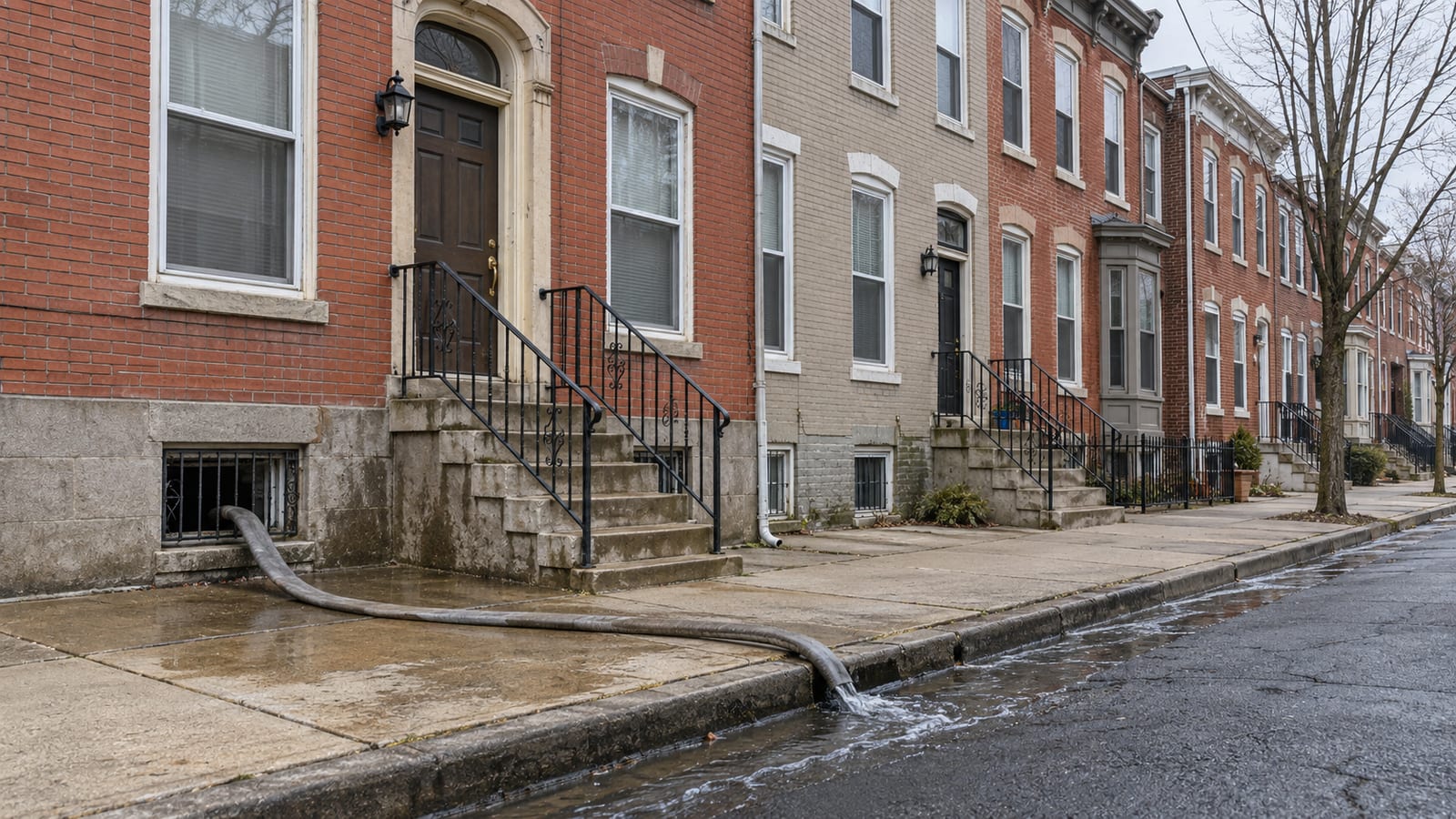
Standing water in a basement or kitchen is a hazard before it is a cleanup, so do not step into it until you know what it is touching. A wet outlet, a running appliance, a gas line or a sagging ceiling can turn a soaked basement or kitchen into a hazard in a hurry, and in an attached rowhouse or a small apartment building the water may already be moving toward the unit next door or the one below. You may be an owner, a tenant, a landlord or a property manager, and you probably have a few minutes to decide about the power, about who to call and about what to leave alone. Emergency water extraction in Trenton, NJ starts with those decisions, made in a safe order, and then moves to pumping, drying and paperwork. Most of the first hour needs no equipment at all, only a dry place to stand and a phone for photographs.
Key Takeaways
Stay out until the hazards are known
Do not wade into standing water if outlets, electrical equipment, gas appliances, structural damage or contaminated water may be involved.
Power comes off from a dry spot only
Never stand in water to reach a panel and never touch wet electrical equipment; a generator runs outdoors, at least 20 feet from the building.
Water crosses shared walls
In rowhouses and two-to-four-unit buildings, a leak in one home can reach the unit beside or below, so notify the landlord or property manager and the insurer, and document both sides of the wall.
Extraction is the first step of several
Pumping out the water is followed by moisture mapping, drying, and often separate mold work and reconstruction, each with its own scope.
Standing Water Right Now: Power, Gas and the Unit Next Door
Stay out of standing water if electrical equipment, outlets, gas appliances, structural damage or contaminated water may be involved. If you cannot rule those out from the doorway, you have your answer. EPA advises not touching electrical equipment if it is wet or if you are standing in water, so if the panel is in a flooded basement, do not walk in to reach it. Shut power off only from a dry location, and if that is not possible, call the utility or an electrician and stay out. If you are running a portable generator to power pumps or lights, keep it outdoors and at least 20 feet from the building, as the EPA flood cleanup guidance advises. If you smell gas or suspect a gas appliance is in the water, leave and call the utility.
Then deal with the source. Stop the water if that is safe: close the appropriate valve, call the plumber or utility, or deal with the failed appliance or sump pump. Keep children, pets and medically vulnerable people away from the area. Water that came in from outside, from a storm or a backup, may carry sewage, bacteria or chemicals, so if you have to go near it, wear gloves, sturdy footwear, eye protection and respiratory protection suited to the conditions. EPA's guidance on returning to a flooded home covers the precautions in more detail.
Before you move or discard anything, take photos and video of the water, the source and the damage, when it is safe to do so. Then make two calls: one to your insurer, and one to the landlord or property manager if you rent or manage the building. If you are the landlord or manager, tell the tenants who share walls, ceilings or floors with the affected space. Finally, arrange assessment and extraction quickly, before the water travels farther into walls, floors, subfloors, insulation and belongings. Our 24-hour water damage response exists for this moment; call us if the water is spreading and you are not sure where to start.
First Hour Checklist
Stay out until you know
Do not step into water if outlets, electrical equipment, gas appliances, structural damage or contaminated water may be involved.
Power off from a dry spot
If the panel is in a flooded basement, do not walk in to reach it. Call the utility or an electrician and stay out.
Generators stay outside
Run a portable generator outdoors, at least 20 feet from the building.
Gas means leave
If you smell gas or suspect a gas appliance is in the water, leave and call the utility.
Stop the source
Close the appropriate valve, call the plumber or utility, or deal with the failed appliance or sump pump, only if that is safe.
Photograph, then call
Take photos and video when it is safe, then call your insurer and the landlord or property manager.
What Happens on the First Day, and How Long Does Drying Take?
Once the space is safe, the work follows a working order. The team first decides what kind of water it is: clean supply water, gray water, or contaminated flood or sewage water. That call sets the protective equipment, the cleaning and the choices about what can stay. Next comes moisture mapping, which is measuring how wet the walls, floors and ceilings are past the visible edges, using moisture meters and, when appropriate, thermal imaging. Water often travels well beyond the stain, so touch and appearance are poor guides.
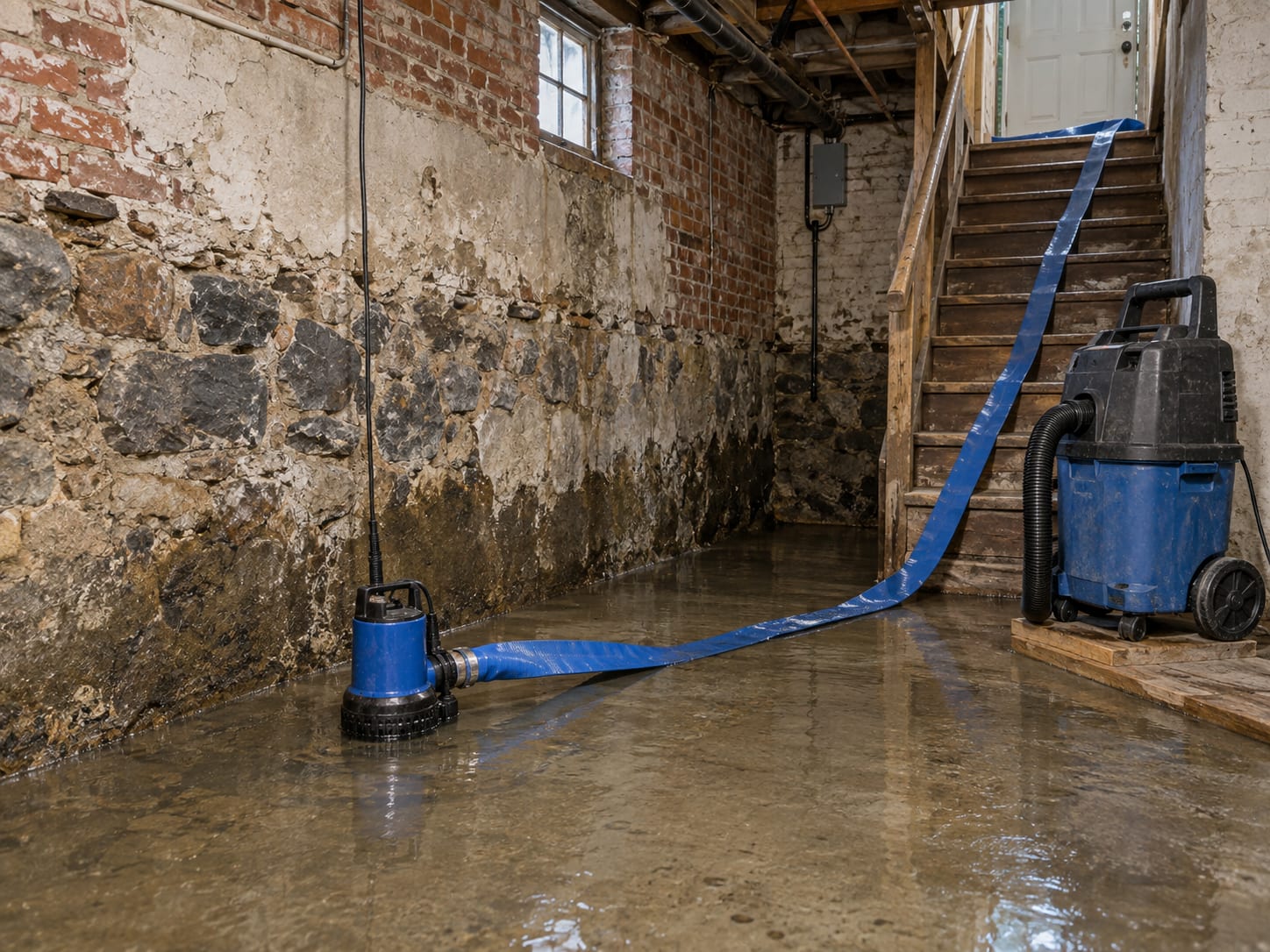
Then comes extraction itself. Standing water is removed with pumps, truck-mounted extractors, portable extractors or specialty equipment, depending on how much water there is and how the building can be reached. The crew decides which carpet, padding, drywall, insulation, wood, plaster, cabinets and contents can be dried and which must be removed. After the site is safe, air movers and dehumidifiers go in, and the work zone is separated from the unaffected rooms. We start a written record on the first day, covering equipment, moisture readings, photographs, removed materials and conversations, because that record is what your insurer, your landlord or a future buyer may ask for.
Over the next two to five days, we monitor moisture levels with readings and continue dehumidification and airflow until the affected materials meet the project's drying targets. Where the water category calls for it, cleaning and disinfection follow, and HVAC components are inspected if floodwater or mold may have reached them. EPA guidance emphasizes drying wet materials within 24 to 48 hours when possible, and says materials wet 48 hours or more that cannot be thoroughly cleaned and dried may need to be discarded.
From the First Day Through the Drying Days
- 1
Decide the water type
Clean supply water, gray water, or contaminated flood or sewage water. That call sets the protective equipment and what can stay.
- 2
Map the moisture
Moisture meters and, when appropriate, thermal imaging show how wet the walls, floors and ceilings are past the visible edges.
- 3
Extract the standing water
Pumps, truck-mounted extractors, portable extractors or specialty equipment, depending on how much water there is.
- 4
Decide what stays
The crew decides which carpet, padding, drywall, insulation, wood, plaster, cabinets and contents can be dried and which must be removed.
- 5
Dry and separate
Air movers and dehumidifiers go in, and the work zone is separated from the unaffected rooms.
- 6
Monitor for two to five days
Readings, dehumidification and airflow continue until the affected materials meet the project's drying targets.
As a practice figure, and not a promise, ExecPro Restoration & Cleaning describes structural drying as typically taking about three to five days and carpet drying as about three to seven days, depending on how saturated the materials are and on conditions in the building. Your building may take longer, especially if walls, insulation, floors or HVAC parts have to come out. Ask for a site-specific timeline once the moisture mapping is done.
Hover or tap a row to highlight it.
| What | Time | Where it comes from |
|---|---|---|
| Drying wet materials when possible | 24 to 48 hours | EPA guidance |
| Materials wet 48 hours or more that cannot be thoroughly cleaned and dried | May need to be discarded | EPA guidance |
| Structural drying | About three to five days | ExecPro practice figure, not a promise |
| Carpet drying | About three to seven days | ExecPro practice figure, not a promise |
How Does Water Reach the Unit Next Door or Below?
In an older attached building, water follows the building, not the property line. The city's 2025 to 2029 Consolidated Plan describes multifamily housing in Trenton as mostly smaller two- to four-unit buildings rather than large complexes, with those smaller structures making up 20 percent of the multifamily inventory, and the city's zoning code recognizes existing rowhouse developments. In buildings like these, a burst pipe, a failed appliance or a roof leak in one unit can send water through shared walls, connected floor systems, basements and utility chases into the neighboring or lower unit.
Two practical things follow from that. First, moisture checks may be needed next door or downstairs even when nothing looks wet there, so ask the crew to check adjoining units, and tell your neighbors, landlord or property manager so they can allow access. Second, narrow lots and attached buildings limit where hoses can run, where equipment can be placed and how debris comes out, so plan for access early. If the only way to a basement is through a shared hallway or a neighbor's unit, that needs to be arranged in the first day and not the third.
Older materials also dry differently. Plaster, lath, wood flooring and masonry respond to water differently from newer drywall assemblies, and a technician will often check concealed cavities in them before deciding what to open.
Who pays when water crosses into someone else's home is a question with no single answer. It depends on the lease, on where the water came from and on each household's policy. What you can do right away is give notice to the landlord or property manager and to your insurer, and document the damage on both sides of the wall with dated photographs. If you are the owner of a two-to-four-unit building, keep those records for every unit affected.
What Sets the Price of Emergency Water Extraction?
The price of extraction depends on your building and your water, and it cannot be stated responsibly before someone has seen both. The main drivers are these:
- Water category: Clean supply-line water calls for different precautions than gray water, stormwater, groundwater or sewage.
- Affected area: One room costs less to assess, extract, dry and repair than a basement, a whole floor or several units.
- Absorption and spread: Water in carpet, padding, wood flooring, subfloors, plaster, drywall, insulation, framing, cabinets and wall cavities adds labor and equipment.
- Time wet: Materials that stay wet longer are more likely to need removal and disposal.
- Equipment and duration: Pumps, extractors, air movers, dehumidifiers, containment and monitoring all add to the scope.
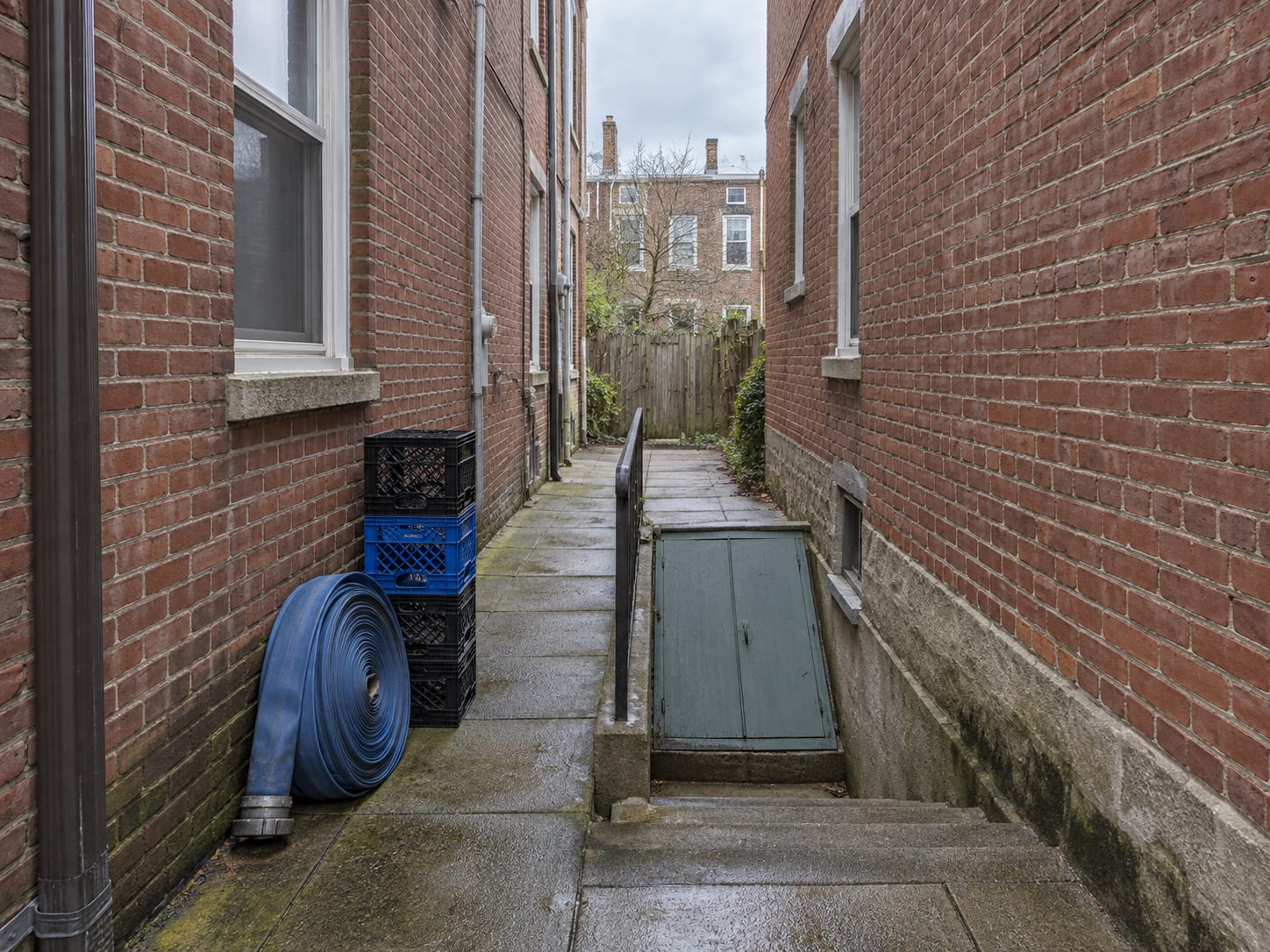
- Access: Attached buildings, narrow lots, upper-floor losses, occupied units and limited staging space add labor and setup time.
- Contents and contamination: Moving, cleaning, storing or disposing of belongings, and any sewage or chemical exposure, add scope.
- Reconstruction: Extraction and drying do not include the repairs. Flooring, drywall, plaster, trim, paint, cabinetry and electrical or plumbing work are usually separate.
Ask for a written, itemized scope that lists extraction, drying, monitoring, removal, cleaning, disposal and repairs separately. Documentation, such as photographs, moisture maps, drying logs, receipts and item inventories, supports a claim but does not guarantee coverage.
Which Repairs Need a Permit, and What Does Your Insurer Want to See?
Extraction and drying are one thing; rebuilding is another. New Jersey's Uniform Construction Code is administered under N.J.A.C. 5:23, which identifies some ordinary maintenance that can be done without a permit application. That exclusion leaves out work that affects structural or fire safety and changes to water supply, sewer, drainage, gas, waste or vent piping. The state also lists full construction permits and minor-work permits. Which one applies depends on the work: replacing plumbing, removing structural parts or replacing electrical equipment is not the same as pumping out a basement. EPA advises property owners to consult local building and floodplain officials before repairing a flooded property. Confirm your scope with Trenton's construction official, and if the building is a designated landmark or sits in a historic district, ask the Landmarks Commission before any exterior work.
For your insurer, keep wide and close photographs, videos, serial numbers of damaged appliances, samples of damaged materials, receipts, repair estimates, moisture readings, drying logs, equipment records and an item inventory. FEMA's flood insurance guidance on documenting damage says to contact the insurer promptly and to keep damaged-material samples and receipts. If you have a flood policy and a claim is denied, the NFIP claims checklist says you may appeal within 60 days after receiving the insurer's letter. That window comes from flood-policy rules and does not apply to every kind of homeowners claim, so read your own policy.
What to Keep for Your Insurer
Photographs and video
Wide and close shots of the water, the source and the damage.
Appliance details
Serial numbers of damaged appliances.
Material samples
Samples of damaged materials, kept as FEMA's guidance advises.
Receipts and estimates
Receipts and repair estimates.
Drying records
Moisture readings, drying logs and equipment records.
An item inventory
A list of the damaged belongings.
How Do You Keep the Water From Coming Back?
Extraction removes the water, and it does not fix what let it in. Before repairs start, find the source. Depending on the building, that can be a failed sump pump, a supply line, a leaking appliance, a floor drain, a basement window, a foundation wall or a roof. Heavy rain can enter through any of those openings, and freeze-thaw cycles can expose plumbing or foundation weaknesses. The New Jersey Department of Health advises finding and correcting the moisture source before any mold remediation, since mold needs water to grow and excess water is the usual cause of mold problems.
If odor or visible growth appears after drying, that is a separate scope, and our mold remediation work in Trenton covers it, including basement mold remediation when the water was below grade. When the structure is dry and the source is fixed, the drywall, flooring, trim and finish work belongs to our build-back services.
Frequently Asked Questions About Emergency Water Extraction Trenton NJ
What should I do first when there is water on my floor or in my basement?
Stay out of the water if electrical hazards, gas, structural damage, sewage or flood contamination may be present. If it is safe, stop the water source and the power serving the affected area from a dry location. Keep children and pets away, photograph the damage, call your insurer or landlord and arrange professional assessment and extraction promptly.
Is the water safe to touch?
Treat stormwater, groundwater, river or creek water, sewage backups and water that has crossed contaminated surfaces as potentially hazardous. Wear gloves, sturdy footwear, eye protection and suitable respiratory protection, and never touch wet electrical equipment or use electrical equipment while standing in water.
How much does it cost to remove water from a flooded basement in Trenton?
The price depends on the water category, the size of the basement, how deep and how far the water spread, how long it has been wet, the materials affected, access and the repairs afterward. Ask for a written scope that prices extraction, drying, removal, cleaning, disposal and repairs separately.
How long does cleanup after a flood take?
Bulk extraction starts during the first response, and drying usually continues for several days. Our practice figures are about three to five days for structural drying and three to seven days for carpet, and walls, insulation, floors or HVAC parts that have to come out add time.
Should I use fans or bleach?
Do not use fans if visible mold may be disturbed, and do not use a flood-affected HVAC system until it has been evaluated. Do not mix cleaning products or add bleach to other chemicals.
Who pays if water from my unit damages my neighbor's?
It depends on the lease, the source of the water and each policy. Notify the landlord or property manager and your insurer, and document the damage on both sides of the wall.
Water Extraction Quick Check
1. Where should a portable generator run?
2. From where should you shut off power?
3. Why might moisture checks be needed in the unit next door or below?
4. What does EPA guidance emphasize for drying wet materials?
5. Who should you notify if you rent or manage a building?
Pick an answer to begin.
Moving Forward
Emergency water extraction runs in a clear order. Stay out of standing water until the electrical, gas, structural and contamination hazards are known, cut the power only from a dry spot, stop the source, and photograph everything before you move it. Then get the water out, map the moisture past the visible edges and dry the structure while watching readings instead of trusting touch. In an attached building, tell the landlord or property manager, your insurer and your neighbors early, since water does not stop at a shared wall.
Acting in that order protects your health first, then your building, then your claim. It also keeps extraction, drying, mold work and reconstruction from blurring together, so you can compare estimates and know what each one includes.
If you have water in a Trenton rowhouse, apartment or small building, ExecPro Restoration & Cleaning can respond, extract the water, check the adjoining spaces and lay out the next steps in an itemized scope. Our water damage restoration team works from extraction through drying and reconstruction, and you can contact us or call (888) 300-3772 right now.
Water Extraction Terms
Tap a term to see what it means.
Moisture mapping. Measuring how wet the walls, floors and ceilings are past the visible edges, using moisture meters and, when appropriate, thermal imaging.
Serving Trenton
ExecPro Restoration & Cleaning provides mold remediation services in Trenton, NJ, from inspection and testing through removal, drying, and post-remediation verification. Call (888) 300-3772 for 24/7 emergency response.
Related Articles
Flood Damage Cleanup in Trenton, NJ: Backwater, Mud and Checking Your Parcel
After the river or the creek backs up into the street, cleanup starts with power, photos and what to throw out. Then check your parcel's flood status.
Emergency Water Extraction in Bridgewater, NJ: Getting Standing Water Out Safely
Keep clear of wet outlets and standing water until the power question is settled. What safe entry looks like, how extraction goes and what backup coverage adds.
Emergency Water Extraction in Robbinsville, NJ: The First Hour and the 72-Hour Permit Window
Within the first hour of standing water, shut off power from a dry spot and call. See how emergency water extraction in Robbinsville, NJ works, permits too.