Commercial Mold Remediation in East Windsor, NJ: Occupancy Decides the Plan
Cal HewittPublished
- commercial mold remediation
- property management
- east windsor
- new jersey
- mercer county
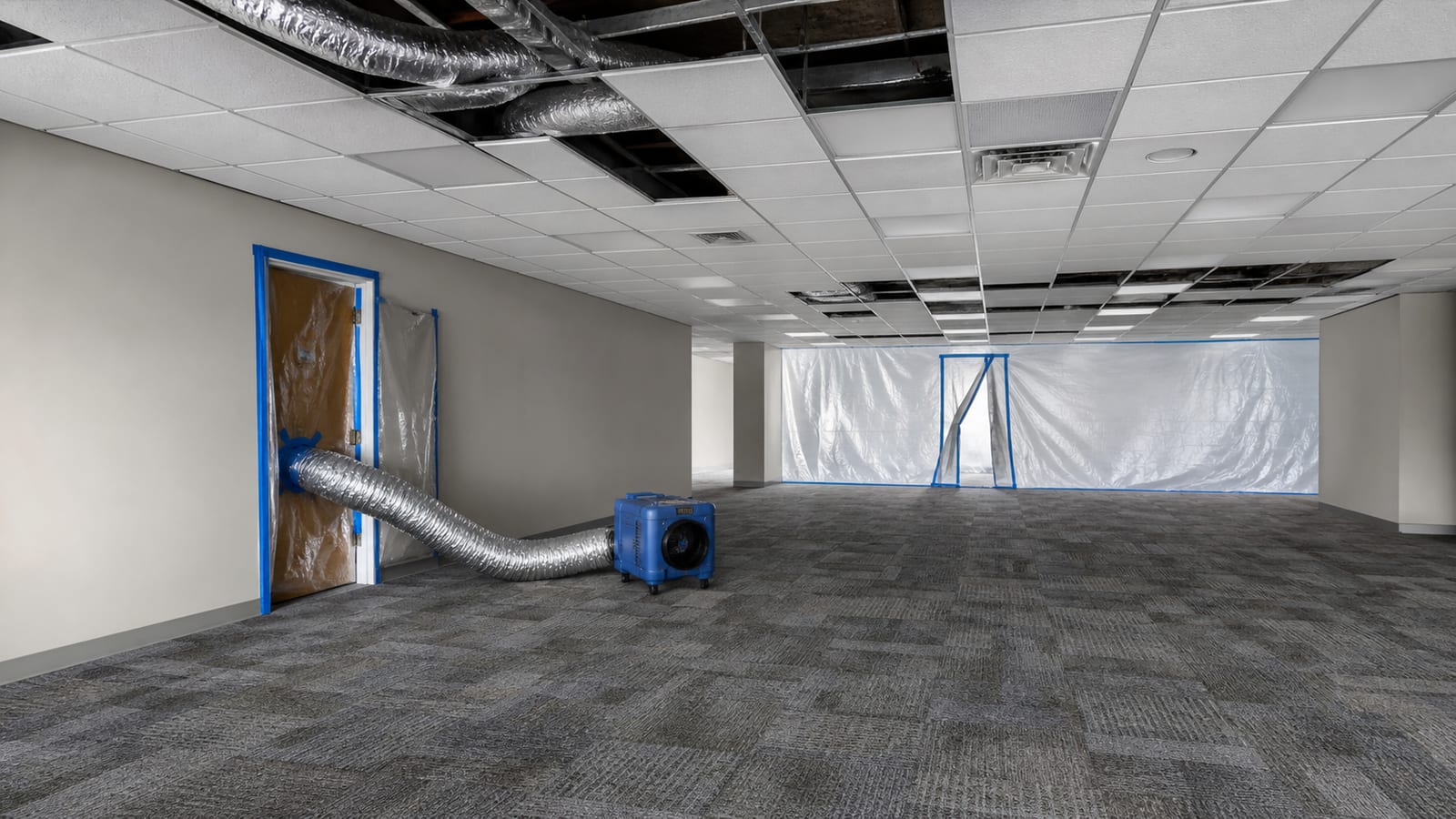
Before anyone measures an affected area in a commercial building, there is a more useful question on the table: who is still going to be in the building while the work happens. A back office can often be emptied for a few days. A retail floor with customers, a warehouse crew on a shift, a suite whose neighbors share a corridor, and a public facility with a schedule cannot simply pause. That answer shapes containment, sequencing, hours, and cost far more than the number of square feet on a floor plan does.
This is the difference people miss when they treat commercial remediation as residential remediation on a bigger scale. The physical work is not fundamentally different. The EPA is direct that moisture control is the key to mold control, and OSHA emphasizes that building maintenance and rapid repair of water damage help prevent contamination. What changes in a commercial building is everything around the work: occupants who stay, systems shared between tenants, a lease that assigns responsibility, and a municipality with commercial maintenance authority. East Windsor Township has all four.
Key Takeaways
Occupancy sets the plan
Whether people remain in the building during the work determines containment, sequencing, and hours long before the affected area is measured.
Containment protects occupants, not just crews
The EPA describes containment as limiting mold release into surrounding air and minimizing exposure for both remediators and building occupants.
The source is often a shared system
Roofs, facades, common plumbing, and HVAC condensate paths sit outside a single tenant's control, which changes who has to authorize the fix.
Responsibility is written down somewhere
East Windsor's commercial and industrial maintenance code distinguishes owner, operator, and occupant duties, and the lease usually adds its own division.
Public workplaces have an extra framework
New Jersey's PEOSH program enforces the state Indoor Air Quality Standard for public employers, which does not automatically extend to every private business.
Cleanup and reconstruction are separate projects
Regulated repair runs through the East Windsor Construction Department, where permit charges are the sum of the applicable subcode fees.
Occupancy Before Square Footage
Start by sorting the building into spaces that can be closed and spaces that cannot. A stockroom, a vacant suite, and a mechanical space are usually straightforward. A sales floor, a shared corridor, a reception area, an entrance that everyone uses, and any space with a fixed operating schedule are the constraints the plan has to bend around.
That sorting determines whether work happens in phases, after hours, behind hard barriers, or all three. It also determines how the building's air handling is treated during the work, because a system serving both the affected area and an occupied area is a pathway. The EPA's guidance for schools and commercial buildings frames containment precisely this way: it exists to limit the release of mold into surrounding air and to minimize exposure of both the people doing the work and the people in the building. Containment is not a formality for large jobs. It is what makes staying open defensible.
None of this is a promise that a business can remain fully open through any remediation. Some conditions and some layouts do not allow it. The point is that the decision is made from documented facts about the source, the affected spaces, the air handling, and the occupancy, rather than from a default assumption in either direction.
Who Actually Gets to Say Yes
In a single family home, the owner authorizes the work. In a commercial building, the authority is usually split, and identifying the split early prevents a plan that cannot be executed. East Windsor's commercial and industrial maintenance code itself recognizes separate owner, operator, and occupant responsibilities and creates inspection procedures for covered commercial and industrial premises. Leases add another layer on top of that, and the two do not always describe the same boundary.
Hover or tap a row to highlight it.
| Suspected source | Typically controlled by | What it means for the plan |
|---|---|---|
| Fixture, appliance, or finish inside a leased suite | The tenant, subject to the lease | The fastest path, since access and authorization sit with the occupant of the space |
| Roof or exterior facade | The building owner | A tenant only cleanup will fail while the intrusion continues, so the owner has to be engaged first |
| Common plumbing or a riser serving multiple units | The owner or the property manager | Access to another suite or a chase may be required, which puts scheduling outside the affected tenant's hands |
| HVAC equipment, ductwork, or a condensate path | Usually the owner or operator, depending on the system | The system may distribute moisture or spores, so it is assessed before work rather than after |
| Common corridors, entries, or shared storage | The owner, operator, or association | Work in shared space affects every occupant, which raises the containment and notice requirements |
| Site drainage or runoff at the building perimeter | The owner | Correction is an exterior repair, and East Windsor's flood ordinance may apply in flood hazard circumstances |
The practical failure mode is a tenant who arranges a careful cleanup of their own suite while the water keeps arriving through a roof or a common line. The opposite failure is real too: parties avoid documenting a condition at all because responsibility is unclear, and the record everyone needs later never gets created. Neither is necessary. Documenting the source, the affected spaces, and the ownership boundary is possible before anyone agrees on who pays.
The Source Is Usually a Building System
East Windsor is inland in Mercer County, and commercial moisture here follows building paths rather than coastal ones. Roof and envelope intrusion, plumbing failures, HVAC related condensation, internal maintenance failures, drainage and runoff, and inland flooding are the realistic categories. The township's stormwater page identifies polluted runoff as a contributor to flooding, and East Windsor administers a flood damage prevention ordinance. Those are administrative facts about the municipality, not a prediction about any particular business address.
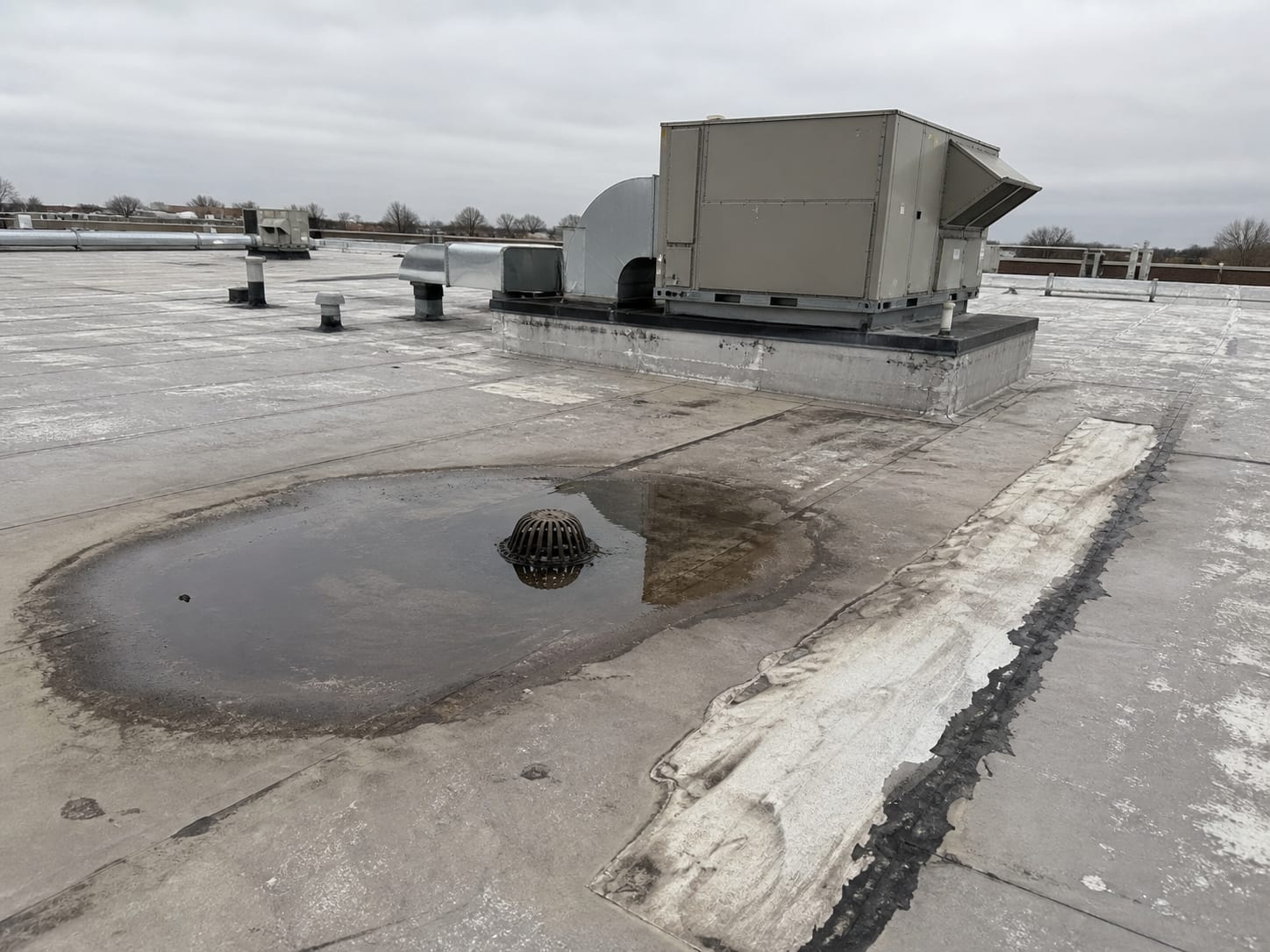
The township's own planning record shows why a commercial page here cannot assume one building type. East Windsor's master plan documents identify neighborhood commercial land use along the Route 130 corridor and office research and office commercial land uses in the township, and the Route 33 corridor revitalization study describes commercial retail context. Retail, office, industrial, and mixed use sites have different envelopes, different mechanical systems, and different occupancy patterns. A remediation approach built for one of them and applied to the others will misjudge both the containment and the schedule.
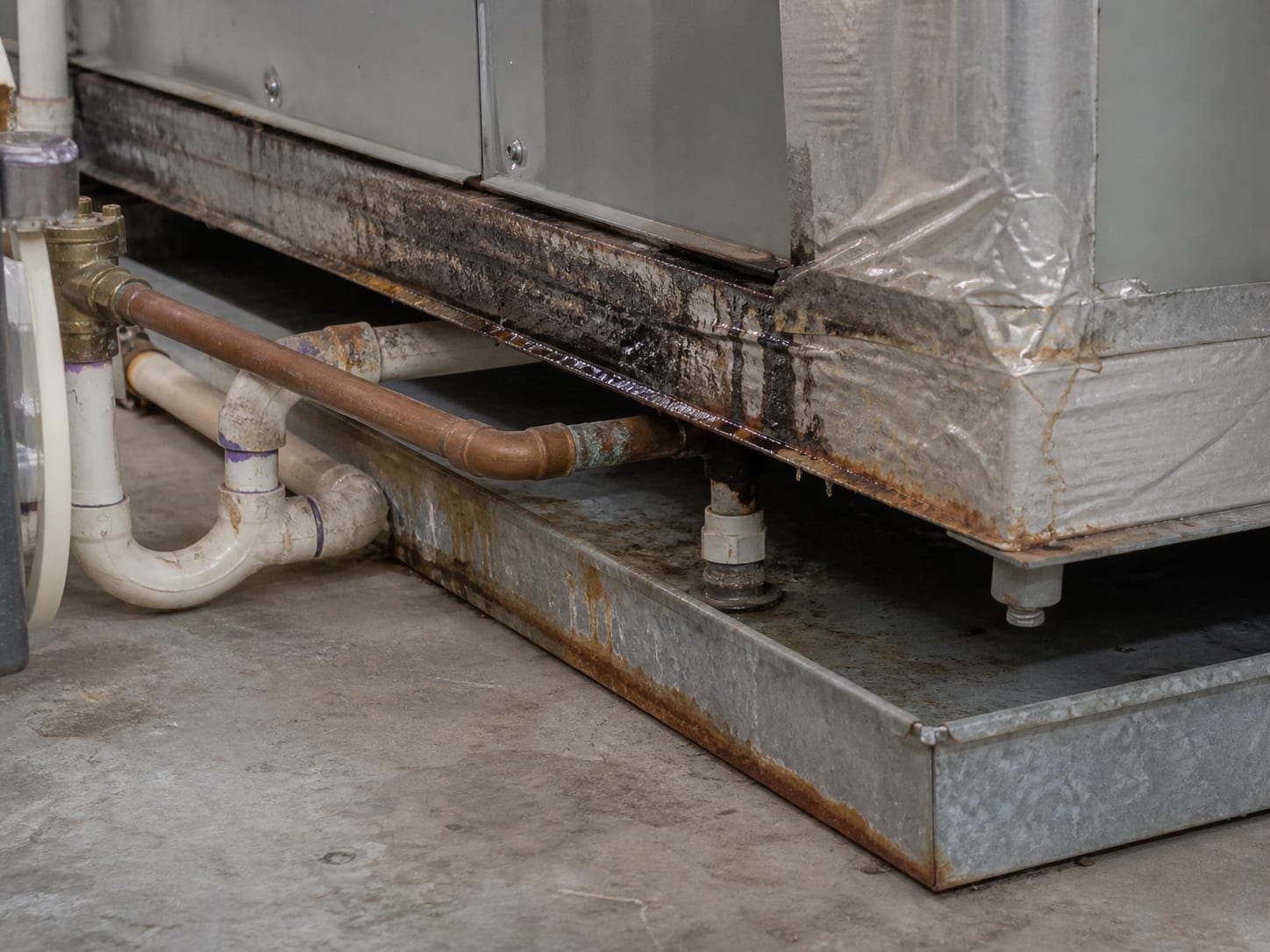
Mechanical systems deserve particular attention because they are both a common source and a distribution path. A condensate pan that has been overflowing, a duct run passing through a wet area, or an air handler serving several tenants can move a local problem around a building. Checking the system is part of the assessment, not an add on discovered midway through the work.
What the Local and State Frameworks Actually Require
Two different frameworks come up in commercial conversations, and they get blurred together often enough to be worth separating.
The municipal one is East Windsor's. The township's Construction Department processes permit applications and conducts plan review and inspections for building, electrical, fire, mechanical, and plumbing work, and its Code Enforcement Department serves as the local Uniform Construction Code agency while also covering fire prevention, zoning, and commercial maintenance. The commercial and industrial maintenance code establishes minimum exterior maintenance standards and authorizes premises inspection. None of that makes ordinary cleanup a permitted activity by itself. It becomes relevant when the repair reaches regulated building systems, and at that point permit charges are the sum of the applicable subcode fees rather than one flat remediation figure. Two neighboring names to keep straight: Hightstown is a separate borough that East Windsor surrounds, and West Windsor is a different township. A contractor citing "Windsor" requirements has not told you which municipality they mean.
Check Your Understanding of Commercial Remediation
1. According to the EPA, what is the purpose of containment during remediation?
2. Who does New Jersey's PEOSH Indoor Air Quality Standard cover?
3. What does OSHA identify as a way to prevent mold contamination in buildings?
4. Why can a tenant only cleanup fail in a multi tenant building?
5. How are East Windsor permit charges calculated for regulated repair work?
Pick an answer to begin.
The state one applies to a narrower group. New Jersey's PEOSH program enforces the state Indoor Air Quality Standard for public employers and offers a consultation service, and its indoor air quality material includes mold remediation guidance for workplaces. Its checklist reinforces the same practical point the rest of the guidance makes: dry, replace, remove, or clean wet materials within 48 hours, and eliminate the intrusion. That framework governs public workplaces. Private commercial operations may be subject to different occupational rules, and it would be wrong to present PEOSH as a universal requirement for every business in the township.
Insurance and lease responsibility sit outside both frameworks and depend entirely on policy and contract language. Records help the conversation: the moisture source, the incident timeline, photographs, affected locations and materials, the containment and cleanup scope, occupant communications, work logs, and any subsequent permits or repairs. Good records make coordination clearer. They do not promise coverage, approval, or a particular legal outcome, and no contractor should suggest otherwise.
What a Commercial Estimate Should Separate
No credible East Windsor specific price range for commercial remediation exists in public sources, and a flat number quoted before the site is documented is a guess with a decimal point. What a proposal should do is break the work into parts that can each be scoped and questioned.
Those parts are the assessment, the source repair, the remediation itself, contents and equipment handling, and any reconstruction. Layered on top are the scope drivers: building size and use, the number of affected rooms or suites, whether HVAC or common areas are implicated, containment and access requirements, coordination around operating hours, the water category, documentation requirements, and the security or inventory considerations that a commercial site carries and a house does not. A commercial mold inspection is what turns those variables from assumptions into documented facts, and the same component by component method used in any thorough East Windsor building assessment applies here at a larger scale.
Our commercial mold remediation work is structured around that separation on purpose, so a building owner or manager can see which line items belong to stabilization, which belong to source correction, and which belong to rebuilding that may require township review.
Frequently Asked Questions About Commercial Mold Remediation in East Windsor, NJ
Does my business have to close during remediation?
Not automatically, and not always avoidably either. It depends on the source, which spaces are affected, how the air handling is arranged, and which areas are occupied. The EPA describes containment as the means of limiting mold release into surrounding air and protecting occupants, which is what makes partial operation possible in many cases. The decision comes from the documented conditions rather than from a default.
The problem is in my leased suite but the water is coming from the roof. Who handles it?
The cleanup and the source repair usually fall to different parties. East Windsor's commercial and industrial maintenance code recognizes separate owner, operator, and occupant responsibilities, and your lease will add its own allocation. Practically, remediation inside the suite will not hold while roof intrusion continues, so the owner has to be brought in before the work is scheduled rather than after.
Does PEOSH apply to my business?
New Jersey's PEOSH program enforces the state Indoor Air Quality Standard for public employers. If you operate a public workplace, its indoor air quality guidance, including its mold remediation material, is directly relevant. Private employers may be subject to different occupational requirements, so it is worth confirming which framework covers your operation rather than assuming PEOSH does.
Do I need a permit from East Windsor for commercial mold remediation?
Cleanup alone is not established as a permitted construction activity. Permits become relevant when the work includes regulated building, electrical, fire, mechanical, or plumbing repair, which runs through the East Windsor Construction Department with plan review and inspections. Fees there are the sum of the applicable subcode charges. Confirm the actual scope with the township rather than relying on a general statement.
How is this different from residential remediation?
The physical principles are the same, and the EPA's position that moisture control is the key to mold control does not change with building type. What differs is the surrounding structure: multiple decision makers, shared mechanical systems, occupants who remain on site, lease and management boundaries, operating hours, inventory and security, and a municipal commercial maintenance framework that has no residential equivalent.
Can a test prove the building is safe for employees afterward?
No test can do that. No federal limits for mold or mold spores exist, so there is no numerical standard to clear. Post work assessment can confirm whether a defined cleanup objective was met, which is a legitimate and narrower question. Health questions about specific individuals belong with clinicians, not with a building report.
What records should we keep?
Keep the moisture source and how it was identified, the incident timeline, photographs before and during the work, the affected locations and materials, the containment and cleanup scope, communications with occupants and tenants, work logs, and any permits or repairs that followed. Those records serve owners, managers, insurers, and code officials, and they are far easier to assemble as you go than to reconstruct later.
Final Thoughts
The instinct on a commercial job is to start with the size of the affected area, because that is the number that looks like it should drive the estimate. It rarely does. The building's occupancy pattern, the location of the source relative to lease boundaries, and the air handling that ties spaces together are what determine whether work happens in phases, whether containment has to be substantial, whether another party has to open a door, and how long the whole thing takes.
Get those three things documented first and the rest of the project becomes legible to everyone involved: the owner, the manager, the tenants, the occupants, the insurer, and the township if regulated repair follows. Skip them and the most common outcome is a clean space that gets wet again, because nobody with authority over the source was ever brought into the plan.
When an East Windsor commercial property needs the work scoped around who stays in the building, ExecPro Restoration & Cleaning can document the source, define the containment, sequence the work around your hours, and keep the cleanup and the reconstruction as separate, reviewable pieces. Call (888) 300-3772 or reach our team through the contact page to get the assessment on the calendar.
Commercial Remediation Terms
Tap a term to see what it means.
Containment. Physical barriers and pressure control that limit the release of mold into surrounding air, described by the EPA as protecting both workers and building occupants.
Serving East Windsor
ExecPro Restoration & Cleaning provides mold remediation services in East Windsor, NJ, from inspection and testing through removal, drying, and post-remediation verification. Call (888) 300-3772 for 24/7 emergency response.
Related Articles
Paying for Mold Testing in East Windsor, NJ: When a Sample Earns Its Cost
A sample is worth paying for when it settles a question the building itself cannot. When growth is already visible, it usually is not. East Windsor, NJ.
Mold Inspection in East Windsor, NJ: Mapping Moisture a Sample Cannot Find
A walk through the building locates stains, odor and dampness that no laboratory result explains. It also stops at doors it cannot open. East Windsor, NJ.
The First Hours After Water Is Found in East Windsor, NJ: Extraction in Order
Standing water starts a clock in an East Windsor, NJ building. Power and safety come first, then the source, then removal, then proof it is actually dry.