A Map of the Water: Mold Inspection in Alpine, NJ
Cal HewittPublished
- mold inspection
- moisture assessment
- septic
- alpine nj
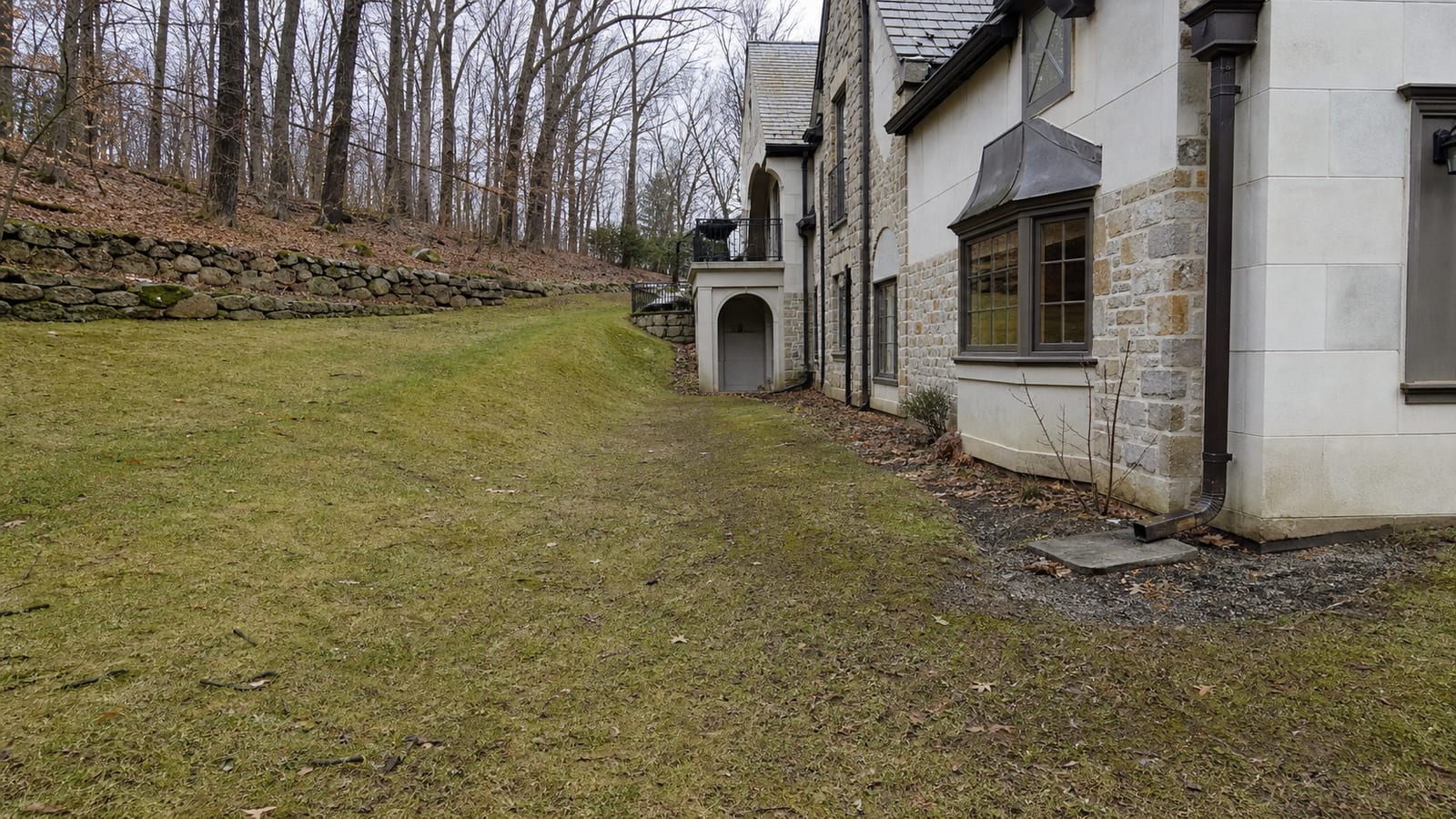
What a mold inspection gives you is a map: where water is getting into a building, where it goes once it is inside, what it has already reached, and which of those things somebody can actually see today. On a large detached Alpine property, that map has more possible routes on it than the same exercise in a compact house on public sewer, and the routes are the reason a careful inspection here takes longer than people expect.
The borough's own adopted plan sets out why. It describes moderate to steep slopes over 15 percent, shallow bedrock, high groundwater conditions, wetlands and protected streams, and says a select few properties have public sewer while the majority of Alpine households and businesses use private septic tanks. Every one of those is a candidate for the water in a wet wall, and an inspection that skips straight to a sample has skipped the part that decides what to fix.
Key Takeaways
The inspection is the map, the sample is one data point
A visual and moisture assessment establishes conditions and likely water paths; a laboratory result reports on what was sampled, where and when.
Most Alpine properties are on private septic
The borough's adopted plan says only a select few have public sewer, which adds a water path most inspection checklists never mention.
Shallow rock and high groundwater change the drainage picture
The plan calls these significant stormwater management obstacles, and the borough's code warns that infiltration can worsen a seasonally high water table.
Hidden material is part of the assessment
EPA's checklist calls for considering hidden mold and checking ducts and air handling equipment, not just the visible surface.
There is no score to pass
Federal guidance is that no health based standards exist for indoor mold, so no report can certify a building as safe.
An inspection is not permitted work
The repairs that follow one often are, and that is a separate conversation with the borough.
What the Walk Actually Records
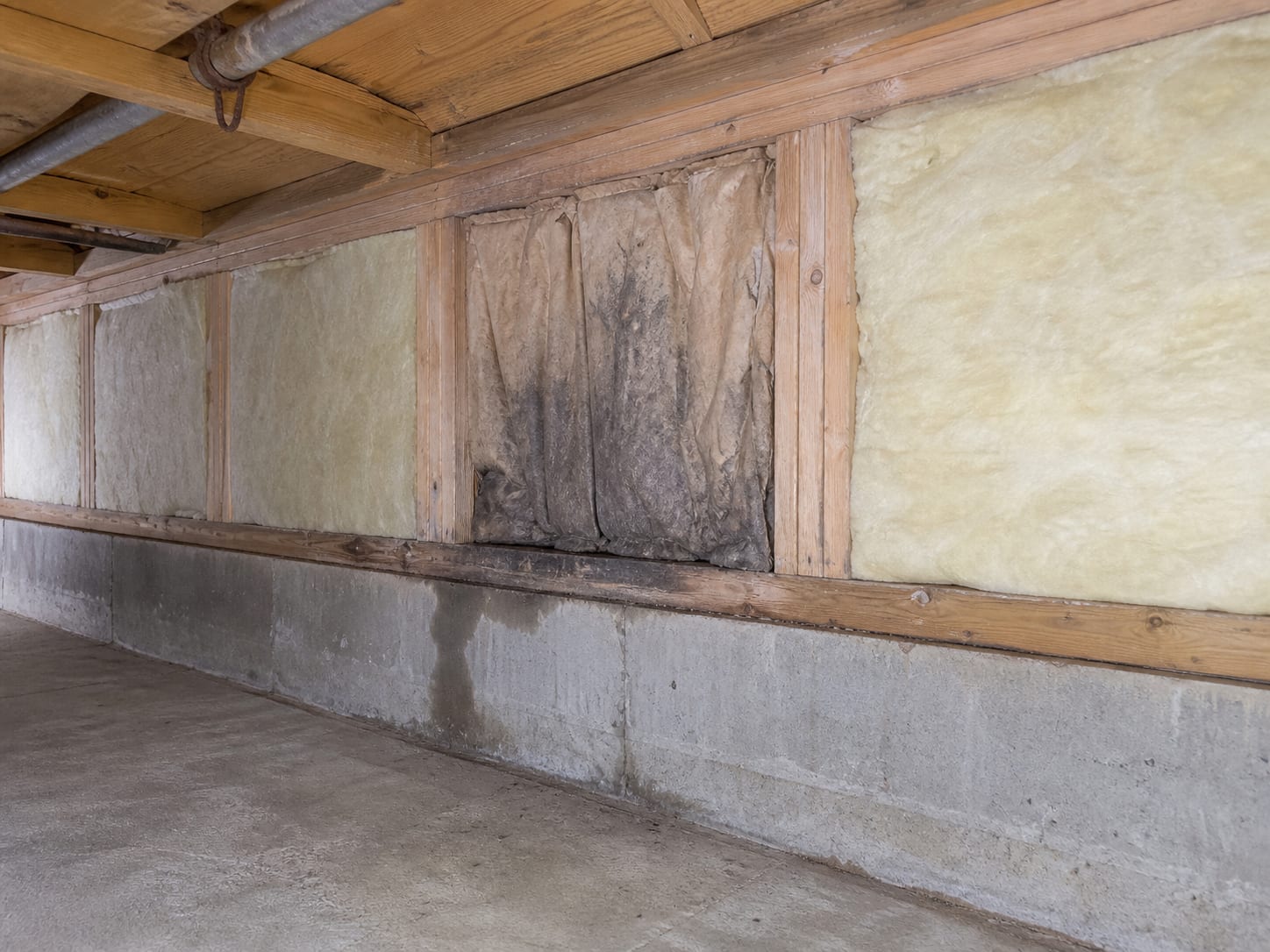
A competent inspection produces observations, not conclusions dressed as facts. EPA's own assessment checklist frames the job well: establish the size of the affected area, consider whether there is hidden mold, note water damaged materials, and check the ducts and air handling equipment. To that, add moisture readings at the surfaces in question and at comparable dry surfaces, the presence and location of odor, staining and its pattern, and the history of the space as the owner remembers it.
The last of those is undervalued. When a room got wet, how often, what the weather was doing, whether anything changed outside, and whether the problem tracks with rain or with use are the observations that narrow five candidate routes down to one or two. Instruments confirm a theory. The history is usually what supplies it.
Equally important is what the report says it could not see. Wall cavities that were not opened, a crawl area that could not be entered, an attic reached only from a hatch, an area behind fixed cabinetry: naming those is what makes a report honest and reviewable later. A map with an edge drawn on it is more useful than one that implies the whole building was examined.
The Water Paths an Alpine Property Actually Has
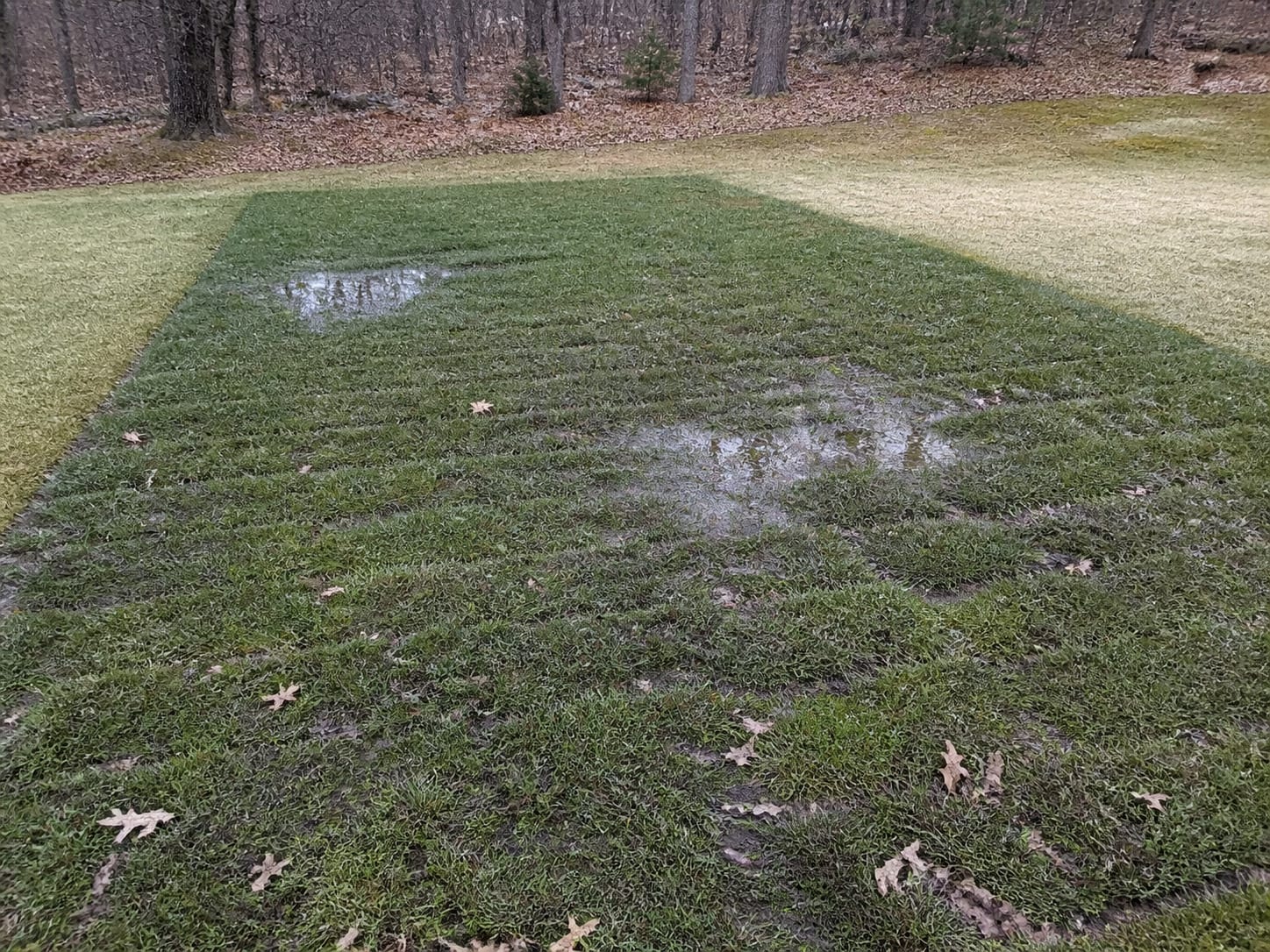
Alpine's adopted plan is unusually specific about the ground. It identifies slopes over 15 percent, wetlands and protected streams with buffers, shallow bedrock and high groundwater, and describes those last conditions as creating significant stormwater management obstacles. The borough's stormwater code follows the same logic, requiring design to account for slopes, flood prone areas, depth to seasonal high groundwater, soil permeability and drainage patterns.
One line in that code deserves a homeowner's attention, because it explains a failure people rarely connect. It warns that infiltration measures can make a naturally or seasonally high water table worse, causing surficial ponding, basement flooding, or interference with subsurface sewage disposal. In plain terms, a drainage solution installed to solve one problem on a lot like this can create another, and the second one may show up as a damp lower level or a struggling septic field rather than as an obvious drainage fault.
That is why an inspection here starts outdoors and works in. Where does roof water go, what do the paved surfaces shed and where, does the grade fall away from the building, is there a low area that holds water, and where is the septic field relative to all of it. The broader local picture is on our Alpine service area page, but the answer is always specific to the parcel.
That last row is the one a generic checklist leaves out. In a borough where most properties handle their own wastewater, a saturated area of ground or an unexplained damp condition can point at the disposal system, and no amount of moisture reading inside the house will settle it. What an inspection can do is identify the pattern and say plainly that the next step belongs to somebody who evaluates septic systems.
How an Inspection Should Run
- 1
Take the history first
When, how often, what the weather was doing and what has changed outside, because the pattern narrows the routes.
- 2
Walk the exterior
Grade, discharge, paved surfaces, low areas and the location of the disposal field, before anything indoors is touched.
- 3
Survey the interior systematically
Room by room, with attention to lower levels, mechanical spaces, ceilings below wet areas and the underside of built ins.
- 4
Read moisture, not just appearance
Take readings at suspect surfaces and at comparable dry ones, so a number has something to be compared against.
- 5
Check the air handling equipment
EPA's checklist includes ducts and equipment, which can move a local problem through the whole building.
- 6
Record the limits
Name every area that could not be seen or reached, since that boundary is part of the finding.
- 7
Decide whether a sample has a question
Only where a laboratory result would change what happens next.
Inspection and Testing Are Two Different Purchases
They get sold together often enough that people assume they are one thing. They are not, and knowing the difference is worth money. An inspection establishes observed conditions and the likely water path. A laboratory sample reports what its method found, at the location sampled, during the period sampled. New Jersey's own guidance is that visible growth commonly makes sampling unnecessary for a remediation decision, because the growth is already the finding and the correction does not change with the species name.
There is also no score. Federal guidance is explicit that no health based standards exist for indoor mold and that short term spore counts cannot be interpreted as a health risk, which means no report can pronounce a house safe. Where a sample does earn its cost is when a specific unanswered question exists: an odor with no visible source, a hypothesis about distribution through the air handling system, a comparison against outdoor air, or documentation after a cleanup. Our mold testing page sets out what those samples involve, and the honest sequence is inspection first, question second, sample third.
The practical protection is an itemized estimate. Inspection, sample collection, laboratory analysis, interpretation and reporting, and any remediation should appear as separate lines. A quote that folds sampling into the word inspection, or presents a laboratory number as a clearance, is describing something the method cannot deliver.
What the Report Should Leave You Holding
A report worth keeping is one a stranger can act on in two years. It names the date, the areas inspected and the areas that were not, the observed conditions with photographs, the moisture readings and where they were taken, the suspected water route and the reasoning behind it, any sampling with its locations, methods and limitations, and a recommendation that distinguishes what is established from what is inferred.
That distinction is the whole quality difference between reports. Observation and interpretation kept apart lets an owner, a contractor, an adjuster or a buyer see what was actually measured and decide for themselves what it means. Blended together, the reader has to take the conclusion on trust. Where the finding leads to cleanup, mold remediation is scoped from that record, and where documentation is wanted afterward, post remediation verification is a separate step with its own purpose.
When the Findings Reach the Building Department
Looking at a building is not construction. Repairing it can be. New Jersey's construction code requires permits for structural, plumbing, mechanical and electrical work on an existing building while excepting ordinary maintenance and routine repair, and a complete application is to be released or denied within 20 business days. Alpine routes those applications through its building department, and its published notice sets out when its officials and inspections are available.
For an inspection itself, none of that applies. The reason it belongs in the conversation is sequencing: if the water route turns out to be a plumbing failure, a mechanical problem, a structural repair or a site drainage change, then the fix carries a process, and building that into the plan on day one is faster than discovering it after the walls are open. Our mold inspection page covers what the assessment itself includes.
Frequently Asked Questions About Mold Inspection in Alpine NJ
I can already see the mold. Is an inspection still worth it?
Usually yes, though not for the reason people expect. The inspection is not there to confirm that mold exists, it is there to establish where the water is coming from and how far it has gone. Without that, the cleanup is scoped off what is visible, which is reliably less than what is wet. The visible patch is the end of the story, not the beginning of it.
Can an inspection find mold inside a wall?
Not directly, and any report claiming otherwise is overstating its tools. What an inspection can do is read elevated moisture through a surface, identify staining patterns, follow the water route logically and recommend a small inspection opening where the evidence points. EPA's guidance treats hidden mold as something to consider carefully, including because disturbing it without control spreads it.
We are on septic. Could that be causing the problem?
It can be a factor, and in Alpine it is worth ruling in or out because the borough's plan says most properties use private septic rather than public sewer. Saturated ground near a disposal field, odor outdoors, or a persistent lower level condition with no other explanation are patterns that point that way. An inspection can identify the pattern; the diagnosis itself belongs to a septic professional.
Will an inspection tell me whether the house is safe?
No, and no test will either. Federal guidance is clear that no health based standards exist for indoor mold, so there is no threshold to be under. What an inspection tells you is what conditions exist, where the water is, and what the affected materials are. Health questions belong with a physician who knows the people living there.
How long has this been going on?
Sometimes the evidence answers that and sometimes it does not. Layered staining, material deterioration, corrosion at fasteners and the condition of adjacent finishes can indicate a long running condition, while a sharp boundary and undamaged surroundings suggest a recent one. A confident date with nothing behind it is a guess, and the honest version says so.
Does Alpine require a permit for a mold inspection?
No published requirement makes an inspection permitted work, and the reviewed sources treat it as an observational activity rather than construction. What can require a permit is the repair that follows: plumbing, mechanical, electrical, structural or drainage work. The construction office is the right place to confirm once the actual scope is known.
Final Thoughts
The value of an inspection in Alpine comes from the number of things it can rule out. Shallow rock, high groundwater, steep ground, on site wastewater and large houses with a lot of enclosed assembly make for a long list of candidate water routes, and eliminating four of them is what makes the fifth worth spending money on. That is unglamorous work and it is the entire point.
What you should end up holding is a dated record: the conditions observed, the readings taken, the areas that could not be examined, the water route the evidence supports, and a clear line between what was measured and what was concluded. It scopes the repair, it survives a change of contractor, and it answers the question a buyer or an insurer asks later.
If something smells wrong, looks wrong, or got wet once and you never found out how far it went, ExecPro Restoration & Cleaning will map it before recommending anything. Call (888) 300-3772 or reach us through the contact page, and bring whatever history of the space you have.
Inspection Terms
Tap a term to see what it means.
Moisture reading. A meter measurement of moisture in a material, meaningful when compared with a similar surface known to be dry.
Serving Alpine
ExecPro Restoration & Cleaning provides mold remediation services in Alpine, NJ, from inspection and testing through removal, drying, and post-remediation verification. Call (888) 300-3772 for 24/7 emergency response.
Related Articles
What an Inspection Will Actually Tell You: Mold Inspection in Plainsboro, NJ
What a Plainsboro mold inspection finds, what it costs, how to get access in a shared building, and how to use the report with a landlord, buyer or insurer.
Classify the Water First: Water Damage Restoration in Alpine, NJ
What the water is decides what can be saved. On an Alpine lot with septic and high groundwater, that question is harder and more important than usual.
Mold Inspection in Livingston, NJ: What It Can Confirm and What It Cannot
An inspection confirms what is visible, reachable and measurable in a Livingston, NJ home. No honest report calls a house mold free, because none can.