
How to Clean a Dryer Vent Yourself, and When to Call a Pro
Cal HewittPublished
- dryer vent cleaning
- documentation
- property management
- new jersey
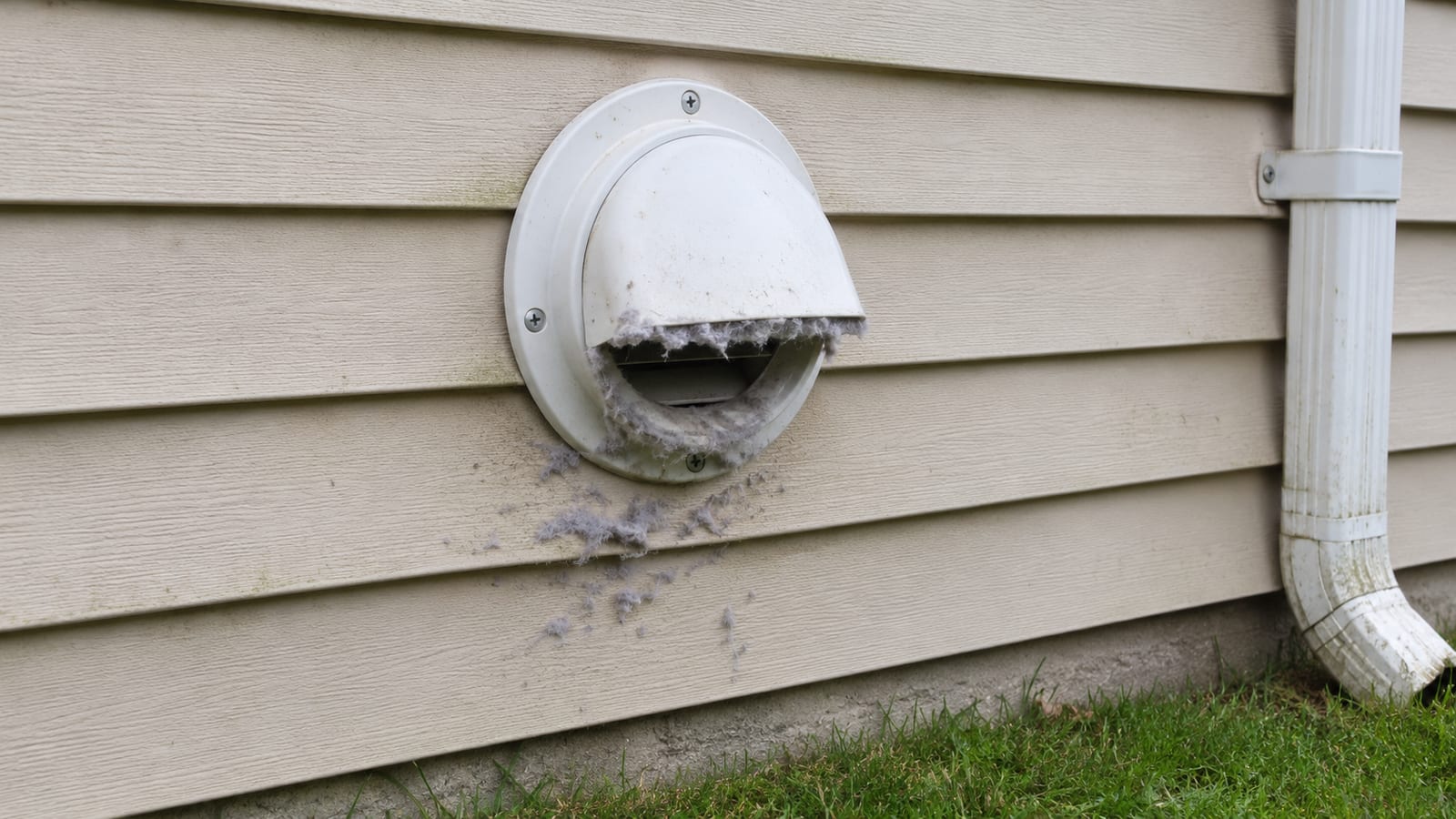
Learning how to clean a dryer vent starts with what you can already see: clothes that need two cycles, a hot laundry room, lint around the outside cap. Those signs can mean lint has restricted the airflow, and the first checks take a few minutes and no tools.
Start with the lint screen and the slot it sits in. Then go outside and see whether the flap on the vent cap opens while the dryer runs. If the duct behind the dryer is short and reachable, a vacuum and a dryer-vent brush can clear it. If it disappears into a wall, climbs to a roof or serves a stacked or gas dryer, that part belongs to a professional.
If the dryer feels unusually hot, smells burned or has a damaged or disconnected duct, stop using it until the vent is checked. Otherwise you have time to work through the steps in order and decide which ones are yours.
Key Takeaways
Reach first
Clean the lint screen and its slot, disconnect the transition duct, vacuum and brush the run you can reach, then check the outside cap and damper.
Call for the rest
Concealed or roof runs, stacked or closet installs, gas connections, nests and rental or condominium systems call for a professional, or for the landlord or association first.
The manual sets the interval
Whirlpool's guidance runs from about every six months to one year up to at least every two years, so the owner's manual for your own dryer decides.
Why Does a Slow Dryer Deserve Attention Now?
A slow dryer is moving less air out of your house than it should. CPSC says lint buildup in a dryer or its exhaust duct can restrict airflow, increase heat and cause a fire. You notice the first part as extra drying time; the second part is why fire agencies keep repeating the maintenance advice.
The national figures are specific. NFPA estimates that U.S. fire departments responded to an average of 13,820 home structure fires involving dryers each year from 2014 to 2018. Those fires caused an average of seven civilian deaths, 344 civilian injuries and $233 million in direct property damage annually. NFPA attributed 32% of them to failure to clean, and in 27% dust, fiber or lint was the first thing to ignite.
Hover or tap a row to highlight it.
| Measure | Annual average |
|---|---|
| Home structure fires involving dryers (U.S. fire department responses) | 13,820 |
| Civilian deaths | 7 |
| Civilian injuries | 344 |
| Direct property damage | $233 million |
| Fires attributed to failure to clean | 32% |
| Fires where dust, fiber or lint ignited first | 27% |
The U.S. Fire Administration asks for a short list of habits: clean the lint filter before and after each cycle, check for crushed or restricted venting, clean behind the dryer, and confirm that the outdoor vent covering opens while the dryer operates.
How Do You Know If Your Dryer Vent Is Clogged?
The signs show up in the laundry room first and at the outside wall second. A single one is enough reason to check the vent. Look for these:
- Drying time: Clothes take longer to dry or need more than one cycle.
- Heat: The dryer or the laundry room feels unusually hot, or there is a burning odor.
- Airflow at the cap: Air at the outside cap is weak, or the flap opens only partway or not at all.
- Lint outside: Lint collects around the exterior cap.
- Damage: The duct behind the dryer is crushed, kinked, disconnected or visibly damaged.
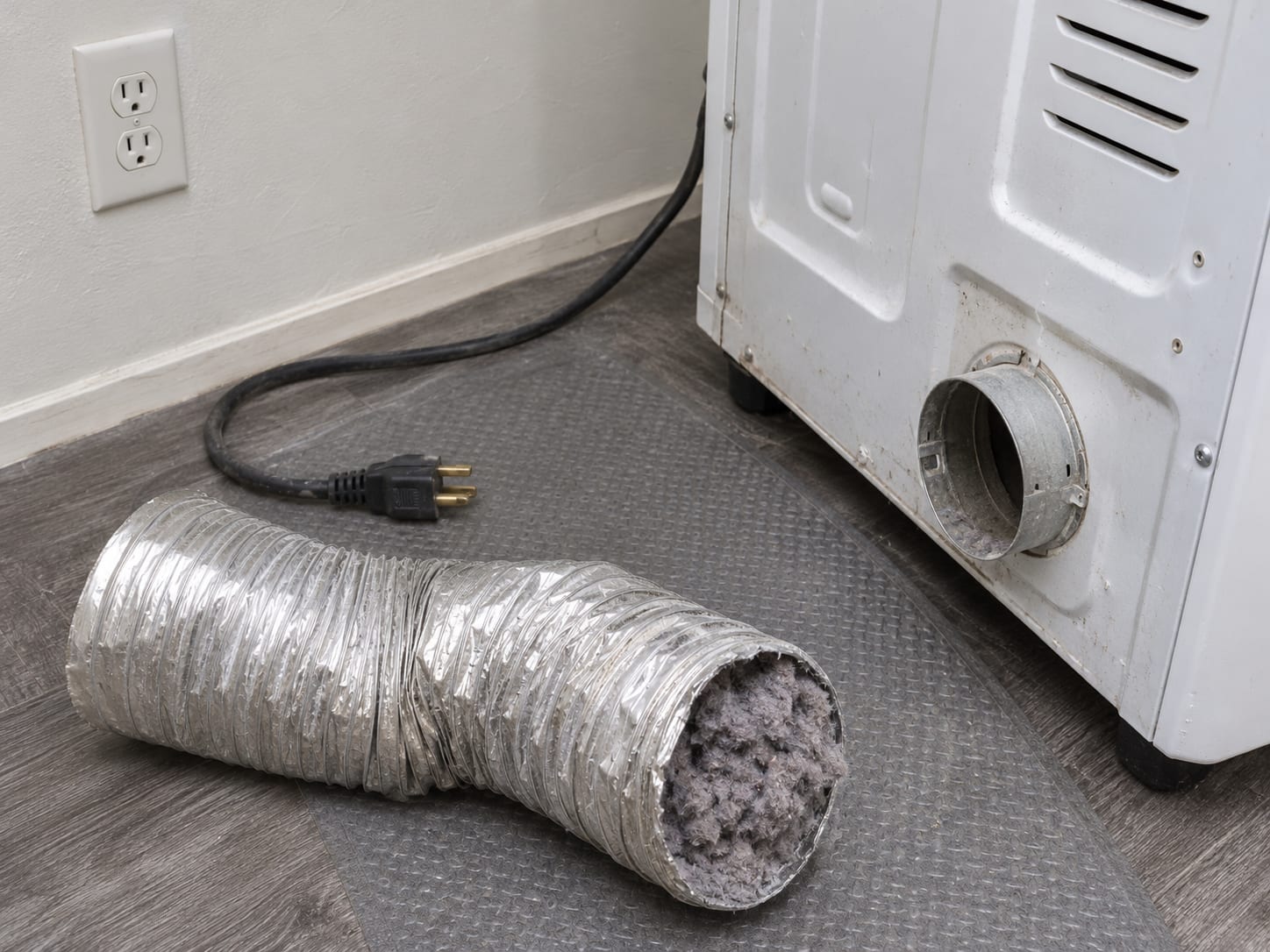
Pull the dryer forward and look at the transition duct, the short piece that connects the dryer to the wall. A crushed or kinked one can restrict airflow by itself, and it is the first thing to check.
Signs Your Dryer Vent May Be Clogged
Drying time
Clothes take longer to dry or need more than one cycle.
Heat
The dryer or the laundry room feels unusually hot, or there is a burning odor.
Airflow at the cap
Air at the outside cap is weak, or the flap opens only partway or not at all.
Lint outside
Lint collects around the exterior cap.
Damage
The duct behind the dryer is crushed, kinked, disconnected or visibly damaged.
Will a dryer shut off if the vent is blocked?
Some dryers show a vent warning or stop under certain fault conditions, but only some have one. A dryer can run with restricted airflow and never shut down, so do not wait for it to tell you. Whirlpool lists a burning scent as a warning sign. Stop using the dryer when airflow is restricted or the appliance overheats.
What Does Professional Dryer Vent Cleaning Include, and When Do You Need It?
Some systems are better left to someone with the equipment and the access. Call a professional when:
- The duct is long, concealed in a wall, ceiling or floor, or hard to reach.
- The termination is on a roof, or the cap needs a ladder to reach.
- The dryer is stacked or fitted tightly into a closet.
- A bird, rodent or other nest is blocking the run, or the duct has several turns or looks crushed or disconnected.
- The dryer is gas-powered and moving it could disturb the gas connection.
A run that stays restricted after you clean from both ends, or a dryer that stays slow once the duct is clear, may mean the appliance itself needs a technician.
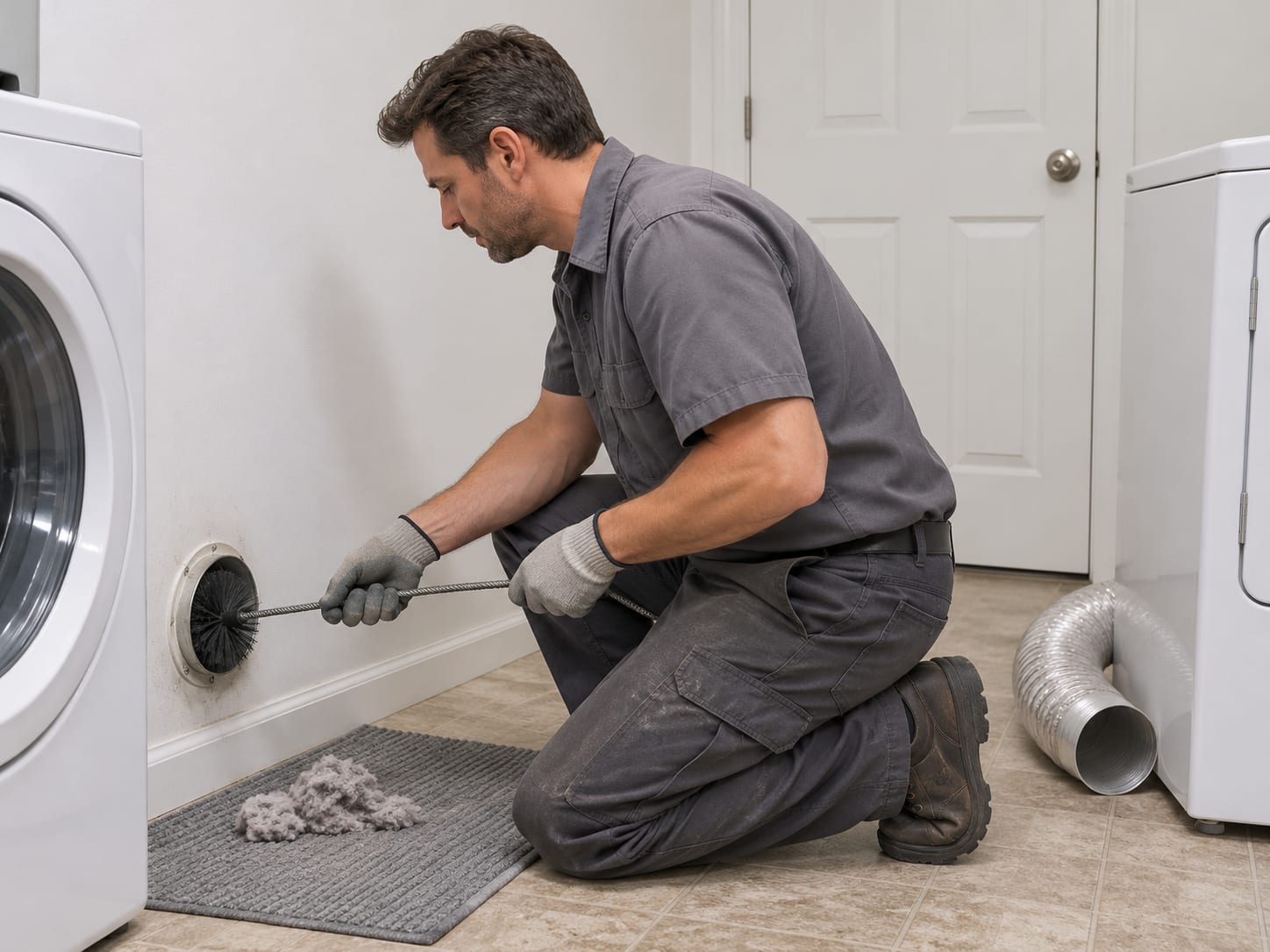
A professional visit may start with an inspection at the dryer and at the exterior cap, then identify the duct material, route, length, turns and damage. The work is removing lint, debris and any wildlife blockage with a rotary brush and a high-powered vacuum. On longer or complex runs a camera shows what a brush cannot, and airflow is verified at the end. Our residential dryer duct cleaning page describes this sequence and says typical appointments take one to two hours, depending on duct length and configuration.
How much does a dryer vent cleaning cost?
The price depends on duct length, access, roof work, bends, how much is blocked and whether repairs turn up. Ask for a written scope and estimate before work begins.
When Does the Duct Need Repair or Replacement?
Replace, rather than merely clean, ducting that is plastic, combustible, crushed, kinked, perforated, disconnected, improperly concealed or unable to keep air moving. The transition duct behind the dryer is the usual place to look, since it is the part you can see and handle.
The 2021 International Residential Code text describes what a sound run looks like: a smooth-walled metal duct, nominally 4 inches in diameter, with joints fastened and sealed and no screws protruding more than 1/8 inch into the duct, since those screws collect lint. A transition duct must be listed, no longer than 8 feet and not concealed inside construction. The exhaust ends outdoors with a backdraft damper and no screen at the termination.
Manufacturers can be stricter than the code. Samsung recommends a 4-inch rigid aluminum or galvanized-steel duct, prohibits flexible plastic duct and says the duct should be clean, unkinked and uncrushed. GE prefers rigid metal, requires UL-listed metal ducting for its dryers and allows semi-rigid transition duct when the vent length is 8 feet or less. Check your manual for the material, length and number of turns your dryer allows, and match any replacement to it.
Hover or tap a row to highlight it.
| Source | What it says |
|---|---|
| 2021 International Residential Code | Smooth-walled metal duct, nominally 4 inches, joints fastened and sealed, no screws protruding more than 1/8 inch |
| 2021 International Residential Code, transition duct | Listed, no longer than 8 feet and not concealed inside construction |
| 2021 International Residential Code, termination | Ends outdoors with a backdraft damper and no screen |
| Samsung | 4-inch rigid aluminum or galvanized-steel duct; prohibits flexible plastic duct |
| GE | Prefers rigid metal, requires UL-listed metal ducting and allows semi-rigid transition duct at 8 feet or less |
How much does it cost to replace a dryer vent?
That depends on the duct material, the route, the length, the access and where the vent ends. Have the duct inspected first, then ask for a written scope and estimate that names each of those.
Can You Clean a Dryer Vent Yourself, and How Is It Done?
Yes, when the whole run is short, reachable and safe to get to. Read the owner's manual first and note whether the dryer is electric, gas or ventless. Unplug an electric dryer before you touch the duct. For a gas dryer, follow the manual's gas-shutoff instructions and leave the gas line alone unless you are qualified to disconnect it. Pull the dryer forward carefully so you do not crush the duct behind it. Then work through the run in this order:
Cleaning a Short, Reachable Dryer Vent
- 1
Disconnect the transition duct
At the dryer outlet, and check it for plastic construction, crushing, kinks, holes, loose joints and packed lint.
- 2
Vacuum the openings
The dryer outlet, the lint-screen slot and the open end of the duct.
- 3
Brush the duct
Push a dryer-vent brush through from the dryer end without forcing it through sharp turns, and vacuum up what it loosens.
- 4
Clear the outside cap
Remove lint, leaves, nests and debris from the vent hood and confirm that the damper moves freely.
- 5
Reconnect and test
Reconnect the duct securely, short and unkinked, run the dryer briefly and confirm that the outside damper opens and air is moving.
1. Disconnect the transition duct at the dryer outlet and check it for plastic construction, crushing, kinks, holes, loose joints and packed lint. Replace a defective one instead of putting it back. 2. Vacuum the lint from the dryer outlet, the lint-screen slot and the open end of the duct. 3. Push a dryer-vent brush through the duct from the dryer end, without forcing it through sharp turns, and vacuum up what it loosens. A vacuum hose and the brush can be used together. 4. Go outside and clear lint, leaves, nests and debris from the vent hood. Confirm that the damper moves freely, and if the run is reachable from the outside, brush and vacuum from that end as well. 5. Reconnect the duct securely, short and unkinked, with no screws sticking into it. Restore power and gas as the manual directs, run the dryer briefly and confirm that the outside damper opens and air is moving.
Stop and call a professional if the brush cannot pass, lint stays packed in the run, the duct is concealed, the termination is on a roof or the appliance connection does not look safe.
Can you use a shop vac to clean a dryer vent?
Whirlpool identifies a vacuum with a hose as useful alongside a dryer-cleaning brush. A shop vac is a type of vacuum, so it can do that job, but your dryer's instructions and safe access still decide the method.
What is the dryer lint mistake everyone makes?
Cleaning only the visible lint screen. The slot, the back of the dryer, the exhaust duct and the outside cap are all part of the system, as CPSC and the USFA describe it, and lint that sits there keeps restricting airflow after the screen is spotless.
What Do New Jersey Code, Rentals and Insurance Mean for a Dryer Vent?
The 2024 International Residential Code, New Jersey edition, became the state's one- and two-family dwelling subcode on August 17, 2026, according to the Department of Community Affairs. Older state guidance said that manufacturer instructions control dryer exhaust length when they are stricter than the code, so check your dryer manual before applying an old length figure.
If you rent, or live in a condominium or multi-unit building, talk to the landlord, property manager or association before you move a dryer or change a shared, concealed or exterior vent. The Department of Community Affairs provides New Jersey landlord and tenant information, and we have a separate post on multi-unit dryer vent cleaning in New Jersey.
Coverage, exclusions and documentation requirements differ by policy and insurer, so ask yours before assuming a maintenance visit is covered. The New Jersey Department of Banking and Insurance advises policyholders to read their policy, keep photographs and receipts and report losses promptly. A dated service record belongs with those papers.
How Often Should You Clean a Dryer Vent?
The owner's manual for your dryer controls the interval, and manufacturers do not agree on one number. CPSC says to clean the vent and exhaust duct periodically, and GE says to inspect and clean regularly, with the installation instructions controlling length and turns.
How often should dryer vents be blown out?
Whirlpool's product help advises cleaning the vent from the back of the dryer about every six months to one year. Another Whirlpool maintenance page says at least once every two years unless the manual says otherwise, and a Whirlpool owner's manual says every two years or more often depending on use.
Hover or tap a row to highlight it.
| Whirlpool source | What it advises |
|---|---|
| Product help | Clean the vent from the back of the dryer about every six months to one year |
| Maintenance page | At least once every two years unless the manual says otherwise |
| Owner's manual | Every two years or more often depending on use |
Several things point toward the shorter end: frequent loads, a large household, pet hair, a long run, multiple bends, a roof termination, a shared system and slower drying. Use the manual as the baseline and clean sooner when drying slows or lint shows at the cap.
What Keeps a Dryer Exhausting Properly Between Cleanings?
Empty the lint screen before and after each cycle, and glance at the outside cap now and then to see that the flap moves and nothing has built a nest. Leave enough space behind the dryer that the transition duct is not crushed against the wall, and keep a screen off the end of the vent.
After a cleaning, keep a record: the service date, the dryer type, the duct route, what was blocked, photographs, the method used, the airflow result, any defects found, repairs recommended and the invoice. If drying stays slow once the duct is clear, have a qualified technician inspect the appliance itself, because a clean duct does not repair a failed heating, motor or control component.
If you own a newer machine, check its type before you buy brushes. NJDEP explains that conventional electric dryers exhaust outside, while heat-pump dryers recycle air in a closed loop and do not need a dryer vent.
Frequently Asked Questions About Cleaning a Dryer Vent
What happens if you never clean your dryer vent?
Lint can restrict airflow, increase heat and contribute to dryer fires. Drying times can climb, the dryer can run hotter and the appliance may develop performance or component problems.
Can I use a leaf blower to clean my dryer vent?
Use the method your dryer's manufacturer approves, or ask a qualified vent professional. A leaf blower used without that guidance is on the list of common mistakes.
Can I clean a dryer vent from the outside?
You can clear the cap and the debris around it from outside, and when the run is reachable from that end you can brush and vacuum it there too. Cleaning from the dryer end is still part of the job, and a roof or high cap is a job for someone with safe access.
Dryer Vent Quick Check
1. What should you confirm at the outside cap while the dryer runs?
2. Which duct does the code text describe as a sound run?
3. How long can a transition duct be under the code text?
4. What sets how often you clean the vent?
Pick an answer to begin.
Wrapping Up
Clear the lint screen and its slot, disconnect the transition duct, brush and vacuum the run you can reach, and check the outside cap and damper from outdoors. Stop using the dryer when it overheats or the duct is damaged, and bring in a professional for concealed, roof, stacked, gas, nested or shared-building runs. Your owner's manual sets the cleaning schedule.
A vent that moves air freely gives you shorter drying times, and a dated record of each service gives you something to show a landlord, buyer or insurer.
If your duct is long, concealed or on a roof, or the dryer is still slow after a cleaning, ExecPro Restoration & Cleaning can inspect it for your New Jersey home. Call us at (888) 300-3772 or reach us through our contact page, and tell us where the dryer sits and where the vent ends.
Dryer Vent Terms
Tap a term to see what it means.
Transition duct. The short piece that connects the dryer to the wall.
Related Articles
Commercial Dryer Vent Cleaning in Robbinsville, NJ: Shared Laundry Rooms in Hotels, Assisted-Living and Mixed-Use Buildings
Across a hotel, an assisted-living residence or a mixed-use building, commercial dryer vent cleaning in Robbinsville starts with a hot room and slow dryers.
Commercial Dryer Vent Cleaning in Bridgewater, NJ: Records for the Fire Inspector and the Board
For property managers and condo boards, commercial dryer vent cleaning in Bridgewater means finding the shared cause and keeping fire inspector records.
Commercial Dryer Vent Cleaning in Trenton, NJ: Shared Exhaust in Apartment Buildings and Conversions
Under New Jersey's fire code, dryer exhaust must stay clear of lint. See how commercial dryer vent cleaning in Trenton handles shared runs and records.