Commercial Dryer Vent Cleaning in Robbinsville, NJ: Shared Laundry Rooms in Hotels, Assisted-Living and Mixed-Use Buildings
Cal HewittPublished
- commercial dryer vent cleaning
- property management
- documentation
- robbinsville nj
- new jersey
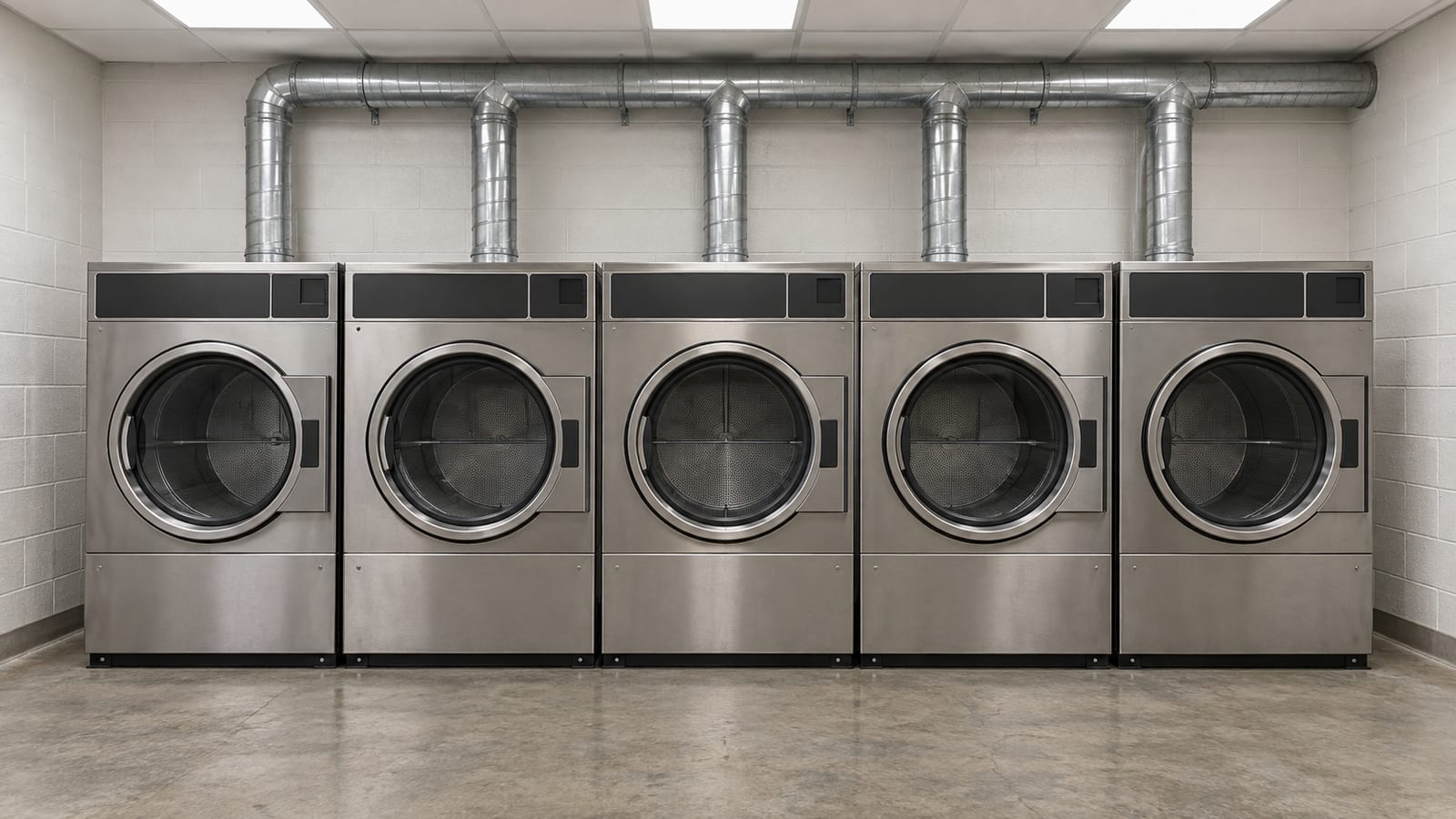
The dryers in your laundry room have gone slow, the room feels hotter than it should, or a resident has mentioned a burning smell. You run the building, so the questions land on you: is it one machine or the whole exhaust run, what do you do today, and who do you call? Commercial dryer vent cleaning in Robbinsville, NJ is a decision about an occupied building, with guests or residents waiting on clean laundry and a board or an insurer that will want records afterward. Hotels, assisted-living residences, mixed-use buildings and condominiums all share the same problem: an on-site laundry room where one blocked duct can slow every machine. The sections below walk through the first hour, the first day and the first week, then cover what to ask a contractor before you approve a scope, how to keep the laundry open and which records to keep. You can use them as a checklist the same afternoon.
Key Takeaways
Safety comes first
Stop any dryer with smoke, a burning smell or abnormal heat, and call 911 for active smoke or fire.
Mapping the run answers the first question
A technician who maps each run from the dryer to its exterior termination, including shared risers, can tell you whether the trouble is one machine or the shared exhaust.
The laundry room may be its own regulated room
New Jersey's rules for facilities that use commercial laundry equipment call for a separate, fire-rated laundry room with dryers venting outside, and they cover only the facilities they name.
Ask for an itemized proposal
It should be built on the mapped system and state what is included, what is priced separately and what records you will receive.
Hot Laundry Room, Slow Dryers: The First Hour, the First Day, the First Week
Start with safety, then work through the building in order. If any dryer is giving off smoke, a burning smell or abnormal heat, stop using it, and call 911 for active smoke or fire. Repeated shutdowns and visible ignition belong in the same category. Everything else can follow a simple schedule.
The First Hour, the First Day and the First Week
- 1
In the first hour
Record which dryers are affected and the symptoms, take any suspect dryer out of service and tag it, check the lint screens and the exterior hood, tell occupants which machines are out and keep any alarm records and equipment details.
- 2
By the end of the first day
Find the prior cleaning records, learn who controls the individual units and the common exhaust, call a qualified provider, give notice about access and ask whether the scope includes shared risers and exterior terminations.
- 3
By the end of the first week
Have a written scope, an access plan, a findings report, a repair list and a maintenance decision based on how the laundry is really used.
In the first hour:
- Record what you see: Note which dryers are affected and the symptoms, such as long cycles, a hot room, a burning odor or lint around the exterior hood.
- Stop unsafe equipment: Take any suspect dryer out of service and tag it.
- Check the visible parts: Look at the lint screens and the exterior hood or termination for obvious blockage.
- Tell occupants: Let residents or guests know which machines are out and where else they can do laundry.
- Keep the information: Hold on to any alarm records and equipment details, since a provider and an insurer may ask for them.
By the end of the first day:
- Find the prior cleaning records: Locate any service reports, invoices or photographs from earlier work.
- Learn who controls what: Identify who controls the individual units and who controls the common exhaust.
- Call a qualified provider: Contact a commercial dryer vent provider and describe the building, the dryer count and the symptoms.
- Give notice about access: Tell residents or guests when technicians may need to reach their units or the laundry room.
- Ask about scope: Ask whether the proposed scope includes shared risers and exterior terminations.
By the end of the first week:
- A written scope: The work described in writing, tied to the mapped system.
- An access plan: Who is entering which areas, and when.
- A findings report: What the technician saw, with photographs.
- A repair list: Anything that needs fixing beyond cleaning.
- A maintenance decision: A recurring schedule based on how the laundry is really used.
Responsibility for the parts of a dryer system is specific to each property. Read the lease, the declaration, the bylaws, the maintenance agreement and the management contract, then put in writing who handles lint screens, appliance connections, shared ducts, exterior terminations, access and repairs.
Is It One Machine or the Shared Run?
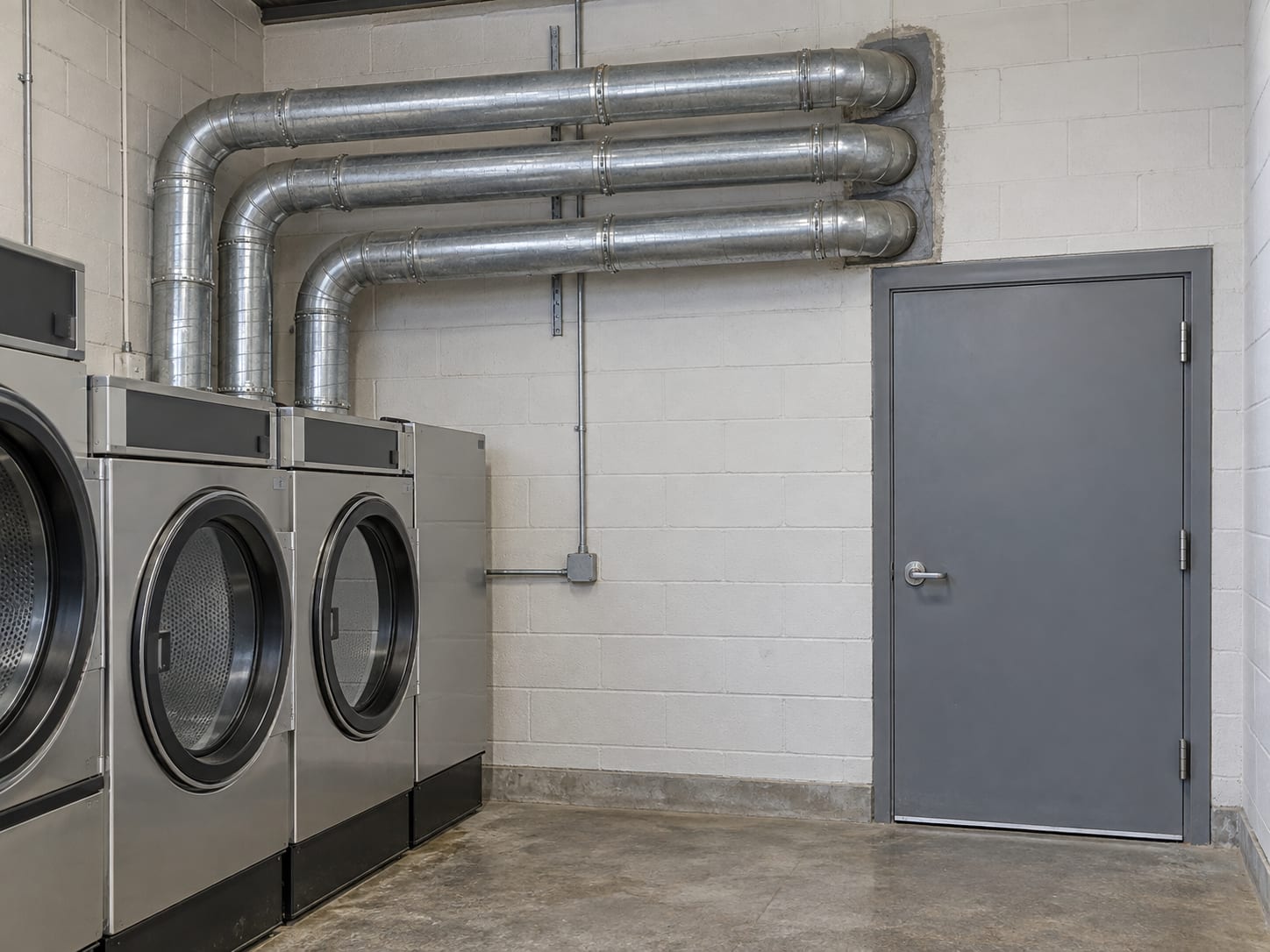
That question decides the size of the job, and a few observations point the way. If a single dryer is slow and its neighbors are fine, the trouble is often close to that machine: its lint screen, its connection or the short duct behind it. If several dryers slow down together, or the whole room runs hot, the shared exhaust run is a stronger suspect. Lint collecting around the exterior hood tells you air has been struggling to leave the building. A shared riser, which is the vertical duct that collects exhaust from several floors or several machines, can make one maintenance failure show up for many occupants at once.
Hover or tap a row to highlight it.
| What you see | What it often points to |
|---|---|
| One slow dryer while its neighbors are fine | Trouble close to that machine: its lint screen, its connection or the short duct behind it |
| Several dryers slowing down together, or the whole room running hot | The shared exhaust run |
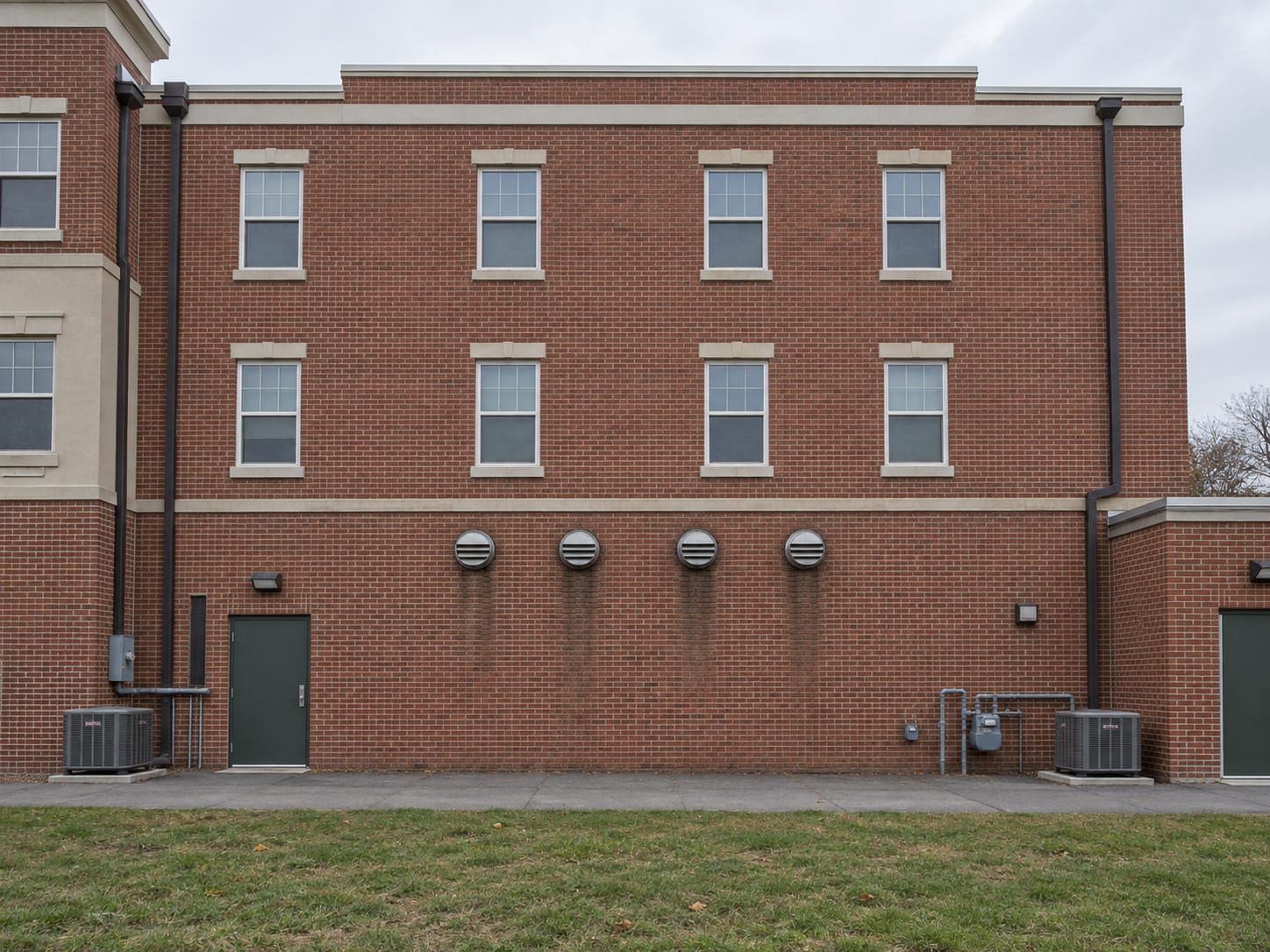
| Lint collecting around the exterior hood | Air has been struggling to leave the building |
| One maintenance failure showing up for many occupants at once | A shared riser, the vertical duct that collects exhaust from several floors or several machines |
You cannot settle this by looking at the machines alone. The technician needs to trace each run from the dryer to where it leaves the building, and that is why the first thing a good provider does is map the system. Give the provider the address, the building count, the number of dryers, the access requirements for units and common areas, any roof or exterior access limits, and any planned duct changes before you approve the scope.
A clean vent will not fix a defective dryer or a damaged duct, and moisture in the room is a separate building problem. If the technician finds a damaged section or signs of water, treat it as its own repair. If it points to mold, our Robbinsville mold remediation page explains that separate job.
Why Does the Shared Laundry Room Get Its Own Rules?
Because in some buildings it is treated as its own room. New Jersey's rules for facilities that use commercial laundry equipment, N.J.A.C. 8:111-25.5, require the equipment to sit in a separate laundry room protected from the rest of the facility by fire-resistance-rated separation, with the dryers vented to the outside. That rule covers the facilities it names. Confirm with the township construction office or the agency that licenses your facility whether your building is one of them.
Robbinsville's 2025 zoning map lists office/research/hotel, town-center, village-commercial, highway-commercial, office-commercial and office-warehousing districts, among others. That mix is why the buildings with a shared laundry room here are not only apartments. They include hotels, assisted-living residences, mixed-use buildings and condominiums, each with its own occupants and its own way of running laundry.
A second rule applies to clothes-dryer exhaust in general. The state fire code, N.J.A.C. 5:70-3.2, adds a section on dryer exhaust that calls for exhaust ducts installed to the International Mechanical Code or the International Fuel Gas Code and the manufacturer's instructions, with the lint trap and exhaust duct maintained so lint does not block the exhaust. New Jersey's construction-code page lists the International Mechanical Code, 2024 edition, as the mechanical subcode as of August 17, 2026. Ask your provider which of these apply to the work in your building.
Hover or tap a row to highlight it.
| Rule | What it says | What to confirm |
|---|---|---|
| N.J.A.C. 8:111-25.5 | Facilities that use commercial laundry equipment need the equipment in a separate laundry room protected by fire-resistance-rated separation, with the dryers vented to the outside | It covers only the facilities it names. Confirm with the township construction office or the agency that licenses your facility |
| N.J.A.C. 5:70-3.2, the state fire code | Dryer exhaust ducts are installed to the International Mechanical Code or the International Fuel Gas Code and the manufacturer's instructions, with the lint trap and exhaust duct maintained so lint does not block the exhaust | Ask your provider which parts apply to the work in your building |
| International Mechanical Code, 2024 edition | Listed on New Jersey's construction-code page as the mechanical subcode as of August 17, 2026 | Ask your provider which of these apply to the work |
What Should a Commercial Dryer Vent Visit Include?
The visit should follow a sequence you can check off. We follow this sequence in occupied buildings for commercial dryer vent cleaning at apartment complexes and multi-unit properties, and it is what to ask any provider for.
- Map each run: Trace every dryer's exhaust from the machine to its exterior termination, including shared risers, concealed sections, roof or wall terminations and any booster fan.
- Flag possible code issues: Note conditions that need a closer look, such as damaged sections or unusual terminations.
- Coordinate access: Arrange entry to units and common areas ahead of time.
- Disconnect dryers where required: Machines are moved and reconnected as the work needs.
- Clean the runs: Clear the duct runs, the shared risers and the discharge points.
- Check dampers and terminations: Confirm the damper moves and the termination is open.
- Record the findings: A written record of what was cleaned and the condition found.
Before you approve a scope, ask four questions. Does it include the shared risers and the exterior terminations? Who disconnects and reconnects the dryers? Which parts are priced separately because they cannot be judged until access is available? What will you receive afterward? A vague answer to any of them is a reason to ask for the proposal again.
Four Questions to Ask Before You Approve a Scope
Are the shared risers and exterior terminations included?
Ask whether the proposed scope covers the whole route, not only the machines.
Who disconnects and reconnects the dryers?
Settle this before the crew arrives.
Which parts are priced separately?
Anything that cannot be judged until access is available should be priced apart, so there are no surprises on the day.
What will you receive afterward?
A written record of what was cleaned and the condition found.
How Do You Keep the Laundry Open While the Work Is Done?
Ask for an access plan in writing. It should say which units, laundry rooms and roof areas the crew will enter, on which days and at what hours, so guests or residents are told in advance instead of finding a machine out of service. In a building with several laundry rooms, ask whether the work can be phased so that only some machines are down at a time. In a hotel or an assisted-living residence, ask what hours the work can run without disturbing occupants, and whether restricted hours will affect the price.
Missed access is the most common way a schedule slips. If a technician arrives and cannot enter a unit, the visit may need to be repeated, and repeat visits may cost extra, so notice to occupants matters. Ask the provider how it handles missed-access visits. Roof or lift access and weather matter too, because termination work often happens outside.
What Sets the Price of a Commercial Dryer Vent Job?
The price follows the system, not the town, so ask for an itemized proposal built on the mapped system. These are the drivers:
- Dryer count and separate runs: How many machines, and how many independent exhaust paths.
- Shared risers: Whether several floors or machines feed one duct.
- Duct length and bends: Longer runs with more turns take more time.
- Terminations: Concealed, rooftop or high exterior terminations.
- Moving dryers: Disconnecting and reconnecting machines.
- Access: Roof access, lift access, weather and restricted hours.
- Scheduling: Resident schedules and missed-access visits.
- Lint load and condition: Heavy lint, debris, nests or damaged duct sections.
- Equipment: Booster fans, dampers and lint collectors.
- Records: Photographs and unit-by-unit documentation.
- Repairs: Replacement or alterations beyond cleaning.
- After-hours work: Emergency or off-hours scheduling.
A sound proposal states what is included: the inspection, the equipment count, the full duct route, shared trunk lines, exterior terminations, cleanup, verification, repairs and documentation. It should price separately anything that cannot be judged until access is available, so you are not surprised on the day.
Hover or tap a row to highlight it.
| Cost driver | What it covers |
|---|---|
| Dryer count and separate runs | How many machines, and how many independent exhaust paths |
| Shared risers | Whether several floors or machines feed one duct |
| Duct length and bends | Longer runs with more turns take more time |
| Terminations | Concealed, rooftop or high exterior terminations |
| Moving dryers | Disconnecting and reconnecting machines |
| Access | Roof access, lift access, weather and restricted hours |
| Scheduling | Resident schedules and missed-access visits |
| Lint load and condition | Heavy lint, debris, nests or damaged duct sections |
| Equipment | Booster fans, dampers and lint collectors |
| Records | Photographs and unit-by-unit documentation |
| Repairs | Replacement or alterations beyond cleaning |
| After-hours work | Emergency or off-hours scheduling |
Do You Need a Permit for Dryer Vent Work?
It depends on what is done. Cleaning an existing, accessible system is a different kind of work from rerouting, replacing, extending, opening walls, changing a termination, installing a booster fan or altering mechanical equipment. New Jersey's construction permit forms include a mechanical technical section, and a permit question becomes more relevant when the job includes any of those changes. Ask the Robbinsville construction office whether your proposed work is cleaning only or a mechanical alteration before the work begins.
If the job would change a visible exterior vent cap or the roof in a designated historic area, check with the township before exterior work.
Which Records Should You Keep, and How Often Should You Clean?
Your insurer, your board or a fire inspector may ask for proof that the system is maintained, so build the file as you go. Keep:
- The written scope and the proposal: What was agreed and priced.
- Dated service records: What was cleaned, when and the condition found.
- Photographs: Before and after images of terminations, risers and lint loads.
- Findings and repair lists: What needed attention and what was done.
- Permit or inspection papers: If any work required them.
- Access notices: The dates residents or guests were told.
- Prior records: Earlier reports, so a pattern is visible.
Ask your insurer or your board what records it requires, since formats vary.
As for how often, set the interval from how heavily the laundry is used, how much lint the technician finds, how well air moves through the run, how complex the route is and what the dryer manufacturer's guidance says. National figures show why staying on top of it matters. The National Fire Protection Association reports that, for home dryer fires in 2014 to 2018, 32 percent were caused by failure to clean and 27 percent began when dust, fiber or lint ignited. Those are national home-fire figures, not Robbinsville commercial data, but a building with many machines and a shared duct has more at stake, not less.
Frequently Asked Questions About Commercial Dryer Vent Cleaning in Robbinsville, NJ
How do I know if the problem is one dryer or the shared exhaust?
A single slow machine often points to its own lint screen, connection or short duct. Several slow dryers, a hot room or lint around the exterior hood point to the shared run. A technician who maps each run from the dryer to its termination can tell you for certain.
Can the laundry stay open during cleaning?
Often, with an access plan. Ask the provider to phase the work by room or run, to give occupants advance notice and to explain how missed-access visits are handled.
Who is responsible for the dryer exhaust in a condominium or mixed-use building?
It depends on the property. Check the lease, declaration, bylaws, maintenance agreement and management contract, then put in writing who handles lint screens, appliance connections, shared ducts, exterior terminations, access and repairs.
Does dryer vent cleaning need a permit?
Confirm it with the Robbinsville construction office. Cleaning an existing accessible system is different from rerouting, replacing or extending a duct, changing a termination or installing a booster fan.
What does commercial dryer vent cleaning cost?
The price depends on the number of dryers and runs, shared risers, duct length, terminations, access, lint load, repairs and records. Ask for an itemized proposal built on the mapped system.
Laundry Room Quick Check
1. What should you do first if a dryer gives off smoke, a burning smell or abnormal heat?
2. If one dryer is slow and its neighbors are fine, where does the trouble often sit?
3. What does a shared riser do?
4. Does N.J.A.C. 8:111-25.5 cover every commercial property?
5. What does a good provider do first?
Pick an answer to begin.
Wrapping Up
Handle safety first, then record what you see, find who controls the exhaust and get a technician to map each run. Ask for a written scope, an access plan, a findings report and an itemized proposal, and confirm with the township whether any of the work needs a permit.
Done in that order, the laundry room runs cooler, the dryers finish loads again and your board and your insurer have records that hold up.
If you run a hotel, an assisted-living residence, a mixed-use building or a condominium in Robbinsville, NJ, ExecPro Restoration & Cleaning can map your dryer exhaust, clean the runs and risers and document what we find. We also handle water damage restoration and mold remediation, so a moisture problem found along the way does not stall the work. Call us at (888) 300-3772 or contact us to schedule an assessment.
Laundry Room and Dryer Vent Terms
Tap a term to see what it means.
Shared riser. The vertical duct that collects exhaust from several floors or several machines.
Serving Robbinsville
ExecPro Restoration & Cleaning provides mold remediation services in Robbinsville, NJ, from inspection and testing through removal, drying, and post-remediation verification. Call (888) 300-3772 for 24/7 emergency response.
Related Articles
Commercial Dryer Vent Cleaning in Bridgewater, NJ: Records for the Fire Inspector and the Board
For property managers and condo boards, commercial dryer vent cleaning in Bridgewater means finding the shared cause and keeping fire inspector records.
Commercial Dryer Vent Cleaning in Trenton, NJ: Shared Exhaust in Apartment Buildings and Conversions
Under New Jersey's fire code, dryer exhaust must stay clear of lint. See how commercial dryer vent cleaning in Trenton handles shared runs and records.
Mold Remediation in Robbinsville, NJ: Hiring the Whole Job and Keeping the Paperwork
Once the water source is found, the written plan protects you. See what to get before you sign for mold remediation in Robbinsville, NJ, and what to keep.