Commercial Dryer Vent Cleaning in Bridgewater, NJ: Records for the Fire Inspector and the Board
Cal HewittPublished Updated
- commercial dryer vent cleaning
- property management
- documentation
- bridgewater nj
- new jersey
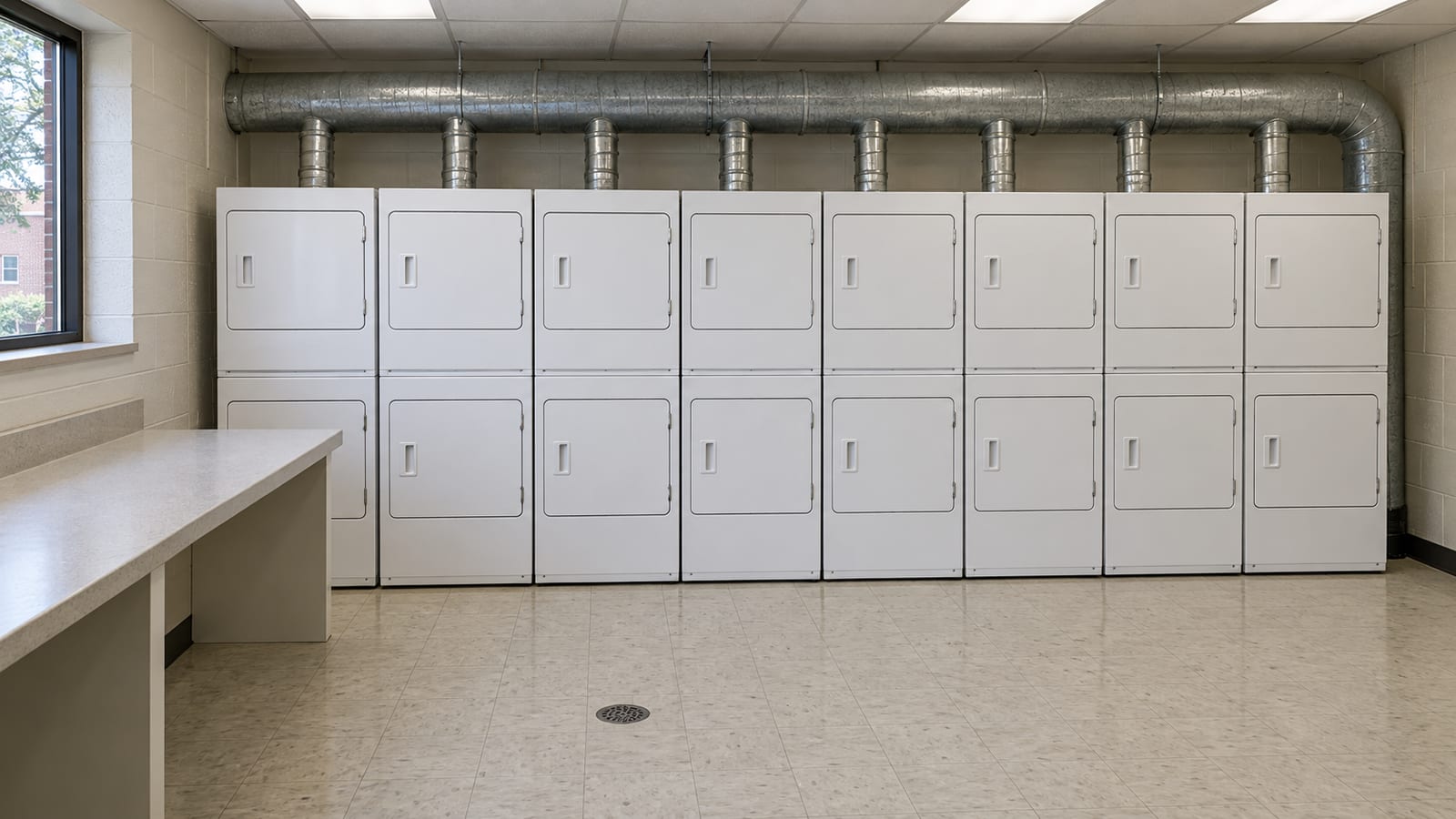
Residents keep telling you the dryers take two cycles to finish a load, or that the laundry room smells hot, and you have to decide what to do about it. For a property manager or condo board member, commercial dryer vent cleaning in Bridgewater, NJ is rarely about one machine. It is about a shared system of ducts, risers and roof terminations that nobody sees, plus a set of people who will ask what was done and when. Your goals are simple to state and harder to reach: find out whether the trouble is one dryer or the whole system, get the vents cleaned without walking into every unit on the same day, and end up with a file that satisfies the fire inspector, the insurer and the owners. That is the order this page follows.
Key Takeaways
Several units, one symptom
When dryers in more than one unit run long or smell hot, the shared riser or roof termination is the first place to look, and a single unit points to that unit's dryer or duct run.
Cleaning and alteration are different scopes
Cleaning alone may not need a construction permit, while replacing, rerouting or adding a termination is mechanical work to confirm with Bridgewater Code Enforcement first.
Bridgewater inspects commercial properties on a cycle
Bridgewater Fire Safety performs annual, semiannual or quarterly fire-prevention inspections under the New Jersey Uniform Fire Code, so dated, unit-by-unit records are worth keeping.
Price follows the system
The number of dryers, the duct layout, the access and the documentation set the scope, so ask for a written scope instead of a flat rate.
Slow Dryers in Several Units Point to the Shared System
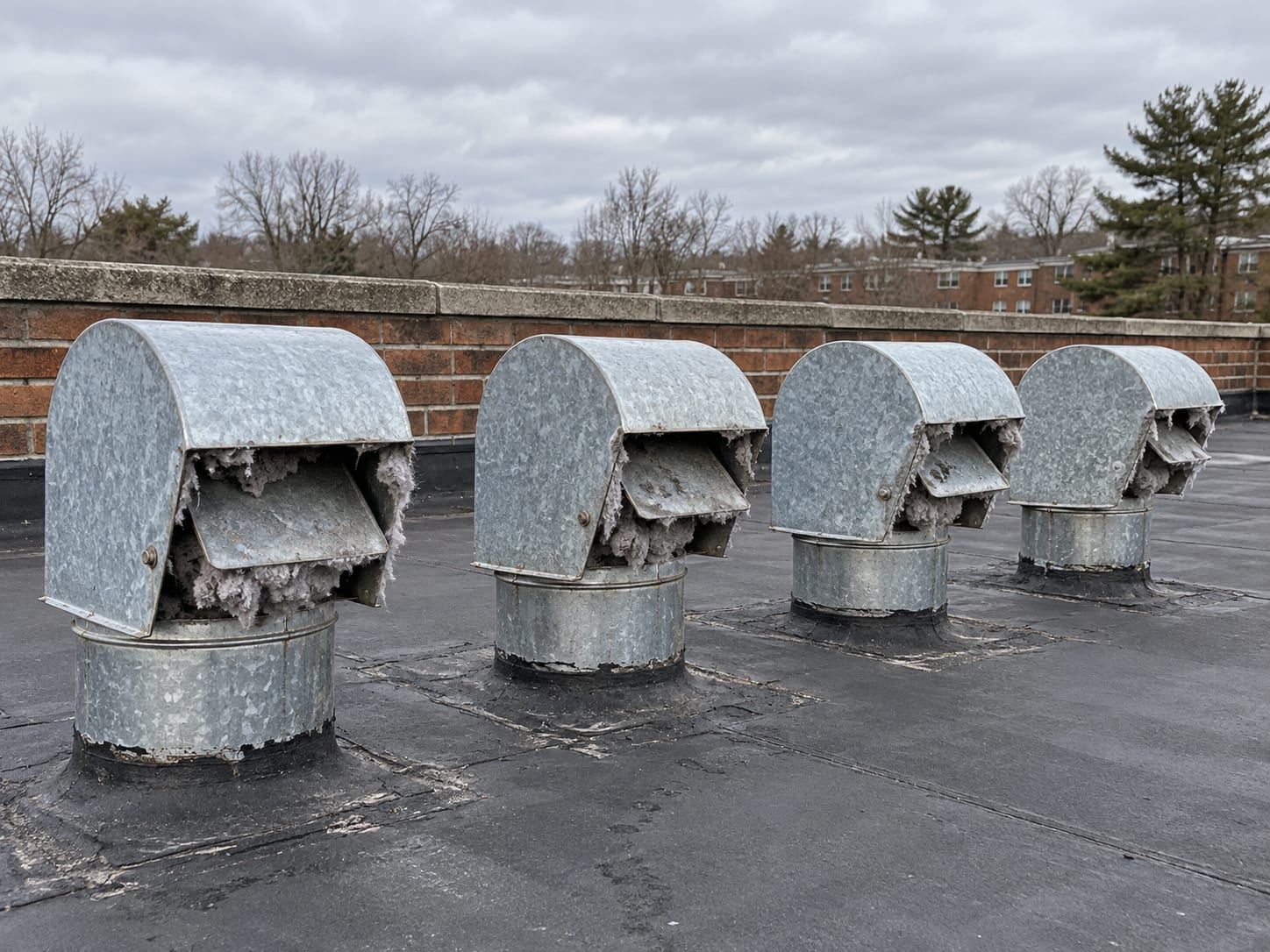
Start by mapping the complaints. If one resident reports a long drying time, the cause is usually that dryer or the duct run behind it. If residents in several units, on several floors or in a common laundry room report the same thing, the shared system moves to the top of the list: a vertical riser (the main duct that carries exhaust from several units), a trunk line, a damper that sticks, or a roof or wall termination clogged with lint or covered by something that should not be there.
Hover or tap a row to highlight it.
| What residents report | Where to look first |
|---|---|
| One resident with a long drying time | That dryer or the duct run behind it |
| Residents in several units, on several floors or in a common laundry room | The shared system: a vertical riser, a trunk line, a damper that sticks, or a roof or wall termination clogged with lint or covered |
The symptoms to write down are drying times that keep growing, a burning or hot smell, warm laundry rooms, and poor airflow at the exterior outlet. Add the unit numbers and the dates to your list.
In the next hour, ask residents to stop using any dryer that overheats, smells like burning or barely dries a load, and let them know who to notify. Identify the affected units and keep any error messages or maintenance records. Please do not have staff pull shared ductwork apart; that is a job for a contractor who works on commercial and multifamily systems.
In the Next Hour
Stop the risky dryers
Ask residents to stop using any dryer that overheats, smells like burning or barely dries a load
Say who to notify
Let residents know who to tell
Note the affected units
Identify them and keep any error messages or maintenance records
Leave shared ductwork alone
Staff should not pull it apart, since that is a job for a contractor who works on commercial and multifamily systems
The reason to act quickly is fire safety. NFPA says failure to clean is the leading cause of home clothes-dryer fires, and it recommends cleaning the vent pipe at least once a year, or more often when drying time gets longer. In its dryer-fire analysis, NFPA reports that dryers were involved in an average of seven civilian deaths, 344 civilian injuries and $233 million in direct property damage each year, and that 32 percent of dryer fires trace to failure to clean. Those are national home-fire figures, not Bridgewater commercial-property numbers. In a shared building, a clogged vent can also mean smoke or water in common areas, disrupted occupancy, damaged laundry equipment and a records question with nothing to point to.
The Work Starts With a Map of Runs, Risers and Terminations
A commercial job in an occupied building differs from a house call because entry, access and records all have to be arranged. On our commercial dryer vent cleaning for apartment complexes work, the sequence looks like this:
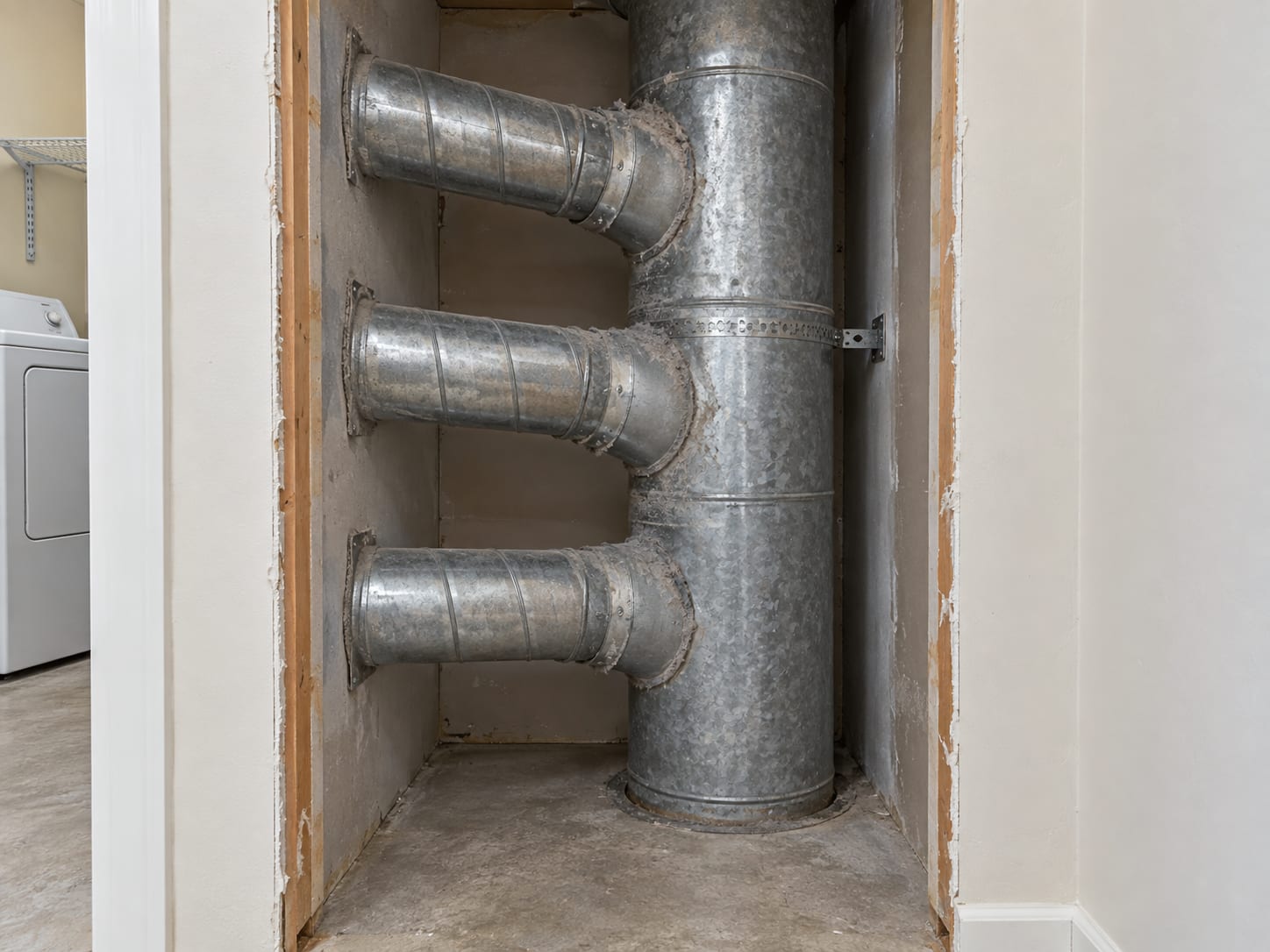
1. Map the system: Individual dryer runs, shared risers, common laundry rooms, duct chases and exterior or roof terminations. 2. Coordinate entry: Arrange access with the owner, the property manager, maintenance staff and residents. 3. Clear the lint: Disconnect equipment where necessary and clear lint and debris from accessible ductwork and termination points. 4. Check the system: Look at airflow, the condition of the termination, backdraft dampers, visible restrictions, damage and any cover that blocks the outlet. 5. Return to service and document: Reconnect equipment and record the units and areas serviced, the conditions found, the recommended corrections and the date.
A written access plan is what keeps residents from being disrupted all at once. It sets which units, laundry rooms and roof or exterior areas are entered on which day, and it tells residents in advance when entry is needed. Ask what happens to the laundry room while work is underway, and whether the work can be done in stages.
A Commercial Vent Job, Step by Step
- 1
Map the system
Individual dryer runs, shared risers, common laundry rooms, duct chases and exterior or roof terminations.
- 2
Coordinate entry
Arrange access with the owner, the property manager, maintenance staff and residents.
- 3
Clear the lint
Disconnect equipment where necessary and clear lint and debris from accessible ductwork and termination points.
- 4
Check the system
Look at airflow, the condition of the termination, backdraft dampers, visible restrictions, damage and any cover that blocks the outlet.
- 5
Return to service and document
Reconnect equipment and record the units and areas serviced, the conditions found, the recommended corrections and the date.
The cleaning may also reveal problems that belong to someone else: a crushed duct, a missing damper, a corroded section, or moisture damage. A good report lists them as recommendations with locations, so you can schedule repairs as a separate scope. If water from a leak or equipment failure has reached a laundry room or duct area, our 24-hour water damage response team handles that side.
Scope and Price Come From the Dryer Count, the Duct Layout and the Access
A flat rate cannot tell you what your building needs, because the work depends on the system. These are the factors that set the scope:
- The count: The number of dryers, units, laundry rooms and duct runs.
- The configuration: Individual ducts compared with shared vertical risers or trunk lines.
- The duct itself: Length, bends, diameter, elevation, and where the roof or exterior termination sits.
- Access: Occupied units, locked rooms, ceilings, walls, roofs, ladders, lifts and restricted mechanical spaces.
- Condition: Lint buildup, foreign objects, nesting, moisture damage, corrosion, crushed ductwork, missing dampers or blocked terminations.
- Documentation: Airflow testing, photographs, labels, reports and unit-by-unit certificates.
- Scheduling: Working around residents and business hours, laundry-room downtime, and any need for more than one visit.
- Extras: Repairs or code-related corrections that go beyond cleaning.
Ask each contractor for a written scope built on those items, along with proof of insurance and any site-specific safety requirements for the property. Comparing scopes line by line shows you which quote covers documentation and which covers only cleaning.
Hover or tap a row to highlight it.
| Factor | What it includes |
|---|---|
| The count | The number of dryers, units, laundry rooms and duct runs |
| The configuration | Individual ducts compared with shared vertical risers or trunk lines |
| The duct itself | Length, bends, diameter, elevation, and where the roof or exterior termination sits |
| Access | Occupied units, locked rooms, ceilings, walls, roofs, ladders, lifts and restricted mechanical spaces |
| Condition | Lint buildup, foreign objects, nesting, moisture damage, corrosion, crushed ductwork, missing dampers or blocked terminations |
| Documentation | Airflow testing, photographs, labels, reports and unit-by-unit certificates |
| Scheduling | Working around residents and business hours, laundry-room downtime, and any need for more than one visit |
| Extras | Repairs or code-related corrections that go beyond cleaning |
The same items set the schedule. The number of dryers, access to occupied units, the design of the shared riser, roof or exterior access, the need to disconnect equipment, any defects found along the way, and whether repairs or permits are needed all change how long the work takes. Rather than a single number of days, ask for a schedule after the contractor has mapped the system and confirmed access to the units, the roof and the mechanical rooms.
Bridgewater Fire Safety's Inspection Cycle Is the Reason to Keep Dated Records
The local reason to keep a file is the township's inspection schedule. Bridgewater Fire Safety states that commercial properties receive annual, semiannual or quarterly fire-prevention inspections, as the New Jersey Uniform Fire Code requires. The Fire Marshal's office handles fire-safety permitting, inspection and plan review. If an inspector asks how you maintain the dryer exhaust in a building with shared laundry, a dated record answers the question in one document.
Whoever manages the property should retain:
- Scope and proposal: What was agreed to before the work began.
- Contractor credentials: License and insurance information.
- What was serviced: Dates, areas, units and duct runs.
- What was seen: Photographs or condition notes where provided.
- How the system performed: Airflow or performance findings where they were measured.
- What needs fixing: Deficiencies and repair recommendations.
- Permits: Applications, approvals and inspection records whenever alterations occur.
- What comes next: Service certificates and the next maintenance date.
Our own documentation includes a service certificate that identifies what was cleaned, when, and the condition it was in, and you can ask any contractor for the equivalent. The same file answers the insurer, the condo board and the owners. It shows that maintenance was scheduled, done and followed up, and it gives the next manager something to pick up.
Records to Keep on File
Scope and proposal
What was agreed to before the work began
Contractor credentials
License and insurance information
What was serviced
Dates, areas, units and duct runs
What was seen
Photographs or condition notes where provided
How the system performed
Airflow or performance findings where they were measured
What needs fixing
Deficiencies and repair recommendations
Permits
Applications, approvals and inspection records whenever alterations occur
What comes next
Service certificates and the next maintenance date
Cleaning and Alteration Are Different Scopes for Permit Purposes
Routine cleaning may not require a construction permit when nothing in the building, mechanical, electrical, structural or duct system is altered. Whether a given cleaning needs one depends on the scope, so treat each job on its own facts. Bridgewater's Code Enforcement office says construction permits are generally required when work involves mechanical systems, or when a structure is constructed, enlarged, altered or demolished, that plans and a plot plan may be required, and that inspections follow permit issuance.
So, before any work that goes beyond cleaning starts, confirm the scope with Code Enforcement. That includes replacing a duct, rerouting a run, adding a new termination, making a structural penetration, or any electrical or gas work. Ask whether your proposed scope is cleaning only or mechanical alteration, and get the answer before the crew arrives.
Hover or tap a row to highlight it.
| Type of work | Permit question |
|---|---|
| Routine cleaning where nothing in the building, mechanical, electrical, structural or duct system is altered | May not require a construction permit; treat each job on its own facts |
| Replacing a duct, rerouting a run, adding a new termination, making a structural penetration, or any electrical or gas work | Mechanical work to confirm with Bridgewater Code Enforcement before the crew arrives |
New Jersey's construction code page lists the International Mechanical Code/2024 as the state mechanical subcode under N.J.A.C. 5:23-3.20, current as of August 17, 2026. The exact exhaust provisions for your building depend on its classification, the duct configuration, the termination and the scope, so have the contractor and the code official review those details together.
The Lease or Governing Documents Decide Who Pays and Who Gives Access
Responsibility for the dryer system is set by the documents, not by a single rule. In an apartment complex, the landlord or owner may control the risers and roof terminations while each tenant is responsible for the dryer itself. In a condominium or townhome community, the association's governing documents may draw the line at the unit wall or at the duct. Senior and residential-care buildings, hotels and laundromats have their own arrangements.
Before you schedule unit access or exterior work, read the lease, the maintenance allocation and the governing documents, and get any property-specific approvals in writing. Then tell residents what entry is needed and when. Bridgewater is a Somerset County township with a balance of residential and commercial uses, according to its township profile, and the property types most affected by shared dryer systems are the ones where that documentation matters most.
Keeping the Next Blockage From Building Up Depends on Your Schedule
Once the vents are clean, the next date is what keeps them clean. NFPA advises cleaning the lint filter before or after every load, keeping the exhaust pipe unrestricted, maintaining the outdoor vent flap, keeping combustible materials away from the dryer and having gas dryers inspected by a qualified professional. Its dryer safety tips recommend cleaning the vent pipe at least annually, and sooner when drying time increases.
For a shared building, set the next maintenance date from real conditions: how many dryers there are, how heavily the laundry rooms are used, and what the last report said. If the report noted lint in one riser or a damaged termination, schedule the correction and the follow-up. Recent roof, siding or construction work is worth mentioning to the contractor too, because it can affect terminations.
A simple rhythm helps:
- In the next day: Count the dryers, laundry rooms, access points, risers and terminations, and pull prior service records.
- In the next week: Complete the service, keep the written records, communicate unit-entry requirements, and schedule any repairs the report lists.
- Ongoing: Ask residents to report longer drying times as soon as they notice them, and set the next service date.
Frequently Asked Questions About Commercial Dryer Vent Cleaning Bridgewater NJ
How do I tell whether the problem is one dryer or the shared vent?
One unit with a long drying time usually points to that dryer or its duct run. Several units with the same symptom point to a shared riser, trunk line or roof termination.
Does cleaning our dryer vents need a permit in Bridgewater?
Routine cleaning may not, when nothing is altered. Replacing, rerouting or adding a termination is mechanical work, so confirm the scope with Bridgewater Code Enforcement before it begins.
How often should a commercial building's dryer vents be cleaned?
NFPA recommends cleaning the vent pipe at least annually, and more often when drying time increases. Set your schedule from the building's dryer count, usage and the last report.
What records should we keep?
Keep the scope, contractor insurance details, dates, units and duct runs serviced, condition notes or photographs, airflow findings, recommendations, any permits and the next service date.
Who is responsible, the tenant, the association or the owner?
The lease or the governing documents decide it. Review them before scheduling access.
Dryer Vent Quick Check
1. How often does NFPA recommend cleaning the vent pipe?
2. If dryers in several units run long, where should you look first?
3. Does routine cleaning with nothing altered always need a construction permit?
4. How often does Bridgewater Fire Safety inspect commercial properties?
5. Who decides who is responsible for the dryer system?
Pick an answer to begin.
Moving Forward
Several units with slow dryers point to the shared system, and the fastest way to confirm it is to map the runs, risers and terminations. A written scope sets the price, a permit check separates cleaning from alteration, and a dated, unit-by-unit file answers the fire inspector, the insurer and the owners. The lease or governing documents settle who handles what.
A building with a clean system and a current file spends less time answering questions and more time running smoothly. It also gives the next manager or board a clear starting point.
If your building in Bridgewater, NJ has dryers that run long or smell hot, ExecPro Restoration & Cleaning can map the system, clean the shared runs and terminations, and leave you with the unit-by-unit records. Call us at (888) 300-3772 or contact us with the property type, the number of dryers and the complaints you have received, and we will tell you what to set up first. You can also read about the mold remediation and restoration work we do in Bridgewater.
Dryer Vent Terms
Tap a term to see what it means.
Riser. The main duct that carries exhaust from several units.
Serving Bridgewater
ExecPro Restoration & Cleaning provides mold remediation services in Bridgewater, NJ, from inspection and testing through removal, drying, and post-remediation verification. Call (888) 300-3772 for 24/7 emergency response.
Related Articles
Commercial Dryer Vent Cleaning in Robbinsville, NJ: Shared Laundry Rooms in Hotels, Assisted-Living and Mixed-Use Buildings
Across a hotel, an assisted-living residence or a mixed-use building, commercial dryer vent cleaning in Robbinsville starts with a hot room and slow dryers.
Commercial Dryer Vent Cleaning in Trenton, NJ: Shared Exhaust in Apartment Buildings and Conversions
Under New Jersey's fire code, dryer exhaust must stay clear of lint. See how commercial dryer vent cleaning in Trenton handles shared runs and records.
Mold Testing in Bridgewater, NJ: When a Lab Report Changes the Plan
Offered a mold test in Bridgewater, NJ? Sampling pays off when the source is hidden or someone else needs a result, so ask what it would change first.