
Multi-Unit Dryer Vent Cleaning in NJ: When One Complaint Is a Building Problem
Cal HewittPublished Updated
- commercial services
- dryer vent cleaning
- property management
- new jersey
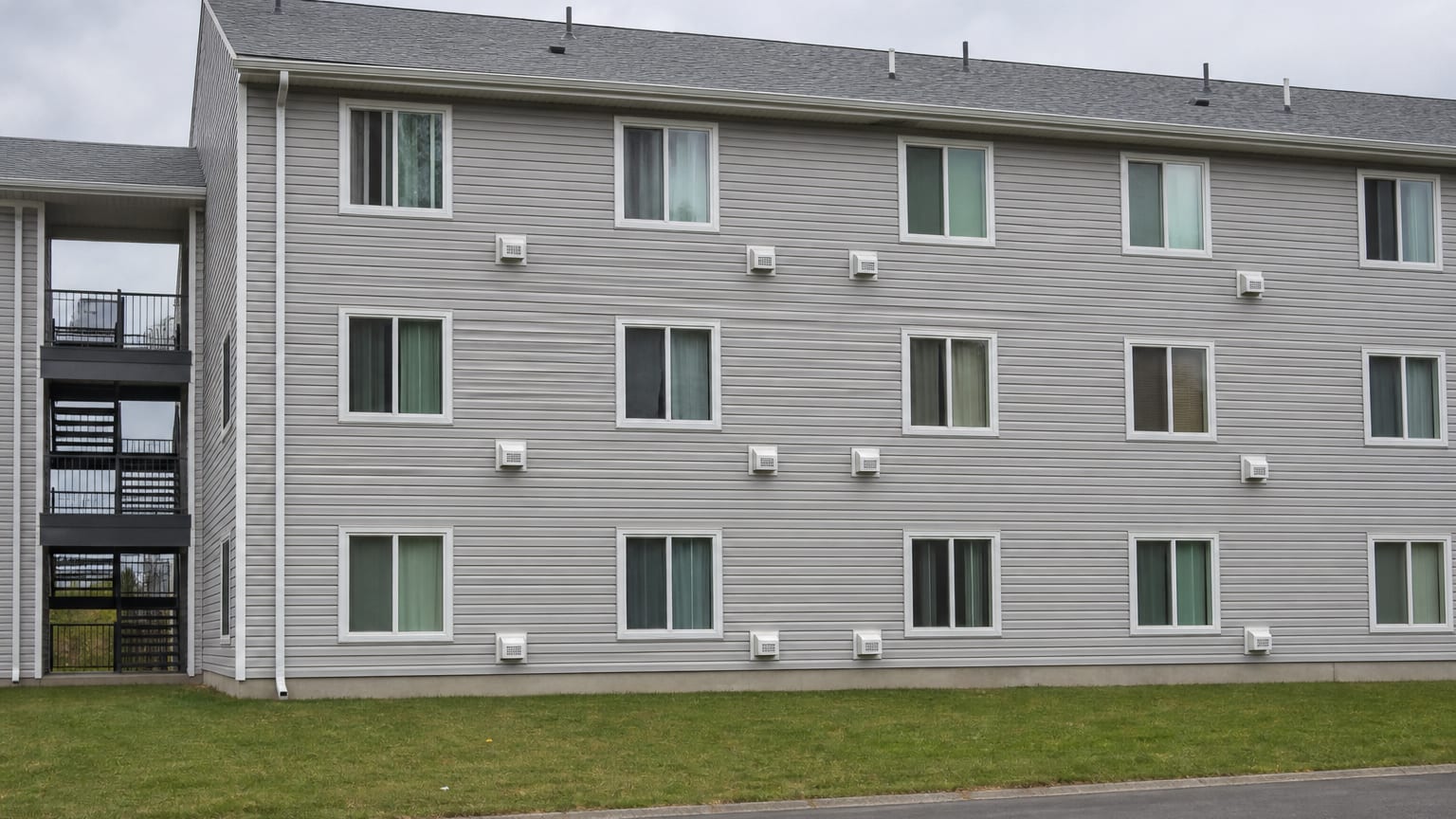
A resident tells you their clothes come out damp and they are running everything twice. It reads like a broken appliance, so it goes on the list behind the leaking tap in 4B. The awkward part is that in a building with a shared exhaust riser, that same complaint can be the only visible symptom of a restriction sitting three floors above the unit that reported it, in a duct nobody in the building can reach. Working out which of those you have is not a maintenance judgement call so much as a scoping question, and it has a clear order. What follows is how to tell the difference, what New Jersey's code and multiple-dwelling rules actually say about it, and what the work involves when the path turns out to be shared.
Key Takeaways
A clean lint screen proves almost nothing
the screen is one point on a path that runs from the appliance through a transition duct, a concealed duct or common riser, and out to an exterior termination.
New Jersey code treats shared systems as their own category
the mechanical code carries a provision written specifically for common exhaust systems serving clothes dryers in multistory structures.
Failure to clean led the causes
the U.S. Fire Administration attributes 31% of reported home clothes dryer fires in 2018 to 2020 to failure to clean, which is national data rather than a New Jersey rate.
The building owns the parts the resident cannot reach
a resident can clear a lint screen and look at an exterior vent from the ground, and should not be asked to disconnect a dryer or go onto a roof.
One Complaint Can Be a Single Appliance or a Shared Path
A dryer depends on an uninterrupted route: blower, transition duct, concealed duct or common riser, exterior termination. Lint collects in the appliance and along that route. The Consumer Product Safety Commission's guidance is that accumulation blocks airflow, builds excess heat, and in some dryers results in fire, and it names the two signs a resident actually notices: clothes still damp at the end of a normal cycle, and drying that takes unusually long.
What those signs do not tell you is where. That is the whole difficulty. The same two symptoms appear whether the restriction is in a lint screen, a crushed transition duct behind the machine, a concealed run inside the wall, a shared vertical shaft, or a blocked cap on the outside of the building. In a single-family house the list is short and mostly reachable. In a multiple dwelling it is neither.
Five Places One Symptom Can Start
The lint screen
The reachable end of the path.
The transition duct
A crushed one behind the machine produces the same signs.
A concealed run
Inside the wall.
A shared vertical shaft
One restriction can affect more than one dryer.
A blocked cap
On the outside of the building.
So the first move is not to send somebody to clean a vent. It is to establish which of those five the complaint could be pointing at, because four of them are yours and one of them may be the resident's appliance.
A Shared Riser Is Not Several House Vents in a Row
This is the distinction the rest of the decision rests on, and New Jersey's own code record is the evidence for it. The state's mechanical code carries a provision titled for common exhaust systems for clothes dryers located in multistory structures, and the code advisory record describes what that provision was written around: a continuously operating exhaust fan serving the common dryer system, a vertical shaft, and standby power for buildings that have one.
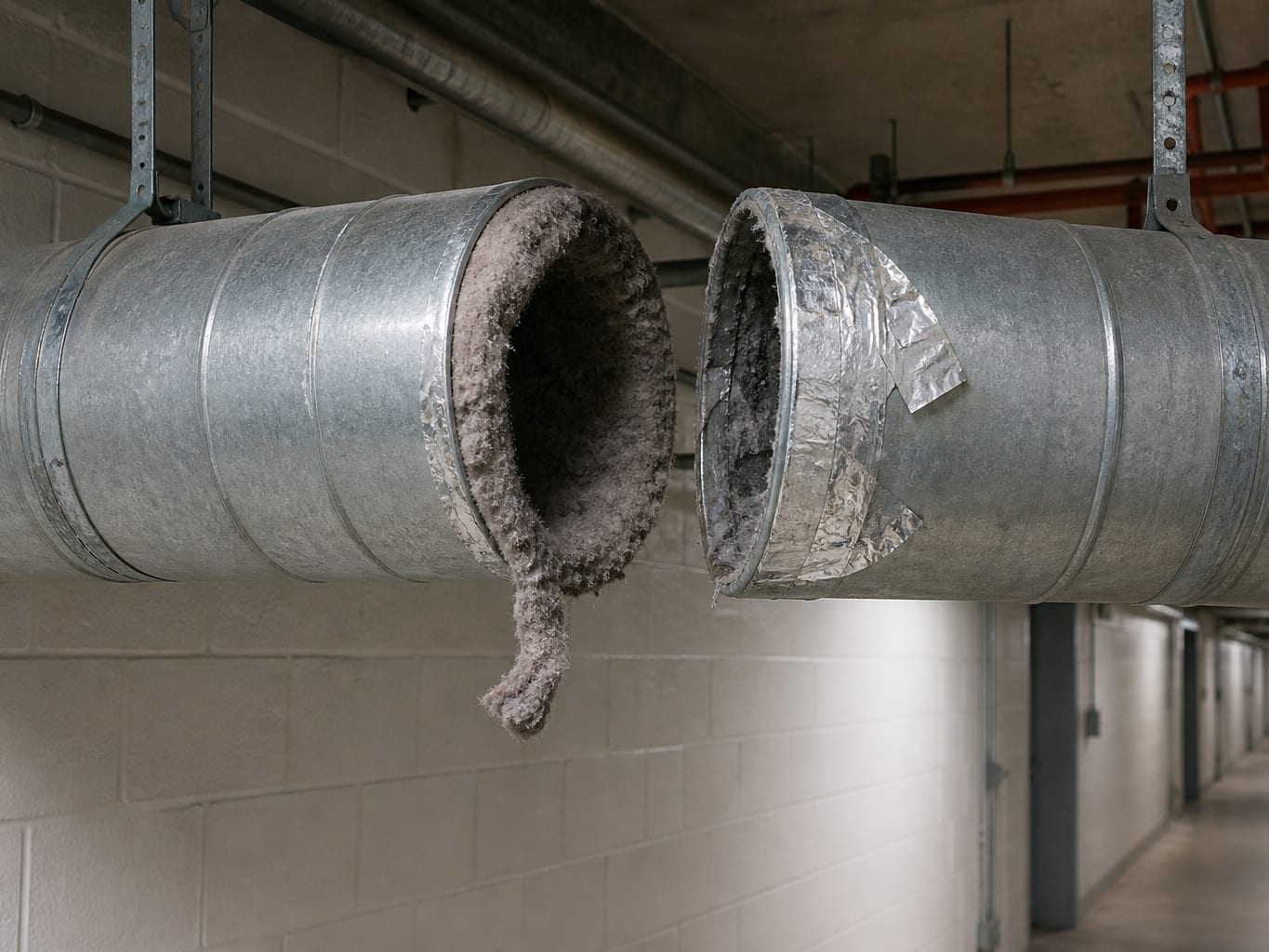
That is a description of a building system, not of plumbing convenience. It means a restriction, a damaged transition piece or a blocked termination can degrade the airflow serving more than one dryer at once, and that the failure point is frequently somewhere no resident has any business going.
It also changes what a complaint is worth as information. In a house, one dryer drying slowly is one data point about one duct. In a building on a common system, one dryer drying slowly is a data point about a shared asset, and the useful next question is whether anyone else on that riser has reported the same thing in the last few months. Your own complaint log is better evidence here than anything a technician can see from the laundry room.
New Jersey's current adopted Mechanical Subcode is the International Mechanical Code 2024, adopted through N.J.A.C. 5:23-3.20 and current as of the DCA codes page on 17 August 2026. What applies to your building specifically still depends on its construction date, its permitted design, later alterations and the local enforcing agency. A cleaning visit is not a code inspection, and nobody should present it as one.
Record These Before Anyone Runs Another Load
Three signs are worth acting on, and all three come from safety agencies rather than from a vendor:
- Clothes still damp after a normal cycle, or drying that now takes longer than it used to.
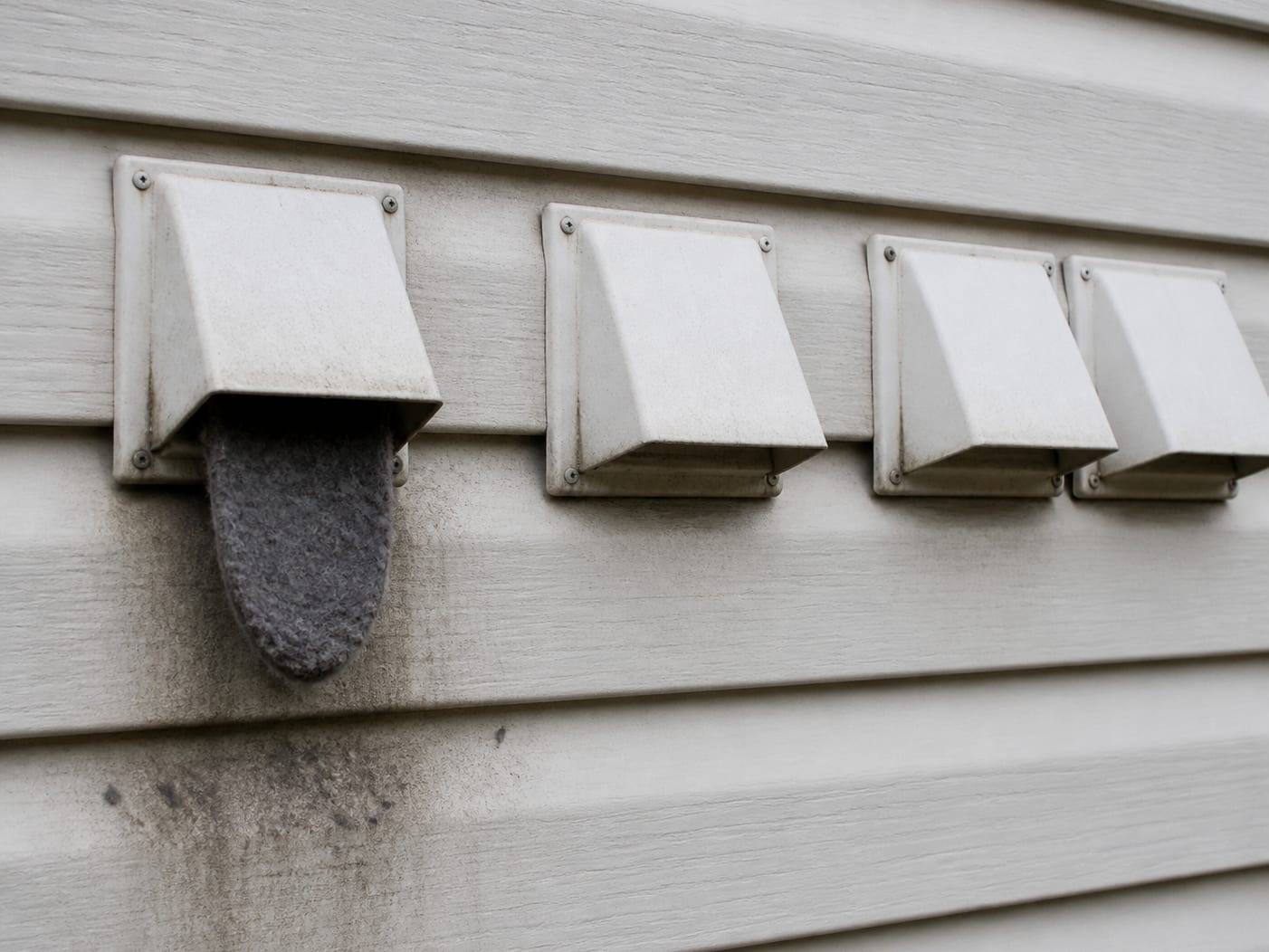
- No exhaust air leaving the exterior termination while a dryer is running. CPSC's guidance is that an absence of escaping air can indicate a blocked vent or duct. Check it from a safe position on the ground, never from a ladder against a roof line.
- Flexible plastic or foil accordion-style transition duct behind the machine. CPSC advises against it because it traps lint and kinks or crushes more readily than rigid or corrugated semi-rigid metal.
What to write down matters as much as what you see, because in a shared system today's note is the pattern evidence for a complaint six months from now. Record the unit or common-laundry location, the dryer number if the machines are numbered, the date, what the cycle actually did, and whether the clothes came out damp.
What to Record for Each Complaint
Location
The unit or the common-laundry room.
Dryer number
If the machines are numbered.
Date
Today's note is the pattern evidence for a complaint six months from now.
What the cycle did
The actual behavior, including whether it ran longer than it used to.
Whether the clothes came out damp
One of the two signs a resident actually notices.
Two things to stop. A dryer with a known disconnected duct should not be run at all. And the New Jersey Division of Fire Safety's dryer safety guidance says not to run a dryer while asleep or out of the building, which is worth putting in a laundry-room notice rather than assuming.
The Response Runs in a Fixed Order
The sequence below is the same whether the property is a garden apartment block or a high rise. What changes is how many units sit on the affected path.
A Multi-Unit Dryer Vent Job, Start to Finish
- 1
Log the complaint properly
Unit, machine, date, cycle behaviour. This is the pattern evidence for the riser, not paperwork.
- 2
Do the safe checks only
Lint screen, clutter around the appliance, and exterior discharge observed from the ground while a dryer runs.
- 3
Escalate anything concealed or shared
Concealed ducts, shaft systems, roof terminations and common laundry systems go to the owner or manager, never to the resident.
- 4
Define the scope before booking work
Which dryers and outlets are on the affected path, who controls access, and whether this is cleaning or a correction.
- 5
Give access notice and coordinate
Occupied units and common rooms need scheduling around residents, which is usually the longest part of the job.
- 6
Clean, correct, and reconnect
Any duct disconnected for the work is reconnected before the appliance is operated again.
- 7
Verify and document the close
Confirm exterior discharge, and keep the work order, findings, units served and completion date.
That last step is the one that pays off later. For a common system, the record worth keeping is the work order, the access notices, the condition findings, photographs where they can be taken safely, the units or areas served, the corrective work and the completion date. None of that is a New Jersey prescribed form. It is simply what an insurer, an association or a buyer's attorney will ask for, and reconstructing it afterwards is not possible.
One boundary to hold: if the work changes installed ductwork, appliances, electrical components or building systems, the local construction official decides what permits apply. A cleaning contract does not authorise an alteration.
New Jersey's Multiple-Dwelling Rules Set the Duty
The Bureau of Housing Inspection administers the Hotel and Multiple Dwelling Law for multiple-family buildings of three or more dwelling units, and those properties are subject to registration and statewide inspection. Certain owner-occupied condominium and cooperative sections are exempt, but only under stated conditions.
The duty itself is stated plainly: owners of multiple dwellings must maintain the building and its facilities safely, and the state's tenant guidance tells tenants to report code violations to the landlord or superintendent. That is the allocation which matters for a dryer complaint. It is not, however, a universal answer about who does every dryer-duct task in every building. The lease, the condominium governing documents, any service contract, and who actually owns the dryer equipment settle that, and they differ building to building.
Hover or tap a row to highlight it.
| Who | What they do |
|---|---|
| Resident | Clears a lint screen, looks at an exterior vent from the ground while a dryer runs, and reports what they see |
| Owner or manager | Handles concealed ducts, shaft systems, roof terminations and common laundry systems, plus scope, access and records |
| Not asked of a resident | Disconnecting a dryer, or going onto a roof or into a shaft |
Worth knowing about the inspection cycle, because it gets confused with maintenance scheduling: the cyclical inspection interval is risk-tiered at seven years, five years or two years depending on the building's violation and abatement history. Those are building inspection cycles. There is no statewide mandatory cleaning frequency for a dryer exhaust duct, no required certificate after a cleaning, and no published automatic insurance consequence for not having one. Anyone telling you New Jersey requires an annual certificate is describing their own service plan.
Hover or tap a row to highlight it.
| Interval | Building's history |
|---|---|
| Seven years | Qualifying prior cycles with no violations, or abatement at the first reinspection |
| Five years | Abatement at the second or third reinspection |
| Two years | Violations not abated by the third reinspection |
Scope Drives the Cost, and No Honest Statewide Price Exists
No New Jersey government, university, peer-reviewed or published industry source gives a defensible statewide price range for multi-unit dryer vent cleaning. This page will not manufacture one by averaging residential advertisements or multiplying a per-unit figure across a shared riser, because a shared riser is not a stack of identical small jobs.
What genuinely moves the number:
- System architecture. Individual short runs behind each unit, versus a common exhaust system in a multistory structure.
- Access and coordination. How many occupied units and common laundry areas need entry, whether the roof or exterior termination is reachable, and whether a shared path has to be isolated or worked around resident use.
- Physical condition. Lint restriction, exterior discharge performance, duct material, kinks and crushing, disconnected components.
- Alteration versus maintenance. Cleaning that uncovers duct replacement, fan work, an appliance issue, electrical work or a wall or roof penetration has crossed out of maintenance.
- The records your risk process needs. A unit list, access record, condition report, photographs and repair documentation, where a manager, association, insurer or lender expects them.
Hover or tap a row to highlight it.
| Driver | What it covers |
|---|---|
| System architecture | Individual short runs behind each unit, versus a common exhaust system in a multistory structure |
| Access and coordination | How many occupied units and common laundry areas need entry, whether the roof or termination is reachable, and whether a shared path has to be isolated |
| Physical condition | Lint restriction, exterior discharge performance, duct material, kinks and crushing, disconnected components |
| Alteration versus maintenance | Cleaning that uncovers duct replacement, fan work, an appliance issue, electrical work or a wall or roof penetration has crossed out of maintenance |
| Records | A unit list, access record, condition report, photographs and repair documentation |
The honest version of a quote for this work is a dated written scope for your building, separating the cleaning from any corrective construction. If a number arrives before anybody has looked at the riser, it is describing a different building.
Documentation Decides What Happens After an Incident
There is no universal New Jersey position that a clogged dryer vent is covered, excluded or denied. Coverage turns on the policy, the cause of loss, endorsements, the deductible and the insurer's adjustment.
What the Department of Banking and Insurance does say is procedural and applies to any property loss: call the carrier promptly, ask what documentation is required, make the temporary repairs needed to prevent further damage, keep the bills, and leave permanent repairs until the adjuster has reviewed the damage. It also advises documenting the property and retaining damaged property until the insurer can inspect it or releases it.
For a multi-unit owner or an association, add the layer that a single-family claim does not have: the service scope, the photographs, the incident timeline, clear identification of which units and common areas were involved, the invoices and the repair records. That file is also what answers a resident's question about whether the building knew, which is a separate problem from the claim and frequently the more expensive one.
Prevention Is Condition-Based, Not Seasonal
It would be convenient to tell you New Jersey has a dryer-vent season. It does not, at least not in anything published. The state's climate record supports a maintenance-planning fact and nothing more: precipitation is year-round, with a statewide normal of 47.56 inches for 1991 to 2020, wetter in July at 4.71 inches than in February at 2.86 inches. No New Jersey source reviewed dates dryer-vent failures or cleaning demand by season, and the mechanical driver the safety agencies actually name is lint and restricted airflow, not weather.
So the preventive programme is condition-based. Exterior termination checks belong in the year-round maintenance round, with a documented check after any observed damage to a termination or vent outlet. Flexible plastic and foil transition ducts get replaced with rigid or corrugated semi-rigid metal as units turn over. Laundry rooms get a notice covering the lint screen, the extension cord rule, and not running a dryer unattended. And the complaint log gets read as a system, because two slow dryers on one riser in one quarter is the signal that a single work order will never look like on its own.
Frequently Asked Questions About multi unit dryer vent cleaning NJ
How often does New Jersey require dryer vents to be cleaned in an apartment building?
No reviewed New Jersey authority sets a statewide mandatory cleaning frequency for dryer exhaust ducts, and none requires a certificate after a cleaning. Your obligation is the general one: owners of multiple dwellings must maintain the building and its facilities safely. Most managers set an interval from their own complaint history and condition findings rather than from a rule.
Is the dryer duct the tenant's responsibility or the building's?
The lease, the condominium documents, any service contract and who owns the equipment settle it, and they differ building to building. What is consistent is that a resident can be asked to clean a lint screen and to look at an exterior vent from the ground, and should not be asked to disconnect a dryer or access a roof or shaft. Anything concealed or shared is a building matter in practice, whoever pays.
We cleaned the lint screens. Why are the dryers still slow?
Because the screen is one point on a path that also includes the transition duct, the concealed run, the shared riser where there is one, and the exterior termination. A restriction at any of those produces the same symptom. Commercial multi unit dryer vent cleaning covers the whole path rather than the accessible end of it.
Do dryer vent problems really cause fires, or is that a sales line?
The U.S. Fire Administration attributes 31% of reported home clothes dryer fires in 2018 to 2020 to failure to clean, which made it the leading contributing factor. That is national NFIRS data, not a New Jersey rate, and it is about home dryer fires generally rather than multi-unit buildings specifically. It is still the most substantial published figure on the question.
Will our insurer refuse a claim if we have no cleaning records?
No reviewed source establishes an automatic consequence either way. Coverage depends on the policy, the cause of loss and the insurer's adjustment. Records help you answer questions rather than guarantee an outcome, and they cannot be created after the fact.
Does a dryer vent cleaning need a permit?
Cleaning does not. If the work turns into replacing ductwork, altering a fan or appliance, touching electrical components, or making a wall or roof penetration, the local construction official decides what applies. New Jersey's adopted Mechanical Subcode is the International Mechanical Code 2024.
Multi-Unit Dryer Vent Quick Check
1. What does a clean lint screen prove?
2. What share of reported home clothes dryer fires in 2018 to 2020 did the U.S. Fire Administration attribute to failure to clean?
3. Does New Jersey set a statewide mandatory cleaning frequency for dryer exhaust ducts?
4. Which transition duct does CPSC advise against?
5. Does a dryer vent cleaning need a permit?
Pick an answer to begin.
Final Thoughts
The useful reframe for a multi-unit property is that a dryer complaint is a scoping question before it is a maintenance task. Establish whether the affected path is one appliance, one unit's duct, or a shared riser, because that decides who acts, what access is needed, and whether the answer is a cleaning or a correction. New Jersey gives you a duty to maintain the building safely and a code that recognises common dryer exhaust systems as their own thing, and leaves the rest to your building's own facts.
Buildings that run this as a condition-based programme, with a readable complaint log and a documented file per visit, tend to catch a shared restriction while it is still a slow dryer. The ones that treat each complaint as an isolated ticket find out about the riser a different way.
If a dryer complaint in your building might be pointing at a shared path, we can scope it properly before anybody books a truck. ExecPro Restoration & Cleaning has worked on commercial and multi-unit properties across central New Jersey since 2015, from Princeton Junction NJ through West Windsor NJ, Plainsboro NJ, Hamilton NJ, Trenton NJ, New Brunswick NJ and the surrounding towns. Call ExecPro Restoration & Cleaning at (888) 300-3772 or get in touch. We handle unit and common-area service records, shared-riser work, and the documentation your association or insurer will ask for.
Multi-Unit Dryer Vent Terms
Tap a term to see what it means.
Lint screen. The screen in the appliance. Cleaning it proves almost nothing about the rest of the path.
Related Articles
Commercial Dryer Vent Cleaning in Robbinsville, NJ: Shared Laundry Rooms in Hotels, Assisted-Living and Mixed-Use Buildings
Across a hotel, an assisted-living residence or a mixed-use building, commercial dryer vent cleaning in Robbinsville starts with a hot room and slow dryers.
Mold Remediation in Trenton, NJ: Planning the Whole Job Around the People Living There
When tenants or family are still living in the house, mold remediation in Trenton, NJ has to be planned around them. See the steps, the scope and the records.
Commercial Dryer Vent Cleaning in Bridgewater, NJ: Records for the Fire Inspector and the Board
For property managers and condo boards, commercial dryer vent cleaning in Bridgewater means finding the shared cause and keeping fire inspector records.