River Scale, Lot Scale: Flood Damage Cleanup in Plainsboro, NJ
Cal HewittPublished
- flood damage cleanup
- flood hazard area
- contamination
- plainsboro nj
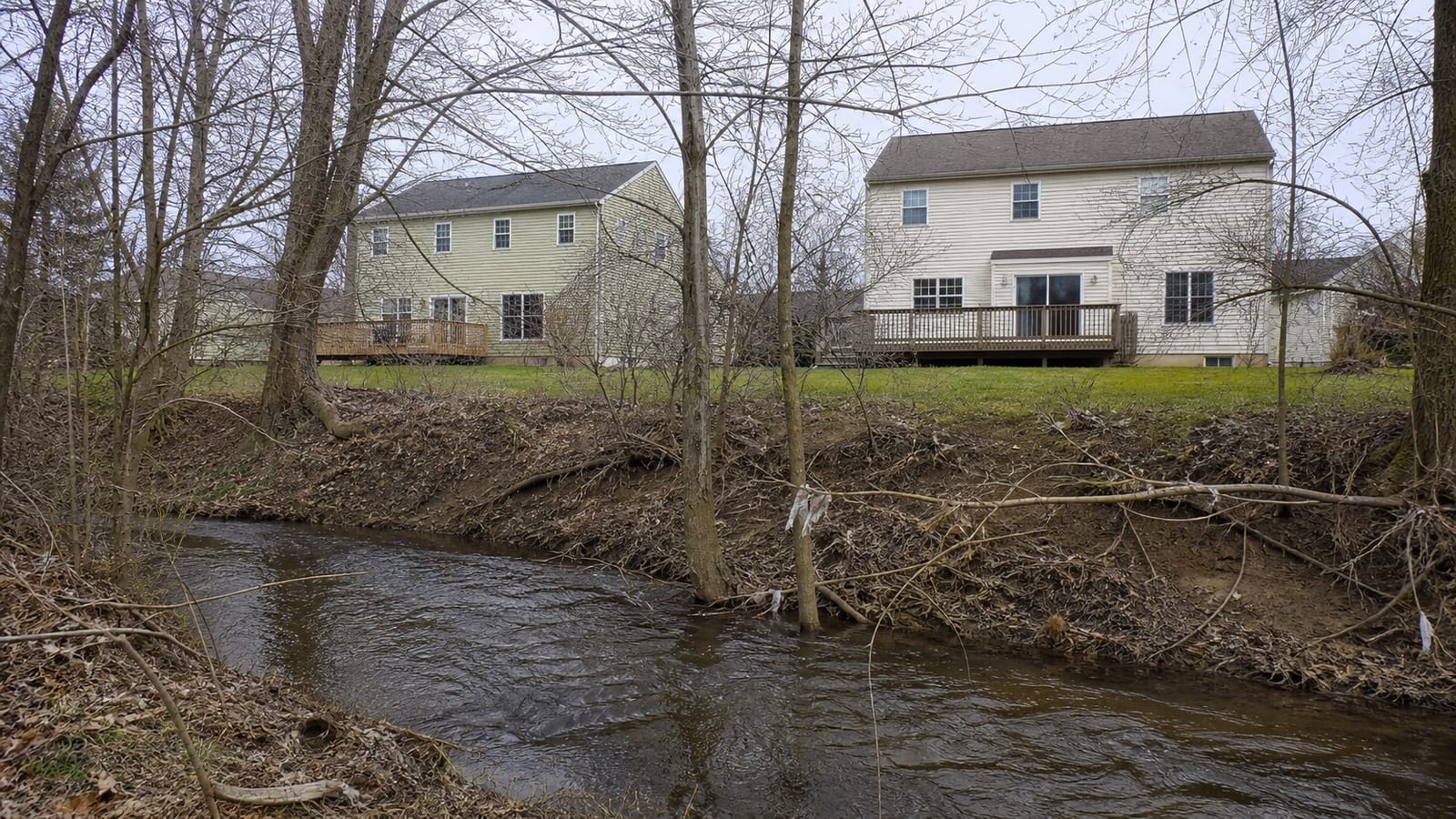
Watershed maps are drawn at the scale of a river, and flood determinations are made at the scale of a lot. That gap is where most bad flood advice lives. Plainsboro's floodplain chapter names the Millstone River, Stony Brook, Devils Brook, Shallow Brook, Bee Brook and Cranbury Brook, and the township's conservation plan notes that Delaware and Raritan Canal Commission drainage requirements apply across the whole municipality. Every one of those facts is true of the township and none of them is true of your address in particular.
The township's own code makes the point more bluntly than any contractor would dare. It states that compliance with its rules, or being located outside a special flood hazard area, does not mean a property will be free from flood damage. Read that carefully: the municipality that publishes the maps is telling you the maps do not settle it. What settles it is the parcel, checked against the current information held by Planning and Zoning, and the actual path the water took on the day.
Key Takeaways
Floodwater is treated as contaminated from the first hour
CDC says it can carry sewage, agricultural and industrial waste, germs, chemicals and sharp debris.
Outside the mapped zone is not the same as safe
Plainsboro's code says location outside a special flood hazard area does not mean a property will be free from flood damage.
The parcel is the unit of decision
Maps and studies sit with Planning and Zoning, and the Township Engineer serves as floodplain administrator.
More restrictive mapping wins
The township adopted the July 6, 2010 FEMA study and maps and must compare later federal and NJDEP information, using the stricter result.
Power before pumps
CDC says never to operate electrical equipment while standing in water, and to have the system checked before power is restored.
Photograph before anything is thrown out
State insurance guidance is to document damaged property before disposal and keep it until the carrier advises otherwise.
Every Map You Can Look At Is Bigger Than Your Lot
There are four different scales at work here and confusing them is the usual mistake.
The watershed is the largest. Naming the Millstone River tells you about a drainage system covering many square miles, and it tells you nothing about whether water reaches your door.
The flood insurance rate map is next. Plainsboro adopted the Middlesex County study and the map panels effective July 6, 2010, and its code requires comparison against newer federal information and New Jersey Department of Environmental Protection delineations, with the more restrictive result controlling. So even the FEMA panel is not the final word here, because the state's regulated flood hazard area can reach further than the federal one.
The soil series is a third scale, and it is the one that catches people out on lots nowhere near a stream. The township's conservation plan records that alluvial soils are poorly drained and frequently flooded, that Fallsington soil generally has a water table less than half a foot from the surface, that Hammonton soil is often limited by a high seasonal water table, and that Woodstown soils can carry a seasonal high water table one and a half to four feet below grade. The plan says plainly that residential development on some of these may need costly construction to prevent basement seepage or foundation shifting. That is a mapped soil observation, not a finding about your foundation.
The parcel is the fourth scale and the only one that decides anything. Riparian zones alone can run anywhere from 50 to 300 feet depending on the waterbody, which means two houses on the same street can sit in genuinely different regulatory positions.
Why the Source Changes What Can Be Saved
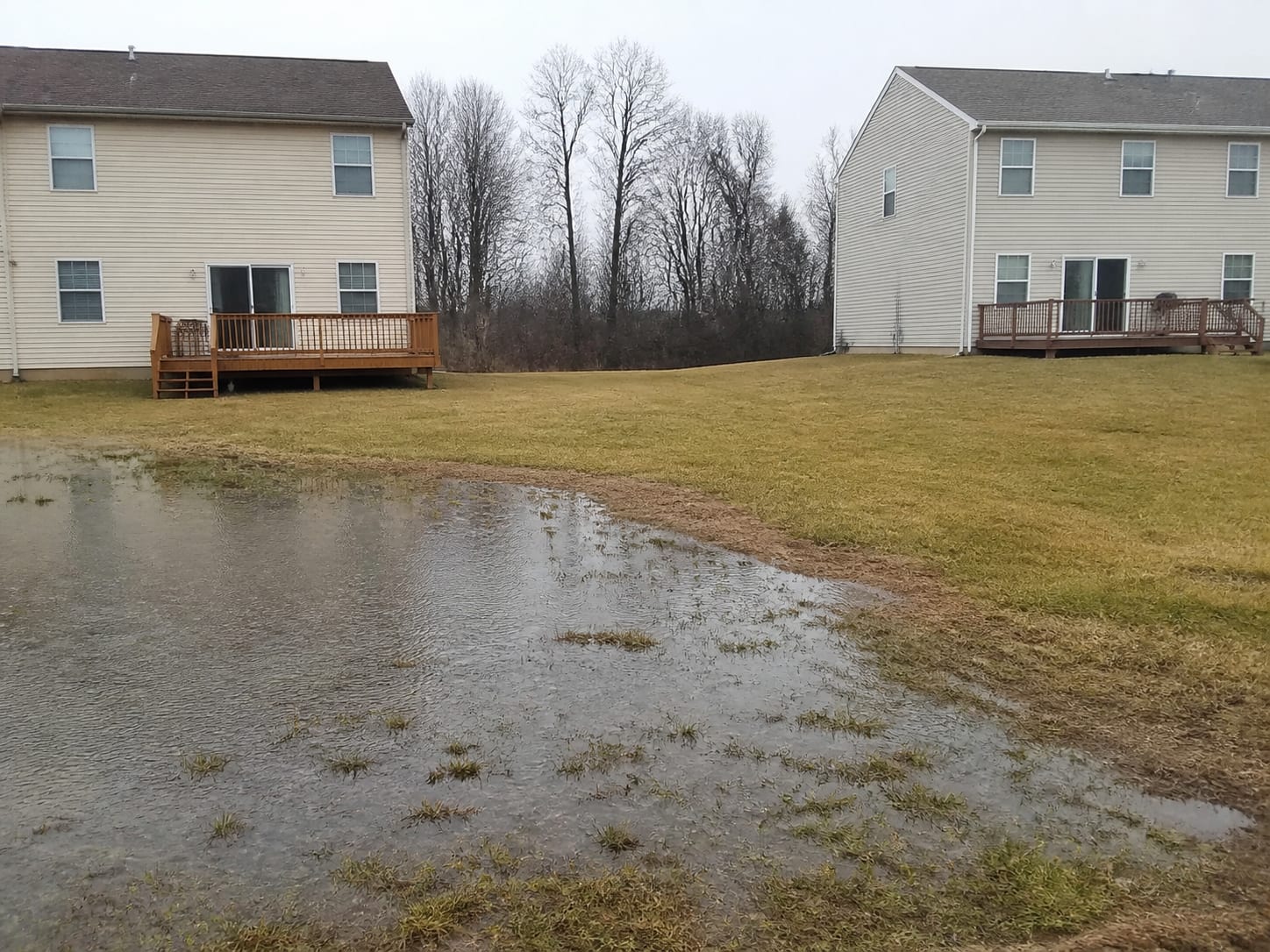
A burst supply line and a flooded ground floor produce similar looking rooms and require entirely different work. CDC is direct about why: floodwater may contain sewage, agricultural or industrial waste, germs, chemicals, sharp debris and other contaminants. That is the reason the response to a flood is a cleaning and removal problem before it is ever a drying problem.
The practical consequences follow from that one fact. Porous materials that floodwater has soaked are removed rather than dried. CDC specifically directs that drywall and insulation contaminated with sewage or floodwater be taken out and discarded, and that items which cannot be cleaned and dried quickly go the same way. Hard surfaces that can be properly cleaned are cleaned. A flooded heating and cooling system is checked and cleaned before it is switched on, because running it circulates whatever is in it through every room in the building.
The 24 to 48 hour figure applies here too, as a target for beginning cleanup and drying rather than as a promise about the outcome. Where the building sat closed for several days after flooding, CDC's guidance is to assume mould is present rather than to hope otherwise.
Getting that top row right is worth real money, because New Jersey's required flood notice defines flood narrowly: a general and temporary inundation of normally dry land from overflow of inland or tidal waters, from unusual and rapid accumulation or runoff of surface water, or from qualifying mudflow. The Department of Banking and Insurance restated in July 2025 that homeowners policies exclude flood water damage and that flood insurance is the coverage for it. Calling a pipe failure a flood, or a flood a pipe failure, is not a wording preference. It moves the claim to a different policy.
The First Hours, Done Safely
Order of Operations After a Flood
- 1
Do not enter until the structure has been looked at
State emergency management advises checking for structural damage before reentry and keeping power off until an electrician has inspected.
- 2
Settle the power question from a dry position
CDC says never to turn power on or off, or use an electrical tool, while standing in water. If it cannot be done safely, an electrician does it.
- 3
Keep engines outside and far away
CDC's guidance is never to run a gasoline engine in a home, basement or garage, or within 20 feet of a door, window or vent.
- 4
Photograph before anything moves
Depth of the waterline, every affected room, the contents, and the source if it can be seen safely.
- 5
Extract standing water
Emergency water extraction comes before any drying equipment is placed.
- 6
Remove what floodwater soaked
Contaminated drywall, insulation and absorbent contents come out, cut to a clean line above the affected zone.
- 7
Clean the surfaces that stay
Hard, non porous materials are cleaned and disinfected rather than discarded.
- 8
Dry the structure and verify it
Structural drying with readings logged by location until they fall and hold.
- 9
Have the heating and cooling system checked
CDC says a flooded system should be inspected and cleaned before it is run, or it distributes the problem.
Children should not take part in the cleanup. That is CDC guidance rather than an abundance of caution, and it applies to the disposal and demolition stages in particular.

Where Cleanup Turns Into Regulated Repair
This is the part that surprises owners, and it is genuinely Plainsboro specific. Extraction, cleaning and drying are mitigation. What follows can be regulated construction, and in a flood hazard area the rules are stricter than elsewhere.
The Township Engineer serves as floodplain administrator and coordinates with the Construction Official. The code requires review of permit applications for development in flood hazard areas, and directs the township to identify damaged buildings in those areas and tell owners about the permits their repairs will need. Plainsboro's permit page says permits are generally required for new construction, additions, and renovations or alterations affecting use, structure or egress, and it specifically names structural deck and balcony repair and heating, cooling and water heater replacement as examples.
Two further points matter for a serious loss. In a regulated flood hazard area, a substantial damage or substantial improvement determination compares the cost of the repair against the property's pre damage market value, and the administrator takes prior permits over the preceding ten years into account. Where that threshold is crossed, flood resistant construction requirements can attach to the rebuild. Separately, approval for flood hazard area development cannot be given until any necessary federal and state permits are produced, and riparian zone development is prohibited unless the state's authorisation requirements are met first.
None of this applies to pumping water out of a room. All of it can apply to putting the room back. Where the rebuild is the next step, post water damage reconstruction is where that scope gets defined, and the permit question belongs with the building division rather than with a cleanup contractor.
What Drives the Cost
No credible published Plainsboro price range for flood cleanup exists, and a national calculator converted into a local figure is a fabrication with a decimal point. What can be said is what actually moves a scope.
Contamination is the largest driver, because it converts material that might have been dried into material that must be removed, cleaned around, bagged and disposed of, with protective equipment throughout. Duration and depth come next, since they decide how much of the assembly the water reached and how far up the wall the removal line sits. Then it is which materials and which assemblies were affected, how much contents work is involved, whether the electrical and mechanical systems need evaluation, and how much drying and verification the structure requires.
Two Plainsboro specific drivers sit on top of that. The first is property type: the township's 2023 figures show 5,239 renter occupied units against 4,942 owner occupied, and a substantial share of the housing sits in buildings of five to nineteen units, where authorisation, unit by unit documentation and the boundary between common elements and tenant contents are real variables. The second is the regulatory one above. A loss inside a flood hazard area can carry a substantial damage determination and flood resistant construction requirements into the rebuild, and that is a different budget from a cleanup.
What You Can Do Yourself, and What to Leave
Document first, within the limits of safety. State guidance from the Department of Banking and Insurance is to report the claim promptly, record the claim number and the representative's name, photograph damaged property before disposal, retain it where possible until the carrier has inspected or told you otherwise, make necessary temporary repairs, and keep receipts and written notes of every conversation. Record the depth of the waterline while it is still legible on the wall, because that single measurement answers questions later that nothing else can.
What not to do is delay safety work in order to preserve evidence. Photograph quickly and then get on with stabilising the building. Do not run the heating and cooling system. Do not start pulling contaminated material apart without protection, and do not put children on the job.
If the water came from outside, treat every porous thing it touched as contaminated until somebody establishes otherwise, and be sceptical of any contractor who proposes to simply dry it all in place. That proposal is faster and cheaper to sell, and it is the single clearest sign that the first decision on the job was never made.
Frequently Asked Questions About Flood Damage Cleanup in Plainsboro NJ
I am not in a flood zone. Why did I flood?
Because the mapped zone is not a promise, and Plainsboro's own code says so: being outside a special flood hazard area does not mean a property will be free from flood damage. Water arrives from runoff, from a blocked or overwhelmed drainage path, from a saturated seasonal water table, or from a storm that exceeded what the local system was built for. The map describes a modelled event, not every event.
How do I find out my property's actual flood status?
Through the township rather than through a search engine. Plainsboro keeps its flood maps and studies with Planning and Zoning, and the Township Engineer acts as floodplain administrator and can interpret boundaries and supply available elevation and hazard information. Because the code requires comparison against newer federal data and state delineations with the stricter one controlling, a single FEMA lookup is not the complete answer here.
Can any of my flooded carpet, drywall or insulation be saved?
Generally not, where floodwater soaked it. CDC's guidance is that drywall and insulation contaminated with sewage or floodwater should be removed and discarded, along with items that cannot be cleaned and dried quickly. Hard, non porous surfaces are a different matter and are usually cleaned and kept. This is the practical difference between a flood and a clean water leak.
Will my homeowners insurance cover it?
For a genuine flood, generally not. New Jersey's required notice states that homeowners policies do not cover flood damage and that separate flood insurance may be available, and the Department of Banking and Insurance restated that in July 2025. Water from a sudden interior plumbing failure is a different analysis under a different policy. Coverage always comes down to your actual policy and the actual facts, so report promptly and document thoroughly.
Do I need a permit to clean up?
Not for extraction, cleaning and drying. Quite possibly for the repair afterward, since Plainsboro treats renovations affecting use, structure or egress as permit work. In a flood hazard area there is an additional layer: a substantial damage determination can bring flood resistant construction requirements into the rebuild, and state permits may have to be produced before local approval. Ask the building division once the scope is known.
The house was shut up for a few days before anyone got in. Does that change things?
Yes. CDC's guidance is that a home closed for several days after flooding should be assumed to have mould, which changes the assessment and usually the scope. It does not mean the building is lost. It means the work now includes a mould evaluation rather than only a flood cleanup, and the heating and cooling system in particular should be checked before it is run.
Final Thoughts
The useful mental model for a Plainsboro flood is two questions asked in order. What was the water, and where exactly is this property. The first decides how the cleanup is done, because floodwater is handled as contaminated and the porous material it soaked comes out rather than dries. The second decides what happens after the building is dry, because a parcel inside a regulated flood hazard area carries rules into its own reconstruction that a parcel two streets away may not.
Neither question is answered by the township's name or by how close a brook looks on a map. The watershed is real and so are the six named waters running through it, but they describe a system, not an address. Your address is settled at the counter in Planning and Zoning and on the day the water actually came in. The wider local picture is on our Plainsboro service area page, and the service itself is covered on our flood damage cleanup page.
If water has come into your building from outside, ExecPro Restoration & Cleaning will treat it as contaminated until the source says otherwise. Call (888) 300-3772 or reach us through the contact page. Emergency services are available 24/7.
Flood Terms
Tap a term to see what it means.
Special flood hazard area. The FEMA mapped area subject to the base flood, which Plainsboro's code notes is not a guarantee of safety outside its boundary.
Serving Plainsboro
ExecPro Restoration & Cleaning provides mold remediation services in Plainsboro, NJ, from inspection and testing through removal, drying, and post-remediation verification. Call (888) 300-3772 for 24/7 emergency response.
Related Articles
Flood Damage Cleanup in West Windsor, NJ: Outside Water Changes the Rules
Floodwater is not just water. What has to be discarded, why the HVAC stays off, the Township's own flood thresholds, and the permit that catches a like-for-like rebuild.
Flooded Basement Cleanup in New Jersey: The Order of Operations
Flooded basement cleanup in NJ goes in a set order: safety, source, photos, water, wet materials, drying, proof of dry. Here is each step and who to call.
Tidal Flooding at the Jersey Shore: What Saltwater Does to a Home
Tidal water from the September nor'easter came into a Jersey Shore home? What saltwater does to wiring, HVAC and framing, and what to do first.