
Who Holds the Key: Emergency Water Extraction in Plainsboro, NJ
Cal HewittPublished
- emergency water extraction
- shutoff valve
- multifamily
- plainsboro nj
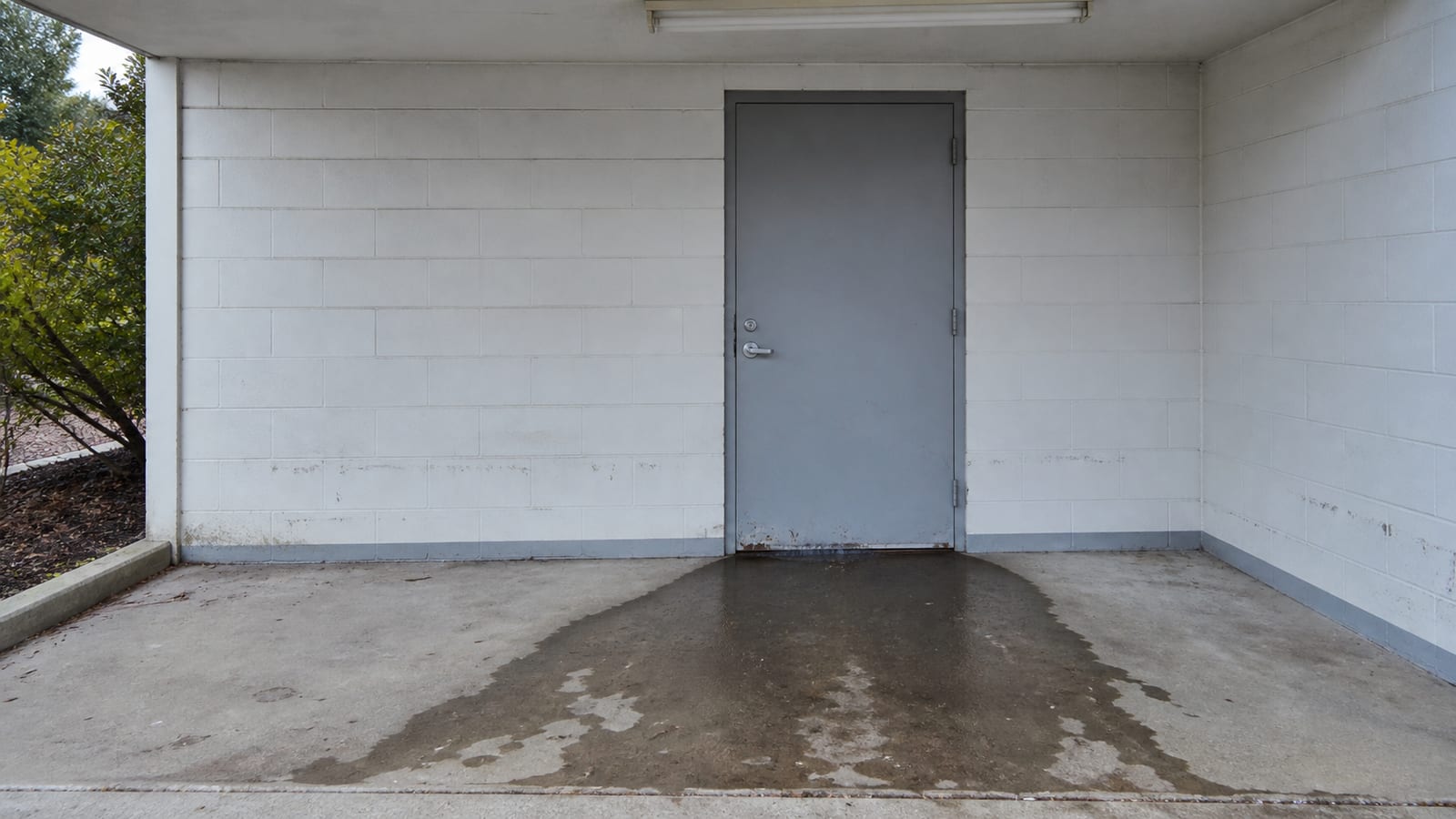
Find out where the shutoff is before you need it, and find out who holds the key. In a detached house that is a five minute errand with a torch. In a managed building it is a genuinely different question, because the valve that stops water arriving is often in a shared mechanical room, and the person with the key may be a manager who is not on site at two in the morning.
Plainsboro makes this worth planning for. The Census puts owner occupancy at 47.7 percent for 2020 to 2024, meaning a slim majority of occupied units are rented, and the township's housing plan documents a steady pipeline of multifamily and rental development: 96 units at the Nurseries project, 67 rental affordable units at Forrestal Village Residential, roughly 66 at Fusion, and about 35 acres at the Forrestal campus rezoned to accommodate a further 107. A water event in a building like that has an owner, an occupant and a manager, and the first minutes depend on which of them can physically reach the valve.
Key Takeaways
Know your shutoff before there is water on the floor
The individual fixture valve, the unit's main, and the building's main are three different valves with three different owners.
Electricity comes before everything
EPA says to make sure electricity is off before re-entry and never to touch wet electrical equipment or stand in water around it.
Photograph before cleanup starts
EPA directs owners to contact their insurer and photograph the property and belongings before anything is cleaned up.
The window is 24 to 48 hours
EPA's guidance is to clean and dry the home and everything in it inside that window where possible.
Do not run the heating and cooling system
EPA says not to run it until cleanup, drying and any needed repairs are finished, because it can spread contamination.
Extraction is not permit work; the repair may be
Plainsboro lists electrical, plumbing, mechanical replacement, renovation and rebuilding among work that may require permits.
Three Valves, Three Different Owners
Most people know about one of these and need all three.
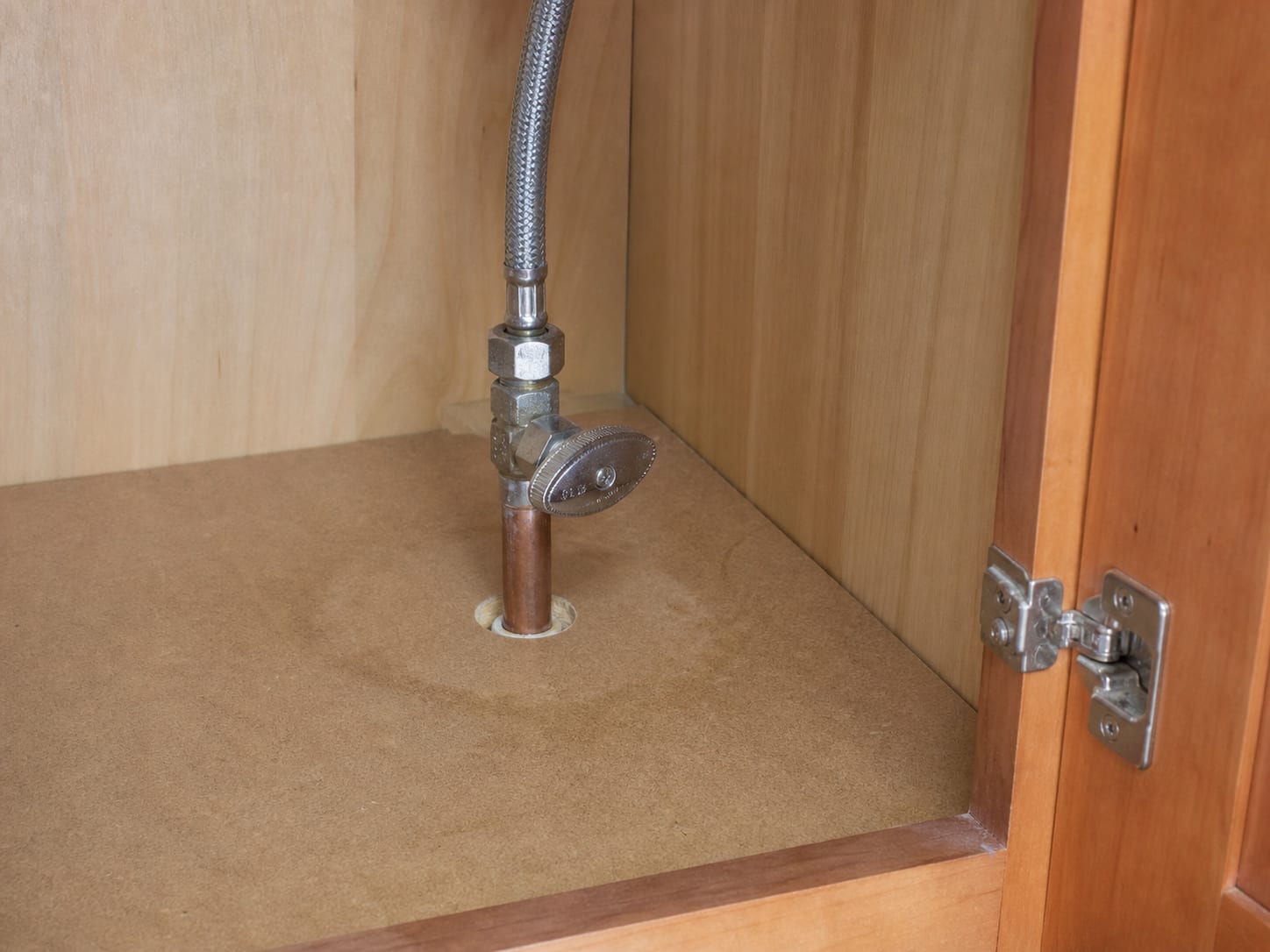
The fixture valve is the small one under a sink, behind a toilet, or at a washing machine box. It stops one appliance and you own it. This is the valve that matters for the most common failures, and it is worth knowing which way it turns before you are lying on a wet floor in the dark.
The unit main shuts off water to your dwelling. In a detached house this is usually in a basement or a utility area near where the supply enters. In an apartment or a condominium it may be inside a closet in your unit, or it may not exist as a separate valve at all.
The building main serves everything. In a managed building it is normally in a locked mechanical or service room, and access is controlled by the association or the property manager. If a failure is upstream of your unit, this is the valve that stops it, and you probably cannot reach it.
The practical takeaway is a ten minute job on an ordinary afternoon: find all three, confirm which ones you can actually reach, and get the after hours contact for whoever holds the key to the third one. That single piece of preparation shortens more water losses than any equipment we own.
Before Anyone Touches Anything
Water and electricity is where this goes wrong, and the guidance is not ambiguous. EPA says to make sure electricity is off before re-entering a flooded building, and not to touch wet electrical equipment or stand in water around it. If turning the power off means standing in the water to do it, that is an electrician's job rather than a brave one.
The second rule is about who does the work at all. EPA states that children, pregnant people, and people with weakened immune systems or chronic breathing problems should not take part in flood cleanup. That is worth saying plainly because the instinct in a household emergency is for everyone to help.
The third is the heating and cooling system. EPA's guidance is not to run it until cleanup, drying and any needed repairs are complete, and specifically not to operate a system suspected of contamination, because it will distribute whatever is in it to rooms the water never reached.
The First Two Hours
- 1
Settle the power
From a dry position, or by an electrician. Nothing else starts until this is decided.
- 2
Close the nearest valve that works
Fixture first, unit main second, building main third. If the source is upstream of your unit, call whoever holds that key immediately.
- 3
Call the manager or owner if the building is managed
Authorisation and access are on the critical path, and starting that call early is free.
- 4
Photograph everything before it moves
The water, the depth, every affected room, the contents. EPA directs owners to do this before cleanup and to contact the insurer.
- 5
Get contents up off the floor
Anything absorbent that can be lifted, lifted. This is the highest value thing an occupant can do unaided.
- 6
Extract the standing water
Removal comes before evaporation. Equipment set into standing water accomplishes very little.
- 7
Establish what the water was
A supply line is one job; anything that may have carried sewage or come from outside is a different one.
- 8
Dry and verify, then decide about repair
The 24 to 48 hour window is for drying, not for the whole job.
Why the Source Question Cannot Wait
A clean supply line failure and exterior water produce similar looking rooms and completely different scopes. EPA is direct that floodwater can carry sewage and other harmful substances, and it separates materials that can be cleaned and dried from materials that cannot, noting that porous items such as ceiling tile and carpet may need disposal.
In Plainsboro the exterior possibility is real enough to check rather than assume away. The township's 2022 land use plan describes a municipality divided by stream corridors and names Cranbury Brook, Devils Brook and the Millstone River, with the Millstone forming the southern boundary with West Windsor. A township resolution adopted September 25, 2024 treats flooding in the 238 square mile Millstone River Basin as a regional problem producing economic damage, transportation, school and business shutdowns, and public health and safety issues, and it names Tropical Storm Irene in 2011, Hurricane Sandy in 2012, Tropical Storm Isaias in 2020 and Hurricane Ida in 2021 as the recent severe storm sequence.
That establishes a context, not a diagnosis. It does not mean your water came from a brook. It means that when the source is genuinely unknown, treating it as clean because clean is cheaper is a decision made for the wrong reason. Where the water did arrive from outside, flood damage cleanup governs the handling, and where a sewer backup is involved, sewage cleanup sets the protective requirements instead.
What Extraction Actually Is, and Where It Stops
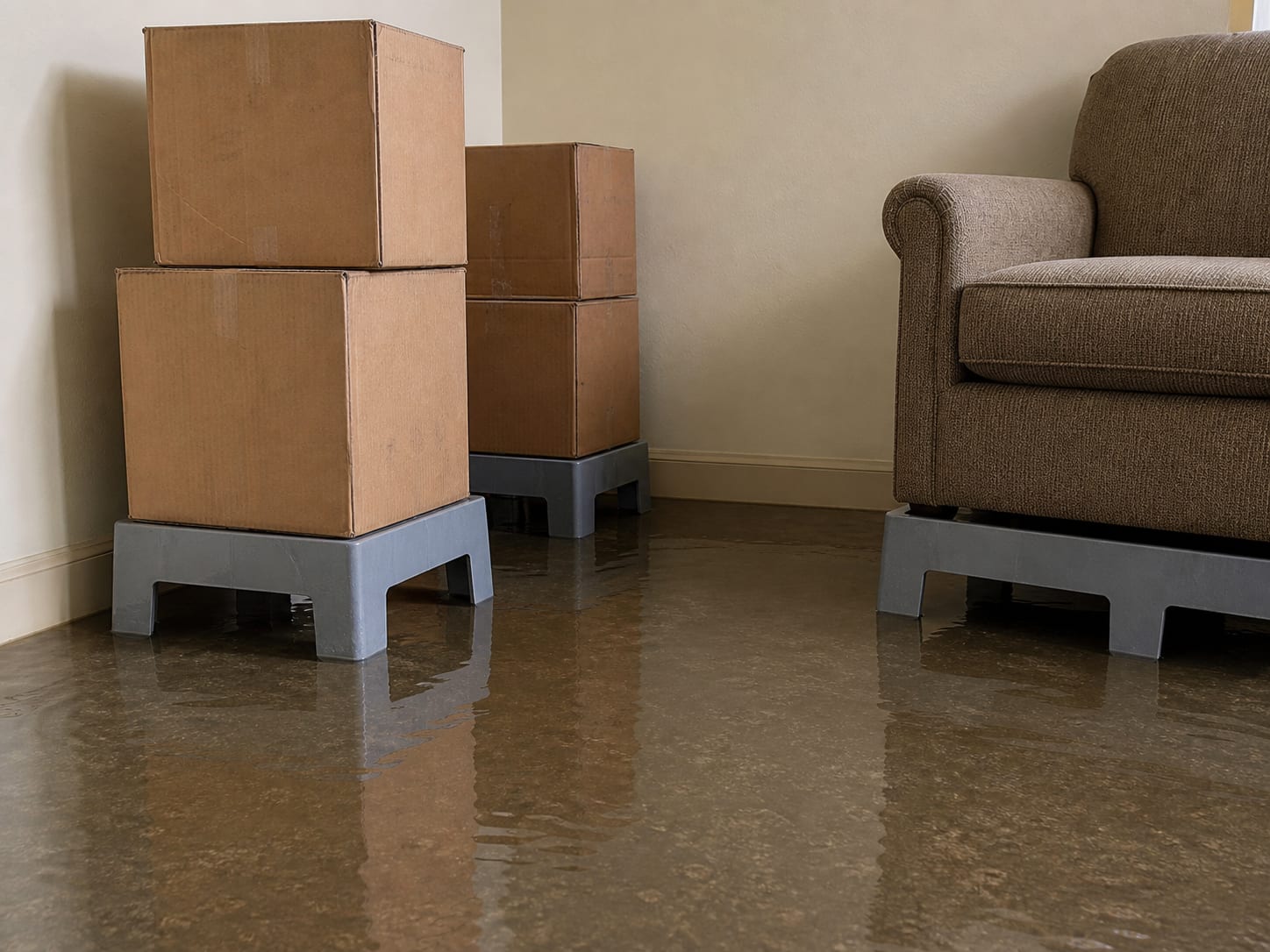
Extraction is the removal of standing and absorbed water. It is the first phase, not the whole job, and it ends well before the building is dry. What follows is structural drying, which is measured rather than felt: readings taken at each affected location and logged until they come down and hold.
EPA's published window is to clean and dry the home and everything in it within 24 to 48 hours where possible, and its guidance is explicit that a cleanup is not complete until the moisture problem is fixed and there is no visible mould or mouldy odour. Those two sentences together are the whole quality standard. Water removed plus a surface that feels dry is not a finished job if the source is still running or the wall cavity is still wet.
The Plainsboro line between phases is worth knowing. The township's published permit guidance lists new construction, remodelling, additions, interior and exterior renovations, mechanical equipment replacement, electrical work and plumbing work among the categories that may require permits, and says the proposed scope determines which inspections apply. Removing water is not listed as permit triggering work. Re energising a circuit, replacing a water heater or an air handler, opening a wall, or rebuilding a room may be. Confirm the actual scope with the Building Division before that phase begins rather than after.
The Managed Building Complication
In a rented or association governed property, three things sit outside the occupant's control and all of them can slow a response.
Access is the first. Entry to a common mechanical space, and permission to work in it, comes from the manager or the association rather than from the resident with the wet carpet.
Authorisation is the second. Work on the structure is normally the owner's decision, while contents are usually the occupant's. Establishing which is which early prevents a crew standing in a hallway waiting for a call to be returned.
Common systems are the third, and this one is written into township rules. Plainsboro's stormwater ordinance contemplates that a homeowners association, a developer or a public agency may hold responsibility for maintaining stormwater facilities, and requires documentation where that responsibility sits with somebody other than the property owner. That applies to development stormwater measures rather than to interior extraction, but it matters the moment a proposed repair touches a recorded common system. A unit owner should not assume they are entitled to alter one.
What Drives the Cost
There is no published Plainsboro price range for emergency extraction, and a national average converted into a local number would be invented. What genuinely moves a scope is the source of the water and whether contamination is involved, how long it ran before discovery, which rooms and materials it reached, whether it got into electrical or mechanical systems, how much material has to be removed rather than dried, how much drying and verification the structure needs, and what repair follows.
Property type belongs on that list here more than in most towns. Authorisation, unit by unit documentation, access to common areas and the boundary between structure and contents are real variables in a building with a manager, and none of them can be priced over the phone.
One more scope question is worth asking before anyone starts: credentials for the phase that follows. Plainsboro's own guidance states that electrical and plumbing contractors must be licensed with New Jersey and that general contractors performing residential work must hold a valid contractor registration certification. Ask which licence or registration covers the repair, not only the extraction.
Frequently Asked Questions About Emergency Water Extraction in Plainsboro NJ
I cannot find my shutoff and water is running. What now?
Call the water utility or the building manager and, if the building is managed, tell them the main is what you need. While you wait, protect the power situation from a dry position, get absorbent contents up off the floor and out of the path, and photograph what is happening. Do not go looking for a valve in a flooded mechanical space with the power on.
Do I need a permit for emergency water extraction?
Not for the water removal itself, which does not appear as a permit triggering category in the township's published guidance. The work afterward often does. Plainsboro lists electrical, plumbing, mechanical replacement, renovation and reconstruction among the categories that may require permits, with the scope determining the inspections. Confirm before the repair phase starts.
The floor is dry to the touch. Can the equipment come out?
Not on that evidence. Surfaces dry long before framing, subfloor and the inside of a wall cavity do, which is why drying is finished on logged readings rather than on how a room feels. EPA's own standard is that a cleanup is not complete until the moisture problem is corrected and there is no visible mould or mouldy odour. Pulling equipment early is the most common route back to a mould problem weeks later.
Water came into my unit from the one above. Whose job is it?
Physically it is one problem with two addresses. The source unit's owner or manager has to stop it, and your side has to be dried regardless of who eventually pays. Document your own unit thoroughly, notify the manager in writing as well as by phone, and press for access to both sides of any shared assembly, because drying only your side leaves wet framing in the middle.
Should I run fans and the air conditioning to help it dry?
Fans yes, once you know what the water was. The heating and cooling system no. EPA's guidance is not to run it until cleanup, drying and repairs are complete, and specifically not to run a system suspected of contamination, because it distributes the problem through the whole building. If mould is already visible, moving air over it without containment spreads it too.
Is my address in a flood zone?
That is an address level lookup, not a neighbourhood impression. FEMA's Flood Map Service Center is the authoritative public source for that determination, and the township holds its own mapping. Being near a named stream corridor is not the same as being in a mapped hazard area, and being outside one is not a guarantee either.
Final Thoughts
Emergency extraction rewards preparation more than almost any other restoration service, and the preparation is nearly free. Know the three valves. Know which ones you can reach. Know who holds the key to the one you cannot, and have that number somewhere other than in a folder in the flooded room.
After that, the sequence is stable regardless of building type: settle the power, stop the source, photograph before anything moves, lift what you can, extract, establish what the water was, then dry to a number rather than to a feeling. The parts that vary in Plainsboro are the ones that come from ownership rather than from plumbing: who authorises the work, who controls the common systems, and which phase of the job crosses into permitted construction. The local overview is on our Plainsboro service area page, and the service method itself is on our emergency water extraction page.
If you have water moving through a building right now, ExecPro Restoration & Cleaning is available around the clock. Call (888) 300-3772 or reach us through the contact page, and if the property is managed, have the manager's number ready when you call.
Extraction Terms
Tap a term to see what it means.
Fixture valve. The individual shutoff serving one appliance or fixture, which the occupant normally controls.
Serving Plainsboro
ExecPro Restoration & Cleaning provides mold remediation services in Plainsboro, NJ, from inspection and testing through removal, drying, and post-remediation verification. Call (888) 300-3772 for 24/7 emergency response.
Related Articles
Emergency Water Extraction in Bridgewater, NJ: Getting Standing Water Out Safely
Keep clear of wet outlets and standing water until the power question is settled. What safe entry looks like, how extraction goes and what backup coverage adds.
Emergency Water Extraction in Robbinsville, NJ: The First Hour and the 72-Hour Permit Window
Within the first hour of standing water, shut off power from a dry spot and call. See how emergency water extraction in Robbinsville, NJ works, permits too.
Emergency Water Extraction in Trenton, NJ: Rowhouses, Shared Walls and the Unit Below
In a rowhouse or a two-to-four-unit building, water can cross a shared wall or floor. What to do about power, gas and the unit below in the first hour.