Elevation Is Not Dryness: Emergency Water Extraction in Alpine, NJ
Cal HewittPublished
- emergency water extraction
- water damage
- palisades
- alpine nj
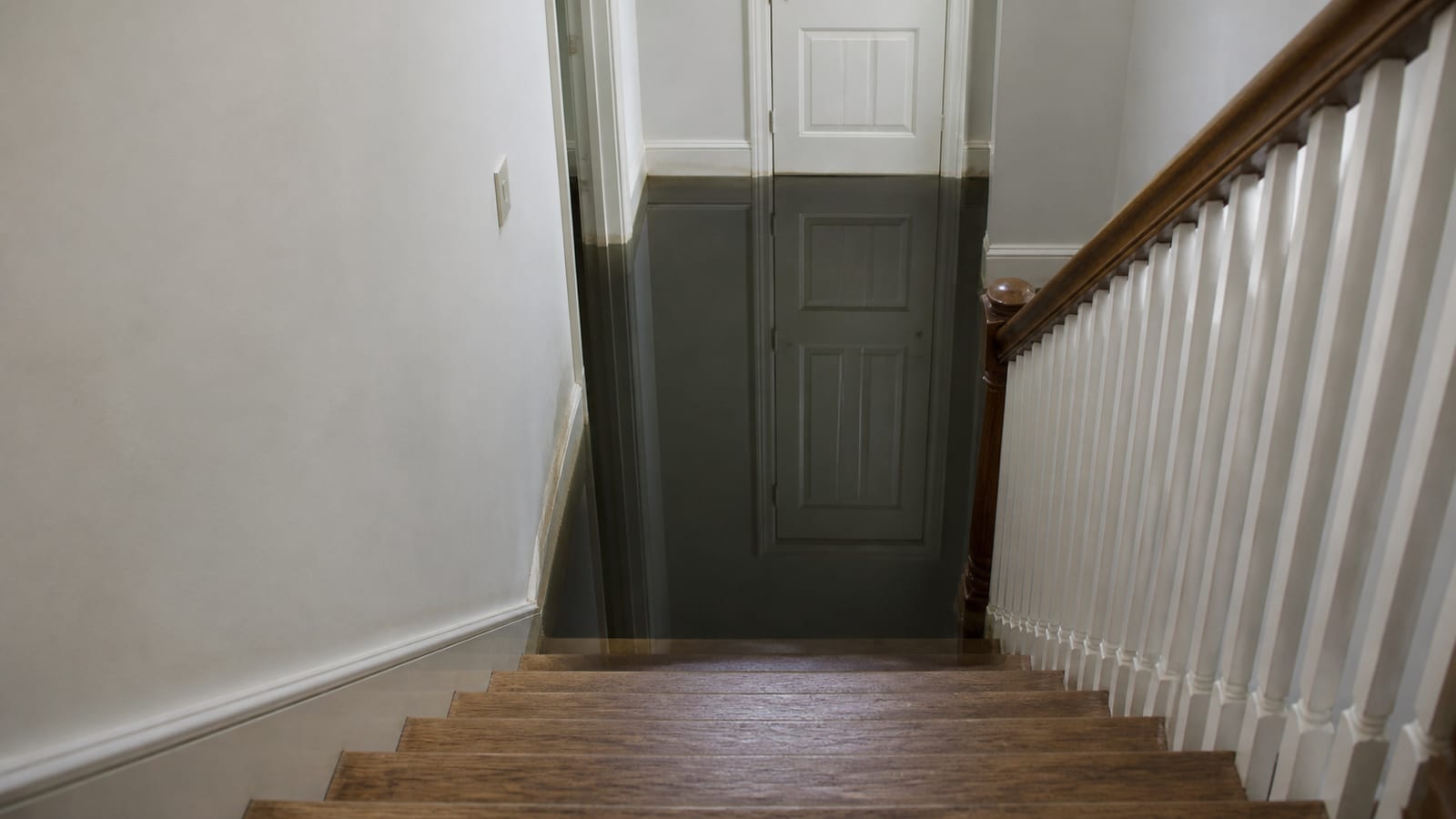
Standing water in a house at the top of the Palisades surprises people, and the surprise costs time. The reasoning is understandable. If the borough sits on the cliffs above the Hudson, on ground that drains away from the river rather than toward it, a wet lower level feels like something that should be happening somewhere else. Then a supply line fails, a heavy band of rain finds a path down a sloped lot, or groundwater arrives where the rock sits close to the surface, and elevation turns out to have had no vote in it.
The first hour of a water loss has a strict order, and it does not begin with moving water. It begins with electricity, then the source, then a record of what happened, and only then removal. Getting that order right is most of the difference between a contained loss and a long one, and none of it depends on where the property sits relative to the river.
Key Takeaways
Electricity comes before extraction
EPA says not to touch wet electrical equipment or stand in water around it, and federal responder guidance says power should not be restored until a qualified electrician has inspected the circuits.
The source decides everything downstream
A clean supply failure, storm entry, groundwater and a sewage backup are handled, cleaned and disposed of differently.
Wet materials have a short grace period
EPA guidance is to clean and dry within 24 to 48 hours where possible, and notes mold can grow on materials wet for more than 24 hours.
Removing the water is not drying the building
EPA describes drying taking days to weeks, and says not to seal or paint until materials are dry inside.
Alpine's own planning record names the conditions
Slopes over 15 percent, wetlands and Category One streams with buffers, shallow rock and high groundwater all appear in the borough's adopted plan.
Emergency work does not wait on paperwork
New Jersey's construction code allows emergency work to proceed with prompt notice and a permit application within 72 hours.
The First Decision Is About Power, Not Water
Water and energized equipment is the hazard that turns a property loss into an injury, and it is the reason nobody should walk into a wet lower level to see how bad it is. EPA's flood guidance is direct about not touching wet electrical equipment or standing in water around it. Federal responder guidance goes further and says power should not be restored until electrical devices and circuits have been inspected by a qualified electrician, which means the panel is not the place to experiment.
The rest of the safety picture is equally unglamorous and equally worth following. EPA lists goggles, an N-95 respirator, long sleeves and pants, gloves and boots for cleanup work, says children, pregnant people and anyone with a weakened immune system or a chronic breathing condition should not take part, warns against mixing cleaning products, and says a portable generator belongs outside and at least 20 feet from the building. On a wet Alpine morning with a generator running and a family trying to help, those are the sentences that matter most.
Being Above the Hudson Does Not Mean Being Dry
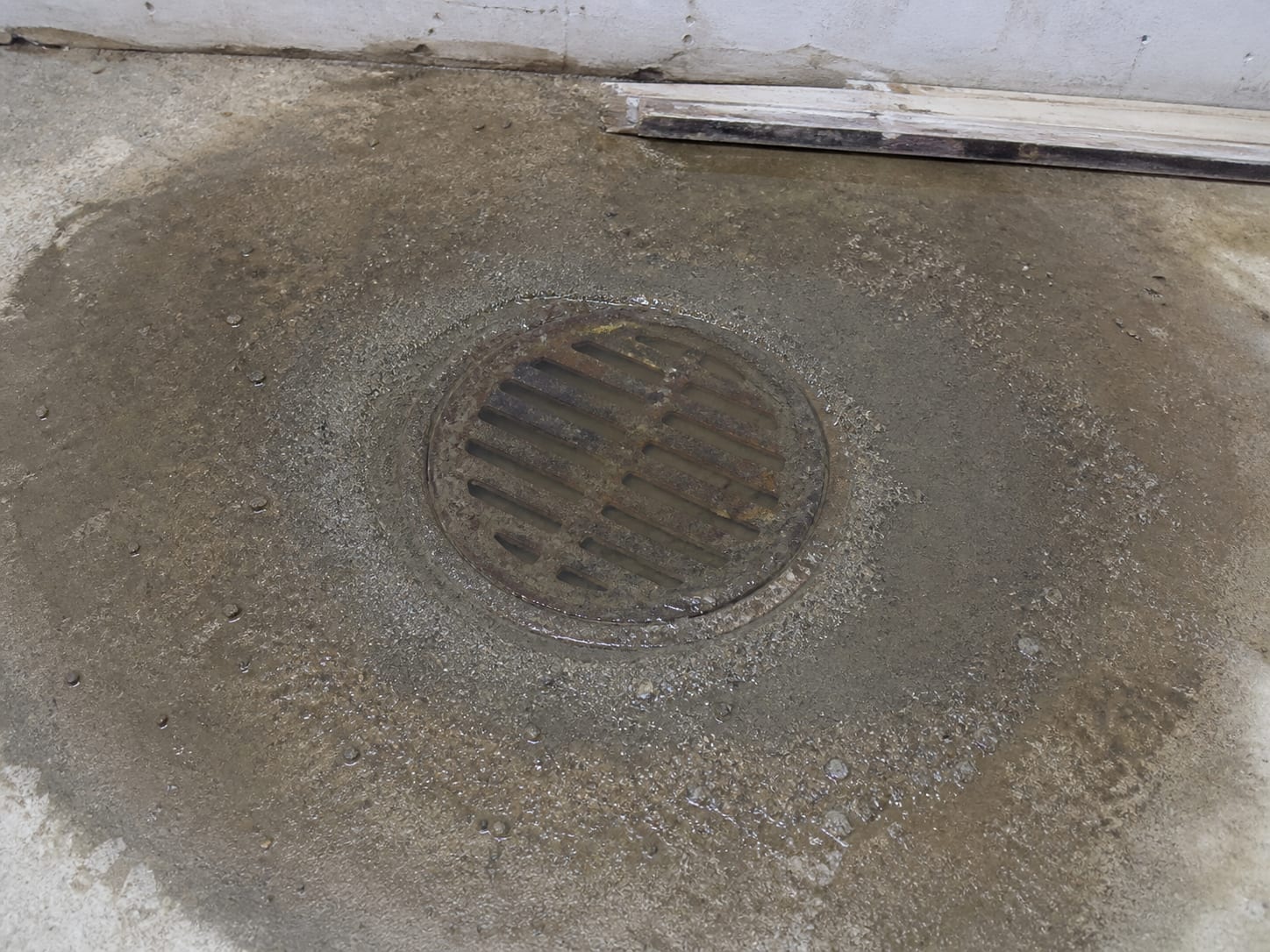
Alpine's adopted housing element describes a borough of 4,095 acres, roughly 6.4 square miles in northeastern Bergen County, with nearly two thirds of its land in public or quasi public use and the Palisades cliffs along the Hudson's west bank. The same plan is specific about the physical constraints the borough works around: moderate to steep slopes over 15 percent, wetlands and Category One streams carrying buffers of 50 to 300 feet, shallow rock, and high groundwater conditions.
Those are planning facts rather than a diagnosis of anyone's house, and they cut against the intuition that height equals dryness. Shallow bedrock limits how far water can soak away, so it moves across the surface or along the top of the rock instead. High groundwater in a given area means the ground below a lower level is not the reliable drain people assume. A steep lot delivers what lands on it to whatever is downhill quickly, which on many properties is the house. The plan does not say your parcel has any of these conditions, and nobody should tell you it does without looking, but it explains why an Alpine water loss is a property investigation rather than a map lookup. The wider local context sits on our Alpine service area page.
Sorting the source into the right category is not paperwork for its own sake. Contaminated water changes the protection worn, what can be salvaged and how material leaves the building, and sewage cleanup is a different scope from a clean supply loss even when the two look identical on the floor.
A Larger House Spreads Water Further
Alpine's housing stock is not the usual restoration assumption. The borough's 2023 five year estimate, carried in the same adopted plan, counts 556 one unit detached homes out of 593 units, with 205 four bedroom units and 248 units having five or more bedrooms. That is a market of large detached houses, and large detached houses spread a water loss in ways a compact floor plan does not.
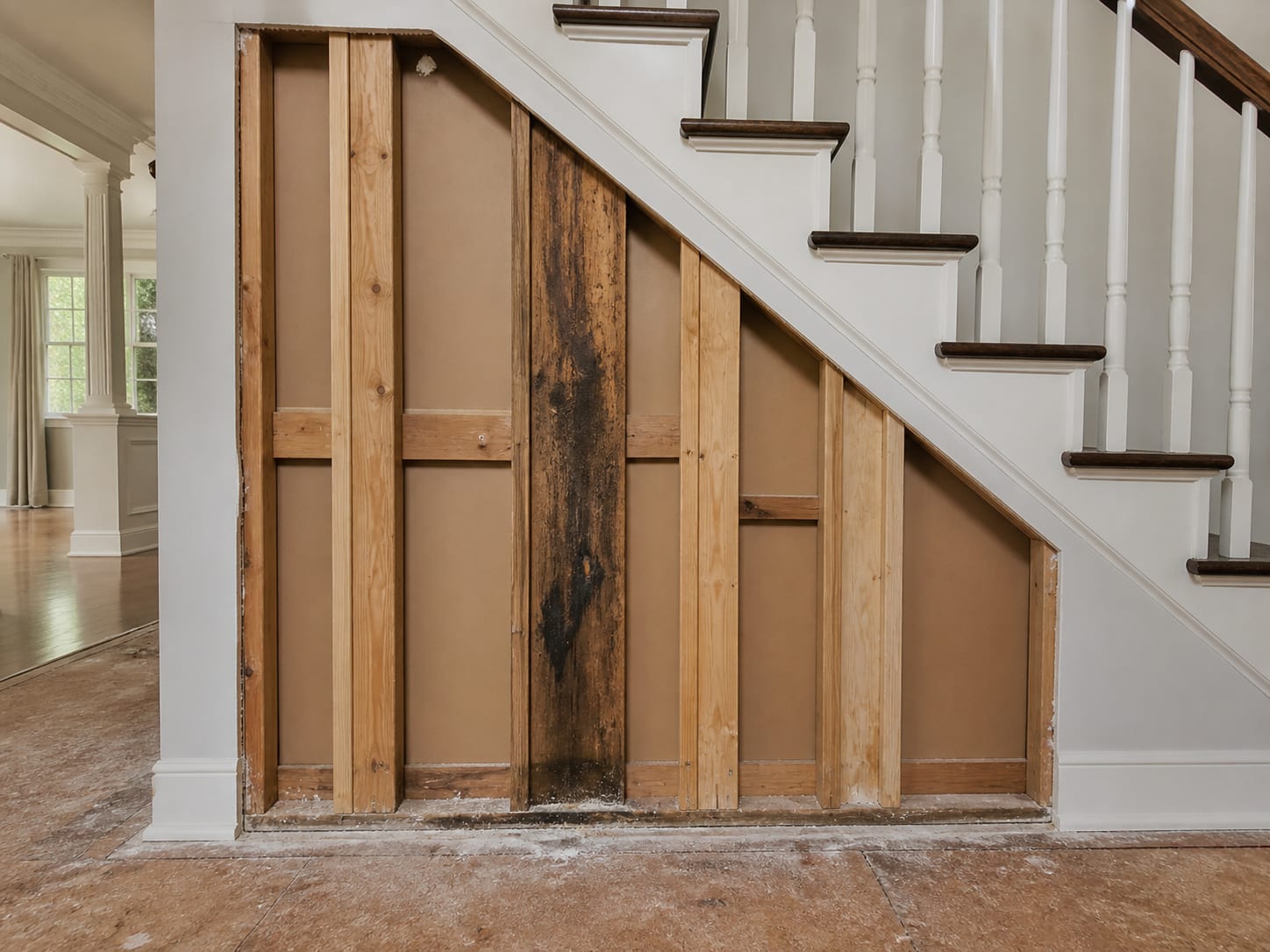
The practical effect is on intake. A loss in a house like this is rarely one room. Water follows the framing to connected spaces, runs behind built ins that have to be opened to be assessed, tracks along a stair, and reaches a mechanical room on a different level from where it started. Asking which levels, which connected rooms, which built in cabinetry and which materials are involved, before the first piece of equipment is placed, is what stops a job being repriced twice. Where the water travelled far enough to make drying the main event, structural drying is the phase that carries the schedule.
The Order the First Hours Should Follow
- 1
Establish electrical safety
Determine whether power to the affected area is off and stay out until it is, since this is the only irreversible risk in the sequence.
- 2
Stop or isolate the source
Shut a valve, divert the entry or contain the flow where it can be done safely, because extraction into an active source is wasted effort.
- 3
Photograph before anything moves
Dated photographs and video of the water at its extent, taken before removal, are the record no one can reconstruct later.
- 4
Categorize the water
Decide what the source implies about contamination, since it governs protection, salvage and disposal from that point on.
- 5
Remove the bulk water
Extract standing water and saturated absorbent material, working from the affected area outward.
- 6
Open what needs to be reached
Pull base trim, lift flooring or make inspection openings where materials are holding water out of sight.
- 7
Set and document the drying plan
Place equipment, take initial readings and record them, so the finish line is a measurement rather than an opinion.
Extraction Is the Start of Drying
The floor being clear is the most misleading moment in a water loss. EPA notes that mold can grow on materials that stay wet for more than 24 hours and advises cleaning and drying within 24 to 48 hours where that is possible, which is the reason speed matters at the front of the job. It also says drying itself can take days to weeks depending on the materials and conditions, and that surfaces should not be sealed or painted until they are dry inside, offering a moisture meter reading of 15 percent or less as its general marker for material ready to be refinished.
Between those two facts sits the part of the work most people never see. Framing, subfloor, insulation, cavity spaces and the underside of built in furniture hold water long after a wet vacuum stops picking anything up, and they release it slowly into a room that feels fine. A drying plan with daily readings, recorded per location, is what proves the assembly reached a dry standard. Without the readings there is only a floor that looks dry, which is exactly the condition a mold problem starts from.
Where the Water Goes, and When the Borough Gets Involved
Discharge deserves a thought before the hoses run. Alpine's stormwater provisions treat a wide range of wastes and runoff as pollutants, and its storm sewer ordinance exists to protect the municipal system, so water pulled out of a building is not automatically something to send to the nearest inlet. Where the source is questionable, containment and proper disposal are part of the job rather than an afterthought, and the discharge point belongs in the record along with everything else.
The permit question has a clear answer that surprises people. New Jersey's Uniform Construction Code generally requires a permit to repair, renovate, alter or reconstruct, with a narrow ordinary maintenance exemption, but the code also provides for emergency work: it may proceed, with notice given as soon as practicable and the permit application filed no later than 72 hours afterward. Nobody has to wait for an office to open before making a wet building safe. What that rule does not do is waive the follow up, and the plumbing, electrical, structural or reconstruction work that comes afterward runs through Alpine's construction department in the normal way. Post water damage reconstruction is where most of those permits actually land.
What Moves the Cost
No published Alpine figure exists for this work, and a number offered over the phone before anyone has seen the property is a guess wearing a decimal point. What genuinely sets the scope is the source and its contamination status, how many levels and rooms took water, how much absorbent material and how many contents are involved, how accessible the wet areas are, how much has to be opened to be assessed, the amount of drying and monitoring required, and whether the recovery reaches electrical, plumbing, mechanical or structural repair.
What to ask for is an itemized, dated scope that keeps those lines apart: emergency stabilization and extraction, drying and monitoring, cleaning or removal of material that cannot be salvaged, any trade repairs, and reconstruction. A single flat number covering all of it hides which parts are firm and which depend on what is found once material comes up. Our emergency water extraction page sets out what the stabilization phase itself covers.
Frequently Asked Questions About Emergency Water Extraction in Alpine NJ
There is water in the lower level right now. What is the first thing to do?
Stay out of it until you know the electrical situation, and if there is any doubt, shut power to that area at the panel only if the panel itself can be reached safely and dry. EPA warns against touching wet electrical equipment or standing in water near it, and federal guidance says circuits should be inspected by a qualified electrician before power goes back on. Once the area is safe, stop the source if you can reach it, then photograph everything before anything is moved.
How quickly does the water actually have to come out?
Quickly enough that materials are not sitting wet for more than about a day. EPA's guidance is to clean and dry within 24 to 48 hours where possible and notes that mold can grow on materials wet for more than 24 hours. That is a prevention window rather than a completion promise, because the drying that follows extraction is measured in days to weeks depending on what got wet.
Can I handle it with a shop vacuum and some fans?
For a small, clean water spill caught immediately, sometimes. The limits show up fast: a household vacuum will not pull water out of pad, cavity or subfloor, fans move air without removing moisture from it, and EPA notes that fans are the wrong choice where mold is visible because they can spread it. The bigger gap is measurement, since there is no way to prove an assembly is dry without readings taken over time.
Alpine is not a mapped flood town. Why is my basement wet?
Because mapped flood risk and water on a property are two separate questions. The borough's own adopted plan describes slopes over 15 percent, shallow rock and high groundwater among its site constraints, none of which require a flood zone to put water where it does not belong. A supply failure, a roof or window path, surface runoff on a sloped lot, or groundwater arriving through a foundation all happen well outside any mapped hazard area.
Do I need a permit before emergency work starts?
No. New Jersey's construction code allows emergency work other than lead abatement to proceed, provided notice is given as soon as practicable and a permit application follows no later than 72 hours afterward. That covers making a wet building safe. Repairs and reconstruction that follow are regular permitted work, and Alpine's construction department is the office that decides what applies to the specific scope.
How will I know the building is actually dry?
By numbers taken in the same places over several days, not by how the room feels. A drying plan should record the affected materials, the equipment placed and the readings per location until they reach and hold a dry standard. EPA offers a moisture meter reading of 15 percent or less as a general marker for material ready to be refinished, and any scope that rebuilds without that evidence is rebuilding on a hope.
Final Thoughts
An Alpine water loss follows the same physics as everyone else's, and the local details only change where the water is likely to come from and how hard it is to work the site. Steep ground, shallow rock and high groundwater are all in the borough's own planning record, and none of them care that the house sits above the river. The sequence is what protects you: power, source, record, removal, then a documented dry.
The other thing worth protecting is the file. Photographs taken before anything moved, the source category, the affected materials by room, the readings that show the drying actually happened, and a clean separation between emergency work and the permitted repairs that follow. That record is what an insurer, a contractor and a future buyer all end up reading.
If you have water somewhere it should not be, ExecPro Restoration & Cleaning will start with the electrical condition and the source rather than with a hose, and tell you what the scope really is before anything is rebuilt. Call (888) 300-3772 or reach us through the contact page, and keep out of the water until somebody has answered the power question.
Terms From the First Day
Tap a term to see what it means.
Extraction. The removal of standing and absorbed water from a building, which reduces the moisture load but does not by itself dry the structure.
Serving Alpine
ExecPro Restoration & Cleaning provides mold remediation services in Alpine, NJ, from inspection and testing through removal, drying, and post-remediation verification. Call (888) 300-3772 for 24/7 emergency response.
Related Articles
Emergency Water Extraction in Bridgewater, NJ: Getting Standing Water Out Safely
Keep clear of wet outlets and standing water until the power question is settled. What safe entry looks like, how extraction goes and what backup coverage adds.
Emergency Water Extraction in Robbinsville, NJ: The First Hour and the 72-Hour Permit Window
Within the first hour of standing water, shut off power from a dry spot and call. See how emergency water extraction in Robbinsville, NJ works, permits too.
Emergency Water Extraction in Trenton, NJ: Rowhouses, Shared Walls and the Unit Below
In a rowhouse or a two-to-four-unit building, water can cross a shared wall or floor. What to do about power, gas and the unit below in the first hour.