Vinegar on Mold in a Bathroom: Steps, Limits and Mixing Risks
Cal HewittPublished
- mold removal
- moisture control
- documentation
- new jersey
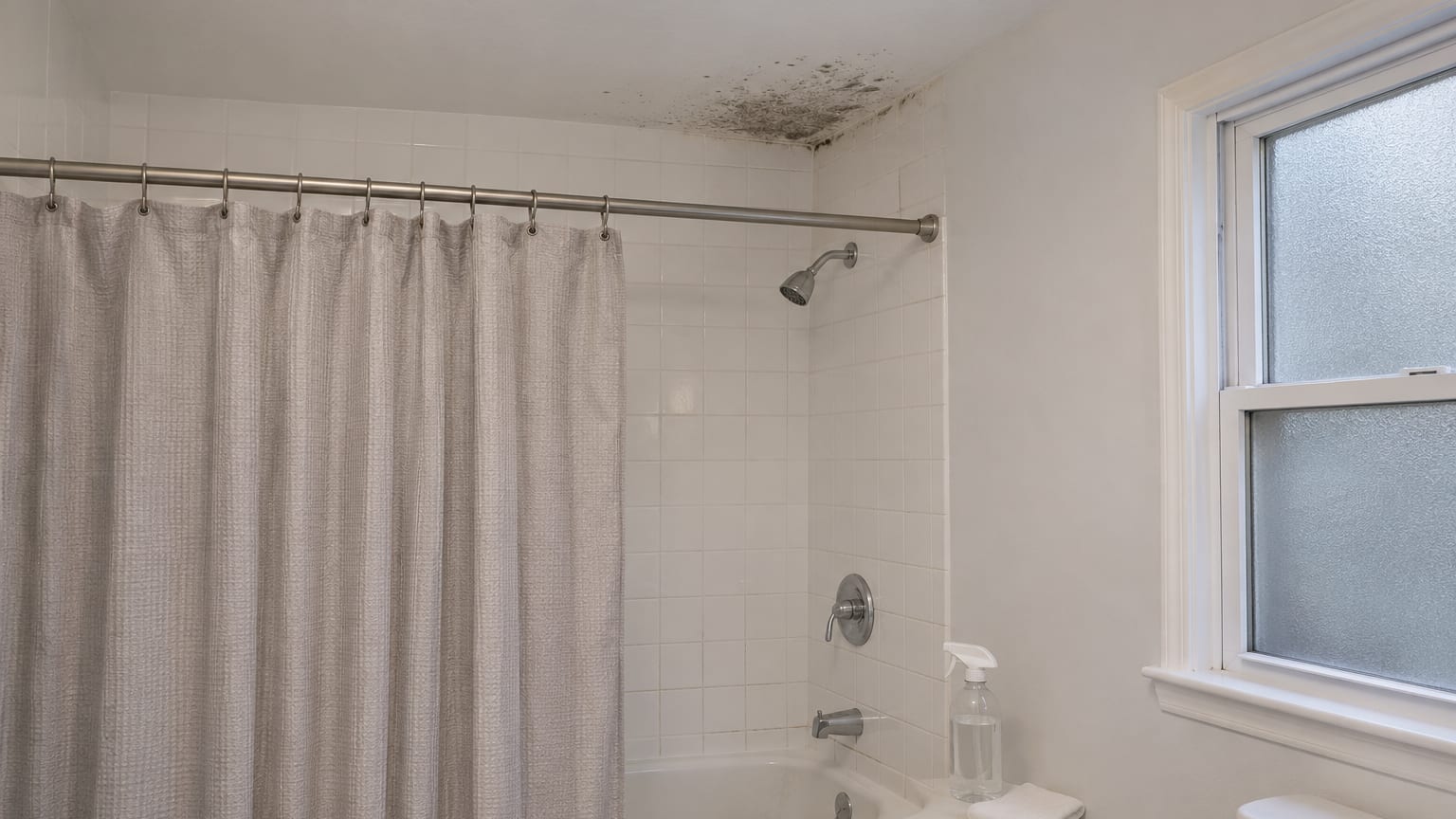
Does vinegar kill mold? You are looking at a dark patch on a bathroom ceiling or a window sill, a bottle of white vinegar is within reach, and you want to know what to do before bed tonight.
A lab study found that vinegar held back one common mold and did not hold back another. The agencies that write cleanup guidance ask for something different first: detergent, water, physical removal and complete drying. Vinegar can sit inside that sequence as one option for the right surface.
Below, you will find the steps for a small hard-surface patch, how vinegar, hydrogen peroxide and baking soda compare, what must never share a container, and the signs that mean the job belongs to a professional.
Key Takeaways
Vinegar has limited lab evidence
In a 2015 dish test, 4.0% to 4.2% vinegar inhibited Penicillium chrysogenum and did not inhibit Aspergillus fumigatus.
EPA's sequence is the baseline
Fix the moisture, scrub hard surfaces with detergent and water, remove visible growth, and dry the area completely.
About 10 square feet is the size line
EPA says a patch smaller than roughly 3 feet by 3 feet can usually be handled by a homeowner.
Never combine cleaners
Poison Control says vinegar mixed with chlorine bleach releases chlorine gas, and EPA and CDC advise against mixing cleaning products at all.
Porous, hidden or returning mold needs an inspection
Drywall, ceiling tile, carpet and a patch that comes back all point to a moisture or material problem.
Does Vinegar Kill Mold on Bathroom Walls and Ceilings?
Vinegar has some laboratory support and no proven routine for a bathroom wall. The most directly relevant work is a 2015 peer-reviewed study that tested commercially available vinegar with 4.0% to 4.2% acetic acid against two molds taken from indoor air, using a disc-diffusion method, where a treated paper disc sits on a dish of growing mold and the clear ring around it shows how far growth was held back.
Vinegar produced a mean inhibition ring of 15 mm against Penicillium chrysogenum and suppressed its sporulation, which is the production of new spores. Against Aspergillus fumigatus it showed no inhibitory effect and did not change sporulation.
Hover or tap a row to highlight it.
| Mold | Mean inhibition ring | Sporulation |
|---|---|---|
| Penicillium chrysogenum | 15 mm | Suppressed |
| Aspergillus fumigatus | No inhibitory effect | Not changed |
Those were dishes in a lab. The study did not spray vinegar on painted drywall, a bathroom ceiling, grout or caulk, and it did not set a contact time or a kill rate for any of them. That means no "leave it on overnight" or "ten minutes is enough" rule comes from it. Other work points the same way: a 1993 study of organic acids found acetic acid inhibited growth only at its highest tested concentration, 50 ml/L, in two cases, and a 2015 review of vinegar's antifungal properties describes the evidence as limited and varying by organism and test condition.
EPA and CDC also separate cleaning from disinfecting. Removing visible contamination and correcting moisture come first, because dead mold can remain allergenic. Indoor spores cannot be eliminated completely, so keeping the surface dry is what holds them in check.
The First Hour Goes to Photographing, Sizing and Stopping the Water
Before you spray or scrub anything, spend a few minutes on information. Moisture is what grows mold, and the New Jersey Department of Health says bathroom mold commonly relates to excess water or steam. Persistent growth calls for finding and correcting that moisture source before remediation.
Work through these steps in order:
- Photograph the patch: Take pictures of the growth and any staining or moisture damage around it before you disturb anything.
- Measure the area: A patch near or above 10 square feet, about 3 feet by 3 feet, changes the decision.
- Check the surface: Decide whether it is hard and cleanable, such as tile, a painted wall or a window sill, or porous and absorbent, such as drywall, ceiling tile or carpet.
- Look for the water: Check for an active leak, condensation, failed caulk, damp drywall, ceiling staining, a plumbing problem or weak bathroom ventilation.
- Clear the room: Keep children, pets and anyone with asthma, COPD, severe allergies or weakened immunity away from the cleanup area.
Skip the instinct to mix a stronger cleaner. Do not paint or caulk over visible mold either, because EPA says to clean and dry the surface first. If the water came from sewage, flooding or another contaminated source, bring in a qualified professional rather than cleaning it yourself, and stop active leaks as soon as it is safe to do so.
Detergent and Water Lead, and Vinegar Is One Option Beside Them
For a small patch on a hard surface, EPA's cleanup sequence is short. Fix the plumbing leak, condensation or humidity problem. Clean the hard surface with detergent and water. Physically remove the visible mold and debris. Dry the surface completely and quickly. That order matters more than which bottle you pick.
EPA's Cleanup Sequence for a Small Hard Surface
- 1
Fix the source
Fix the plumbing leak, condensation or humidity problem.
- 2
Clean the surface
Clean the hard surface with detergent and water.
- 3
Remove the growth
Physically remove the visible mold and debris.
- 4
Dry completely
Dry the surface completely and quickly.
Where does each kitchen product fit inside it?
- Detergent and water: This is the baseline because scrubbing removes mold and debris from the surface. A dish soap such as Dawn counts as a detergent here; the benefit is the scrubbing, not a spore-kill claim for any brand.
- White vinegar: It has limited laboratory activity against some molds, and the study behind that set no contact time for a bathroom wall. It can discolor or damage some materials, so check the surface manufacturer's instructions first.
- Hydrogen peroxide: EPA says disinfectants and sanitizers must be used as their labels direct, including dilution, protective gear, ventilation and contact time. The label on your product sets the concentration and timing. Peroxide can bleach or damage some finishes and fabrics.
- Baking soda: It works as a mild abrasive and cleaning ingredient on surfaces that can be cleaned and dried. EPA does not present it as a mold treatment, and it does not make drywall, ceiling tile or caulk fully cleanable.
So, is hydrogen peroxide or vinegar better? EPA and CDC build their advice on physical removal, detergent, water and drying, rather than on a winner between the two. Pick by the material and the label, then follow it with the same removal and drying.
Hover or tap a row to highlight it.
| Product | What the post says |
|---|---|
| Detergent and water | The baseline, because scrubbing removes mold and debris from the surface |
| White vinegar | Limited laboratory activity against some molds; can discolor or damage some materials |
| Hydrogen peroxide | Use as the label directs, including dilution, protective gear, ventilation and contact time; can bleach or damage some finishes and fabrics |
| Baking soda | A mild abrasive and cleaning ingredient; EPA does not present it as a mold treatment |
A spray-and-leave routine skips the part EPA asks for. Whatever you use, scrub, wipe up the loosened growth and dry the surface quickly. Our post on what kills mold and what not to use covers bleach, so it gets only this comparison line here: like vinegar, it does not replace removal and moisture control.
Porous Materials Often Have to Come Out Instead of Being Sprayed
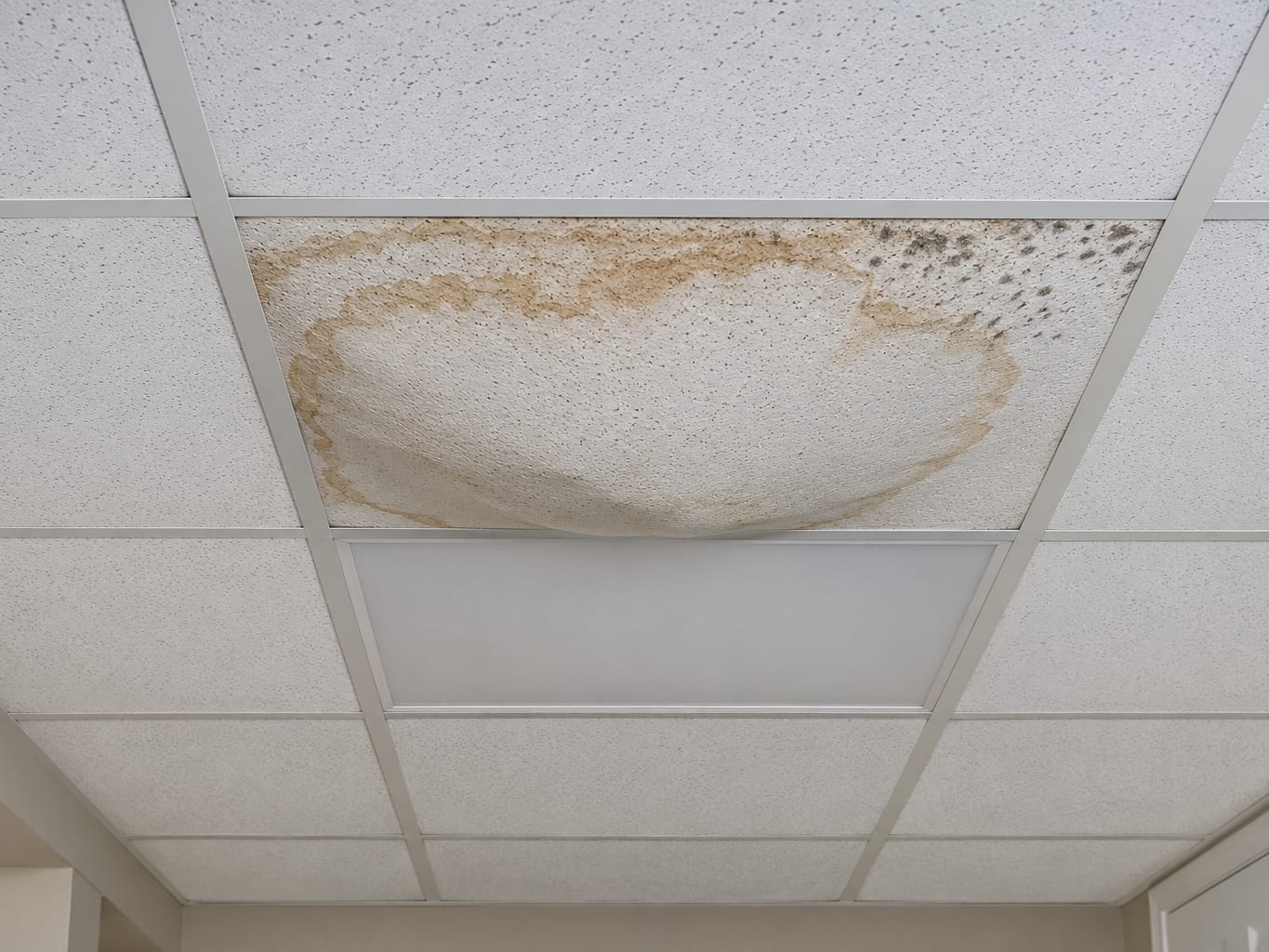
A painted ceiling over drywall, a stained ceiling tile or damp bathroom carpet is a different job from tile and grout. EPA explains that mold can grow into the empty spaces and crevices of porous materials. Ceiling tile, carpet and backing, insulation, drywall and gypsum board, books and paper may be difficult or impossible to clean completely, and a liquid on the surface does not reach what is inside.
EPA treats 24 to 48 hours as the window for drying wet materials to prevent growth. It also says porous materials that have stayed wet for more than 48 hours are generally best removed and replaced. That is guidance for avoiding mold, not a deadline that makes every older patch hopeless.
Hard, nonporous materials such as metal, glass and hard plastic can generally be dried, cleaned and reused. Structurally sound wood and concrete, which are semi-porous, may be cleaned with detergent, depending on the material and how contaminated it is.
Hover or tap a row to highlight it.
| Material type | Examples | What the post says |
|---|---|---|
| Porous | Ceiling tile, carpet and backing, insulation, drywall and gypsum board, books and paper | May be difficult or impossible to clean completely |
| Semi-porous | Structurally sound wood and concrete | May be cleaned with detergent, depending on the material and how contaminated it is |
| Hard, nonporous | Metal, glass and hard plastic | Can generally be dried, cleaned and reused |
Hidden growth belongs in this group as well. Mold can sit behind drywall, wallpaper, paneling, furniture, ceiling tiles, carpet, pipe chases and roof materials, and cleanup that needs demolition, a lot of dust or removal of structural material is no small-patch job. If the stain on your ceiling has a soft or swollen spot, treat it as a question about the material, not the stain. Our post on what looks like mold on walls helps you check what you are looking at, and our drywall replacement after mold service covers the rebuild once the affected material is out.
Never Mix Vinegar With Another Cleaner, and Protect Yourself
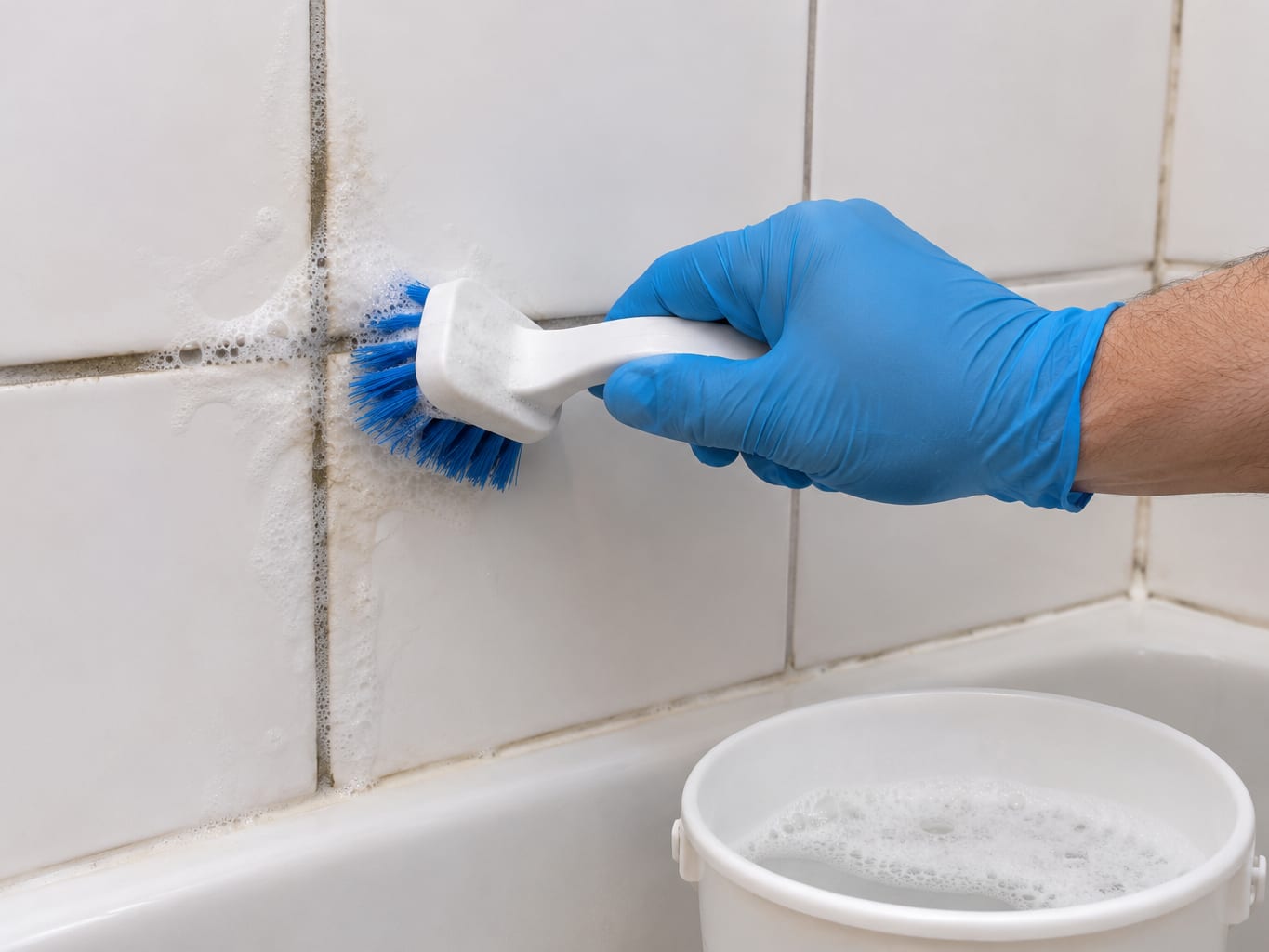
Mixing is where a kitchen cleanup turns dangerous. Poison Control says vinegar combined with chlorine bleach releases chlorine gas, which can severely irritate the airways, eyes, nose and throat. Do not combine vinegar with hydrogen peroxide, bleach, ammonia, detergent, a disinfectant or any other cleaner in the same container. EPA and CDC state the general rule not to mix cleaning products because toxic vapors or hazardous reactions can result. Baking soda and vinegar together fizz in an acid-base reaction, and that fizz is not a mold-killing result. Use one product at a time, follow its label, and rinse and dry before trying another.
Open windows or doors if the weather and outdoor air allow. Hold off on fans until the visible growth has been gently cleaned, since moving air can spread spores, and do not run an HVAC system that may be contaminated.
CDC's cleanup guidance and EPA call for protection while you work:
- Respirator: At least a NIOSH-approved N95.
- Gloves: Non-latex vinyl, nitrile or rubber.
- Goggles: Fully protective goggles that keep dust and small particles out of your eyes.
Anyone with asthma, COPD, weakened immunity, severe allergies or another condition that raises risk should not take part in the cleanup without medical guidance. EPA also notes that cleaning products themselves can cause breathing problems, skin irritation or asthma symptoms when used improperly.
A Larger, Hidden or Returning Patch Needs a Professional
A home remedy is the wrong tool in several situations. EPA says areas smaller than about 10 square feet can usually be handled by a homeowner, while larger areas, extensive water damage, contaminated water, HVAC contamination, hidden mold or health concerns warrant professional help. New Jersey's resident guidelines split the sizes further: under 10 square feet may be manageable at home, 10 to 100 square feet calls for a professional opinion, and over 100 square feet goes to a qualified contractor.
Who Handles a Patch, by Size
Under about 10 square feet
EPA says a homeowner can usually handle it, and New Jersey's resident guidelines say it may be manageable at home.
10 to 100 square feet
New Jersey's resident guidelines call for a professional opinion.
Over 100 square feet
New Jersey's resident guidelines send it to a qualified contractor.
Other situations
EPA says extensive water damage, contaminated water, HVAC contamination, hidden mold or health concerns warrant professional help.
Call for an inspection or remediation assessment when any of these apply:
- Size: The patch is larger than about 10 square feet.
- Material: It is on drywall, ceiling tile, insulation, carpet, padding or wallpaper that cannot be fully cleaned and dried.
- Location: The growth is behind a wall, ceiling or HVAC component.
- Return: The mold comes back after surface cleaning, or a musty odor, dampness or an unresolved leak remains.
- Health: The person doing the work has asthma, severe allergies or a weakened immune system.
Returning mold is a moisture signal, and the Department of Health recommends an inspection when the source cannot be readily traced to a leak. A mold inspection is the next step when the source is unclear, and mold removal covers physical removal when the job outgrows a sponge and detergent. Ask any company for a written scope that separates cleaning, removal, drying, repairs, disposal, testing and rebuild. New Jersey has no state certification program for companies doing residential mold inspection, testing or remediation, so ask about training, insurance, containment, disposal and documentation.
Renters follow a different path. The Department of Health directs renters with unrepaired leaks or structural deficiencies to the local building-code office, which may address the underlying leak or plumbing problem. The Department of Community Affairs tenant guide says tenants should notify the landlord, give access for repairs and meet the other legal requirements before pursuing remedies. Put the notice in writing, keep copies, and ask an attorney or legal-aid provider before withholding rent or deducting repair costs, a step the state's habitability bulletin says needs written notice and time to repair.
Records and Moisture Control Keep the Patch From Coming Back
Clean surfaces stay clean only when the water is gone. EPA lists leaks, condensation, humidity and wet absorbent materials as the conditions that support renewed growth, so the week after cleaning belongs to the moisture source. Confirm the leak is repaired, then watch for returning stains, odor, dampness or growth. A fan that actually vents steam outdoors, caulk that seals out water, and a ceiling that no longer drips are what keep a bathroom dry, and our post on bathroom mold that keeps coming back walks through the usual causes. If the water behind the patch comes from a plumbing or roof leak, water damage restoration addresses the wet materials cleaning cannot reach.
If the damage may be covered, the New Jersey Department of Banking and Insurance advises policyholders to report losses promptly, make necessary temporary repairs to prevent further damage, save receipts and bills, document damage with photographs and written lists, and keep damaged property until the insurer has inspected it or authorized disposal. Coverage depends on your policy, the cause of loss, exclusions, endorsements and your deductible. A sudden event, repeated seepage and flood are treated differently, so read the policy and ask the insurer before you throw anything away.
Keep your own folder as well: the photographs, the moisture-source repair record, a list of affected materials, any contractor scope and invoices, and any post-remediation report. Renters should add written notices, repair records and receipts.
Frequently Asked Questions About Vinegar and Mold
How long does it take for vinegar to kill mold?
The 2015 study used 4.0% to 4.2% vinegar in a lab dish test and set no contact time for a wall or ceiling. EPA's practical guidance is to clean visible mold from hard surfaces with detergent and water and dry the surface completely, so treat that as the routine and the vinegar as an optional step inside it.
What kind of mold does vinegar not kill?
In the 2015 study, vinegar did not inhibit Aspergillus fumigatus, though it did inhibit Penicillium chrysogenum. Those results come from two organisms in a lab and do not tell you how vinegar acts on every species in a home, so removal and drying still do the real work.
Does Dawn dish soap kill mold spores?
Detergent and water remove mold and debris from hard surfaces by scrubbing, and that is why EPA recommends them. Treat soap as a scrubbing aid, then wipe and dry the surface instead of waiting on a soak.
What is the best homemade mold killer?
For a small hard-surface patch, the best homemade approach is detergent, water, physical removal and complete drying, with the leak or condensation fixed first. Porous, hidden, returning, contaminated-water or larger problems need a different response, starting with an inspection.
Vinegar and Mold Quick Check
1. What happened to Aspergillus fumigatus in the 2015 study?
2. What does EPA's sequence put first?
3. What does vinegar mixed with chlorine bleach release?
4. How soon should wet materials be dried to prevent growth?
Pick an answer to begin.
Final Thoughts
Vinegar can play a small part in cleaning a small, hard patch, but the part that works is the sequence around it: stop the water, scrub with detergent, remove what you can see, and dry the area completely. Porous materials, hidden growth, patches near or above 10 square feet and mold that returns call for an inspection, and you should never combine vinegar with bleach or another cleaner.
Following that order saves you from repeating the job every few months. A dry surface, a repaired leak and a folder of records leave you better placed with an insurer, a landlord or a future buyer.
If your patch is larger, on drywall or ceiling tile, or keeps coming back, call ExecPro Restoration & Cleaning at (888) 300-3772 or contact us through our contact page. We handle mold inspection, removal and water damage restoration for homes across New Jersey.
Vinegar and Mold Terms
Tap a term to see what it means.
Disc-diffusion method. A test where a treated paper disc sits on a dish of growing mold and the clear ring around it shows how far growth was held back.
Related Articles
What Kills Mold on Hard Surfaces and Which Cleaners to Avoid
A patch under about 10 square feet can usually be handled at home if the moisture is fixed. Learn what kills mold on each surface and what never to mix.
Why Bathroom Mold Keeps Coming Back | ExecPro NJ
Bathroom mold coming back after cleaning? Check the fan, caulk, grout and hidden leaks, learn what is safe to clean and when to call a New Jersey professional.
What is mold remediation?
What mold remediation involves: fixing the moisture source, removing contaminated materials, and verifying a safe space, plus the signs of mold and how to prevent it.