You notice a musty smell in your basement that will not go away. Or maybe you spot dark staining along a bathroom wall after a slow leak behind the vanity. Whatever brought you here, mold remediation is likely the term someone used, and now you are trying to figure out what it actually means, what the process looks like, and what to expect.
Mold remediation is the process of identifying mold growth, correcting the moisture problem that allowed it to develop, removing contaminated materials when necessary, cleaning affected areas, and restoring the property to a safe condition. It is not the same as scrubbing a visible spot off a tile and calling it done. According to the EPA, moisture control is the key to mold control, which is why every proper remediation project starts by finding and fixing the source of the water problem, not just the mold itself.
For homeowners and property managers in Princeton Junction and West Windsor, NJ, understanding what remediation actually involves helps you make better decisions about when to act, what questions to ask, and what a thorough job looks like from start to finish.
Key Takeaways
Mold remediation addresses the cause
It focuses on moisture control and not just surface cleanup.
It is different from mold removal
Remediation includes inspection, containment, cleanup, and prevention, while removal only addresses the visible growth.
Hidden mold is common
Mold often grows behind walls, under floors, or in damp building cavities where it is not visible until the damage is already significant.
Fast response matters
The longer moisture stays in place, the more material can become contaminated and the more costly the repair process tends to be.
Not all materials can be saved
Porous materials like drywall, insulation, and carpet may need to be removed if the contamination has penetrated deeply enough.
Professional equipment improves results
Thermal imaging cameras, moisture meters, air scrubbers, and structural drying systems allow professionals to find and address problems that are not visible to the eye.
Why Mold Remediation Matters
Mold is almost always a symptom of something else going wrong in the building. Water is finding its way somewhere it should not be, whether from a slow plumbing leak, a failing roof, condensation from poor insulation, or a flooding event that soaked materials faster than they could dry. When that moisture sits long enough, mold follows, spreading into cavities and building materials that are easy to miss during a quick visual check.
Property damage from untreated mold growth can affect drywall, wood framing, flooring, ceiling materials, and insulation, all of which cost money to repair or replace. The CDC notes that mold and health concerns are particularly relevant for people with asthma, allergies, or compromised immune systems, making fast response especially important in homes with vulnerable occupants. Waiting rarely saves money. It usually makes the scope larger.
Surface cleaning alone does not solve the problem either. If you wipe mold off a wall without finding where the moisture is coming from, the mold comes back. That cycle of recurring growth is one of the most common complaints after a do-it-yourself cleanup. Remediation breaks that cycle by treating both the symptom and the source at the same time.
Common Signs of Mold
The signs are not always dramatic. Sometimes it is a smell. Sometimes it is a small stain that keeps coming back even after being wiped away. Other times it is a pattern of symptoms that seem unrelated until someone connects them to indoor air quality.
Hover or tap a row to highlight it.
| Sign | Where it shows up | What it may indicate |
|---|---|---|
| Persistent musty odor | Basements, crawl spaces, bathrooms, near exterior walls | Hidden mold, even with no visible growth |
| Water stains, bubbling or peeling paint | Ceilings and walls | Moisture sitting behind the surface |
| Soft spots in drywall, warped flooring | Floors and lower walls | Water trapped long enough to soften the structure |
Musty Odors
A persistent musty smell is one of the most reliable signals that mold may be present, even when there is no visible growth. According to the CDC, mold can release microbial volatile organic compounds that produce that distinctive earthy smell. If the odor is strongest in a basement, crawl space, bathroom, or near an exterior wall, those are good places to start looking. Hidden mold behind drywall or under flooring can produce a strong odor without any surface signs at all.
Water Stains and Physical Damage
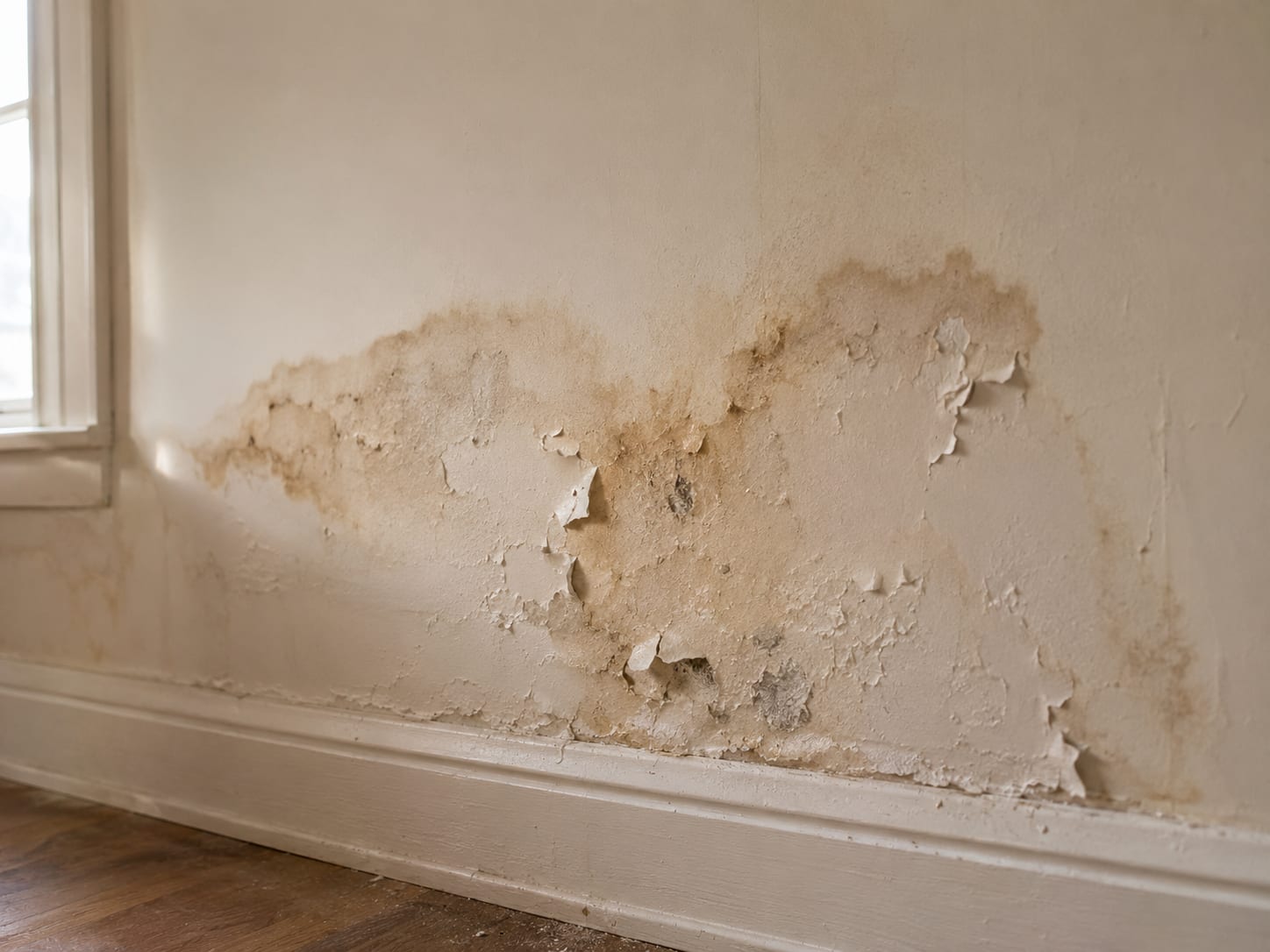
Water stains on ceilings or walls, bubbling or peeling paint, soft spots in drywall, and warped flooring are all signs of moisture intrusion that may require professional remediation. These signs often indicate that water has been sitting in or behind a material long enough to cause structural softening and, in many cases, fungal growth inside the wall or floor cavity. Discoloration that spreads over time is worth investigating before more material becomes involved.
What Affects the Scope of Mold Remediation
Not every mold problem is the same. How much water entered the building, how long affected materials stayed wet, how porous the materials are, and whether the problem is contained in one area or spread across multiple spaces all affect what the project will involve and how long it will take.
Porous vs. Non-Porous Materials
The EPA draws a clear distinction between porous and non-porous materials when it comes to mold cleanup. Hard, non-porous surfaces like tile, metal, or sealed concrete can often be cleaned with detergent and water if the contamination is addressed promptly. Porous materials are a different situation. Drywall, insulation, ceiling tiles, carpet, and untreated wood absorb moisture and allow mold to grow through the material itself, not just on the surface. When mold has penetrated deeply enough into these materials, removal is often the only way to actually resolve the problem. Cleaning the surface of saturated drywall does not remove the contamination inside it.
Hover or tap a row to highlight it.
| Material type | Examples | How it is handled |
|---|---|---|
| Non-porous | Tile, metal, sealed concrete | Often cleaned with detergent and water when addressed promptly |
| Porous | Drywall, insulation, ceiling tiles, carpet, untreated wood | Frequently removed and replaced once mold has penetrated the material |
Hidden Moisture and Recurring Problems
If a wall cavity, subfloor, or ceiling assembly holds trapped moisture, mold can return even after surface cleaning is done. This is why leak detection, moisture metering, and thermal imaging are not optional add-ons. They are how professionals confirm the moisture problem is actually resolved and not just temporarily out of sight. Skipping this step often results in a repeat problem within months.
Safety During Remediation
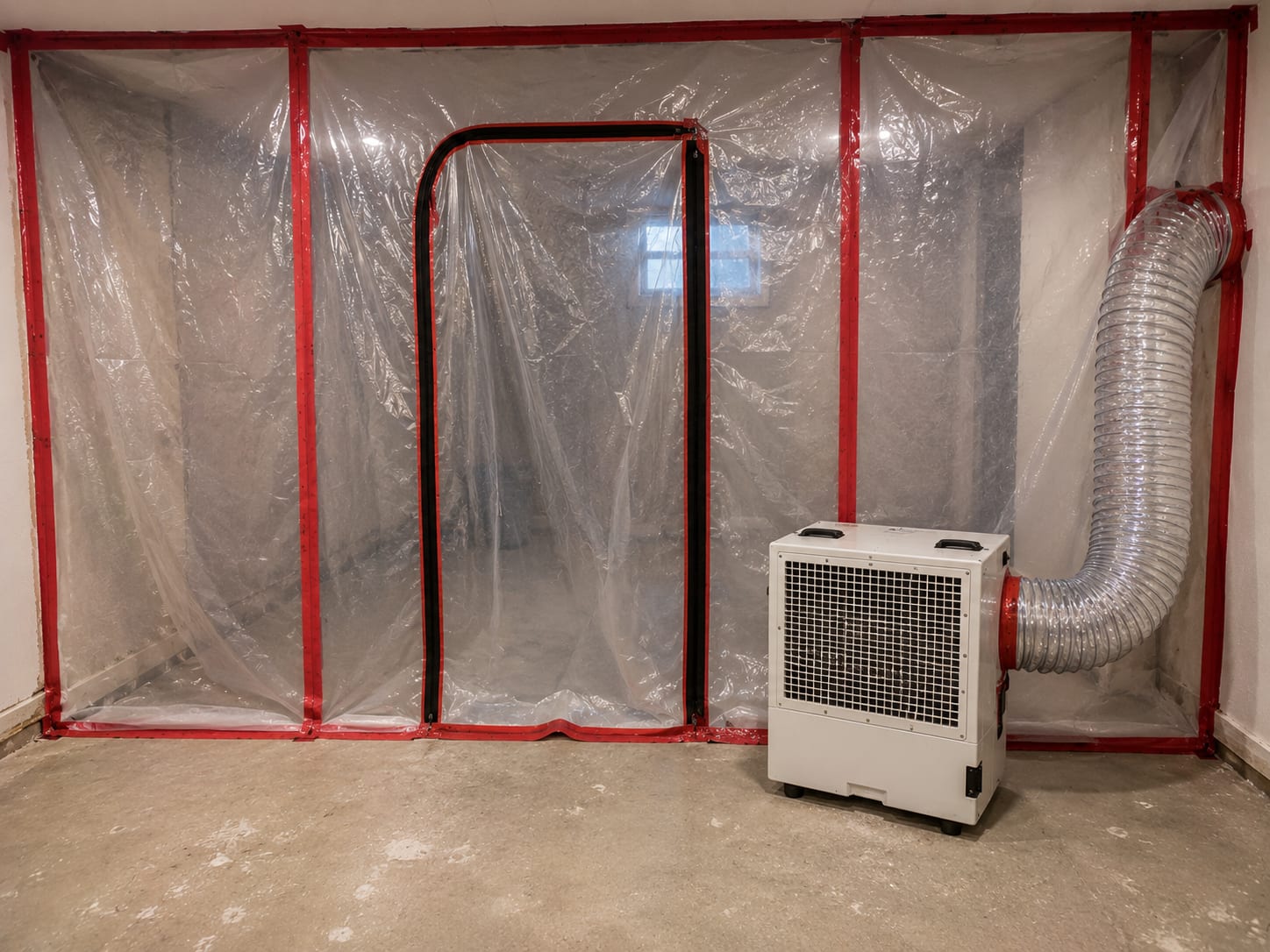
Disturbing mold growth without proper precautions can release spores into the air and spread contamination to unaffected areas. This is why the process involves protective gear, physical containment barriers, and HEPA filtration equipment rather than just cleaning supplies.
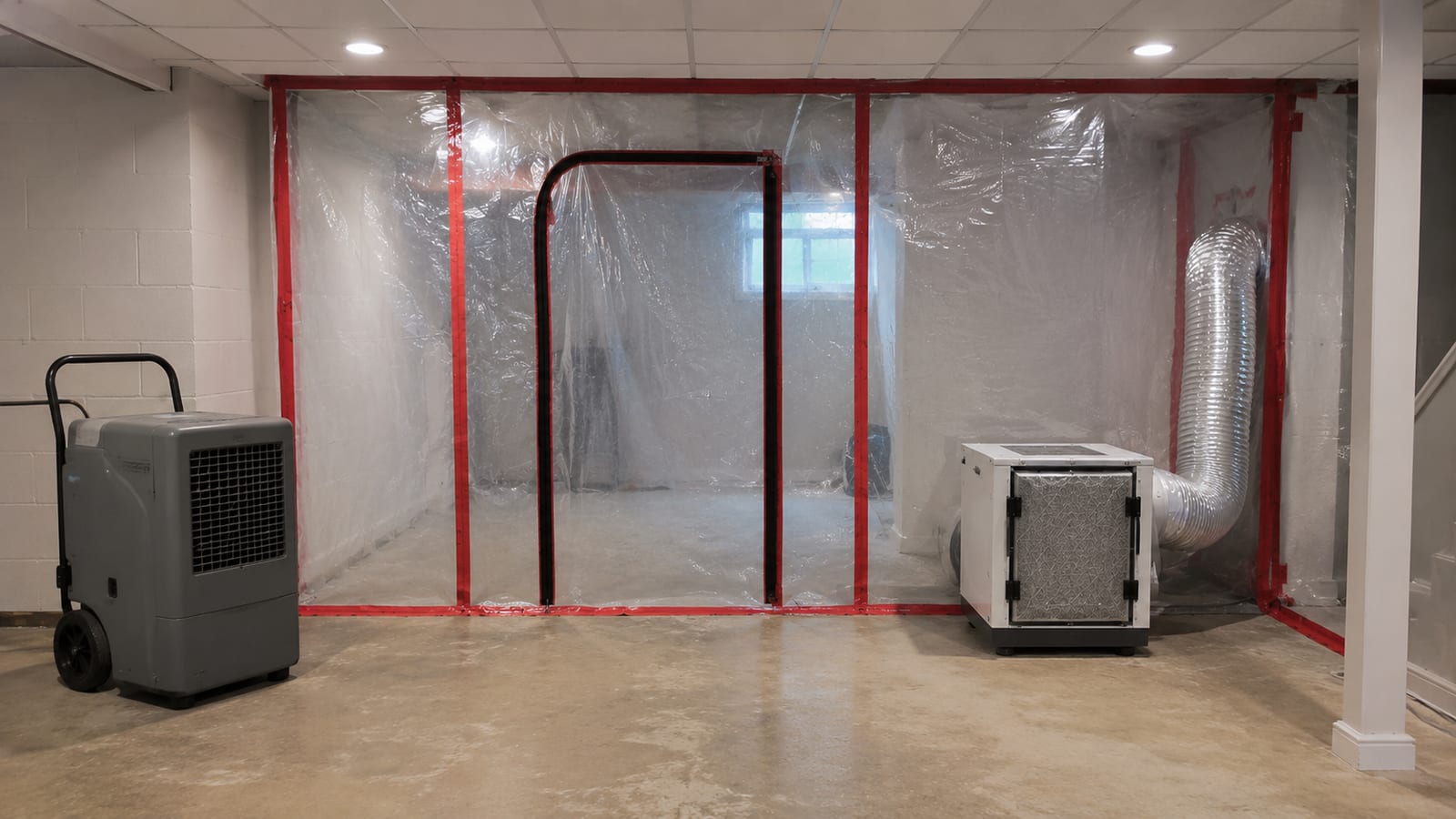
Professional teams set up containment around the affected area before any work begins, typically using plastic sheeting, negative air pressure, and air scrubbers that filter particles from the workspace before air circulates back into the building. Without these precautions, disturbed mold spores can settle into new areas and make the overall remediation more complicated. The EPA recommends removing mold from hard surfaces with detergent and water when possible, and replacing porous materials that are heavily contaminated rather than attempting to clean them in place.
The practical takeaway is that proper mold abatement is a controlled process. The goal is to keep the problem from spreading while it is being addressed, and to verify through testing that the space has been returned to a safe condition before containment is removed.
The Mold Remediation Process, Step by Step
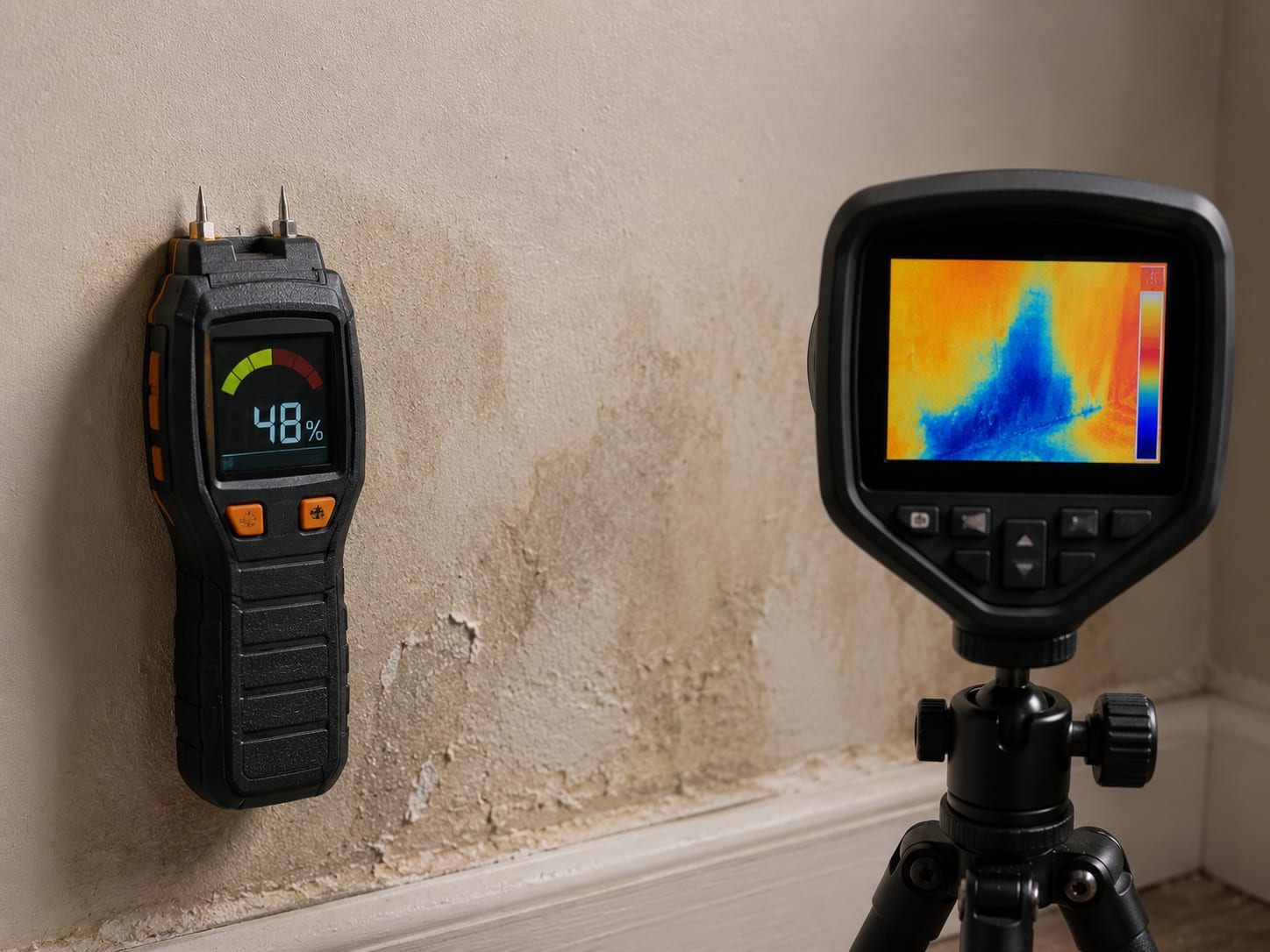
A professional mold remediation project follows a structured sequence. Each step builds on the one before it, and skipping steps is one of the most common reasons mold problems come back.
The Mold Remediation Process
- 1
Inspection and moisture detection
Moisture meters, thermal imaging, and visual assessment locate visible mold and hidden moisture.
- 2
Source correction
The water problem behind the mold is found and fixed first, because any cleanup done before it will need to be repeated.
- 3
Containment
Plastic sheeting and negative air pressure seal the area so disturbed spores do not spread.
- 4
Removal
Porous materials that are too contaminated to clean are taken out.
- 5
Cleaning and structural drying
Remaining surfaces are treated and wall cavities, subfloors, and ceilings are dried with commercial equipment.
- 6
Verification and restoration
Post-remediation testing confirms the space is dry and clean, then drywall, insulation, and paint are restored.
Step 1: Inspection, Moisture Detection, and Source Correction
The project starts with a thorough inspection of the affected area and, where necessary, the surrounding spaces. Professionals use moisture meters, thermal imaging cameras, and visual assessment to locate both visible mold growth and hidden moisture. Identifying the moisture source is part of this step, whether that is a plumbing leak, a roof penetration, a failed vapor barrier in a crawl space, or chronic condensation from high humidity. Nothing meaningful happens until that source is identified and corrected, because any cleanup done before the water problem is fixed will need to be repeated.
Step 2: Containment, Removal, Cleaning, Drying, and Restoration
Once the source is under control, the work area is contained to prevent cross-contamination. Damaged materials are removed when they cannot be adequately cleaned, the remaining surfaces are treated and cleaned, and the entire space is dried completely using commercial drying equipment and dehumidification. Structural drying of wall cavities, subfloors, and ceiling assemblies may be part of this process depending on where the moisture traveled. After post-remediation verification testing confirms the space is dry and clean, restoration work can begin, including drywall replacement, insulation reinstallation, painting, and any other repairs needed to return the space to its original condition.
Prevention and Long-Term Protection
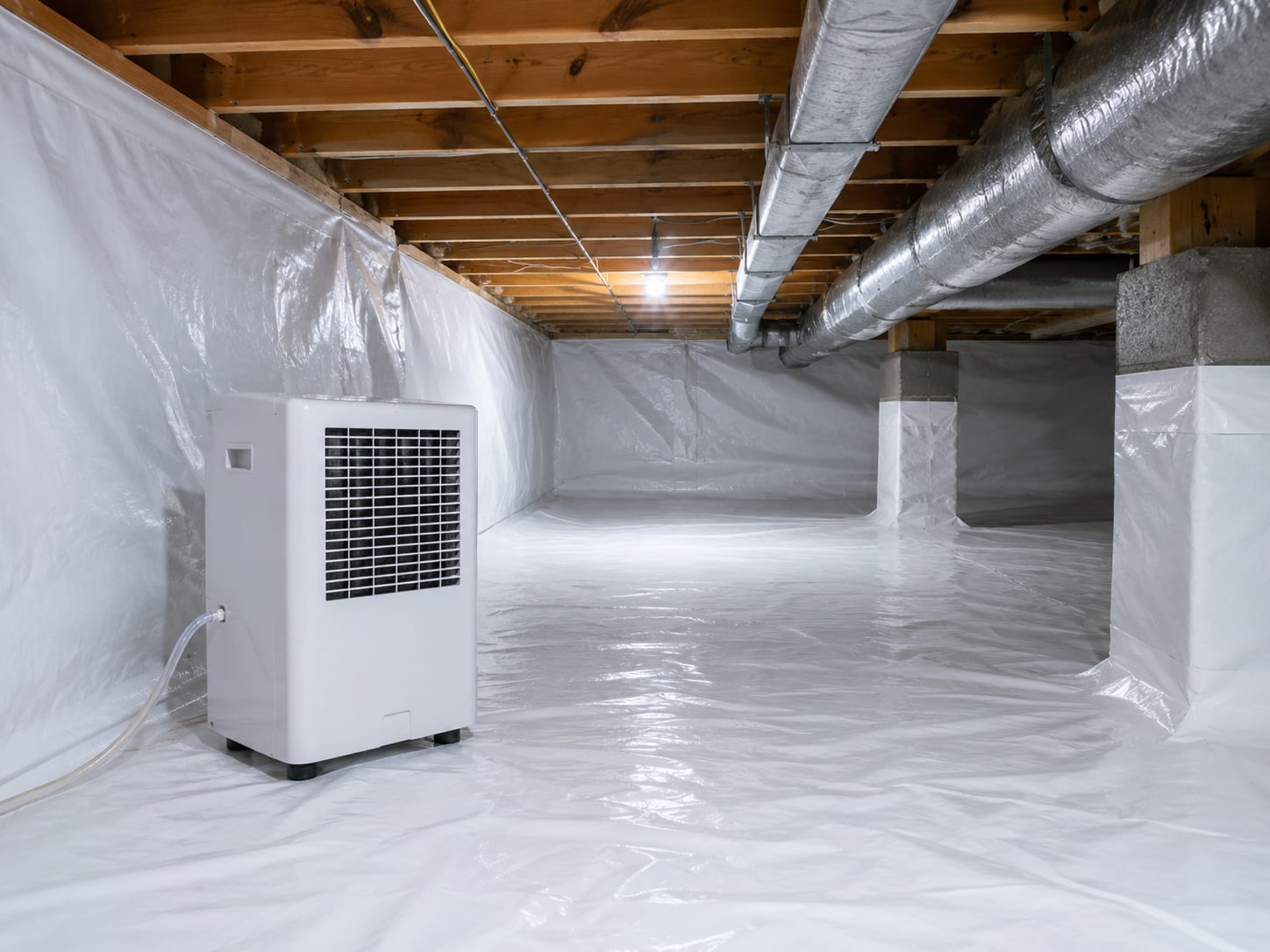
Getting through a remediation project is one thing. Keeping the problem from coming back requires ongoing attention. The most effective thing any property owner can do is control moisture inside the building, because mold cannot grow without it. That means fixing leaks promptly, maintaining proper humidity levels, and making sure bathrooms, attics, crawl spaces, and basements have adequate ventilation.
Preventing Mold Long-Term
Fix leaks promptly
Mold cannot grow without moisture, so stopping leaks early is the single most effective step.
Keep humidity below 60 percent
Especially in crawl spaces and basements through humid New Jersey summers.
Ventilate damp spaces
Bathrooms, attics, crawl spaces, and basements all need adequate airflow.
Act within 24 to 48 hours
After any water intrusion, prompt extraction and drying keep a water problem from becoming a mold problem.
Dehumidification is particularly relevant in central New Jersey, where summer humidity can be high enough to promote mold growth in spaces with no obvious water intrusion. A crawl space or basement that stays consistently damp through the humid months can develop fungal growth even without a leak. Keeping relative humidity below 60 percent in those spaces is one of the more practical ways to reduce long-term risk.
After any water intrusion event, whether from a burst pipe, a washing machine overflow, or a storm-related flood, the window for preventing mold growth is short. The EPA notes that mold can begin to grow on wet materials within 24 to 48 hours under the right conditions. Emergency water extraction and prompt structural drying are not overreactions. They are how you keep a water damage event from becoming a mold remediation project on top of everything else.
Common Pitfalls in Mold Cleanup
The most common mistake property owners make is cleaning visible mold without addressing the leak, humidity issue, or drainage problem that caused it. The surface may look clean afterward, but if moisture is still present in the wall cavity, subfloor, or adjacent materials, mold growth often returns within weeks or months. The EPA is direct on this point: the key to mold control is moisture control, and any cleanup that skips that step is incomplete.
A second pitfall is assuming a space is safe because it looks clean. Mold spores, moisture readings, and contamination in porous materials are not visible without the right equipment. A space that has been wiped down and dried on the surface may still have elevated spore counts in the air, active moisture trapped in a wall assembly, or contamination in insulation that was never addressed. Post-remediation verification testing, using air and surface samples sent to an accredited lab, is the only way to confirm the space has actually been returned to acceptable conditions rather than simply looking better.
Frequently Asked Questions About Mold Remediation
Is mold remediation the same as mold removal?
No. Mold removal focuses on taking mold off a surface, while remediation is a broader process that addresses the moisture source, contains the affected area, removes damaged materials when needed, and verifies the space is safe after cleanup. Removal is one step; remediation is the full process.
How do you know if mold remediation is needed?
If you see visible mold growth, detect a persistent musty odor, or have had recent water damage that may not have dried completely, remediation may be the appropriate response. A professional mold inspection can help confirm whether the situation requires full remediation or a more limited cleanup approach.
Can mold come back after cleanup?
Yes, if the moisture source is not corrected. The EPA is clear that mold will return if the conditions that caused it remain unchanged. A proper remediation project addresses both the mold and the water problem to reduce the likelihood of recurrence.
What areas of a property are most at risk?
Basements, bathrooms, crawl spaces, and attics are among the most common locations for mold growth, along with areas near plumbing failures, roof leaks, or any space that has experienced water intrusion. The CDC notes that basement and attic mold are particularly common because these spaces often have less airflow and are more likely to hold moisture over time.
Do all mold problems require major demolition?
No. The scope depends on what materials are affected, how deeply the mold has penetrated, and whether the contamination is isolated or widespread. A small bathroom mold problem may require basic cleaning and drying. A more serious situation involving saturated drywall, insulation, or structural materials may require removal and replacement of those materials before the space can be properly restored.
Why hire a professional instead of handling it yourself?
Professionals have the equipment and training to locate hidden moisture with thermal imaging and moisture meters, set up proper containment to prevent cross-contamination, and verify through air and surface testing that the space has been returned to a safe condition. According to the EPA, porous materials with mold penetration often need replacement rather than surface cleaning, and determining whether a material is salvageable requires more than a visual check. For any project involving a large affected area, hidden mold, or significant water damage, professional assessment is the more reliable path.
Test Your Mold Remediation Knowledge
1. Is mold remediation the same as mold removal?
2. How quickly can mold begin growing on wet materials?
3. What relative humidity level helps prevent mold regrowth?
4. According to the EPA, what is the key to mold control?
5. Which materials most often must be removed rather than cleaned?
Pick an answer to begin.
Final Thoughts
Mold remediation is a structured process, not a single cleaning step. It works because it addresses both the mold and the moisture problem behind it, removes materials that cannot be adequately cleaned, and verifies through testing that the space has been returned to a safe condition. Property owners who understand that process are better positioned to ask the right questions, recognize whether a job has been done correctly, and respond quickly the next time water finds its way somewhere it should not.
A mold problem caught and addressed within days of a water intrusion event is almost always less costly and less disruptive than one discovered weeks or months later after it has spread through a wall cavity or across a larger area.
When you are ready to have your property assessed, our team at ExecPro Restoration & Cleaning is here to help. We serve homeowners, property managers, and real estate professionals throughout Princeton Junction, West Windsor, and the surrounding communities across central New Jersey. From initial inspection through containment, removal, post-remediation air quality testing, and reconstruction, we handle the full process under one roof. Call us at (888) 300-3772 or email hello@execprorc.com to get started. We offer emergency services around the clock, every day of the week, because water and mold do not wait for business hours. You can also contact us with the details and we will reply with the next step.
Mold Remediation Terms
Tap a term to see what it means.
Mold remediation. The full process of finding mold, correcting the moisture source, removing contaminated materials, cleaning, and restoring the property to a safe condition.
Related Articles
Mold Removal Cost in Princeton NJ: Real Numbers, No Surprises
Wondering about mold removal cost in Princeton NJ? Get real NJ pricing data by job size, location, and mold type so you know exactly what to expect.
Black Mold in Princeton NJ: Stop Cleaning It, Start Fixing It
Black mold in Princeton NJ keeps coming back because scrubbing never fixes the moisture feeding it. Here's what professional black mold removal actually involves.
Basement Finishing in Trenton, NJ: Plan Review, Escape Openings and Finishes That Can Take Water
Plan it, get it reviewed, then finish it. What basement finishing in Trenton takes before walls go up, and what a flood policy will not pay for below grade.