Black Mold in Princeton NJ: Stop Cleaning It, Start Fixing It
Cal HewittPublished
- black mold
- mold removal
- mold remediation
- new jersey
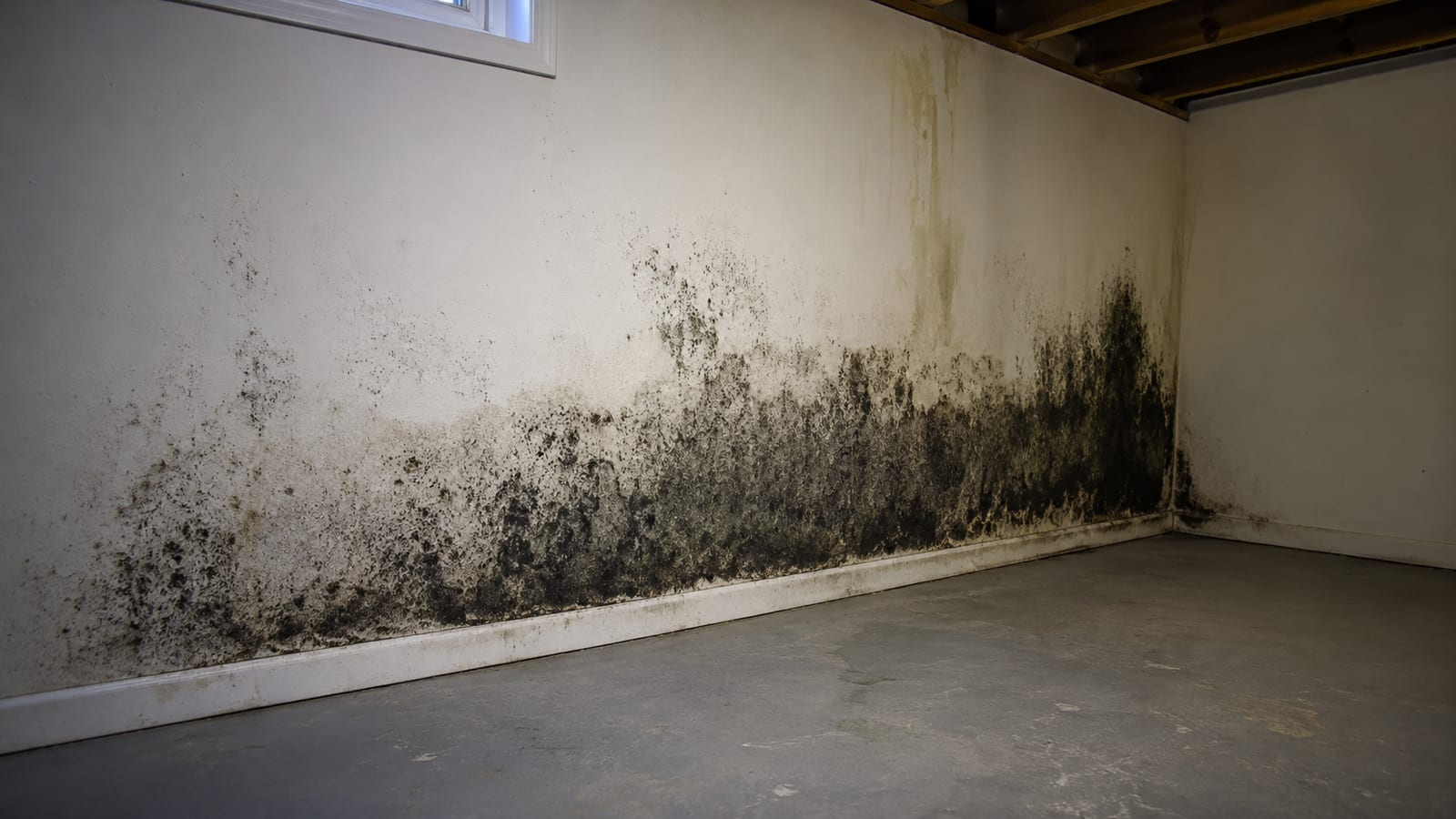
You've scrubbed the dark patch on the basement wall twice now. You bought the spray from the hardware store, followed the directions carefully, and felt relieved for a few weeks. Then it came back, darker and wider than before. That cycle is one of the most common and most frustrating experiences homeowners in Princeton, Princeton Junction, and West Windsor face when dealing with black mold removal in Princeton NJ. The mold is not coming back because you cleaned it wrong. It is coming back because the thing feeding it was never fixed. Moisture is the engine behind every mold problem, and until that engine is shut down, no spray cleaner, scrub brush, or surface treatment will stop the mold from returning. What you are dealing with is a moisture problem before it is a surface problem. It is a moisture problem that happens to show up as a stain. Understanding that difference is the first step toward actually fixing it.
Key Takeaways
Moisture is the root cause
Black mold grows only when excess moisture exists from leaks, high humidity, or condensation. Cleaning the surface without fixing the moisture source will not stop recurrence.
DIY is limited to small areas
The EPA recommends DIY cleanup only for areas under roughly 10 square feet. Larger or hidden mold requires professional containment, air filtration, and material removal.
Professional detection finds hidden mold
Thermal imaging cameras and moisture meters locate moisture behind walls, under floors, and in other concealed areas that visual inspection cannot reach.
Porous materials must be removed
Drywall, carpet, ceiling tiles, and insulation often need to be pulled out entirely if mold has grown into them. Surface cleaning is not enough.
Health risks are real
Mold exposure can trigger allergic reactions, asthma attacks, and respiratory irritation, especially in children, the elderly, and anyone with existing respiratory conditions.
One team handles everything
ExecPro Restoration & Cleaning provides the full scope from inspection and testing through remediation, structural drying, and rebuild, so you never have to coordinate multiple contractors during a stressful situation.
Why Black Mold Removal Matters
Black mold in Princeton NJ homes needs the water source fixed, not just the surface cleaned. It signals that excess moisture has found a place to settle inside your home and that biological growth is already underway. Left alone, mold spreads quickly into wall cavities, subflooring, and insulation where it becomes much harder and more expensive to address. The New Jersey Department of Health's mold guidelines list allergic reactions and irritation of the nose, throat, and respiratory tract among the common health effects, link mold odors to headaches, nausea, and dizziness, and name infants, the elderly, and people with existing allergies or lung conditions as those at highest risk.
Delaying action also narrows your options. Mold can begin growing within 24 to 48 hours of water exposure, which means a slow roof leak or a small plumbing drip can seed a serious problem inside your walls before you ever notice a stain. By the time visible growth appears, the moisture condition behind it has often been active for weeks or months. The visible patch is the symptom. The wet structure behind it is the actual problem.
Why Princeton Homeowners Face This Risk
Homes in Princeton Junction and West Windsor sit in a region that creates favorable conditions for mold growth year-round. Summer brings sustained high humidity that seeps into basements and crawl spaces. Spring thaw and heavy rain put pressure on foundations and drainage systems. Winter temperature swings create condensation on cold surfaces inside walls and around windows. Add in aging plumbing, older roof systems, and the typical basement seepage that comes with New Jersey soil conditions, and it becomes clear why mold remediation in Princeton, NJ is a genuine recurring need for local homeowners rather than a rare event.
Signs You Need Black Mold Removal
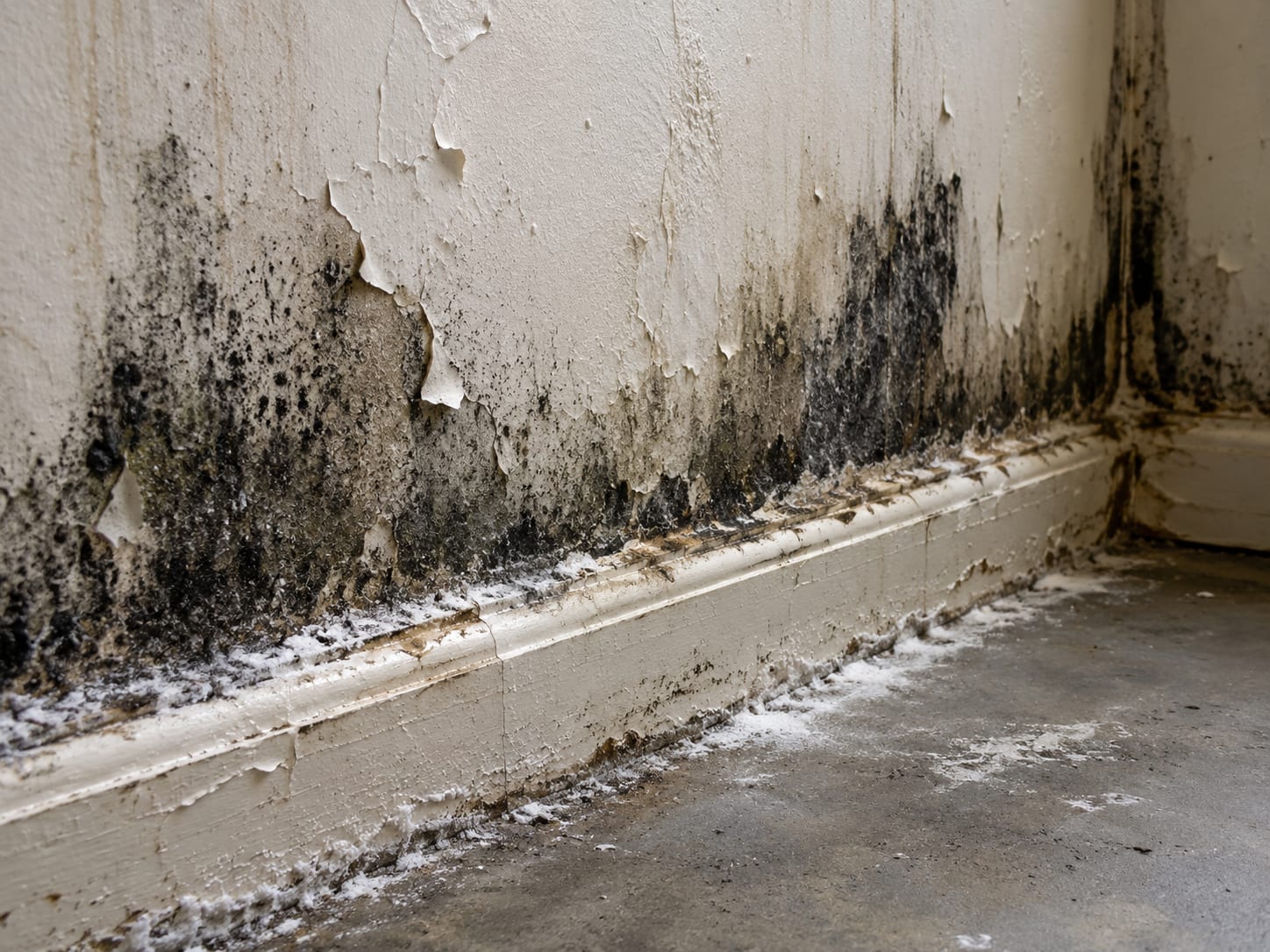
Mold does not always announce itself with a visible black patch. Many homeowners in Princeton NJ live with an active mold problem for months without realizing how far it has spread, because the growth is happening inside walls, under flooring, or in spaces they rarely check.
Three Signs to Watch For
Musty odor
A persistent musty or earthy smell is often the first sign of hidden mold, even when nothing is visible, coming from the compounds mold releases as it consumes material inside walls or under floors.
Visible dark spots
Patchy black, green, or dark gray staining on walls, ceilings, baseboards, or around window frames is the most recognizable sign of active growth.
Water damage history
Peeling paint, bubbling drywall, warped baseboards, and recurring dampness after rain or snowmelt all point to water getting into the structure.
Sign A: Musty Odor
A persistent musty or earthy smell is often the first sign of hidden mold growth, even when nothing is visible on the surface. That odor comes from microbial volatile organic compounds released by mold colonies as they consume organic material inside your walls or under your floors. If a room smells damp and the smell does not go away after cleaning, that is a reason to investigate further rather than assume it is just an old house.
Sign B: Visible Dark Spots
Patchy black, green, or dark gray staining on walls, ceilings, baseboards, or around window frames is the most recognizable sign of active mold growth. Color alone does not identify the mold species or the level of risk. New Jersey's mold guidelines note that mold can appear brown, yellow, green, or black depending on the species present. What matters more than the color is the moisture condition behind it and the size of the affected area.
Sign C: Water Damage History
Peeling paint, bubbling drywall, warped baseboards, and recurring dampness after rain or snowmelt all indicate that water has been getting into the structure. Anytime a home has a history of roof leaks, plumbing leaks, burst pipe cleanup, basement seepage, or flood damage, the risk of mold inside the structure is significantly elevated. Wherever water sat long enough to saturate a porous material, mold had the conditions it needed to grow.
Key Considerations Before Starting Removal
Before touching a single patch of mold, there are factors that determine whether doing the work yourself is reasonable or whether calling a professional is the safer choice.
Hover or tap a row to highlight it.
| Situation | DIY may be reasonable | Professional remediation needed |
|---|---|---|
| Affected area size | Under roughly 10 square feet on a non-porous surface in a well-ventilated space | Larger than roughly 10 square feet |
| Location and access | Surface mold you can fully see, reach, and clean | Mold inside wall cavities, under subfloor material, or in an HVAC system |
| Cleaning history | A small, visible spot being addressed for the first time | The same spot cleaned more than once without lasting results |
Factor A: Size of the Affected Area
The EPA draws a clear line at roughly 10 square feet. Below that threshold, a careful homeowner wearing proper protective gear may be able to handle cleanup on a non-porous surface in a well-ventilated space. Above that threshold, professional remediation is the appropriate path. Larger mold problems require containment, air filtration with HEPA equipment, and in many cases the removal of contaminated building materials that cannot be safely handled without professional tools and training.
Recommended action: If the affected area is larger than 10 square feet, if you suspect mold is behind a wall, or if you have already cleaned the same spot more than once without lasting results, contact a licensed mold remediator before attempting further DIY treatment.
Factor B: Location and Accessibility
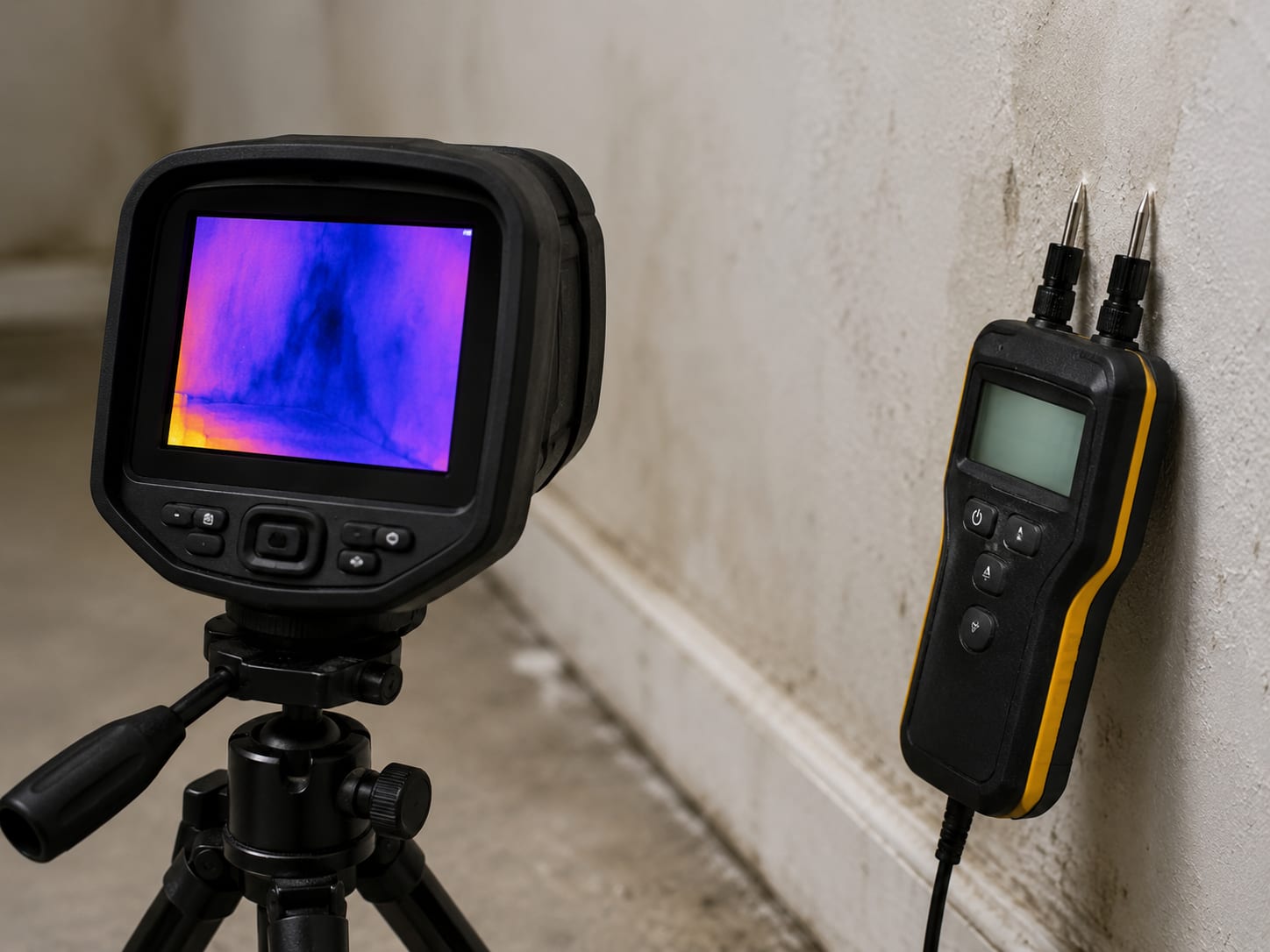
Surface mold in a bathroom or on a concrete basement wall is a different problem from mold growing inside wall cavities, under subfloor material, or inside an HVAC system. Mold in hidden locations cannot be safely or effectively cleaned using DIY methods because you cannot reach it, contain it, or verify that it has been fully removed. Hidden mold detection requires professional tools, specifically thermal imaging cameras and moisture meters that can read moisture levels inside wall assemblies without tearing everything open blindly.
Recommended action: If you cannot see the full extent of the mold, or if you have reason to believe it extends beyond the visible surface, have a professional mold inspection performed before doing any remediation work.
Legal, Safety, and Practical Considerations
Homeowners in New Jersey have some regulatory context worth understanding before starting any mold project, whether DIY or professional.
Standards and Limits
New Jersey's official guidance makes two points that many homeowners find surprising. First, a thorough visual inspection is often sufficient to identify a mold problem. Once mold is visible, additional laboratory testing is frequently unnecessary, and the priority should shift to fixing the moisture source and removing contaminated material. Second, homeowners should not expect any contractor to make a home completely "mold free." Mold spores exist naturally in both indoor and outdoor air. A reputable contractor promises to remove the active growth, address the moisture source, and return conditions to normal background levels. Any claim of a permanently mold-free home is a red flag.
CDC guidance requires protective gloves, goggles, and at minimum an N95 respirator for anyone cleaning mold, even on small areas. EPA guidance adds that the HVAC system should not be running if mold contamination is suspected, because air handling can pull spores from the affected area and distribute them throughout the entire home. Wearing protection and shutting off the HVAC are two steps that can meaningfully reduce contamination spread while you wait for professional help.
Professional Black Mold Removal Process
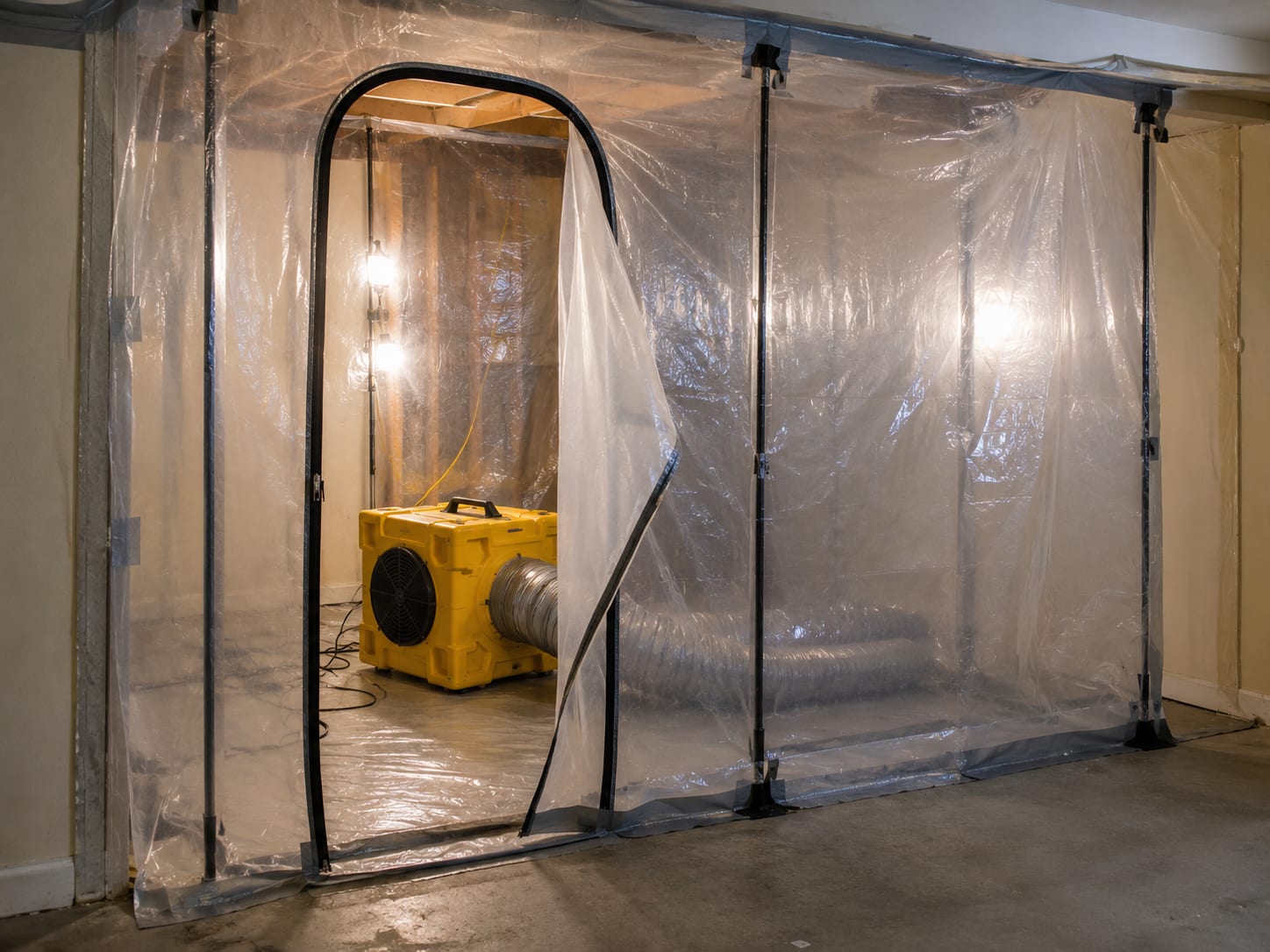
Professional black mold removal in Princeton NJ is a structured, multi-step process. It is not a more thorough version of what you can do with a spray bottle. Each step addresses a different part of the problem, and skipping any one of them is how mold comes back.
The Professional Black Mold Removal Process
- 1
Inspection and moisture detection
Thermal imaging cameras and moisture meters map moisture inside walls, under flooring, and in concealed areas to find the source, not just the visible mold.
- 2
Containment and air filtration
The affected area is sealed off with plastic barriers and negative air pressure while HEPA air scrubbers run continuously to pull spores from the air.
- 3
Removal of contaminated materials
Porous materials like drywall, carpet, ceiling tiles, and insulation are taken out because mold colonizes their interior and cannot be cleaned.
- 4
Cleaning and antimicrobial treatment
Non-porous structural surfaces are cleaned with HEPA vacuums and treated with antimicrobial agents to address residual spores.
- 5
Structural drying
High-capacity dehumidifiers and air movers run until moisture readings return to acceptable levels throughout the structure.
- 6
Rebuild and restoration
After post-remediation verification, the removed drywall, flooring, and paint are replaced to bring the space back to livable condition.
Step 1: Inspection and Moisture Detection
The process starts before any cleaning begins. Professionals use thermal imaging cameras and moisture meters to map moisture inside wall assemblies, under flooring, and in concealed areas. This step identifies the moisture source rather than just the visible mold, so that the repair targets the actual cause. Without it, remediation addresses the result but leaves the problem running.
Step 2: Containment and Air Filtration
Once the scope is understood, the affected area is physically sealed off using plastic barriers and negative air pressure. This prevents mold spores from migrating to clean areas of the home during removal. HEPA air scrubbers run continuously inside the containment zone to pull spores out of the air and prevent them from settling on surfaces or traveling through the home's ventilation.
Step 3: Removal of Contaminated Materials
This is the step that surprises most homeowners who expected cleaning to be enough. Porous materials like drywall, carpet, ceiling tiles, and insulation cannot be cleaned once mold has grown into them. Mold colonizes the interior of these materials rather than just the surface, so wiping or spraying them leaves the growth intact. Drywall, carpet, insulation, and ceiling tiles have to come out when they are affected. There is no cleaning shortcut for saturated porous material.
Step 4: Cleaning and Antimicrobial Treatment
After contaminated materials are removed, non-porous structural surfaces are cleaned with HEPA vacuums and treated with antimicrobial agents to address residual spores. Bleach is not the primary tool here. For hidden or porous-material mold problems, the emphasis belongs on material removal, structural drying, and moisture source correction, not surface treatment with household chemicals.
Step 5: Structural Drying
Cleaning is not the same as drying. Professional structural drying equipment, including high-capacity dehumidifiers and air movers, runs in the affected area until moisture readings return to acceptable levels throughout the structure. This is not a fast process; it requires monitoring over time to confirm the building assembly is genuinely dry. Mold cannot sustain itself in a properly dried structure.
Step 6: Rebuild and Restoration
Once the area passes post-remediation verification, the materials that were removed get replaced. Drywall, flooring, paint, and any necessary structural repairs bring the space back to livable condition. This is the step that most single-trade contractors cannot complete on their own, which is why a remediator with rebuild capability matters.
Prevention and Long-Term Strategy
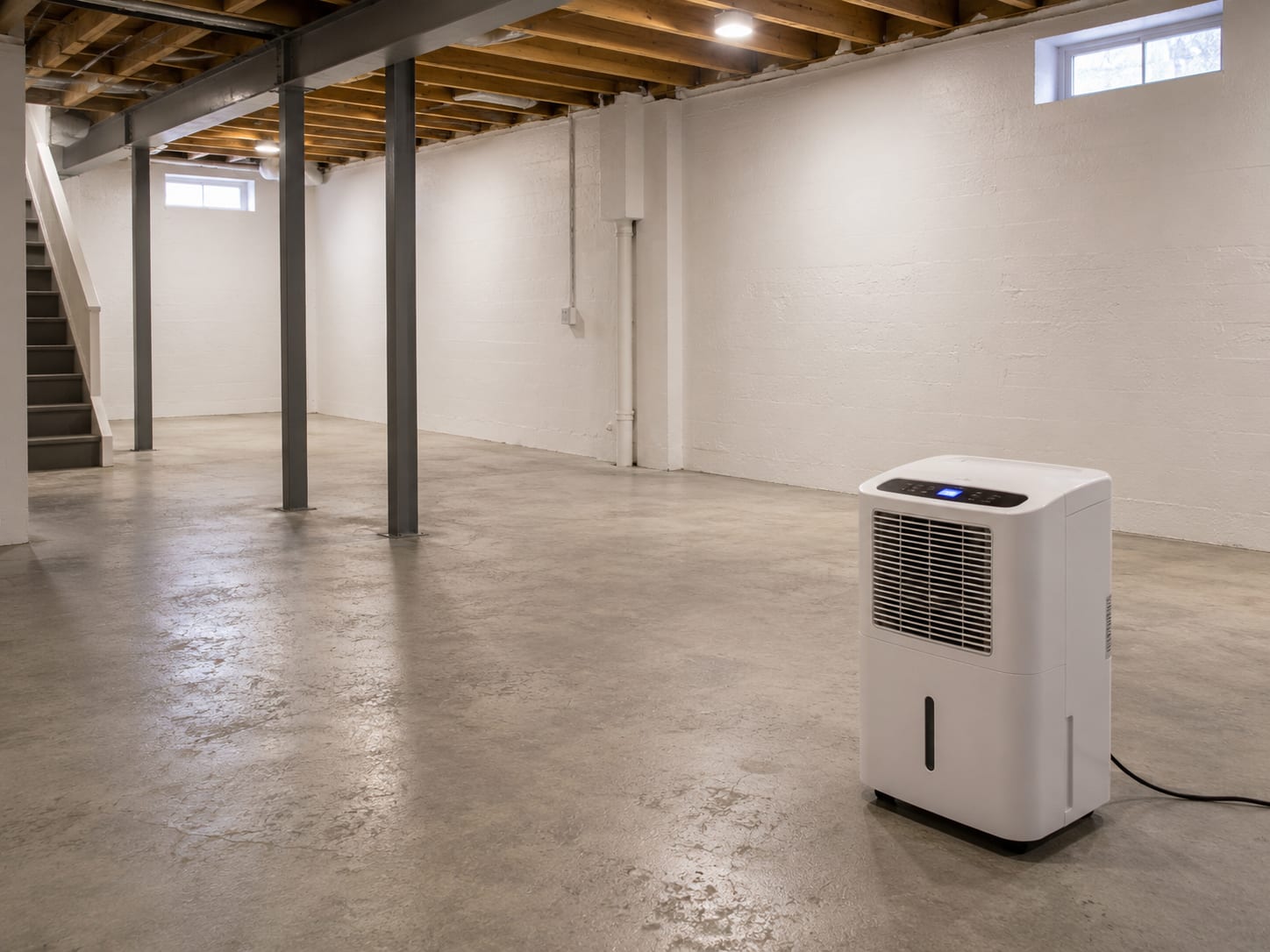
Remediation solves the current problem. Prevention keeps it from becoming a recurring one. For Princeton NJ homeowners, the long-term strategy is straightforward but requires attention to the building itself, not just to visible surfaces.
Fix the moisture source completely. Roof leaks, plumbing leaks, foundation cracks, and poor drainage should be repaired immediately after remediation, not deferred. Keep indoor humidity below 50 percent with properly sized dehumidifiers and adequate ventilation. Inspect the home regularly after heavy rain, snowmelt, or any plumbing work to catch new water intrusion early. HVAC maintenance matters too; a neglected air handling system can harbor mold and spread spores through every room if the contamination goes undetected.
Keeping Mold From Coming Back
Fix the moisture source completely
Repair roof leaks, plumbing leaks, foundation cracks, and poor drainage immediately after remediation rather than deferring them.
Keep humidity below 50 percent
Use properly sized dehumidifiers and adequate ventilation to hold indoor humidity down.
Inspect after weather events
Check the home after heavy rain, snowmelt, or any plumbing work to catch new water intrusion early.
Maintain the HVAC system
A neglected air handling system can harbor mold and spread spores through every room if it goes undetected.
Common Pitfalls
What people get wrong when dealing with black mold in Princeton NJ homes often comes down to a few repeated mistakes that are easy to understand but costly to correct.
- Using bleach as the primary solution: Bleach can address surface mold on non-porous materials, but it does not penetrate into porous materials and does not fix the moisture condition. Repeated bleach treatment on a wall with active moisture behind it is a temporary cosmetic fix, not a solution.
- Ignoring the moisture source: Cleaning visible mold without identifying and correcting the source guarantees recurrence. The mold will return because the conditions that created it never changed.
- Attempting DIY on large or hidden mold areas: Once the affected area exceeds roughly 10 square feet, or once mold is growing somewhere you cannot fully access, DIY methods can make the problem worse by disturbing spores without proper containment.
- Running the HVAC system when mold is suspected: This distributes spores through the entire home via the ductwork. Shut off the system and leave it off until a professional has assessed the situation.
- Expecting a contractor to make the home completely mold free: This is not achievable. A legitimate remediation brings active growth under control and returns conditions to normal background levels.
- Delaying action after water exposure: Mold can begin growing within 24 to 48 hours of a water event. Fast response after a burst pipe, roof leak, or flooding is the difference between a contained remediation and a much larger structural problem.
Frequently Asked Questions About Black Mold Removal Princeton NJ
What is black mold?
"Black mold" is the everyday name for dark-colored mold growth, and many different molds can look that way. Mold can appear black, green, gray, white, or orange depending on the species and the surface it is growing on. What matters more than appearance is the moisture condition behind the growth and the size and location of the affected area.
When should I call a professional for black mold removal?
Call a professional when the visible area is larger than about 10 square feet, when you suspect mold is growing inside walls or under flooring, when there has been significant water damage, or when anyone in the household has asthma, allergies, or respiratory sensitivities. Professional mold inspection Princeton NJ is also warranted any time the same area has been cleaned more than once and the mold has returned.
Can I clean black mold myself?
DIY cleanup may be appropriate for small, visible areas under roughly 10 square feet on non-porous surfaces, as long as you wear proper protective gear including gloves, goggles, and an N95 respirator. Larger areas, hidden mold, or mold connected to a water damage event require professional containment, air filtration, and material removal that cannot be replicated with household products.
How does ExecPro Restoration & Cleaning handle black mold removal in Princeton NJ?
We handle the full scope in a single-source process: mold inspection, mold testing, remediation, water extraction, structural drying, rebuild, and cleaning. Homeowners work with one team from start to finish rather than coordinating separate contractors for each phase. We also use thermal imaging and moisture mapping to identify hidden moisture so the root cause gets corrected, not just the visible growth.
Does insurance cover mold remediation in New Jersey?
Homeowners insurance in New Jersey typically covers mold damage when it results from a covered peril, such as a burst pipe or a malfunctioning appliance. Gradual leaks, long-term seepage, and deferred maintenance are generally not covered. If your mold problem is connected to a sudden water event, contact your insurance provider promptly and document the damage thoroughly before remediation begins.
How long does black mold removal take?
Most residential mold removal projects take between one and five days for the remediation phase. Severe problems involving large areas, significant material removal, or extensive structural drying can take several weeks from inspection through rebuild. The timeline depends on the size of the affected area, how many materials need to be removed, and how long the drying phase requires to bring moisture readings down to acceptable levels.
Is mold testing always necessary before remediation?
Not always. New Jersey guidance notes that once mold is visible, additional laboratory testing is often unnecessary and the priority should shift to addressing the moisture source and removing the growth. Air quality testing and post-remediation verification are more useful: the first to establish baseline conditions, and the second to confirm that remediation was successful and spore counts have returned to normal background levels.
Test Your Black Mold Knowledge
1. Above what affected area does the EPA say professional remediation is the appropriate path?
2. How quickly can mold begin growing after water exposure?
3. What indoor humidity level helps keep remediated mold from returning?
4. What should you do with the HVAC system when mold is suspected?
5. Why must porous materials like drywall and insulation often be removed?
Pick an answer to begin.
Final Thoughts
Black mold in Princeton NJ does not respond to more scrubbing or a better spray product. It responds to finding and fixing the moisture source, removing contaminated materials, drying the structure completely, and putting back what was taken out. Every time mold has come back after a DIY attempt, it was because one or more of those steps did not happen.
Taking proper action the first time saves money, protects your home's structure, and removes an ongoing health risk for your family. A single professional remediation that addresses the moisture source and passes post-remediation verification is worth far more in the long run than repeated rounds of surface cleaning that buy temporary relief.
When you are ready to stop the cycle, our team at ExecPro Restoration & Cleaning is here to help. We serve homeowners in Princeton Junction NJ, West Windsor NJ, and the surrounding communities with a full-scope process that covers mold inspection, testing, remediation, structural drying, and complete rebuild, all under one roof. Contact us to schedule a mold inspection and get a clear picture of what is actually happening inside your home.
Black Mold Removal Terms
Tap a term to see what it means.
Black mold. A common term for dark-colored mold growth, not a precise scientific category. Mold can appear black, green, gray, white, or orange, and color alone does not identify the species or the health risk.
Serving Princeton
ExecPro Restoration & Cleaning provides mold remediation services in Princeton, NJ, from inspection and testing through removal, drying, and post-remediation verification. Call (888) 300-3772 for 24/7 emergency response.
Related Articles
Black Mold Removal in a Deal, NJ Shore Home: What Happens Next
Dark mold behind a cabinet in a reopened Deal, NJ shore home. What the removal involves, what drives the cost, and how to keep it from coming back.
Dark Mold, Shared Walls: Black Mold in Princeton Junction NJ Townhouses and Condos
In a Princeton Junction townhouse, dark basement mold can trace back to an association-controlled source. Why color and responsibility are separate questions.
Mold Removal Cost in Princeton NJ: Real Numbers, No Surprises
Wondering about mold removal cost in Princeton NJ? Get real NJ pricing data by job size, location, and mold type so you know exactly what to expect.