Black Mold Removal in a Deal, NJ Shore Home: What Happens Next
Cal HewittPublished
- black mold removal
- black mold
- mold remediation
- coastal
- new jersey
- deal
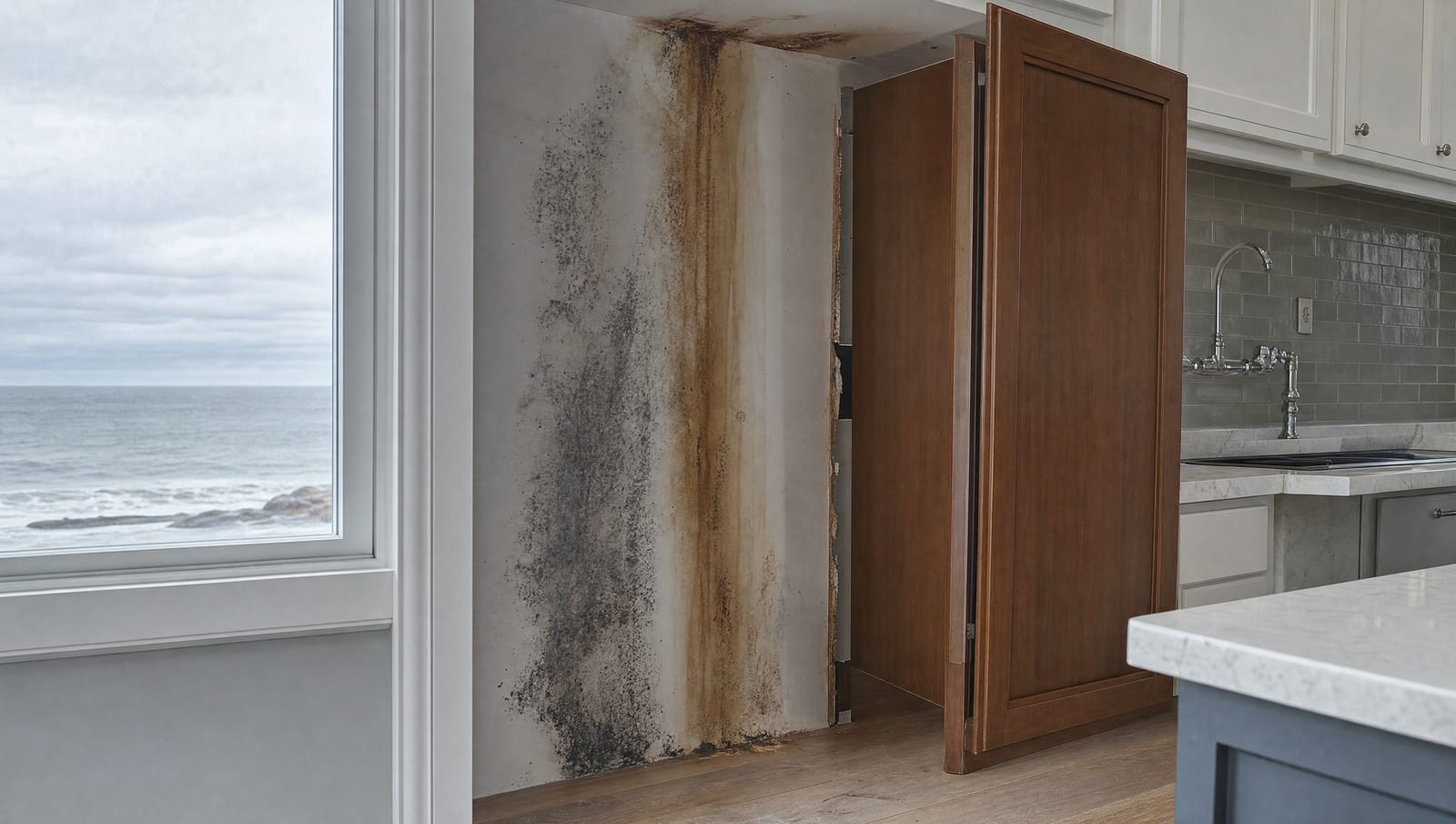
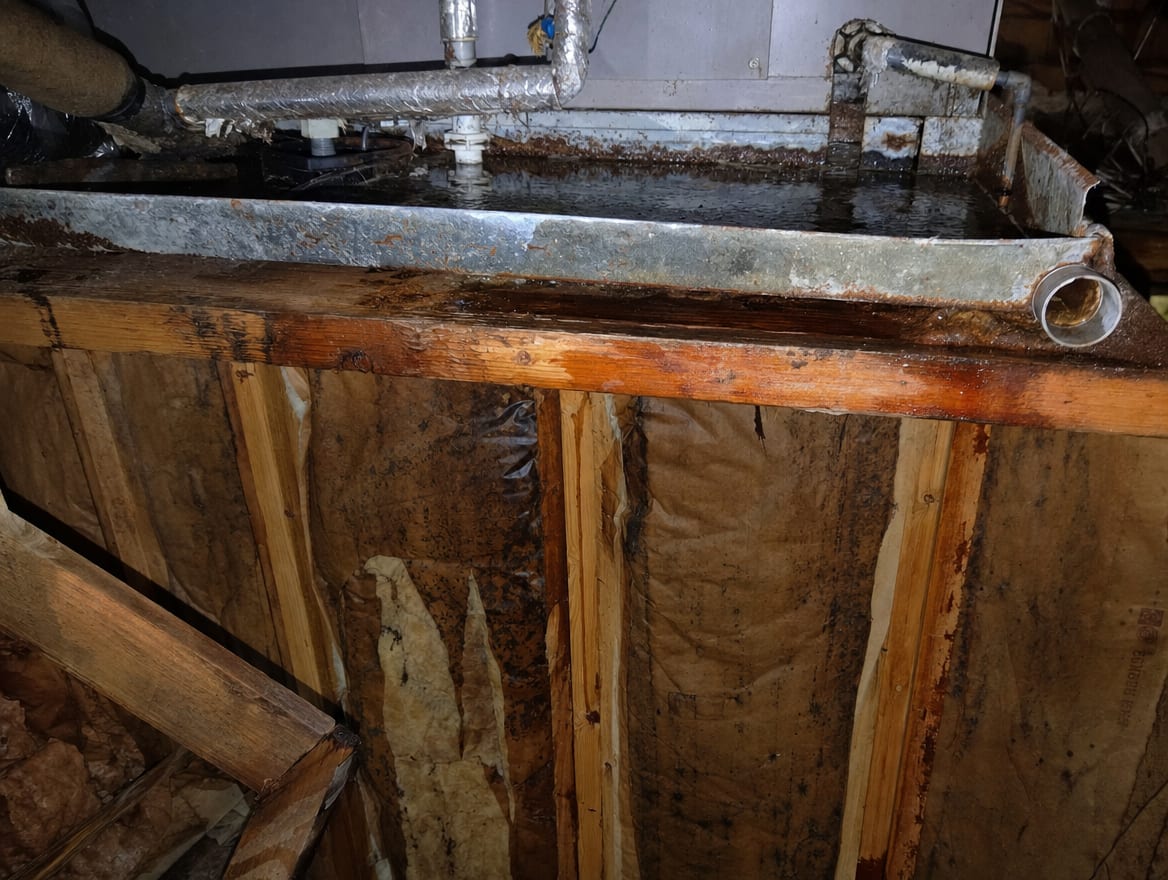
The season is over, the family has gone back to the city, and a large home in Deal has been closed for months. When someone finally reopens it, the air carries a faint musty note, and behind a custom kitchen cabinet there is a dark, spreading patch that was not there in the summer. The first word that comes to mind is "black," and right behind it comes a wave of worry about something toxic. That is a natural reaction, and it is also the wrong place to start. When the cabinet comes off the wall, the story is the water that got in behind it. A roof leak had been feeding water down inside the wall for weeks, and a failed HVAC condensate drain in the attic had been quietly adding to it the whole time the cooling system ran. The dark growth was the last thing to appear. The moisture was the first, and it was the thing that actually needed a diagnosis.
In a seasonal, high-value coastal home, three questions decide the work: what water fed the growth, how far the problem reaches, and which of your finishes and contents can be saved. This post is about answering them for dark mold in a Deal shore home, by reading the water event and the materials. For the broader story of how coastal water losses unfold and get stabilized, our guide to water damage restoration in Deal walks through the mitigation and rebuild stages in full.
What Actually Sets the Scope of a Black Mold Job
You are looking at a dark stain and you want to know how serious it is and what has to happen next. Two things decide both: the moisture that fed the growth, and how far the growth has spread. "Black mold" is the everyday name for dark growth, and the EPA uses it to describe an appearance rather than one organism. Many different molds can grow dark green, brown, gray, or near black on a wet surface, and you cannot tell one from another by looking. The color you see is a function of the material, the light, and the age of the growth as much as anything about the mold itself.
On health risk, federal guidance takes a practical line. Guidance from the CDC and NIOSH treats toxigenic molds, including the Stachybotrys that people usually mean when they say "toxic black mold," the same way it treats other indoor molds: correct the moisture and remove the growth safely. Any indoor mold, dark or light, points to a moisture problem that has to be found and corrected, and that is where the work starts. Color is where fear starts. Evidence is where the work starts.
Hover or tap a row to highlight it.
| The question you arrive with | What actually sets the scope | How it gets answered |
|---|---|---|
| "Is this the toxic kind?" | The moisture source that fed the growth | Inspection traces the water pathway to a roof, plumbing, flood, or HVAC origin |
| "Is what I can see the whole problem?" | How far contamination extends behind finishes | Moisture mapping and thermal imaging of hidden cavities |
| "Do I need to know the species?" | Whether species identification changes any decision | Lab testing, only when a defined question needs it |
| "Can I just wipe it off?" | The condition of the affected materials | Judging what can be dried and cleaned versus removed |
Every item in the right two columns can be measured, documented, and acted on, which is why a careful response in Deal builds the plan from them.
The Deal Moisture-History Checklist
The moisture history is the diagnosis. A shore home has a specific set of water pathways, and reconstructing which ones were in play is the single most useful thing an owner and a technician can do together. The goal is to answer a few questions before anyone opens a wall: what water event occurred, how long the home sat wet or vacant, and which systems could have been feeding the growth unnoticed.
Deal makes this history longer and less obvious than a typical inland home. Properties are often closed or lightly watched for stretches of the year, so a leak that would be caught in a day in an occupied house can run for weeks here. Coastal storms and wind-driven rain add roof, flashing, and window pathways that a calm inland street does not face. Large homes carry several HVAC zones, condensate lines, and drain pans, any of which can wet a ceiling or a closet quietly. And flood exposure is real but parcel by parcel, so it is checked against FEMA and NJDEP maps for the specific address rather than assumed from the fact that the ocean is close.
The Deal Moisture-History Checklist
Storm and wind-driven rain
Coastal storms and nor'easters push water through roofs, flashing, windows, and exterior penetrations, sometimes far from where the stain finally appears.
Seasonal vacancy
A home closed for part of the year lets a leak or humidity problem run unnoticed, so the visible area rarely shows the full scope on reopening.
Roof and envelope
Aging roofing, corroded flashing, and failed seals let water into attics, ceilings, walls, and insulation over time.
Plumbing events
A supply leak, a burst pipe over winter, or a slow drip in a closed home can saturate materials well beyond the visible spot.
Flood by parcel
Flood exposure varies address to address and is confirmed on FEMA and NJDEP maps, not guessed from proximity to the shore.
HVAC condensate
Clogged condensate drains, sweating equipment, and overflowing drain pans wet ceilings, closets, attics, and mechanical rooms during the cooling season.
Indoor humidity
A buttoned-up seasonal home with reduced cooling can hold high indoor humidity that condenses on cool surfaces in basements, closets, and still corners.
The cabinet scene from the opening is a clean example of why the checklist matters. Two separate pathways, a roof leak and a failed condensate drain, were both feeding the same wall. If the response had stopped at the color of the growth, one source could easily have been missed, and the mold would have returned no matter how carefully the surface was cleaned.
When Species Testing Answers a Real Question, and When It Does Not
Owners often assume that dark mold means they need a lab to identify the species before anything can happen. Usually they do not. EPA guidance is that sampling is generally unnecessary when mold is already visible, because the response is the same regardless of the species: fix the moisture and remove the growth safely. Spending on a species name that does not change a single decision is spending for its own sake.
Testing earns its place when it answers a defined question. Purposeful black mold testing is worth it when the growth is hidden and the source is uncertain, when a real estate, legal, insurance, or medical professional has asked for documentation, when a written remediation protocol needs more information to be built, or when clearance criteria for the end of the job have to be set and later confirmed. In those cases a lab result drives a real choice. Outside of them, the more honest move is to correct the moisture and treat the visible growth without waiting on a report that will not change the work.
One caution belongs here in plain terms. Color cannot identify a species, a negative sample is not a permanent certificate of safety, and there are no federal thresholds that define a "safe" indoor mold level. Testing is a tool for specific questions, not a substitute for correcting the water problem.
Finding Hidden Growth Without Tearing the House Apart
Dark mold behind one cabinet raises a fair question: what else is hidden, and do we have to open every wall to find out? The answer, in a high-value home especially, is no. The point of a good mold inspection is to find where moisture traveled without demolishing finishes on a hunch. A technician follows the water rather than the stain, using moisture meters to read wet framing and insulation that still look fine, and thermal imaging to spot the cool, damp patches inside walls and ceilings that visual inspection misses entirely.
In a coastal seasonal home the water rarely stays where it entered. A roof or flashing leak can run along framing and drop into a wall far from the roof itself. A condensate line can wet a ceiling one floor below the air handler. So the inspection maps the likely path, checks the wall and ceiling cavities along it, and opens only the small, targeted areas the readings point to. That is how the scope gets defined by evidence instead of guesswork, and it is what protects custom millwork, plaster, and detailed interiors from demolition they never needed.
Which Materials Come Clean and Which Come Out
Once the extent is understood, the next decision is material by material, and this is where a high-value Deal interior demands care. There is no blanket rule to tear out everything damp or to save everything on sight. The call depends on what the material is, how long it stayed wet, what the moisture readings show, and whether the assembly can be reached and dried.
Porous materials that have been colonized are usually the ones that come out. Saturated drywall, paper-faced insulation, carpet pad, and similar organic products hold growth inside them, not just on the surface, so cleaning the face leaves the problem intact. Non-porous and dense materials tend to fall on the salvageable side. Wood, masonry, metal, glass, and many hard surfaces can often be HEPA cleaned and dried when their condition allows it. Contents deserve their own triage: furniture, rugs, artwork, books, and stored belongings are inventoried and evaluated, then cleaned, relocated, or removed based on what they are and how far the contamination reached. Two more coastal notes apply. Older Deal homes may involve lead paint or asbestos considerations that call for testing before any demolition, and clean water does not stay clean forever, so a material that could have been dried early may need removal if it sat wet through a long vacancy.
What a Complete Remediation Scope Includes
A dark stain tempts people toward the shortest possible fix: spray it, fog it, paint over it, and move on. None of those is a complete solution when contaminated materials and active moisture remain. A real scope is a sequence, and each step depends on the one before it. The word "black" does not appear anywhere in it, because the work is defined by moisture, extent, and material condition, not by color.
What a Complete Remediation Scope Includes
- 1
Handle immediate controls
Address active water, electrical hazards, and any contaminated water first, and avoid disturbing the growth with fans or dry brushing that would spread particles.
- 2
Inspect and find the source
Trace the actual moisture pathway with meters and thermal imaging, and map how far the problem reaches before anything is removed.
- 3
Decide whether testing helps
Use lab testing only where it answers a defined question, since visible mold usually does not require sampling to act on.
- 4
Set the scope
Define containment boundaries, materials to remove, materials to clean, contents handling, drying targets, source repairs, verification criteria, and build-back.
- 5
Contain, remove, and clean
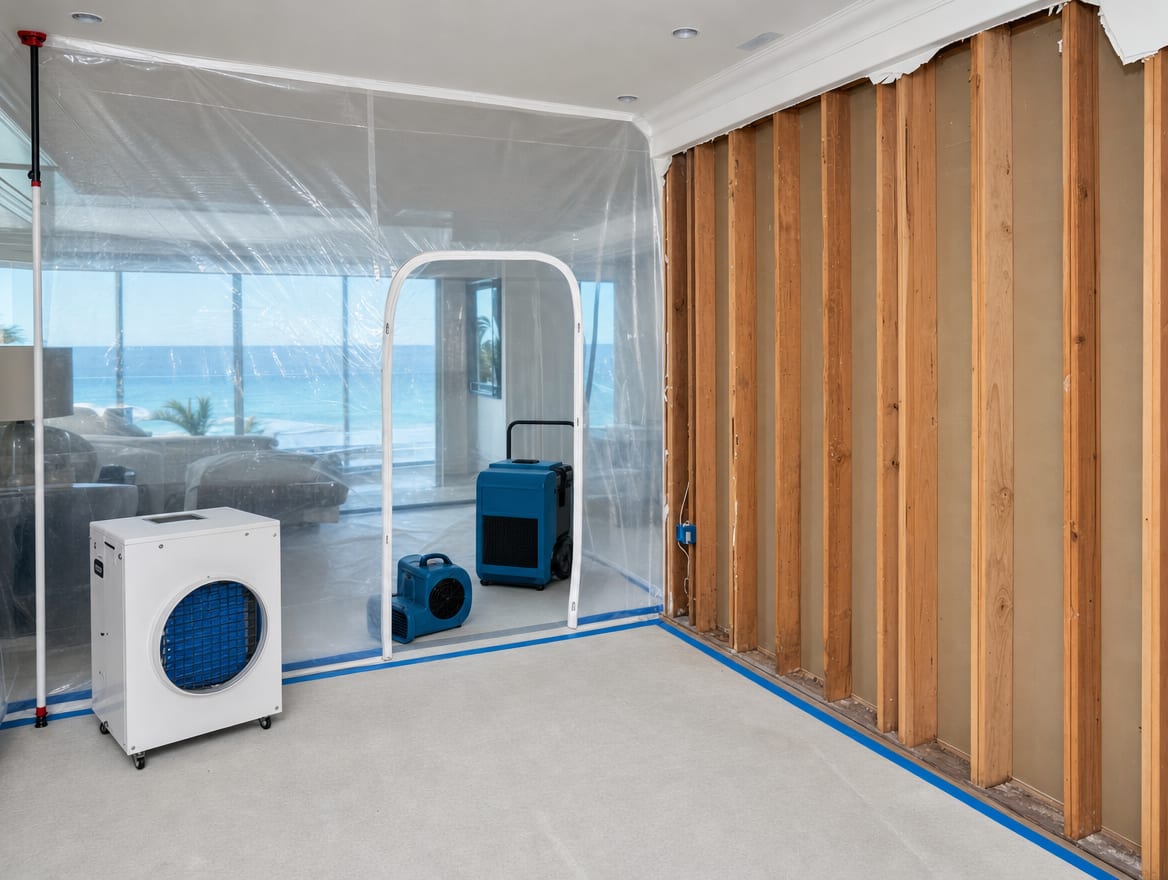
Isolate the area with sheeting and negative air pressure, run HEPA-filtered air, remove unsalvageable porous materials, and HEPA clean the surfaces that can be saved.
- 6
Dry and correct the source
Bring the structure to a dry standard with commercial equipment, and complete or assign the roof, plumbing, drainage, or HVAC repair that caused the loss.
- 7
Verify, then rebuild
Confirm the space is dry and clean, use independent verification when the job calls for it, and only then restore finishes so nothing is sealed behind a new wall.
The cabinet example runs the whole sequence honestly. Correcting only the roof leak would have left the condensate drain feeding the wall, and correcting only the drain would have left the roof. A complete scope finds and fixes both, dries the assembly, verifies it, and rebuilds last.
Documenting the Result for Owners, Insurers, and Buyers
In a seasonal, high-value home, the paperwork is not an afterthought. These properties change hands, get insured, and get reopened by different people over the years, and a dark stain can trigger fear, transaction delays, and broad repair demands if there is no record to answer it. A documented source diagnosis and a clean remediation file are far more useful than a scary label like "toxic black mold."
Worth preserving from the start: the date and cause of the water loss, photographs and video of conditions as found, moisture readings, drying logs, the inspection findings, any lab reports, the remediation scope, a contents inventory, invoices, and repair records. Where an objective sign-off is needed, independent post-remediation verification confirms that conditions have returned to normal background levels before containment comes down, which is exactly the kind of proof a buyer, an adjuster, or a future owner can rely on. One honest limit belongs in every conversation about insurance: coverage depends on your policy language, the cause of loss, exclusions, notice, and documentation, and no contractor can guarantee that a claim will be paid. What good documentation does is give the claim the record it needs to be evaluated fairly.
Frequently Asked Questions
Is dark mold in my Deal home always Stachybotrys or "toxic black mold"?
No. Many different molds look dark on a wet surface, which is why the extent of the affected material sets the scope rather than the shade. Color alone cannot identify the organism. Lab analysis is the only way to name a species, and that is only worth doing when identification changes a decision. Whatever the species, the response is the same: correct the moisture and remove the growth safely.
Do I need testing before the mold can be removed?
Usually not. The EPA advises that sampling is generally unnecessary when mold is already visible, because the work does not change with the species. Testing makes sense when the source is uncertain, when growth is hidden, when a real estate, legal, insurance, or medical professional requests documentation, or when clearance criteria have to be set. Outside of those reasons, testing adds cost without changing the plan.
The stain is small. Could the problem still be large in a seasonal home?
Yes, and that is one of the reasons a closed shore home deserves extra care. Water often travels along framing and inside cavities, so the visible patch can be the edge of a larger wet area rather than the whole of it. A leak that ran unnoticed while the house was closed has time to spread. Moisture mapping and thermal imaging define the true extent so the scope matches the evidence, not the size of what shows.
Can dark mold be cleaned off wood and custom finishes, or does everything get torn out?
It depends on the material, how long it stayed wet, the moisture readings, and whether the assembly can be reached and dried. Wood, masonry, and many hard surfaces can often be cleaned and dried when their condition allows. Saturated porous materials such as drywall and paper-faced insulation usually come out, because growth lives inside them. In a high-value interior the call is made material by material, not with a blanket rule.
Will my insurance cover black mold removal in Deal?
Only your carrier can decide that, based on your policy language, the documented cause of loss, exclusions, notice, and mitigation. Mold-related limits or exclusions may apply, and flood coverage is separate from standard homeowners coverage. A contractor cannot guarantee coverage. Thorough documentation of the source, the scope, and the work gives your claim the record an adjuster needs.
How do I keep the mold from coming back after removal?
Correct every moisture source that fed it, not just the most obvious one. In the opening example that meant both the roof leak and the failed condensate drain. Confirm the structure is dry to a defined standard before any rebuild, and for a seasonal home, monitoring and caretaker checks shorten the window a future leak can run unnoticed. Growth returns when a source is left in place, so a complete source correction is what makes the fix hold.
When dark mold turns up in your Deal home, the useful next step is a diagnosis of the water and the materials, not a verdict based on the color. ExecPro Restoration & Cleaning investigates the moisture source, maps the true extent, and handles the work through drying, verification, and the high-value rebuild these coastal homes call for, with the documentation that owners, insurers, and buyers rely on. To get an assessment scheduled, call (888) 300-3772 or reach out through our contact page and move from a worrying stain to a clear, documented answer.
Black Mold Terms
Tap a term to see what it means.
Black mold. A common term for dark-colored mold growth, not a species or a specific type. Color alone does not identify the organism or prove that a mold is more dangerous.
Serving Deal
ExecPro Restoration & Cleaning provides mold remediation services in Deal, NJ, from inspection and testing through removal, drying, and post-remediation verification. Call (888) 300-3772 for 24/7 emergency response.
Related Articles
Reopening a Deal NJ Shore Home: When Air Quality Testing Answers a Real Question
Reopening a closed Deal NJ shore home? Learn when air quality testing helps after vacancy, humidity, a storm, or renovation, and what a test cannot tell you.
Property Management Mold Services in Deal NJ: A Seasonal-Home Protocol
A repeatable mold protocol for managers of seasonal Deal NJ homes: pre-arrival inspections, remote humidity monitoring, emergency access, and owner reporting.
Structural Mold Repair in Deal NJ: Clean, Reinforce, or Call an Engineer
Structural mold repair in Deal NJ starts with one decision: is framing cleanable, decayed, or a job for a licensed engineer. Here is how to tell.