Structural Mold Repair in Deal NJ: Clean, Reinforce, or Call an Engineer
Cal HewittPublished
- structural mold repair
- structural mold
- mold remediation
- coastal
- new jersey
- deal
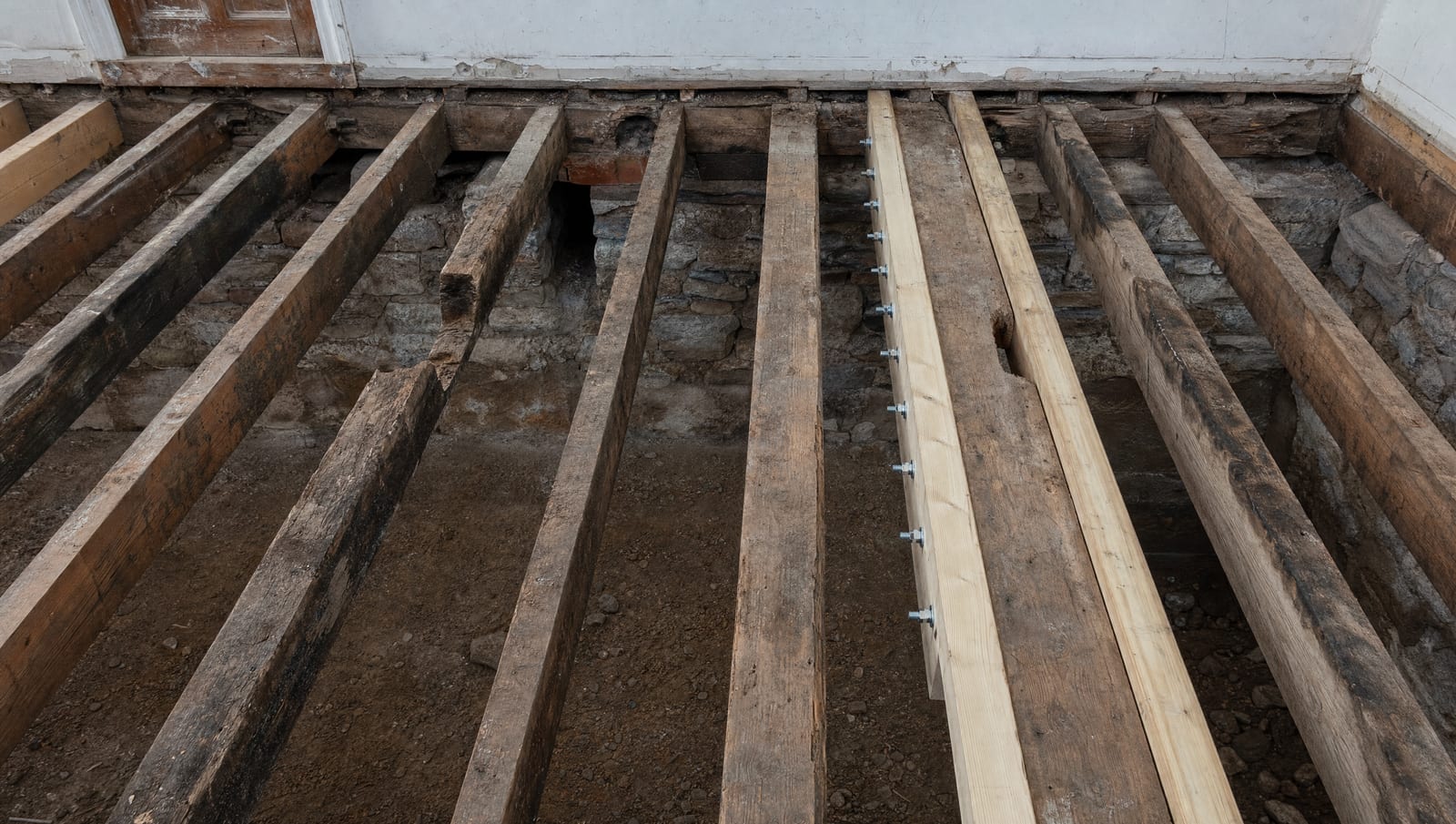
You opened a wall, a crawl space, or a section of subfloor in your Deal home and found dark growth running across the framing. The first question almost everyone asks is the wrong one. It is not "how do I clean this off." It is "is this wood still doing its job." Mold on a joist or a stud can mean two very different things. Sometimes it is surface growth on wood that is still sound, and it wipes away without changing anything structural. Other times the moisture that fed the mold has already softened the wood, taken away part of its strength, and turned a cleaning question into a repair question. Telling those two situations apart is the whole point of structural mold repair, and it is a decision that deserves care before anyone reaches for a scrub brush or a saw.
Deal sits right on the Atlantic coast in Monmouth County, and that location shapes the problem. Homes here deal with humid summers, coastal storms, and seasons when a house sits closed and unoccupied while moisture works quietly in the background. Framing that stays wet long enough can decay whether or not you ever see mold on the surface. So the mold you found is useful mostly as a signal. It tells you that part of your home has been wet long enough to grow something, and that is your cue to look harder at the wood underneath, not just the stain on top of it.
Signs Framing Damage Is Structural, Not Cosmetic
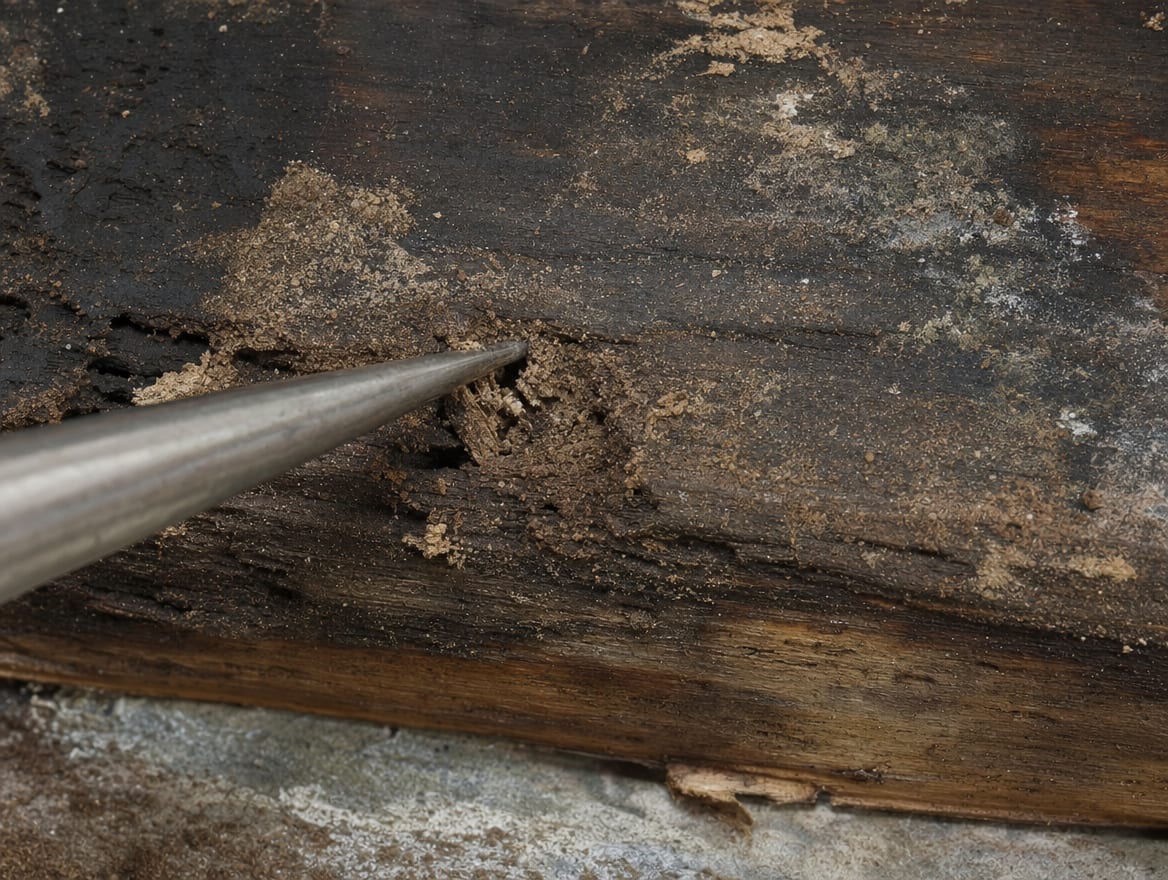
Soft or punky wood at probe
When a screwdriver or awl sinks into the wood with little resistance, the fibers have broken down and the member has lost strength, not just picked up a stain.
Crushed or crumbling grain
Wood that flakes, crushes, or powders when pressed has moved past discoloration into decay that a cleaning cannot reverse.
Sagging or deflection
A floor that dips, a beam that bows, or a roofline that sags points to a member no longer carrying its load the way it was built to.
Fungal decay versus surface staining
Surface staining sits on top of firm wood, while decay changes the wood itself, so the difference is felt by probing, not judged by color alone.
Fastener or bearing failure
Nails or bolts pulling loose, or a beam end crushing where it rests on a support, signals a load path that is coming apart.
Widespread long-wet framing
When large areas of framing have stayed wet through a leak, a flood, or a closed season, damage is more likely to be structural than local.
Start With the Moisture, Not the Mold
Before any decision about the wood, the water has to be understood. Structural mold repair that skips this step is just a temporary cleanup. In a Deal home the water could come from a long-term roof or plumbing leak, a wet crawl space or basement, a coastal flood event, failed flashing, or wet sheathing that never fully dried after a past repair. Each of those has a different meaning for safety and for what comes next. Floodwater, sewage, groundwater, rainwater, plumbing water, and simple condensation are not the same, and the way a job is handled depends on which one you are dealing with.
There is also a clock involved. The EPA advises drying wet materials within 24 to 48 hours to reduce the chance of mold taking hold. Once framing has been wet longer than that, and especially when a house has been closed up for a season, the honest assumption is that the wood may have been wet for a while. That does not automatically mean decay, but it does mean the framing has earned a closer look. Finding and stopping the water source is the first real move. Cleaning growth off a joist while the leak above it keeps dripping only resets the same problem.
The Three Outcomes: Clean, Reinforce, or Replace
Once the water is stopped and the affected framing is exposed, most members fall into one of a few outcomes. The goal of the assessment is to sort each piece of wood into the right one, using a probe and trained judgment rather than a guess from across the room.
Hover or tap a row to highlight it.
| Condition | What it means | The action |
|---|---|---|
| Surface mold on sound wood | Growth sits on top of firm framing that still carries its load | Clean the salvageable wood, correct the moisture, and dry it |
| Softening or rot | Moisture has broken down the fibers and weakened the member | Sister or reinforce the member, or replace it, under the right guidance |
| Lost structural section | Enough wood is gone that the member no longer carries its rated load | Replace the affected material, coordinated with engineering where needed |
| Uncertain | Access, hidden cavities, or a complex load path make the call unclear | A licensed structural engineer directs the assessment and repair |
Surface growth on sound wood is the best case. The wood is still firm when probed, it has not lost strength, and the mold is a coating rather than a symptom of decay. Here the work is to clean the salvageable framing, correct the moisture that fed the growth, and dry the assembly so it does not come back. Nothing about the structure changes.
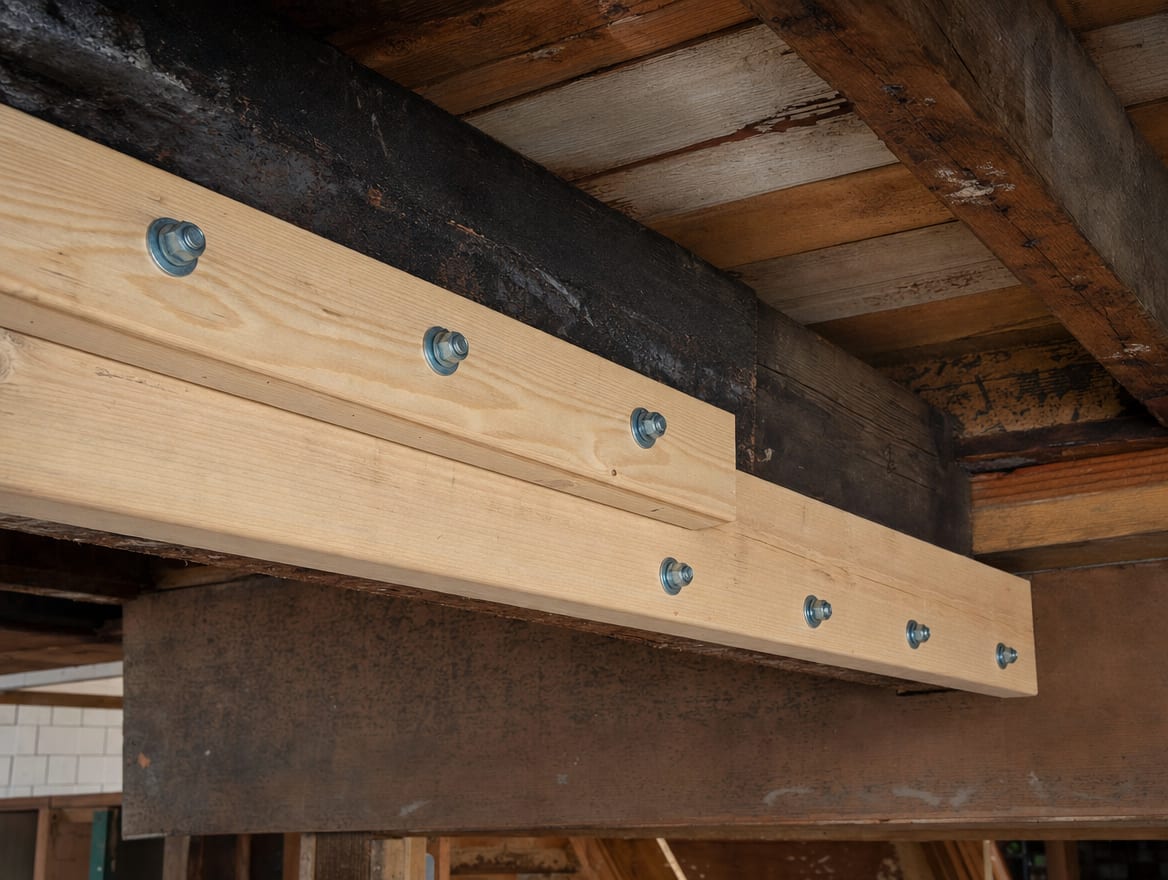
Softening or rot is a different call. When probing shows the wood has broken down, the member has lost some of its strength, and cleaning cannot bring that back. The wood fibers that carried the load are gone or weakened. That is where reinforcement comes in, often by sistering a new member alongside the damaged one, or by replacing the piece entirely. Which approach fits depends on how much section has been lost, where the member sits in the load path, and what it supports.
Loss of section is the clearest case for replacement. When enough wood has decayed that a joist, stud, beam, or rafter can no longer carry the load it was sized for, cleaning and reinforcing around a hollow or crumbling member is not the answer. The affected material comes out and new material goes in, sized and fastened to do the job the original wood used to do.
When a Structural Engineer Has to Direct the Repair
There is a line where this stops being a cleaning-and-carpentry decision and becomes an engineering one. When the structural adequacy of a member or an assembly is uncertain, that call belongs to a licensed structural engineer, not to a remediation crew and not to a homeowner. A restoration contractor can clean sound wood, dry an assembly, and carry out repairs, but confirming whether a load-bearing member is still adequate, and designing the fix when it is not, is the engineer's role.
That matters most where the load path is complex, where a beam or a main-floor support is involved, where several members over a wide area have stayed wet, or where access hides part of the framing. Sistering a new board over wood that is still wet or contaminated, or rebuilding without a design and an inspection, are exactly the shortcuts that create hazards later. The safer sequence is to stabilize anything unsafe first, expose only what the scope requires, and bring in engineering input the moment structural strength is in question. Removing material before a member is properly shored, or treating discoloration as if it proves failure, both cut against that.
From Assessment to Verified Structural Repair
- 1
Assess and probe
A technician inspects beyond the visible growth, stops the moisture source, and probes framing to sort surface growth from softening, decay, and lost section.
- 2
Bring in engineering where needed
When structural strength is uncertain or a main load path is involved, a licensed structural engineer evaluates the member and directs the repair approach.
- 3
Clean the salvageable wood
Framing that is still sound is cleaned using appropriate remediation methods, while porous materials that cannot be saved are removed.
- 4
Sister, reinforce, or replace
Weakened members are reinforced or replaced, and lost-section members are swapped out, following the engineer's direction where one is involved.
- 5
Treat and dry
The assembly is dried at depth so residual moisture does not feed new growth, and structural drying is confirmed rather than assumed.
- 6
Verify
Dryness and clearance are checked against defined criteria, and the work is documented before any rebuild closes the framing back up.
What Is Different About a Deal Address
The decision tree above is the same anywhere, but a few local facts change how a Deal project runs. Deal is a fully developed coastal borough, and parcel-level flood exposure varies from one address to the next. You cannot assume that every home in town shares the same flood risk or the same permit path. Those facts have to be checked for your specific property, using FEMA address-level flood mapping and NJDEP coastal-risk tools, rather than assumed from the neighborhood.
The borough also publishes a summer construction moratorium that runs from June 24 through the Wednesday after Labor Day. That window can affect when reconstruction work is allowed to happen, which is worth knowing early if your project lands in the warm months. Because moratorium dates, permit requirements, and any exceptions are set by the town and can change, confirm them directly with the Deal Building Department before scheduling repair work. Emergency stabilization and stopping active water are about safety and come first regardless. It is the permitted rebuild that has to fit the local calendar and code review.
Documentation and the Questions Worth Asking
Whatever the outcome, keeping a clear record protects you. Pre-work photos, moisture readings, the source finding, the scope and its exclusions, drying records, disposal records, permits, inspection results, verification reports where required, and invoices all build a picture of what was found, corrected, removed, dried, verified, and rebuilt. If an insurance claim is involved, that record is what the documented cause rests on. Coverage itself depends on your policy language, the cause of loss, exclusions, notice, and documentation, and only your carrier can decide it. Flood insurance is also separate from standard homeowners coverage. No contractor can promise that a claim will be paid.
A few red flags are worth watching for when you talk to any company. A price quoted without an inspection, a single product sold as a cure, a scope with no moisture-source correction, no completion criteria, or a promise that insurance will pay are all reasons to slow down. Testing has its place, but it should answer a specific question and change a decision, not get run for its own sake. The company that inspects first, sorts the framing honestly, and tells you where an engineer is needed is the one giving you a real answer.
Frequently Asked Questions
Does mold on floor joists or studs mean they have to be replaced?
Not by itself. Mold on framing can be surface growth on wood that is still sound, in which case the wood is cleaned and dried rather than replaced. Replacement becomes the answer when the moisture has caused decay or taken away structural section so the member no longer carries its load. The way to tell them apart is to probe the wood and assess it, not to judge by the stain.
How do you tell decay from surface staining?
Surface staining sits on top of firm wood. Decay changes the wood itself, so it feels soft, punky, crushed, or crumbly when a screwdriver or awl is pressed into it. Discoloration alone does not prove failure, and firm wood that happens to be stained is often still sound. That is why a probe, not a glance, drives the decision.
Do I need a structural engineer for mold on framing?
Sometimes. When the structural adequacy of a member or assembly is uncertain, a main load path is involved, or damage is widespread, that call belongs to a licensed structural engineer who can evaluate the wood and direct the repair. Surface growth on clearly sound framing usually does not require one. When strength is in question, engineering input is the right step rather than a guess.
Can wet framing be dried out and saved?
Often, if it is still structurally sound and the moisture is corrected quickly. The EPA advises drying wet materials within 24 to 48 hours to limit mold growth, and framing that dries in time and stays firm can frequently be cleaned and kept. Wood that has already decayed or lost section is a different case, because drying cannot restore strength that is already gone.
Will insurance cover structural mold repair?
That cannot be guaranteed. Coverage depends on your policy language, the cause of loss, exclusions, notice, and documentation, and only your insurance carrier can decide it under the policy. Flood damage is typically covered separately from standard homeowners insurance. Keeping thorough records of the cause and the work helps support a claim, but no contractor can promise a carrier will pay.
Should I test for mold before repairing framing?
Testing is not always needed. It is most useful when it answers a defined question and changes a decision, such as confirming clearance before a rebuild closes the framing back up. Testing run without a clear purpose adds cost without changing the plan. A good assessment tells you whether testing would actually inform the repair in your case.
Structural Mold Repair Terms
Tap a term to see what it means.
Loss of section. The amount of usable wood a member has lost to decay, which reduces the load it can safely carry.
Structural mold repair in a coastal home like yours comes down to one honest question repeated for each piece of framing: is this wood still doing its job. When you are ready to get that answered clearly, the team at ExecPro Restoration & Cleaning inspects first, stops the moisture, and sorts salvageable framing from wood that needs reinforcement or replacement, bringing in engineering direction where the structure calls for it. You can see how we handle structural mold repair as a build-back service, read about our related structural drying work, or learn what we do for homeowners across mold remediation in Deal NJ. To get from uncertainty to a documented answer, reach out to our team or call (888) 300-3772.
Serving Deal
ExecPro Restoration & Cleaning provides mold remediation services in Deal, NJ, from inspection and testing through removal, drying, and post-remediation verification. Call (888) 300-3772 for 24/7 emergency response.
Related Articles
Reopening a Deal NJ Shore Home: When Air Quality Testing Answers a Real Question
Reopening a closed Deal NJ shore home? Learn when air quality testing helps after vacancy, humidity, a storm, or renovation, and what a test cannot tell you.
Property Management Mold Services in Deal NJ: A Seasonal-Home Protocol
A repeatable mold protocol for managers of seasonal Deal NJ homes: pre-arrival inspections, remote humidity monitoring, emergency access, and owner reporting.
Insurance Restoration Services in Deal, NJ: Building a Claim File That Holds Up
In Deal, NJ, a strong insurance claim starts with documentation. See what belongs in a coastal claim file and how a restoration contractor records a loss.