Dark Mold, Shared Walls: Black Mold in Princeton Junction NJ Townhouses and Condos
Cal HewittPublished
- black mold removal
- black mold
- mold remediation
- hoa condo
- new jersey
- princeton junction
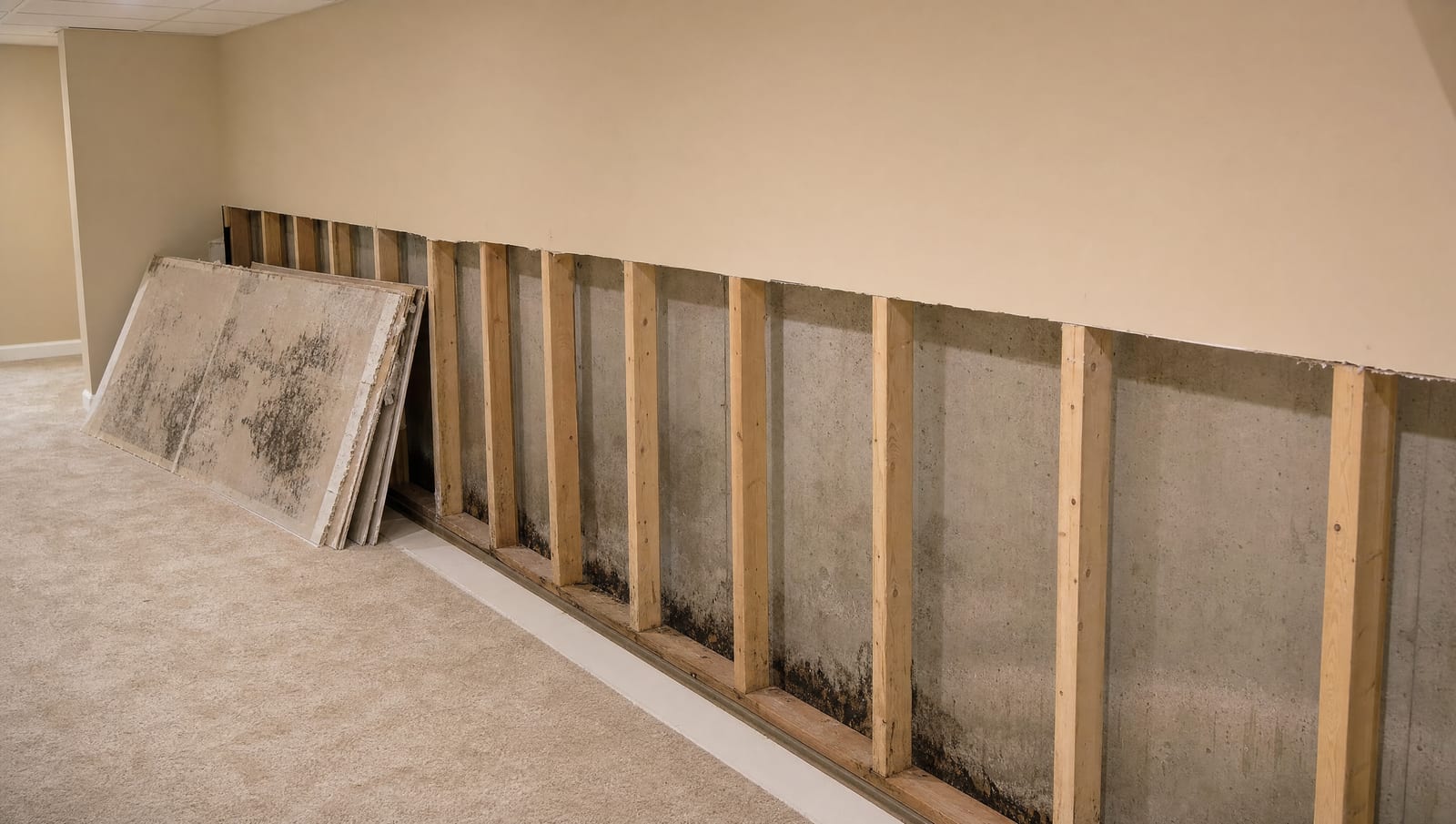
The dark patch showed up behind the basement drywall of a Princeton Junction townhouse, discovered when a homeowner pulled back a section of baseboard that had started to feel soft. To the owner, the story looked simple. There was mold, it was dark, and it was inside the unit, so it was the unit's problem to clean. But the moisture behind it did not start at the drywall. It came from exterior grading and a foundation the owner does not control, both of which belong to the association in a shared community. The mold was inside the walls. The water that fed it was partly outside the owner's authority.
That gap between where growth appears and where the water comes from is the whole reason townhouse and condominium mold is harder to sort out than mold in a detached house. The dark color of the growth does not tell you what organism you are looking at, and it does not tell you who is responsible for the source. Those are two separate questions, and in shared-wall housing there is a third layer stacked on top: which building components belong to the unit and which belong to the community. This guide is about keeping those questions apart, because collapsing them into "it's black mold, clean it up" is how owners in townhouses, condos, and managed buildings end up paying for a source they cannot even reach.
What Decides Your Next Step in a Shared Building
You have found a dark patch, probably in a basement or against a party wall, and you want to know how serious it is and who deals with it. Three things decide that: the moisture history, how far the growth extends, and who controls the part of the building the water is coming from. Those three are what a remediation scope is built from. The EPA is direct on this point: "black mold" is not a species or a specific kind of mold. Many different molds can look dark green, brown, gray, or black on a wall, and appearance alone cannot tell you which one is present. Color is not a lab result, and it is not a measure of how serious a problem is.
That matters because a lot of fear rides on the word "black." People hear it and picture a single toxic organism, but the responsible message is much plainer. All indoor mold growth points to a moisture problem that should be corrected, and the response is the same regardless of the shade: find the water, define how far the growth extends, remove and clean what needs it, and dry the structure. Guidance from the CDC and NIOSH treats molds like Stachybotrys the same way as other indoor molds, by controlling moisture and removing the growth safely, rather than by chasing a color.
So the color of that basement patch is not the evidence that decides your next step. The evidence is the moisture history, the extent of the contamination, and the condition of the materials. In a shared building, one more piece of evidence joins the list, and it has nothing to do with what the mold looks like: who controls the part of the building where the water is getting in.
How Shared Walls Change the Investigation
In a detached home, the investigation stops at your own four walls. Water came in through your roof, your plumbing, or your foundation, and the whole path is yours to inspect and repair. A townhouse, condominium, or apartment breaks that clean boundary. The wall you are looking at may be a party wall shared with a neighbor. The foundation under your basement may be common to the whole building. The grading, the exterior drainage, and the roof above you are often maintained by the association, not by you.
That changes the investigation in a practical way. A dark stain on the inside face of a basement wall could be fed by a source that sits entirely outside your unit, and no amount of work on the interior finish will fix it. Before anyone decides what to remove, the assessment has to answer where the water is coming from and whether that origin is a unit component or a shared one. The remediator's job is to document those conditions carefully. It is not to decide who is legally responsible for them, because that answer lives in the community's governing documents and insurance policies, not in a moisture reading.
The matrix below shows the kind of split those documents typically define. Treat it as a starting map, not a ruling. Every association writes its own rules, and the only authority on your building is your building's paperwork.
Hover or tap a row to highlight it.
| Building component | Typically maintained by | Notes |
|---|---|---|
| Unit interior finishes | Unit owner | Drywall, paint, flooring, and trim inside the unit are usually the owner's, though the water that damaged them may not be |
| Party walls | Shared or association, varies | The wall between two units is often a common element; responsibility for what is inside it can be split |
| Shared foundation | Association, commonly | A foundation serving multiple units is frequently a common element the association maintains |
| Common roof | Association, commonly | Roofs over multiple units are usually association-maintained, so a roof-fed leak may not be a unit repair |
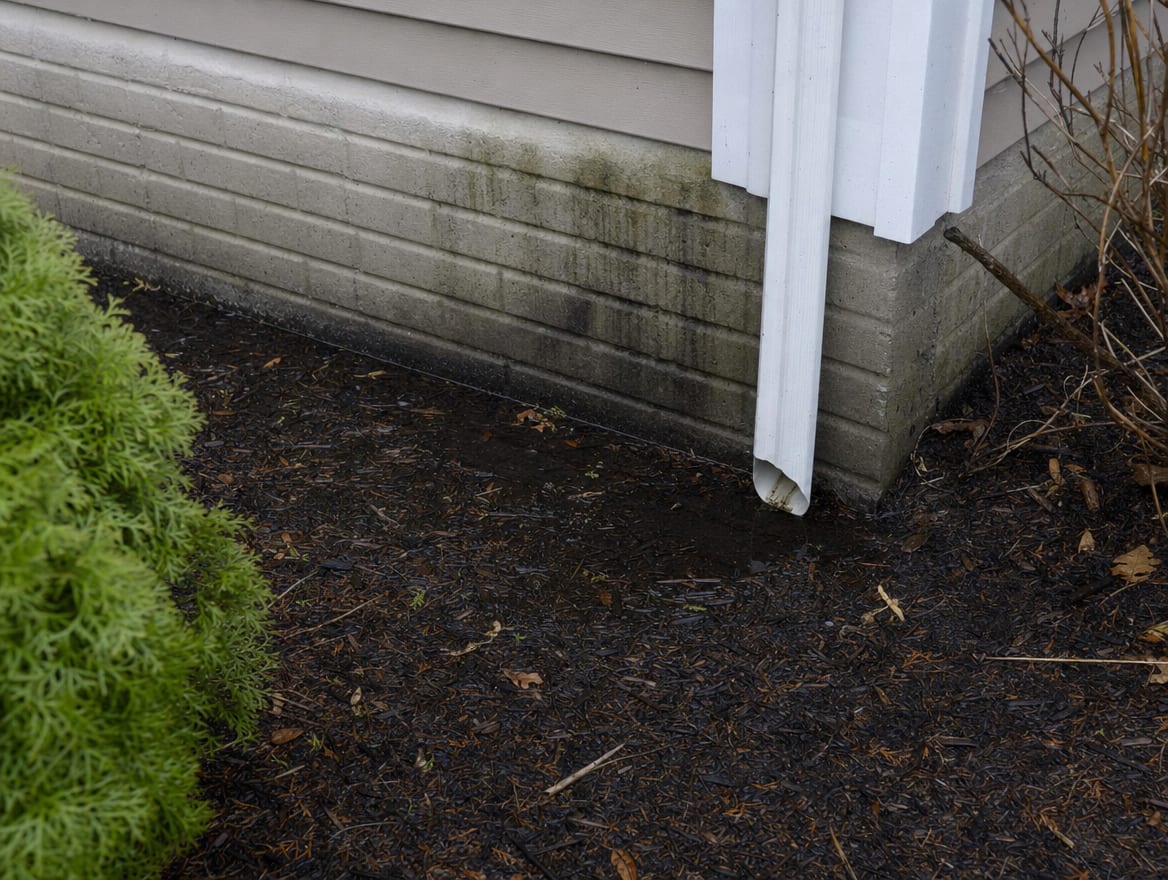
| Exterior drainage and grading | Association, commonly | Site grading, downspouts, and drainage around the building are often common-area responsibilities |
| Common HVAC or plumbing stacks | Shared or association, varies | Systems that serve more than one unit may be common; branches inside a unit may be the owner's |
The point of the table is not to assign blame. It is to show that in a shared building the source of the water and the responsibility for it can sit on different sides of a line the owner did not draw. The remediator documents where the moisture is and where it came from. The governing documents decide who owns the fix.
Moisture Pathways in Townhouses and Condominiums
Once you accept that the source may be outside your unit, the next question is how the water gets from there to the drywall you can see. Shared buildings have more pathways than a detached house, because there are more shared surfaces and more places for water to travel between units. Princeton Junction sits inland in West Windsor, so these pathways are driven by rainfall, drainage, humidity, plumbing, and winter freeze-thaw rather than by coastal flooding, and flood exposure still varies parcel by parcel.
Shared-Wall Moisture Pathways
Common roof and exterior drainage
Rain that overwhelms an association-maintained roof, gutter, or downspout can send water down into wall cavities and along the foundation of the units below.
Party-wall cavity
The shared wall between two units has an interior space where moisture can travel sideways, so a leak on one side can surface on the other.
Shared foundation and basement
A common foundation can seep or wick moisture into the finished basements of multiple units when exterior grading pushes water toward the building.
Common plumbing stack
A vertical pipe serving several stacked units can leak inside a chase and wet framing and drywall along the way down.
HVAC condensate
A condensate line or drain pan that overflows can feed moisture into a wall or ceiling served by a shared or unit system.
Adjacent-unit leak
Water from a neighbor's plumbing or appliance can migrate through a shared assembly and appear as growth on your side.
Because homes here are often empty during the commuter workday, a small drainage backup, a slow stack leak, or an overflowing condensate line can run for hours before anyone is home to notice. By the time the dark growth shows up on the drywall, the moisture that created it may have been active for a while, and it may have entered through a component the owner does not control. Reconstructing recent weather, plumbing events, roof condition, and association maintenance is part of finding the real source, and visible color never replaces that moisture assessment.
The Documents Every Unit Owner Should Gather
In a detached home, the paperwork after a mold discovery is mostly insurance and repair records. In a shared building, the documents do double duty, because they also define who is responsible for the source. Gathering them early keeps the process from stalling later.
Owners in a townhouse or condominium should pull together their governing documents first: the declaration, bylaws, and any rules that spell out maintenance responsibility for roofs, exterior drainage, party walls, common foundations, shared plumbing, and common HVAC systems. Those documents are what a professional will read to understand which components are common and which are the unit's. Alongside them, keep the association's insurance information and your own unit-owner policy, since a shared-building loss often involves both.
The rest of the file is the same evidence any mold claim benefits from: the dates and cause of any water event, photographs and video of the conditions, moisture readings, drying logs, inspection and any lab reports, the written remediation scope, a contents inventory, and invoices. Add one shared-building item to that list: your correspondence with the property manager or association. When the source turns out to be a common component, that paper trail is what shows you reported it and asked for access in a timely way.
When Adjacent-Unit or Common-Area Access Is Needed
Some sources cannot be inspected or repaired from inside your unit at all. If the water is coming through a party wall, a common foundation, a shared stack, or exterior drainage, the work may require access to a neighbor's unit or to common areas, and that access has to be arranged through the association or property manager rather than assumed.
This is where early notification pays off. Water in a shared assembly does not respect unit lines, so a delay in reaching a common component can let contamination extend further into the wall or into a neighboring unit. When a professional documents that the source sits in a shared component, that documentation supports the request for access and gives the association what it needs to coordinate. This kind of coordination is a routine part of professional property management mold services for townhouse, condo, and managed buildings, where the same loss frequently touches more than one unit and more than one insurance policy. The remediator maps and documents the conditions across those units; the association decides on access and on who owns the repair.
When Species Testing Helps, and When It Does Not
Owners often assume the first step is to test the mold and find out "what it is." Usually that is not necessary. The EPA states that sampling is generally unnecessary when mold is already visible, because the response does not change based on the species. Visible growth plus a moisture source is enough to justify correcting the moisture and removing the contamination, and color alone cannot identify a species anyway.
Testing earns its place when it answers a defined question. It can help when growth is hidden or the source is uncertain and someone needs to confirm whether a wall cavity is affected. It can help when a real estate, legal, insurance, medical, or association matter calls for documentation, or when post-remediation verification criteria have been set and need to be checked. In a shared building, testing sometimes supports the scope question by documenting how far contamination extends across a shared assembly. If you do want confirmation of what is present or a documented baseline, black mold testing is the tool for that specific job, not a routine gate you have to clear before any cleanup can start. The default remains simple: when mold is visible, the priority is the moisture and the material, not the label.
What a Complete Remediation Scope Covers
A complete scope in a shared building looks like a complete scope anywhere, with one addition: it coordinates the parts of the work that cross into common property. Spray-only, fogging-only, bleach-only, or paint-over work is not a solution when contaminated materials and moisture remain, and in a townhouse it also leaves the shared source untouched. The sequence below shows how a sound project moves from discovery to a verified finish.
From Discovery to Verified Completion
- 1
Immediate controls
Avoid disturbing the growth, running fans across it, or starting demolition, and address any active water, electrical hazard, or sewage first so the situation does not get worse.
- 2
Inspection and source, with who controls it
A professional finds the moisture source, judges how far the growth extends, and documents whether the source is a unit component or a shared one.
- 3
Decide on testing
Testing is used only when it answers a defined documentation or scope question; visible mold usually does not require it.
- 4
Scope and shared-property coordination
The plan defines containment, materials to remove and clean, drying targets, source repairs, and how any common-area or adjacent-unit access will be arranged with the association.
- 5
Containment, removal, and cleaning
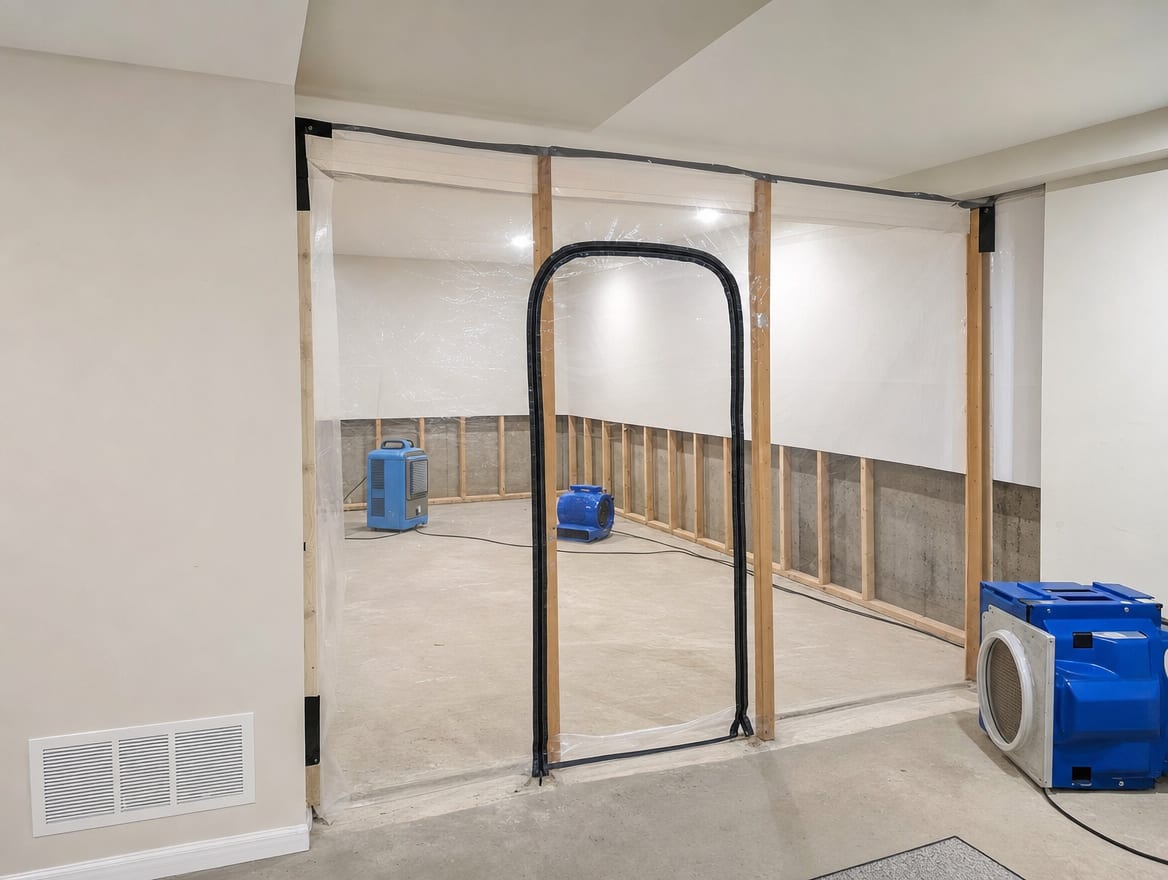
The area is isolated with HEPA-filtered air control, contaminated porous materials are removed and bagged, and salvageable hard surfaces are HEPA vacuumed and damp cleaned.
- 6
Drying and source correction
The structure is dried to target before rebuild, and the moisture source is repaired or formally assigned to the correct trade, which for a shared component means the association's contractor.
- 7
Verification and rebuild
Completion is confirmed against written criteria, then removed materials are replaced to bring the space back.
Every one of those steps can involve a separate trade, and the shared-property step can involve a separate owner entirely. That is exactly why comparing written scopes matters more than comparing bottom-line prices. A low quote that leaves out source correction, association coordination, drying, contents, or rebuild is not cheaper. It is smaller, and the missing pieces come back as the next problem. No honest contractor will state a fixed local price or duration without seeing the extent of the hidden contamination, the number of units and rooms involved, and how long drying takes.
Documenting Completion Without Starting a Responsibility Dispute
The end of a shared-building project is where the temptation to overreach is strongest, because the paperwork that proves the work is done can look like a verdict on who was at fault. It should not. A remediator documents conditions. It does not adjudicate legal responsibility, and a completion record should read that way.
A sound completion package sticks to what was observed and what was done: no visible mold remaining, no moldy odor, dry materials confirmed by readings, the source repair completed or assigned to the responsible trade, a clean work area, and any testing that written project criteria required. Independent post-remediation verification can confirm the work met its stated criteria when the project calls for it, which is often useful in a shared building where more than one party has a stake in the outcome. What the record does not do is declare who owned the source or who should pay for it. Those determinations belong to the governing documents and the insurance carriers, and a contractor cannot guarantee coverage under any policy. Keeping the completion record factual protects the owner, the neighbors, and the association alike, because it gives everyone the same clear account of the conditions without picking a side in a responsibility question the remediator was never there to settle.
Frequently Asked Questions
Who is responsible for mold in a townhouse or condominium?
It depends on the source of the water, where it is located, the maintenance responsibilities in the governing documents, and the insurance policies involved. The mold may be inside your unit while the source is a common roof, foundation, drain, or party wall. A remediator can document where the moisture is and where it came from, but should not make the legal determination of who is responsible. That answer lives in your community's declaration, bylaws, and rules.
Is black mold always Stachybotrys?
No. "Black mold" is not a species. Many molds can appear dark, and color alone cannot identify the organism. Laboratory analysis is what identifies a mold when identification is actually needed. CDC and NIOSH guidance also treats molds like Stachybotrys the same as other indoor molds: correct the moisture and remove the growth safely.
Do I need testing before the mold is removed?
Usually not. The EPA says sampling is generally unnecessary when mold is already visible, because the response does not change with the species. Testing is worth doing when it answers a defined question, such as confirming hidden growth, supporting a real estate or insurance matter, or checking established post-remediation criteria.
Will my insurance cover it?
Only your carrier can decide that, based on your specific policy language, the cause of loss, any exclusions, and the documentation you provide. Mold-related limits or exclusions may apply, and in a shared building both an association policy and a unit-owner policy can be involved. A contractor cannot guarantee coverage, so clear records from the start matter.
Does the remediation company decide who is at fault?
No. The remediator documents the conditions, the source, and the work performed. Deciding who is legally responsible for a shared component is a matter for the governing documents and the insurance carriers, not the restoration crew. A good completion record stays factual for exactly that reason.
Will the work need access to a neighbor's unit or common areas?
Sometimes. If the source is in a party wall, a shared foundation, a common stack, or exterior drainage, the inspection or repair may require access that has to be arranged through the association or property manager. Notifying them early helps, because water in a shared assembly can keep moving until the common component is reached and corrected.
When dark growth turns up in a Princeton Junction townhouse or condo, the right first move is to separate the color from the evidence and the unit from the association, then let a documented source diagnosis guide the scope. ExecPro Restoration & Cleaning serves Princeton Junction and the West Windsor area, handling inspection, containment, removal, drying, source coordination with your association, verification, and rebuild, with records that document conditions rather than assign blame. You can reach our team at (888) 300-3772 or get in touch through our contact page to start with a clear assessment of what you are actually dealing with.
Black Mold and Shared-Property Terms
Tap a term to see what it means.
Black mold. A common term for dark-colored mold growth, not a scientific species. Color alone does not identify the organism or measure how serious the problem is.
Serving Princeton Junction
ExecPro Restoration & Cleaning provides mold remediation services in Princeton Junction, NJ, from inspection and testing through removal, drying, and post-remediation verification. Call (888) 300-3772 for 24/7 emergency response.
Related Articles
Black Mold Removal in a Deal, NJ Shore Home: What Happens Next
Dark mold behind a cabinet in a reopened Deal, NJ shore home. What the removal involves, what drives the cost, and how to keep it from coming back.
Sound, Sistered, or Replaced: Structural Mold Repair in Princeton Junction NJ Townhouses and Condos
In a Princeton Junction townhouse or condo, a mold-damaged joist raises one structural question: is the member sound, can it be sistered, or must it be replaced?
Where the Roof Meets the Attic: Diagnosing Attic Mold in Princeton Junction, NJ Homes, Townhouses, and Condos
Attic mold in Princeton Junction NJ meets roof, exhaust, and air leakage at once, and a shared roofline changes who can reach the source. How to tell them apart.