Sound, Sistered, or Replaced: Structural Mold Repair in Princeton Junction NJ Townhouses and Condos
Cal HewittPublished
- structural mold repair
- structural mold
- mold remediation
- hoa condo
- new jersey
- princeton junction
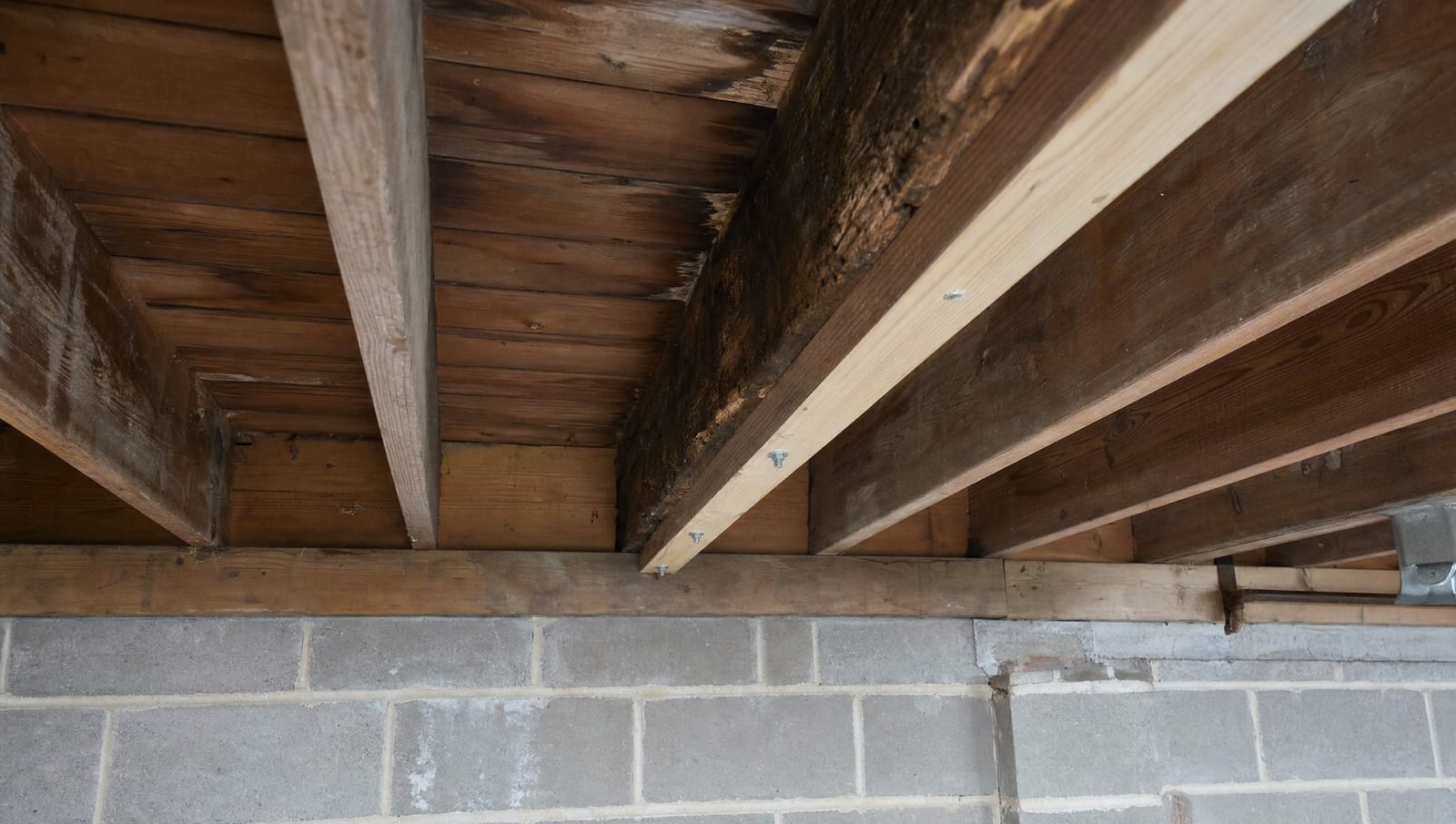
The remediation crew opened a basement ceiling in a Princeton Junction townhouse and found a floor joist gone dark along its length. To the owner, the dark wood looked like a verdict. The joist was stained, so surely it was ruined, and ruined framing gets torn out. But when a technician pressed a probe into the wood, most of the joist was still firm. Only a short run near the party wall had gone soft and lost part of its thickness. One member, two very different conditions, and a single question that the color of the wood could not answer: is this joist still sound, can it be reinforced, or does a section of it have to come out.
That question is the whole job in structural mold repair. It is not the same job as cleaning mold, and it is not answered by looking at a stain. In a townhouse or condominium, there is a second layer stacked on top, because the damaged member may run into a party wall, a shared floor assembly, or a common foundation, so the repair has to be coordinated with more than one party. This guide keeps the structural decision in front, where it belongs, and treats the shared-building coordination as the reality layered on top of it, not the other way around.
What Happens Once the Joist Is Exposed
The first thing to set down is that dark wood is not proof of structural failure. Mold and moisture can absolutely damage framing over time, because fungi feed on wet wood and break it down. The EPA is clear that mold and moisture left unaddressed can eventually cause structural damage. But that is a statement about what long-term wetness can do, not a diagnosis of the board you are looking at. Surface staining and even active growth do not, by themselves, tell you the member has lost strength.
The investigation has to sort a stained board into one of several very different states. It might be only discolored on the surface. It might have active mold that cleans off sound wood. It might have fungal decay that has eaten into the cross section. It might be split, crushed at a bearing point, delaminated, sagging under load, or carrying a failed connection. Those conditions call for completely different responses, from a simple cleaning to a full replacement, and the only way to tell them apart is to probe and evaluate the wood, not to judge it by shade. Color alone never decides whether framing is safe.
How Water Reaches a Shared Framing Member
Before anyone can repair a member, the crew has to understand how it got wet, and in attached housing that path is rarely contained to one unit. Princeton Junction sits inland in West Windsor, so the moisture that damages framing here tends to come from rainfall, roof and drainage problems, plumbing failures, sump and foundation water, HVAC condensate, and winter freeze-thaw, rather than from coastal flooding, and flood exposure still varies from one address to the next.
In a townhouse or condo, water can travel a long way before it reaches the framing you can see. A leak in a common roof assembly can run down inside a wall and wet a floor joist below. A party wall shares its cavity with the neighbor, so moisture can move sideways between units. A common foundation can wick water into the framing of several units at once. A shared plumbing stack can leak inside a chase and soak studs and joists on the way down. Because many homes here sit empty through the commuter workday, a slow leak can run for hours before anyone is home to notice, which is often why the damage is well advanced by the time a dark joist finally comes into view. The member is in front of you, but the water that ruined it may have entered through a component the unit owner does not control.
What the Remediator Can and Cannot Say
When the framing is exposed, the remediator's role is to observe and record, not to rule. A qualified technician can find and document the moisture source, define how far the mold and dampness extend, HEPA vacuum and clean salvageable wood, and note the condition of each member: where it is only stained, where it feels soft, where it has clearly lost material. All of that is careful documentation of what is there.
What the remediator should not do is make an unsupported engineering call or decide who is legally responsible for a shared component. Whether a load-bearing member is still adequate is a structural judgment, and in a shared building the question of who owns the fix lives in the association's governing documents and the insurance policies, not in a moisture reading. A good crew stays in its lane: it documents conditions clearly and hands the load-bearing decision to the right professional. That discipline is what separates honest structural mold repair from a crew that oversells demolition it cannot justify.
What Only a Structural Engineer Can Decide
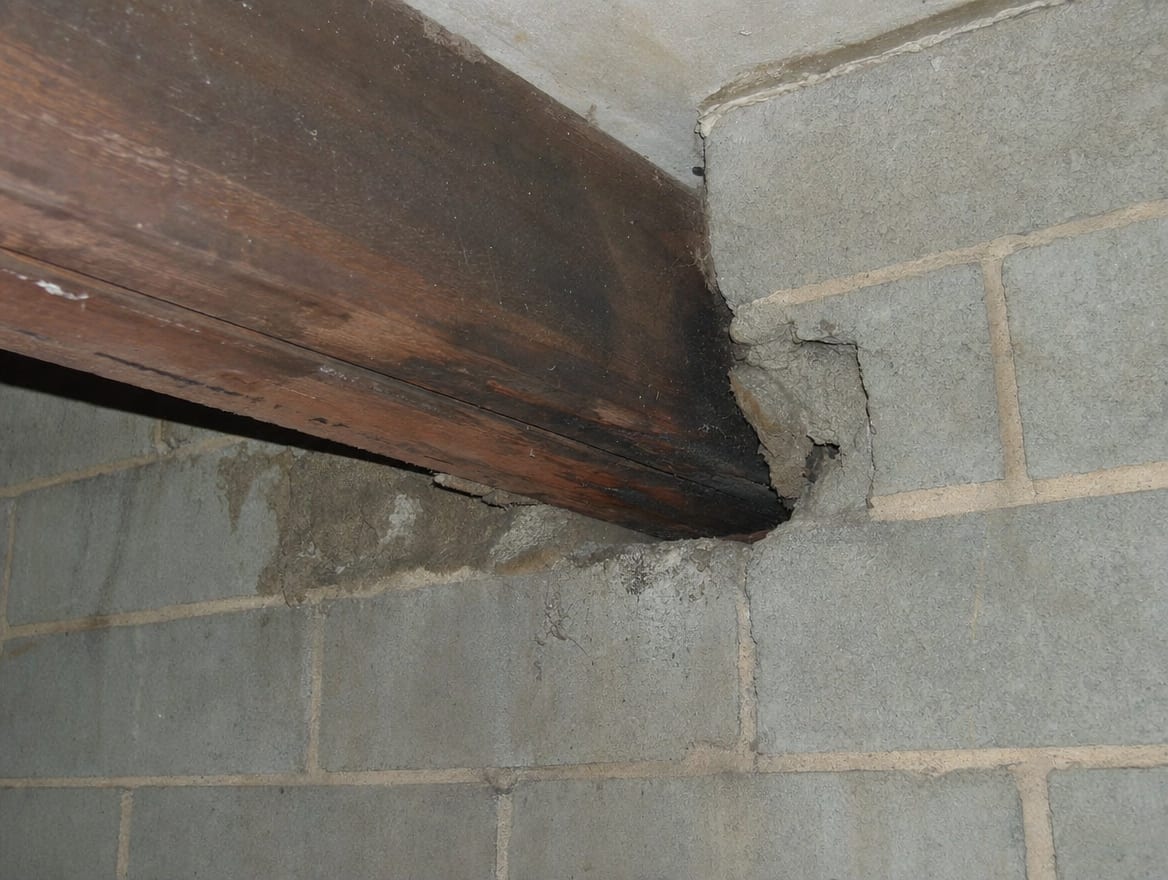
When the soundness of a load-bearing member is uncertain, the call belongs to a licensed structural engineer or another qualified design professional. EPA guidance itself points owners toward a structural engineer when a building's structural integrity may be affected. This is not a formality to skip on a fast job. It is the difference between a repair grounded in someone's judgment of the load path and a guess dressed up as certainty.
An engineer looks at things a remediator cannot sign off on: how much sound cross section remains, how far the member deflects under load, the condition of the bearing points and connections, the span, and where the load actually travels through the assembly. From that read, the engineer decides whether the member can be cleaned and left in place, reinforced or sistered, partially replaced, or fully replaced, and whether temporary shoring is needed to hold things safely while the work happens. On a shared member, the engineer's written evaluation also becomes part of the record every party can rely on. The remediator exposes and documents the wood; the engineer decides what the wood can still carry.
Clean, Reinforce, or Replace
With the source found and an engineer's read in hand where the member is load-bearing, the repair resolves into three broad paths. The table below maps the member's condition to the structural decision and to the coordination it triggers when the member is shared. Read the rows as being about the wood, not about ownership. Every association writes its own rules, and the only authority on your building is your building's paperwork.
Hover or tap a row to highlight it.
| Condition of the member | Structural decision | Who gets looped in |
|---|---|---|
| Surface growth or staining on otherwise firm wood | Clean the wood in place and keep it | Usually the unit owner; notify the association if the member is shared |
| Partial decay or some lost thickness, still mostly sound | Reinforce or sister a new member alongside it | Engineer confirms the fix on a load-bearing member; association if it is a common element |
| Significant loss of section, crushing, or a failed connection | Replace the damaged length or the member | Engineer specifies the repair; association authorizes work on a shared member |
| Load-bearing and condition uncertain | No decision until an engineer evaluates and shoring is considered | Structural engineer first, then the association for any shared or common component |
The point of the table is not to hand you an answer for your joist. It is to show that the decision follows the member's real condition, and that on a shared member each of those decisions carries a phone call to someone else. A low quote that skips the engineer, the source correction, or the shared-building coordination is not cheaper. It is smaller, and the missing pieces come back as the next problem.
The Three Parties Around One Member
Here is where the townhouse reality layers onto the structural decision. A single mold-damaged joist, beam, or bearing wall can sit at the meeting point of three interests: the unit owner, the association, and a neighboring unit or shared building system. That does not change what the wood needs. It changes how you get to the wood and who has to agree before the work happens. The steps below are about coordinating and reaching a shared member, and about keeping the contractor's role to documenting conditions rather than assigning fault.
When a Damaged Member Is Shared
Identify what the member supports
Before touching it, establish what the joist, beam, or wall carries and whether the load extends beyond the one unit.
Probe for soundness, not just growth
Test the wood for firmness and lost section so the decision rests on condition, not on how dark it looks.
Bring in an engineer when it is load-bearing
If the member carries load and its condition is uncertain, a licensed structural engineer makes the clean, reinforce, or replace call.
Arrange access to the adjacent unit or common area
A member that runs into a party wall, shared assembly, or common space may need access that only the association or a neighbor can grant.
Notify the association or property manager early
When a shared or common component is involved, formal early notice keeps the repair from stalling and creates a record that you reported it.
Document conditions without assigning fault
The contractor records what was found and what was done; it does not decide who is legally responsible for the shared member.
Keep the records together
Photos, moisture readings, the engineer's report, and association correspondence belong in one file the owner and association can both use.
Notice that none of those items is the contractor deciding who pays. That determination belongs to the governing documents and the insurance carriers. The crew's job is to map the conditions across the units the member touches and to give every party the same clear account.
Source Correction and Dryness Come Before Enclosure
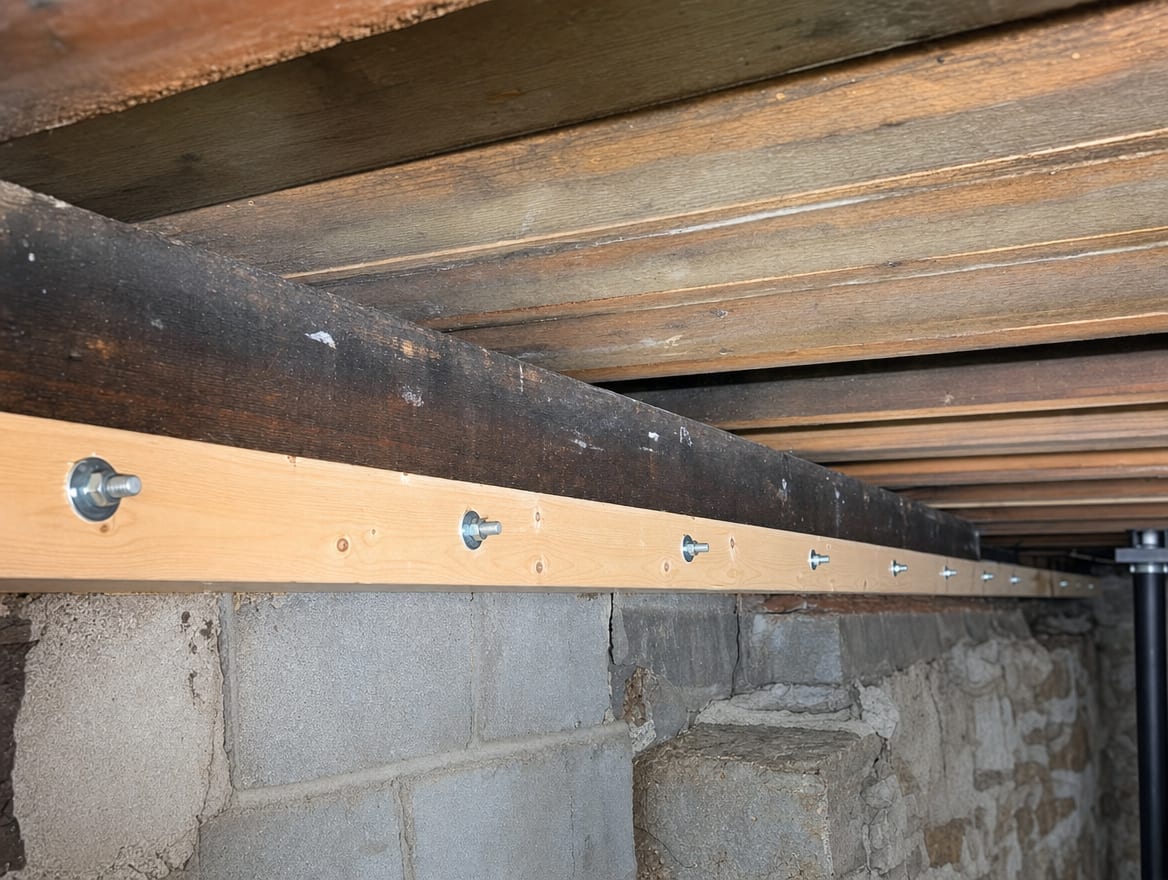
Whatever the decision on the member, one sequence never changes: the water gets fixed and the assembly gets dry before anything is closed up. New lumber sistered next to a joist will rot again if the roof leak or foundation seepage that caused the first problem is still feeding the cavity. Replacing framing over a live moisture source just buys a repeat visit. So source correction and structural drying sit ahead of rebuild in every sound project, and on a shared component the source repair may fall to the association's trade rather than the owner's. The timeline below shows how a repair on a shared member moves from first look to a documented finish.
Repairing a Shared Structural Member, Step by Step
- 1
Assess and probe
Address any active water or hazard first, then expose the member under containment and probe it to separate surface staining from real loss of section.
- 2
Bring in an engineer where needed
For a load-bearing member in uncertain condition, a structural engineer evaluates it and specifies clean, reinforce, or replace, plus any temporary shoring.
- 3
Arrange access and approvals
Coordinate access to any adjacent unit or common area and secure association authorization and municipal permits where the work requires them.
- 4
Clean, sister, or replace
Carry out the specified repair, cleaning sound wood, reinforcing partially damaged members, or replacing sections that have lost capacity.
- 5
Treat and dry the assembly
Correct the moisture source and dry the structure to the project's target before anything is enclosed.
- 6
Verify the work
Confirm the wood is dry and clean against written criteria, and complete any required inspections and post-remediation verification.
- 7
Document everything
Record the conditions, the engineer's findings, the repairs, the approvals, and the verification in one file for the owner and the association.
Documentation That Stays With the Unit and the Association
The end of a shared-building repair is where a record can be tempted to overreach, because paperwork that proves the work is done can start to read like a ruling on who was at fault. It should not. A sound file sticks to what was observed and what was done: the moisture source and its correction, the mold-remediation scope, the engineer's structural evaluation, which members were cleaned, reinforced, or replaced, any association authorization, the permit and inspection approvals, and the drying and verification results.
What that file does not do is declare who owned the source or who should pay for it. Those determinations belong to the governing documents and the insurance carriers, and a contractor cannot guarantee coverage under any policy. Keeping the record factual protects the owner, the neighbors, and the association at once, because everyone works from the same clear account of the conditions. In Princeton Junction's active, higher-value housing market, that evidence matters at resale too. A repair that cleaned the surface but left a compromised member is incomplete, and tearing out sound framing that only needed cleaning is its own kind of waste. Evidence-based repair, documented well, is what holds up.
Frequently Asked Questions
Does mold on a joist mean the joist has to be replaced?
Not on its own. Mold and long-term moisture can damage framing, but a stained joist may still be structurally sound. The response depends on the wood's real condition once it is probed: surface growth on firm wood can often be cleaned and kept, partial damage may be reinforced, and only a member that has lost real capacity needs replacement. The color of the wood does not decide it.
Who decides whether a shared member can be cleaned, reinforced, or replaced?
When the member is load-bearing and its condition is uncertain, a licensed structural engineer or another qualified design professional should make that call. The remediator can document what was found, but the load-bearing decision is a structural judgment. On a shared or common component, the association's governing documents also determine who authorizes the repair.
Does the contractor decide who is responsible for a shared structural member?
No. The contractor documents the conditions, the moisture source, and the work performed. Deciding who is legally responsible for a party wall, shared foundation, or common assembly is a matter for the governing documents and the insurance carriers, not the repair crew. A good completion record stays factual for exactly that reason.
Do you need to get into a neighbor's unit to fix a shared member?
Sometimes. If the damaged member or its moisture source runs into a party wall, a shared floor assembly, a common foundation, or exterior drainage, the evaluation or repair may need access that has to be arranged through the association or property manager. Notifying them early helps, because water in a shared assembly can keep moving until the common component is reached.
Can a mold-damaged joist be cleaned and reinforced instead of fully replaced?
Often, yes. Cleaning and sistering are common repairs when enough sound material remains and the load, span, bearing, and connections allow it. Whether that is the right choice for a load-bearing member is an engineering judgment based on the member's remaining strength, not a preference for saving demolition.
Will insurance pay for structural mold repair?
Only your carrier can decide that, based on your specific policy, the cause of loss, any exclusions, and the documentation you provide. Mold and fungi limits may apply, and in a shared building both an association policy and a unit-owner policy can be involved. A contractor cannot guarantee coverage, which is why clear records from the start matter so much.
When a dark joist turns up in a Princeton Junction townhouse or condo, the right first move is to separate the stain from the structure and let a probed, documented condition drive the decision to clean, reinforce, or replace, then coordinate the shared parts through the association. ExecPro Restoration & Cleaning serves Princeton Junction and the West Windsor area with inspection, containment, source correction, structural drying, coordination with your engineer and association, verification, and rebuild, keeping mold remediation in Princeton Junction documented rather than adjudicated. You can reach our team at (888) 300-3772 or get in touch through our contact page to start with a clear assessment of the member you are actually dealing with.
Structural Mold Repair Terms
Tap a term to see what it means.
Joist, beam, or bearing wall. Framing members that carry the weight of floors, ceilings, or the building above. When these are damaged, the decision is structural, not cosmetic.
Serving Princeton Junction
ExecPro Restoration & Cleaning provides mold remediation services in Princeton Junction, NJ, from inspection and testing through removal, drying, and post-remediation verification. Call (888) 300-3772 for 24/7 emergency response.
Related Articles
Structural Mold Repair in Deal NJ: Clean, Reinforce, or Call an Engineer
Structural mold repair in Deal NJ starts with one decision: is framing cleanable, decayed, or a job for a licensed engineer. Here is how to tell.
Where the Roof Meets the Attic: Diagnosing Attic Mold in Princeton Junction, NJ Homes, Townhouses, and Condos
Attic mold in Princeton Junction NJ meets roof, exhaust, and air leakage at once, and a shared roofline changes who can reach the source. How to tell them apart.
Dark Mold, Shared Walls: Black Mold in Princeton Junction NJ Townhouses and Condos
In a Princeton Junction townhouse, dark basement mold can trace back to an association-controlled source. Why color and responsibility are separate questions.