Downstream of the Hatch: Crawl Space Mold Remediation in Alpine, NJ
Cal HewittPublished
- crawl space mold remediation
- underfloor moisture
- site drainage
- alpine nj
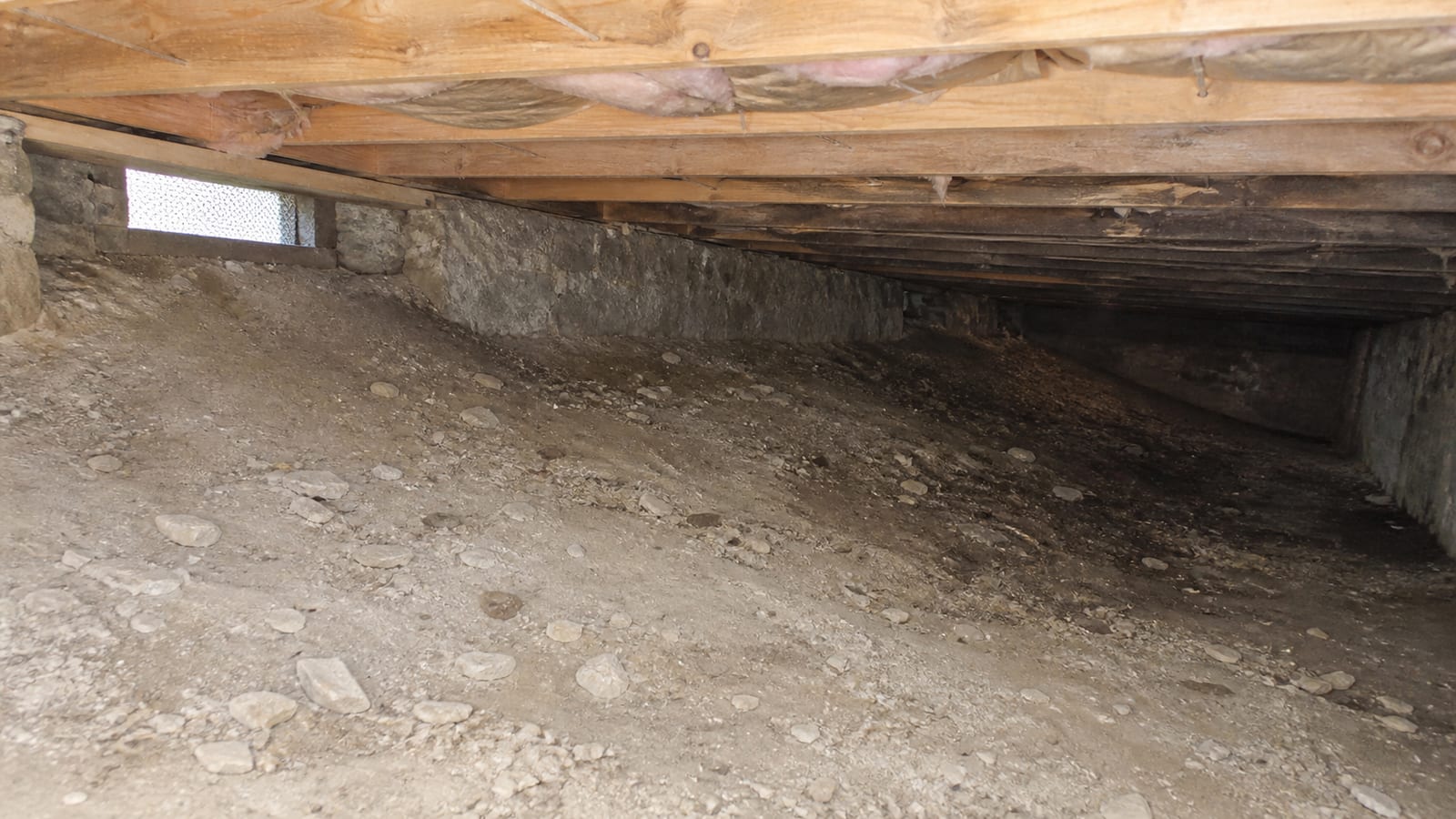
A crawl space is the low point of the building and, on a sloped Alpine lot, frequently the low point of everything around it too. Roof water leaves a downspout, driveway and patio surfaces shed what lands on them, the ground carries some of it and holds the rest, and the assembly with the least clearance and the least ventilation is the one sitting at the bottom of that sequence. Whatever ends up on the joists is the visible end of a chain that started well outside the hatch.
That is the practical reason an underfloor scope in this borough looks different from the same job on flat ground. The growth on the wood is real and it has to be dealt with properly, but treating it without reading the site tends to buy a season. Alpine's own code takes the surrounding ground seriously enough to regulate it, which is a useful signal for a homeowner: the water path across a lot here is not an afterthought, and it is often the part of the repair that actually settles the problem.
Key Takeaways
Ground moisture is a source, not a symptom
EPA describes soil moisture evaporating into a crawl space, and that accumulated moisture moving into other parts of the building.
The correction usually starts outside
Roof discharge, driveway runoff, grade and retaining features decide how much water reaches the foundation in the first place.
Alpine regulates sloped ground for exactly these reasons
The code names erosion, siltation, soil slippage, flooding and runoff as the concerns behind its steep slope rules, which apply at 15 percent grade.
Removal is the goal, not sterilization
EPA's position is that the purpose of remediation is to remove contamination, and that dead mold can still cause an allergic reaction.
Drainage inspections have their own route here
The borough's building department notice sends seepage pit and drainage inspections to the Borough Engineer, and runs inspections by appointment.
Nothing gets closed up before it is looked at
State guidance requires inspections to happen before completed work is covered or concealed, which matters in a space where everything is eventually hidden.
What Is Under the Floor Is Usually a Site Condition
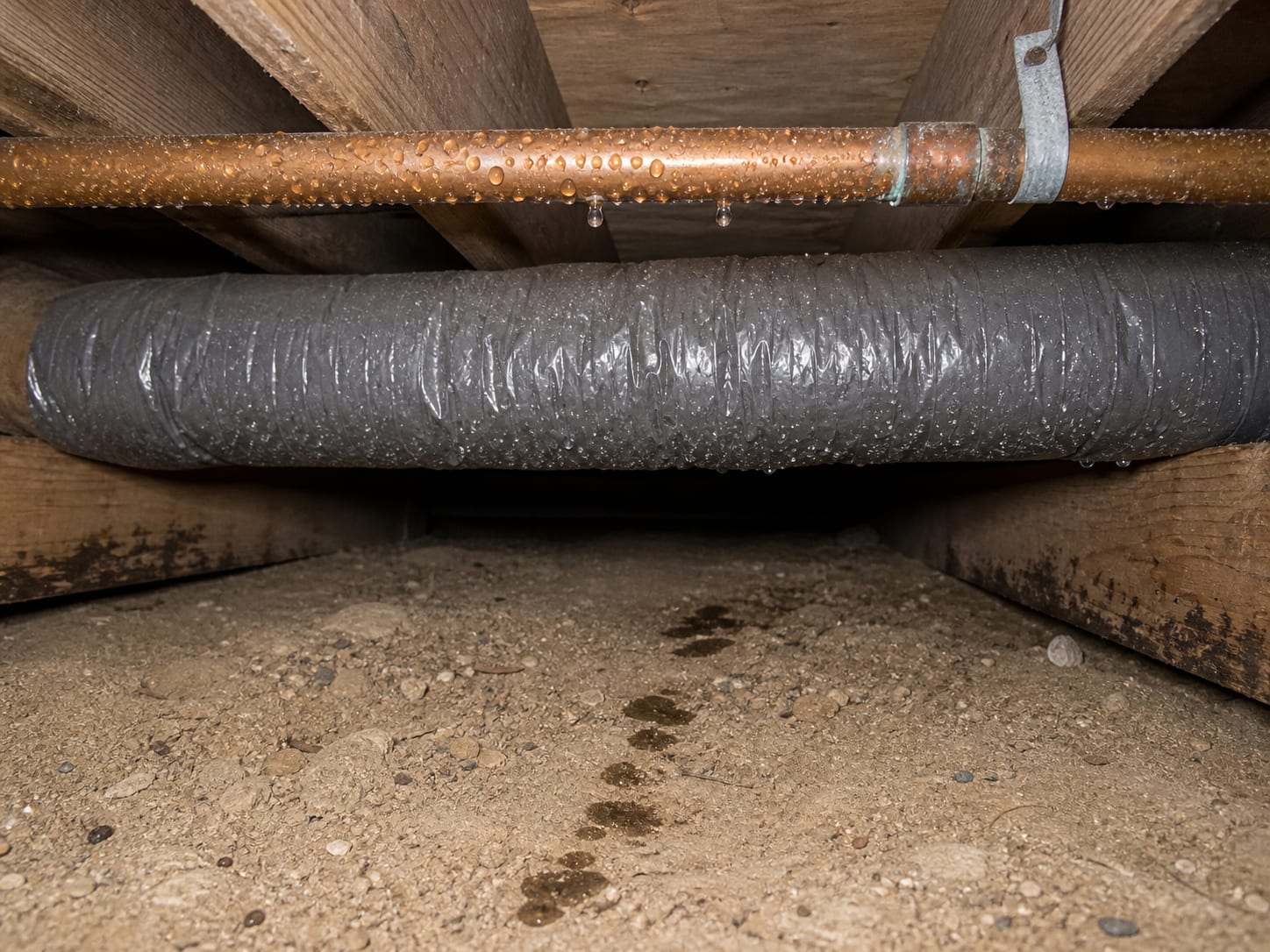
The physics are unglamorous. EPA notes that moisture in the soil can evaporate into a crawl space, and that moisture accumulating there can move into other parts of a building. So a crawl space with bare or damp ground, poor air movement and cool surfaces is a place where water changes phase and settles on whatever is available: joists, subfloor, the paper facing on batt insulation, duct exteriors and stored material that should not be down there in the first place.
None of that requires a dramatic event. There is no drip, no alarm, no system that stops working. Insulation sags, framing darkens, a duct sweats through a humid stretch, and a floor above feels slightly cool underfoot. The condition reaches somebody's attention through an odor upstairs, a home inspection, or a plumber who had to go down for another reason entirely. By then it has usually had a long run, which is why the useful first question is not how bad it looks but where the water has been coming from and for how long.
The Lot Above the Hatch
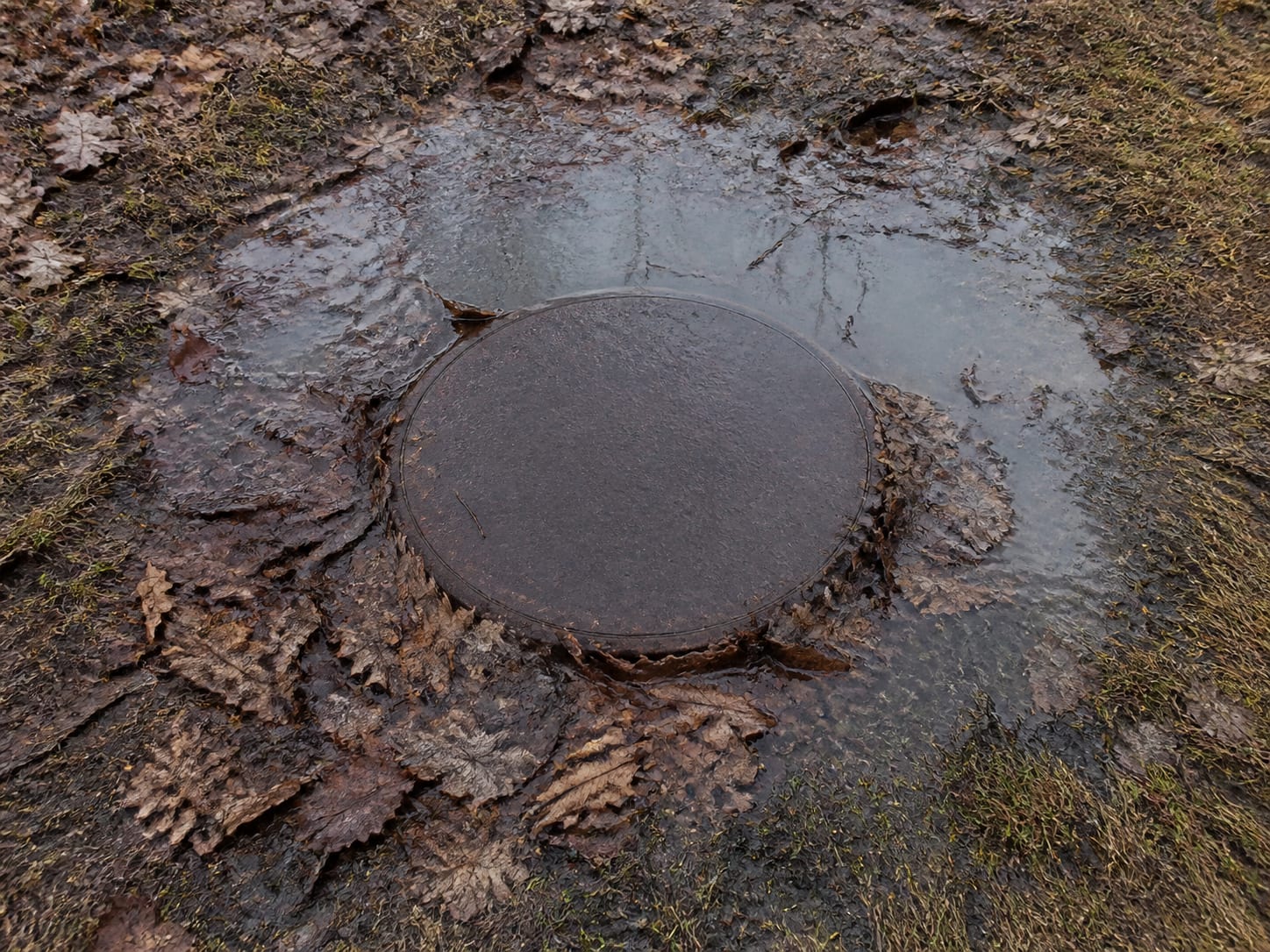
Alpine's zoning code regulates steep slopes for reasons it states directly: construction on them can cause erosion, siltation, soil removal, flooding, soil slippage and water runoff. It treats a grade of at least 15 percent as steeply sloped, says the borough seeks to preserve steep slopes, wetlands, floodplains and vegetation, and applies its slope provisions lot by lot within a development application. Read as a homeowner rather than as a developer, that is a plain statement that water moving across ground here is a known local issue with local consequences.
The borough's stormwater provisions make the same point in engineering language. Design work has to account for site features such as ponds, wetlands, depressions, hedgerows and culverts, and calculate pervious and impervious runoff separately, which is a formal way of saying that a hard surface and a lawn send very different amounts of water downhill. For Bergen County the ordinance carries current precipitation adjustment factors of 1.01 for the 2 year storm, 1.03 for the 10 year storm and 1.06 for the 100 year storm. Those are design multipliers an engineer applies to a calculation, not a forecast for your property and not a claim about how much rain Alpine gets.
What all of it supports is a habit rather than a conclusion. Before anyone prices an underfloor cleanup, walk the ground above it: where roof water lands and where it goes afterward, whether the driveway and any paved surface drain toward or away from the house, whether the grade within the first several feet slopes away, and whether a retaining feature or a low area is collecting water and holding it against the foundation. The broader local picture is on our Alpine service area page, and the specific answer is always on the specific lot.
A Detached Housing Stock, Spanning Several Eras
The borough's 2025 housing element, working from the 2023 five year American Community Survey estimate, counts 593 housing units in Alpine, of which 556, or 93.8 percent, are one unit detached homes, and puts owner occupancy at 481 units, or 81.1 percent. The same plan describes a municipality that is essentially built out, with a large share of its land in public and quasi public use, and notes roughly three residential new construction permits a year since the early 2000s, with most new units expected to come from knock downs and rebuilds.
For underfloor work that matters in a specific way. In that estimate 43 percent of units were built before 1980 and 19 percent since 2000, which means the assembly under an Alpine floor could be almost anything: an older foundation with a vented crawl and no ground cover, a 1980s build with batt insulation between the joists, or a recent rebuild with a sealed and conditioned space. The framing, the insulation strategy, the vapor control and the access are established by looking, and they change the scope more than the age of the house ever does.
The Point Is Removal, Not Sterilization
The most common wasted spend in this space is chemical. EPA's guidance is that the purpose of remediation is to remove the contamination rather than simply kill it, that dead mold can still cause an allergic reaction, and that the routine use of biocides is not recommended. A fogging pass over damp joists leaves the material where it is and the water doing what it was doing. It also produces a receipt that looks like work was done, which is worse than nothing when the next owner or the next inspector goes down there.
What actually holds up is unremarkable. Establish and correct the source. Set containment appropriate to the scope, with EPA generally putting limited containment at 10 to 100 square feet of contamination and full containment above 100 square feet, while noting that heavy growth in a smaller area can call for more caution than the area alone suggests. Clean sound non porous surfaces, remove porous material that cannot be adequately cleaned, HEPA vacuum and wipe down, then dry the space and confirm it stays dry. Where the framing itself is in question rather than the surface on it, that becomes structural mold repair and is scoped separately.
How an Underfloor Project Should Sequence
- 1
Read the site first
Walk the grade, the discharge points and the paved surfaces above the crawl, because the source is usually up there.
- 2
Establish access and extent
Determine what can actually be reached and observed, and record what is affected rather than describing the space as generally damp.
- 3
Rule the indoor sources in or out
Confirm or eliminate plumbing, condensation and ventilation problems before committing to a drainage theory.
- 4
Contain before disturbing
Set the containment the scope calls for, since disturbing growth in a space that shares air with the house moves it upstairs.
- 5
Remove and clean by material
Porous material that cannot be adequately cleaned comes out; sound surfaces are cleaned rather than treated.
- 6
Correct the source
Complete the drainage, plumbing or vapor correction itself, which is the step that decides whether the work lasts.
- 7
Dry, verify, then close
Bring the space to a documented dry condition and have anything reviewable inspected before it is covered.
Fresh wet material is the one place a clock genuinely applies. EPA advises drying wet or damp materials within 24 to 48 hours to reduce the chance of growth, which is the right urgency after a leak or an entry event. It says nothing about a crawl space that has been damp for two seasons, where the schedule is set by access, by what the source repair requires and by which trade has to be involved. Where the water arrived from a line rather than the ground, water leak detection is usually the faster route to the source than opening the assembly.
Where the Borough Comes Into It
Cleaning and removing moldy material is not automatically a construction project. Altering the building is. New Jersey's guidance is that structural alterations, interior modifications and changes to systems can require a construction permit, and that required inspections must take place before completed work is covered or concealed. That last clause deserves attention in a crawl space, because a crawl space is the definition of work that ends up hidden. Anything reviewable needs to be looked at while it is still open.
Alpine runs a Construction Code Enforcement Office covering the building, plumbing, electrical and fire subcodes. Its building department notice, revised March 19, 2025, says the construction and zoning officials are available by appointment, sets inspections on Tuesdays and Thursdays within stated windows, and routes seepage pit and drainage inspections to the Borough Engineer. That last detail is the one homeowners miss: on a project where the real fix is drainage, the review is not necessarily the same office or the same day as the building inspection, and knowing that in advance keeps a week out of the schedule.
The defensible way to handle it is to describe the actual proposed work to the borough and ask which parts need review, rather than assuming that the word encapsulation either does or does not trigger a permit. A contained cleanup with a ground cover replacement is a different conversation from new drainage, a mechanical change or a framing repair.
What Moves the Cost
There is no published Alpine price for this work, and any figure quoted before someone has been under the house is a placeholder. What genuinely moves an estimate is the source and who has to repair it, the amount of growth and where it is, how much porous material cannot be salvaged, the containment the scope requires, how hard the space is to physically work in, how much drying and monitoring is needed, whether sampling has a defined purpose, and how far the work extends into drainage, plumbing, mechanical or structural repair.
Access is the driver people underestimate. Clearance, the location of the hatch, ductwork routed through the space and the ground surface all decide how fast a crew can move and how much material can be carried out per trip. A written scope should separate assessment, containment and removal, source correction, any municipal or engineering step, and restoration, so it is clear which lines are firm and which depend on what is found. Our crawl space mold remediation page covers what the cleanup itself includes, and a documented mold inspection is what turns a vague impression of dampness into a scope anyone can price.
Frequently Asked Questions About Crawl Space Mold Remediation in Alpine NJ
There is mold on the joists but the ground looks dry. Where is the water coming from?
Dry looking soil at the moment of the visit does not rule the ground out, and it does not rule other sources in. Condensation on cool surfaces, a slow supply or drain leak, a duct problem or water arriving only after heavy rain all leave growth behind while the space looks unremarkable on a clear day. Moisture readings and the pattern of where growth is heaviest usually separate them faster than another look at the soil.
Will encapsulating the crawl space fix it?
Only if the water it is holding back is the water actually causing the problem. A sealed space with a ground cover and controlled humidity works well where evaporation from the soil is the source. It does considerably less where runoff is reaching the foundation from above, where a plumbing failure is feeding the space, or where the existing growth was never removed before the cover went down. The order matters more than the product.
Does a musty smell mean there is mold under the house?
It means there is a reason to look. An odor is a signal about moisture conditions rather than a diagnosis, and it can come from a crawl space, a wall cavity, a duct run or something else entirely. What settles it is an inspection that finds the water, not a guess about the smell.
Do I need a permit to work on my crawl space?
It depends on what the work actually is. Cleaning and removing affected material is generally not construction; altering framing, plumbing, mechanical systems or site drainage generally is. Alpine's Construction Code Enforcement Office is the authority for a specific scope, its officials are available by appointment, and drainage and seepage pit inspections go through the Borough Engineer rather than the usual route.
Should the mold be tested before it is removed?
Usually not, when it is visible. EPA's position is that sampling is generally unnecessary where growth can be seen, because the presence of mold is already established. Sampling earns its place when the source cannot be found, when documented conditions are needed for a transaction or a claim, or when a specific health question is being worked through with a physician.
Is it safe for us to be in the house while this is happening?
That depends on the scope and on who lives there. New Jersey's health department notes it is not known how much mold is needed to cause health problems, and identifies people with allergies or lung conditions, very young infants and older adults as potentially at greater risk. Containment exists precisely so the rest of the house is not part of the work area, and the answer should be given for your specific project rather than in general.
Final Thoughts
An Alpine crawl space is rarely the origin of its own problem. It is the place where the lot's water, the building's plumbing and the season's humidity all end up, in a space with low clearance, poor air movement and no reason for anyone to visit. Fixing what is on the wood without reading what is above the hatch is the version of this job that gets repeated.
The version that lasts is the one where the source is named in writing, the removal is real rather than chemical, the drying is verified, and anything the borough needs to look at is looked at before it disappears behind a barrier or a floor. That file is also the thing that answers a buyer, an engineer or an insurer years later, which in a borough where houses are held and rebuilt rather than churned is worth more than it costs to produce.
If you have found something under the floor and you want to know whether the answer is under the house or out on the lot, ExecPro Restoration & Cleaning will read the site and the space together before quoting either one. Call (888) 300-3772 or reach us through the contact page, and we will start with where the water is coming from.
Underfloor Terms Worth Knowing
Tap a term to see what it means.
Crawl space. A shallow area beneath a floor, too low to stand in, that carries framing, ducts and pipes and usually has bare or covered ground beneath it.
Serving Alpine
ExecPro Restoration & Cleaning provides mold remediation services in Alpine, NJ, from inspection and testing through removal, drying, and post-remediation verification. Call (888) 300-3772 for 24/7 emergency response.
Related Articles
The Space Nobody Enters: Crawl Space Mold Remediation in East Windsor, NJ
Underfloor moisture can run for months before anything upstairs gives it away, so the day an East Windsor owner finds it is rarely the day it started.
Crawl Space Mold Remediation in Warren, NJ: Cleanup or Encapsulation?
Encapsulation and remediation are two purchases, not one. What each does in a Warren, NJ crawl space, in what order, and how long the work really runs.
The Fourth Track in the Claim File: Insurance Restoration Services in Alpine, NJ
A restoration claim runs on four separate tracks, and the one that gets forgotten on an Alpine property is the site itself, which can carry its own review before permanent work starts.