
The Space Nobody Enters: Crawl Space Mold Remediation in East Windsor, NJ
Cal HewittPublished
- crawl space mold remediation
- underfloor moisture
- property inspection
- east windsor nj
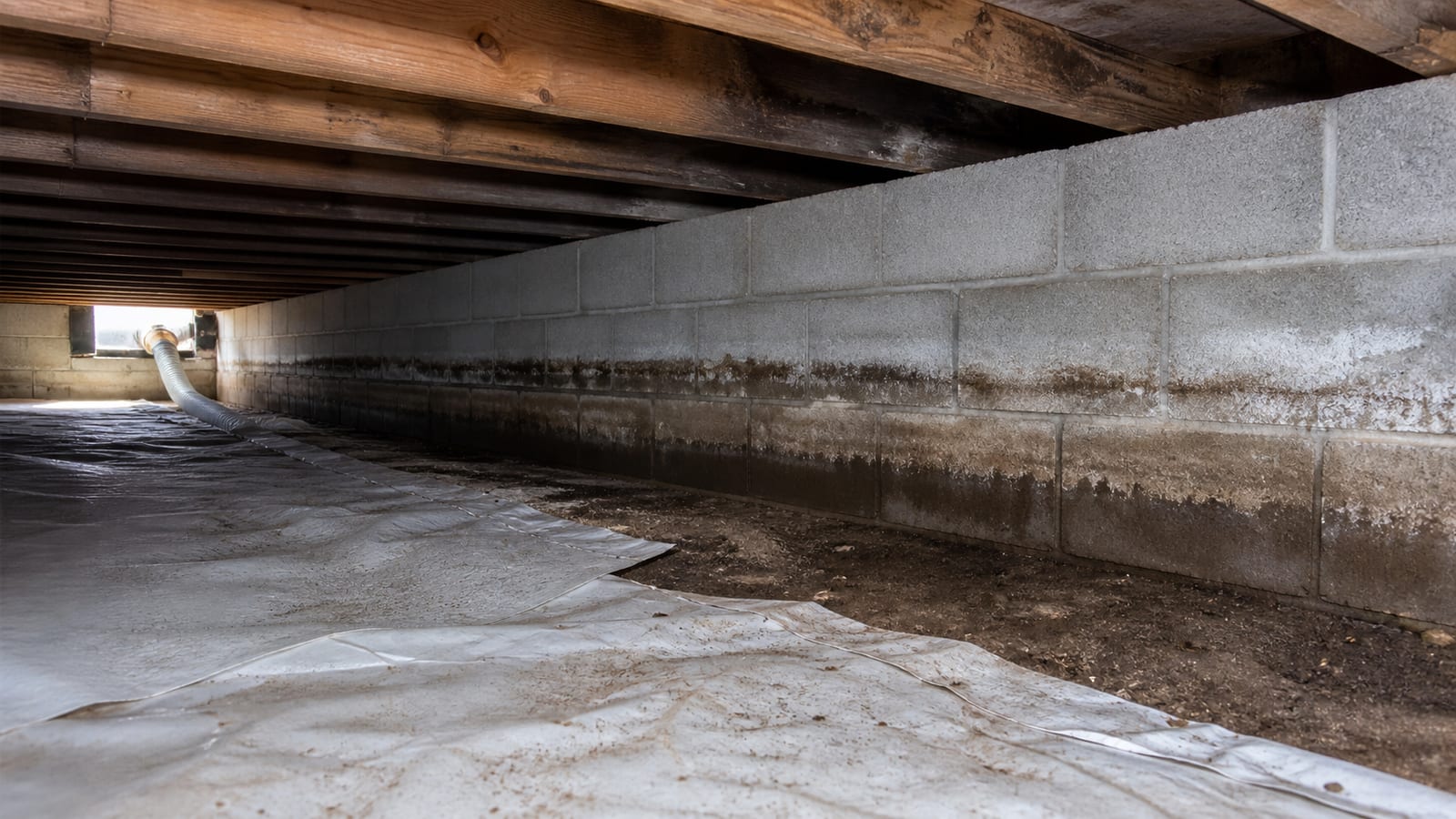
Most parts of a house get looked at because someone has a reason to be there. A basement holds the laundry and the mechanicals. An attic holds boxes. A crawl space holds nothing anyone wants, sits behind a hatch that may be outside the building, and gives a person no reason at all to crouch down and crawl in. So nobody does. That single fact, more than any question about drainage or vapor, is what shapes the way crawl space mold problems show up in East Windsor.
The result is a gap between when a moisture condition starts and when anyone learns about it, and that gap is often measured in seasons rather than days. The EPA notes that soil moisture can evaporate into a crawl space and that accumulated moisture there can move into other parts of a building. That is a slow process with no alarm attached to it. By the time something upstairs finally gets someone's attention, the condition below has usually had a long, undisturbed run.
Key Takeaways
Discovery is late by design
There is no routine reason to enter a crawl space, so the condition is usually found by an unrelated event rather than by a check.
The trigger is rarely the problem itself
An odor, a home inspection, a plumbing call, or a floor that feels cool is what prompts the look, not the moisture that has been running underneath.
Moisture does not stay put
EPA describes crawl space moisture moving into other parts of a building, which is why the first sign often appears in a room, not under one.
What you see is not always mold
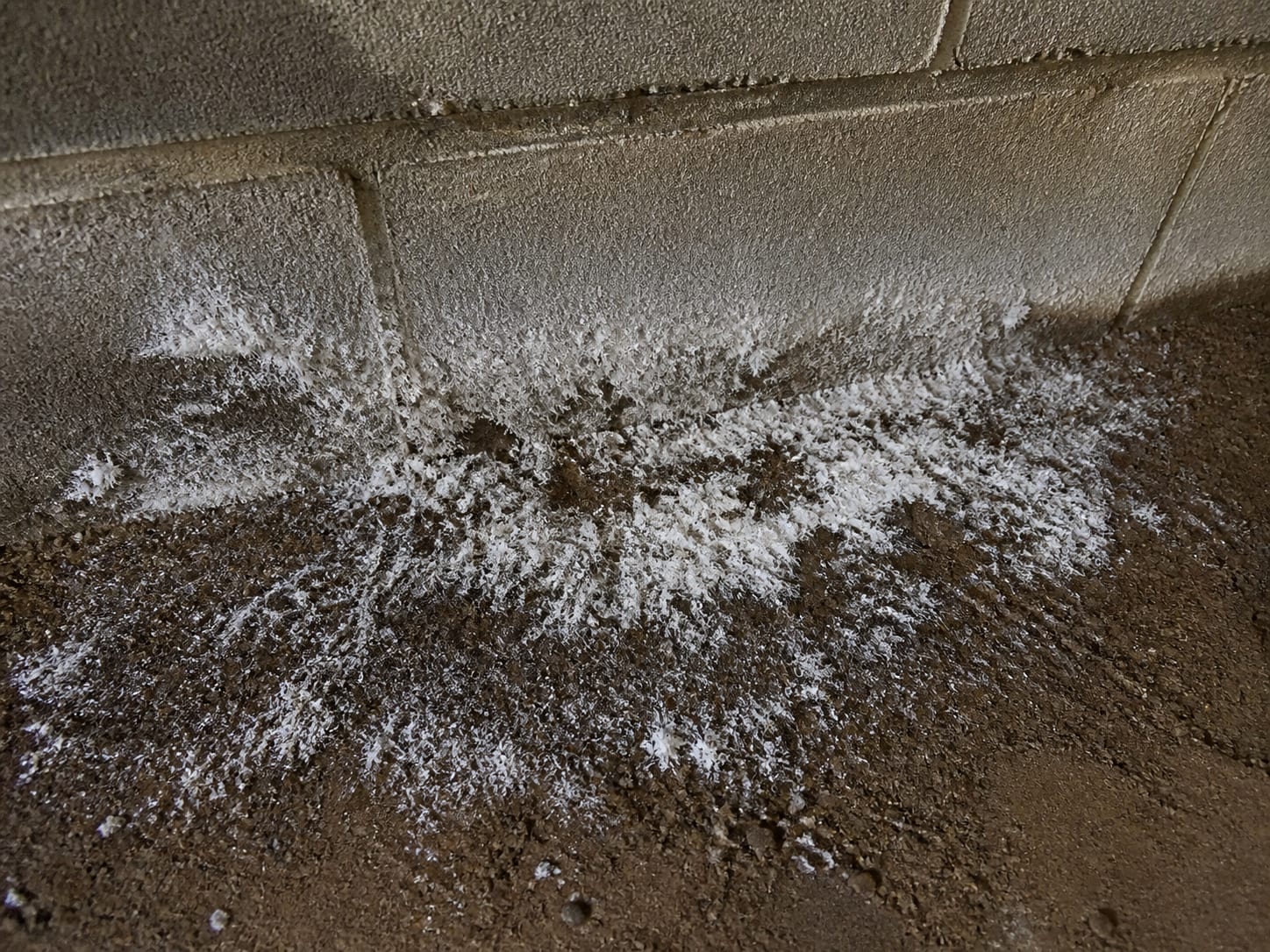
EPA notes that white fibrous material on crawl space soil can be mineral salts, though it still points to a moisture problem worth investigating.
Access limits what can be known
Clearance, entry points, ductwork, and ground conditions decide how much of the space can actually be observed and documented.
New Jersey already expects some crawl spaces to be watched
State maintenance rules for covered hotels and multiple dwellings call for these spaces to be free of exterior liquid moisture and properly ventilated.
Why the Lag Is So Long
A crawl space is the only part of a building with no scheduled visitor. There is no filter to change on a routine, no storage to retrieve, no light switch by the door, and often no comfortable way in. Entry may be through an exterior hatch, a closet floor panel, or an opening behind shrubs that has not been opened since the house was built. Clearance is frequently low enough that a look means lying down and pulling yourself along on your elbows.
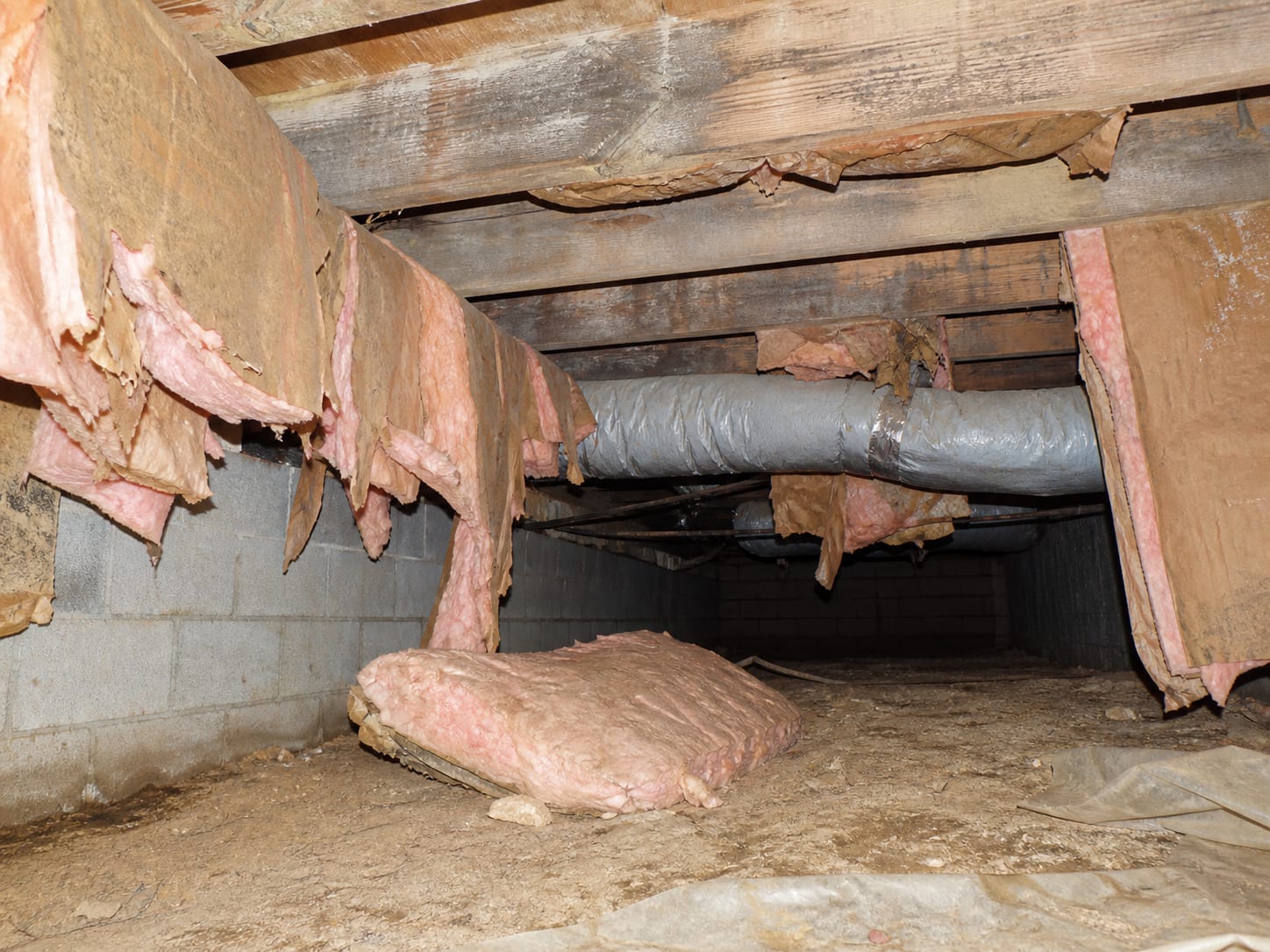
Add to that the fact that nothing down there complains. A slow ground moisture condition does not drip on anything valuable, does not trip a breaker, and does not stop a system from running. Insulation may sag, framing may darken, and duct exteriors may sweat for a full season with no consequence anyone upstairs would notice. The space is doing exactly what it always did, which is nothing visible, and that silence is what buys the moisture its time.
What Finally Prompts the Look
Almost nobody finds a crawl space problem by going to check on the crawl space. They find it because something else sent them there, and the something else is usually one of a short list of events. Knowing that list is useful, because each trigger tends to arrive at a different stage of the condition.
Hover or tap a row to highlight it.
| What prompts the look | What it usually means | Typical timing |
|---|---|---|
| A musty odor in a first floor room | Air from below is reaching the living space, so the condition is established rather than new | Late, often several seasons in |
| A home inspection during a sale | A third party opened a space the owner never did, on a schedule set by a transaction | Whenever the sale happens, unrelated to the condition |
| A plumber, electrician, or HVAC technician | Another trade went under the floor for their own reason and reported what they saw | Random, and often the earliest realistic catch |
| Insulation falling out of the floor joists | Material has been wet long enough to lose its hold, which takes sustained moisture | Late |
| A floor that feels cool, damp, or soft in one area | Conditions below have started to affect the assembly above them | Variable, depending on the material |
| A visible plumbing failure upstairs | A known event sends someone down to check for damage | Early, because the date is known |
The pattern in that table is the point. Every early catch on the list is accidental, and every reliable trigger is late. That is the detection problem in one view, and it is why a crawl space scope written from a single visible patch usually turns out to be smaller than the actual condition.
What the Lag Actually Costs
Time changes the scope, not the diagnosis. A moisture source that has been active for two weeks and one that has been active for two years may have the identical cause, but they leave very different lists of affected material. Framing, subfloor undersides, batt insulation and its facing, vapor barriers, duct exteriors and their insulation, pipe wrap, and anything stored down there all absorb the delay.
The second cost is reach. Because crawl space moisture can move upward into other parts of the building, a long undetected condition is more likely to have involved rooms above it by the time anyone looks. That widens the assessment from an underfloor question to a whole assembly question, and it is one reason the scope of a late discovery is difficult to predict from a photo of the hatch. Basement and attic conditions each have their own routes and their own service paths, so they are assessed separately rather than folded in here.
What You Are Looking At May Not Be What You Think
Late discovery has a companion problem: the first look is usually done by someone with a flashlight and an opinion. That is where a common misread happens. The EPA notes that a white fibrous material on crawl space soil can be alkaline salts rather than mold, while also indicating a moisture problem that deserves further inspection. Both halves of that sentence matter. The substance may not be what it looks like, and the finding is still worth acting on.
The practical lesson is not to argue about what a patch is from a phone photo. It is to treat any of it as a prompt to identify the water or vapor route, document what components are affected, and decide the scope from that evidence. A documented mold inspection is the tool for that in a space where visibility is poor. Sampling is a separate question, and EPA guidance holds that routine testing is generally unnecessary where growth is already visible, so mold testing is worth reserving for the cases where a real question about the source or extent remains unanswered.
Access Decides How Much Can Be Known
An inspection of a crawl space is limited by the crawl space. Clearance may prevent reaching a far corner. A single entry point may leave a section of the footprint unreachable. Ductwork, piping, and mechanical runs can block the path along a joist bay. Standing ground moisture can make part of the area impassable. Those limits are not a failure of the inspection, but they do have to be stated, because an owner reading a report needs to know the difference between an area that was seen and found sound and an area that was never reached.
That distinction also protects the scope. A repair plan built on the assumption that unreached areas match the reached ones is a plan that changes once someone gets there. A plan that names its access limits up front changes less.
Who Has the Authority to Send Someone Down
East Windsor has an estimated 12,422 housing units, and about 54 percent are single unit structures. The rest includes attached and multifamily housing where foundation areas, exterior drainage, and shared piping may be common elements rather than individual property. Census figures put owner occupancy near 61.1 percent, so tenants, landlords, associations, and property managers all appear in these conversations. Twin Rivers, which the Township identifies as a planned unit development, is a local example of a managed setting where the party who smells the odor is not necessarily the party who can authorize the entry or the repair.
There is one place where the expectation of attention is written down. New Jersey's maintenance regulation for covered hotels and multiple dwellings states that basements, cellars, and crawl spaces must be free of exterior liquid moisture and have the required ventilation to prevent moisture and dampness from accumulating. That provision applies to the property types the rule covers, not to every detached home, but it makes a broader point worth borrowing: an unwatched underfloor space is recognized as a maintenance concern, not an acceptable blind spot.
Shortening the Gap
Closing the detection gap takes one habit and one document. The habit is a short look on a schedule, ideally after a wet stretch of weather, so that discovery stops depending on an unrelated trade or a pending sale. The document is a written record of that look: the entry points used, the clearance, the areas that could not be reached, the condition of framing, subfloor, insulation, vapor barrier, duct exteriors, and piping, and any evidence of a water or vapor route.
From there the work follows the evidence rather than a template. Determine whether moisture is arriving as ground evaporation, exterior water entry, drainage, a plumbing failure, or condensation, because each one points to a different correction. Confirm who controls that source before scheduling anything, since the answer differs in attached and managed housing. Then remediate to the documented boundary and correct the moisture condition, because EPA guidance treats moisture control as the basis of mold control. Verify the result and keep the file.
That last part is where the detection problem finally breaks. A crawl space that has been documented once has a baseline, and a baseline turns the next look into a comparison instead of a discovery. Details on what the cleanup portion covers are set out on our crawl space mold remediation service page.
If the work later moves past cleanup into changes to building systems or structure, East Windsor's Construction Department is the office that reviews permitted building, mechanical, plumbing, electrical, and fire work, and the Township's flood standards can apply where a project counts as development in a flood hazard area. Cleanup alone does not establish that either applies. The Township makes that call on the actual scope, and it is East Windsor that makes it, not West Windsor or Hightstown, which run their own separate processes.
How Late Would You Have Caught It?
1. Why do crawl space moisture problems usually go undetected for so long?
2. What most often prompts an owner to finally look under the floor?
3. A white fibrous material on crawl space soil means what?
4. Why do access limits belong in the inspection report?
5. What ends the cycle of late discovery?
Pick an answer to begin.
Frequently Asked Questions About Crawl Space Mold Remediation in East Windsor NJ
How long has this probably been going on?
Longer than the trigger suggests, in most cases. Because nothing routinely brings a person into a crawl space, the discovery date reflects when someone happened to look rather than when the condition began. Material evidence gives a better estimate than memory does. Insulation that has lost its hold, sustained darkening on framing, and layered staining all indicate repeated or prolonged wetting rather than a recent event.
I smell something musty on the first floor but the crawl space looks fine from the hatch. Now what?
The view from a hatch covers a small fraction of the footprint, and the far corners are exactly where a person is least likely to have looked. Since crawl space moisture can move into other parts of a building, an odor upstairs with no obvious source at eye level is a reason to have the full accessible area examined rather than a reason to assume the space is clear.
Should I schedule a crawl space check even if nothing seems wrong?
A short annual look is the cheapest thing in this entire article. It costs an hour and it converts the whole problem from a discovery problem into a monitoring problem. Timing it after a wet stretch of weather makes it more informative, because that is when an exterior water route is most likely to show itself.
Do I need a mold test to know what is down there?
Usually not, if growth is already visible. EPA guidance holds that sampling is generally unnecessary in that situation, because the response does not change based on what species is present. Testing earns its cost when the source or the extent is genuinely unclear, which in a hard to reach space is a real possibility worth discussing rather than a default step.
I rent, and the crawl space is not something I can get into. What can I actually do?
Report what you can observe, in writing, with dates. Odor, floor conditions, and any visible change are all reportable observations even without entry. Access and source repair in attached or managed housing frequently belong to a landlord, association, or manager, and a written record of when a condition was reported is the part a tenant controls.
Will encapsulating the crawl space solve it?
Not on its own, and not as a first move. Any covering or conditioning approach installed over an uncorrected water route is a lid on a live problem. The order that holds up is to identify the route, document the affected components, remediate to that boundary, and correct the moisture condition. What the space needs afterward is a decision made from the evidence, not a product chosen before the diagnosis.
Final Thoughts
The hardest thing about crawl space mold is not the remediation. It is that the space is structurally exempt from attention, so the problem gets to run on its own schedule until an unrelated event exposes it. Every part of the response that follows, the scope, the cost, and how far the moisture reached, is shaped by how long that ran.
The fix for the lag is not complicated. Look on purpose, once a year, and write down what was seen and what could not be reached. That one habit turns a space nobody enters into a space with a history, and a space with a history stops producing surprises.
If something in your house is telling you to look under the floor and you would rather not find out the hard way what is down there, ExecPro Restoration & Cleaning can get in, document what is actually there, and tell you where the moisture is coming from. Call (888) 300-3772 or reach our team through the contact page, and we will start with the access and work outward from what can be seen.
Crawl Space Terms
Tap a term to see what it means.
Crawl space. The shallow underfloor area between the ground and the first floor framing, tall enough to crawl through but not to stand in.
Serving East Windsor
ExecPro Restoration & Cleaning provides mold remediation services in East Windsor, NJ, from inspection and testing through removal, drying, and post-remediation verification. Call (888) 300-3772 for 24/7 emergency response.
Related Articles
Downstream of the Hatch: Crawl Space Mold Remediation in Alpine, NJ
What grows on the joists under an Alpine house is usually the last event in a chain that began somewhere uphill of it, which is why the fix so often sits outside.
Crawl Space Mold Remediation in Warren, NJ: Cleanup or Encapsulation?
Encapsulation and remediation are two purchases, not one. What each does in a Warren, NJ crawl space, in what order, and how long the work really runs.
The Inspector Found It: Crawl Space Mold Remediation in Plainsboro, NJ
A Plainsboro crawl space flagged for mold: what it means, what the work involves, what it costs, and whether you really need encapsulation or are being upsold.