
Cape May County Flooding After Thanksgiving: Basements and Mold
Cal HewittPublished
- flood damage cleanup
- basement flooding
- mold remediation
- new jersey
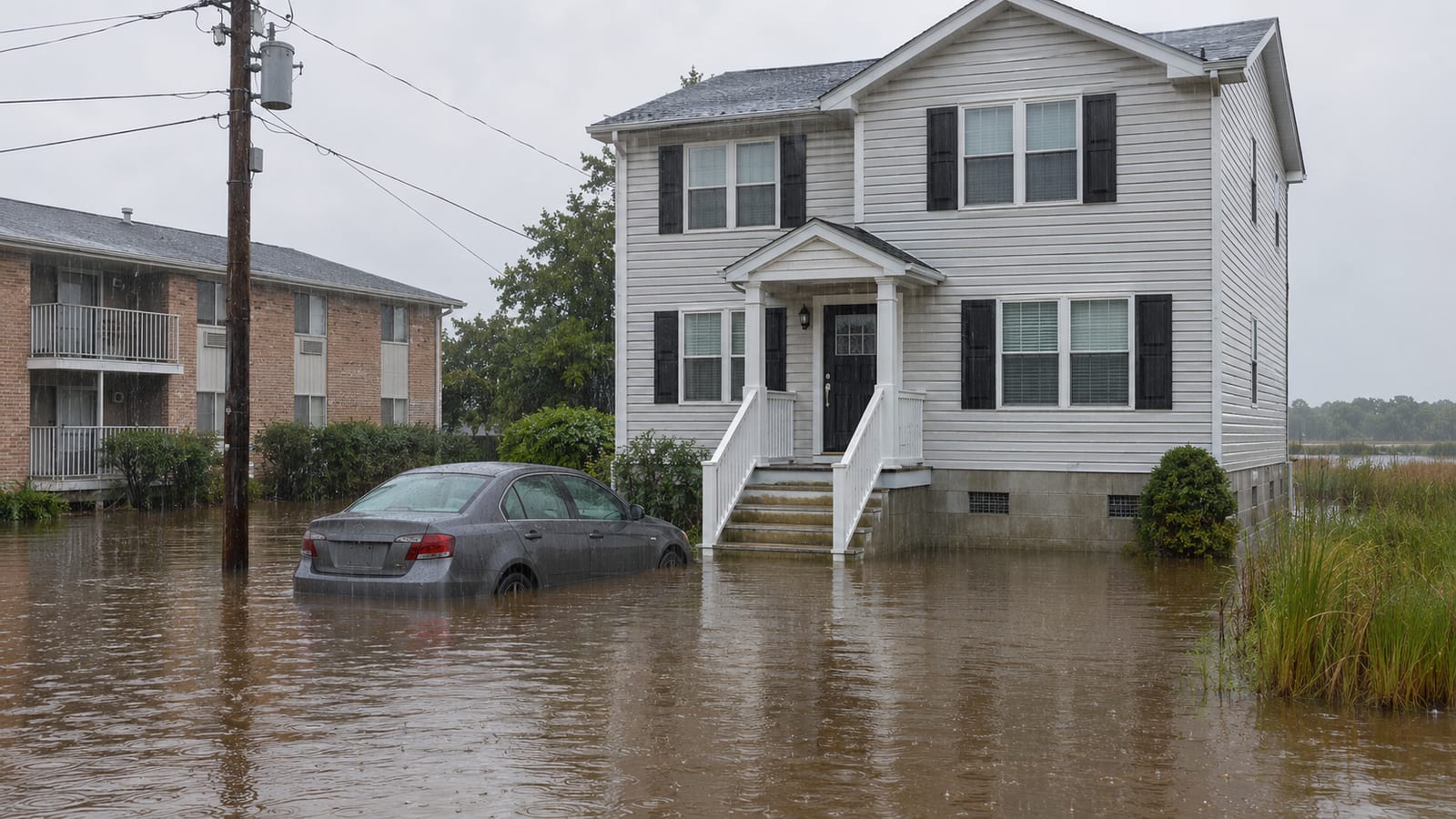
Floodwater over the middle of a parked car in your driveway or lot is a warning about the road, the vehicle and the building behind it. It is a reason to check the basement, crawl space, garage or first floor, and the depth inside has to be found by looking, once it is safe to look.
Governor Mikie Sherrill declared a statewide State of Emergency effective at 6:00 p.m. on November 25 for all 21 counties. Cape May County was in the coastal flood warning and high-wind warning area, with the most dangerous conditions forecast for Thanksgiving Day, November 26, and flooding possible through Friday, November 27.
Your first job is staying safe. Your second is a clock. If a flooded home and its furnishings cannot be dried within 24 to 48 hours, EPA says to assume mold may be growing, so the drying plan and the mold plan are one plan. Below, that plan runs from the first photographs to the insurer calls, with the mold steps placed where they belong.
Our one-minute video walks through the same checks, from the waterline outside to the mold clock.
Key Takeaways
The line outside is a signal
Water over half a car in the driveway is a reason to inspect every lower level, and the real depth inside comes from the waterline you find and photograph on the walls.
The drying clock sets the order
Safety comes first, then photographs and an insurer call, then removal of wet materials that cannot be dried, all inside the 24 to 48 hour window.
Three coverage questions, not one
Flood insurance, a homeowners policy and a car's comprehensive coverage each answer for different damage, and your own policy decides each one.
Water Over Half a Car Outside Is a Reason to Check Every Lower Level
The New Jersey Department of Health says not to walk, swim or drive through floodwater, because it can hide debris, open structures, contaminated material and electrical hazards. That covers the car, and it covers you. Stay out of the water, and photograph the street, driveway, vehicles and exterior walls from a place that is safe.
FEMA's guidance on urban flooding for homeowners and renters says basement flooding can range from a few inches to several feet, depending on the source and how long the water stays. No table turns "water at the wheels" into a depth inside a particular house, so treat the outside line as evidence of exposure and then find the real interior waterline on walls, doors, stairs and the foundation.
How the water gets in depends on how the building is built:
- Basement: Water can enter through stairs, windows, foundation openings, sump systems or utility penetrations, and FEMA says basements receive limited flood coverage.
- Crawl space: Insulation, floor framing, ducts, plumbing and electrical parts can be wet even when the living floor is dry.
- Attached garage: Water can come under the garage door or through adjacent walls and reach stored contents, drywall, electrical equipment and vehicles.
- Slab-on-grade first floor: Water can come straight through doors, thresholds, walls and floor penetrations.
- Elevated home: The living area may stay above the water, but stairs, enclosed areas below the floor, utilities and stored property can still be wet.
You Do Not Walk Back In Until Power, Gas and Structure Are Cleared
Do not enter a flooded building until officials say it is safe and someone can assess it without electrical, gas or structural hazards. Follow the evacuation, road-closure and re-entry instructions that come from local officials. CDC's re-entry guidance says to use battery-powered flashlights instead of candles or torches, and never to turn power on or off, use electric tools or run appliances while standing in water.
If the main power switch can only be reached through standing water, an electrician has to turn it off, and an electrician inspects the electrical system before power comes back. South Jersey Gas says to stay away from the breaker box in a flooded basement. If you smell gas, leave right away, call 911 from a safe location and then contact the gas company. Do not turn gas service back on yourself if it was shut off at the meter.
Downed lines can stay dangerous even when they look dead or sit under standing water, and Atlantic City Electric says to leave the area and report them to 911 and the utility. Furnaces, water heaters and other gas appliances that the water touched need inspection or repair before service resumes. Weakened floors, damaged stairs, foundation movement and unstable ceilings need a look before anyone goes in.
Treat the water itself as contaminated. NJ OEM warns that floodwater can carry chemicals, bacteria and other contaminants, and EPA says contaminated-water cleanup takes protective equipment and containment. Saltwater from the shore gets the same treatment as any contaminated floodwater. If sewage may be in it, our sewage cleanup work applies. Keep generators out of garages, basements, crawl spaces and any enclosed area.
Photograph the Interior Waterline Before Anything Moves
Once you can enter safely, take photos and video before you move or throw out anything. The interior waterline is the most useful picture you will take. It shows the insurer how high the water stood, and it tells a restoration crew which walls, cabinets and framing to open first. Shoot it on each wall, on doors, on stairs and on the foundation, and add a tape measure in the frame where you can.
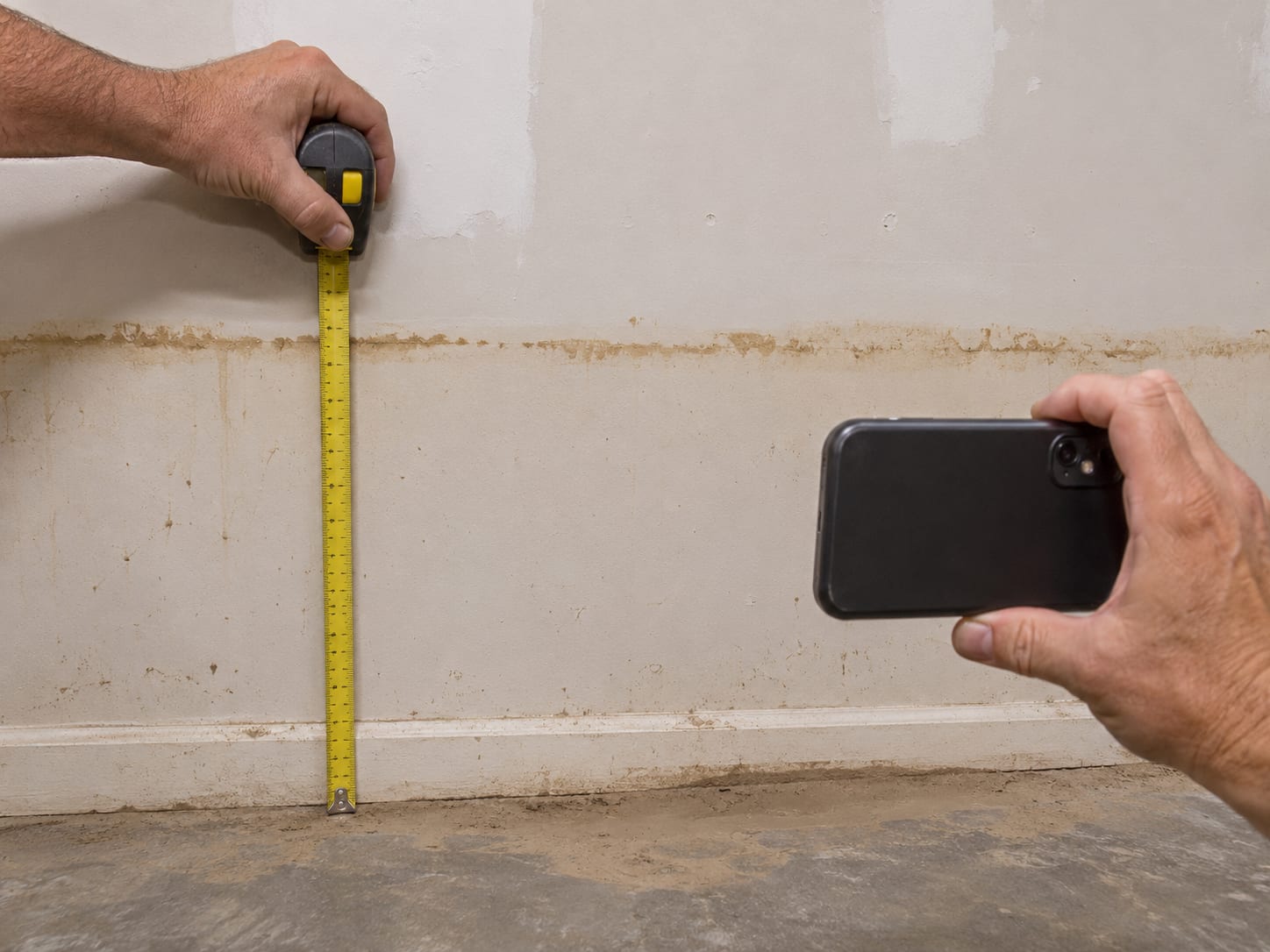
Then work outward from the line. Photograph floors, ceilings, structural damage, and every appliance, furnace, water heater and piece of electrical equipment the water reached, with make, model and serial number. Photograph the construction details too, such as the flooring type and how deep the insulation sits, before any of it is cut out.
What to Photograph Before Anything Is Moved
Outside
The street, driveway, exterior walls and floodwater lines, from a safe position.
Interior waterline
Each wall, door, stair and foundation face where the water left a mark.
Building damage
Floors, ceilings, structural damage and any foundation movement.
Equipment
Appliances, HVAC, furnaces, water heaters and electrical equipment.
Vehicles and contents
Cars from several angles including the dashboard, and damaged contents with quantity, approximate age and replacement information.
FEMA's guidance on documenting damage lays out the same records, and the call to your insurer comes before demolition. Keep damaged items for inspection unless they are a health hazard or officials require their removal.
The First Days Follow the Drying Clock
The order of work is set by two things: what is safe, and how long materials have been wet. Water removal and drying start as soon as the electrical conditions allow, using only equipment that is safe for them and for the contamination.
The First Hour, Day and Week
- 1
Next hour
Stay out of moving or standing floodwater, follow evacuation and road-closure instructions, keep away from downed wires, leave and call 911 if there is a gas odor, and photograph the exterior and waterline from a safe place. Report the loss to the insurer.
- 2
Next day
Re-enter only when authorities and qualified professionals say conditions are safe. Have an electrician evaluate the electrical system, remove standing water only when the electrical conditions are safe, take out wet materials that cannot be cleaned and dried, and keep the HVAC off.
- 3
Mold steps, same day
Open doors and windows when weather and security allow, run dehumidifiers when the electrical service is safe, and separate the affected area so dust and debris do not travel into dry rooms.
- 4
Next week
Keep photographs, receipts, contractor records and a log of every call. Confirm which coverage the loss falls under, and arrange a documented drying, demolition and remediation plan for wet lower levels, crawl spaces, garages and HVAC.
If water is standing in a basement, our basement flood cleanup work starts with extraction. Drying is the next stage. Structural drying means running equipment until the readings show the framing, subfloor and wall cavities are dry, which is how you know the clock has been beaten and not just guessed at. Keep the full plan in writing, with moisture readings and a scope you can hand to the insurer.
How Do You Stop Mold While the Water Is Still Being Pumped Out?
Most people spend the first days pumping, hauling and running fans, and the mold clock runs the whole time. EPA says that if a flooded home and its furnishings cannot be dried within 24 to 48 hours, occupants should assume mold growth may be present. So the steps that prevent mold belong inside the dry-out, starting on the first day, and not after it.
The first step is deciding what cannot be dried in time. EPA says that drywall, carpet, insulation and ceiling tile are hard to clean because water and mold soak into them, and that porous materials still wet after 48 hours should generally be removed and replaced. Pull those out early, once the electrical conditions allow it and you have photographed them.
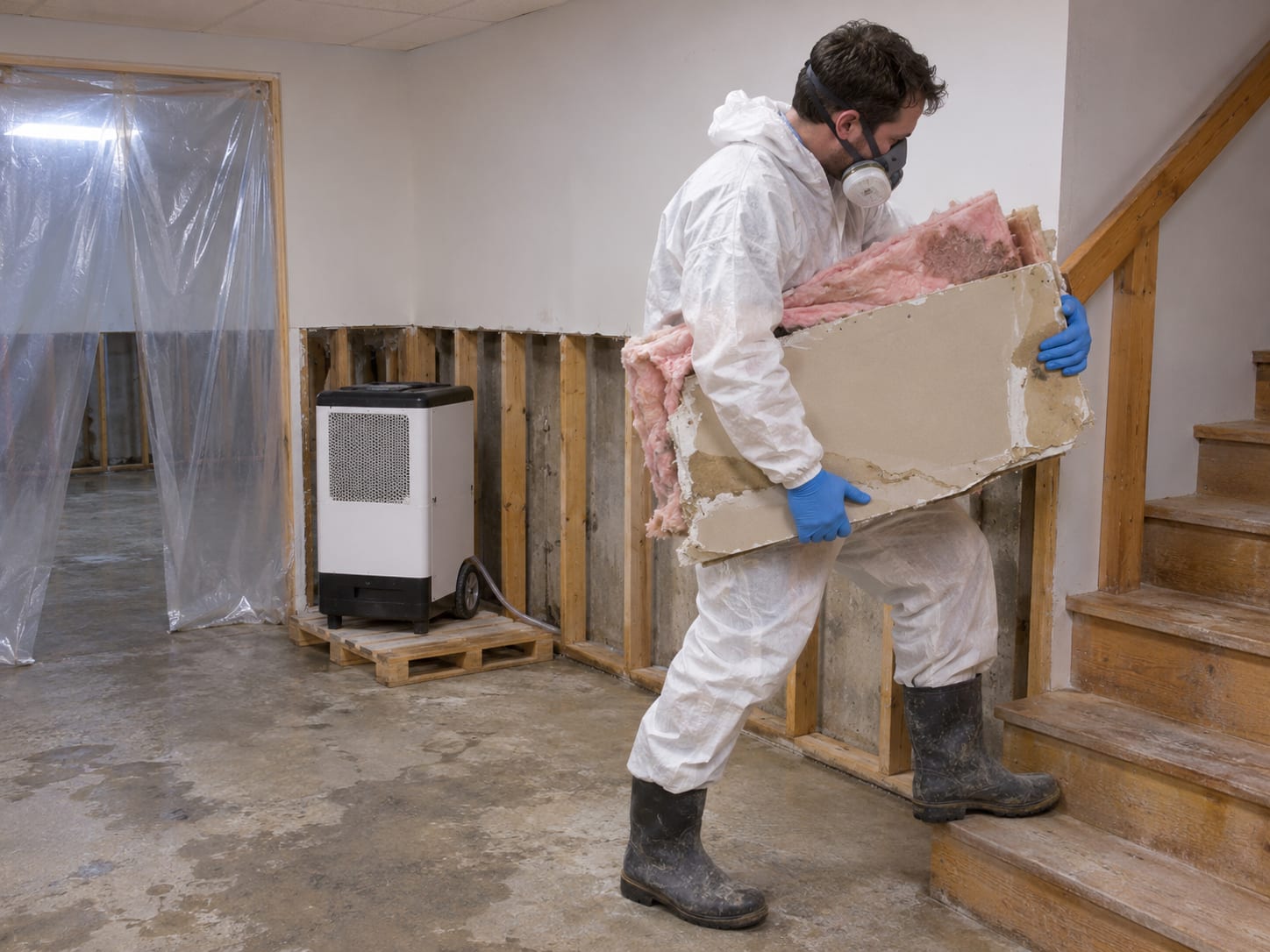
The second step is airflow. EPA says fans should not be used until the water is known to be clean or sanitary, and floodwater from the shore is not that. Where fans are used, they should push air outward and not blow contaminated air into rooms the water never reached. Keep the HVAC system off until it has been inspected and cleaned by an experienced professional, since mold and debris can spread through the home from it.
The third step is looking where you cannot see. Mold can stay hidden behind walls, under carpeting, in insulation, inside ductwork and in HVAC components. Cleaning the mold you can see while wet insulation, wall cavities, ductwork or flooring stay damp underneath leaves the cause in place, so those hidden spots are the ones to open and dry.
Call for remediation, which is the containment, removal and cleaning of mold-affected materials by trained crews, when any of these are true:
- Contaminated water: The floodwater may hold sewage or chemicals.
- Wet beyond the window: Porous materials have stayed wet past the drying window.
- Hidden growth: Mold may be inside walls, under flooring or in the HVAC system.
- Large area: The affected area is extensive.
- Not safe to do yourself: The people living there cannot do the work safely.
For a wet basement, our basement mold remediation page covers how that work runs, and our general mold remediation page covers the rest of the building. EPA flags respiratory and allergy concerns from mold, especially for people with asthma, respiratory conditions or weakened immune systems, so keep those household members away from affected areas and ask a physician about any symptoms.
Some Materials Can Dry in Place and Others Usually Come Out
Each material gets its own decision, and a restoration crew makes it with moisture readings in hand. EPA's flood guidance gives a starting point for the lower level.
Hover or tap a row to highlight it.
| Material | Guidance |
|---|---|
| Drywall | May be dried in place if it has no obvious swelling and the seams are intact; swollen, damaged or mold-contaminated drywall is removed and replaced |
| Insulation | Fiberglass and cellulose are generally removed and replaced after wetting |
| Carpet and carpet pad | Extract water and dry quickly when the water is clean; remove what cannot be dried promptly or was contaminated |
| Vinyl, linoleum and ceramic tile | Generally cleaned and dried, with the underflooring checked and dried as well |
| Structurally sound wood | Can be cleaned and dried, with caution around hardwood floors and heat |
| Ductwork and HVAC | Do not operate a flooded or contaminated system; have an experienced professional inspect and clean it |
| Water heaters and furnaces | Stay out of service until a qualified professional has inspected them |
| Concrete and masonry | Generally extracted, cleaned and dried when structurally sound |
If the water was salty or visibly dirty, have the insurer, a qualified restoration professional and an equipment specialist look at the materials and mechanical equipment before anything is dried, cleaned or reused. For what salt does to wiring, HVAC and framing, our guide to tidal flooding and saltwater home damage goes through each system.
Flood, Homeowners and Auto Coverage Are Three Separate Questions
Ask each one on its own, because a different policy answers for a different piece of the loss. Under NFIP guidance, building coverage and contents coverage are separate, and contents coverage applies if you bought it. Basement coverage is limited. Certain installed items such as furnaces, water heaters, central air conditioners, electrical switches and outlets, and sump pumps may be covered, along with some powered contents such as washers, dryers, window air conditioners and freezers. NFIP covers floodwater that enters from the ground up, including storm surge or overflow, and generally does not cover water entering from above through a wind-damaged roof.
New Jersey's required flood notice states that homeowners policies do not cover property damage from floods and that separate flood insurance may be available. A car is a third question. NJDOBI says vehicle flood damage is generally handled under optional comprehensive auto coverage, and liability-only coverage does not pay for damage to your own car.
Report the loss promptly to each insurer that may apply, and keep a log of every call. The NFIP checklist says an assigned adjuster is expected to contact you within 48 hours after you report. Coverage limits, deductibles, exclusions and basement provisions come from your policy, and the insurer can tell you which apply. Our guide to flood insurance claims under a New Jersey state of emergency walks through the claim steps and records in more depth.
Where to Get Cape May County and Ocean View Updates
Ocean View is one of Dennis Township's communities in Cape May County, and the township lists it among its communities. The Governor's announcement named coastal and bayside communities among the areas at greatest risk. Whether you are in Ocean View, Sea Isle City, Ocean City, Woodbine or the Wildwoods, conditions change block by block.
For road and bridge closures, shelter openings and evacuation orders, check your municipality's emergency alerts, Cape May County OEM and 511NJ before you travel. Executive Order 31 lets the state close or reroute roads, order evacuations and open state shelters when conditions require. The National Weather Service in Mount Holly carries the current tide-gauge forecast and storm updates.
Cape May County OEM also asks residents to pick an evacuation location before a severe storm. It says traditional shelters may be restricted and suggests a safe place outside the county with family, friends or short-term lodging. If your property is near Ocean City, our Ocean City mold remediation page covers that town.
A Restoration Plan Runs From Extraction to Rebuild
A written plan keeps emergency work apart from permanent repairs. It starts with extraction and drying, then removal of what cannot be saved, then mold remediation if growth is present, and only then the rebuild. Our flood damage cleanup work follows that order, with moisture measurements, a written scope and a documented timeline from extraction through rebuild.
The plan changes with the building. A basement needs extraction and drying of walls and the slab. A crawl space needs the insulation, ducts, plumbing and floor framing checked. A garage needs its drywall and electrical equipment looked at, and an elevated home needs its stairs, enclosed lower areas and utilities checked even if the living floor stayed dry. Work in a mapped floodplain may need municipal floodplain permits, so ask your municipality before reconstruction starts.
Frequently Asked Questions About Cape May County Flooding
Can I turn off the breaker myself?
Not while you are standing in water. CDC says never to turn power on or off while standing in water, and if the main switch can only be reached through standing water, an electrician needs to turn it off. An electrician also inspects the system before power is restored.
Should I remove drywall before the adjuster arrives?
Call your insurer first and photograph the waterlines and construction details before anything comes out. Drywall that is swollen, contaminated, or has stayed wet beyond 48 hours generally has to be removed, so tell the insurer that and ask how long to keep samples.
Can I run fans or a dehumidifier?
A dehumidifier is fine when the electrical service and equipment are safe. EPA says to hold off on fans until the water is known to be clean or sanitary, and then to exhaust air outward. Ask a restoration professional to set the airflow if the water was floodwater.
Does flood insurance cover my basement?
NFIP gives limited basement coverage, and it can include installed items such as a furnace, water heater and sump pump. Your policy sets what applies, so ask your insurer about basement provisions and what qualifies as building or contents.
How quickly can mold start?
EPA says to assume mold growth may be present if the home and its furnishings cannot be dried within 24 to 48 hours. Drying fast and removing porous materials that stay wet is how you stay ahead of it.
Test Your Flood Response Knowledge
1. Does the depth of floodwater in the driveway tell you the depth inside the house?
2. What does EPA say to assume if a flooded home cannot be dried within 24 to 48 hours?
3. Which coverage generally handles a flooded car?
Pick an answer to begin.
Moving Forward
Tomorrow morning, in this order: photograph from a safe position, call your insurers, and get a qualified assessment of the lower level before any material comes out. The outside line tells you to check. The waterline inside tells you how much, and the 24 to 48 hour window decides how quickly the wet materials have to move.
Putting the order right protects the claim and the building. Records made before demolition support the claim, and drying that finishes in time keeps mold from adding a second repair.
If water reached your lower level, ExecPro Restoration & Cleaning can help with extraction, structural drying and mold remediation at New Jersey properties. Call us at (888) 300-3772 or use our contact page, tell us what the water reached, and confirm availability for your address.
Flood and Mold Terms
Tap a term to see what it means.
NFIP. The National Flood Insurance Program, whose building and contents coverage are separate.
Related Articles
Mold in Washing Machines: Cleaning Gasket, Drawer and Drum
A musty smell or black gunk in the door gasket often comes from trapped water and residue. Learn how to clean each part and what never to mix with bleach.
Mold Remediation Certification in NJ: What to Ask Before Hiring
Mold remediation certification in NJ: ask which credential applies to your job, verify it, and confirm registration and insurance before you sign.
Black Mold in the Toilet: What the Ring Is and How to Clean It
Black mold in toilet bowls can be a deposit, a mineral stain or a moisture sign. Learn what to clean, what never to mix, and when to call a plumber.