Black Mold Removal in Robbinsville, NJ: Dark Growth at Home or in an Older Workplace
Cal HewittPublished
- black mold removal
- black mold
- commercial mold
- robbinsville nj
- new jersey
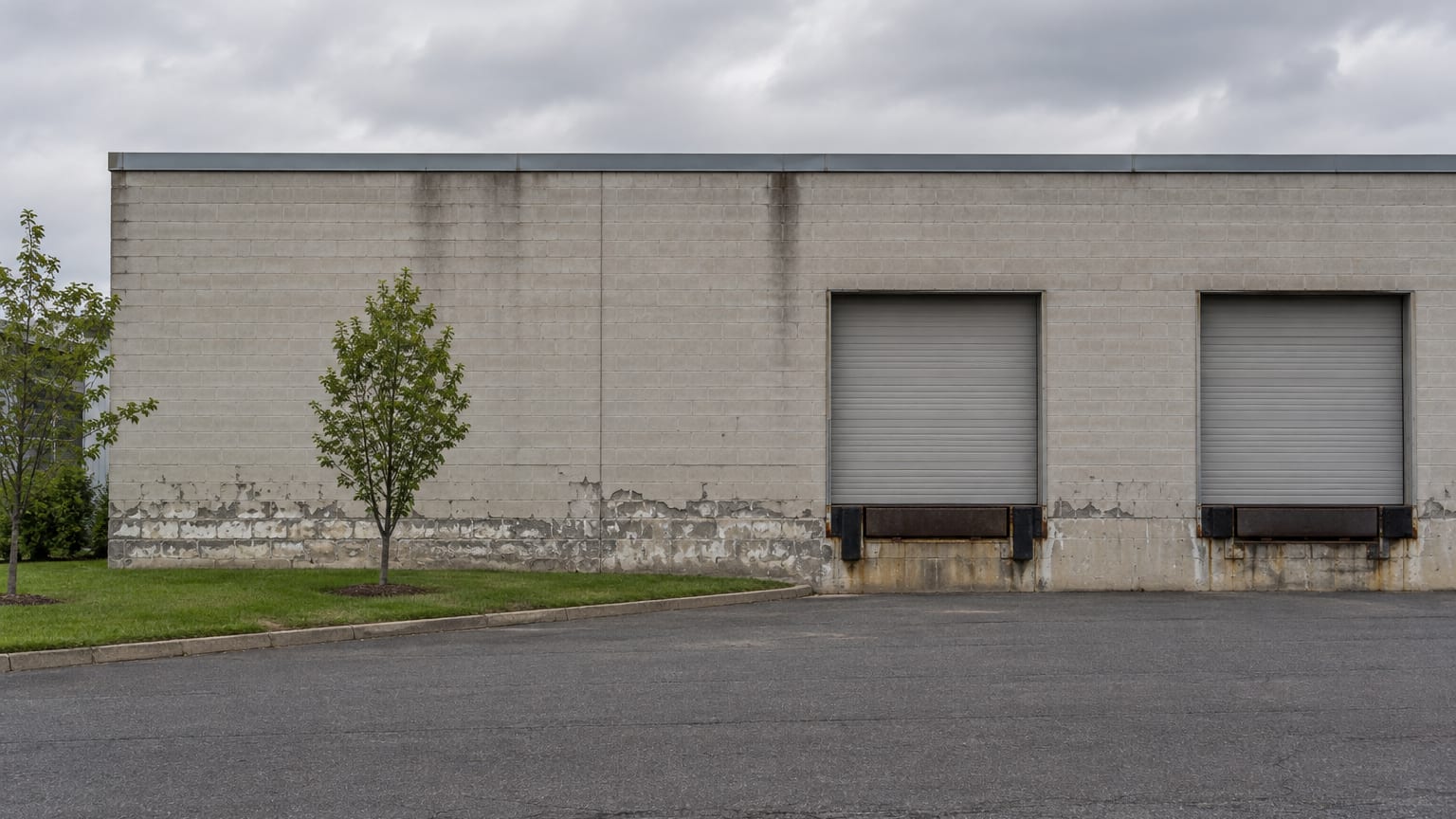
You just found dark growth, and now every question is urgent at once. It may be on a basement wall, behind a piece of finished drywall you pulled loose, or on a ceiling, a wall or a roof deck in a commercial or industrial building you own or manage. You want to know whether people should stay out of that room, what you should not touch, how far the growth may go past what you can see, and what it will take to get rid of it for good. Black mold removal in Robbinsville, NJ starts with answers to those questions in that order, and the first ones cost nothing. You can act on them today, before anyone arrives, and they protect both the people in the building and the record you will need later.
Key Takeaways
Keep people out until the size and the water source are known
People with asthma, lung disease or weakened immune systems should stay out of the room, and so should pets and anyone who does not need to be there.
Photograph first, then leave the wall alone
Do not cut into walls, pull up flooring, run fans that spread contamination or mix cleaning chemicals, and treat sewage, electrical danger, structural instability or active flooding as an emergency.
EPA's size guide is planning guidance, not a health limit
Under 10 square feet is small, 10 to 100 is medium, and over 100 is large, and professional judgment still applies.
Older workplaces and finished lower levels hide moisture
The township's 2024 Windsor Industrial Park redevelopment plan says 12 of 18 buildings on that site were more than 50 years old, and at home the lower level is where growth tends to hide.
Ask for a scope that includes the water source
A written scope should cover the source, containment, removal, drying, disposal, repairs, testing and rebuild, and not only the growth.
Dark Growth at Home or at Work: Who Should Stay Out of the Room
Start with the people. Keep children, pets and anyone who does not need to be in the room out of it, and keep people with asthma, lung disease or weakened immune systems out completely. CDC says most people inhale mold spores with no ill effects, while invasive mold infections are rare but can be severe in people with weakened immune systems. A person with breathing difficulty or another urgent symptom should get medical care.
Then work through the first hour in this order:
- Stop the water if it is safe: Shut off the supply or isolate the leak if you can reach it without risk.
- Photograph the condition and the water source first: Take pictures of the growth, the wet materials and the source before moving any contents.
- Leave the growth undisturbed: Do not cut into walls, pull up flooring, run fans that spread contamination through the building, or mix cleaning chemicals.
- Watch for emergencies: Sewage, chemical contamination, electrical danger, structural instability or active flooding make this a safety emergency, and the mold is a second concern.
- Make two calls: Tell your insurer if an insured event may be involved, and tell your property manager or building owner if the building is shared.
Within a day, arrange an inspection of the affected area and the likely water source, keep the area as dry and isolated as you practically can without spreading contamination, and ask your insurer what it requires, such as an adjuster, moisture documentation or testing. If you rent, notify the landlord or property manager in writing, and contact the local building-code office about unrepaired leaks.
The First Hour and the First Day
- 1
Stop the water if it is safe
Shut off the supply or isolate the leak if you can reach it without risk.
- 2
Photograph the condition and the source
Take pictures of the growth, the wet materials and the source before moving any contents.
- 3
Leave the growth undisturbed
Do not cut into walls, pull up flooring, run fans that spread contamination or mix cleaning chemicals.
- 4
Make two calls
Tell your insurer if an insured event may be involved, and tell your property manager or building owner if the building is shared.
- 5
Within a day, arrange an inspection
Cover the affected area and the likely water source, and ask your insurer what it requires.
How Big Is the Growth, and What Is It Growing On?
Size and material decide who should do the work. EPA's commercial-building guidance sorts affected area into three planning sizes: under 10 square feet is small, 10 to 100 square feet is medium, and over 100 square feet is large. EPA calls these planning guidelines, not health-based thresholds, and says professional judgment is still needed. A visible patch can understate the real area, because growth often continues behind drywall, under carpet or inside a ceiling.
Hover or tap a row to highlight it.
| Planning size | Affected area |
|---|---|
| Small | Under 10 square feet |
| Medium | 10 to 100 square feet |
| Large | Over 100 square feet |
Material matters as much as size. Growth on a hard surface such as concrete or tile can often be cleaned in place, while growth in drywall, insulation, carpet or paper-faced material usually means those pieces come out. Our Robbinsville mold removal guide goes through which materials go and which stay.
One point changes what you do first. Molds come in many colors, and CDC says color does not necessarily indicate that a mold is more or less dangerous. So, judge the situation by moisture and extent, and take the same first steps whatever color you see. CDC also says excess moisture is generally the major cause of indoor mold growth, which is why the water source is part of every plan.
Where Does Dark Growth Hide in a Robbinsville House or an Older Workplace?
In a house, dark growth tends to hide in finished lower levels, inside wall cavities, and next to bathrooms and HVAC equipment. Most homes in the township were built from the 1980s through the 2000s, and in that kind of home a finished basement puts drywall, insulation and carpet against walls and floors that can stay damp out of sight. If you cannot see the source, ask an inspector to trace it before anyone cleans, since cleaning over an active leak only sets up the next round.
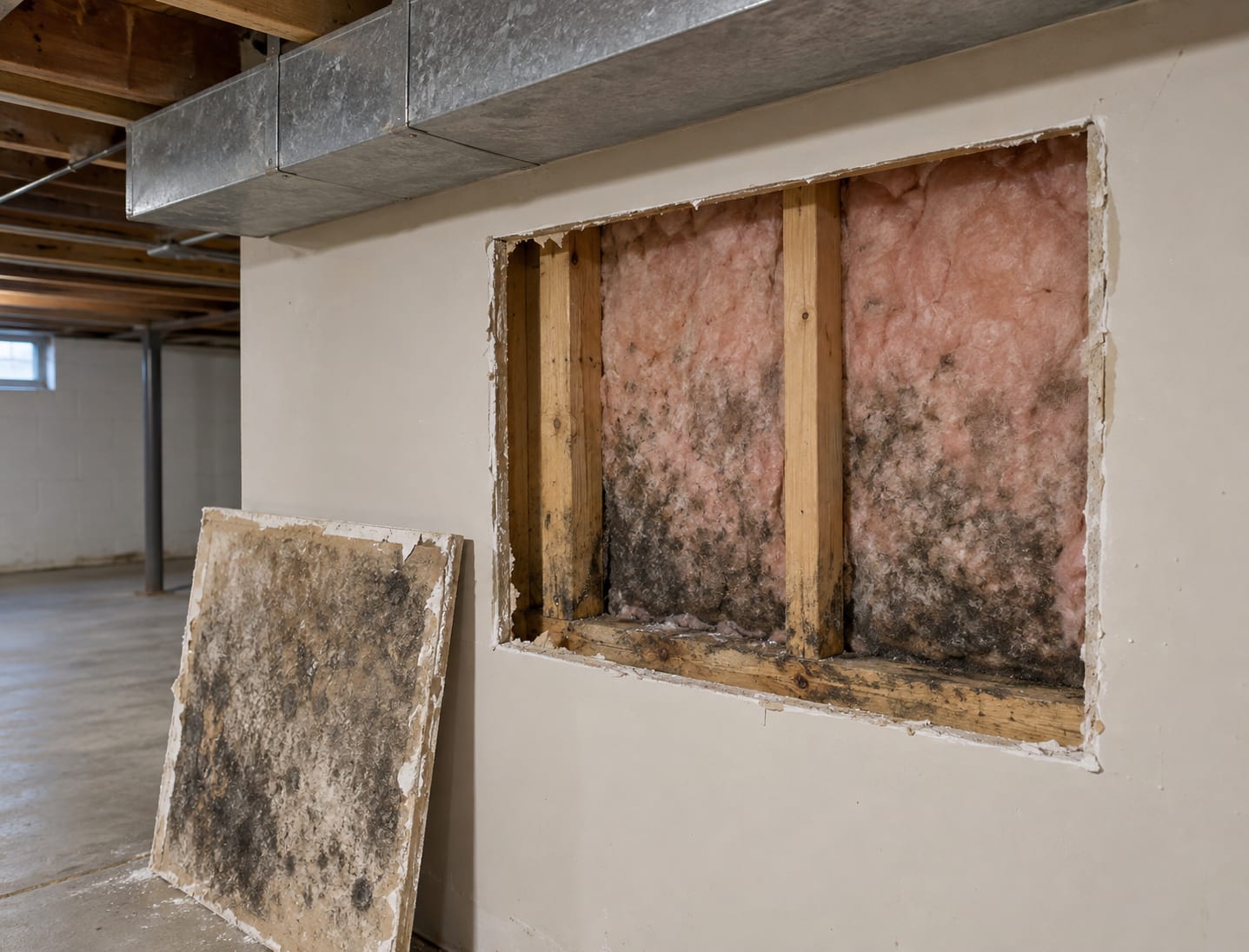
Older workplaces are a different setting. The township's 2024 Windsor Industrial Park redevelopment plan says 12 of 18 buildings on that site were more than 50 years old, with inadequate insulation and cracking or spalling exterior masonry. Spalling means the face of the masonry is flaking off. The township's economic development page reports more than 12 million square feet of warehouse space at 98% occupancy, so a mold problem in a building like this often sits inside a large, occupied, working property.
In those older buildings, dark growth tends to hide behind roof leaks, condensation, water coming in through masonry, and moisture concealed in insulation or wall assemblies. A ceiling stain on a roof deck, a damp corner along an outside wall, or growth near a mechanical room each points to a different route. The plan is the same, though: find the water, size the growth, and protect the people who work there.
Where Dark Growth Hides
Finished lower levels
Drywall, insulation and carpet against walls and floors that can stay damp out of sight.
Wall cavities
Concealed space inside a house where growth can continue behind drywall.
Next to bathrooms and HVAC equipment
Places where moisture and condensation collect.
Behind roof leaks
A ceiling stain on a roof deck in an older workplace.
Behind condensation
A damp corner along an outside wall or growth near a mechanical room.
Behind masonry water entry
Water coming in through cracked or flaking masonry, with moisture concealed in insulation or wall assemblies.
How Does the Job Change in a Townhouse, a Condominium or a Commercial Building?
If the building is shared, the scope depends on who controls the walls, roof and systems. In a townhouse or condominium, tell the association or the property manager, because shared walls, roofs and mechanical systems can change the work. Get their requirements in writing before anything shared is opened.
In a commercial or industrial building, the owner or property manager should be part of the first conversation. The crew has to coordinate with tenant schedules, warehouse operations, truck traffic and loading areas, and some work may need to happen off hours. Larger buildings also mean larger air volumes, which affects containment and air filtration. Ask any contractor how the work area will be separated from the rest of the building and how tenants will be told. Our commercial mold remediation team handles occupied buildings.
Hover or tap a row to highlight it.
| Building | What to do first |
|---|---|
| Townhouse or condominium | Tell the association or the property manager, and get their requirements in writing before anything shared is opened |
| Commercial or industrial building | Bring the owner or property manager into the first conversation, and coordinate with tenant schedules, warehouse operations, truck traffic and loading areas |
| Rental | Notify the landlord or property manager in writing, and contact the local building-code office about unrepaired leaks |
What Does Removal Look Like, From the Water Source to the Rebuild?
A sound job follows the moisture and the extent. The sequence runs:
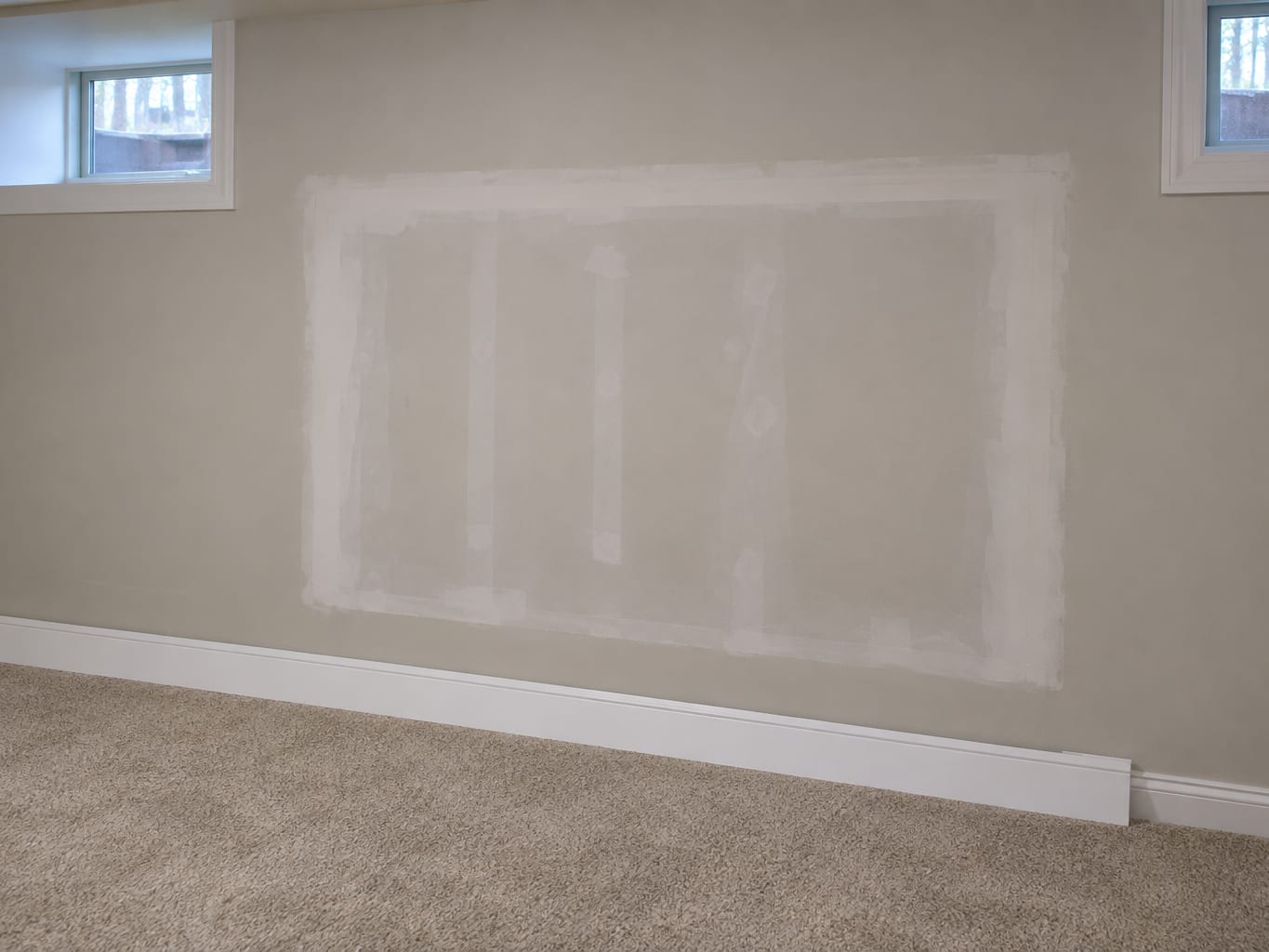
1. Identify and stop the water source or humidity condition. 2. Assess visible and concealed damage, the affected materials, who is exposed and the approximate area. 3. Set up containment and protective equipment that suit the size, the material and the chance of airborne spread. 4. Remove or clean affected materials, using methods that suit porous and nonporous surfaces. 5. Dry the structure and correct the underlying problem, whether that is a leak, drainage, humidity or condensation. 6. Reassess concealed areas if demolition reveals more growth. 7. Rebuild damaged finishes once the area is dry and the moisture source is controlled.
EPA's water-damage guidance emphasizes drying wet materials within 24 to 48 hours when possible. Once growth is visible, the schedule depends on the source, the material, hidden damage, containment, demolition, drying and rebuild, so a small accessible spot moves faster than a basement, a wall cavity or a whole commercial space. Our Robbinsville mold remediation page covers the full sequence.
A Black Mold Removal Job, From the Water Source to the Rebuild
- 1
Identify and stop the water source
Or the humidity condition feeding the growth.
- 2
Assess visible and concealed damage
Include the affected materials, who is exposed and the approximate area.
- 3
Set up containment
Containment and protective equipment that suit the size, the material and the chance of airborne spread.
- 4
Remove or clean affected materials
Use methods that suit porous and nonporous surfaces.
- 5
Dry and correct the underlying problem
A leak, drainage, humidity or condensation.
- 6
Reassess concealed areas
If demolition reveals more growth.
- 7
Rebuild damaged finishes
Once the area is dry and the moisture source is controlled.
Interior cleaning may be treated differently from demolition, structural, plumbing, electrical, roofing, exterior or drainage work, so ask the township construction office which parts of your job need one. In an older building, consider asbestos or lead in older finishes before demolition, and New Jersey requires licensed asbestos-abatement companies for covered asbestos work.
What Changes the Scope and Cost of Black Mold Removal?
A Robbinsville price cannot be quoted before someone sees the building, so the useful step is to learn what moves the number and ask for a scope that shows it. The main drivers are:
- Total area: Whether the visible patch understates concealed growth.
- Materials: Porous materials that must be removed and disposed of, against surfaces that can be cleaned.
- Source correction: Plumbing, roofing, drainage, grading, foundation or HVAC work to stop the water.
- Access: Basements, crawl spaces, wall cavities, attics and HVAC spaces take longer to reach.
- Containment and protection: Containment, air filtration, protective equipment and disposal.
- Drying: Equipment and the time it runs.
- Rebuild: Demolition and the rebuild after remediation.
- Contents: Furniture, carpeting, cabinetry and stored materials.
- Commercial access: Tenant coordination, off-hours work, loading-dock limits and larger air volumes.
- Older finishes: Possible asbestos or lead before demolition.
- Paperwork: Insurance documentation, adjuster coordination and third-party testing when someone requires it.
Ask for a written scope that separates inspection, containment, removal, drying, disposal, repairs, testing and rebuild, so that the water source is a line on the page and not an afterthought. EPA's size categories help explain scope, and they are not price categories.
Insurance depends on the policy and the cause. A covered sudden event may be treated differently from long-term seepage, flood, sewer backup or mold-only loss, so report the loss promptly and ask what your policy says about seepage, flood coverage and additional living expenses.
Stopping the Water That Fed It
Growth returns when the water does. The New Jersey Department of Health says mold problems generally occur where there is excess water, and it recommends correcting the water source before remediation. CDC says any mold growing in a building indicates a water or moisture problem that should be addressed. Go through the routes one at a time:
- Roof and flashing: Look for stains under roof penetrations, at valleys and along walls, and repair the leak before the ceiling is rebuilt.
- Plumbing: Fix supply leaks, drain leaks and appliance connections, and ask the contractor to confirm the line is dry.
- Drainage and grading: Soil should slope away from the foundation, and downspouts should empty well away from the wall.
- Condensation and humidity: Bathroom, kitchen and dryer exhaust should vent outside, and cold surfaces and humid rooms need airflow and dehumidifying.
For a basement or lower level near water, or after a storm, check the property's flood status by parcel with current FEMA and New Jersey maps. If the wet materials or a leak come first, our water damage restoration team dries the structure before the mold work starts. EPA also notes that unresolved mold and moisture can eventually damage structural materials in large buildings, including weakening wet wood, which is one reason to fix the water instead of only cleaning.
Frequently Asked Questions About Black Mold Removal in Robbinsville, NJ
Will insurance pay for mold removal?
It may, when the mold results from a covered sudden water event during the policy period. Long-term seepage, maintenance problems, flood, sewer backup and mold-only losses may be treated differently, so report the loss promptly and read your policy.
How much does black mold removal cost in New Jersey?
It depends on area, material, access, moisture correction, containment, drying, disposal and rebuild. A written property-specific scope shows what you are paying for, and it is more useful than an average.
What permanently kills mold?
The lasting fix is to remove or clean the growth, dry the materials and correct the moisture source. A chemical treatment without moisture correction does not prevent recurrence. EPA says the plan should fix the water or humidity problem and remove or clean contaminated materials.
Is mold removal worth the cost?
The answer depends on the extent of growth, the materials, the moisture source, who occupies the space and the risk of hidden or repeated damage. Removal makes the most sense when it stops an active moisture problem, protects occupied space, prevents spread or avoids repeated damage.
What do I do if I rent and the growth comes from a leak?
Notify the landlord or property manager in writing and contact the local building-code office about unrepaired leaks. Keep photographs and dates.
Check What You Know About Dark Growth
1. What does CDC say about mold color?
2. What does EPA call growth under 10 square feet?
3. What should you photograph before moving any contents?
4. What can growth on a hard surface such as concrete or tile often be?
5. What does the New Jersey Department of Health recommend correcting before remediation?
Pick an answer to begin.
Moving Forward
Dark growth calls for the same first steps whatever its color. Keep people out of the room, especially anyone with asthma, lung disease or a weakened immune system, photograph the condition and the water source, leave the wall alone, and treat sewage, electrical danger, structural instability or active flooding as an emergency. Size and material tell you who should do the work, and EPA's small, medium and large guide is a planning aid and not a health limit.
In a finished lower level or in an older workplace, the growth is usually the visible end of a water problem. A written scope that covers the source, containment, removal, drying, disposal, repairs, testing and rebuild is what protects the building, and it gives your insurer a clear record.
If you are looking at dark growth in a Robbinsville, NJ home or workplace, ExecPro Restoration & Cleaning can inspect the area, find the water source and put the whole scope in writing. Call us at (888) 300-3772 or contact us to schedule an assessment, and see our black mold removal service for how we handle the work.
Black Mold Removal Terms
Tap a term to see what it means.
Spalling. When the face of masonry flakes off.
Serving Robbinsville
ExecPro Restoration & Cleaning provides mold remediation services in Robbinsville, NJ, from inspection and testing through removal, drying, and post-remediation verification. Call (888) 300-3772 for 24/7 emergency response.
Related Articles
Black Mold Removal in Trenton, NJ: Whether to Stay, What to Touch and What It Takes
Is it safe to stay in the house tonight? Get the size-based answer, what not to touch and what black mold removal in Trenton, NJ takes to do properly.
Black Mold Removal in Bridgewater, NJ: Scope, Safety and Cost After You Find It
Dark growth on a wall or ceiling: is it safe to stay tonight, what black mold removal in Bridgewater, NJ involves, and what drives the cost of the job.
Black Mold Removal in a Deal, NJ Shore Home: What Happens Next
Dark mold behind a cabinet in a reopened Deal, NJ shore home. What the removal involves, what drives the cost, and how to keep it from coming back.