Black Mold Removal in Bridgewater, NJ: Scope, Safety and Cost After You Find It
Cal HewittPublished Updated
- black mold removal
- black mold
- containment
- bridgewater nj
- new jersey
It is tonight, and you have just found dark growth on a wall, on a ceiling, or on the boxes stacked in your basement. You have probably read something frightening in the last ten minutes, and now you are looking for black mold removal in Bridgewater, NJ and trying to decide whether to sleep in the house. You want to know what is safe to do before morning, whether you can clean it yourself, and what getting rid of it properly will take and cost. Those are fair questions, and they have practical answers that start with the next hour and only later move on to price. Take the next hour first.
Key Takeaways
Tonight, limit the water and leave the growth alone
Stop the water source if it is safe, keep children and vulnerable people away, photograph the growth, and never mix bleach with ammonia or other cleaners.
Size frames the scope
EPA's planning sizes are under 10 square feet, 10 to 100 square feet for limited containment, and over 100 square feet or high exposure for full containment, and they are planning guides and not health thresholds.
Cost comes from a written scope
Our published range of about $500 to $7,000 or more is our own practice data and not a Bridgewater price, so ask any company to price assessment, containment, removal, drying, testing and rebuilding separately.
You Found Dark Growth: Is It Safe to Stay, and What to Leave Alone
Start with the next hour. If water is still coming in and you can stop it safely, stop it: shut the valve, pull the plug on the source, or put a bucket under the drip. Keep children and anyone vulnerable out of the affected area. Do not scrub, scrape or pull at large or hidden growth, because disturbing it can spread material around the room. Photograph the growth and where the water came from, and then call the plumber, roofer, property manager, insurer or restoration company that fits the source.
Never mix bleach with ammonia or with other cleaners. The combination is a hazard of its own, and it is a common mistake when someone is scared and reaching for whatever is under the sink.
Whether you can stay tonight depends on who lives in the house and how much growth there is. CDC says damp and moldy environments may cause no health effects or may cause a stuffy nose, sore throat, coughing, wheezing, burning eyes or a skin rash, and people with asthma or mold allergies may react more strongly. People who are immune-compromised or have chronic lung disease may be at risk of lung infections. Infants, older adults and anyone with breathing difficulty should get medical guidance, and serious breathing symptoms call for urgent care. If someone in your home falls in one of those groups, sleep in a room away from the growth.
Can You Clean It Yourself, and Where Does the Job Get Bigger?
EPA describes affected areas in three planning sizes. Under 10 square feet is a small area. From 10 to 100 square feet is a medium area that generally calls for limited containment, which means sealing off the work area. Over 100 square feet, or any job with significant exposure potential, generally calls for full containment. EPA stresses that these are guidelines for planning the work based on area and exposure and are not health thresholds.
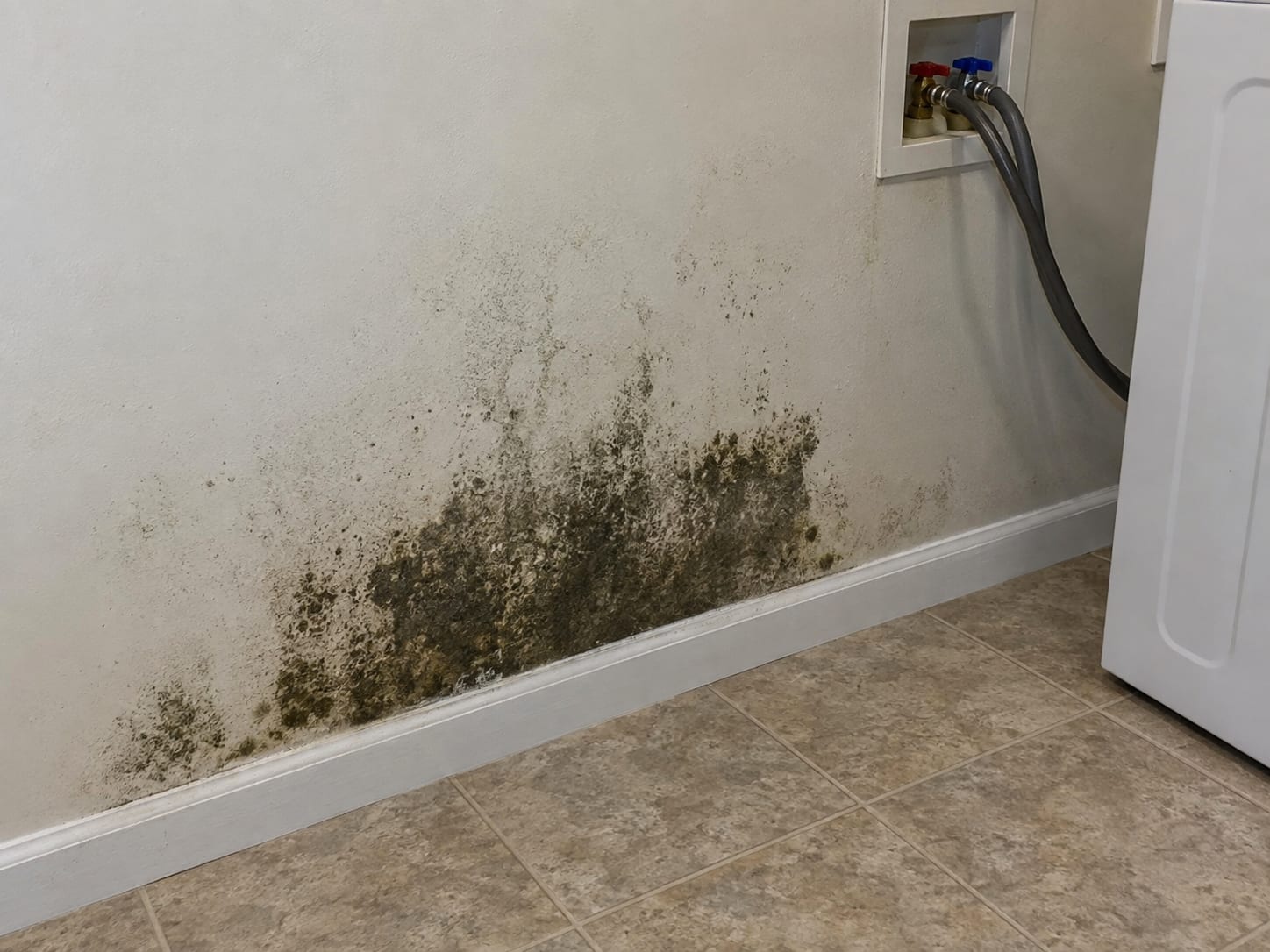
Size is not the only trigger. Growth that could be hidden behind finishes, materials that stayed wet for more than 48 hours, a musty odor, occupants with health concerns or a possible HVAC connection all point toward a professional assessment. Sewage or floodwater is a professional job, and EPA says contaminated water calls for extra protective measures.
Hover or tap a row to highlight it.
| Affected area | What EPA generally calls for |
|---|---|
| Under 10 square feet | A small area |
| 10 to 100 square feet | A medium area, generally with limited containment, which means sealing off the work area |
| Over 100 square feet, or any job with significant exposure potential | Full containment |
One point changes what you should do. "Black mold" describes a color. EPA says it is not a species or a specific kind of mold, and CDC says people do not need to know the type before removing mold and fixing the moisture problem. So the color should not decide whether you are worried, or how worried you should be. Moisture and extent decide the work: how wet the material is, where the water came from, and how far the growth reaches.
When Should You Check the Basement and Attic in Bridgewater?
Rain is the reason. A Bridgewater Township rain station 0.9 miles northeast of the township reports NOAA 1991 to 2020 normals through CoCoRaHS that total 49.17 inches a year. The wettest months are July at 5.03 inches, June at 4.56, August at 4.55 and September at 4.37. Those are regional climate normals from a nearby station, not a forecast for your street, and they are not a schedule for when mold appears. What they do give you is a calendar for checking the places water gets in.
Hover or tap a row to highlight it.
| Month | NOAA 1991 to 2020 normal |
|---|---|
| July | 5.03 inches |
| June | 4.56 inches |
| August | 4.55 inches |
| September | 4.37 inches |
| Full year total | 49.17 inches |
- The basement: Heavy rain can send water through foundation seepage. After a wet stretch, look at the lower walls, the floor edges and anything stored against a wall.
- The attic and top-floor ceilings: Roof and flashing leaks show up as staining after storms. Look up after a heavy rain and check the underside of the roof and the ceiling below it.
- Bathrooms, kitchens and laundry areas: Plumbing failures do not depend on the weather, but slow drips can go unnoticed for weeks. Check under sinks and around fixtures.
Water can also enter through river or tributary flooding, drainage overflow, condensation and frozen or burst pipes. Whatever the route, mold control depends on moisture control. If you find a leak, dry the area and correct the source; our 24-hour water damage response covers the water side when a plumbing or roof event is active.
How Does Professional Black Mold Removal Proceed, and How Long Does It Take?
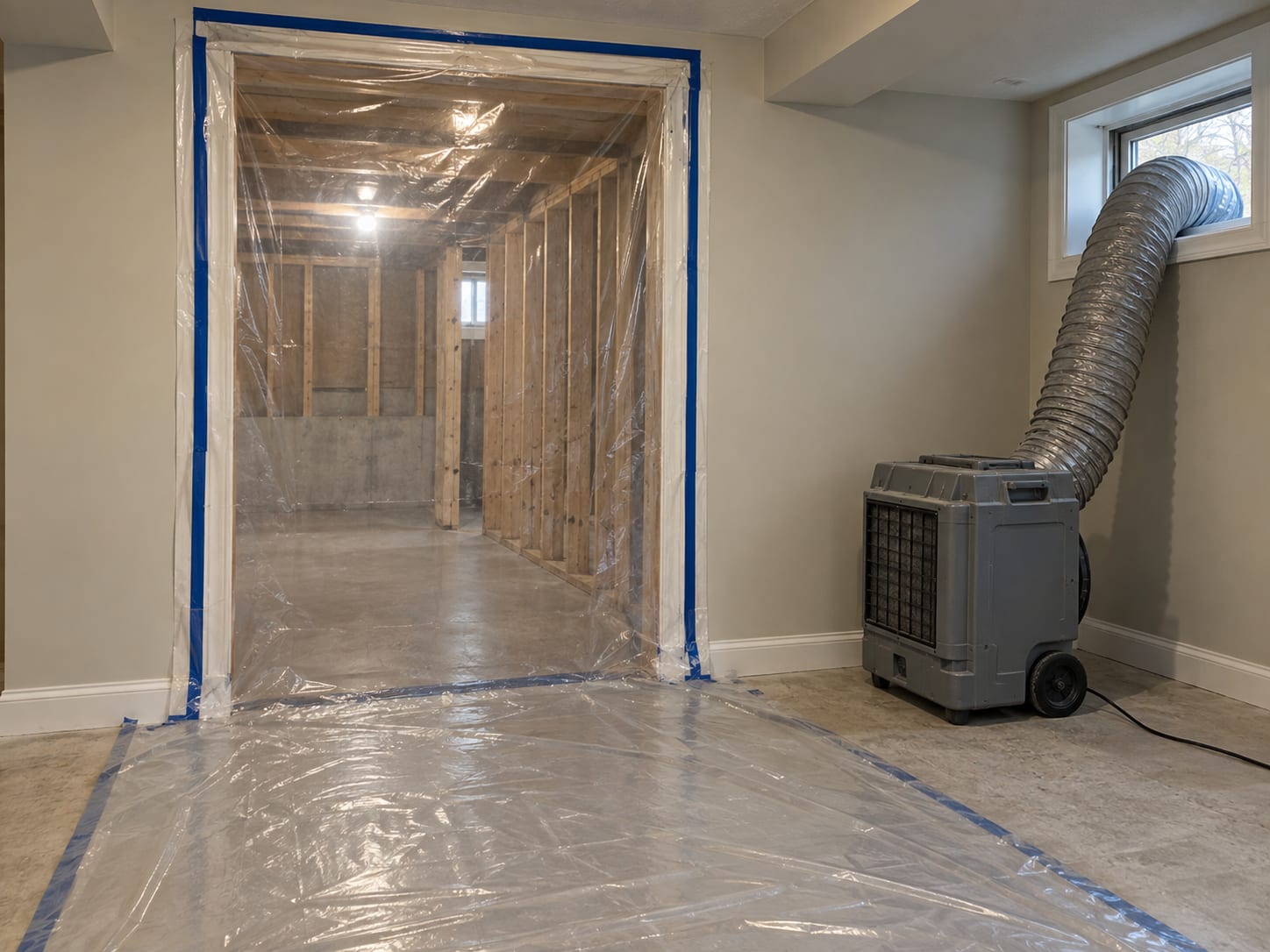
The job follows the moisture. A crew starts with a moisture and visual assessment, then identifies and corrects the water source and works out which materials are affected and whether growth has spread out of sight. Next, the work area is contained to protect the rest of the building, and porous materials that cannot be adequately cleaned are removed. Salvageable surfaces are cleaned or treated, and the structure is dried. Where the HVAC system may be involved, it is evaluated. The last steps are post-remediation verification or other closeout documentation, and rebuilding after clearance and required repairs. Our black mold removal page covers these steps for our own jobs.
Time depends on the size. By our own published figures, a contained single area usually takes one to three days of active work, and larger projects with several rooms or substantial material removal take five to ten days. Contained residential projects generally move from inspection to cleared post-remediation testing within several days to two weeks, and laboratory results and reconstruction can add time. Those are our practice ranges and not a Bridgewater standard, so ask any company for a written schedule for your property.
How Professional Black Mold Removal Proceeds
- 1
Moisture and visual assessment
The job follows the moisture, so a moisture and visual assessment comes first.
- 2
Correct the water source
Identify and correct it, then work out which materials are affected and whether growth has spread out of sight.
- 3
Contain the work area
Protect the rest of the building while the work is done.
- 4
Remove what cannot be cleaned
Porous materials that cannot be adequately cleaned are removed.
- 5
Clean or treat what can be saved
Salvageable surfaces are cleaned or treated.
- 6
Dry the structure
The space is dried, and where the HVAC system may be involved, it is evaluated.
- 7
Verify and close out
Post-remediation verification or other closeout documentation.
- 8
Rebuild
Rebuilding follows clearance and any required repairs.
What Does Black Mold Removal Cost in Bridgewater?
There is no verified Bridgewater average or New Jersey average to quote, so the honest answer is a set of drivers and a request. Our published range is about $500 to $7,000 or more, with an advertised average near $2,500. That is our own contractor data. It is not government or academic data and it is not a Bridgewater price promise.
Hover or tap a row to highlight it.
| Item | Our published range |
|---|---|
| A contained single area, active work | One to three days |
| Larger projects with several rooms or substantial material removal | Five to ten days |
| Contained residential job, inspection to cleared post-remediation testing | Several days to two weeks, with laboratory results and reconstruction adding time |
| Cost range | About $500 to $7,000 or more |
| Advertised average | Near $2,500 |
What moves an actual estimate, according to EPA's remediation guidance and our own experience, is the total area, whether growth is visible or hidden, the type and porosity of the affected materials, how many drywall, insulation, carpet or flooring pieces must come out, access in basements, crawl spaces, attics and wall cavities, floodwater or sewage, HVAC involvement, containment and filtration, correction of the moisture source, drying time, testing or verification, disposal and reconstruction. Insurance documentation and coordination add time on some jobs, and multifamily or commercial scheduling adds more.
What Moves a Mold Estimate
Area and visibility
The total area, and whether the growth is visible or hidden.
Materials
The type and porosity of what is affected, and how many drywall, insulation, carpet or flooring pieces must come out.
Access
Basements, crawl spaces, attics and wall cavities.
Water type and HVAC
Floodwater or sewage in the loss, and whether the HVAC system is involved.
The work itself
Containment and filtration, correcting the moisture source, drying time, testing or verification, disposal and reconstruction.
Paperwork and scheduling
Insurance documentation and coordination add time on some jobs, and multifamily or commercial scheduling adds more.
Ask for a written scope that separates assessment, containment, removal, drying, testing and rebuilding. That single request lets you compare three quotes on the same footing.
Do You Need a Permit, and Who Pays?
Bridgewater's Code Enforcement office says a construction permit is generally required when work constructs, enlarges, alters or demolishes a structure, or involves structural, electrical, plumbing or mechanical work. Its examples include finishing a basement, rearranging plumbing, installing electrical receptacles and repairing or replacing structural members. If the cleanup will lead to rebuilding that touches any of those, ask the township early. The zoning department is also a good first call. If the property is in a floodplain, the township's floodplain ordinance says a floodplain development permit or approval may be required in addition to a building permit, so review floodplain-related reconstruction with the township before work begins.
On qualifications, the New Jersey Department of Health says the state has no certification program for mold remediation companies, and that government offices have limited authority to cite owners for mold itself. Renters with an unrepaired leak are directed to the local building-code office. Ask any company for its insurance, training and the closeout documents it provides.
For coverage, New Jersey's homeowners policy summary says mold may be excluded unless it results from a covered loss, and gives mold from flood damage as an example that is not covered. Your own policy controls. Report the loss promptly, and keep photographs, dates, moisture-source information, affected materials, drying records, invoices, scope descriptions and repair records.
Frequently Asked Questions About Black Mold Removal Bridgewater NJ
Q: What is the average cost of mold remediation in New Jersey?
No verified statewide average is available. Our published range is about $500 to $7,000 or more, with an advertised average near $2,500, and the actual cost depends on scope, materials, access, drying, containment, testing and rebuilding.
Q: Will insurance pay for mold remediation?
It depends on the policy and the cause. Mold may be covered when it results from a covered loss, while mold from flood is an example of an exclusion. Report the loss promptly and review your declarations page and policy terms with the insurer.
Q: What permanently kills mold?
Cleaning or removing visible growth without fixing the moisture source does not solve the building problem. CDC says mold should be removed and the moisture problem fixed, and EPA emphasizes assessment, removal or cleaning, drying, containment and verification sized to the job.
Q: Is mold remediation worth the cost?
It matters most when moisture is ongoing, porous materials are affected, growth is extensive or hidden, the HVAC system may be involved, flooding or sewage occurred, someone in the home has asthma or another vulnerability, or the property is part of an insurance claim or sale. Base the decision on a documented scope and moisture correction.
Q: Will mold spread through the HVAC system?
It can, which is why a crew evaluates the HVAC system where it may be affected. Tell the company if the growth is near a vent, an air handler or a return.
Test Your Black Mold Knowledge
1. What does "black mold" describe, according to EPA?
2. What should you never mix bleach with?
3. What containment does EPA generally call for over 100 square feet?
4. What decides the work, according to the post?
5. What does the New Jersey Department of Health say about certification for mold remediation companies?
Pick an answer to begin.
Moving Forward
Tonight, stop the water if you can, keep vulnerable people away from the growth, photograph what you see and leave large or hidden growth alone. In the days that follow, use EPA's sizes to understand the scope, expect moisture and extent to decide the work, and ask for a written scope you can compare.
Acting on the source now protects your walls, your budget and your paperwork. A leak fixed this week is a smaller job than the same leak fixed next season.
If you have found dark growth in Bridgewater, NJ, we at ExecPro Restoration & Cleaning can assess the moisture source, contain the work area and remove what cannot be cleaned, then hand you the closeout documents. Call (888) 300-3772 or contact us with a photo and a description of where you found it, and we will tell you what happens next.
Black Mold Terms
Tap a term to see what it means.
Black mold. A color description. EPA says it is not a species or a specific kind of mold.
Serving Bridgewater
ExecPro Restoration & Cleaning provides mold remediation services in Bridgewater, NJ, from inspection and testing through removal, drying, and post-remediation verification. Call (888) 300-3772 for 24/7 emergency response.
Related Articles
Mold Removal in Bridgewater, NJ: What Comes Out and What Can Stay
Drywall, insulation, carpet and ceiling tile holding growth usually come out; hard surfaces can be cleaned. See what mold removal in Bridgewater, NJ involves.
Black Mold Removal in Trenton, NJ: Whether to Stay, What to Touch and What It Takes
Is it safe to stay in the house tonight? Get the size-based answer, what not to touch and what black mold removal in Trenton, NJ takes to do properly.
Black Mold Removal in Robbinsville, NJ: Dark Growth at Home or in an Older Workplace
Keep people out of the room until the size and the water source are known. See what to do about black mold removal in Robbinsville, NJ, at home or at work.