What Happens Next: Black Mold Removal in Plainsboro, NJ
Cal HewittPublished
- black mold removal
- containment
- remediation process
- plainsboro nj
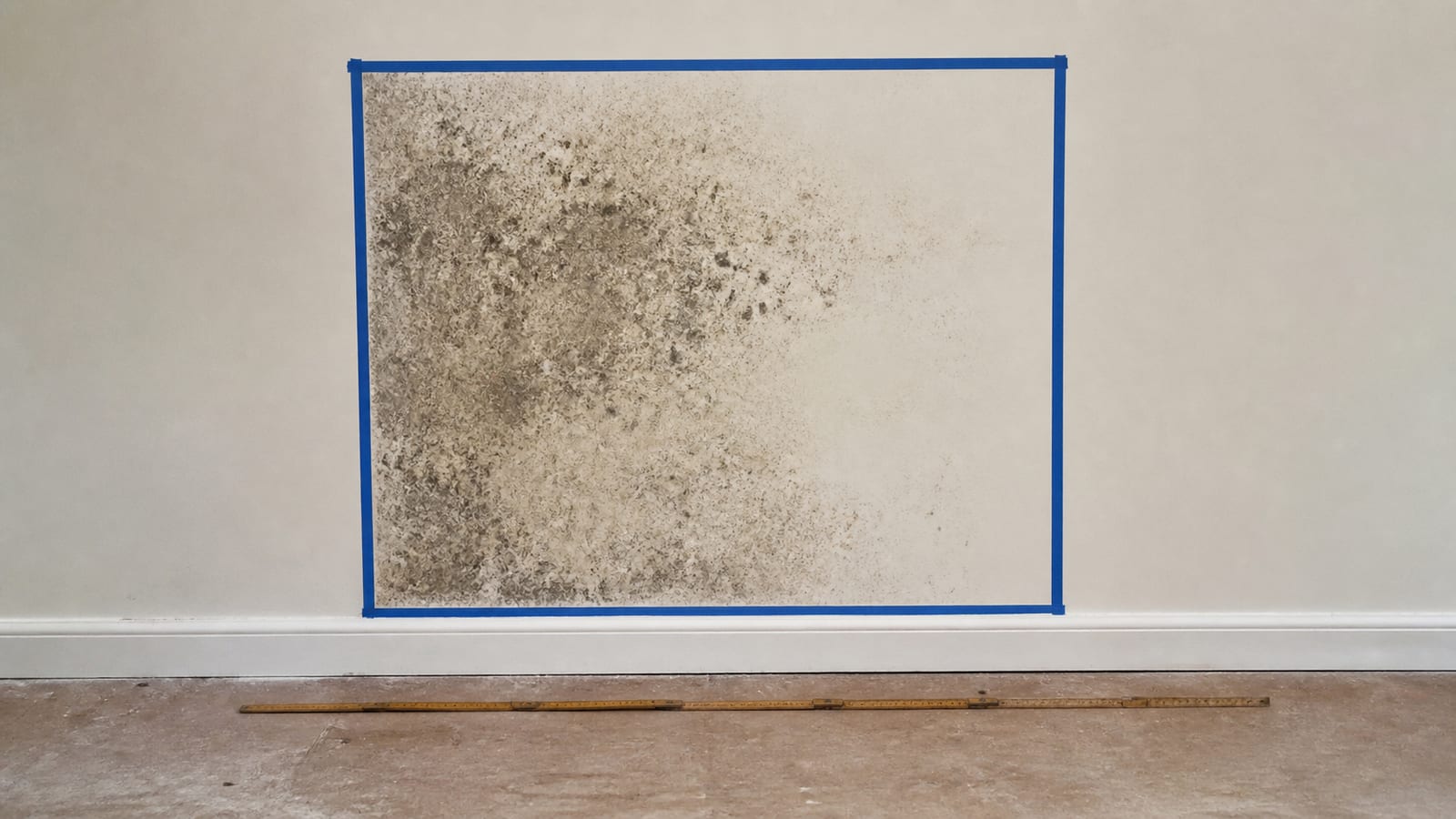
Two things decide how bad this gets: how long water keeps arriving, and how quickly somebody establishes how far it has already spread. Everything else, including what the growth looks like, matters far less than most people expect when they first find it.
So if you have just pulled a piece of furniture away from a wall and found something dark, this is the practical sequence. What to do today, what a crew actually does when it arrives, how long it takes, what drives the price, and how to stop it happening again in the same spot.
Key Takeaways
Act on the water first
Growth is the symptom. Until the moisture source is stopped, anything done to the surface is temporary.
Wet material has a short window
Federal guidance is to dry water damaged material within 24 to 48 hours, which is why a leak found today is a smaller job than the same leak found next month.
The visible patch is not the affected area
The mark is where growth reached a surface; the job is scoped from wherever material stayed wet.
Size drives the setup
Roughly 10 to 100 square feet generally calls for limited containment, and above that for more.
A small job can be a real do it yourself job
A small area, hard surface, clean water, source already fixed, with proper protection.
Removal is not the last step
The source repair and a verified dry reading are what stop it returning.
What To Do Today
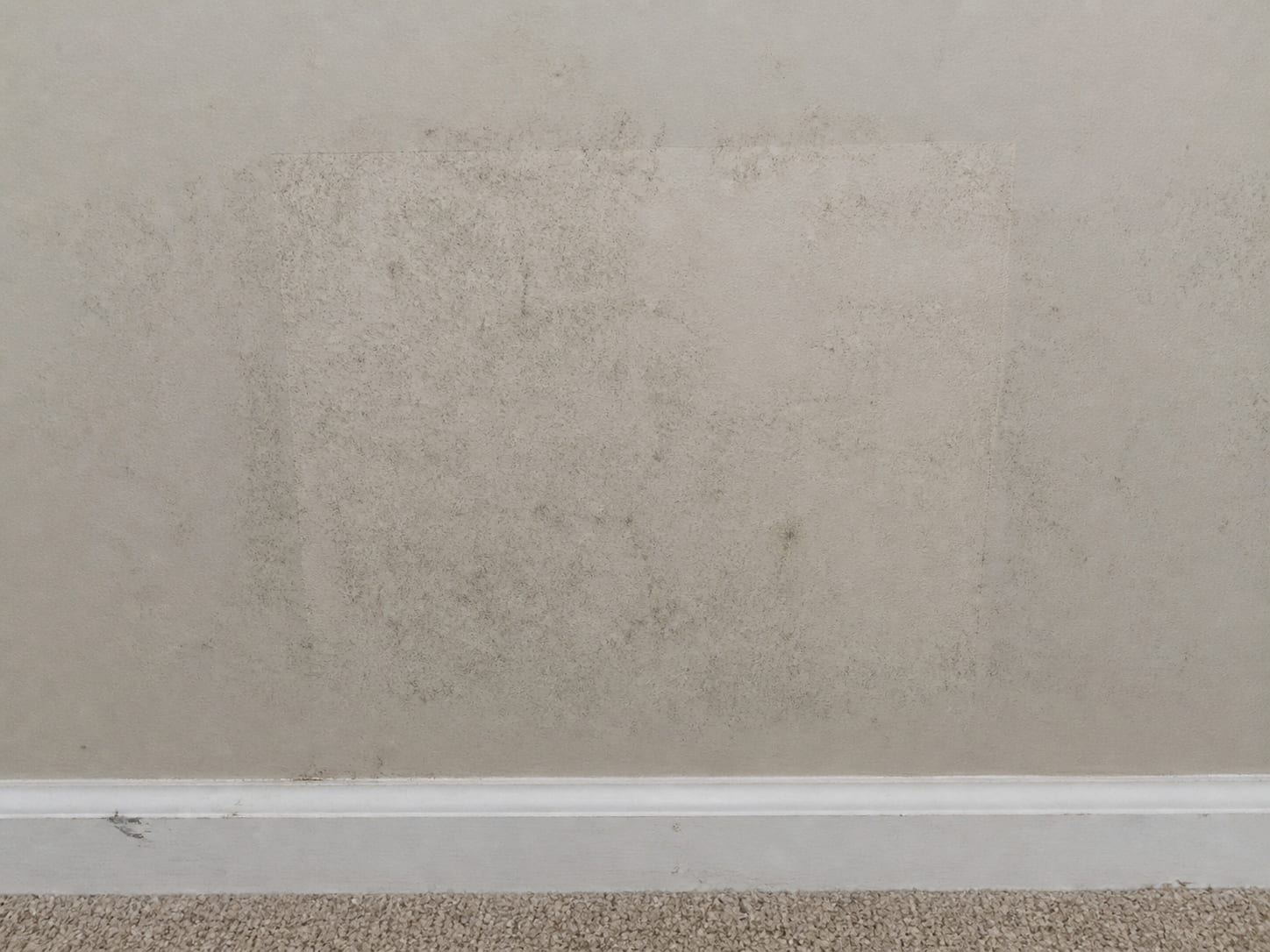
Do not spray it, wipe it, or paint over it yet. Those are the three things that make the next stage harder, because they disturb the material, destroy the record, and hide the condition without changing anything that caused it.
Instead: photograph it before anything moves, with a date. Look directly above and behind it for the water. Check whether the surface is damp now or only stained. If there is an active leak you can stop safely, stop it. Move absorbent contents away from the area. If anyone in the household has asthma, a mold allergy, immune suppression or a chronic lung condition, keep them out of that room, because CDC advises that people in those groups should not take part in cleanup.
Then decide whether this is yours to clean or ours to remove, which comes down to size, material and water source rather than anything about its appearance.
Signs It Is Bigger Than a Cleaning Job
- The affected area is larger than roughly ten square feet.
- The material is porous and stayed wet: drywall, insulation, carpet pad, ceiling tile.
- The wall or floor feels damp, or a moisture reading is elevated away from the visible mark.
- You cannot find the water source, or you found it and cannot reach it.
- The water may have been contaminated, from a sewer backup or from outside the building.
- It is on or near the heating and cooling equipment, ductwork, or a mechanical closet.
- It came back after somebody already cleaned it.
That last one is the most common call we get, and it is almost never about the growth being unusually stubborn. It is the moisture source still running.
What the Removal Actually Involves
A Removal, Step by Step
- 1
Find and stop the water
The source is established first, because a removal over a live leak is a temporary result. CDC's instruction pairs removing the mold with fixing the moisture problem.
- 2
Measure and document
Dated photographs, moisture readings at the affected material and at comparable dry material, and the affected area established by measurement.
- 3
Set the containment
Sized to the area, the density of growth and the water source. EPA generally recommends limited containment from roughly 10 to 100 square feet, built as a single layer of 6 mil fire retardant polyethylene with an entry flap.
- 4
Protect the rest of the building
The work area is isolated and the air handling system serving it is shut down rather than left running.
- 5
Remove what cannot be cleaned and dried
Porous material that stayed wet comes out, cut back past the wet line rather than to the edge of the stain.
- 6
Clean what stays
Sound, non porous surfaces are cleaned rather than replaced for appearance.
- 7
Dry the structure and verify it
Readings logged by location until they come down and hold, which is a number rather than a feeling.
- 8
Repair the source, then rebuild
The rebuild is its own phase, with its own permit question.
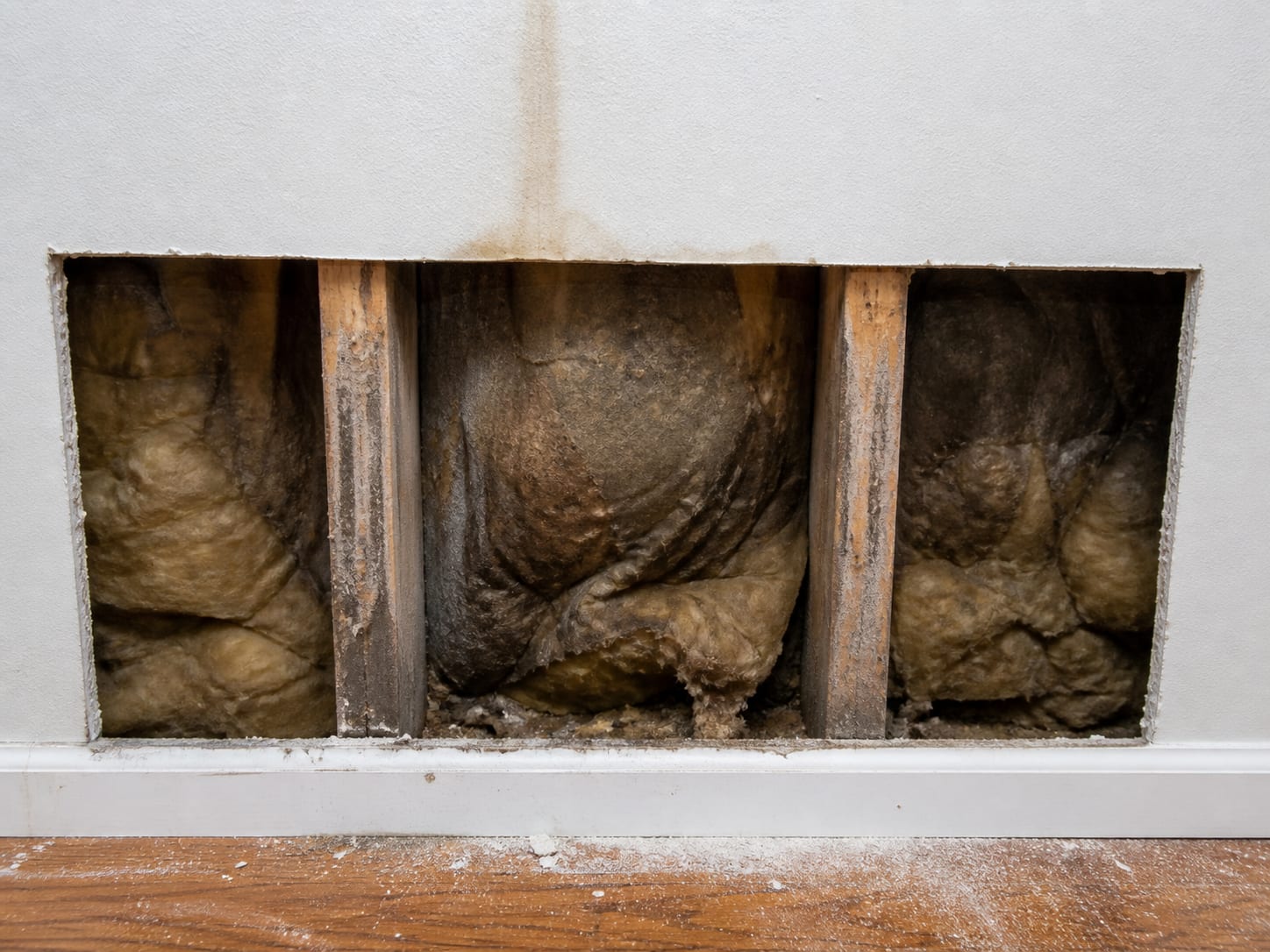
The part owners are most often surprised by is the cutting. A removal usually takes out more material than the visible mark, and that is deliberate rather than opportunistic. EPA's own material guidance says water damaged wallboard may be dried in place only where it is not visibly swollen and its seams are intact, and otherwise removed and replaced. Carpet and backing are to be dried within 24 to 48 hours and the subfloor beneath checked rather than assumed. Cutting to the edge of the stain leaves wet material inside the wall, which is how a properly performed removal still fails.
How Long It Takes
Nobody can give you a duration over the phone without seeing the building, and anyone who does is quoting a marketing number. What sets the schedule is how far the wet area extends once opened, how much material has to come out, what the water source was, how long drying takes to reach a stable reading, and whether reconstruction follows.
A useful way to think about it is three separate clocks. The removal itself is usually the shortest. Drying is measured in days and finishes when the readings say so. The rebuild afterward depends on materials and, where the work is regulated, on the permit. The 24 to 48 hour figures in the federal guidance describe how quickly to respond to wet material, not how long a whole project runs.
What Drives the Price
There is no published Plainsboro price range for this work, and a national cost per square foot presented as a local figure is invented. What can be described honestly is what moves the number, so you can read a quote properly.
The affected area and how densely the material is colonised set the containment level, which is one of the largest line items. Whether the material is porous decides removal against cleaning. Whether the water reached the subfloor or the inside of a wall cavity decides how much of the assembly comes apart. The water source decides the protective requirements, because contaminated water brings equipment, containment and disposal that clean water does not. Access matters, including moving contents and working around people who still live there. And the rebuild after removal is a separate trade with a separate budget.
When you compare quotes, ask each one to itemise the same list: the moisture investigation, the containment level and the reason for it, removal by material and area, the drying and how it will be verified, any testing along with the question it answers, the source repair, and the rebuild. Two bundled numbers are not comparable to each other.
What You Can Safely Handle Yourself
A small area, on a hard non porous surface, from a clean water source you have already fixed, is genuinely a homeowner job. CDC's cleanup guidance calls for at least a NIOSH approved N95 respirator, gloves and goggles, with more protection for more extensive removal. Water and detergent do most of what people expect bleach to do on a hard surface.
Two hard limits. CDC says people with allergies, immune suppression, underlying lung disease, asthma or COPD should not take part in cleanup at all. And never mix bleach with ammonia or with other cleaners, because CDC warns that combination produces a poisonous gas.
Leave it alone if the material is porous and stayed wet, if the water may have been contaminated, if the area is beyond that small band, or if you cannot find or fix the source. And do not paint over it. Painting hides the evidence you will need later without changing a single condition that produced the growth.
The Plainsboro Part: Who Can Actually Fix the Source
This is where a local job differs from the generic advice, and it is worth planning around before work is scheduled.
In a detached house one owner controls the roof, the plumbing, the grade and the mechanical equipment, so the source repair is one person's decision. Census figures put owner occupancy here at 47.7 percent for 2020 to 2024 across 9,853 households, and the township's January 2025 stormwater plan describes a built up municipality of 12.18 square miles at 1,977 people per square mile, with high and medium density residential alongside commercial and industrial land. In an attached or managed property, a roof, an exterior wall, a shared plumbing line or a common mechanical room can sit outside one resident's authority to repair. A removal inside the unit is durable only when somebody closes the water path, and that may not be you.
The same plan supplies the local water picture worth checking after a storm: five named streams inside the township, the Millstone River, Devils Brook, Shallow Brook, Bee Brook and Cranbury Brook, plus Carnegie Lake, with the Delaware and Raritan Canal on the western boundary and the Millstone on the southern. It records that flooding still occurs along Mapleton Road, Schalks Crossing Road, Dey Road, Maple Avenue and George Davison Road, and explains that connected impervious surfaces move runoff faster and raise peak flows.
None of that diagnoses a building, and the plan's flood prone mapping rests on FEMA data issued in July 2010. It is a reason to ask where water moved and whether the structure was dried afterward, rather than treating an interior stain as a purely interior event. Where a recent water event is behind it, emergency water extraction and structural drying come before any removal is scoped.
On permits, the cleaning and removal are not regulated construction here, and no stand alone mold permit requirement appears in the township's published material. The rebuild afterward often is. New Jersey's construction code separates full permit work, minor work and ordinary maintenance, and replacing drywall, altering framing or touching electrical, plumbing or mechanical systems can move a job across that line. Plainsboro's Building Division asks anyone unsure to contact them, which is a cheaper call before the rebuild than after.
One credential note worth having: the New Jersey Department of Health states there is no state certification programme for companies performing mold services, and that it does not endorse or qualify the firms on its informational lists. A certification badge is a private credential rather than state approval, so ask about scope, insurance, training, the source repair plan, and what part of the reconstruction needs code review.
Stopping the Next One
Most repeat problems in the same spot come down to four things, and all four are cheaper than a second remediation.
Fix the leak properly rather than drying the result of it. Keep indoor humidity down, particularly in summer and particularly in a below grade or closed up space. Dry anything that gets wet within that 24 to 48 hour window, including after a small overflow that seems harmless. And move water away from the building outside: gutters that discharge clear of the foundation, grade that falls away from the wall, and a clear path for surface water.
Where the source sits in a shared assembly or a common element, the prevention step is a written request to the owner or manager rather than a home improvement. Put it in writing, keep the copy, and follow it up.
Frequently Asked Questions About Black Mold Removal in Plainsboro NJ
How dangerous is it?
CDC's position is measured: exposure to damp and mouldy environments may cause a variety of health effects or none at all. Some people get a stuffy nose, sore throat, cough or wheeze, burning eyes or a skin rash, and people with asthma or a mold allergy may react more strongly, while immune compromised people or those with chronic lung disease may be at risk of lung infections. That is a real reason to deal with it promptly and not a reason to panic. Health questions belong with a clinician who knows the people in the house.
Do I need it tested first?
Usually not. CDC says it is not necessary to identify the type before removal, because all molds are treated the same way for removal purposes, and there are no health based indoor air standards to measure a result against. Color does not tell you the species or the risk either, which is why the scope is built from extent, material and moisture instead. Testing earns its cost for a defined question: a suspect location nobody can open, or documentation needed for a sale or a claim.
How fast can somebody come out?
For an active leak or standing water, treat it as an emergency and call rather than book. The reason is the drying window: wet material has 24 to 48 hours before the problem changes character, so the response time genuinely affects the size of the job. For growth that is already established and dry, a scheduled assessment is the right route.
Will it come back?
Only if the water does. That is the honest answer and it is why the source repair matters more than the cleaning. A removal that is verified dry and paired with a real source correction holds. A surface clean over a live leak reappears, usually in the same square foot.
Do I have to move out?
That depends on the extent, where it is, and who lives there, so it is a decision made from the actual conditions rather than a rule. What is standard is that the work area is contained and the air handling equipment serving it is shut down, so the rest of the building stays usable in most residential jobs. Anyone in the household in the higher risk groups CDC names should stay out of the work area regardless.
Will insurance cover it?
That depends entirely on the policy and the cause. State consumer guidance is that ordinary homeowners and renters policies generally do not cover flood damage and generally do not cover mold, and advises checking whether your policy covers mold resulting from a covered loss. Your declarations page and endorsements settle it. Photograph everything before it is disturbed, keep the moisture findings, the itemised scope and the invoices, and report promptly. Where a carrier is funding the work, insurance restoration services is where the scope and the paperwork have to agree.
Final Thoughts
The order that works is unglamorous: stop the water, measure the extent, contain the area, remove what cannot be dried, dry the rest to a reading, then repair the thing that let water in. Done in that order a removal holds. Done in any other order it is a cleaning with a delay built in.
What you should end up holding afterward is a record: what was found, how large it was, what was removed, how the drying was verified, and what repair closed the water path. That document is what an insurer, a buyer, a manager or the next contractor will ask for, and it is worth more than a certificate. The wider local picture is on our Plainsboro service area page, and the service itself is on our black mold removal page.
If you have found something and you want the extent established before anybody quotes a removal, ExecPro Restoration & Cleaning will measure it first. Call (888) 300-3772 or reach us through the contact page.
Removal Terms
Tap a term to see what it means.
Affected area. The full extent of material that stayed wet, normally larger than the visible mark on the surface.
Serving Plainsboro
ExecPro Restoration & Cleaning provides mold remediation services in Plainsboro, NJ, from inspection and testing through removal, drying, and post-remediation verification. Call (888) 300-3772 for 24/7 emergency response.
Related Articles
Black Mold Removal in Bridgewater, NJ: Scope, Safety and Cost After You Find It
Dark growth on a wall or ceiling: is it safe to stay tonight, what black mold removal in Bridgewater, NJ involves, and what drives the cost of the job.
Staying Open: Commercial Mold Remediation in Plainsboro, NJ
Commercial mold remediation in Plainsboro, NJ for buildings that cannot close: containment, out of hours sequencing, tenant access, cost drivers and records.
How Commercial Mold Remediation Works While a New Jersey Building Stays Open
Commercial mold remediation in New Jersey while tenants and staff stay: containment, after-hours phasing, notice, and the closeout documents to ask for.