Black Mold Removal in Alpine, NJ: What Happens Next
Cal HewittPublished
- black mold removal
- moisture source
- palisades
- alpine nj
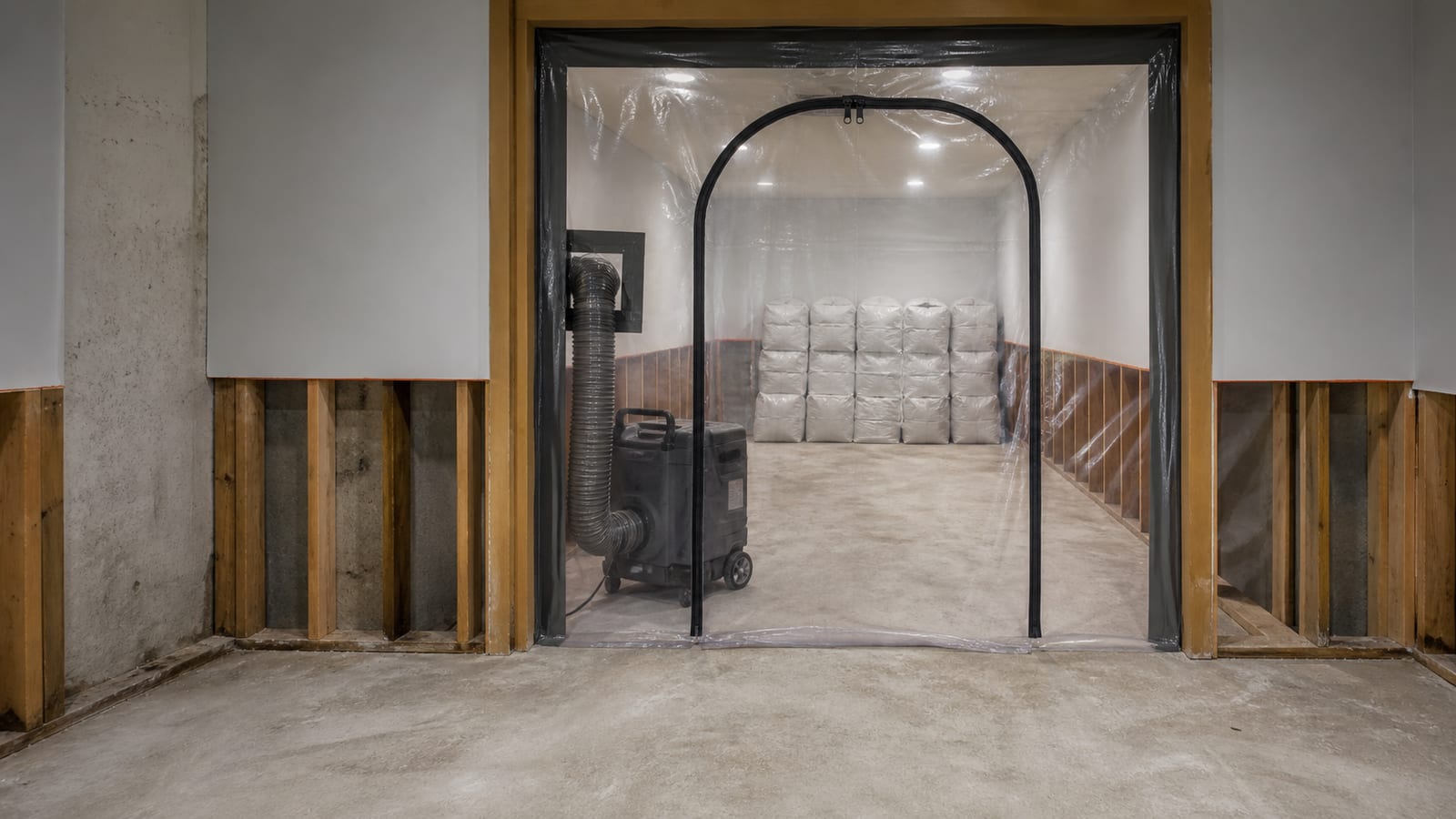
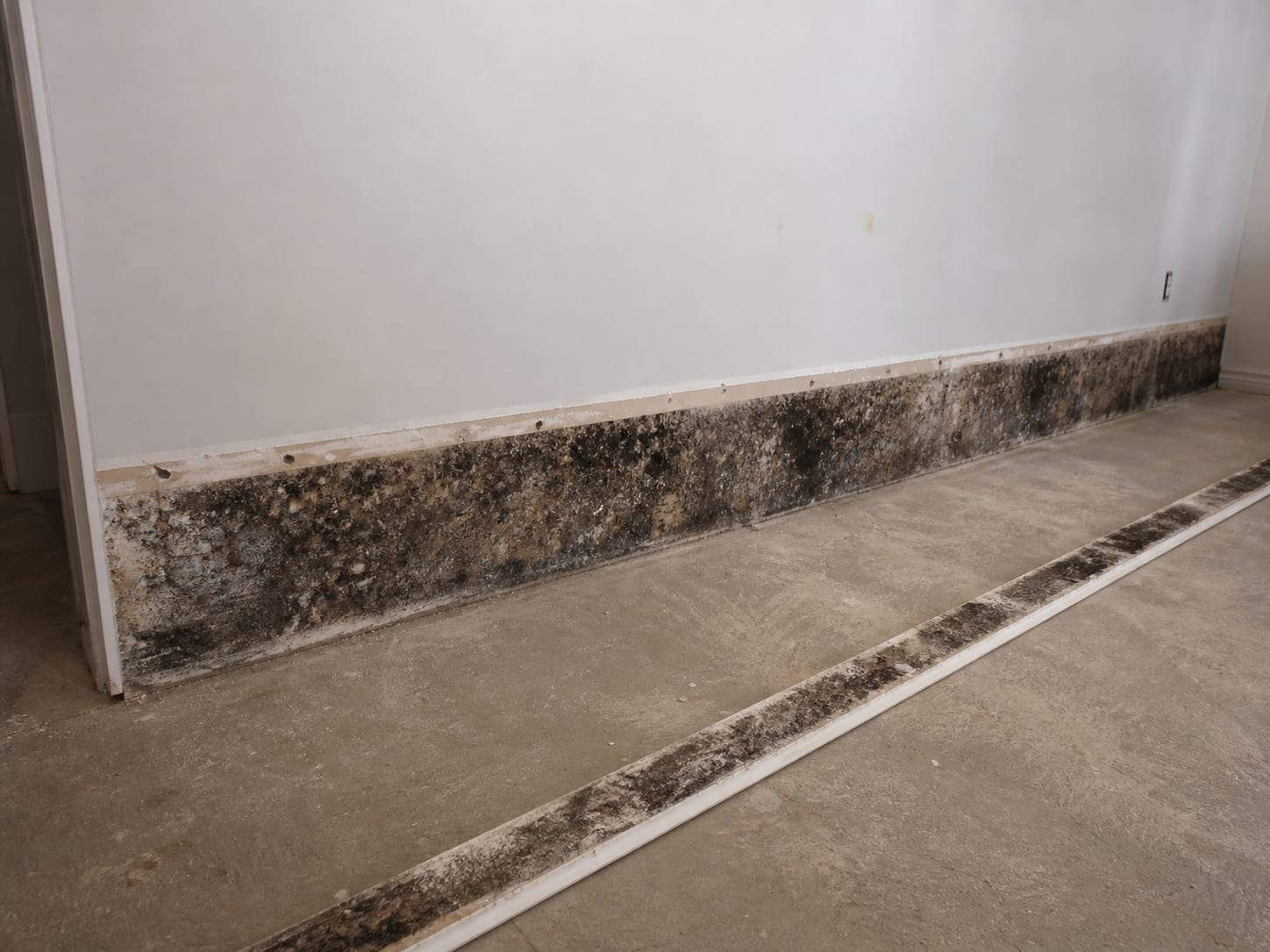
You have moved something away from a wall, or looked up at a ceiling, and found a spread of dark growth that was not there the last time you looked. The useful thing to know in the first five minutes is that this is a defined job with a known sequence, not a mystery. Somebody finds the water, the affected area is contained so the problem does not travel, the material that cannot be saved comes out, the space is dried to a measured standard, and the repair goes back.
The shade of it matters less than people expect, which is genuinely good news: it means nothing has to wait on a laboratory before the work can start. What decides the job is how much material is affected, whether it can be cleaned or has to be removed, and where the water came from. Our black mold removal page covers the method in general; this is what it looks like on an Alpine property, and what it will ask of you.
Key Takeaways
There is a sequence, and it starts outside the stain
Find and stop the water, contain, remove, dry, verify, rebuild. Skipping the first step is what makes a job repeat.
Speed matters at the start
EPA's guidance is to dry wet material within 24 to 48 hours, which is the window that decides whether this stays small.
Area sets the response
Under about 10 square feet is often a homeowner cleanup. Above 100 square feet calls for full containment and a professional scope.
Porous material usually leaves
Drywall, insulation and carpet that stayed wet come out. Hard surfaces can generally be cleaned and kept.
Growth damages the building itself
It rots wood and degrades studs, joists and drywall, which is a repair bill separate from any health question.
Alpine sets the calendar
Borough inspections run on published windows and construction hours are limited, so a permitted rebuild is scheduled around both.
Why This Is Worth Dealing With Now
The property case is straightforward and it does not depend on anything alarming. Federal guidance notes that unchecked growth damages furnishings, rots wood and damages drywall, and the state health department describes indoor mold degrading studs and joists as it feeds on building materials. Left alone behind a finished wall, a small removal becomes a framing repair, and a framing repair becomes a permitted construction project. The cost curve on this is steep and it is entirely avoidable.
There is a health dimension and it deserves plain language rather than either dismissal or drama. The state health department says it is not known how much mold is needed to cause health problems, and points to the individual and to the extent and conditions of growth rather than to any threshold. It names people with allergies, people with asthma or emphysema, very young infants and older adults as potentially at increased risk. If somebody in the house is in one of those groups, that moves this up your list. Persistent symptoms belong with a clinician rather than with a contractor.
The third reason is timing. Alpine's housing stock is small and mixed in age, 593 units at the 2020 Census with the state's community profile putting pre 1950 construction at 11 percent for 2016 to 2020, and older houses here have usually been renovated at least once. That matters because an old water event can sit concealed behind newer work for years, and the day somebody finds it is rarely the day it started.
Signs You Are Looking at a Removal Job
Some of what people find is a wipe down. Some of it is a scope. The difference is usually visible before anyone opens anything, and these are the signals that put a finding in the second category.
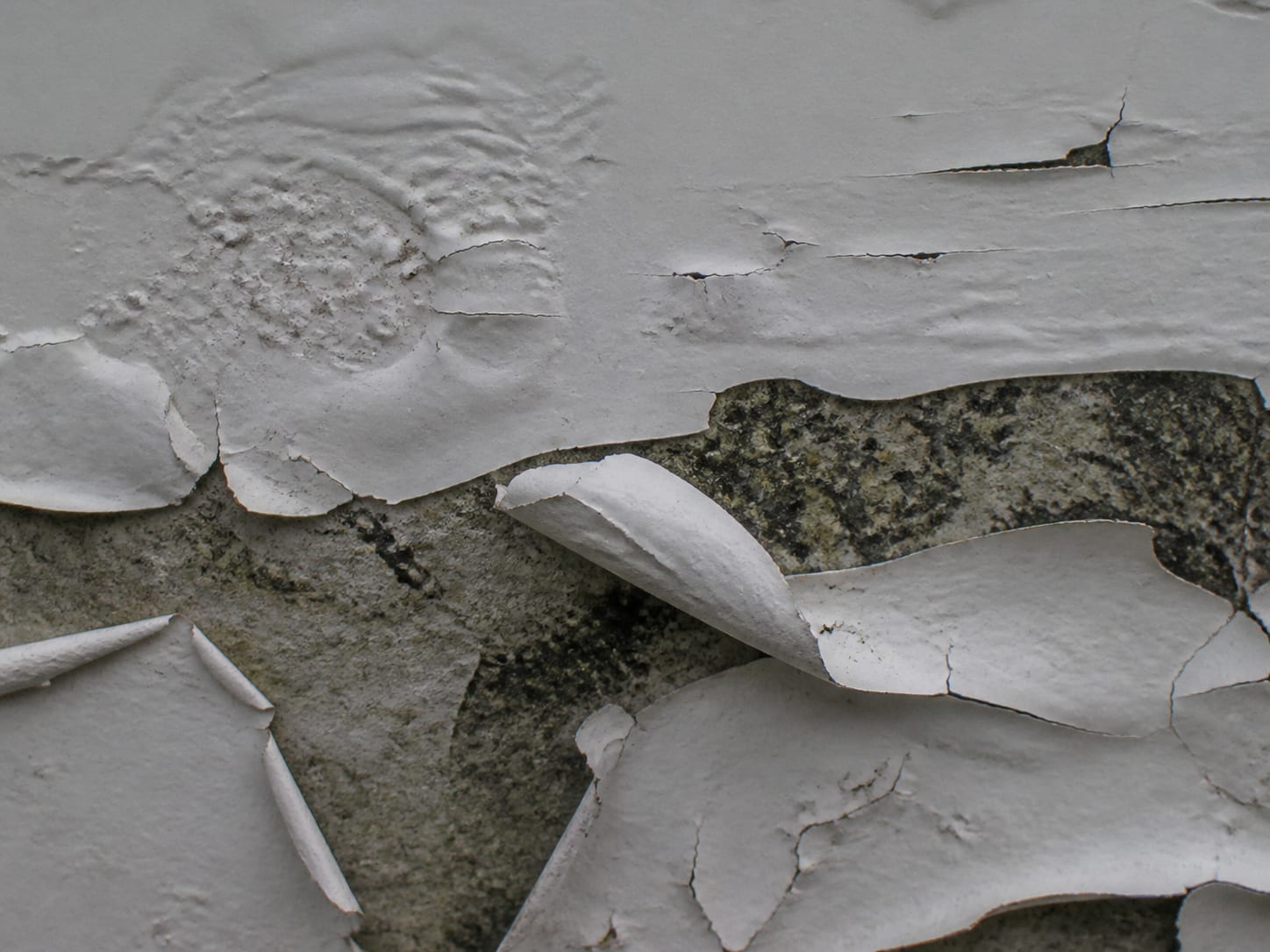
The patch keeps coming back after cleaning, which means the water is still arriving. The affected area is larger than a couple of square feet, or it appears in more than one place. There is a musty smell that persists in a room even when nothing is visible, which points at something concealed. The material itself is soft, stained through, or the surface is blistering, which means the substrate is involved rather than the finish. There is a known water history in that part of the building, a leak, a storm entry, an appliance failure, whether or not anybody thought it had dried. Or the growth is on or near the air handling equipment, in which case running the system moves the problem into rooms that were fine.
Any one of those is worth a documented mold inspection before money is spent on removal, because the scope depends on findings that a look from across the room cannot supply.
What Professional Removal Actually Involves
This is the part most homeowners have never seen, and it is worth knowing what you are buying. The work is not a strong product applied to a surface. It is a controlled sequence with a verification step at the end.
The Removal Process, Step by Step
- 1
Find the water
Trace the source, whether it is a plumbing failure, condensation, roof or envelope entry, or surface water reaching the building, and confirm the repair path before anything is disturbed.
- 2
Establish the extent
Determine what is actually affected, including behind finishes, and set the removal boundary from that rather than from the visible edge.
- 3
Contain the area
Seal the work zone and control the air so disturbed material stays inside it, sized to the affected area rather than applied out of habit.
- 4
Protect the rest of the building
Shut down the air handling system serving the area, cover routes and openings, and set the access path crews will use.
- 5
Remove and clean by material
Porous material that stayed wet comes out to a clean cut line; sound hard surfaces are cleaned in place and kept.
- 6
Dry to a measured standard
Run the drying with readings recorded per location until they reach and hold, rather than until the room feels dry.
- 7
Verify, then rebuild
Confirm the area is clean and dry and the source repair is complete before any finish goes back over it.
Two things in that sequence are where a cheap job and a real one separate. The first is containment: disturbing growth without controlling the area is how a problem in one room becomes a problem in four. The second is verification, which costs an afternoon and is the only evidence that the space actually reached dry rather than looking dry. Where drying is the substantial part of the work, structural drying is the phase that carries the schedule, and where the water arrived as an event rather than a seep, water damage restoration runs first.
What Moves the Cost
There is no published Alpine price for this and any number offered before somebody has seen the space is a guess. What a written scope should show you is the drivers, priced as separate lines, so you can see which parts are firm and which depend on what is found once material comes off.
The honest framing on price is that the cleanup portion is fairly predictable once the extent is known, and the two things that genuinely move a quote are the source repair and the rebuild. Those are the lines to read closely.
What You Can Handle Yourself
Plenty of this is a homeowner job and there is no reason to pay for what you can do. Federal guidance treats roughly 10 square feet as the scale a homeowner can usually manage, with the firm condition that the water source is fixed first or it simply returns. Above that, or where water damage has been extensive, the more protective framework applies and it is worth a professional.
Three things are worth avoiding whatever the size. Bleach is not the treatment: federal guidance does not recommend biocides for routine cleanup, dead growth can still cause an allergic reaction, and bleach must never be mixed with ammonia or other cleaners. Painting or sealing over it does not work, because guidance is explicit that material still wet or still showing growth should not be enclosed, sealed or painted, and the finish fails on its own timetable. And fixing the leak alone is not finishing the job, because the materials that got wet are still wet, and concealed spaces above ceilings and behind walls are exactly where that goes unnoticed.
What Alpine Adds to the Schedule
Cleaning itself is not a borough permit category. The moment removal turns into replacement that touches plumbing, electrical, structural or drainage work, the Construction Official's determination settles whether a permit applies, and getting that before the work rather than during it is what keeps a project moving.
If the job does reach permitted reconstruction, two local specifics shape the calendar. Inspections run on published windows: building and plumbing or mechanical on Tuesday and Thursday mornings, electrical on Tuesday and Thursday between 11:00 a.m. and 3:00 p.m., requested with the permit number, address and inspection type. And the borough limits construction hours to Monday through Friday from 7:00 a.m. to 6:00 p.m. and Saturday from 9:00 a.m. to 6:00 p.m., with no Sunday or legal holiday work, under an ordinance amended in December 2023. Officials can authorize work outside those hours in an emergency or for public health and safety, but that is a permission to obtain rather than to assume.
One more local point worth knowing before the first phone call. Where the source turns out to be drainage or septic rather than the building itself, the borough routes those through separate contacts, so naming the likely source early saves a week. On a sloped Alpine lot that is a live possibility: the borough has ordinances covering steep slopes, floodplain, wetlands and riparian zones, and the United States Geological Survey describes the New Jersey side of the Hudson here as a near vertical Palisades escarpment. A property on the upland and one below that escarpment have different water to manage, which is why the exterior assessment happens alongside the interior one rather than instead of it. The wider local picture sits on our Alpine service area page.
Keeping It From Coming Back
Recurrence has one cause, which is water that was never fully dealt with. The prevention list follows from that. Keep the grade falling away from the foundation and the roof discharge carried well clear of the wall, since on a sloped lot that is the cheapest correction available. Keep indoor humidity in a reasonable band and watch cool surfaces in the lower level, where air moisture condenses first. Deal with a leak the week it appears rather than the season it appears, using the 24 to 48 hour window as the standard. And after any water event, check the concealed spaces the health department names, above ceilings, behind walls, in the lower level and the crawl space, before anything is closed up.
Where removal has opened walls that need to go back, post mold remediation rebuild is the phase that restores the finishes, and it belongs after verification rather than alongside it.
Frequently Asked Questions About Black Mold Removal in Alpine NJ
How quickly do I need to act?
Quickly at the start, then at the pace the building sets. If material is currently wet, the guidance is to dry it within 24 to 48 hours, and that window is what decides whether this stays a small job. If the growth is established and the source is no longer active, a few days of careful assessment is better than a fast quote. What is not advisable is leaving it through a season, because it feeds on the building while it waits.
Should I test it to find out if it is toxic?
Usually not, and the reason is practical. The state health department's position is that a visual finding shifts the focus to correcting moisture and cleaning up rather than to testing, and the removal work is set by extent and material rather than by species, so a name typically changes nothing about what happens next. Testing earns its cost when growth is suspected but cannot be found, when a transaction or dispute needs documentation, or when an assessor has a specific question a sample can answer.
Can I clean it myself?
For a small area, often yes, provided the water source is fixed first. Federal guidance treats roughly 10 square feet as the homeowner scale. Above that, or where water damage has been extensive, containment starts to matter and a professional scope is the safer call. Whatever the size, skip the bleach, never mix cleaners, and do not paint over anything still damp.
Will we have to move out?
Usually not. Containment exists precisely so the rest of the house stays usable while the work happens in a sealed zone. Where the affected area is large, where the air handling system is involved, or where somebody in the household is in one of the higher risk groups, the answer should be given for your specific project rather than in general.
Will my insurance cover it?
That depends on the policy and the cause, and nobody can promise you an outcome. One thing is consistent: the state's insurance department says homeowners policies exclude water damage caused by flood. Beyond that, coverage for a leak, the resulting damage, the cleanup and the rebuild turns on your own policy and the facts. Photograph conditions before anything is disturbed, keep the moisture findings, scope, invoices and permits, and talk to your carrier before authorizing non emergency work.
How do I check that a company is qualified?
Ask what credential they hold and who issued it. New Jersey does not run a certification program for companies performing mold or indoor air work, and the Department of Health says so directly and does not endorse the firms on its lists, so a company describing itself as state certified for mold is describing something that does not exist. Real qualifications come through private training bodies and demonstrable experience, and a good contractor will name theirs specifically and show you a written scope before asking for a decision.
Final Thoughts
A dark patch on a wall is not a verdict on your house. It is a signal that water has been somewhere it should not be, and the work that follows is well defined: find the source, contain the area, take out what cannot be saved, dry the space properly, prove it is dry, then put it back. Most of the cost and nearly all of the risk of a repeat sit in the first step and the last one.
On an Alpine property the extra attention goes to where the water is coming from, because a sloped site moves water differently and the answer sometimes lives outdoors in grading and discharge rather than in the wall where the stain appeared. It also lives in a pipe often enough that nobody should assume either.
If you have found something dark behind a box, on a ceiling or along a lower level wall, ExecPro Restoration & Cleaning will trace the moisture route, tell you plainly what is affected and what is not, and give you a written scope that separates the cleanup from any repair the building actually needs. Call (888) 300-3772 or reach us through the contact page, and we can usually tell you a great deal from the water history before we arrive.
Terms Worth Knowing
Tap a term to see what it means.
Moisture source. The leak, condensation point, seepage path or past water event that put water into the material in the first place.
Serving Alpine
ExecPro Restoration & Cleaning provides mold remediation services in Alpine, NJ, from inspection and testing through removal, drying, and post-remediation verification. Call (888) 300-3772 for 24/7 emergency response.
Related Articles
Black Mold Removal in Trenton, NJ: Whether to Stay, What to Touch and What It Takes
Is it safe to stay in the house tonight? Get the size-based answer, what not to touch and what black mold removal in Trenton, NJ takes to do properly.
Black Mold Removal in West Windsor, NJ: How to Choose Who Does It
Found dark growth and about to hire someone? What to do first, why no state mold licence exists in New Jersey, and the checkable things that separate a real contractor.
Black Mold Removal in Warren, NJ: What Happens Next
Found dark mold in your Warren, NJ home? What black mold removal actually involves, what has to come out, what drives the cost, and how the water gets stopped.