The Lot Decides the Repair: Basement Mold Remediation in Alpine, NJ
Cal HewittPublished
- basement mold remediation
- below grade moisture
- palisades
- alpine nj
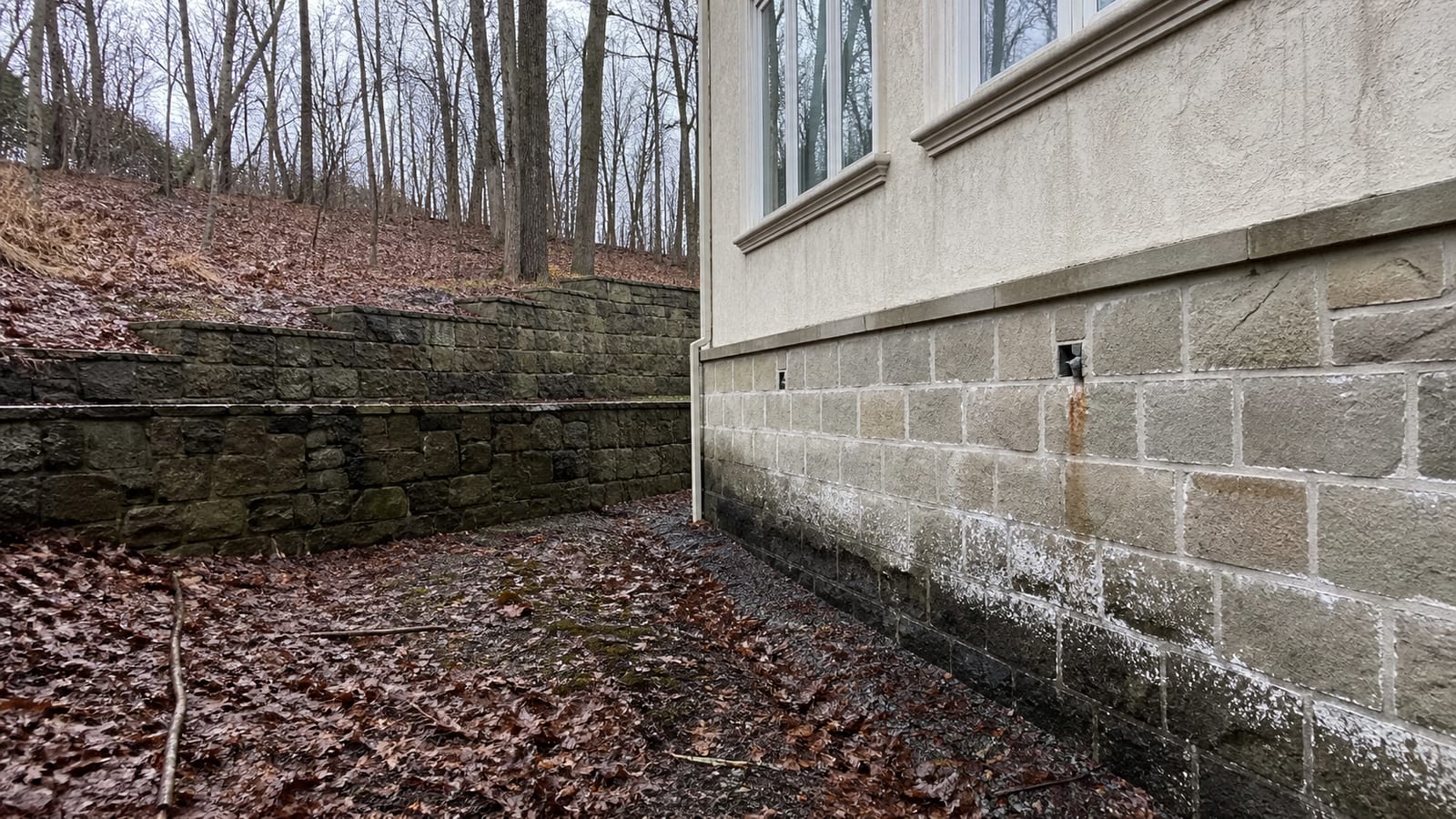
Cleaning mold off a basement wall is rarely the hard part of the job. The hard part is deciding what has to change so the wall stays dry, and in Alpine that decision has a habit of walking outside and landing on the lot itself. A regrade, a redirected downspout run, a drainage line or an excavation is a different kind of project here than it is in a flat subdivision, because the borough regulates what happens on sloped and environmentally sensitive ground.
So a lower level scope in this borough is really two questions stacked on each other. The first is the ordinary one every wet basement asks: where is the water coming from, and what did it soak. The second is local: if fixing it means touching the ground outside, what does that parcel allow, and is there a sale in the calendar that the work and the records need to clear. Answering both in that order is what keeps a basement from being cleaned twice.
Key Takeaways
Moisture is the condition, not the mold
EPA treats moisture control as the thing that controls mold, and says an unresolved water problem makes recurrence likely.
The 24 to 48 hour window is a prevention figure
It applies to drying a fresh wet event, not to a lower level that has been damp through two seasons.
Alpine housing is detached and mixed in age
Federal tabulation puts the borough school district at 515 households, 96.8 percent houses, with a third of structures built before 1970.
Exterior correction is a parcel question
The borough's code names slopes of at least 15 percent grade, wetlands and floodplains as features it seeks to preserve, and applies slope rules lot by lot.
Cleanup and construction are separate
Removing wet material is remediation, while plumbing, structural, mechanical or drainage work brings the Construction Code Enforcement Office in.
The resale certificate runs on a clock
Alpine's change of occupancy application is filed at least 20 business days ahead, which is the schedule documentation has to beat.
What the Housing Record Says, and What It Leaves to Your Address
The federal ACS-ED tabulation for the Alpine Borough School District describes 515 households, a housing mix that is 96.8 percent houses against 3.2 percent apartments and other, and a build spread of 33.5 percent before 1970, 50 percent from 1970 to 1999, and 16.5 percent from 2000 onward. That is a useful frame for a basement page. It says this is detached house territory, and it says the assemblies below grade span three eras of construction practice rather than one.
What it does not do is tell you what is under any particular house. Foundation type, whether the lower level is finished, how it was insulated and what has been done to the exterior since are all facts about your address, established by looking. The value of the townwide picture is that it stops anyone from writing an Alpine basement scope off a template, because a 1962 foundation and a 2004 foundation fail in different places and get repaired differently.
Two Directions, and Neither One Is Obvious From the Stain
Water reaches a lower level from outside or from inside, and the visible growth looks much the same either way. From outside, EPA describes water leaking in from around the building and water seeping up through basement floors as separate routes. From inside, the same agency notes that air moisture can condense on a cool slab and wet materials like carpet with no exterior water involved at all, and a supply line, a condensate line, a water heater or a washing machine can soak a room while the soil outside stays dry.
Establishing which one is happening is worth doing before anything is torn out, because the two corrections share almost nothing. Exterior entry points at grade, discharge, drainage and the wall assembly. An indoor source points at a trade repair or a humidity problem. A documented mold inspection is where those observations get written down in a form a scope can be built from, and where the boundary of the affected material actually gets drawn.
What Actually Sets the Scope
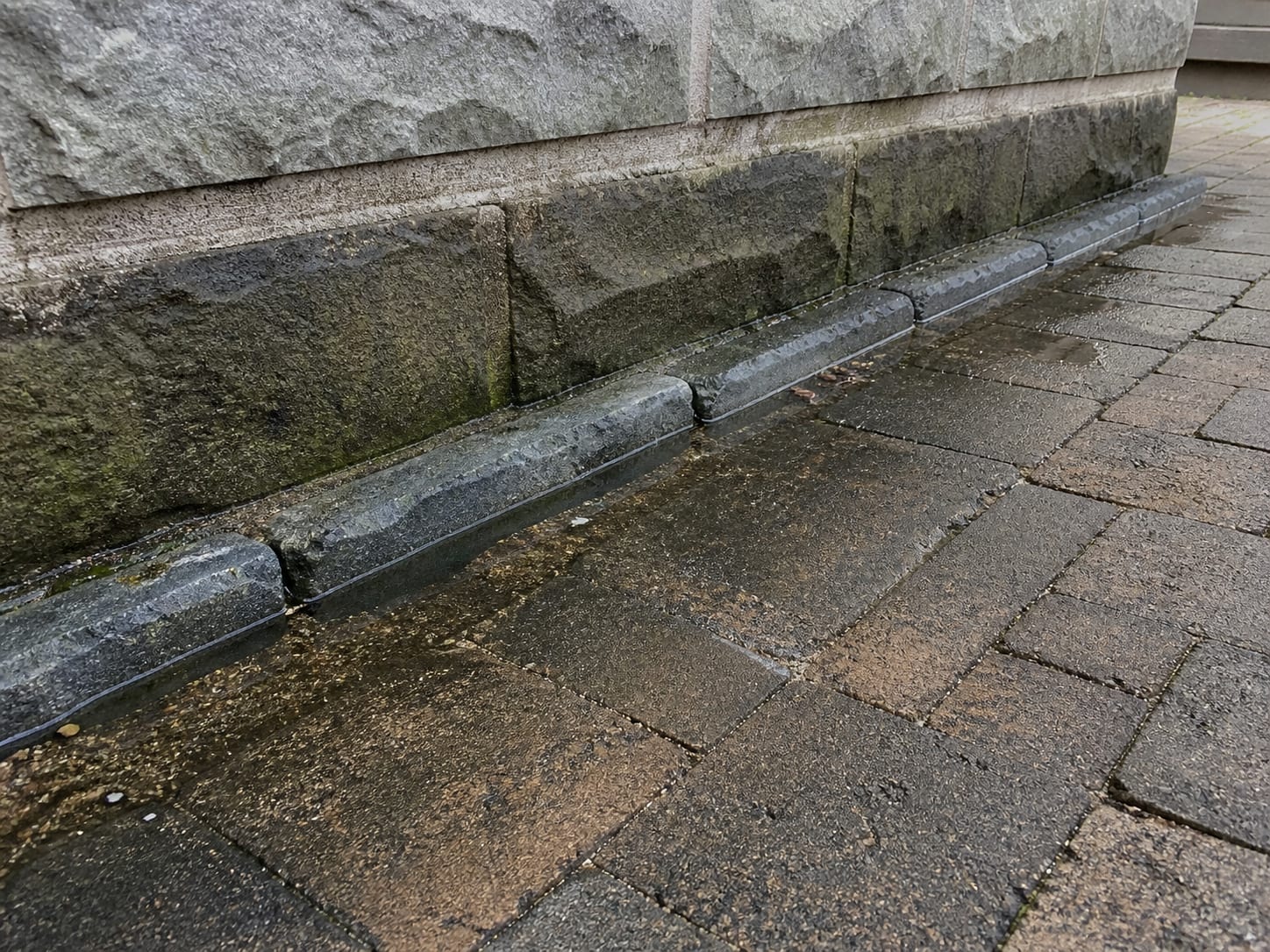
Two basements with a similar looking patch can carry very different projects, and the reasons are all measurable. EPA's guidance is that the larger the moldy area the greater the potential exposure and the greater the need for containment, generally putting limited containment at 10 to 100 square feet of contamination and full containment above 100 square feet. It also notes that heavy growth in a smaller area can warrant more control than the square footage alone suggests, and that water carrying sewage or other contamination calls for someone experienced with contaminated water.
The one thing that does not belong on that list is a price per square foot. What a written scope should show you is those lines separately: affected area, containment, drying, source repair and rebuild, each priced for what it is. Our basement mold remediation page sets out what the cleanup portion covers, which is the part that stays constant from one address to the next.
When the Fix Moves Outside, the Ground Starts Making Decisions
Alpine's zoning code identifies steeply sloped areas of at least 15 percent grade, along with wetlands and floodplains, as features the borough seeks to preserve. Slope rules are applied to each individual building lot in a development application, to new construction in a slope area of 15 percent or more, and to reconstruction after more than half a structure is destroyed where the footprint sits in such an area. The code itself observes that a number of sites in the municipality carry extensive environmentally sensitive features.
That is why an exterior source correction here is screened against the actual parcel rather than proposed off a walk around. Regrading toward a swale, cutting a drainage line, excavating along a foundation or rebuilding an exterior assembly are all site work, and site work on a regulated slope is reviewed. Alpine's site plan code adds a second trigger worth knowing about: where proposed work affects circulation, water supply, sewage disposal, drainage, landscaping or environmental factors, the Construction Code Official refers the application to the Planning Board for site plan review.
None of that means every Alpine lot is steep, wet or restricted. Plenty are not. It means the honest sequence is to establish the water route first, then look at what the property permits, and to price exterior work only after both are known. The wider local picture sits on our Alpine service area page, and where water has actively arrived rather than seeped, drying comes before any mold scope is written at all.
The Order a Lower Level Project Holds Together
- 1
Find the source
Trace the water to a route and a repair, because everything downstream is guesswork until this is settled.
- 2
Document the extent
Record the affected materials, including behind finishes and under stored contents, and set the cleanup boundary from that record.
- 3
Isolate before disturbing
Contain the work area first, since disturbing growth without control spreads it into rooms that were fine.
- 4
Remove or clean by material
Porous material that cannot be adequately cleaned comes out; sound hard surfaces are cleaned in place.
- 5
Correct the source
Complete the repair itself, whether that is a trade fix indoors or reviewed work outside.
- 6
Dry and verify
Bring the space to a documented dry standard rather than a dry appearance, with readings to show it.
- 7
Rebuild last
Put finishes back only after the area is clean, dry and verified, because a finish over an open route fails on the same schedule as the last one.
Timing follows that order rather than a promise. EPA's guidance to dry wet or damp materials within 24 to 48 hours is a prevention marker for a fresh event, and it earns its place at the top of a burst pipe or a storm entry. It is not a completion schedule for a basement that has been quietly damp since spring, where access, hidden wetness, a repair by another trade and material decisions set the real pace. Where drying is the heavy part of the work, structural drying is what establishes that the assembly reached dry rather than looking dry.
Where Cleanup Ends and a Permit Begins
Removing wet material is not by itself a construction project. New Jersey's Uniform Construction Code generally requires a permit for structural, plumbing, mechanical and electrical work on an existing building, and exempts ordinary maintenance and routine repair. The scope decides the question, not the fact that mold was involved. Alpine runs its own Construction Code Enforcement Office as the local intake and inspection point, and the state's general guidance gives a local office up to 20 business days after a complete application to release or deny it.
The practical version is simple. A contained cleanup and a dry down usually stays cleanup. The moment the project reaches a plumbing repair, a structural member, a mechanical change, an exterior drainage alteration or a rebuild of the finished space, it has become construction, and the Building Department is the office that decides what applies. Confirming that once, with the scope in hand, is faster than assuming it either way and being corrected at inspection. When removal opens walls that have to go back, post mold remediation rebuild is the phase where those permits usually land.
The Record, and the Alpine Resale Clock
Alpine added a certificate of continued occupancy for resale to its code on October 25, 2023, required where the transfer of an existing premises comes with a change in occupancy. The application goes in at least 20 business days before the proposed change, and the code official inspects within 10 business days of receiving a complete application with fees. That inspection covers visible parts of the property and apparent code violations or unsafe conditions.
It is not a mold test and it is not a clearance. What it does is put a date on the calendar that remediation records have to beat, because visible moisture, an open wall or unpermitted reconstruction are exactly the kind of thing a visual inspection notices. Separately, since March 20, 2024, New Jersey requires sellers and landlords to disclose specified known and potential flood risk information, which raises the value of having any water event in the property's history documented rather than remembered.
So keep the file as the work happens: dated photographs, moisture readings, the written scope, invoices, any permits and inspection results, and whatever verification was done at the end. Where a transaction is the reason for the work, home buyer and seller protection covers the wider documentation question, and where a record of conditions after cleanup is wanted, verification testing has a defined role. None of it guarantees a coverage decision or a smooth closing. It does mean the answers exist in writing when someone asks.
Frequently Asked Questions About Basement Mold Remediation in Alpine NJ
The mold is only on one wall. Why would that involve the outside of the house?
Because a wall is the last surface in the sequence, not the first. If water is arriving through soil against the foundation, at a cold joint, around a penetration or through a window well, the inside face of that wall is simply where it becomes visible. Cleaning it addresses what you can see. Whether the correction is indoors or out is settled by tracing the route, and that is a half hour with a moisture meter rather than a guess.
Do I need a permit to remediate mold in my basement?
Cleanup on its own generally does not require one. New Jersey's construction code requires permits for structural, plumbing, mechanical and electrical work while exempting ordinary maintenance and routine repair, so the answer follows the scope. Alpine's Construction Code Enforcement Office is the authority on a specific job, and a complete application is to be released or denied within 20 business days under the state's general guidance.
Can I regrade the yard to stop water reaching the foundation?
Sometimes, and it is often the cheapest correction available. In Alpine it needs checking against the parcel first, because the borough's code singles out slopes of at least 15 percent grade, wetlands and floodplains, and its site plan provisions send work affecting drainage or environmental factors to the Planning Board. Confirm what your lot allows before anyone quotes excavation or drainage work on it.
Does mold have to be tested before it can be removed?
Not usually, where growth is visible. EPA's position is that sampling is generally unnecessary in that situation, because the presence of mold is already established and the remediation does not change with the species name. Testing earns its cost when the source cannot be found, when there is an odor with nothing visible, or when documented conditions are needed after cleanup for a transaction or a claim.
Is a wet basement covered by homeowners insurance?
It depends entirely on the cause and the policy language. New Jersey requires insurers to tell homeowners that a standard policy does not cover flood damage and that separate flood insurance may be available, and every other water cause is read against the specific policy. A documented source, a condition history and an itemized list of affected materials get a claim reviewed on facts. No contractor can promise the outcome.
Should I wait until we sell to deal with it?
That order tends to cost more. The borough's resale inspection is a visible condition check with its own filing timeline, so a damp lower level or an open wall meets the inspector at the worst possible moment. Doing the diagnosis early leaves room to correct the source, dry the space properly and have the records assembled before the application is even filed.
Final Thoughts
An Alpine basement is usually two projects wearing one name. There is the cleanup, which is well defined work with published guidance behind it, and there is the source correction, which may sit indoors as a plumbing repair or may sit outside on ground the borough regulates. Deciding which one you actually have, before quoting either, is the difference between a lower level that stays dry and one that gets cleaned again next spring.
The other half is the paper. A file that names the water route, the affected materials, the correction, the drying verification and the line between cleanup and construction follows the property through later repairs, later claims and a sale. It is worth more than a general statement that the basement was treated, and it is far easier to build while the wall is open than to reconstruct afterward.
If your lower level is damp and you want to know whether the answer is behind the finish or out on the lot, ExecPro Restoration & Cleaning will trace it in order and tell you which one you are looking at before anything gets torn out. Call (888) 300-3772 or reach us through the contact page, and we will start with the water.
Below Grade Terms Worth Knowing
Tap a term to see what it means.
Below grade. Any part of a building sitting at or beneath the level of the surrounding soil, where water can press against it from outside.
Serving Alpine
ExecPro Restoration & Cleaning provides mold remediation services in Alpine, NJ, from inspection and testing through removal, drying, and post-remediation verification. Call (888) 300-3772 for 24/7 emergency response.
Related Articles
Where the Water Went: Air Quality Testing in Alpine, NJ
A sample is read against that day's outdoor air, and on a sloped Alpine lot the more useful question is usually where the water got in.
Above the Hudson, Below the Roof: Attic Mold Remediation in Alpine, NJ
An Alpine attic problem is a moisture source question and an access question. The Palisades setting changes how you get to the roof, not what wet the wood.
Two Elevations, One Question: Mold Remediation in Alpine, NJ
A house on the ridge and a structure at the river edge are different problems wearing the same word, and neither location tells you where the water in a particular wall came from.