Leak or Condensation: Attic Mold Remediation in Plainsboro, NJ
Cal HewittPublished
- attic mold remediation
- ventilation
- condensation
- plainsboro nj
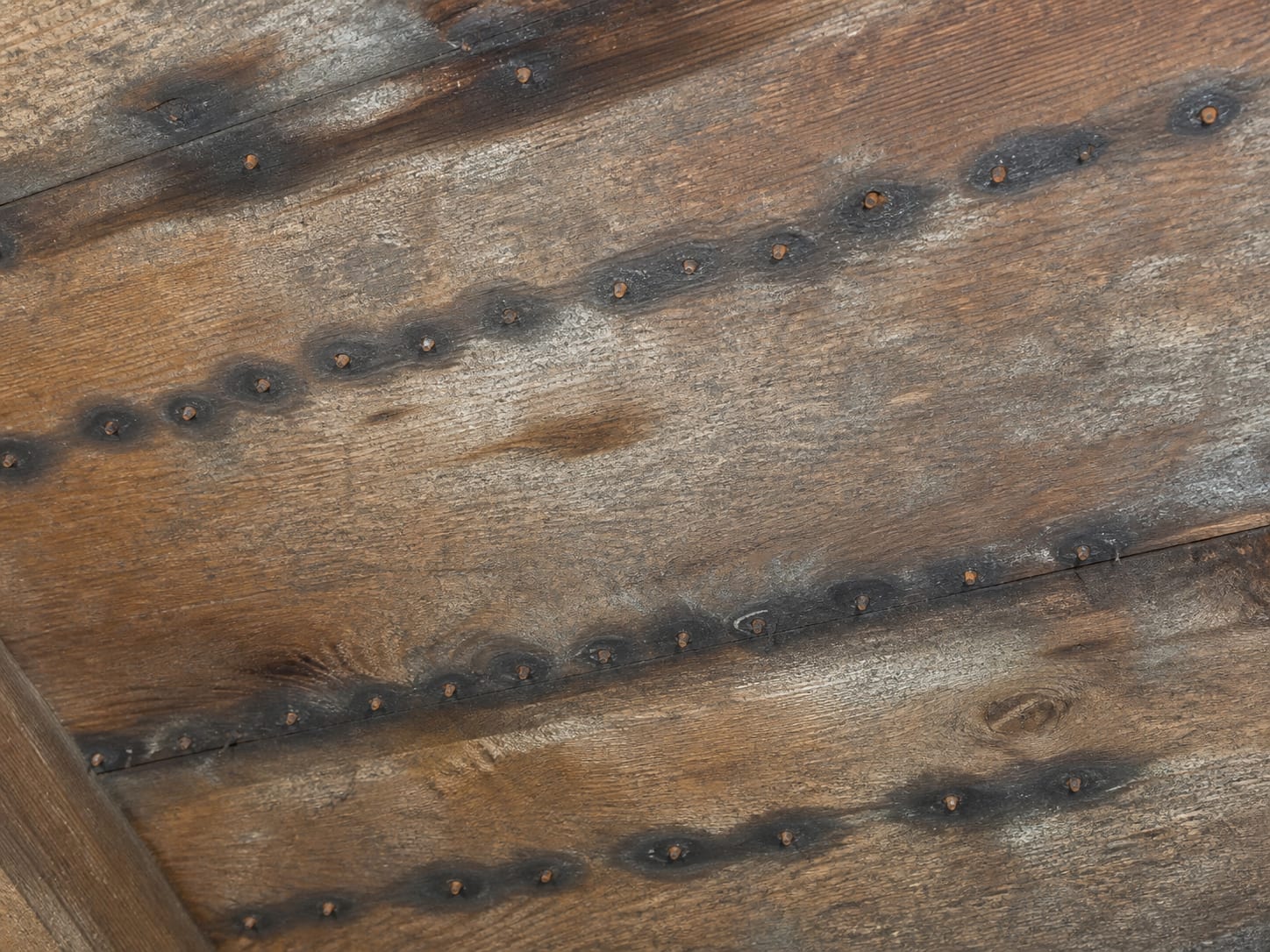
Dark staining on the underside of a roof deck is one of two things, and telling them apart is most of the job. Either water is coming in through the roof, or warm damp air from inside the house is rising into a cold attic and giving up its moisture on the sheathing. The repair for one does nothing at all for the other, which is why attics get cleaned twice by people who only had the problem once.
This is how to work out which one you have, what removal actually involves, what it costs, and why the cheapest looking option, painting over it, is the one that comes back.
Key Takeaways
Leak and condensation look similar and need opposite repairs
One is a roofing job, the other is a ventilation and air sealing job.
The staining pattern usually tells you which
A leak concentrates near a penetration; condensation spreads broadly and favours the coldest surfaces.
Much of the diagnosis happens outside the attic
From the room below and from the ground, because the attic is often not a space anyone can stand in.
Dead mold is still allergenic
EPA is explicit, which is why killing or coating it is not the same as removing it.
Cleaning is the final step, not the first
EPA puts HEPA vacuuming after the contaminated material is removed and the area is dried.
Permit fee here is published
$20 per $1,000 of estimated work for renovations, alterations and repairs to one and two family owner occupied structures.
Working Out Which One You Have
You can get most of the way to an answer before anybody quotes anything.
A roof leak concentrates. It shows around something: a plumbing vent, a chimney, a dormer, a valley, a nail line, a skylight. The staining has a source you can point at, it often runs downward from that point, and there is usually a matching mark on the insulation directly below it. It may show only after certain kinds of rain, particularly wind driven rain from one direction.
Condensation spreads. It appears across several rafter bays rather than at one point, it favours the coldest surfaces, and it is often worst on the north facing slope and near the eaves where the sheathing runs coldest. It is a winter problem that gets discovered in spring. Nails protruding through the sheathing frequently show it first, because a metal nail is colder than the wood around it.
Both at once happens, and is worth naming because fixing only the leak on a house that also has a ventilation problem produces a partial result that reads as failure.
The mechanism behind the second one is worth understanding, because it is the one people find counterintuitive. Warm air holds more moisture than cold air. Every shower, every kettle, every load of laundry puts water into the air in the house. That air rises, and if there are gaps around light fittings, the loft hatch, plumbing penetrations or the top plates of walls, it goes into the attic. When it hits sheathing that is at outdoor temperature in January, it drops its moisture there. Nothing is leaking. The house is doing it to itself.
Why the Assessment Happens From Below and Outside
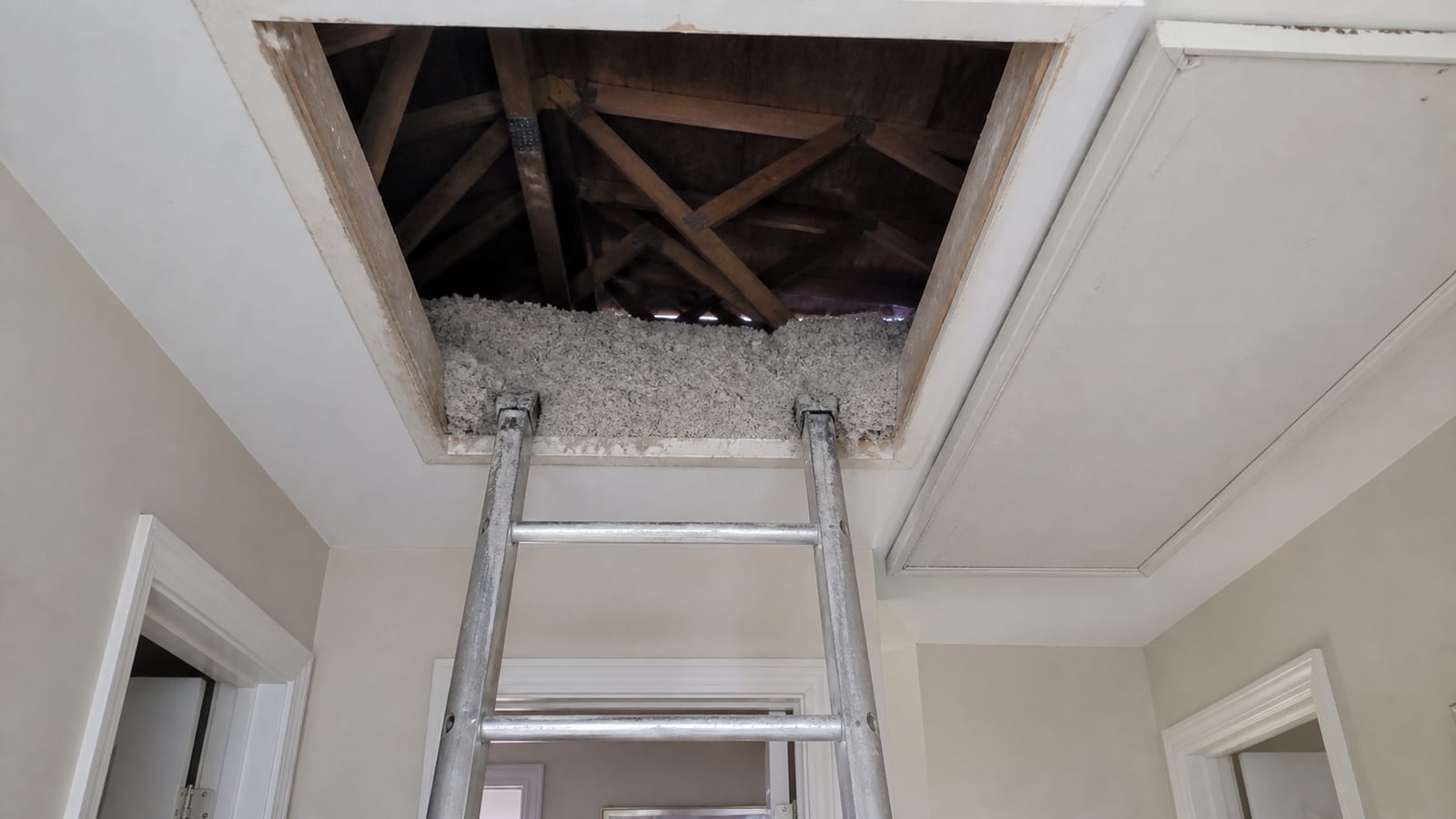
Plenty of attics here are not walkable. Blown insulation sits deep over the joists, so there is no floor, and stepping in the wrong place puts a foot through a ceiling. That constraint shapes the whole assessment, and a good one works with it rather than pretending otherwise.
From the room below: stains on the ceiling, the condition around light fittings and the hatch, where the bathroom fans actually discharge, and whether the ceiling feels cold in patches.
From the ground outside: whether there are soffit vents and a ridge vent, whether the roof has valleys or penetrations near the affected area, the condition of flashing where it is visible, and which slope faces north.
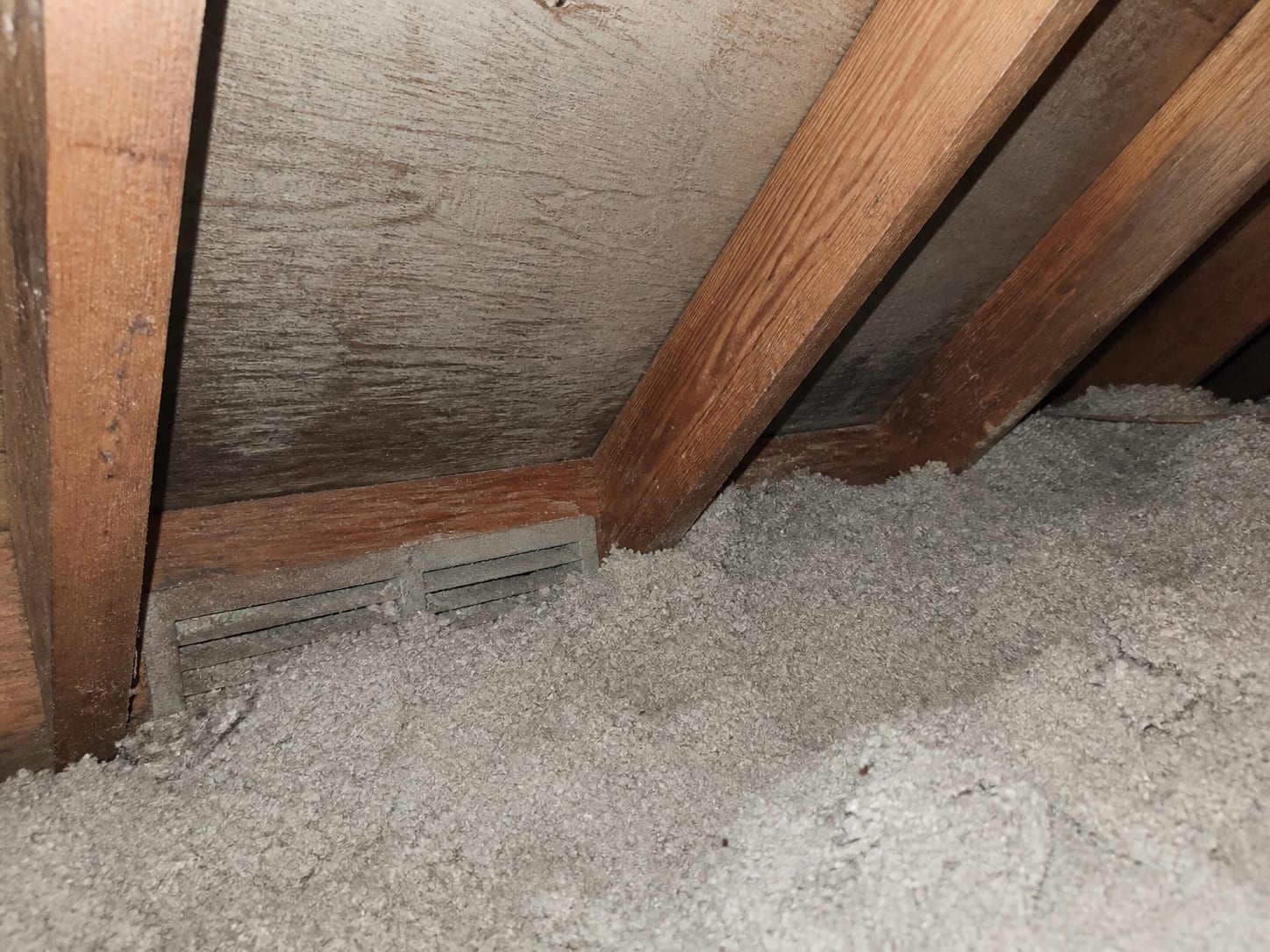
From the hatch: the pattern of staining across the bays, whether the insulation is compressed into the eaves and blocking the soffit vents, whether daylight is visible at the eaves, and whether any duct is discharging into the space rather than through the roof or wall.
That is often enough to name the source with confidence before anybody crawls anywhere.
What the Work Involves
An Attic Remediation
- 1
Identify the moisture source
Leak or condensation, or both. EPA's sequence starts with the moisture problem and the affected area, and the New Jersey health department's guidance is that an unexplained problem should prompt an inspection to find the excess water.
- 2
Establish the extent
Which bays, how much surface, and whether the insulation below is wet.
- 3
Set the containment
EPA generally calls for limited containment at 10 to 100 square feet and full containment above 100, with material type, hidden growth and sensitive occupants justifying a more conservative approach.
- 4
Remove what cannot be cleaned
Wet or contaminated insulation comes out. Sheathing and framing are normally cleaned and kept.
- 5
Clean the structure
Surface treatment of the sheathing and framing to remove growth rather than colour it.
- 6
Dry and verify
The attic has to be dry before anything closes it up.
- 7
HEPA vacuum as the final step
EPA places this after removal and drying, not as the job itself.
- 8
Fix the source
Roof repair, or ventilation and air sealing, or both. This is the step that decides whether you are back next year.
The last item is the one that gets skipped, and the reason it matters is a fact worth carrying: EPA states that the moisture source must be resolved because dead mold remains allergenic. That single sentence disposes of a whole category of cheap fixes.
About Painting Over It
Encapsulant paint is a real product with a real use, and it is also the most commonly misused item in this service.
Coating stained sheathing makes the attic photograph better. It does not remove the growth, it does not dry anything, and because dead mold is still allergenic, sealing it in place does not resolve what a sensitive occupant is reacting to. Most importantly, it does nothing whatever about the humid air that put it there, so a coated attic with an unfixed ventilation problem simply grows again on top of the coating.
The legitimate sequence is: fix the source, remove the wet material, clean the structure, dry it, verify it, and then coat if there is a cosmetic or resale reason to. Coating as step one is not a remediation, it is a paint job with a mold sticker on it.
What It Costs
There is no published Plainsboro price range for attic remediation, and any local average quoted at you is invented. What can be described is the scope, and an attic quote should separate these rather than bundling them into "mold removal":
The investigation. The source correction, which is either roofing work or ventilation and air sealing work and is priced by a different trade in each case. The containment. The cleaning and removal. Disposal. The drying and its verification. Insulation replacement, which is frequently the largest single material item. And any framing or finish rebuild.
One local number is genuinely published, and it applies only if the repair becomes regulated construction. Plainsboro's code, as amended on November 8, 2023, sets the permit fee for renovations, alterations and repairs to one and two family owner occupied structures at $20 per $1,000 of estimated work, based on the cost information given to the enforcing agency. That is a permit fee formula rather than a remediation price, but it is a real figure you can apply to your own rebuild estimate. The same code also requires that the Middlesex County notification form be received within 48 hours after a permit is issued, and the construction official supplies the construction and demolition disposal instructions at that point.
What You Can Do Yourself
The safe and genuinely useful work is nearly all outside the attic.
Check where your bathroom and kitchen exhaust fans actually terminate. A fan that discharges into the attic instead of outdoors is a very common cause and a comparatively cheap repair. Look at the eaves from the ground for soffit vents, and from the hatch for insulation blocking them. Seal the obvious air paths from the house into the attic: around the hatch itself, around light fittings, around plumbing penetrations. Run bathroom fans during and for a while after showers.
What not to do: walk into an unfloored attic, disturb a large area of growth without containment, or coat it. And if anyone in the household has asthma, a mold allergy, immune suppression or a chronic lung condition, they should not be doing attic work at all.
The Local Part
Two Plainsboro specifics are worth knowing before the repair stage.
The first is ordinary: permits are generally required for new construction, additions and renovations or alterations affecting use, structure or egress, with the application drawing on the relevant building, fire, plumbing and electrical sections, and a zoning compliance form where the work affects the exterior or setbacks. Whether your attic repair is ordinary maintenance or permitted work is a determination the Building Division makes from the actual scope. Adding a powered ventilator with new wiring is a different answer from clearing soffit vents.
The second applies to a minority of properties but matters a great deal to them. The township's floodplain code names the Millstone River, Stony Brook, Devils Brook, Shallow Brook, Bee Brook and Cranbury Brook as state studied waters, and a building alteration in a flood hazard area can require an application to the floodplain administrator and a floodplain permit alongside the building permit. For scale, the adopted 2022 Land Use Plan's own analysis identified 38 buildings in the 100 year floodplain and 111 in the 500 year floodplain, and states that most developed areas fall outside the 100 year floodplain. So it is a small number of properties, and if yours is one of them the review is real. That is an address check, not a neighbourhood assumption.
Keeping It From Coming Back
Attic mold prevention is almost entirely about air, not about roofs.
Get the exhaust fans discharging outdoors. Seal the air leaks between the house and the attic, because every one of them is a moisture delivery route in winter. Keep the soffit vents clear and make sure insulation is not packed into the eaves. Confirm there is a working path for air to enter low and leave high. And keep insulation at a consistent depth rather than heaped in some places and thin in others, since thin patches create cold spots on the ceiling below and warm spots on the sheathing above.
Do those and a cleaned attic stays clean. Skip them and it does not, regardless of how well the cleaning was done.
Frequently Asked Questions About Attic Mold Remediation in Plainsboro NJ
Does this mean I need a new roof?
Often not. If the source turns out to be condensation, the roof covering may be in perfectly good order and the work is ventilation and air sealing. If it is a leak, the repair is usually localised to a penetration, a flashing detail or a valley rather than a full replacement. A quote that jumps to a whole roof before the source has been established is answering a question nobody asked yet.
It was found during a home inspection and the sale is moving. What now?
Get the source identified quickly, because that determines whether this is a roofing item or a ventilation item, and those land very differently in a negotiation. A written assessment naming the source, the extent and the proposed correction is far more useful to both sides than a photograph and a number.
Can the sheathing be cleaned or does it have to be replaced?
Usually cleaned. Plywood and oriented strand board that are stained but structurally sound are normally treated in place, and replacement is reserved for material that has actually deteriorated or delaminated. The item that more often comes out is the insulation beneath it, once it has been wet.
Is it dangerous to us downstairs?
Air does move from an attic into the living space, particularly in winter when the stack effect is strongest, so it is worth dealing with rather than ignoring. Whether it is affecting anybody's health is a question for a clinician who knows the household. What is certain is that removal beats coating, because dead mold remains allergenic.
Why does it keep coming back after being cleaned?
Because the air is still arriving. A cleaning without a ventilation and air sealing correction treats the mark and leaves the mechanism, and the mechanism runs every cold month. If it has returned once already, the next assessment should spend its time on where house air is getting into the attic rather than on the staining.
Do I need a permit?
Not for the cleaning. Possibly for the repair, depending on what it involves, and the Building Division makes that call from your scope. If a permit is issued, the local fee formula for renovations and repairs to a one or two family owner occupied structure is $20 per $1,000 of estimated work, and a county notification form has to be received within 48 hours of issue.
Final Thoughts
Attics are the one place in a house where the cheapest correct answer is usually the right one. A blocked soffit vent, a bathroom fan discharging into the space, and a handful of unsealed penetrations account for a large share of what we are called out to look at, and none of those is an expensive repair. What makes an attic job expensive is treating it as a cleaning problem, coating it, and coming back to the same sheathing in two years with the insulation now wet as well.
So the order is: work out whether it is a leak or condensation, fix that, remove what is wet, clean and dry what stays, and only then think about appearance. The wider local picture is on our Plainsboro service area page, and the service itself is on our attic mold remediation page.
If there is staining on your roof deck and you want to know which of the two you are dealing with, ExecPro Restoration & Cleaning will establish the source before quoting a repair. Call (888) 300-3772 or reach us through the contact page.
Attic Terms
Tap a term to see what it means.
Sheathing. The roof deck itself, usually plywood or oriented strand board, which is the surface staining normally appears on.
Serving Plainsboro
ExecPro Restoration & Cleaning provides mold remediation services in Plainsboro, NJ, from inspection and testing through removal, drying, and post-remediation verification. Call (888) 300-3772 for 24/7 emergency response.
Related Articles
Attic Mold Remediation in Robbinsville, NJ: Bath Fans, Dryer Ducts and 1980s to 2000s Roofs
Is the bathroom fan venting into the attic? Trace dark roof boards to a leak, condensation or exhaust before attic mold remediation in Robbinsville begins.
Attic Mold Remediation in Bridgewater, NJ: Roof Boards, Vents and Homes of Every Age
Before anyone disturbs the insulation, check whether dark roof boards mean a leak, condensation or a vent fan. Attic mold remediation in Bridgewater, NJ.
Attic Mold Remediation in Trenton, NJ: Old Roofs, Old Insulation and Houses That Sat Empty
Dark roof boards in an older house usually mean a leak, condensation or a fan venting into the attic. See how attic mold remediation in Trenton is scoped.