
Mold Remediation in Montgomery, NJ
Montgomery Township, in Somerset County, sits in the Millstone River Valley between the river on the east and the Sourland Mountains on the west, roughly six miles from Princeton. If you have water in a Montgomery home or growth on a wall, ceiling or floor, call (888) 300-3772 and we will start with where the moisture is coming from, because that decides the scope of the work.
How do Montgomery's mountains and streams affect moisture in a home?
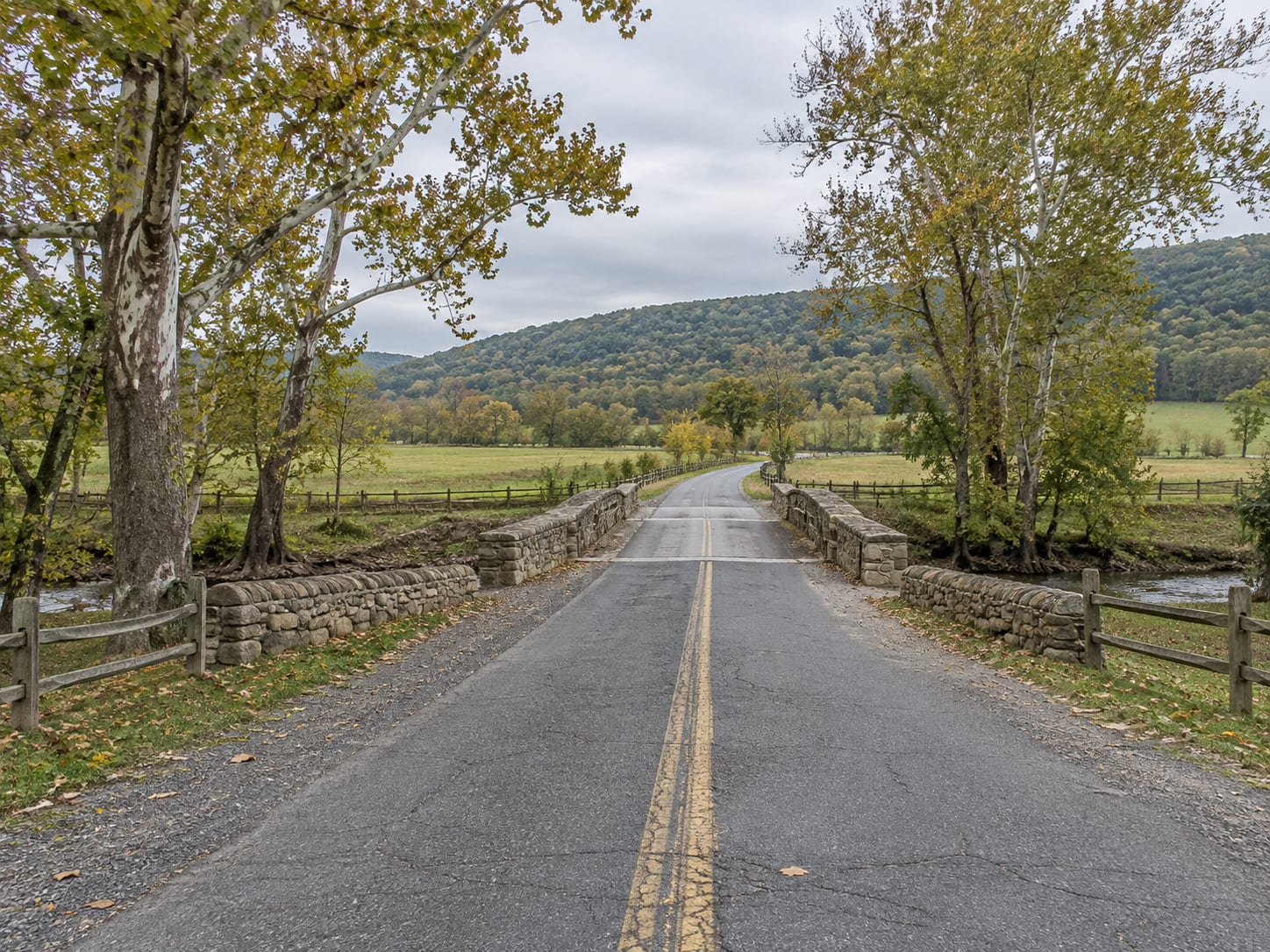
Montgomery lies in inland Central New Jersey, in the southern part of Somerset County. The Sourland Mountains rise along the northwest side, the Millstone River runs along the eastern boundary, and the township counts 121 miles of streams and tributaries between them. Forests, farms, preserved open space, wetlands and stream corridors fill much of the map.
Preserved land is a big part of that picture. Montgomery reports more than 7,900 acres of preserved land, including more than 1,500 acres of county parkland and more than 350 acres of state parkland. For a homeowner, the useful point is that conditions change from one property to the next. A house beside a stream corridor, a wetland or a low field lives with different moisture than a house on preserved upland or in a newer subdivision.
That is why we plan a Montgomery job from your own lot. We look at your foundation, the ground around it and the route the water took, and we build the scope from that.
What kinds of homes do we work on across Montgomery Township?
Montgomery is a township governed by a Township Committee, and it includes the postal and historic communities of Skillman (ZIP 08558), Belle Mead (08502) and Blawenburg (08504), along with Bridgepoint, Dutchtown, Harlingen and Zion. Some Princeton and Hopewell mailing addresses, using ZIP codes 08540 and 08525, also fall inside the township, so check your municipality if your mailing address says one of those towns.
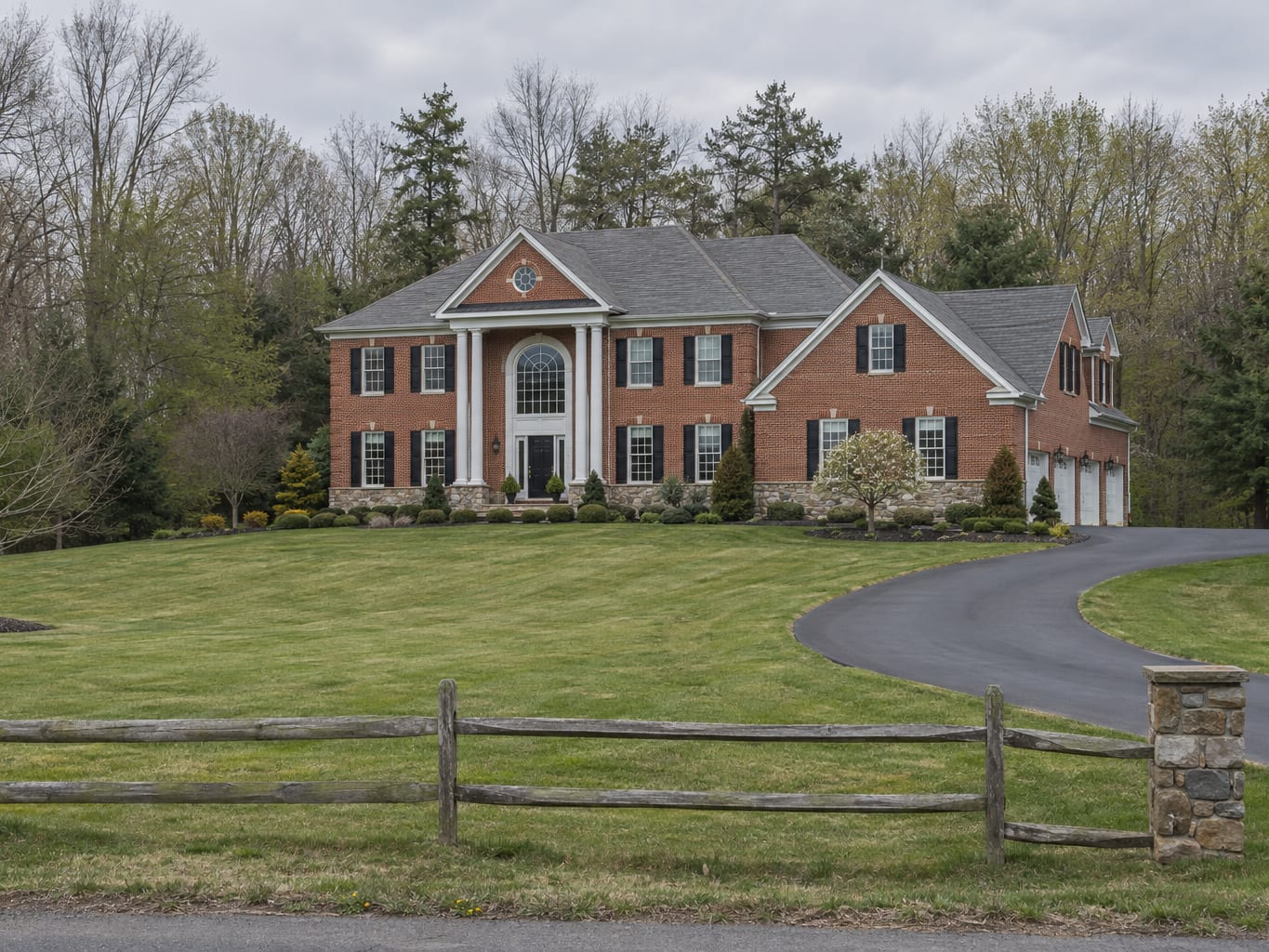
The housing is mostly suburban and owner-occupied. The township's housing plan, based on 2019 to 2023 American Community Survey estimates, counts about 8,582 housing units, with 71.0 percent single-family detached and 16.6 percent single-family attached. It puts 68.4 percent of the housing stock at construction between 1980 and 2009 and 7.3 percent before 1949. The Census Bureau lists the owner-occupied rate at 84.6 percent.
That mix means we see later subdivision homes, attached homes and condominium or multifamily buildings alongside older rural and historic houses. Each has its own weak points, from a finished basement in a 1990s home to an older house with an unfinished cellar or crawl space, and we plan the work around the building in front of us.
Where does water get into Montgomery properties near streams and older houses?
Start with the ground around the house. Montgomery's flood-hazard mapping includes FEMA Flood Insurance Rate Map panels and mapped flood-hazard areas, and the township's planning materials also map wetlands, open waters, stream corridors and groundwater recharge areas. Pike Run has a mapped floodplain that runs through the Mill Pond area in Belle Mead, where the Opie's Mill Trail follows the water with a boardwalk section toward River Road.
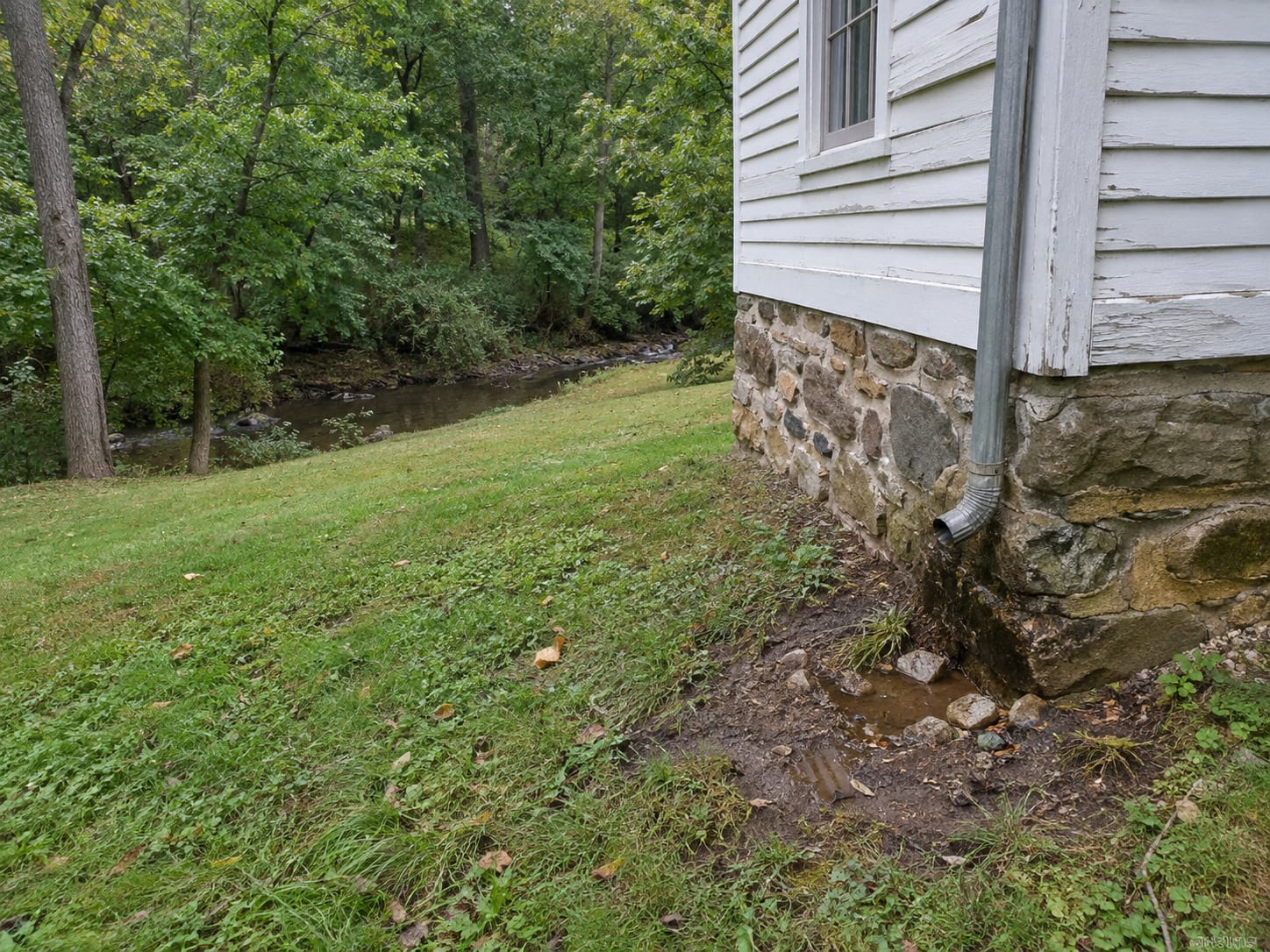
If your property sits near a stream corridor, a wetland or low ground, water is most likely to arrive as seepage through a foundation wall, a rising water table under a slab, or runoff that collects against the house after heavy rain. We check gutters, downspouts, grading, window wells and sump pumps first, because fixing the source is what keeps the growth from returning.
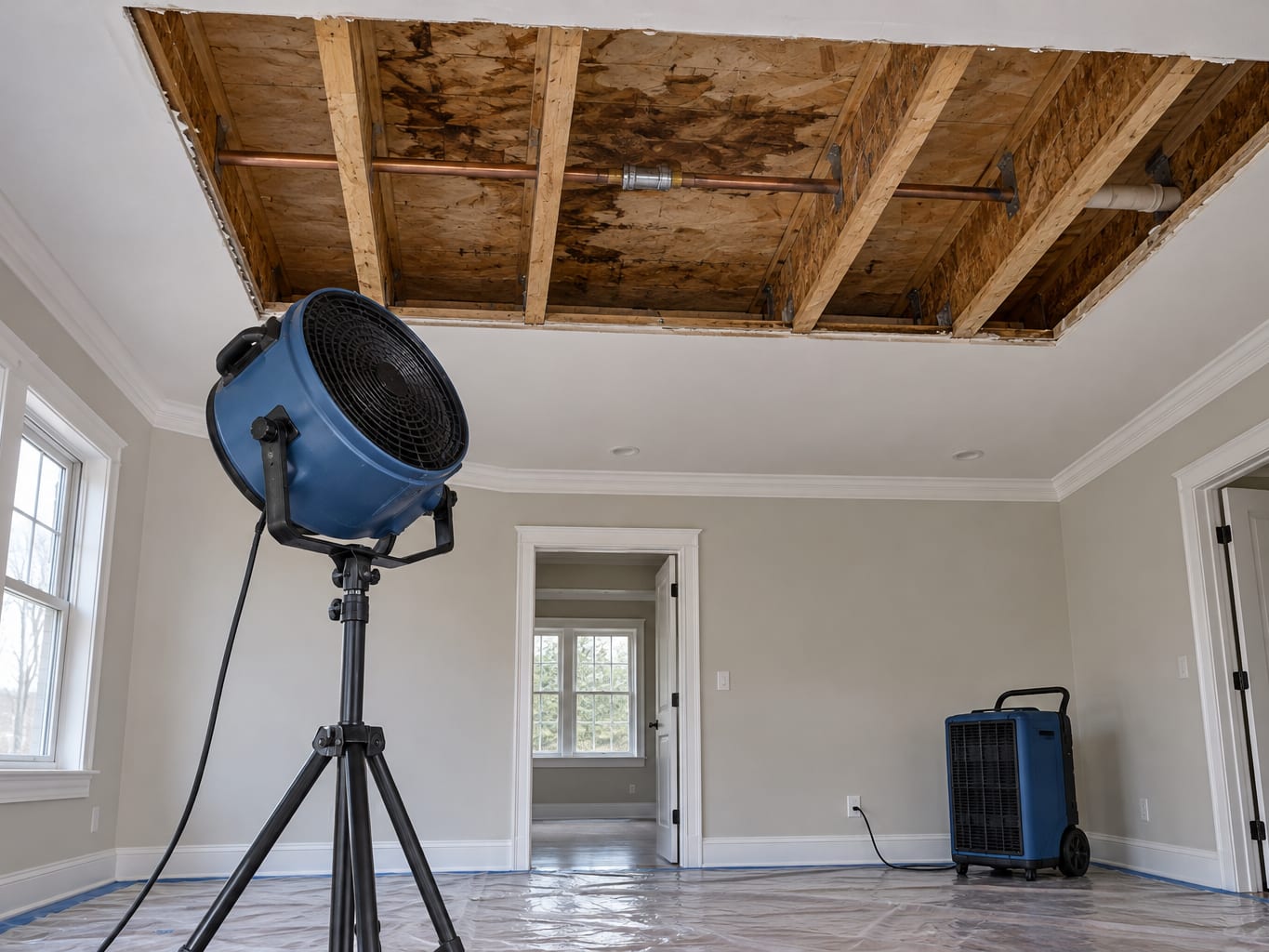
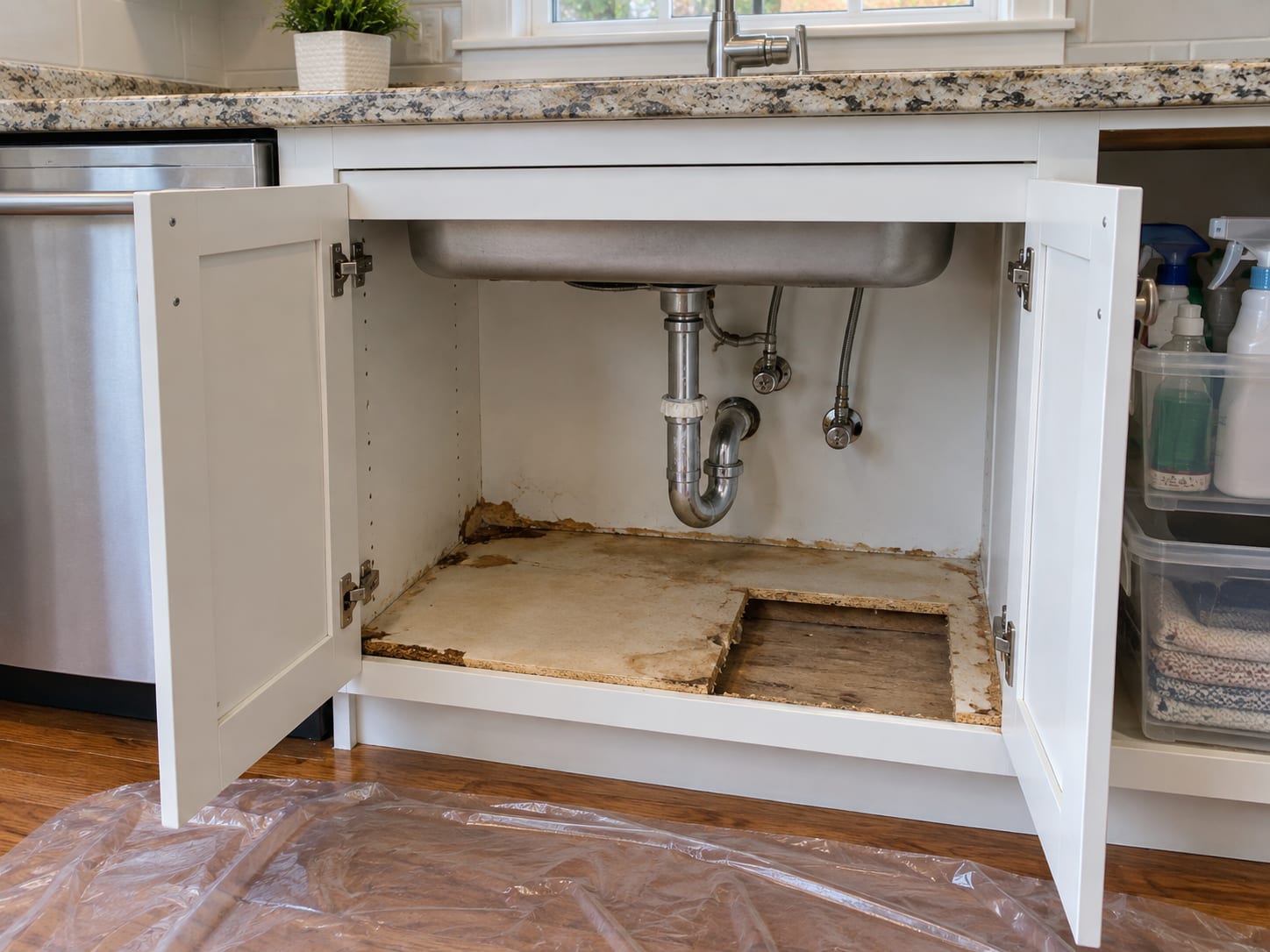
Inside the house, the common routes have little to do with terrain: a supply line or water heater leak, a bathroom or kitchen fixture, an appliance hose, a roof leak, or a plumbing failure hidden in a wall or ceiling. A burst pipe and a slow drip can leave the same stain on a ceiling, so we trace the water rather than guessing from the spot.
What are the signs of a mold or water problem in a Montgomery home?
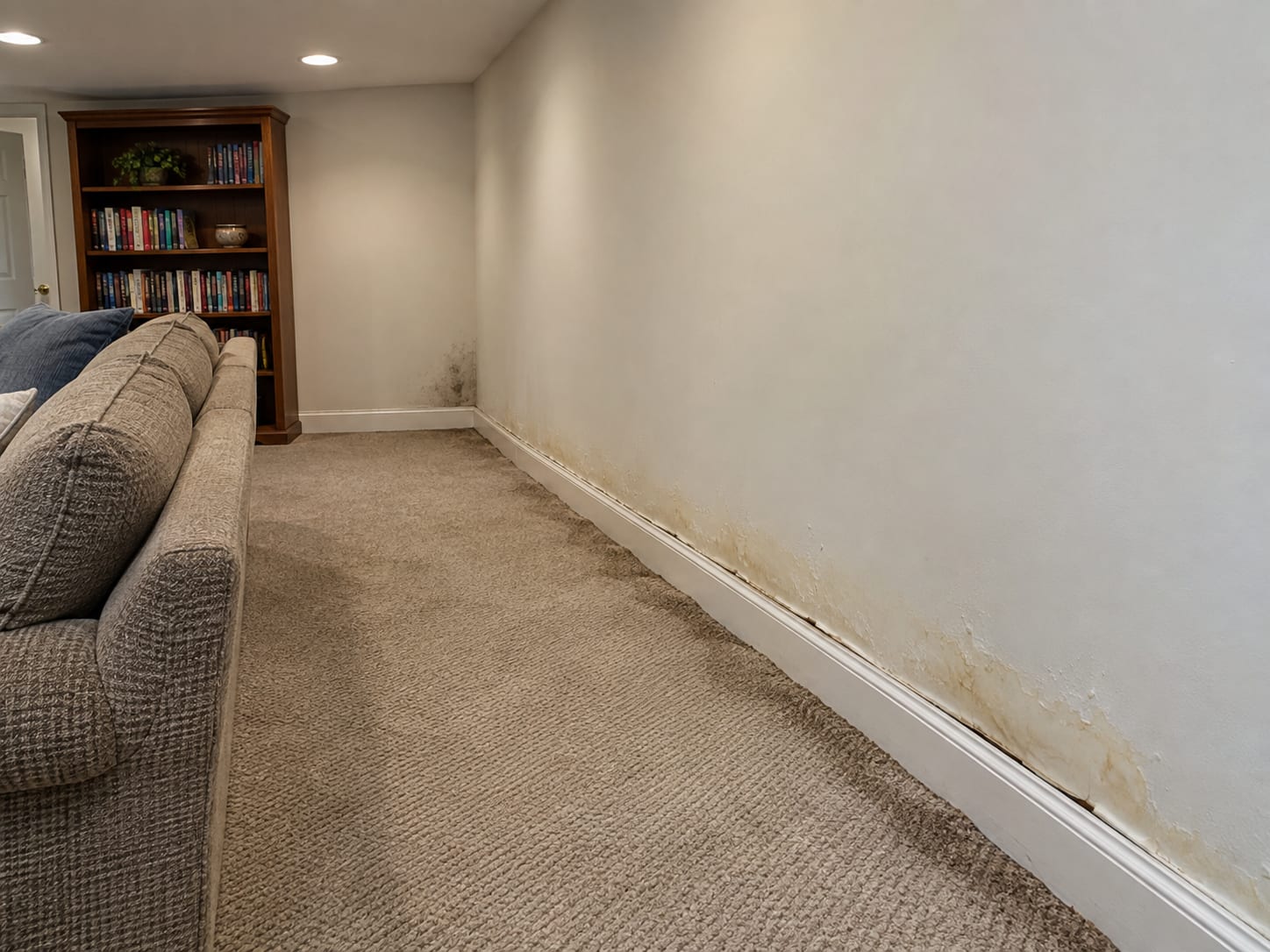
Most people notice one of a few things first: a musty smell that comes back after cleaning, staining or peeling paint on a ceiling or wall, damp drywall at the bottom of a basement wall, warped or cupped flooring, condensation that keeps returning on windows, or a spot that grows over a few weeks.
In a finished basement, check behind furniture and along the base of exterior walls. In an older house, look at the cellar or crawl space floor, the sill area and the underside of the first-floor subfloor. Around the house, watch for gutters that overflow, downspouts that empty next to the foundation, and soil that slopes toward a wall.
Call before you know what the growth is. A mold inspection finds the moisture behind it, and testing is a choice we will talk through with you when the result would change a decision.
What does mold remediation look like after a leak or flood?
This is the order we follow on a Montgomery job, from the first call to the finished room.
Stop or find the water
If water is still coming in, the first job is shutting off the supply or finding the exterior source. Drying and cleanup do not hold while a leak is running.
Inspect and map the moisture
We read moisture in walls, floors and ceilings, and note where growth is visible and where it is likely hidden. You get the extent in writing before anything comes out of a wall.
Contain the area
We seal off the affected space and control airflow so spores and dust do not travel to clean rooms.
Remove damaged material and clean
Wet drywall, insulation, carpet pad and other porous material that cannot be dried is removed. Framing and hard surfaces are cleaned.
Dry the building
Air movers and dehumidifiers bring the structure back to dry readings, which we confirm with a meter before the rebuild starts.
Which services do Montgomery property owners use most?
Depending on what the inspection shows, one or several of these apply to your property.
Mold removal and remediation
For growth on drywall, framing, ceilings and finished basement walls in Montgomery homes, we contain, remove and clean. See our mold removal service.
Basement mold and moisture
Montgomery basements sit close to streams, wetlands and drainage paths in places, so we treat the growth and the water source together with basement mold remediation.
Water damage and drying
After a leak or storm, structural drying stops a wet house from turning into a mold job.
Flooded basement cleanup
When water has entered a lower level, basement flood cleanup removes it and dries what can be saved.
Rebuild after the work
Once the structure is dry and clean, our build-back services replace drywall, flooring and trim so the room is finished.
How do we reach properties across Montgomery Township?
U.S. Route 206 is the main north-south highway through the township, and County Route 601, including Belle Mead-Blawenburg Road and Great Road, carries much of the east-west traffic. Other roads we use to reach homes include County Route 533 (River Road North), County Route 605 (River Road South), County Route 518 (the Georgetown-Franklin Turnpike), County Route 604 (Dutchtown-Harlingen Road), County Route 602 (Skillman Road), Orchard Road, Sunset Road, Burnt Hill Road, Province Line Road, Belle Mead-Griggstown Road, Harlingen Road, Bridgepoint Road and Spring Hill Road.
The Sourland Mountains and the Millstone River limit east-west crossings, which pushes traffic toward Route 206 and Route 601. When you call, tell us your street and the nearest of those routes and we will plan the drive and the equipment access with you.
What is the right next step for a property-specific moisture problem?
Call us first if water is present now. If it is a slow problem, gather three things: where you see the damage, when you first noticed it, and whether it gets worse after rain or after certain fixtures run.
It also helps to look at your parcel's flood, wetland, drainage and elevation layers before you decide what caused the problem. The township publishes a flood-hazard map service with FEMA layers, and the township offices can point you to parcel-level information. Confirm which municipality your address falls under first, since mailing addresses in Princeton and Hopewell can be inside Montgomery.
If you are dealing with an insurance claim, we work to your insurer's documentation requirements and can help you organize photos, moisture readings and the written scope. Our insurance restoration services page explains that process.
Frequently Asked Questions About Mold Remediation in Montgomery, NJ
The price depends on how much area is affected, what material is involved and how much has to come out, and whether a water source still needs to be fixed. We give you the extent in writing after the inspection, before any material is removed.
Areas We Serve In and Around Montgomery, NJ
We work across Skillman, Belle Mead, Blawenburg, Harlingen, Dutchtown, Zion and Bridgepoint. Nearby parks and landmarks include Montgomery Veterans Park and Arboretum on Harlingen Road, Mill Pond Park, Hobler Park, Bessie Grover Park, Van Horne Park and Lubas Field.
Montgomery borders Hillsborough Township to the north, Princeton to the south, Franklin Township to the east, and Hopewell Township and East Amwell Township to the west. The township nearly surrounds Rocky Hill Borough on its north, west and south sides. We also serve the wider service area around Montgomery. To talk through a job, contact us.
About Montgomery, NJ
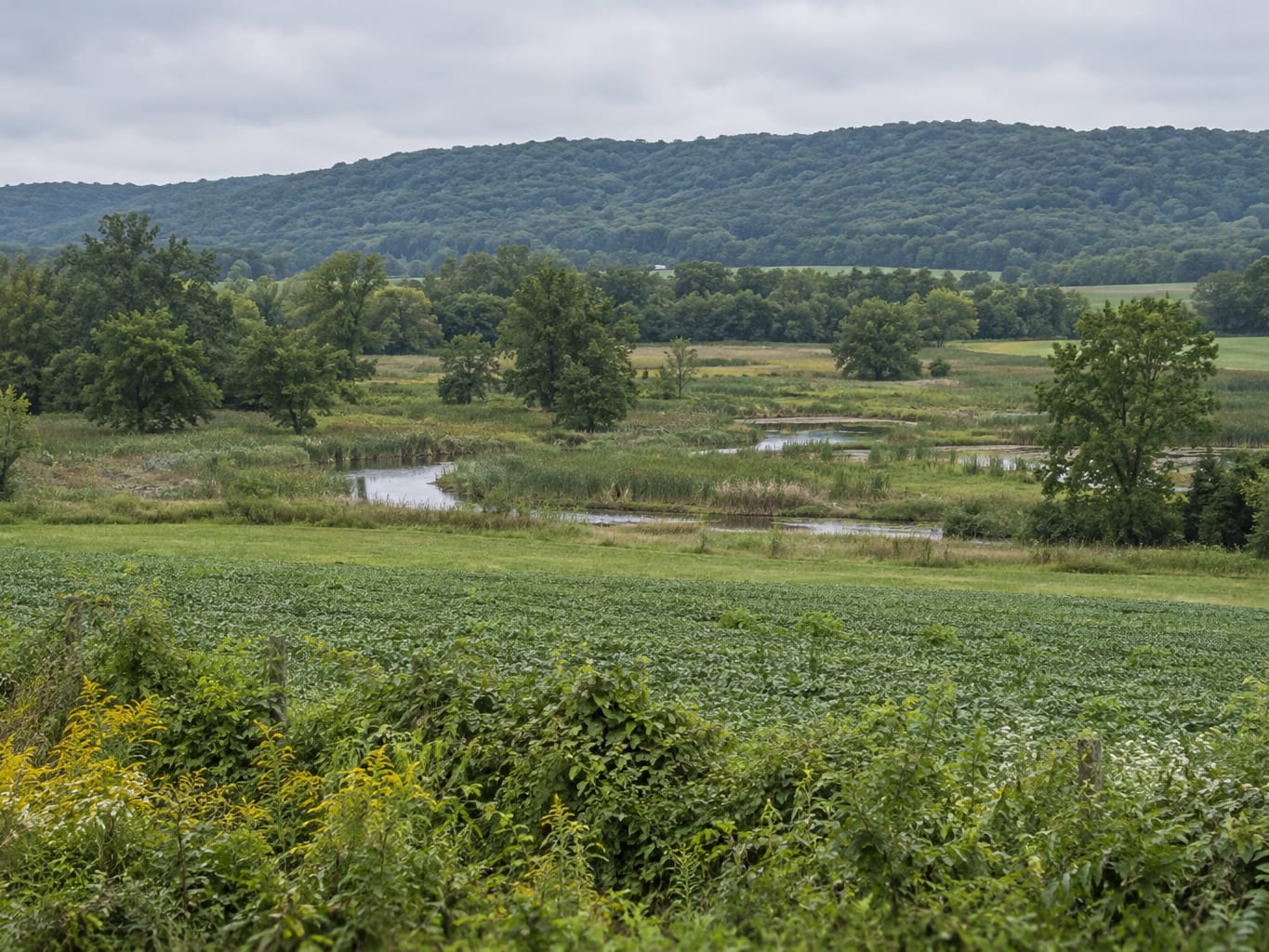
Montgomery Township sits in the Millstone River Valley, with the Millstone River along its eastern edge and the Sourland Mountains on the northwest side, about six miles from Princeton. The Census Bureau counted 23,690 residents in 2020. The housing is mostly suburban and owner-occupied: the township's housing plan, built on 2019 to 2023 estimates, counts about 8,582 homes, 71.0 percent of them single-family detached and 16.6 percent single-family attached, with 68.4 percent built between 1980 and 2009 and 7.3 percent before 1949. That means finished basements in later subdivisions, attached and condominium homes, and older rural and historic houses with cellars or crawl spaces, so the first thing to check is which kind of building you own and where its water is most likely to enter.
The ground is what makes each Montgomery property its own case. The township counts 121 miles of streams and tributaries and more than 7,900 acres of preserved land, and it maps FEMA flood-hazard areas, wetlands, stream corridors and groundwater recharge areas. Pike Run has a mapped floodplain through the Mill Pond area in Belle Mead. A home beside a stream, wetland or low field can see seepage, a rising water table or runoff against the foundation, while a home on upland or in a newer subdivision more often sees leaks from a roof, fixture or supply line. Before you decide what caused a problem, look at your parcel's flood, wetland, drainage and elevation layers, and confirm your municipality first, since some Princeton (08540) and Hopewell (08525) mailing addresses fall inside the township.
Neighborhoods We Serve in Montgomery
Around Montgomery
Do not see your neighborhood? We serve all of Montgomery and the surrounding area. Reach out and we will confirm coverage.