Mold Remediation in Harlingen, NJ
ExecPro Restoration & Cleaning handles mold removal in Harlingen by finding the water that is feeding the growth, taking out what stayed wet and drying the building so the repair holds. Harlingen is a small historic village governed by Montgomery Township in Somerset County, where eighteenth and nineteenth century buildings share the road with newer homes.
Mold Remediation in Harlingen, Somerset County
If you have mold or a damp lower level in Harlingen, a village in Montgomery Township, Somerset County, start by finding where the water is entering. Cleaning the growth without fixing that route only buys time. ExecPro Restoration & Cleaning inspects the affected rooms, reads moisture in the framing and finishes, contains the work area, removes what cannot be dried, and documents the result before anything is rebuilt. That applies whether your house is one of the old buildings near the Harlingen Church or a newer home off Harlingen Road, Route 206 or Dutchtown-Harlingen Road. Call (888) 300-3772 or send the details through the contact page, and we will help you plan the next step.
Why do Harlingen properties need mold remediation after water gets in?
Harlingen is an unincorporated village, counted as a census-designated place, and Montgomery Township is its municipal government. The 2020 Census counted 430 people and 164 housing units here, so this is a small place where a single wet basement or roof leak is a household matter, not a neighborhood one.
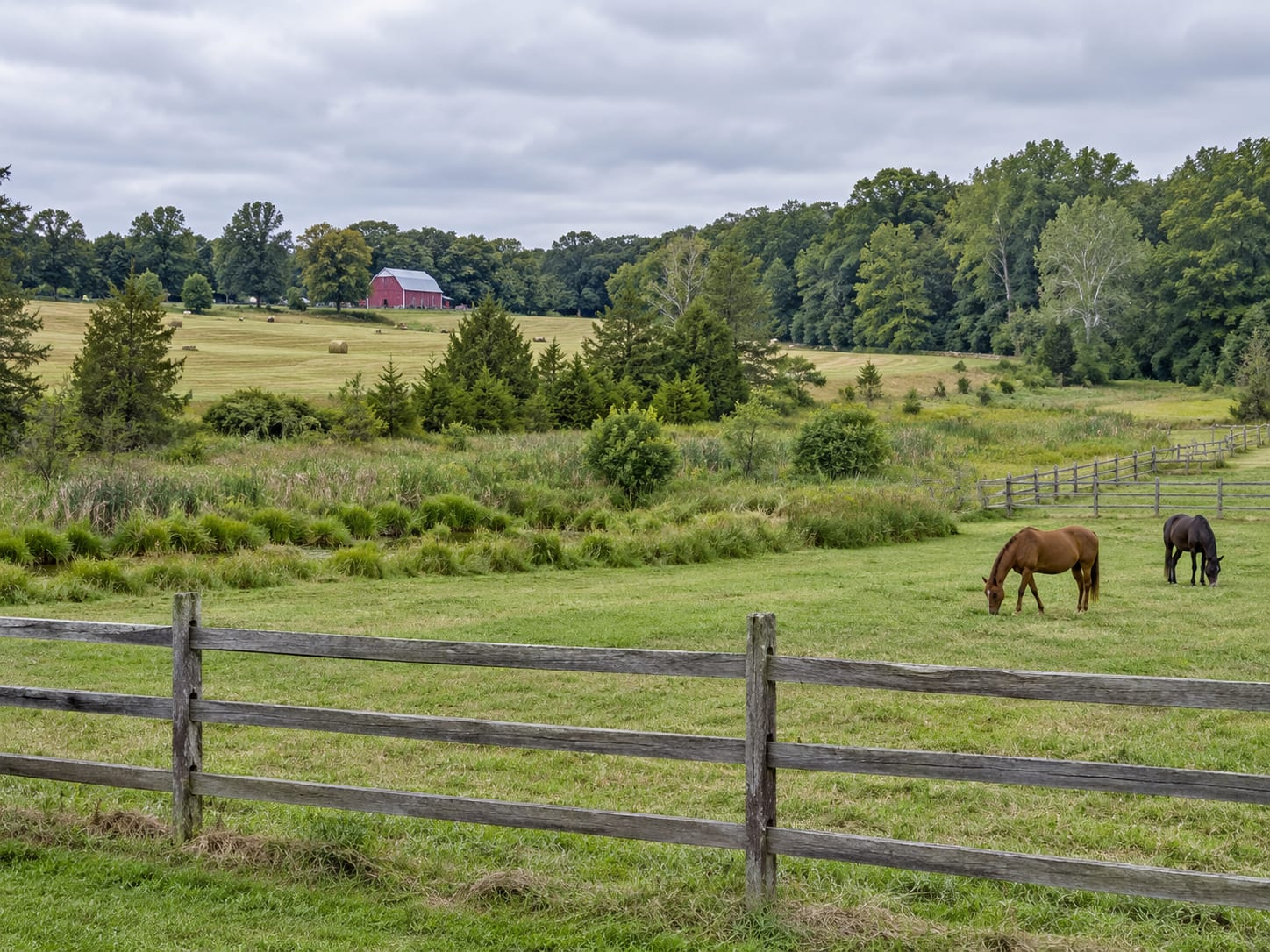
Montgomery Township describes itself as a historic farming community that grew into a suburb, with farms, woodlands, waterways and preserved land still defining it. The township's Guide lists about 39 percent of its land as preserved. Its planning maps show wetlands, stream corridors, groundwater recharge areas, hydric soils and mapped flood zones across the township. Water is part of the landscape, and it reaches buildings through roofs, grading, foundations and plumbing alike.
When any of those routes lets water into a wall, floor or crawl space and it stays wet, growth follows. The cure is the same wherever you live in Harlingen: stop the water, take out what stayed wet, and dry the rest.
How do older village buildings differ from newer Montgomery homes?
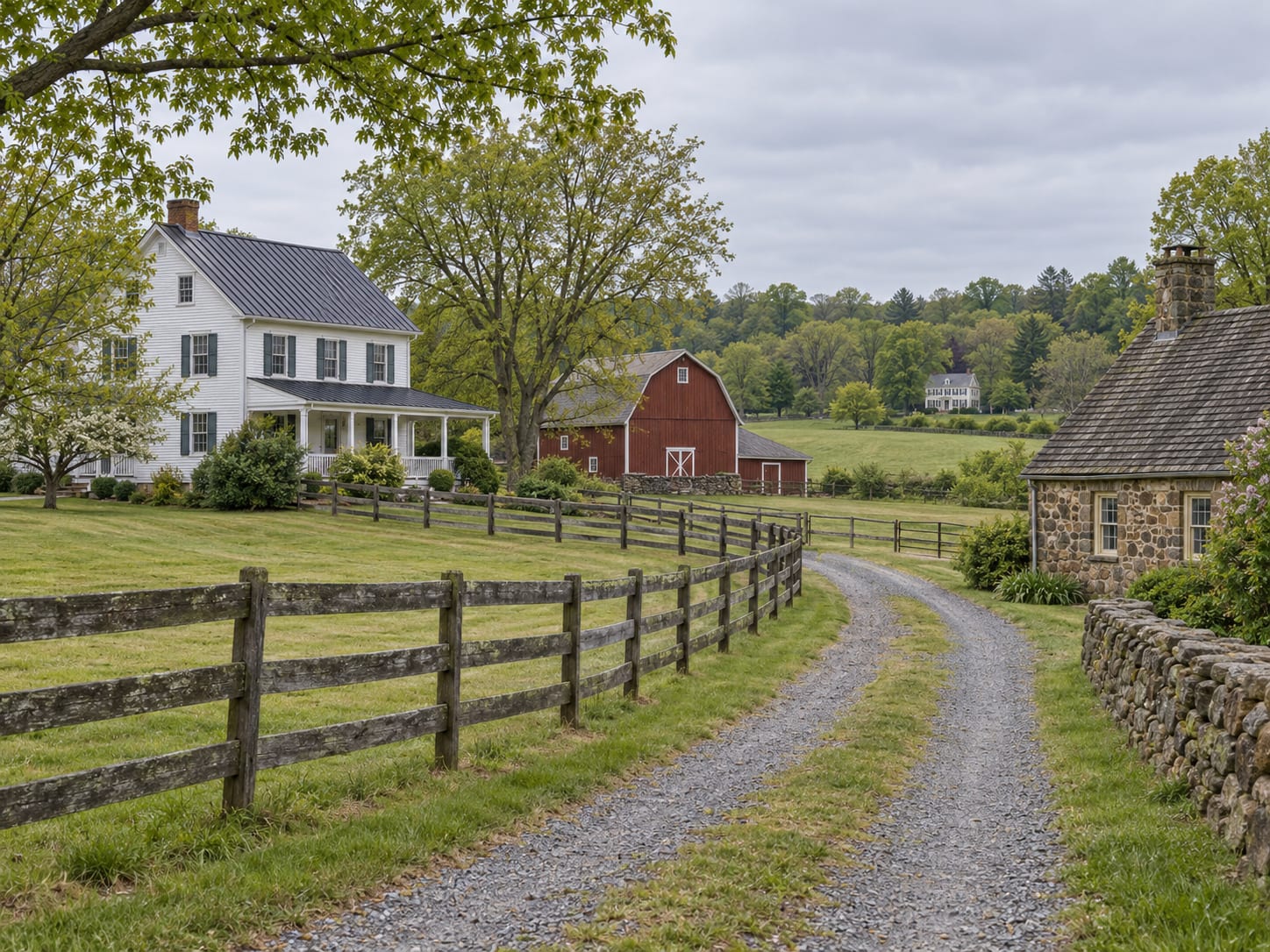
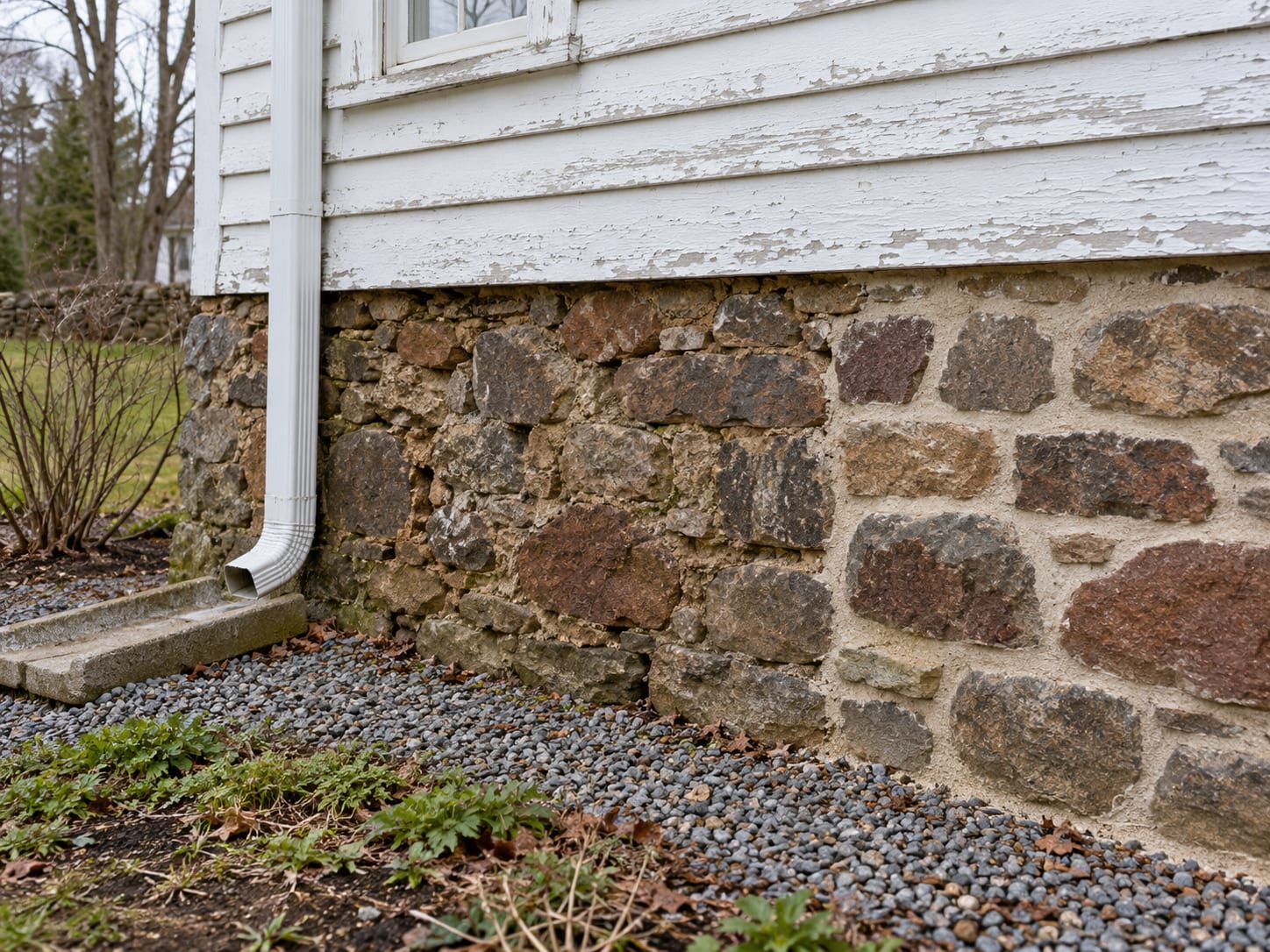
The Harlingen Historic District is the village's core. Its documented buildings include the Harlingen Church, an 1846 parsonage, Dr. Hageman's House and the Peter Wilson House, and the district record dates buildings from the eighteenth and nineteenth centuries in vernacular, Greek Revival, Victorian and Arts and Crafts styles. A house that old may have stone or masonry foundations, older framing, wood siding and drainage that was set up long before modern grading.
Those materials react to moisture differently. Masonry wicks water up from the ground, old framing can hide a slow leak for years, and plaster or wood trim can hold growth behind a fresh coat of paint. We look at how the house was built before deciding what to remove.
Beyond the village core, the housing looks like the rest of Montgomery Township. The township's 2025 housing plan reports about 8,582 homes township-wide, roughly 71 percent single-family detached and 17 percent single-family attached, and about 68 percent built between 1980 and 2009. Those figures describe the township, not Harlingen alone. In a house from that era, the trouble is more often a finished lower level, a window well, a roofline or a plumbing line, and we approach it that way.
Where should you look for moisture around a Harlingen home?
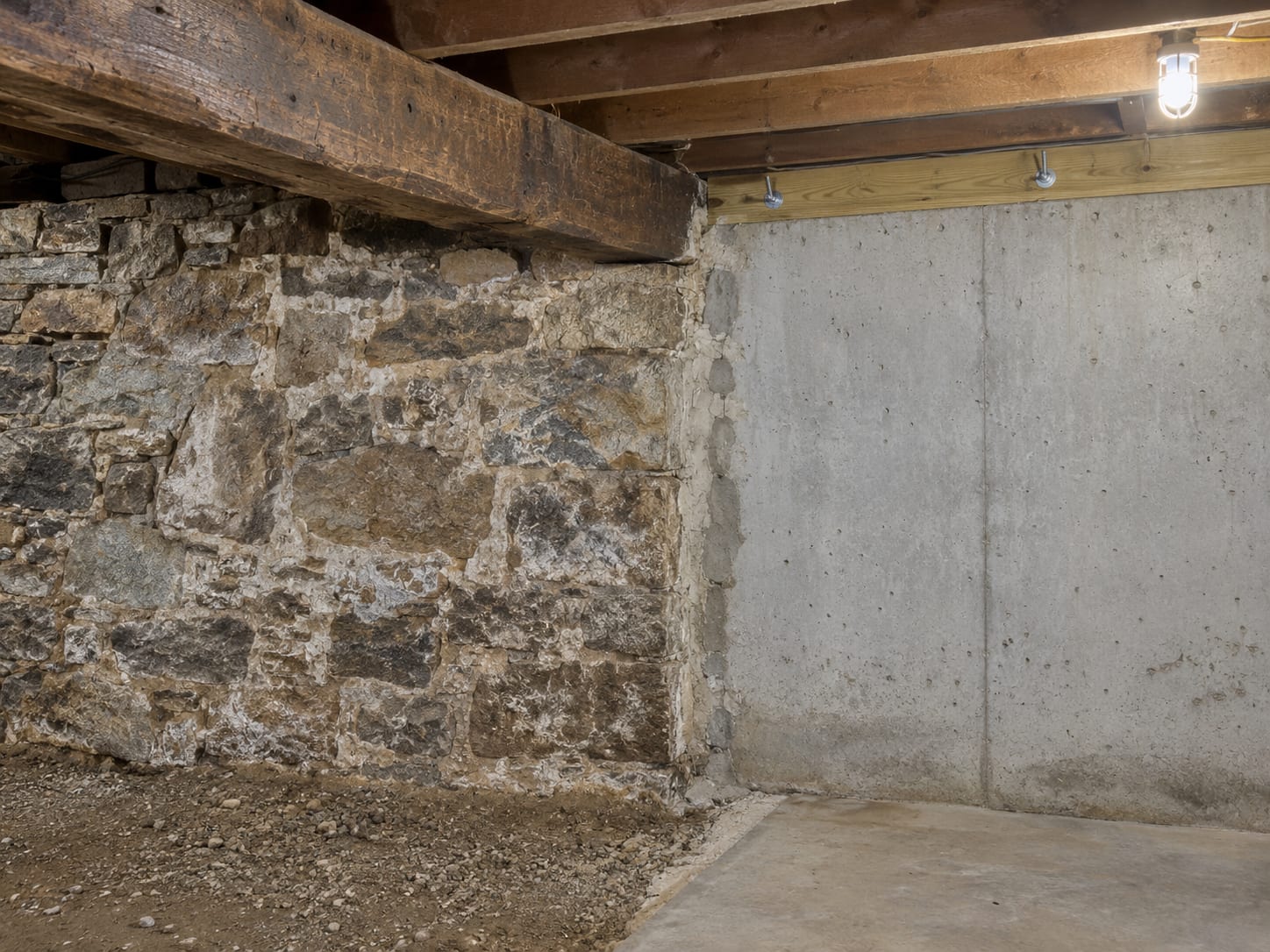
Walk the outside first. Look at the soil around the foundation, the downspouts and where they discharge, the roof valleys and chimney, and any window well. Then go inside and check the lowest floor, the corners where walls meet the slab or foundation, the underside of the first floor if you can see it, and any crawl space.
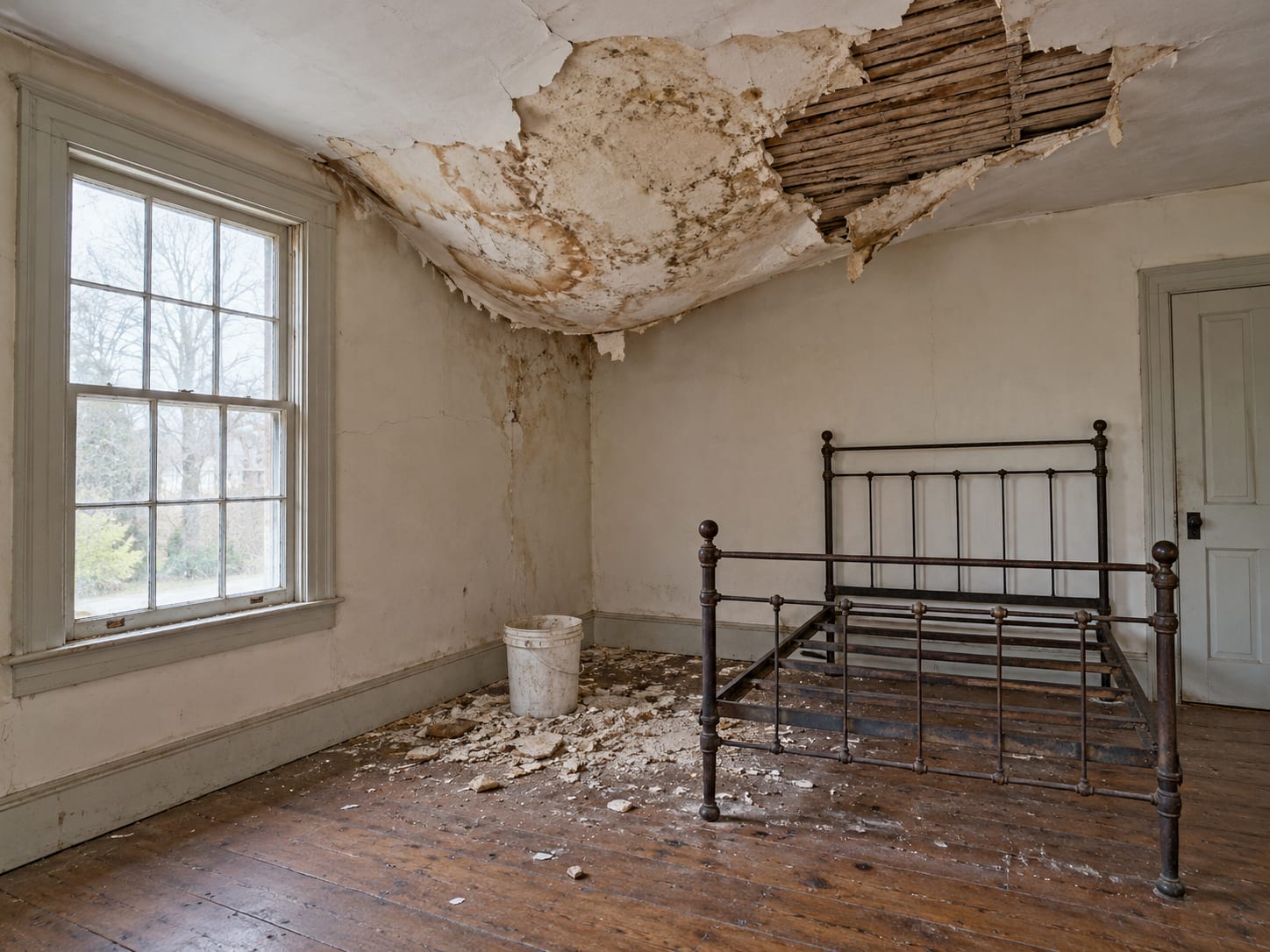
In a historic building, also look at the stone or brick below the sill for white mineral staining, and at baseboards and plaster along outside walls for bubbling, soft spots or a musty smell. In a newer home, check the drywall at the base of finished walls, the ceiling under bathrooms and the attic sheathing near the roof edge.
Take photos and note the date and the weather when you see damp. That record helps us find the cause and helps if you file a claim.
What does the remediation process look like for a Harlingen property?
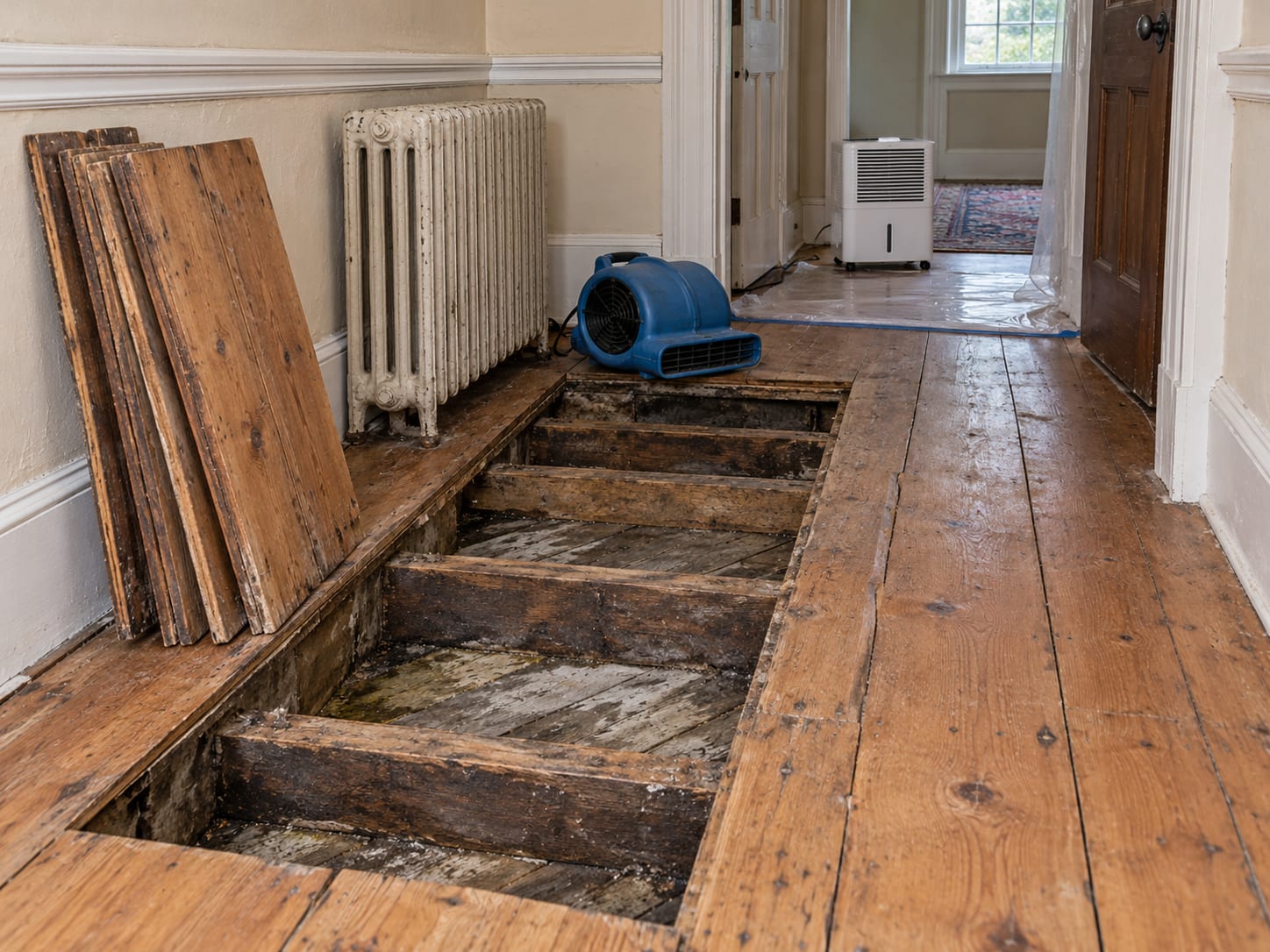
We work in the same order on every property, and we tell you what we find at each stage before it changes the plan.
Walk the property and measure
We check the rooms and the outside of the building, and take moisture readings so the plan rests on numbers, not on how the wall looks.
Fix or flag the source
We point out what is letting water in, whether that is a roof, gutter, grading, foundation or plumbing problem, and tell you which parts we handle and which need another trade.
Contain and remove
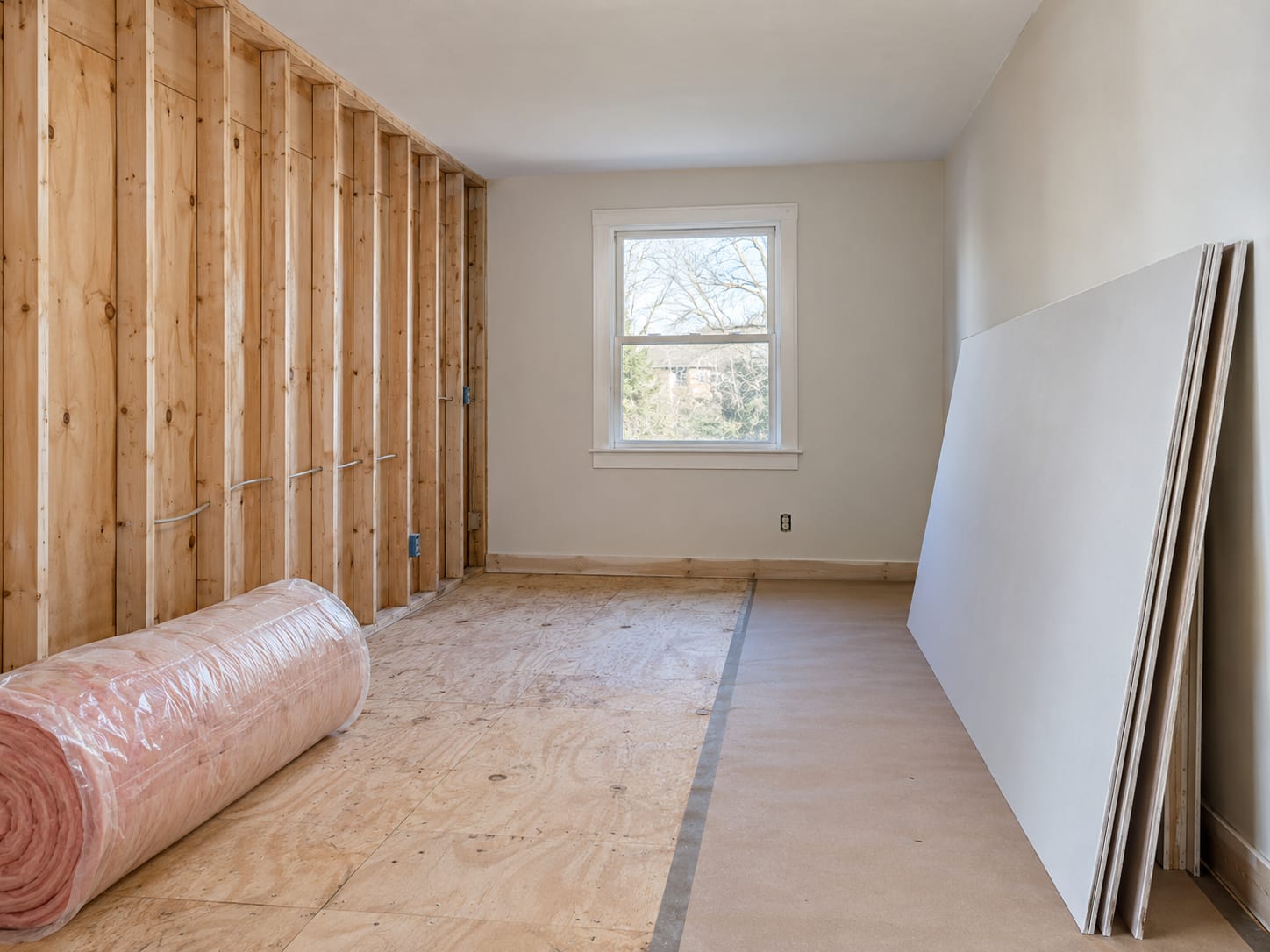
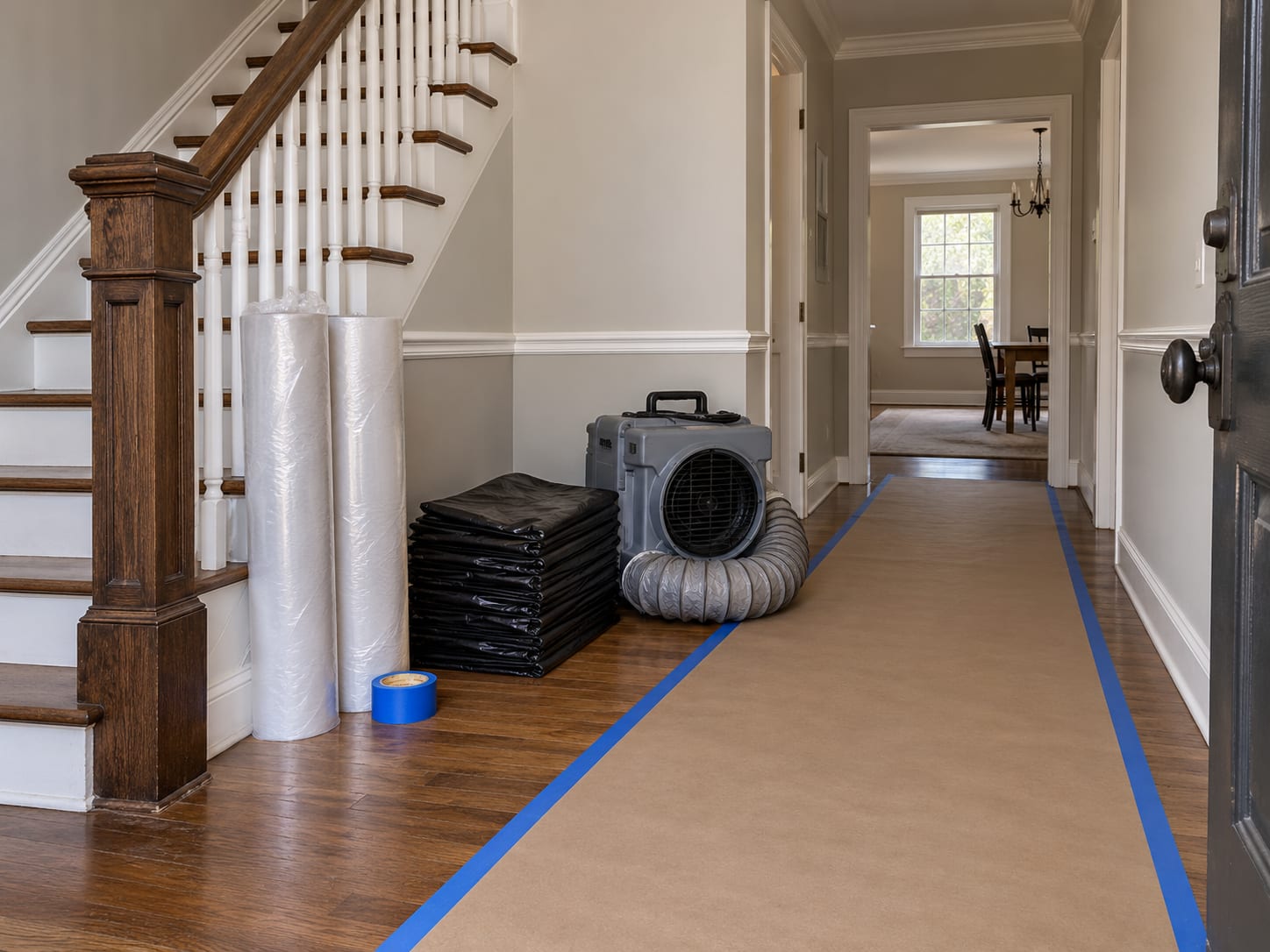
Plastic barriers and air filtration protect the rest of the house while we take out drywall, insulation, carpet or other porous material that stayed wet.
Dry and clean
Structural drying continues until the framing and slab read dry, then surfaces and the air in the work area are cleaned.
Verify and rebuild
A post-remediation check confirms the result, and our build-back services can put the room back together.
How do flood maps, wetlands and drainage affect a Harlingen job?
Flood status here is decided property by property. Montgomery Township maps its wetlands, stream corridors and FEMA flood zones, and one Harlingen lot can sit outside a mapped area while another does not. Check your address on the current FEMA, NJDEP and township maps before you plan a repair or a rebuild.
That matters because it changes what is worth doing. A basement in a mapped flood area may call for materials that tolerate water, while a house with a roof or plumbing leak needs the leak fixed and little else. If storm water or a backed-up drain brought the water in, tell us right away, because contaminated water calls for sewage cleanup rather than ordinary drying.
For a wet basement, our basement mold remediation and basement drying work start with where the water came from. Whether a home has a basement, crawl space or slab, and what drainage it has, is something we confirm by looking at the building.
What affects the scope and cost of restoration in Harlingen?
Scope drives price. The size of the wet area, how long it stayed wet, and which materials are involved matter most. Drywall and insulation are straightforward to replace; old plaster, wide-board flooring or period trim may need more careful handling.
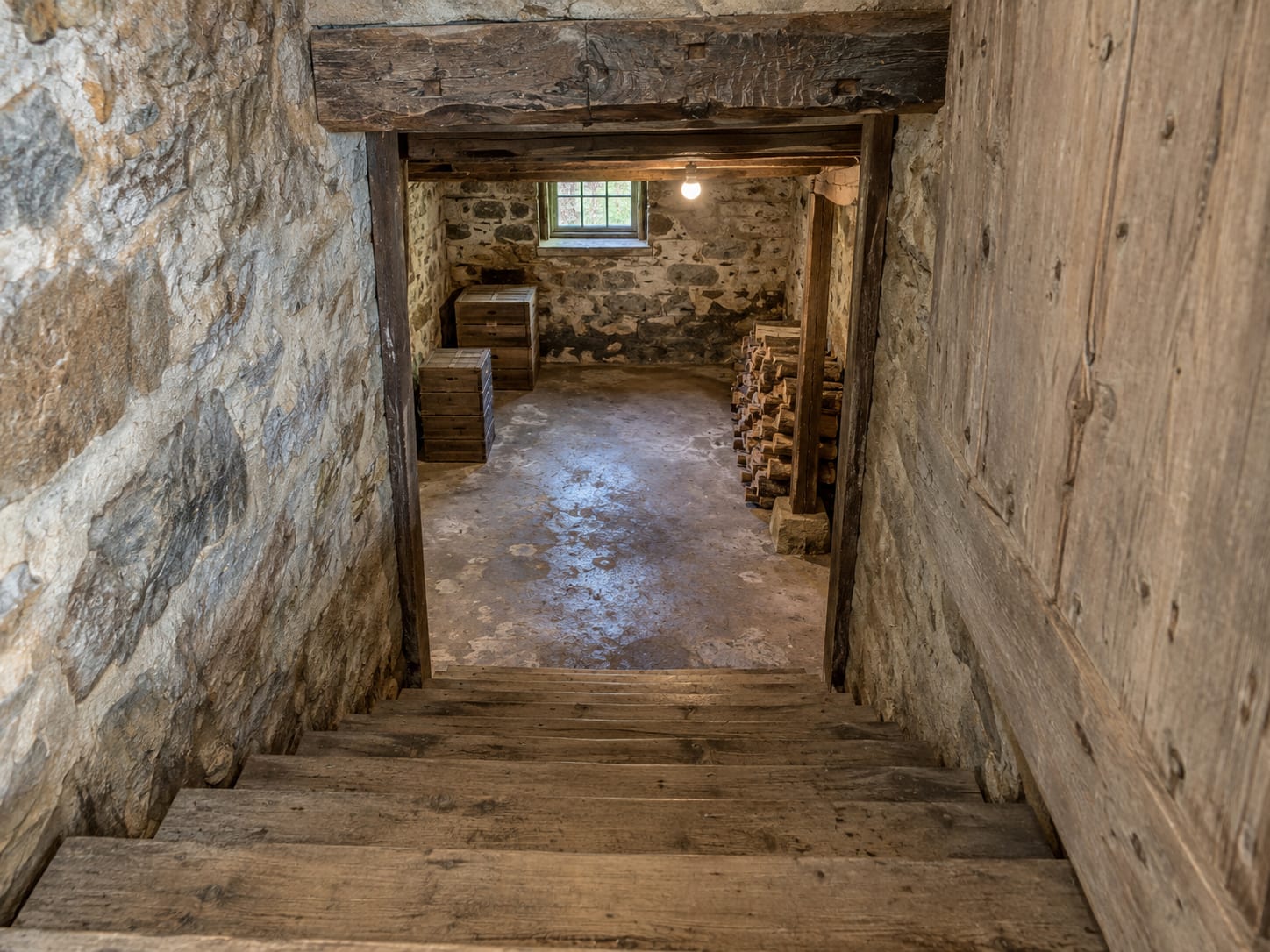
Access counts too. An old house with a low crawl space or a stone-walled cellar takes more time to dry and clean than an open finished basement. We give you a written scope after the walk-through so you can see what each part covers, and we do not quote a number before we have measured.
If a storm, burst pipe or other sudden event caused the damage, your homeowner's policy may respond. Our insurance restoration services can document the loss with dated photos and moisture readings; your insurer makes the coverage decision.
Does mold remediation actually work?
Yes, when the water source is fixed, the wet material is removed and the structure is dried until readings are normal. Mold needs moisture to grow, so a job that handles all three parts leaves nothing for it to feed on. A job that only cleans the visible growth is the kind that fails, because the damp material behind it stays damp.
How well it holds in a Harlingen property depends on the building. In a newer home off Harlingen Road or Route 206, the cause is usually a single route, such as a roofline, a window well, a plumbing line or a finished lower level that never dried, and fixing it is clear-cut. In a historic village building, masonry that wicks water from the ground and old framing that hides a slow leak mean the cause can take longer to trace, and we want the readings to confirm the result rather than relying on how the wall looks.
You can check the work yourself. Ask for the moisture readings before and after, ask what was removed and what was cleaned, and ask for a post-remediation check so you have a documented result. Then watch the repaired area through the next few heavy rains and call us if a stain or smell returns.
Is a house with mold considered uninhabitable?
Whether a home is safe to live in depends on how much mold there is, where it is, and who lives there, and your next step is the same whether you rent or are buying. Large areas of growth, growth that involves the air handler or ducts, a sewage or contaminated-water source, or a household with an infant, an older adult, or someone with asthma or a weakened immune system are reasons to move out of the affected rooms, and sometimes out of the house, until the work is done.
If you rent a place in or near Harlingen, notify your landlord in writing, photograph the growth and the water source with dates, and keep copies. Contact Montgomery Township, which is the municipal government here, about who handles a housing or code complaint. Ask the landlord to have the cause found before anyone paints over it.
If you are buying, a mold inspection during your inspection period shows the extent and the cause. Take the written scope to your agent and attorney to negotiate repairs, a price change or whether to go forward. In an older village house, include the foundation, the plaster along outside walls and the crawl space or cellar in the inspection.
How do you choose a mold remediation company?
Choose the company that finds the water before it removes anything, and ask each one the same questions so you can compare the answers.
- How will you find the moisture source, and do you take readings? - How do you contain the work area and protect the rest of the house and the ducts? - What will you remove, what will you clean, and what happens to the framing? - How do you dry the structure, and how do you confirm it is dry? - What does the written scope cover, and what is left to another trade? - How will the result be verified, and what do I get in writing? - If the house is in the Harlingen Historic District or is an older building, how do you handle plaster, masonry and period trim?
Be careful with any company that quotes a number before looking at the building, offers only to spray or wipe the surface, or does not mention the water. In Harlingen, ask whether the company knows Montgomery Township's permit process for rebuilding after the removal, and whether they will tell you which parts need another trade. We walk the property, measure, and give you a written scope you can compare with any other.
How can you prevent repeat moisture problems in the Harlingen area?
Water control comes first. Keep gutters clear, extend downspouts well away from the foundation and keep soil sloping away from the walls. On an older house, keep an eye on the joints in masonry and repoint them when mortar crumbles, because those gaps let water in.
Inside, use a dehumidifier in a damp lower level and vent bathrooms and the kitchen. After remediation, we suggest watching the repaired area through the next few heavy rains and calling us if a stain or smell returns.
The roads around Harlingen are lined with farmland, woods and streams, so water tends to move across the land in wet weather. It is worth looking at your lot after a storm to see where water collects and where it drains away.
Which areas and roads do we cover in and around Harlingen?
Harlingen sits inside Montgomery Township, and the ZIP code associated with the area is 08502, with Belle Mead as the postal city. ZIP boundaries do not match the village boundary, so confirm your address if it matters for a claim or a permit.
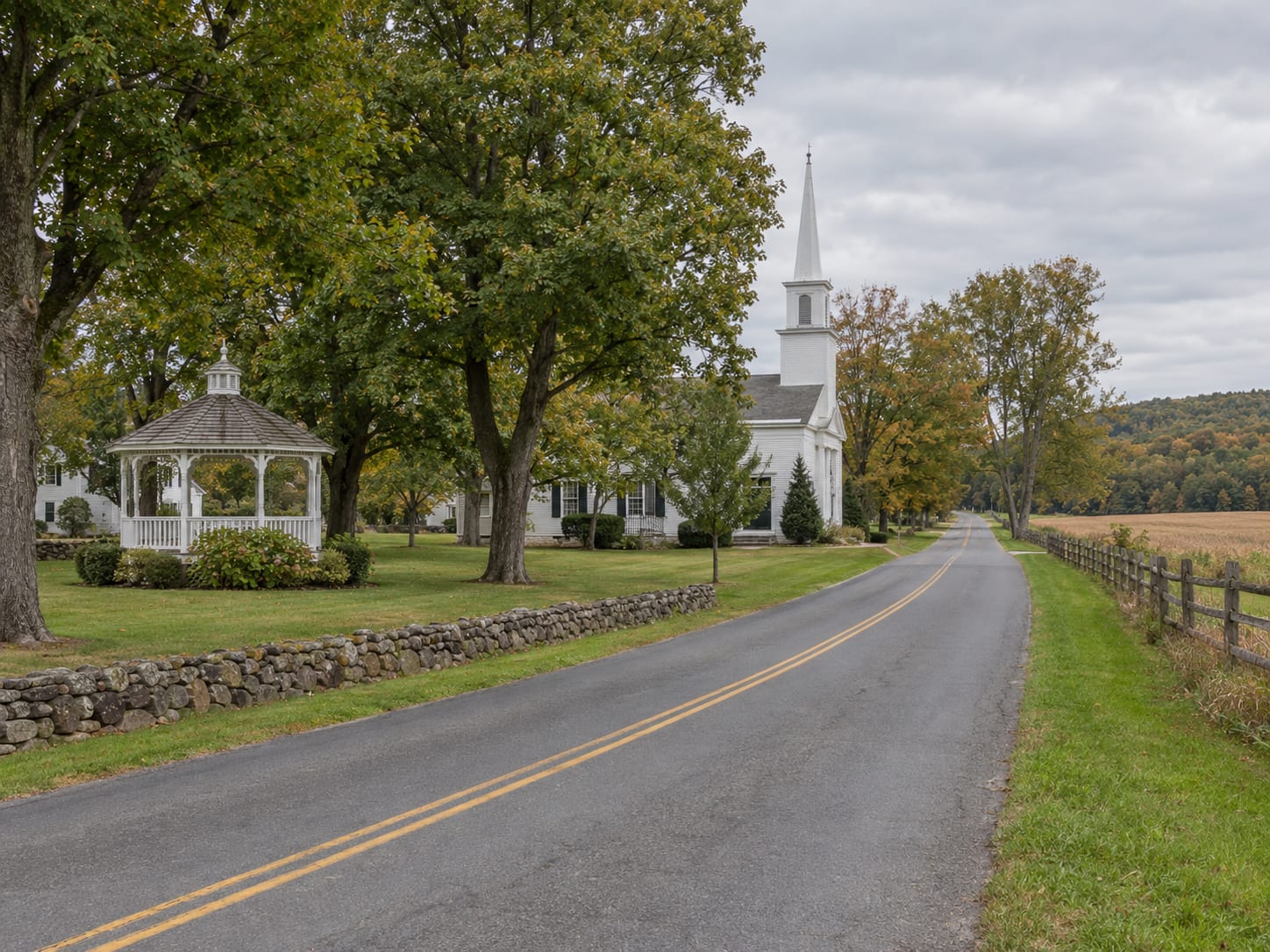
The village has Harlingen Green with its gazebo on Harlingen Road, Arboretum Field, Montgomery Veterans Park at 235 Harlingen Road, the Harlingen Historic District and the Van Harlingen Historical Society's Dirck Gulick House on Route 601. Main routes are U.S. Route 206, County Route 601 (Belle Mead-Blawenburg Road, The Great Road and Trent Place), County Route 604 (Dutchtown-Harlingen Road), County Routes 605, 630 and 533, County Route 518 (the Georgetown-Franklin Turnpike) and Harlingen Road itself.
Montgomery Township is surrounded by Hillsborough, Franklin, Rocky Hill, Princeton, Hopewell and East Amwell. We serve the township through our Montgomery page and neighboring communities such as Rocky Hill and Princeton.
Frequently asked questions about mold remediation in Harlingen, NJ
The number depends on the area affected, the building materials and how long the water sat. Historic materials can add time. We measure first and then give you a written scope.
About Harlingen, NJ
Harlingen is a historic village in Montgomery Township, Somerset County, in inland Central New Jersey. It is an unincorporated community, counted by the Census Bureau as a place of 430 people and 164 housing units in 2020, and Montgomery Township is its municipal government. The village core is the Harlingen Historic District, where the Harlingen Church, an 1846 parsonage, Dr. Hageman's House and the Peter Wilson House stand among buildings dating from the eighteenth and nineteenth centuries. Older masonry, framing and drainage behave differently from newer construction, so a house in the district gets looked at differently from a home built in the past few decades.
Around the village, Montgomery Township is still farms, woodlands, streams and preserved land, with about 39 percent of the township preserved. The township maps wetlands, stream corridors, hydric soils and FEMA flood zones, and flood status is decided parcel by parcel, not village-wide. The township as a whole is mostly single-family housing, with about 68 percent of homes built between 1980 and 2009; those figures describe the township, not Harlingen alone. Before you plan a repair, check your address on the current FEMA, NJDEP and township maps, and look at how the roof, gutters and grading around your house move water.
Neighborhoods We Serve in Harlingen
Around Harlingen
Do not see your neighborhood? We serve all of Harlingen and the surrounding area. Reach out and we will confirm coverage.