
Where Water Comes Into a Basement: Finding the Entry Point in NJ
Cal HewittPublished
- water damage restoration
- basement water
- moisture source
- new jersey
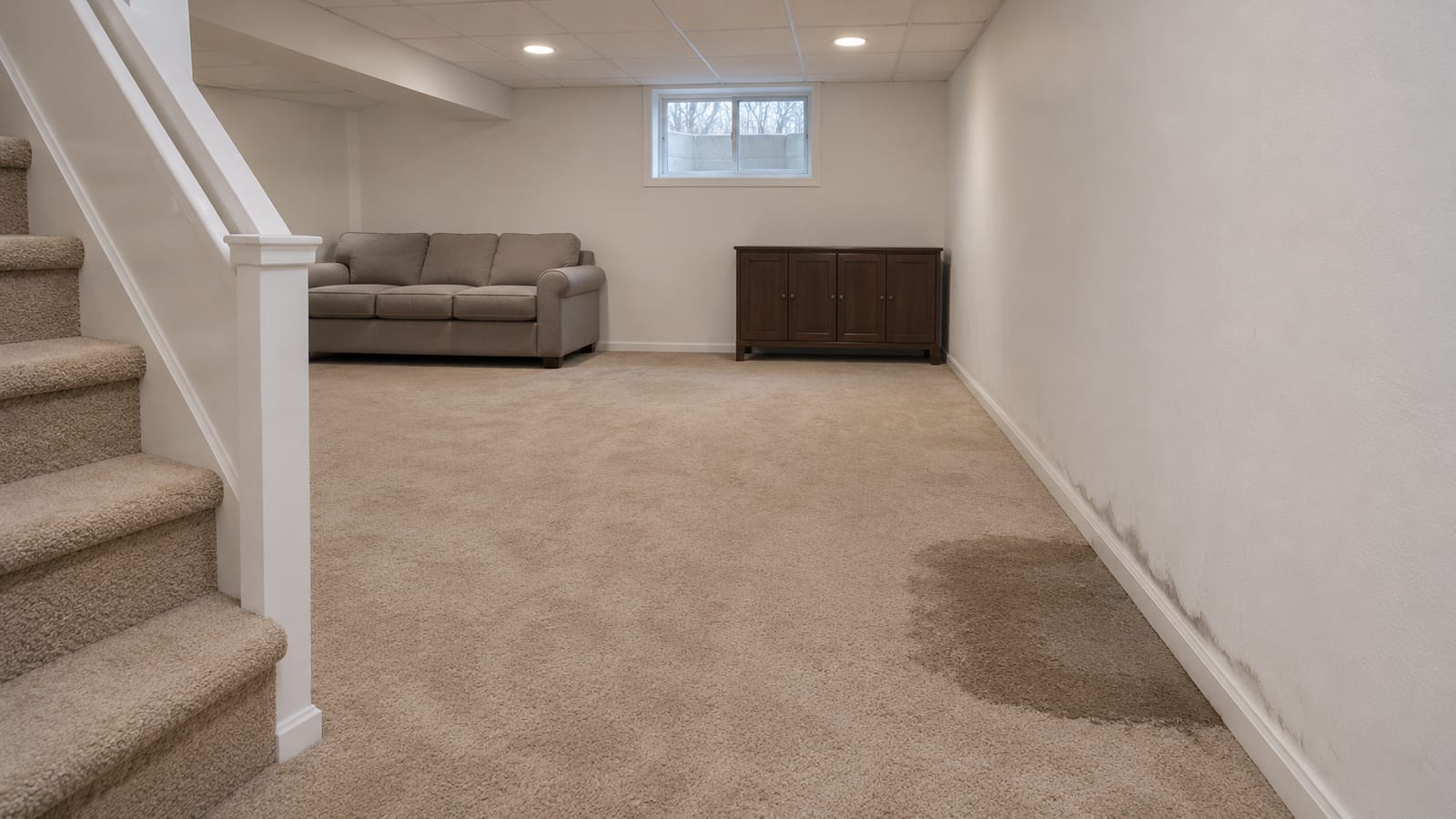
You head downstairs and the carpet squishes, or a dark line has appeared along the base of a wall that was dry last week. Before you pay anyone to fix it, you need to know where the water is coming into the basement. A plumber, an electrician, a drainage or grading contractor, a building official and a restoration company each handle a different source, and the wrong first call costs time and money.
The answer is something you can start narrowing down yourself, from a safe spot. When the water shows up, where it sits and what the outside of the house looks like tell you a great deal. If the water is near outlets, the panel or the furnace, if it smells like sewage, or if it keeps rising, go straight to the safety steps below and call for help first.
Key Takeaways
Timing points to the source
Water that appears only after rain points toward runoff, gutters, window wells or groundwater, while water that shows up in dry weather or after you run a fixture points toward plumbing, a drain or the sump.
A crack is where water enters, not always why
A wet crack can be the entry point while groundwater pressure or poor drainage outside is the cause.
Dry clean materials within 24 to 48 hours
EPA guidance says porous materials such as drywall and carpet that stay wet longer than 48 hours are generally best removed and replaced.
Photograph before you move or throw anything away
Tell your insurer before damaged property is discarded, because coverage depends on the cause of the water and the wording of your policy.
Name the source before you repair
Sealing, painting or replacing flooring over a wall or slab that is still wet usually means doing the job twice.
Basement Water in New Jersey Has More Than One Possible Source
A basement can get wet in several ways, and they do not all call for the same fix. University of Minnesota Extension groups basement moisture into liquid water from rain or groundwater, moisture produced indoors, and warm humid air condensing on cooler basement surfaces. Each leaves a different pattern.
Groundwater deserves a note of its own. When soil around a foundation is saturated, Building Science Corporation explains that the water pushes against the walls and floor with hydrostatic pressure, which can force it through openings such as cracks and the joint where the wall meets the floor.
How common is it for a basement to flood?
Flooding is among New Jersey's most frequent natural hazards, and the New Jersey Office of Emergency Management points to intense rainfall, prolonged rain, snowmelt and storms as the usual triggers. How often your own basement gets wet depends on your lot, your drainage and the storms that hit your area. Local flood maps and a look at how water moves around your house are better guides than any statewide average.
Getting the source right matters for a second reason. The New Jersey Department of Health says mold problems usually involve excess water and recommends finding and correcting the water source before any remediation. A basement that keeps taking on water keeps feeding the conditions mold needs.
The Signs That Point to the Water's Entry Point
The first round of detective work needs only a phone camera and a notepad. Note when the water appears, where it sits and what it looks like, with the date and the weather.
How to tell where water is coming into a basement
Each pattern below points somewhere. None is a diagnosis alone, but together they narrow the list quickly.
- Only after rain: Surface runoff, gutters, downspouts, window wells, groundwater or hydrostatic pressure.
- At the wall-floor joint: Capillary movement, groundwater or a cove-joint pathway. The cove joint is the seam where the basement wall meets the slab, and it often shows a ring of dampness along the base of the wall.
- Through a crack in the wall or floor: A foundation opening, with groundwater pressure behind it.
- At or below a window: The window itself, the window well, or the well's drainage.
- In dry weather or after using a fixture: Plumbing, an appliance, a drain or the sump system.
Dampness spread across cool walls or floors with no clear entry point can also be condensation, which the next section covers. If you can follow the highest damp mark, stain or wet track to its highest visible point, you will usually find the entry area. That visible endpoint may not be the original outside source, so treat it as a clue and not a conclusion.
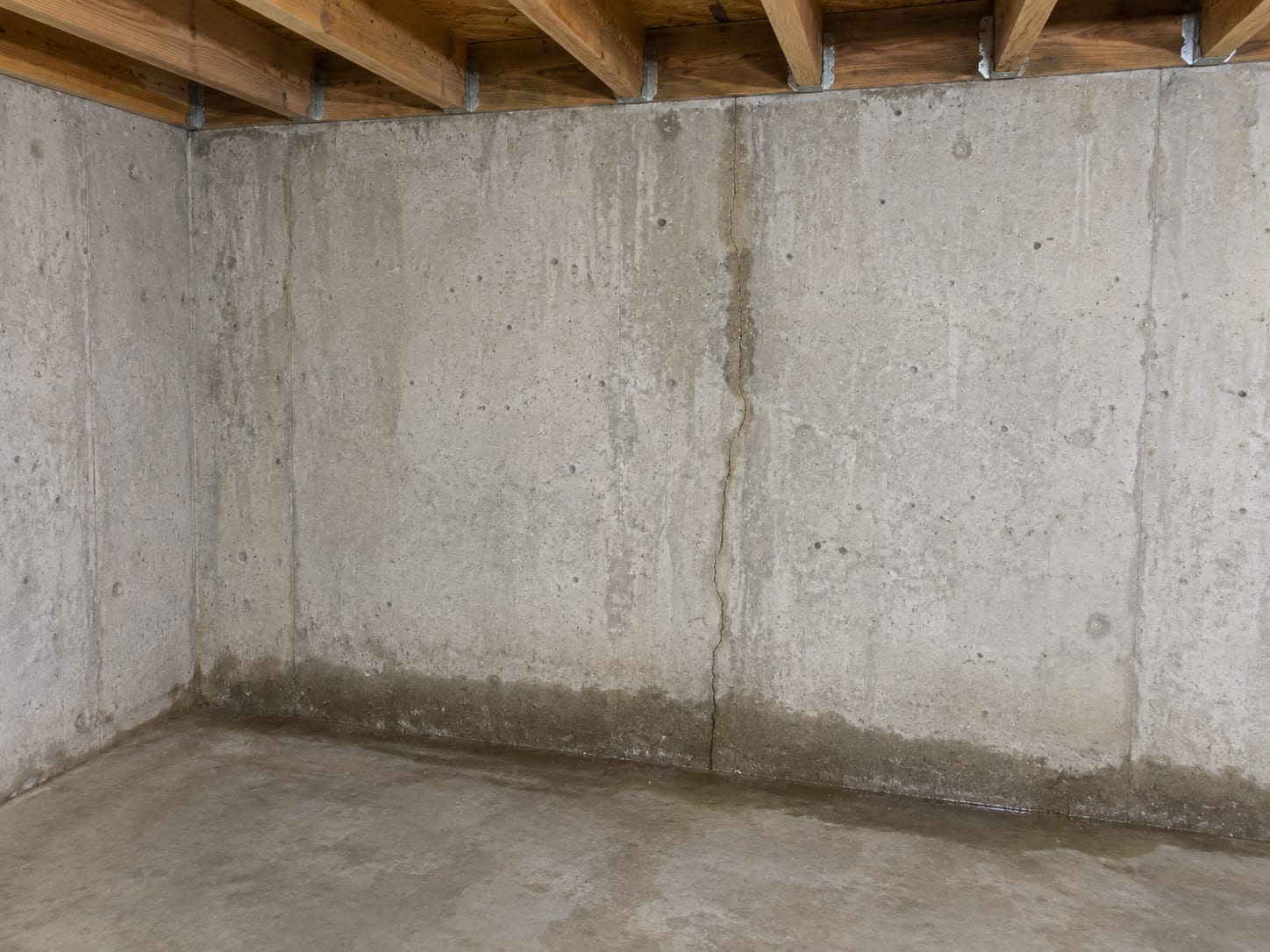
What does water damage look like in a basement?
Visible water, damp wall bases, waterlines, staining, discolored drywall, swollen materials, wet carpet and a musty odor are the common signs. Mold may also be present. EPA warns that mold can hide behind drywall, wallpaper, paneling, carpet and furniture, so a smell with no visible source is worth taking seriously.
Condensation Can Look Like a Leak, and Two Checks Tell Them Apart
Condensation happens when warm, humid air meets a cool surface, and it can look very much like water seeping through a wall. It is most common when humid outdoor air gets into a cool basement. A cold-water pipe, a foundation wall below grade and a bare slab are all cool enough to collect it.
The first check costs nothing. Compare the same spot on a dry, cool day and on a warm, humid one. Dampness that appears on cool surfaces when humid air enters the basement fits condensation, and a wet spot that looks the same in both kinds of weather points toward an actual entry.
The second check is the plastic-sheet test that EPA recommends for concrete slabs. Tape the edges of a clear plastic sheet tightly to the floor, leave it for about 16 hours, and then look for moisture on the plastic. Moisture there means the slab is still too wet to put new flooring over.
Keep the rain log going alongside these checks. A repeatable appearance after rainfall supports an outside drainage or groundwater route.
Hover or tap a row to highlight it.
| What you see | What it fits |
|---|---|
| Dampness on cool surfaces that appears when humid air enters the basement | Condensation |
| A wet spot that looks the same on a dry, cool day and a warm, humid day | An actual entry |
| A wet track from a crack, a wet wall-floor joint or water after rain | A leak |
| Moisture on a taped clear plastic sheet after about 16 hours | The slab is still too wet for new flooring |
What to Do in the First Hour and the First Day
In the first hour, the goal is safety. Keep people away from water near outlets, appliances, the furnace, the boiler and the electrical panel. Photograph the water, its height, its color, any visible damage and any nearby cracks or equipment before you move belongings. If a plumbing line is the source and you can stop it safely, stop it. If sewage may be involved, stop using the affected plumbing and call a plumber.
When should you worry about water in a basement?
Some situations call for help right away, before you investigate anything.
- Sewage or contaminated water: The state emergency management office advises avoiding toilet use and calling a plumber when sewage-line damage is suspected.
- Water near electrical equipment: If reaching the breaker means stepping in water, call an electrician for advice instead.
- Rising water or water reaching mechanical equipment: The furnace, boiler, water heater and HVAC equipment are all at risk.
- Gas odor, hissing, sparks or hot insulation: Leave the area and get help.
- Structural warning signs: Bulging or collapsing walls, shifting, crumbling concrete, horizontal foundation cracks or a sagging floor or ceiling. FEMA says not to enter a building that appears structurally damaged and to contact the local building department for a safety inspection.
Minor moisture can generally be watched while you document it, as long as the area is stable, there is no sewage, gas odor or movement, and wet materials are being dried promptly.
What to do over the rest of the first day
Record whether the water appeared during or after rain, after snowmelt, in dry weather or after plumbing use. From a safe spot, check the gutters, downspouts, grading, window wells, the sump and any floor drains. Begin drying clean, wet materials, and tell your insurer before damaged property goes in the trash.
The First Hour and the First Day
- 1
Keep people away from electrical hazards
Stay clear of water near outlets, appliances, the furnace, the boiler and the electrical panel.
- 2
Photograph before you move anything
Capture the water, its height, its color, any visible damage and any nearby cracks or equipment.
- 3
Stop a plumbing source if you safely can
If sewage may be involved, stop using the affected plumbing and call a plumber.
- 4
Record when the water appeared
During or after rain, after snowmelt, in dry weather or after plumbing use.
- 5
Check the outside from a safe spot
Gutters, downspouts, grading, window wells, the sump and any floor drains.
- 6
Begin drying clean, wet materials
Do it promptly, and tell your insurer before damaged property goes in the trash.
Drying Is Enough for Some Materials, and Others Need to Come Out
EPA's guidance is to dry or remove wet materials within 24 to 48 hours to help prevent mold growth. After that window, the material decides what happens next. EPA says concrete, cinder block, other nonporous surfaces and some wood can be cleaned and dried when they are structurally sound. Porous materials such as drywall, carpet, insulation and ceiling tile are hard to clean fully once water has soaked in, and those wet for more than 48 hours are generally best removed and replaced.
Hover or tap a row to highlight it.
| Material | What EPA guidance says |
|---|---|
| Concrete and cinder block | Can be cleaned and dried when structurally sound |
| Other nonporous surfaces and some wood | Can be cleaned and dried when structurally sound |
| Drywall, carpet, insulation and ceiling tile | Porous and hard to clean fully; those wet for more than 48 hours are generally best removed and replaced |
How do you dry up water in a basement?
Deal with electrical and structural hazards first. Then remove standing water when it is safe, take wet contents out of the room, increase air circulation safely and run a dehumidifier. Hold off on fans if mold is already growing or if the water may be contaminated, until someone has assessed the situation. Drying commonly takes several days to weeks, and materials that look dry can still hold moisture inside. EPA recommends moisture-meter readings before refinishing walls, cabinets or flooring, and says materials should read 15 percent or less.
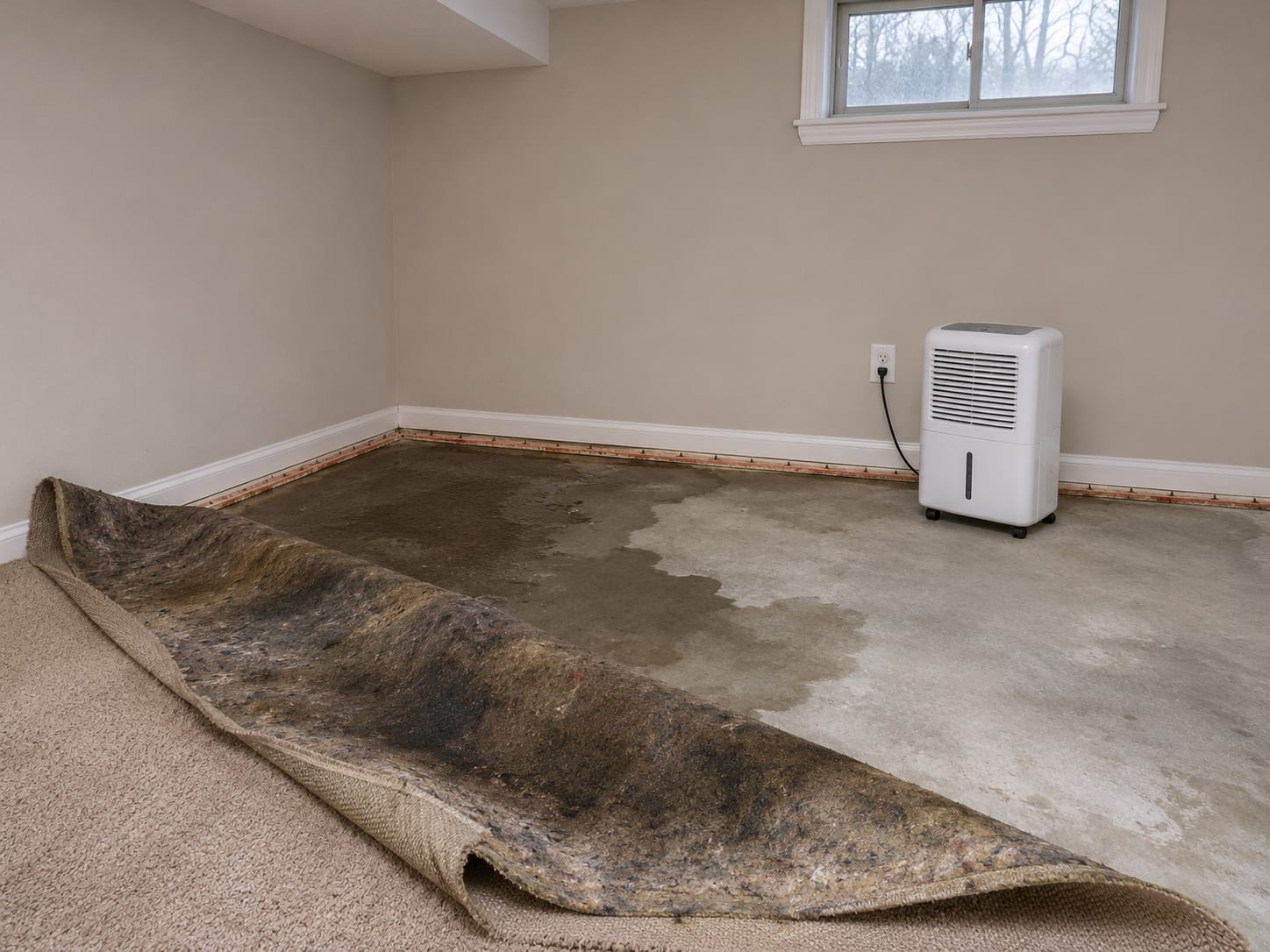
How can you tell if water damage is permanent?
Water damage is not automatically permanent. Drying time, the type of material, contamination, swelling, odor and hidden moisture decide whether something can be cleaned and kept. Swollen drywall, separated seams, a persistent odor, visible mold, staining or moisture behind a wall all suggest that surface drying is not enough. Do not seal walls, replace flooring or paint over wet surfaces until the materials underneath are dry.
New Jersey Insurance, Permits and Documentation
Insurance depends on where the water came from. The New Jersey Department of Banking and Insurance states that all homeowner policies exclude water damage caused by flood. FEMA guidance adds that homeowners insurance usually covers losses from wind, storms or broken water pipes but may not cover sewer backup or surface flooding, and a separate flood policy may apply. Whether water counts as flood, surface water, sewer backup, groundwater seepage, sump discharge or a plumbing loss changes the answer, so ask your insurer how it classifies your loss.
Good records help with any of those outcomes. Before you move or discard anything, when it is safe to do so:
- Photos and video: The water source, waterline, affected rooms, materials, appliances and belongings.
- A written timeline: The date and time you found it, recent weather, how high the water reached, whether it looked clean or contaminated, and what you did.
- Equipment details: Photograph serial numbers. FEMA says flood-insurance claims may ask for the manufacturer, model, serial number and capacity of basement equipment.
- Paperwork: Receipts, estimates, drying logs, equipment records, plumber or electrician invoices and a list of anything discarded.
Permits come up when the fix involves a sump pump or drain. New Jersey's Department of Community Affairs said in a 2018 bulletin that an interior perimeter basement drain generally does not need a building permit unless the work affects an existing radon system. It also said a new sump pump with new discharge piping, where none existed before, does need a permit, while a replacement pump does not. The state permit page says applications go through your local construction code office, so call them before work begins.
Which Professional to Call Depends on What the Water Is Doing
The source you have narrowed down tells you who to call. Water from a supply line, a water heater or a washing machine is a plumbing call. Sewage coming up a floor drain is also a plumber's job. Water near the panel or outlets starts with an electrician. A bulging wall or a horizontal crack goes to the local building department and a structural professional. Water that comes in after rain through the wall, the floor or a window may need a drainage or grading contractor once the source is named.
Hover or tap a row to highlight it.
| What the water is doing | Who to call |
|---|---|
| Coming from a supply line, a water heater or a washing machine | A plumber |
| Sewage coming up a floor drain | A plumber |
| Reaching the panel or outlets | An electrician first |
| A bulging wall or a horizontal crack | The local building department and a structural professional |
| Coming in after rain through the wall, floor or a window | A drainage or grading contractor, once the source is named |
| Source unclear, finished materials wet, drying incomplete or mold visible or suspected | A restoration company |
How long does it take for water to damage a foundation?
No fixed number of days applies. The outcome depends on where the water comes from, how long it lasts, how much pressure it carries, the materials, the drainage and the condition of the structure. What you can watch for are the signs FEMA lists as serious: crumbling, bulging, collapsing, horizontal cracks and shifting. If you see any of them, or if seepage keeps coming back, have a qualified professional look at the foundation.
A restoration company fits when you cannot pin down the source, when water has reached finished materials, when drying is incomplete, or when mold is visible or suspected. At ExecPro Restoration & Cleaning we trace the water to its source, measure moisture in concrete, drywall, flooring and framing, extract water and dry the structure, remove what cannot be dried or cleaned, and document each step. Our water leak detection service is the place to start when you cannot tell where the water is coming from. We also explain which part of the job belongs to a plumber, an electrician, a code official or your insurer.
Preventing the Next Basement Water Event Starts Outside
Most repeat basement water comes from what happens outside the walls. Walk the property during or just after a rain, from a safe spot, and look at four things.
- Grading: Soil that is level or slopes toward the house sends water against the foundation, and settled backfill under stoops can collect it too.
- Gutters and downspouts: Overflowing gutters and downspouts that discharge beside the wall put water exactly where you do not want it.
- Window wells: A poorly built well acts like a drain next to the foundation and can send water toward the wall.
- The sump: Check that the pump turns on during rain, that the discharge line carries water away from the house, and that the pit and drain are not blocked. Drainage systems can fail from collapsed pipe, silt, tree roots, broken connections or pump failure.
If you ever face a flooded basement with water still standing outside, FEMA advises waiting until surface flooding has stopped or dropped below basement level, and then pumping no more than one foot of water per day. Pumping too fast can leave the walls with unbalanced pressure that may lead to collapse.
Repair in the right order: name the source, fix it, dry the space, and only then rebuild. A general mold test does not replace finding and correcting the moisture source either.
Basement Water Terms
Tap a term to see what it means.
Hydrostatic pressure. The force of water in saturated soil pushing against the walls and floor, which can force it through cracks and the wall-floor joint.
Frequently Asked Questions About Basement Water in NJ
Is this condensation or a leak?
Compare the spot on a dry, cool day and a warm, humid day, and try the plastic-sheet test on a concrete slab. Dampness across cool surfaces with no clear entry point that gets worse in humid weather fits condensation. A wet track from a crack, a wet wall-floor joint or water after rain fits a leak.
Why is water coming in only after rain?
Water that appears only after rain points toward runoff, gutters, downspouts, window wells, groundwater or hydrostatic pressure. Photograph the area before, during and after rain, then check the grading and downspouts outside.
Will homeowner's insurance cover this?
It depends on the cause, your policy language, its endorsements and its exclusions. Homeowner policies exclude flood, and a plumbing loss is treated differently from surface water or groundwater seepage. Call your insurer before discarding damaged property.
Should I remove carpet and drywall now?
Photograph everything first and tell your insurer. Porous materials wet for more than 48 hours are generally best removed and replaced, and clean materials that can be dried should be dried within 24 to 48 hours.
Check What You Know About Basement Water
1. What does water that appears only after rain point toward?
2. How long should the plastic sheet stay taped to a concrete slab?
3. When are porous materials such as drywall and carpet generally best removed and replaced?
4. What is the first call when water is near the electrical panel?
Pick an answer to begin.
Final Thoughts
A wet basement gets solved in a clear order. Work out when the water appears and where it sits, rule out condensation, check the outside of the house, and keep people away from anything electrical, contaminated or structurally suspect. Dry clean materials quickly, document the loss, and name the source before anyone starts a repair.
That order spares you from paying for the wrong fix and leaves you with a record for your insurer, your code office and a future buyer. A source that is named and corrected is the difference between a one-time cleanup and a basement that floods again with the next storm.
If you cannot tell where the water is coming from, or it has already reached carpet, drywall or mechanical equipment, call ExecPro Restoration & Cleaning at (888) 300-3772 or contact us. We serve homeowners across New Jersey with water leak detection, water extraction, structural drying, mold assessment and remediation, and rebuilding after the drying is done. Tell us what you are seeing and when it started, and we will help you take the next step.
Related Articles
Commercial Basement Water Removal in NJ: First Day to Reopening
Commercial basement water removal after a storm, sump failure or pipe break? Learn the first safety steps, how drying works and when the space can reopen.
Can a House With Mold Be Saved? What Decides the Scope
Whether a New Jersey house with mold can be saved comes down to the moisture source, the structure and the materials. See the steps, limits and next calls.
Mold After Water Damage in NJ: Timing and Drying Steps
How long wet materials can sit before mold becomes a risk in a New Jersey home, which materials go first, how to confirm they are dry and when to call.