Water Damage Restoration in Deal NJ: Stabilize Now, Rebuild Later
Cal HewittPublished
- water damage restoration
- water damage
- restoration
- new jersey
- deal
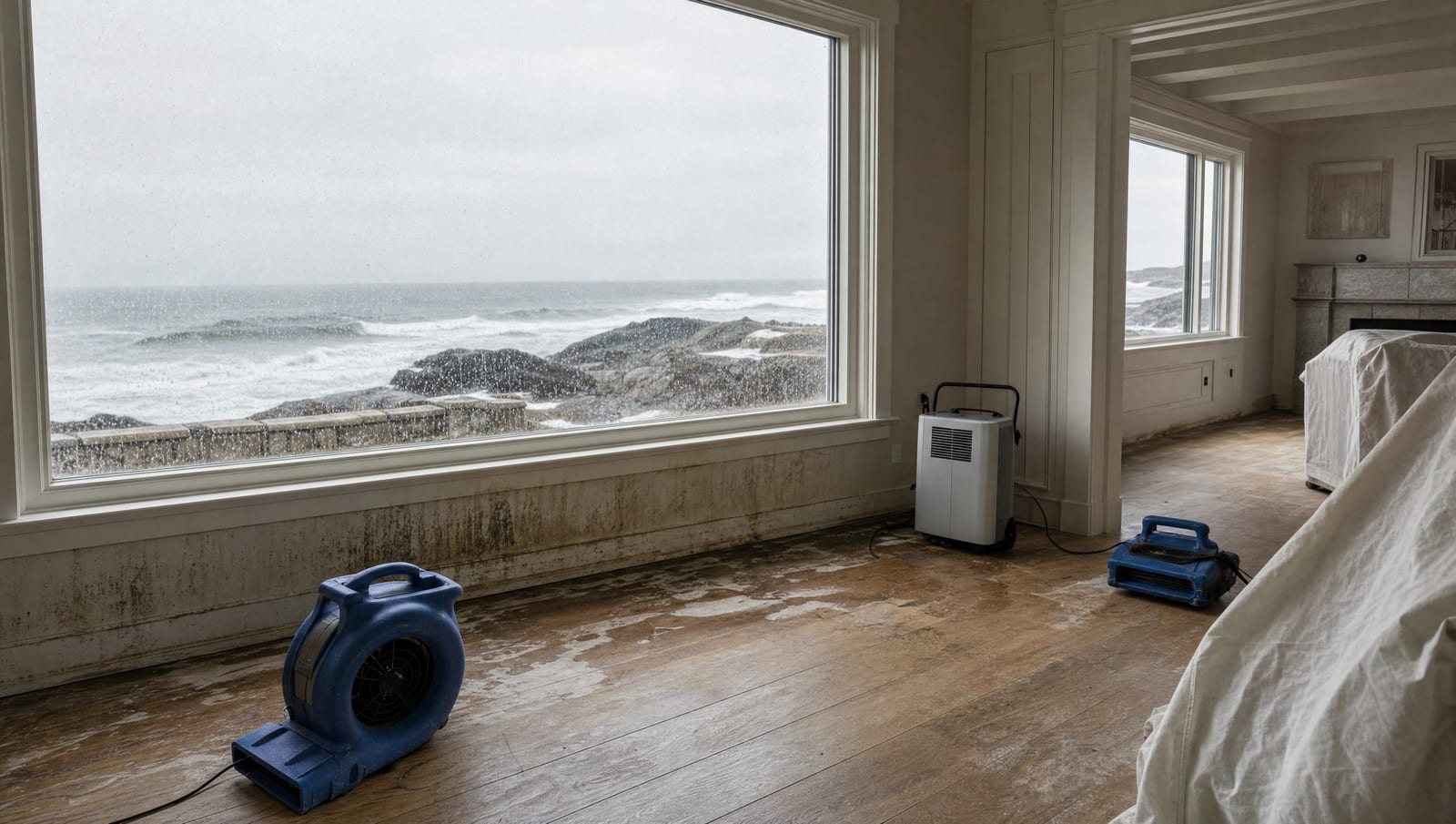
Picture a large oceanfront home in Deal, closed up for the season. A nor'easter drives rain against the roof for two days, or a supply line lets go in an upstairs bath, and no one is there to hear the drip. The floor may look dry by the time a caretaker walks through weeks later, but the walls, insulation, subfloors, and cabinetry behind them can still be soaked. That gap between when the water starts and when anyone notices is the defining water damage challenge on this stretch of the Jersey Shore, and it changes everything about how the loss has to be handled.
There is a second Deal wrinkle that most water damage articles never mention. The Borough of Deal Building Department publishes a summer construction moratorium, with construction required to cease between June 24 and the Wednesday following Labor Day. Water does not follow that calendar. A pipe can fail or a storm can hit right before the window closes, which means the emergency work and the permanent rebuild often cannot happen at the same time. The practical answer is to treat a Deal water loss as two connected phases: stabilize and dry the home right now, then plan the high-value reconstruction as its own coordinated project. This post walks through both.
Why Emergency Mitigation Cannot Wait for the Calendar
The first thing to understand is that stopping water and drying a structure is not construction. It is emergency mitigation, and it protects the building from getting worse while everything else gets sorted out. Wet materials do not pause because a permit is pending or because it is the middle of summer. Drywall swells, hardwood cups, insulation stays saturated against framing, and damp organic materials can begin supporting mold.
The EPA advises drying water-damaged areas and items within 24 to 48 hours when possible to prevent or limit mold growth. Read that carefully: it is a target to aim for, not a guarantee, and it is exactly why the drying clock starts before anyone knows the full reconstruction scope. Waiting to begin drying until permanent repairs are approved is one of the most common and most costly mistakes on a coastal home.
That is why the two phases matter. Emergency extraction, moisture mapping, temporary protection, and structural drying should move immediately. Because the Borough's published page does not by itself spell out every emergency exception, an owner should contact the Building Department right away to understand how emergency stabilization, temporary protection, source repair, and later reconstruction will be treated. What should never happen is delaying water control and drying while those permanent-repair questions get answered.
Your First Hour After Finding Water in a Deal Home
Stop or isolate the source
Shut a valve, cut water to the failed line, or contain the roof or window entry point if it is safe to reach.
Stay clear of electrical hazards
Do not walk into standing water near outlets, panels, or fixtures, and never enter under a sagging ceiling to grab belongings.
Call the right trade
A plumber, roofer, HVAC contractor, or the utility may be needed to stop the source before restoration can begin.
Photograph before you touch anything
Capture visible water, affected rooms, and any contents while conditions are still as found.
Notify the owner, caretaker, or insurer
A seasonal home usually has a property manager or caretaker who needs to authorize access and start the claim.
Do not wait on permanent repairs to start drying
Emergency mitigation and later build-back are separate phases, and wet materials need attention now.
How a Closed Seasonal Home Hides the Damage
Deal has far more housing units than year-round households, which is the shore reality behind so many of these losses. A home that sits closed and lightly monitored is a home where a small problem gets weeks to become a large one. A roof leak, a plumbing break, a sump issue, an HVAC condensate line, or a failed appliance can run unnoticed the entire time.
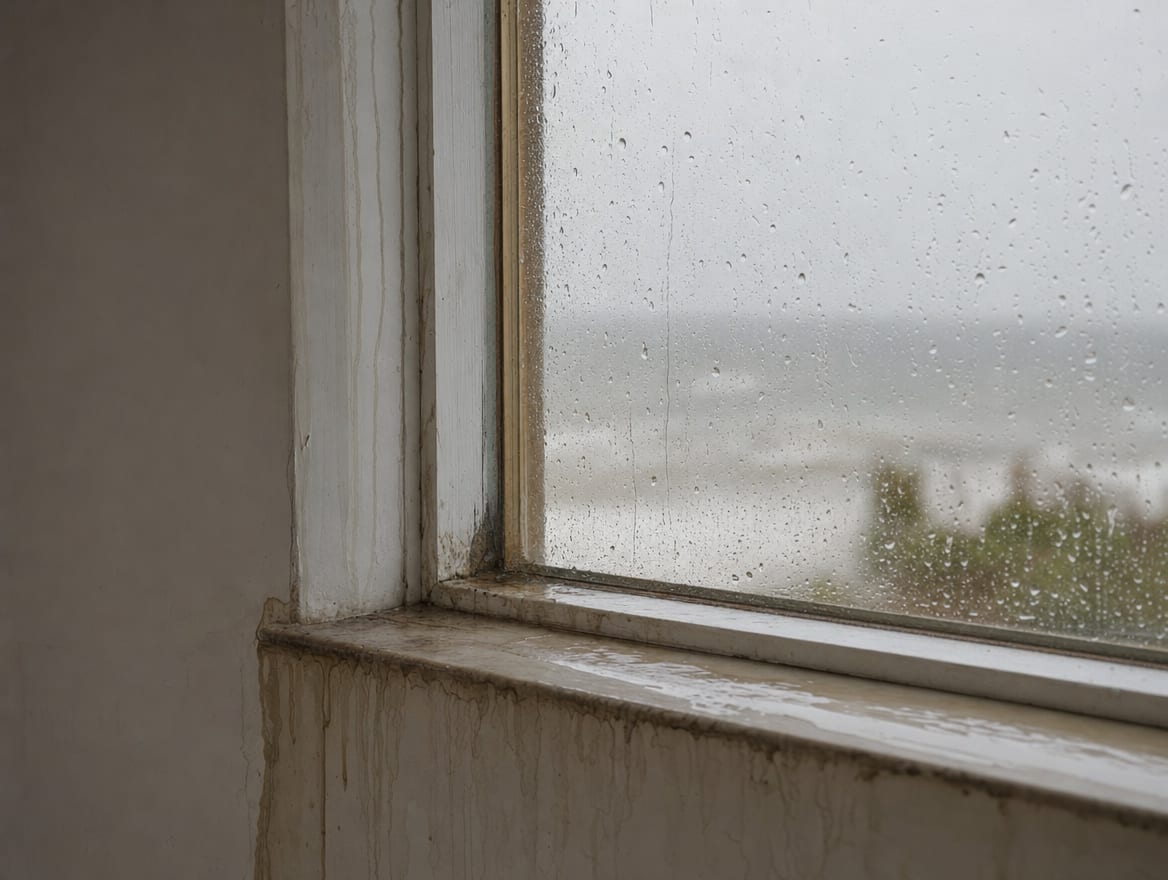
By the time the owner or caretaker arrives, the water may be long gone from the floor surface while the materials around it stay wet. That is the trap. Someone glances at a dry-looking room and assumes the problem passed, when insulation, subfloors, wall cavities, ceilings, cabinetry, and masonry are still holding moisture. In a large estate, water can travel through several floors, along stair openings, and through plumbing and mechanical chases, so a single visible stain may represent only one edge of the loss.
Delayed discovery does more than make the job bigger. It raises the odds of mold growth, extends drying time, threatens more contents, and forces more demolition. It is also why the restoration team has to reconstruct the loss history. Weather records, alarm and smart-home data, caretaker notes, HVAC settings, plumbing and roof reports, and the last date the home was known to be dry all help establish how long water was present, which drives nearly every decision that follows.
Coastal Storms, Wind-Driven Rain, and Salt Air
Deal's Atlantic location adds pressures that an inland home never faces. Heavy rain, strong wind, coastal storms, and nor'easters push water at the building envelope, and it can enter through roofs, flashing, windows, doors, siding, chimneys, vents, and other exterior penetrations. Coastal storm damage restoration frequently involves the roof and exterior envelope rather than a single interior fixture.
Humid summers work against drying. High outdoor humidity can slow the removal of moisture and raise indoor relative humidity after a water event, and the problem is worse in a closed home where cooling or dehumidification has been reduced. Winter brings its own version, with frozen pipes, snow, ice, power interruptions, and freeze-thaw cycles all capable of creating plumbing, roof, and envelope failures.
Salt air deserves a clear-eyed note. Salt does not directly cause water damage or mold. What it does over time is contribute to deterioration of metal flashing, fasteners, HVAC equipment, exterior vents, and mechanical parts, and that corrosion can indirectly open the leaks and condensate problems that later show up as an interior loss. On the coast, the building envelope simply takes more stress, and the drying environment is less forgiving.
Moisture Mapping and Protecting High-Value Materials
Once the source is controlled, the real diagnostic work begins, and it is where a careful approach separates itself from a quick fix. A technician identifies the source and approximate duration, the water category and any contamination, and every room, floor, ceiling, wall, cavity, and material affected, along with electrical and HVAC involvement, detached structures, any pre-existing moisture or mold, and the high-value or custom finishes that need protection.
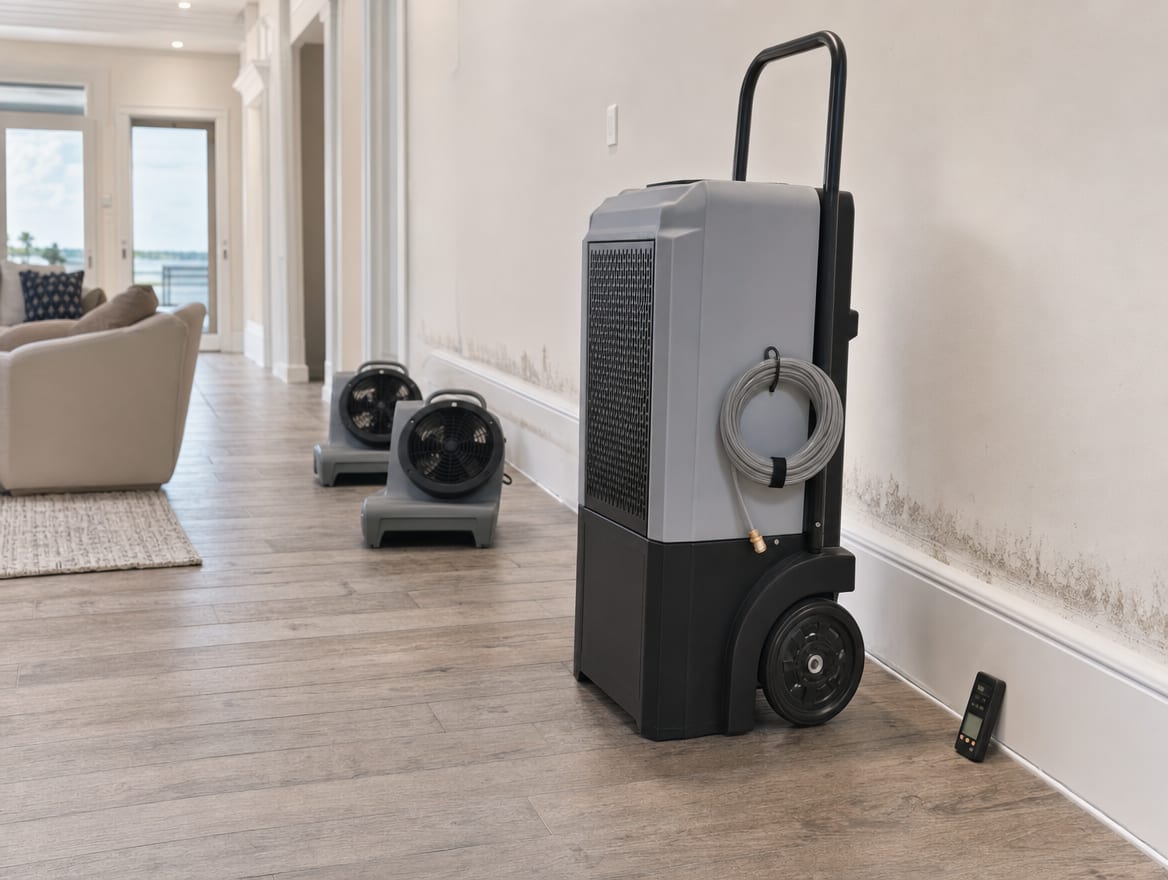
Moisture mapping uses moisture meters and thermal imaging to find water the eye cannot see. This is not a formality on a Deal property. Homes here often carry hardwood, plaster, stone, custom cabinetry, extensive millwork, artwork, and rugs, and the mapping is what allows drying decisions to protect those materials instead of defaulting to demolition. Extraction and contents protection run alongside it: removing standing water with emergency water extraction, relocating or protecting furniture, artwork, rugs, books, and electronics, pulling saturated carpet and pad, and building a contents inventory that separates what can be saved from what cannot.
What Can Be Dried and What Has to Come Out
Wet does not automatically mean gone. One of the worst mistakes on a high-value home is demolishing every damp material on sight, and the opposite mistake, trying to save materials that are contaminated or structurally failed, is just as real. The right call sits in between, and it depends on the water category, how long the material stayed wet, the material type, the moisture readings, whether it can be cleaned, its structural integrity, the access drying needs, any lead or asbestos concerns, and the material's replacement value and craftsmanship.
Older Deal homes raise the stakes here, because painted plaster, older flooring, pipe insulation, adhesives, and other suspect materials may contain lead-based paint or asbestos, and water-damage demolition can disturb them. That is a reason to test and plan rather than tear out fast. Structural drying then does the heavy lifting on what stays: air movers, dehumidifiers, controlled heat where appropriate, cavity drying, and floor drying systems, tracked with moisture meters and thermal imaging and adjusted as the materials respond. Effective structural drying of wall cavities, subfloors, and mechanical spaces is often the difference between a finished job and a repeat problem in a large home with finished lower levels.
Hover or tap a row to highlight it.
| Material | Often salvageable when | Usually removed when |
|---|---|---|
| Hardwood flooring | Clean water, short exposure, subfloor and backing respond to drying | Long saturation, cupping that will not recover, or contamination |
| Plaster and masonry | Sound, clean water, dries on monitoring | Delaminated, crumbling, or holding water that will not release |
| Drywall | Wet only near the base and dries to standard | Saturated high up the wall or exposed to contaminated water |
| Insulation | Rarely; it holds water against framing | Wet, compressed, or contaminated in most cases |
| Carpet and pad | Clean-water event caught quickly | Contaminated water, or pad soaked through |
| Custom cabinetry and millwork | Solid wood that dries with specialist evaluation | Swollen, delaminated, or unsanitary |
Telling Flood, Storm, Plumbing, and HVAC Losses Apart
Not all water is the same, and the source changes the safety, sanitation, scope, and insurance treatment of the whole job. External flooding must be distinguished from internal plumbing discharge, because the water category and cleanup procedures differ, and so can coverage. Sewage, groundwater, and long-standing water are handled very differently from a clean supply-line leak.
Flood exposure in Deal varies parcel by parcel, so it is checked against FEMA and NJDEP resources, and tools like NJFloodMapper, for the specific property rather than assumed for the town. New Jersey also requires sellers and landlords to disclose known and potential flood-risk information, which makes accurate documentation of a flood loss more than a formality. When the water comes from outside the building envelope during a coastal event, flood damage cleanup carries contamination and sanitation steps that a clean interior leak does not. A storm or roof source, a plumbing break, and an HVAC condensate failure each point the response in a different direction, which is why identifying the source is step one, not an afterthought.
From Emergency Stabilization to Final Rebuild
- 1
Control the source and stay safe
Stop or isolate the water, manage electrical and structural hazards, and bring in the right trade to make the source repair.
- 2
Inspect and map the moisture
Find the source, category, and duration, then map every wet room, cavity, and material with meters and thermal imaging.
- 3
Extract and protect contents
Remove standing water, relocate or shield high-value contents, and inventory what is affected.
- 4
Decide what dries and what goes
Make selective removal calls based on category, duration, material, moisture, and hazardous-material concerns.
- 5
Dry the structure and monitor
Run air movers and dehumidifiers, dry cavities and floors, and log readings until materials reach dry standard.
- 6
Check for mold if drying was delayed
When materials stayed wet, inspect for growth and odor and add remediation only where the evidence supports it.
- 7
Verify and document dryness
Confirm completion, record materials removed or kept, and assemble the file before any rebuild.
- 8
Rebuild without trapping moisture
Only after verified dryness, restore plaster, drywall, flooring, cabinetry, and finishes so new work does not seal in water.
Documenting the Loss Before Any Rebuild
Reconstruction should never start on a home that has not been proven dry. New finishes over damp materials trap moisture and set up repeat damage, which on a high-value interior is an expensive way to redo the same job twice. Before build-back, the record should show drying completion, which materials were removed or retained, that the source was repaired, that mold remediation was done where needed, and that any electrical, HVAC, plumbing, roofing, or structural clearances are in hand.
A strong restoration file on a Deal property carries weight for insurance, real estate, and permitting all at once. It usually includes the date and time of loss and discovery, the weather and power history, photos and video, alarm or caretaker records, source-repair reports, moisture maps, drying logs, equipment records, a contents inventory, demolition records, any mold findings, permit and inspection records, correspondence with the Borough about emergency work or construction timing, and the estimates and insurance communication. That documentation is also how an owner shows the full chronology of a loss, which protects the value of a home that changes hands in a high-value market.
Coordinating the Borough, Insurers, and Trades for Build-Back
The permanent phase is where Deal's local requirements come back into play. Routine extraction and drying may not require the same approvals as construction, but plumbing, electrical, HVAC replacement, structural repair, roofing, insulation, drywall, flooring, and other reconstruction work may require Borough permits and inspections, and exact requirements should be confirmed with the Building Department for the specific scope. Paid residential restoration and reconstruction work may also fall under New Jersey Home Improvement Contractor registration requirements.
Insurance is its own coordination, and it is one an owner should go into with clear expectations. New Jersey Department of Banking and Insurance materials state that homeowners policies exclude flood damage, so separate flood insurance is what applies to a flood loss. Coverage for internal water discharge depends on the actual policy, the cause, the exclusions and endorsements, the occupancy, the maintenance, and the mitigation. No restoration contractor can guarantee that a claim will be covered, and anyone who promises otherwise is a red flag. When the phases line up, emergency mitigation, temporary protection, source repair, and permanent build-back move in sequence, with post-water damage reconstruction handling the drywall, flooring, painting, and finish carpentry a high-value Deal interior needs, all under one point of contact rather than a scramble of separate companies.
Frequently Asked Questions
What should I do first when I find water in a Deal home?
Stop the source if it is safe to do so, stay away from electrical hazards, and contact the appropriate repair trade to shut the problem off. Begin emergency mitigation and document the visible damage with photos. For a seasonal property, loop in the caretaker, property manager, or owner so access and the insurance claim can start without delay.
How quickly can mold become a concern after a leak?
The EPA recommends drying water-damaged areas and items within 24 to 48 hours when possible. That is a target rather than a promise, and it is why drying should start right away, especially in a closed home where a leak may already have run for some time before anyone found it.
Can hardwood floors and plaster be saved?
Sometimes. Whether hardwood and plaster survive depends on the water category, how long they stayed wet, their construction and adhesion, any contamination, moisture in the subfloor or backing, and how they respond to drying. Careful moisture mapping and drying give high-value materials their best chance instead of defaulting to demolition.
Do all wet walls need to be removed?
No. Removal depends on the material, the water category, the moisture readings, the access drying requires, any contamination, and the material's drying potential. Some wet drywall and plaster can be dried in place, while saturated or contaminated sections usually need to come out.
Does Deal's summer construction moratorium prevent emergency drying?
The Borough's published page states that construction must cease during the listed summer period, but it does not define every emergency condition. Contact the Borough of Deal Building Department right away to understand how emergency work is treated. Emergency water control and drying should not be delayed while permanent-repair requirements are being clarified.
Will my insurance cover the loss?
It depends on the policy and the cause. Homeowners policies exclude flood damage, so flood losses fall to separate flood insurance, while coverage for an internal water discharge depends on your specific policy and circumstances. A restoration contractor cannot guarantee coverage, though thorough documentation of the loss and the drying process supports your claim.
Water Damage Terms
Tap a term to see what it means.
Water category. The classification of the water by how contaminated it is, from a clean supply line to grossly contaminated sewage or floodwater, which drives the safety and cleanup approach.
When a leak surfaces in a Deal home, the smart move is to stabilize now and rebuild later, and that is exactly how ExecPro Restoration & Cleaning approaches a coastal water loss. Our team handles emergency extraction, moisture mapping, structural drying, documentation, and the high-value reconstruction that follows, coordinating Borough requirements and your insurer along the way. Call (888) 300-3772 or reach out online to get an assessment scheduled and get from a hidden leak to a fully restored home as quickly as possible.
Serving Deal
ExecPro Restoration & Cleaning provides mold remediation services in Deal, NJ, from inspection and testing through removal, drying, and post-remediation verification. Call (888) 300-3772 for 24/7 emergency response.
Related Articles
Water Crossed the Property Line: Restoration in Princeton Junction NJ
In Princeton Junction's commuter households, a supply-line leak can run for hours and cross floors, finished basements, and shared walls before anyone is home.
Dry It Without Destroying It: Water Damage Restoration in Princeton NJ
A roof or plumbing leak in a historic Princeton home soaks plaster, hardwood, and millwork. Here is how to dry and restore it without destroying what matters.
Water Damage Restoration in Robbinsville, NJ: Creek Water, Pipe Water and the Claim File
Where a leak or flood begins decides what can be kept. See how water damage restoration in Robbinsville, NJ sorts pipe water from creek water and the claim.