Emergency Water Extraction in Deal, NJ: Your First 24 Hours
Cal HewittPublished
- emergency water extraction
- water damage
- coastal
- new jersey
- deal
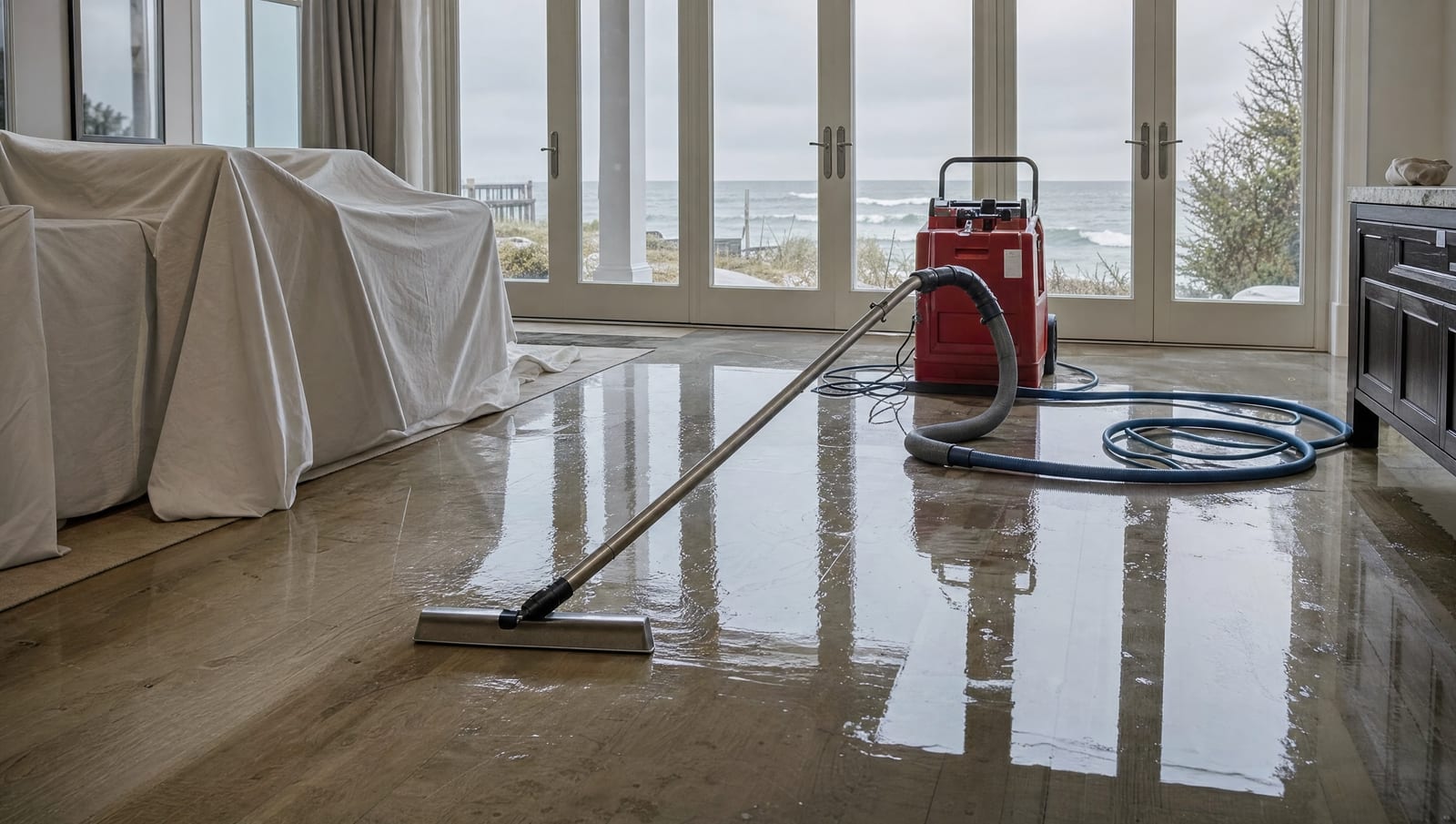
A caretaker opens a large oceanfront home in Deal to check on it before the season, steps into a lower level, and hears a splash. Water is standing where it should not be. Nobody knows how long it has been there. The owner is somewhere else entirely, the house has been closed and lightly watched for weeks, and every hour that passes lets the water push deeper into finishes that are expensive and slow to replace. This is the moment that decides how bad the loss becomes, and it has almost nothing to do with the rebuild that comes later. It is about the first 24 hours.
This post is not about the full restoration lifecycle, and it is not about sorting which insurance policy applies. It is about the urgent first stage on its own: getting into the home safely, stopping more water from coming in, capturing what things looked like before anyone disturbs them, and pulling standing water out fast while protecting high-value finishes and contents. That first-response work has its own rhythm on the Jersey Shore, and in Deal there is one local wrinkle at the end of it that a caretaker should know about before the crew ever picks up a hose.
The First 24 Hours at a Glance
Safe access comes before anything
Electrical, structural, and contamination hazards decide whether it is even safe to walk in, and that call is made before extraction starts.
Stop the source or the extraction never wins
Pumping out water while it is still coming in is a losing effort, so isolating the source is step one of the real work.
Document before you disturb
Photos, moisture readings, and notes taken while conditions are as found are what a claim leans on later.
Speed protects finishes and contents
Standing water wicks into millwork, subfloors, and stored belongings within hours, so rapid extraction limits how much is lost.
Extraction is not construction
Getting water out is emergency mitigation, so it proceeds even during Deal's summer building moratorium; only the permanent rebuild waits.
Why the First Hours Decide the Loss
Water does not sit politely on the floor and wait. It moves into whatever will absorb it: baseboards, drywall, subfloor, insulation in the wall cavity, the underside of cabinetry, and any contents left on a lower level of a closed home. The EPA advises drying wet materials within 24 to 48 hours where possible to limit mold growth, and that target is exactly why the response cannot wait for a full plan. The clock that matters most is the one that started the moment the water appeared, not the one that starts when a scope of work is signed.
In a seasonal Deal home, that clock has often been running for a while before anyone finds the problem. A supply line can let go, a sump can fail during a long storm, an HVAC condensate line can back up, or wind-driven rain can find a way through the envelope, and there is nobody in the house to hear it. So the person who discovers the loss is usually not the owner and usually cannot answer every question about the property. The job of the first 24 hours is to stabilize the situation with the information available and to get standing water out before it does more damage, not to solve the entire loss in one visit.
Step One: Safe Access Before Anything Else
The instinct to rush in and start bailing is understandable and wrong. Standing water in a home carries hazards that are not obvious from the doorway, and the first real decision is whether it is safe to enter at all. Three hazards drive that call. There is electrical risk, because water near outlets, panels, submerged fixtures, or a running appliance can energize the water itself. There is structural risk, because a sagging ceiling holding water overhead or a soaked floor assembly can give way. And there is contamination risk, because water that came in from the ground, from a storm, or from a sewer line is not the clean water it may look like.
None of that gets sorted by guessing. If there is any doubt about electrical hazard, power to the affected area is cut at a safe point before anyone wades in, and utilities or a licensed trade are brought in when the situation calls for it. A trained crew treats unknown water as unsafe until it is confirmed otherwise and wears the right protection accordingly. A caretaker who arrives first should stay out of standing water, avoid walking under a bulging ceiling to grab belongings, and let the responders make the access call. Fast is good; reckless is not, and a first responder who gets hurt helps no one.
Step Two: Stop the Source
Extraction that runs while water is still flowing is wasted effort. Before the pumps come out, the source has to be found and shut down. That might mean closing a valve, cutting water to a failed supply line, killing power to an appliance that is discharging, or containing a roof or window entry point if it can be reached safely. Sometimes the source is obvious and sometimes it is not, especially in a large home with multiple air handlers, condensate lines, and drain pans where a slow leak can travel before it shows.
Some sources need a specific trade to stop them for good. A plumber, a roofer, an HVAC contractor, or the utility may have to make the actual repair, and that is fine. The goal in the first hours is not a permanent fix; it is source control, meaning the water stops getting worse so the extraction can win. Once the flow is stopped or isolated, the standing water in the home becomes a fixed problem that can be measured, documented, and removed, rather than a moving target that keeps refilling everything the crew just cleared.
Step Three: Document Before You Disturb
The moment before anyone touches anything is the only chance to capture the loss as it actually happened. Once extraction begins and materials start moving, that original picture is gone. So documentation comes before disturbance: wide photos of each affected room, close shots of standing water depth against a baseboard or wall, images of wet contents where they sat, and notes on what was found where. Moisture readings taken at this stage record how far the water traveled into materials that still look dry on the surface.
This record is not busywork. Insurance coverage in a water loss depends on the policy language, the cause, timely notice, and documentation, and only the carrier can decide what it will pay. Nobody standing in the house in hour one can promise coverage, and a contractor who does is waving a red flag. What the responders can do is build the clean, dated evidence that lets the claim be evaluated fairly later: pre-work photos, moisture readings, the source finding, and the scope of what was wet. In a high-value Deal interior, that documentation is often the difference between a smooth claim and a dispute.
Emergency Water Extraction: Hour by Hour
- 1
Hour 0, discovery and safety triage
Someone finds standing water. Before entry, the crew checks for electrical, structural, and contamination hazards and cuts power to the affected area if needed.
- 2
Hour 0 to 1, stop the source
Shut a valve, cut water to a failed line, kill power to a discharging appliance, or contain a roof or window entry point so water stops getting worse.
- 3
Hour 1 to 2, document as found
Wide and close photos, standing-water depth, wet contents in place, and first moisture readings recorded before anything is moved.
- 4
Hour 2 to 6, extract standing water
Truck-mount and portable extraction units pull standing water out fast, working from the wettest areas outward to limit how far it wicks.
- 5
Hour 4 to 12, protect finishes and contents
Move or block-and-pad salvageable furniture, lift what can be saved off wet floors, and shield high-value millwork and finishes from further contact.
- 6
Hour 8 to 24, set the drying stage
With standing water gone, air movers and dehumidifiers go in and moisture is mapped, handing off to the structural drying that continues past day one.
Step Four: Get the Standing Water Out, Fast
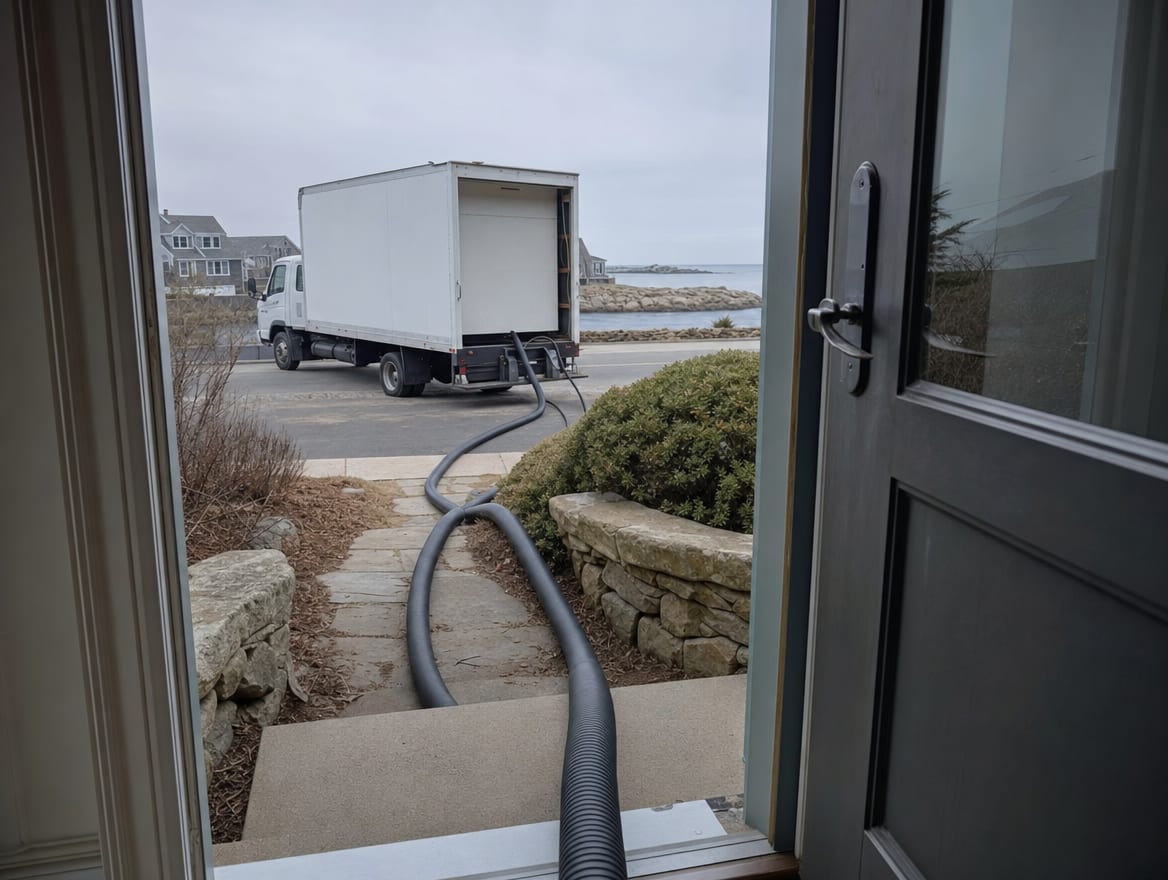
With access confirmed, the source stopped, and the scene documented, the actual extraction begins, and here speed is the whole point. Standing water is removed with powerful equipment: truck-mounted extraction units that stay outside and portable extractors that reach interior areas a hose can get to. The crew works from the wettest zones outward so the water does not keep spreading into dry material while they work. Every gallon pulled out now is water that does not get a chance to soak deeper into a subfloor or wick up another inch of wall.
Extraction removes free-standing and heavily absorbed water, but it does not dry a structure by itself. Water that has moved into wall cavities, under flooring, and into insulation has to be handled separately, which is why extraction hands off to structural drying with air movers and dehumidifiers once the standing water is gone. In a large coastal home with finished lower levels, that hidden moisture is often the larger share of the problem, and getting the extraction done quickly is what makes the drying that follows achievable within a reasonable window. This urgent first stage is the front end of a 24-hour water damage response, and when the water arrived with a coastal storm it connects directly to broader storm damage restoration work.
What Comes Out, and What Comes Off
Not everything wet gets extracted. Part of the first-pass judgment is separating water that can be pumped or vacuumed out from porous material that has absorbed water and cannot be reliably dried in place. Whether a material is cleanable or has to be removed depends on what it is made of, how contaminated the water was, and how long it sat. That call gets made item by item, not by a blanket rule, and it is documented as it goes.
Hover or tap a row to highlight it.
| Item | Handling in the first 24 hours | Why |
|---|---|---|
| Standing water on hard floors | Extracted immediately with truck-mount and portable units | Free water is fastest to remove and does the most spreading damage while it sits |
| Water in carpet and pad | Extracted where salvageable; pad often removed | Carpet can sometimes be dried, but saturated pad usually holds water against the subfloor |
| Saturated drywall and insulation | Assessed, marked, and removed if not salvageable | Porous materials that soaked up water or sat too long often cannot be dried in place |
| Wood millwork and cabinetry | Extracted around, protected, and dried where possible | High-value finishes are worth trying to save, so they are shielded and monitored, not rushed to demo |
| Contents and belongings | Lifted, moved, or blocked off the wet floor | Getting contents out of standing water early limits loss while the structure is cleared |
Protecting High-Value Finishes and Contents
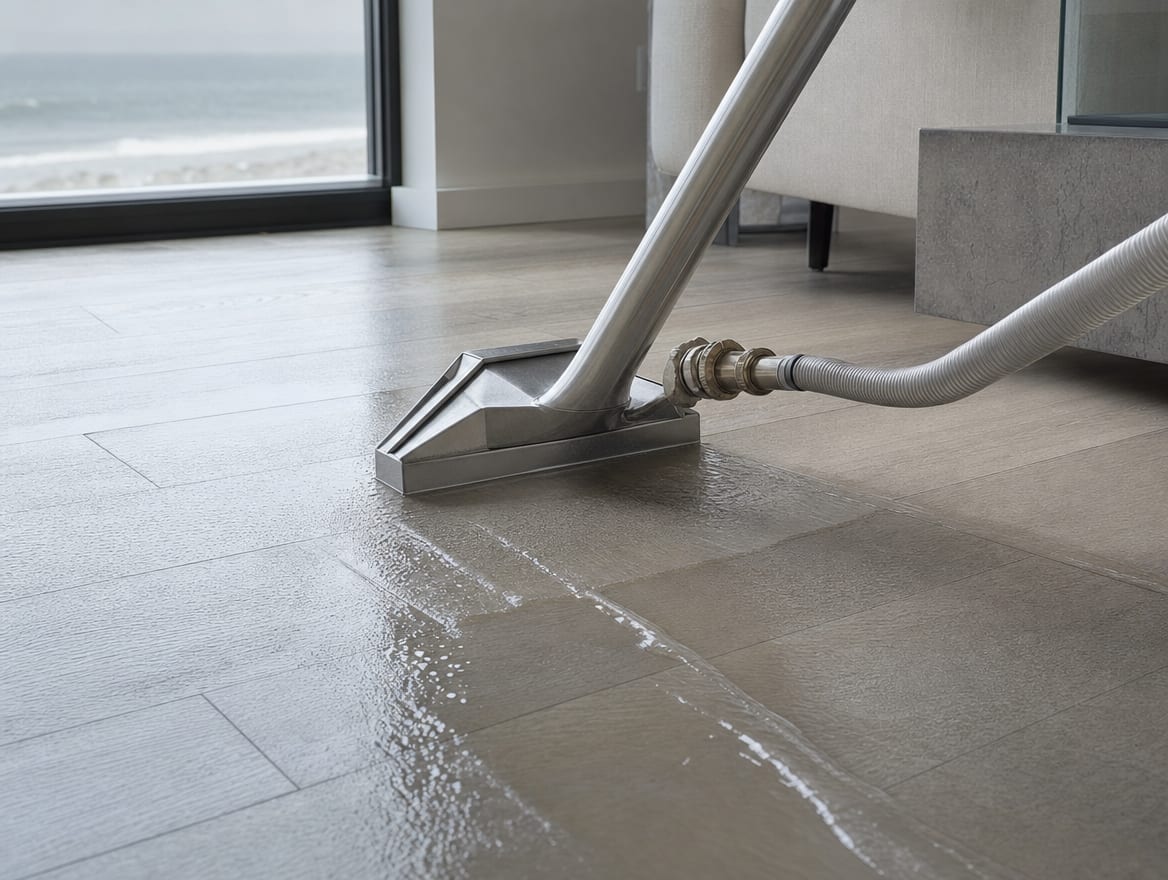
Deal's homes are not average housing stock. Many are large residences with custom millwork, extensive finish work, and expensive contents, and a big part of the first-response value is protecting what can be saved rather than treating everything as disposable. That means lifting furniture out of standing water, placing blocks and pads under legs so wood does not wick and stain, moving salvageable contents to a dry area, and shielding finishes that are worth the effort to preserve. In a high-value interior, careful contents handling during extraction can protect a meaningful amount of value that a rushed muck-out would destroy.
This is also where a coordinated crew earns its place. Extraction, contents protection, and documentation happen at the same time, not in separate visits, because the whole point of the first 24 hours is to do everything time-sensitive before the damage compounds. Materials that clearly cannot be saved are noted and removed, but the default with high-value finishes is to protect and dry, not to demolish on sight.
The Deal Checkpoint: Extraction Now, Rebuild Later
Here is the local wrinkle that catches people off guard. The Borough of Deal publishes a summer construction moratorium, with construction required to cease from June 24 through the Wednesday after Labor Day. Water does not check the calendar, so a loss can happen right in the middle of that window. The key point for the first 24 hours is this: emergency water extraction and drying are mitigation, not construction, so this urgent work proceeds regardless of the moratorium. What the moratorium affects is the permanent rebuild that comes afterward.
That is why the documentation from day one matters so much in Deal specifically. The extraction and drying get done now, and the reconstruction is planned as its own coordinated phase around the borough's requirements. An owner or caretaker should contact the Deal Building Department directly to understand how emergency stabilization, source repair, and later reconstruction will be handled for their property, and requirements should always be confirmed with the authority having jurisdiction before rebuild work begins. For the full two-phase picture of stabilizing first and rebuilding later, see our guide to water damage restoration in Deal. For the first 24 hours, the message is simpler: get the water out, protect what you can, and document everything.
Frequently Asked Questions
How soon should I respond after finding standing water?
Immediately, once it is safe. The first priority is confirming the area is safe to enter and stopping further water, and the EPA advises drying wet materials within 24 to 48 hours where possible to limit mold growth. That guidance is a target to aim for, not a guarantee, which is exactly why extraction should start as soon as safe access and source control are handled rather than waiting for a full plan.
Can I start extracting the water myself before the crew arrives?
You can take safe first steps, like shutting off the source if you can reach it safely and photographing conditions, but do not wade into standing water that may be near electrical hazards or that came in from the ground, a storm, or a sewer line. Water that looks clean is not always clean, and a trained crew treats unknown water as unsafe until confirmed. If in doubt, stay out and let the responders make the access call.
Does Deal's summer construction moratorium stop emergency water work?
Emergency water extraction and drying are mitigation, not construction, so this urgent work proceeds even during the moratorium period from June 24 through the Wednesday after Labor Day. What the moratorium affects is the permanent rebuild that follows. Confirm how emergency stabilization and later reconstruction will be treated for your property with the Deal Building Department.
Will my insurance cover the extraction?
Only your carrier can decide that, based on the policy language, the cause of the loss, timely notice, and the documentation. Anyone who guarantees coverage on the spot is showing a red flag. What the first-response crew can do is build the clean, dated record, meaning pre-work photos, moisture readings, and the source finding, that lets the claim be evaluated fairly.
Is water testing part of the first 24 hours?
Not usually. Testing should answer a specific question that changes a decision, and the urgent first stage is about safe access, source control, documentation, and extraction. If the water is contaminated or a defined question comes up later, testing can be added when it is justified rather than run by default.
What is a red flag to watch for in a first-response contractor?
Be cautious of anyone who guarantees insurance coverage, promises a specific health outcome, quotes a final price without inspecting the property, or claims a permanent fix without correcting the moisture source. Honest first-response work confirms safety, stops the source, documents the loss, and extracts the water, then scopes the rest based on what is actually found.
When you find water in a Deal home, the first 24 hours are the ones that count, and you do not have to navigate them alone. ExecPro Restoration & Cleaning responds to emergency water losses on the Jersey Shore with safe access, source control, rapid extraction, and the documentation your claim will need. Call (888) 300-3772 or reach out through our contact page, and we will help you get the water out and the home stabilized before the damage has a chance to spread.
Emergency Water Extraction Terms
Tap a term to see what it means.
Extraction. The rapid removal of standing and heavily absorbed water from a structure using powerful pumping and vacuum equipment, done before drying begins.
Serving Deal
ExecPro Restoration & Cleaning provides mold remediation services in Deal, NJ, from inspection and testing through removal, drying, and post-remediation verification. Call (888) 300-3772 for 24/7 emergency response.
Related Articles
Emergency Water Extraction in Bridgewater, NJ: Getting Standing Water Out Safely
Keep clear of wet outlets and standing water until the power question is settled. What safe entry looks like, how extraction goes and what backup coverage adds.
Emergency Water Extraction in Robbinsville, NJ: The First Hour and the 72-Hour Permit Window
Within the first hour of standing water, shut off power from a dry spot and call. See how emergency water extraction in Robbinsville, NJ works, permits too.
Emergency Water Extraction in Trenton, NJ: Rowhouses, Shared Walls and the Unit Below
In a rowhouse or a two-to-four-unit building, water can cross a shared wall or floor. What to do about power, gas and the unit below in the first hour.