Before the Pump Runs: Emergency Water Extraction Triage in Livingston, NJ
Cal HewittPublished
- emergency water extraction
- water damage
- safety
- new jersey
- livingston
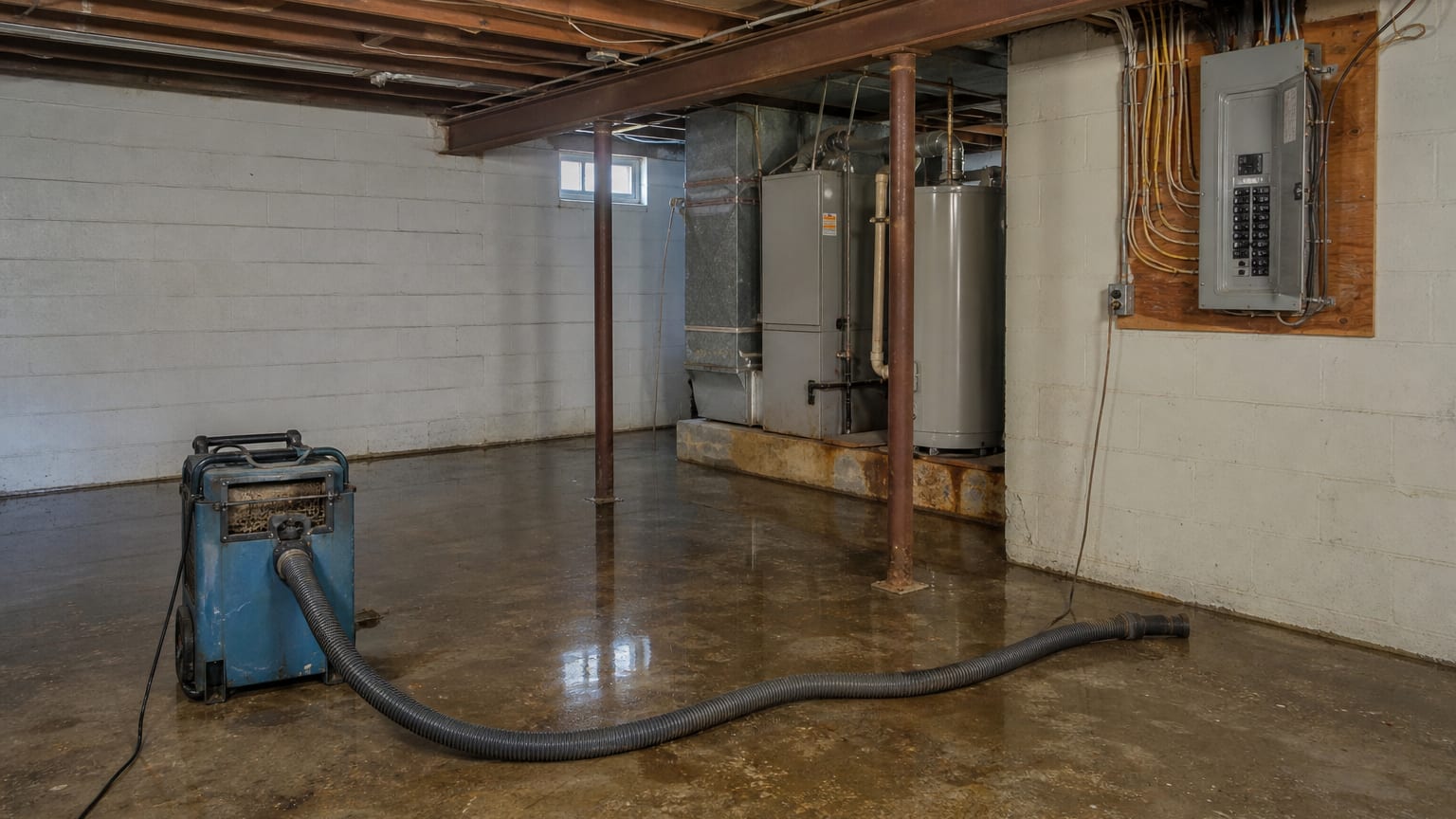
You are at the top of the basement stairs and you can hear water. Maybe you can see it shining on the floor below the last step. Every instinct says go down, look at it, and start moving things off the ground. That instinct is the one to hold for a few minutes.
Emergency water extraction begins above the water, not in it. Before anyone walks into a wet room, a short list of questions has to be answered out loud. Is the power to that area off. Is water still coming in. What is this water likely made of. Is anything overhead or underfoot unstable. Federal guidance on flood and standing water hazards is direct about avoiding water hazards rather than wading in to size them up. Those questions take a couple of minutes to work through, and they decide whether the next few hours are a cleanup or an injury.
This is the part that gets skipped most often, usually by the person who cares about the building the most. Below is what triage looks like in a Livingston home, and where the emergency phase stops.
Hover or tap a row to highlight it.
| Check | What you are looking for | Why it changes entry |
|---|---|---|
| Electrical | Panel, outlets, furnace, water heater, sump pump, or appliances in or near the water | Energized equipment in standing water is a shock hazard, so power has to be off from a dry location first |
| Active source | Water still running, dripping, or rising | Extraction into an open source wastes hours and can hide how far the water has already traveled |
| Water type | Clean supply line, sewer related condition, or outside water that entered the building | Contaminated water calls for different protection, handling, and disposal than a contained clean loss |
| Structure | Sagging ceilings, bulging drywall, saturated ceiling tile, soft flooring | A wet ceiling can hold a surprising amount of water and can let go without warning |
| Footing | Wet tile, wet stair treads, hidden floor drains, submerged objects | Slip and trip injuries are common in the first minutes, before anyone has cleared a path |
Electricity Is the First Question, Not the Second
In most Livingston basements, the electrical panel, the furnace, the water heater, the sump pump, the washer and dryer, and a run of wall outlets all live in the same room as the water. That is normal construction, and it is exactly why a wet basement is an electrical question before it is a water question.
The rule is simple. Power to the affected area comes off before anyone enters, and it comes off from a dry position. If the panel sits in the wet area, or if you would have to cross standing water to reach it, that is a call to your utility or a licensed electrician, not something to attempt. The same goes for a floor level where you cannot see the panel at all. Nobody should be guessing about what is still energized while standing in water.
A response crew works the same way. Equipment does not go in until the energized picture is understood, and that includes the extraction equipment itself, which needs power that is not being drawn through a compromised circuit.
What the Water Is Made Of Changes Everything
A supply line that lets go under a sink and a backup that comes up through a floor drain can look identical on the floor. They are not the same event, and treating them the same is one of the more expensive mistakes an owner can make.
Clean water from a pressurized supply line, an ice maker, or a water heater is the most straightforward case. Water that involves a sewer condition carries a contamination concern that changes protection, handling, and what can be saved. Water that entered from outside during heavy rain, through a roof, a surface drainage path, or a foundation opening, has picked up whatever it crossed on the way in. Ready.gov's guidance on avoiding floodwater hazards exists because that last category is unpredictable.
Livingston is inland, in Essex County, so there is no coastal or surge condition to plan around here. What there is instead is roof, drainage, foundation, plumbing, and appliance failure, any of which can happen in any season. Heavy rain can coincide with water entering a building without the rain being the cause. The honest answer in the first hour is often that the source is not yet confirmed, and until it is, the water gets handled at the more cautious end of the range.
Three Kinds of Water, Three Different Responses
Clean supply water
A pressurized line, fixture, or appliance failure. The water itself is not the hazard. The speed with which it spreads into flooring, padding, and wall cavities is.
Sewer related water
Contamination is the controlling factor, not volume. Protection, material decisions, and disposal all change, and porous materials that soaked it up are usually not candidates for cleaning in place. This is handled as sewage cleanup, not as ordinary extraction.
Water that entered from outside
Roof, surface drainage, or foundation entry. What the water crossed before it reached the building is unknown, so it gets treated as a hazard until the source and path are established.
Stop the Source, or Isolate It
Extraction into a source that is still running is wasted work. Before water comes out, the water coming in has to stop, or at least be isolated.
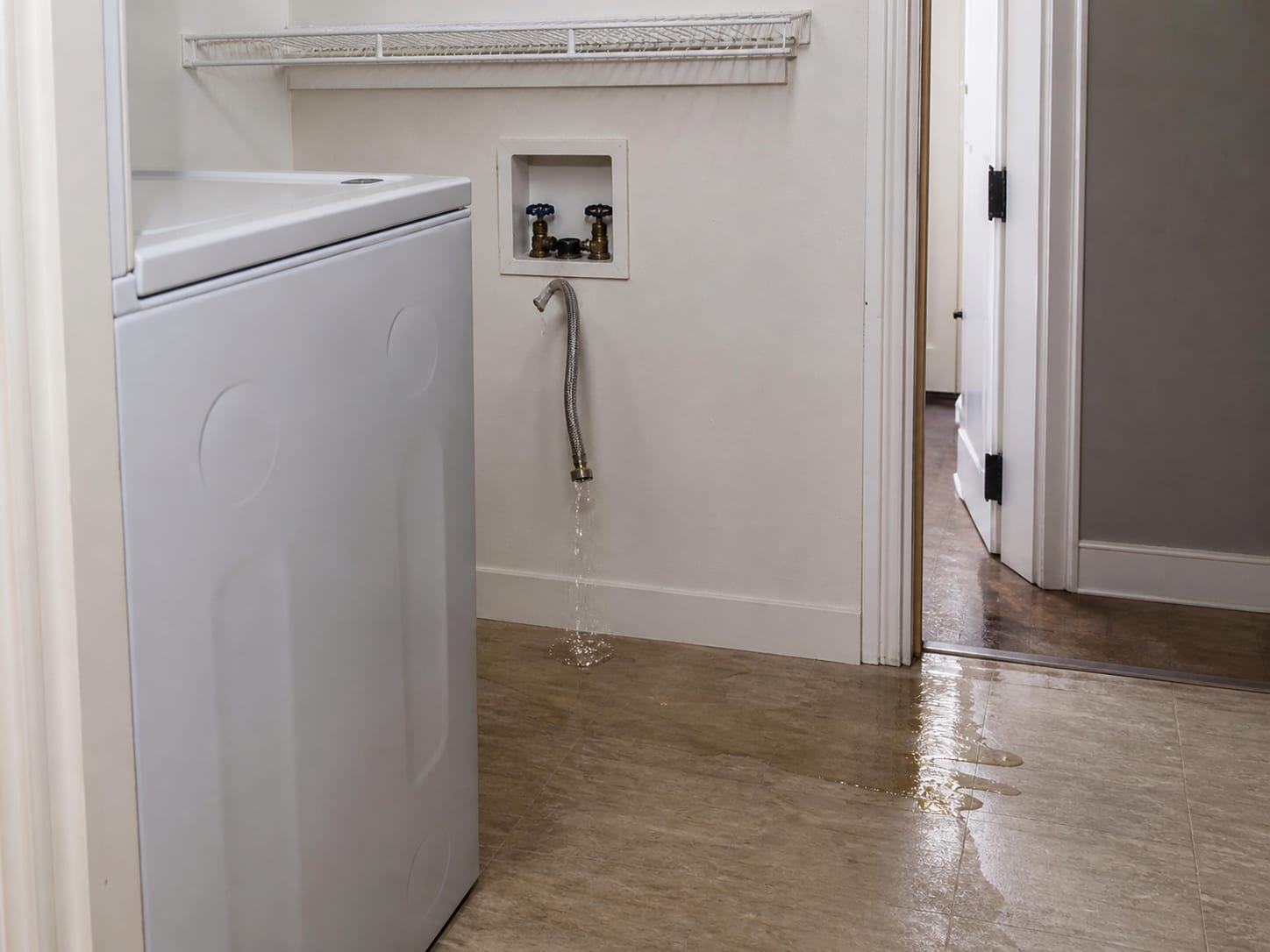
Some sources you can shut yourself. A fixture has a stop valve under it, a washing machine has two, and a house has a main shutoff where the service line enters the building. Knowing where yours is before you need it is one of the few genuinely useful things you can do on a dry Saturday. Other sources you cannot stop from inside. A roof opening, a failed buried service line, or a sewer related backup needs a roofer, a plumber, or the utility.
Property type changes who can do any of this. Livingston's municipal property records recognize single family, multifamily, and commercial buildings as different classifications, and that distinction is not paperwork. It decides who holds shutoff authority, who can authorize access to a shared mechanical room, and whether the water in your unit is coming from a system you do not control. In a multifamily or commercial building, the first call is often to whoever can shut down a shared system, not to a contractor.
Record the Condition Before It Changes
Water does not hold still. The stain line on drywall moves, saturated ceiling tile falls, and contents get relocated in the scramble. Within a few hours the room no longer looks like what happened.
A few minutes of photographs before anything is moved is worth more than an hour of description afterward. Photograph the water at its extent, the room from each corner, the ceiling, and any contents sitting in water. Note the time you discovered it, which is a different thing from when it started. Then write down what you could not reach or could not see, because anything behind a closed wall or in a room you did not enter for safety reasons belongs on that list too.
That record is not a claim and it is not a coverage decision. Insurance policies differ, and only your insurer can tell you what yours covers. What the record does is give every person who shows up later, the plumber, the drying technician, the adjuster, an accurate picture of a room that no longer exists in that condition.
Extraction: Getting the Water Out
Once entry is safe and the source is controlled or isolated, the actual emergency water extraction work begins. It happens in two layers, and people usually only picture the first one.
The first layer is standing water. It comes out with extraction equipment sized to the volume and the access. This is the fast, satisfying part, and the part that makes a room look finished long before it is.
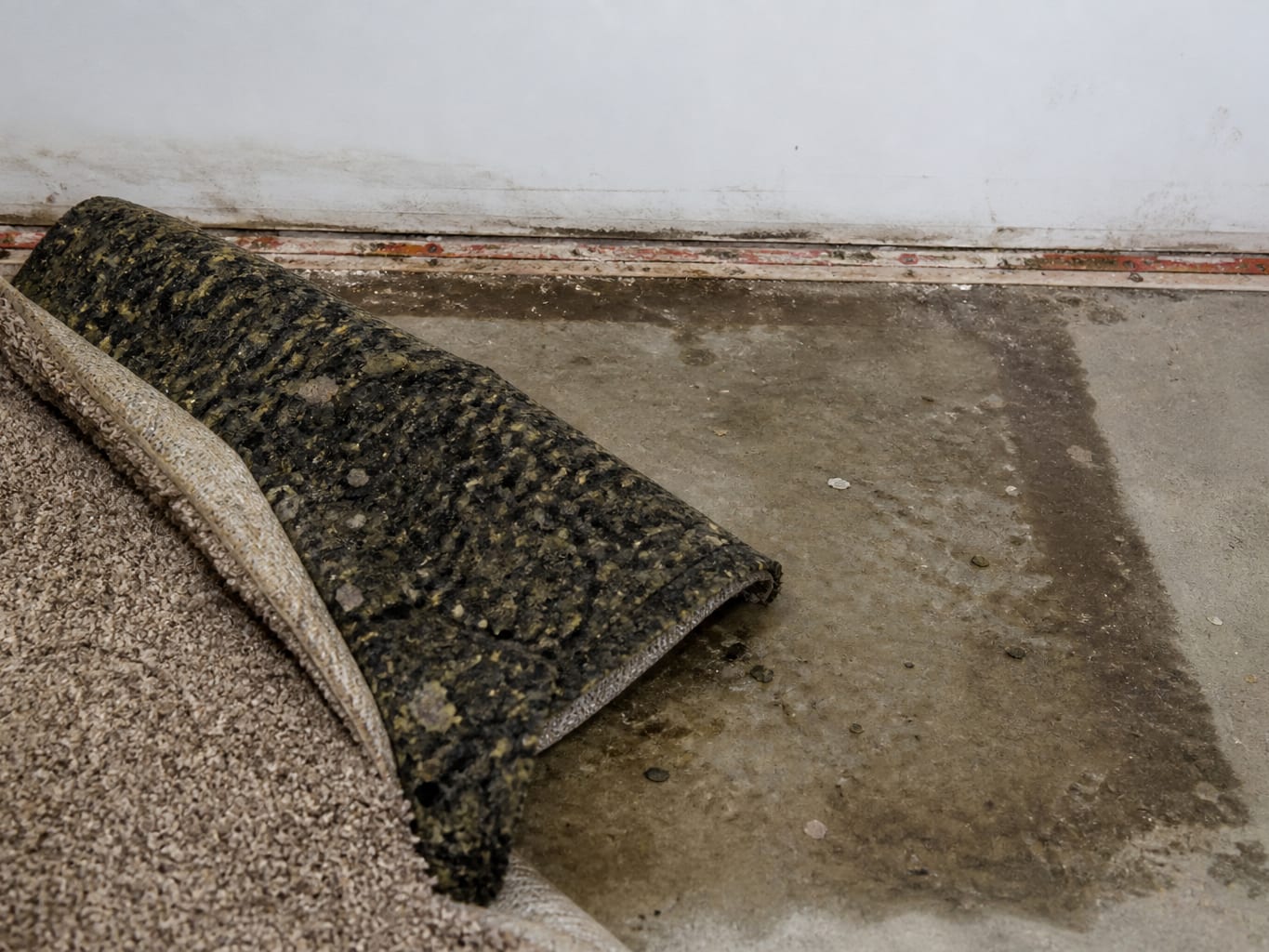
The second layer is the water that materials absorbed. Carpet and its padding, drywall at the base of a wall, insulation inside a stud cavity, subfloor, ceiling tile, and contents can all be holding water after the floor reads dry to the eye. A tile floor gives up water almost completely. Carpet padding does not, and it often holds more than the carpet above it. This is why extraction means lifting and checking rather than passing over the surface, and why a moisture reading matters more than an opinion about how a floor looks.
The EPA's guidance on moisture and mold puts prompt drying at the center of preventing what comes next. That guidance is the reason a good extraction is aggressive about the second layer. Water left inside an assembly is the whole problem, delayed.
Where Emergency Extraction Ends
Extraction is a stabilization step. It is not drying, repair, or remediation. Owners get frustrated when those blur together, because the crew that pulls the water out is not the crew that puts the room back.
After extraction, the building moves into monitored structural drying, where equipment runs and readings are taken until materials reach a verified dry condition. Only then can anyone make honest decisions about what gets repaired, what gets replaced, and whether anything needs further evaluation. Nobody can responsibly tell you at hour one how long drying will take. It depends on whether the source actually stopped, how much water there was, which materials took it on, and whether the crew can reach them.
There is a permitting line worth knowing too. Removing water is not itself a permit event in Livingston. Later work that changes plumbing, electrical, mechanical, or structural conditions can require coordination with the Livingston Township Building Department. Keeping those stages separate in your file saves confusion later.
What Goes Wrong in the First Hours
Most bad outcomes trace back to the same handful of moves.
Waiting is the big one. Water spreads sideways through floor assemblies and upward through drywall while everyone decides what to do. Running equipment before the source is identified is the second, because the machines mask an inflow that is still filling the space. Entering near energized equipment is the third, and it hurts people rather than buildings.
Then there are the quieter errors. Treating every water event as the same event, when a contained clean loss and a sewer related condition call for different handling. Drying only what is visible while soaked padding and cavity insulation stay wet behind the finish. And accepting a general promise that mold will be prevented, in place of real moisture monitoring and material assessment. Prompt drying reduces risk, which matters. It is not the same as a guarantee, and anyone offering one is describing something they cannot control.
Frequently Asked Questions About Emergency Water Extraction in Livingston, NJ
Should I go into a flooded basement to look at the damage?
Not until the power to that area is off and you can confirm that from a dry position. If the electrical panel is inside the wet area, or you would have to cross standing water to reach it, that is a call to your utility or a licensed electrician. Standing water around energized equipment is a shock hazard, and the visual assessment you would gain is not worth it.
How do I tell what kind of water I am dealing with?
Start with the source. Water from a supply line, a fixture, or an appliance is a contained clean loss. Water involving a drain or sewer condition, or water that came in from outside, is treated as contaminated until the source and path are established. When the source is not obvious, the safe assumption is the more cautious one.
Do I need to shut off the water main?
If the source is a plumbing supply line, a fixture, or an appliance and you cannot reach its individual stop valve, the main shutoff is the right move. If the water is entering from a roof, from outside, or from a shared system in a multifamily or commercial building, the main will not stop it, and the fix is with the appropriate trade or whoever controls that system.
How long does it take to dry out after the water is removed?
There is no universal answer, and any specific number offered before an assessment is a guess. Drying time depends on whether the source has stopped, how much water there was, which materials absorbed it, how accessible they are, and what the moisture readings say as work progresses. Verification is by measurement, not by calendar.
Does removing water require a permit in Livingston?
Extraction itself is not a permit event. Repairs that follow can be. Work that alters plumbing, electrical, mechanical, structural, or occupancy conditions may require coordination with the Livingston Township Building Department, so it helps to keep the emergency response and the reconstruction as separate stages with separate records.
Will my insurance cover this?
Coverage is specific to your policy, and no contractor can tell you what yours includes. What you can do in the first hours is preserve the evidence: dated photographs before anything is moved, notes on when you discovered the water and what you could not safely reach, and copies of every invoice and report. Then confirm requirements directly with your insurer.
Does water removal mean mold is no longer a concern?
Not by itself. Prompt drying and correcting the source are what reduce the risk, and EPA guidance is built around exactly that. If materials stayed wet, or if the water sat a while before it was found, further evaluation may still be warranted. That is a separate assessment, not an automatic one.
Water Emergency Triage Check
1. What has to happen before anyone enters a flooded basement?
2. Why is extraction into an active source a mistake?
3. Which layer of water do people most often miss?
4. How is water that entered from outside treated?
5. In Livingston, does removing water require a building permit?
Pick an answer to begin.
Final Thoughts
The first hours of a water loss reward calm more than speed. The order is what protects you: confirm what is energized, understand what the water is made of, stop or isolate the source, record the condition before it changes, and only then get the water out, both the layer you can see and the layer inside the materials. Everything after that, the drying, the repairs, the evaluations, is easier and cheaper when those first steps were done properly.
You do not need to know how the whole restoration will go while you are standing at the top of the stairs. You only need to know what not to walk into.
If you are looking at water in a Livingston building right now, get to a dry, safe position first, then reach ExecPro Restoration & Cleaning at (888) 300-3772 or send us the details on our contact page. We will work through the safety picture with you before anyone enters, identify what is still active, and take it from standing water through documented extraction and monitored drying.
Water Emergency Terms
Tap a term to see what it means.
Extraction. The removal of standing water and absorbed water from a building, using equipment sized to the volume and the access.
Serving Livingston
ExecPro Restoration & Cleaning provides mold remediation services in Livingston, NJ, from inspection and testing through removal, drying, and post-remediation verification. Call (888) 300-3772 for 24/7 emergency response.
Related Articles
Emergency Water Extraction in Bridgewater, NJ: Getting Standing Water Out Safely
Keep clear of wet outlets and standing water until the power question is settled. What safe entry looks like, how extraction goes and what backup coverage adds.
Emergency Water Extraction in Robbinsville, NJ: The First Hour and the 72-Hour Permit Window
Within the first hour of standing water, shut off power from a dry spot and call. See how emergency water extraction in Robbinsville, NJ works, permits too.
Emergency Water Extraction in Trenton, NJ: Rowhouses, Shared Walls and the Unit Below
In a rowhouse or a two-to-four-unit building, water can cross a shared wall or floor. What to do about power, gas and the unit below in the first hour.