Structural Mold Repair in Princeton, NJ: Clean, Reinforce, or Replace Historic Framing
Cal HewittPublished
- structural mold repair
- structural mold
- mold remediation
- historic homes
- new jersey
- princeton
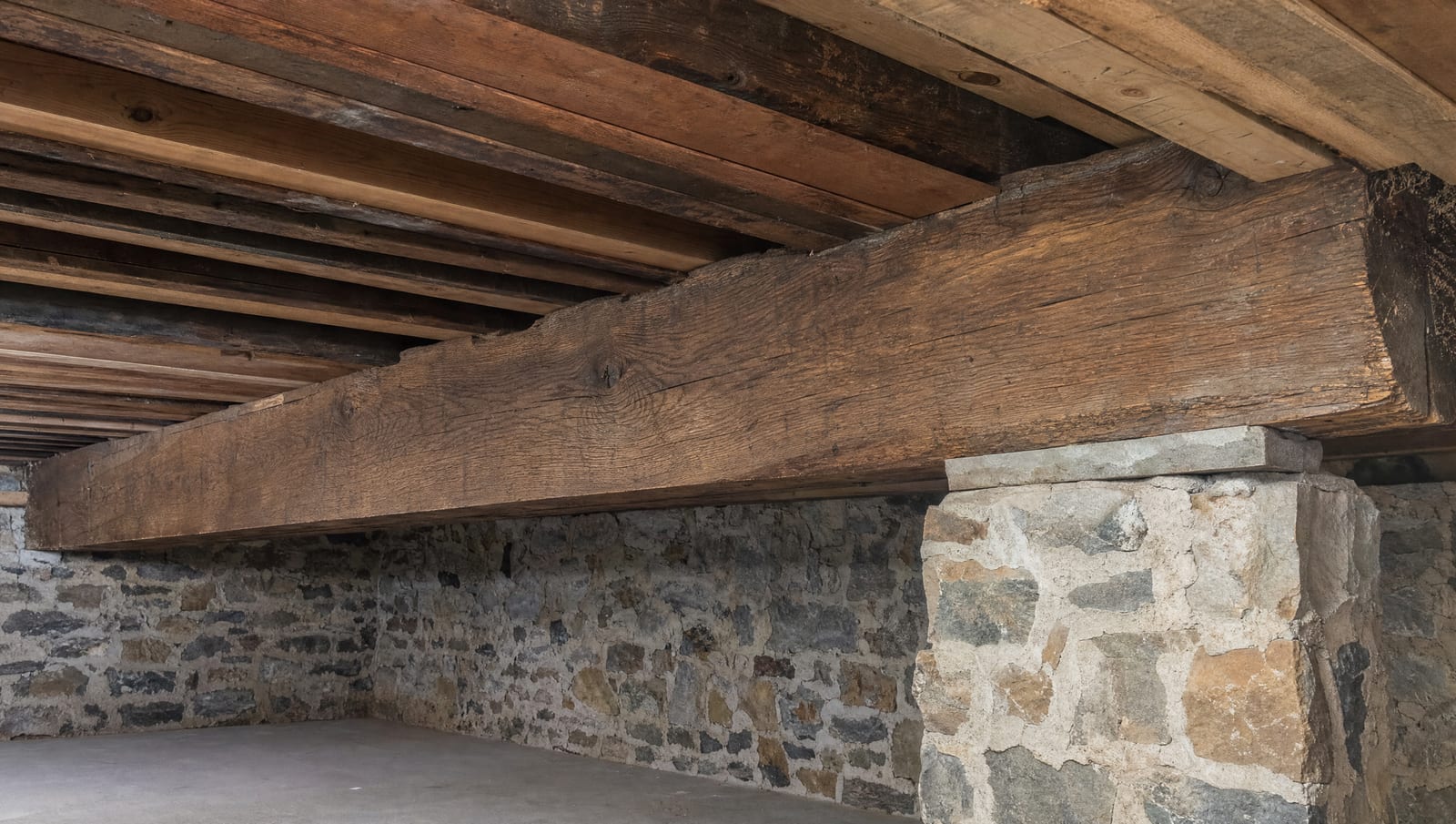
Many Princeton homes were framed well over a century ago. During mold remediation in one of them, a crew opens a first-floor bay and finds darkened floor joists running back toward a stone masonry wall. At first glance they all look the same: stained, old, a little unsettling. But they are not the same. Once the framing is probed, one joist is only surface-stained on sound old-growth wood. A second has lost some strength and can be reinforced. A third has true decay and has to come out. Three members, three different answers.
That is the real work of structural mold repair in Princeton's older homes. It is not one decision applied to a whole floor. It is a member-by-member call between three outcomes: clean and keep, reinforce or partially repair, or remove and replace. Getting that call right protects both the safety of the home and the original framing that gives these houses their character. Old-growth lumber, full-dimension joists, hand-worked timber, and post-and-beam connections are not things you tear out casually. They also are not things you leave in place when they can no longer carry a load. This post walks through how those decisions get made, and where a licensed structural engineer and preservation review come in.
What Decides Whether Framing Is Damaged
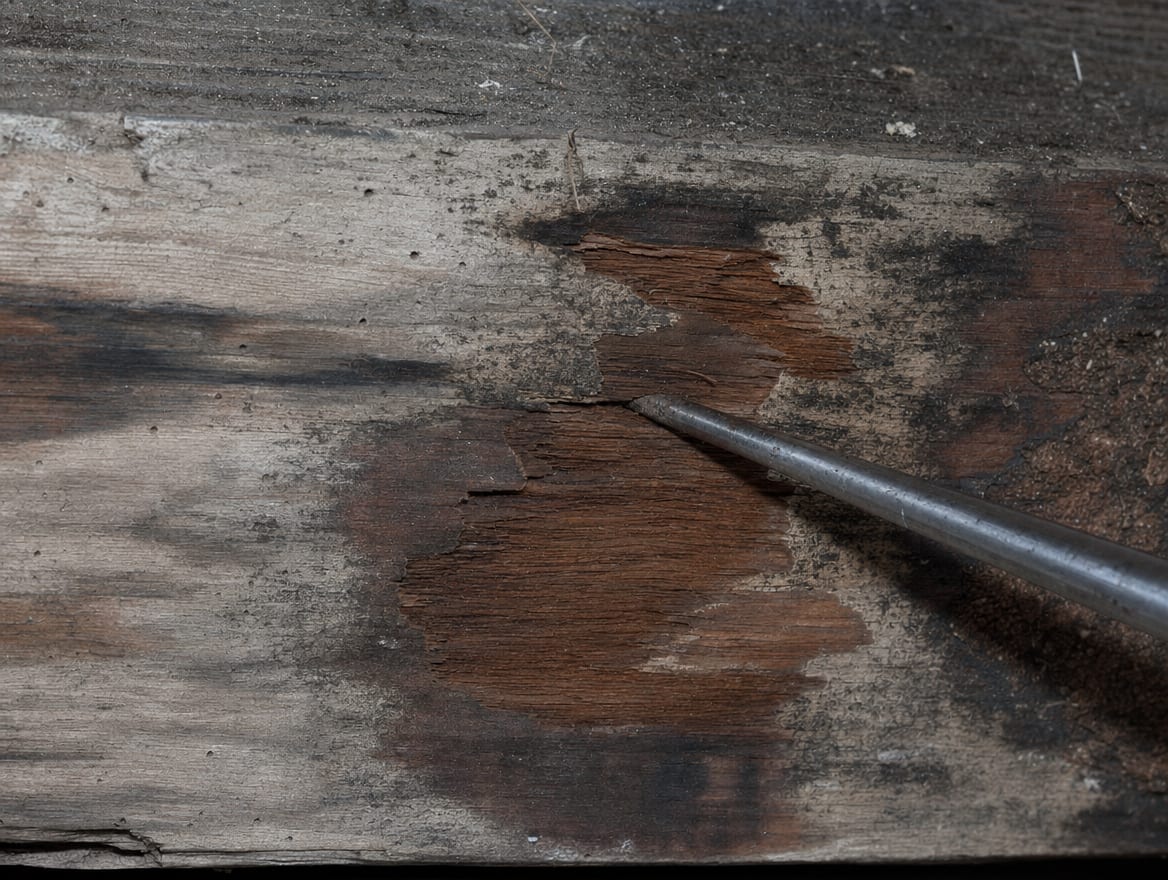
The most common mistake is reading the color of the wood and stopping there. A dark stain looks alarming, so it feels like proof of damage. It is not. Staining and surface growth show that the wood was wet and that mold found something to grow on. They do not, on their own, prove that the member has lost any strength.
The reverse trap is just as real. A joist that has been cleaned until it looks fresh can still hide rot, section loss, delamination, or a failed connection under the surface. Clean wood is not automatically sound wood. This is why the condition of historic framing has to be assessed by probing and evaluation, not by eye. The question is never simply whether the wood is stained. It is whether the member is merely stained, biologically contaminated, decayed, split, deflected, or genuinely compromised. Mold color alone cannot answer that.
How Moisture and Decay Actually Affect Old Framing
Wood decay is a moisture story that plays out over time. When framing stays wet, whether from a slow roof leak, a plumbing failure, foundation seepage, or chronic condensation, fungi can begin breaking down the wood itself. The EPA notes that mold and moisture left unaddressed can contribute to structural damage as fungi break down wet building materials. The key phrase is over time. A recent wetting event that dried out may leave a stain and little else. Years of repeated wetting near a sill plate, a joist pocket, or a beam bearing on masonry can leave real loss of section.
Princeton's conditions give moisture plenty of ways in. Humid summers keep cavities damp. Heavy rain, mature trees, complex roofs with valleys and dormers, and older masonry that holds moisture differently than modern concrete all add exposure. In a historic home, water often sits longest exactly where the original framing meets stone or brick. That is why so many of these projects surface around masonry walls, joist pockets, and beam bearings.
Hover or tap a row to highlight it.
| Condition of the member | Likely decision | Preservation note |
|---|---|---|
| Surface staining or mold growth on sound old-growth wood | Clean and retain | Keeping original framing protects the home's structure and character; do not remove without a structural reason |
| Partial decay, minor section loss, or a weakened but still-present member | Reinforce or partially repair | Sistering or added support can preserve the original member alongside new material |
| Failed section, advanced rot, or a member that can no longer carry its load | Remove and replace | Match species, dimension, and profile where the framing is visible or historically significant |
| Historically significant member (hand-hewn, timber, decorative) | Evaluate carefully before any removal | Preservation review may apply; retention is preferred whenever the member can still perform |
What the Remediator Evaluates, and Where the Engineer Takes Over
Two different professionals look at the same framing and answer different questions. Keeping their roles separate is one of the most important parts of an honest project.
The remediation team handles the mold and moisture side. They contain the area, use HEPA-filtered air control, remove contaminated porous finishes, HEPA vacuum and clean salvageable framing, and carry out the selective opening needed to expose damaged components. They also probe the wood to distinguish decay from surface staining and flag members that look questionable. What a remediator should not do is make unsupported engineering claims about whether a joist or beam can still carry its load.
That structural judgment belongs to a licensed structural engineer or another qualified design professional. When the integrity of a load-bearing member is uncertain, the engineer evaluates the remaining section and strength, checks for rot, splitting, crushing, and delamination, looks at deflection and the condition of connections, and traces the load path. From that, the engineer decides whether a member can be cleaned and kept, reinforced, partially repaired, or replaced. On a historic Princeton home, that call carries weight in both directions: replacing sound original material is a loss, and leaving a failed member is a hazard.
Assessing Historic Framing After Mold
Probe for soundness
Physically test the wood rather than judging by stain color; a pick or probe reveals soft, decayed, or hollow areas that the surface hides.
Distinguish decay from surface staining
Separate cosmetic discoloration on solid wood from true fungal decay and section loss, because they lead to opposite decisions.
Value the old-growth lumber
Original tight-grain, full-dimension framing is often stronger and more durable than modern replacement stock, so retention is worth real effort.
Match species and dimension when replacing
Where a member must be replaced, match the wood species, size, and profile so the repair is compatible with the surrounding historic framing.
Bring in an engineer for load-bearing members
Joists, beams, rafters, sill plates, and bearing walls with uncertain strength should be evaluated by a licensed structural engineer, not a remediator.
Check for regulated materials
Older framing and finishes can carry lead-based paint or asbestos-containing materials, which change how demolition and disposal must be handled.
Confirm preservation review where it applies
In designated historic districts, exterior-affecting work may require Historic Preservation Commission review; confirm requirements with the municipality.
When Selective Opening Is the Right Move
You cannot judge framing you cannot see. In a finished historic home, damaged members hide behind plaster, lath, flooring, insulation, and trim. That creates a tension. Open too little and you leave deteriorated framing or trapped moisture behind a wall. Open too much and you needlessly destroy original plaster, millwork, and framing that could have stayed.
The answer is selective, controlled exposure. The team opens what is needed to follow the moisture and reach the questionable members, while protecting unaffected rooms and historic materials nearby. This is deliberate investigation, not broad demolition. A proposal that calls for tearing out large areas without first investigating selectively is a red flag, especially in a home with original finishes worth keeping.
How Historic Framing Can Sometimes Be Reinforced
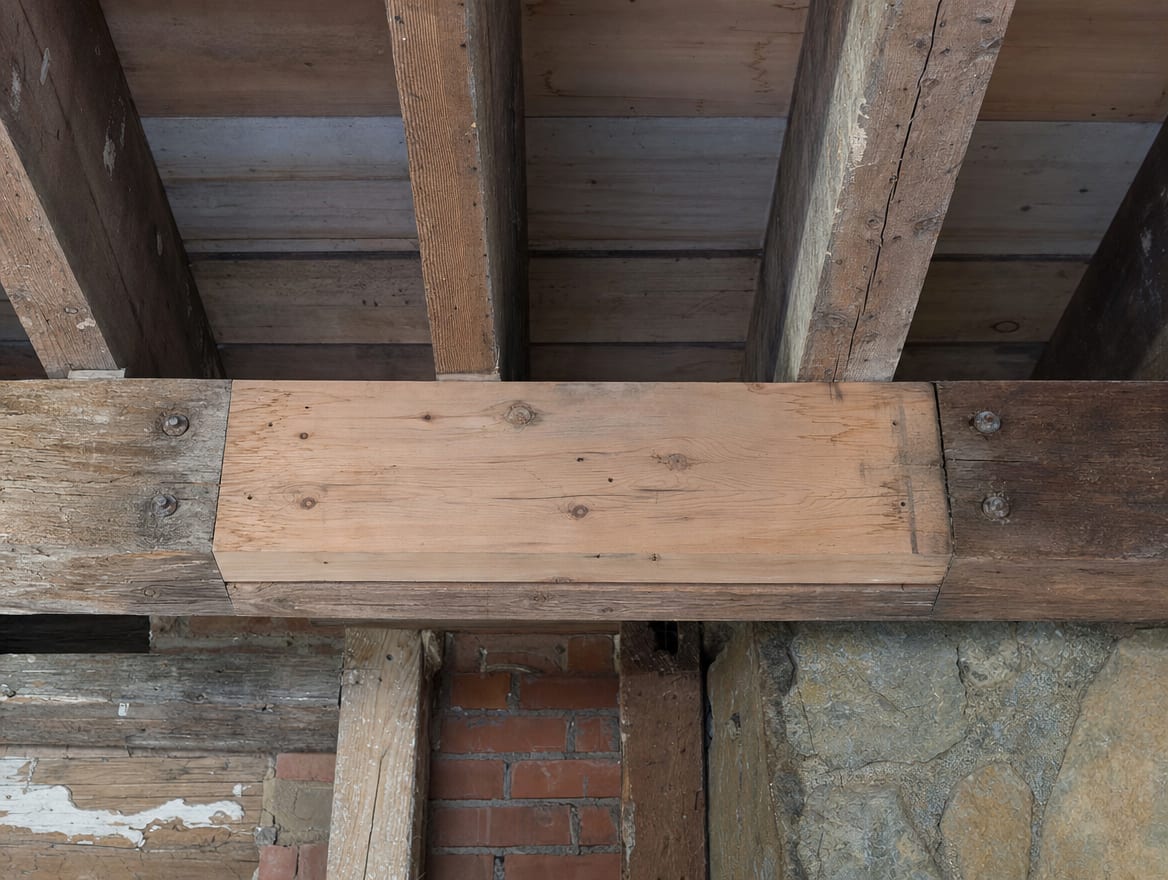
Between cleaning and full replacement sits a middle path that historic homes reward: reinforcement. When a joist or rafter has lost some capacity but is still present and largely intact, it can often be sistered, meaning a new member is fastened alongside the original to share the load. Other members can be partially repaired or supported rather than removed whole.
Reinforcement matters here because it lets the original member stay in the building. The repair design is not one-size-fits-all. It depends on the load, the remaining sound material, the bearing, the span, the connections, and how much access the space allows. Those are engineering variables, which is why the reinforcement plan should come from a qualified professional rather than a field guess. When it works, sistering preserves the original framing and the home's structure at the same time.
When a member truly cannot be saved, replacement is the honest answer. In a visible or historically significant location, that replacement should match the original as closely as practical in species, dimension, and profile, so the repair reads as part of the house rather than a patch. Matching full-dimension or hand-worked historic lumber can call for specialized fabrication, which is part of why these projects deserve careful planning.
Historic Structural Repair, Step by Step
- 1
Assess and probe
Inspect for sagging, softened, or deteriorated framing, restrict unsafe areas, add temporary shoring if needed, and probe members to separate stain from decay.
- 2
Engineer and preservation review
Bring in a licensed structural engineer for uncertain load-bearing members, and confirm whether permits or Historic Preservation Commission review apply.
- 3
Clean the salvageable
HEPA vacuum and clean sound framing that only needs to be retained, protecting nearby historic materials.
- 4
Sister or reinforce
Where a member is weakened but present, sister or partially repair it so the original stays in the structure.
- 5
Replace and match
Remove failed members and replace them, matching species, dimension, and profile where the framing is visible or significant.
- 6
Treat and dry
Correct the moisture source and dry the structural materials to the project's dryness criteria before anything is enclosed.
- 7
Verify
Confirm dryness, clean surfaces, complete required inspections, and gather engineer and permit documentation before rebuild.
Dryness and Source Correction Come Before Enclosure
There is one sequence rule that protects every dollar spent on the repair: never close a wall over a wet or still-leaking assembly. If new framing goes in while the roof, plumbing, drainage, or envelope is still letting water in, the fresh lumber simply becomes the next wet, contaminated member. Structural repair should not proceed while the assembly is actively wet, and enclosure should not happen until the source is corrected and the materials meet the project's dryness criteria.
Before plaster, drywall, insulation, or flooring goes back, the moisture source should be fixed, the structural materials should be dry, the remediated surfaces should be visibly clean, required inspections should be complete, and engineer or design-professional documentation should be in hand where applicable. That order is what separates a lasting repair from one that fails quietly behind a finished wall. Professional structural drying is how the framing reaches those dryness targets at depth, not just on the surface.
Documentation That Should Stay With the Property
Princeton homes change hands, and historic, higher-value properties benefit from a clear record. A strong structural mold repair file tells the whole story: the cause and chronology of the moisture, photographs and moisture maps, the mold assessment and remediation logs, engineer or architect reports, any shoring and permit drawings, records of what was cleaned, reinforced, or replaced, drying and verification results, and historic approvals when they apply. That paper trail shows a future buyer, inspector, or insurer that the work addressed both the mold and the structure, and that original material was kept wherever it could safely stay.
A note on insurance, because owners always ask. Whether a policy responds depends on the cause of loss, the specific policy language, exclusions, endorsements, maintenance history, and mold or fungi limits. A contractor cannot guarantee coverage or decide claim liability. What a contractor can do is document the project thoroughly so you have the record to bring to your insurer.
Frequently Asked Questions About Structural Mold Repair in Princeton
Can old-growth framing be saved after mold, or does it have to come out?
Often it can be saved. Old-growth lumber is frequently strong and worth keeping, and staining or surface growth on sound wood usually calls for cleaning and retention, not removal. The deciding factor is the actual condition of the member: whether it has true decay, section loss, or damaged connections, or is simply stained. That is determined by probing and evaluation, not by the color of the wood. Original material should not be removed without evidence that cleaning or reinforcement will not work.
How do you match a historic member that has to be replaced?
When a member truly cannot be saved, the replacement should match the original as closely as practical in wood species, dimension, and profile, especially where the framing is visible or historically significant. Full-dimension or hand-worked historic lumber sometimes requires specialized fabrication. The goal is a repair that is compatible with the surrounding framing and reads as part of the house.
How do you tell decay apart from surface staining?
Surface staining is discoloration on wood that may still be structurally sound. Decay is fungal breakdown of the wood itself, which can bring rot, softening, and loss of section. The two look similar from a distance but lead to opposite decisions, so the wood is physically probed to find soft or hollow areas the surface hides. A stained but solid member can be cleaned and kept; a decayed one may need reinforcement or replacement.
Do I need a structural engineer for this?
When the integrity of a load-bearing member is uncertain, yes. A licensed structural engineer or other qualified design professional should evaluate joists, beams, rafters, sill plates, and bearing walls and decide whether they can be cleaned, reinforced, partially repaired, or replaced. A mold remediator should not make that structural call. Structural framing and reconstruction commonly require permits as well, and the exact requirement should be confirmed with Princeton.
Will insurance cover structural mold repair?
It depends. Coverage turns on the cause of loss, the policy language, exclusions and endorsements, maintenance and mitigation, and any mold or fungi limits. A contractor cannot guarantee coverage or determine claim liability. The best thing you can do is keep thorough documentation of the cause, the remediation, the structural evaluation, and the repair so you have a complete record for your insurer.
Structural Mold Repair Terms
Tap a term to see what it means.
Old-growth lumber. Tight-grain, full-dimension wood from slow-grown trees, common in older homes and often stronger and more durable than modern replacement stock, which is why keeping it is worthwhile.
Bringing It Together
Structural mold repair in a historic Princeton home is a series of separate, deliberate decisions, not a single verdict on a whole floor. The mold remediation, the structural evaluation, the selective repair, the permitting and preservation review, the documentation, and the preservation-sensitive rebuild each deserve their own step. Kept separate, they let you clean what is sound, reinforce what is weakened, and replace only what truly must go, all while protecting the old-growth framing that makes these homes worth saving.
If mold remediation in your home has exposed framing you are unsure about, ExecPro Restoration & Cleaning can help you sort the stained from the decayed and plan a repair that respects the structure and the history. We handle the full path, from structural mold repair and drying through preservation-sensitive build-back services, and we serve homeowners across Princeton and the surrounding area. For a clear look at what your framing actually needs, reach out through our contact page or call (888) 300-3772.
Serving Princeton
ExecPro Restoration & Cleaning provides mold remediation services in Princeton, NJ, from inspection and testing through removal, drying, and post-remediation verification. Call (888) 300-3772 for 24/7 emergency response.
Related Articles
Structural Mold Repair in Deal NJ: Clean, Reinforce, or Call an Engineer
Structural mold repair in Deal NJ starts with one decision: is framing cleanable, decayed, or a job for a licensed engineer. Here is how to tell.
Sound, Sistered, or Replaced: Structural Mold Repair in Princeton Junction NJ Townhouses and Condos
In a Princeton Junction townhouse or condo, a mold-damaged joist raises one structural question: is the member sound, can it be sistered, or must it be replaced?
Old House, New Systems: Air Quality Testing for Historic Homes and Rentals in Princeton, NJ
Older Princeton homes with modern HVAC, rentals, and renovations need a smarter air quality test. Here is how building history changes what to test and how to read it.