Old House, New Systems: Air Quality Testing for Historic Homes and Rentals in Princeton, NJ
Cal HewittPublished
- air quality testing
- indoor air quality
- mold remediation
- historic homes
- new jersey
- princeton
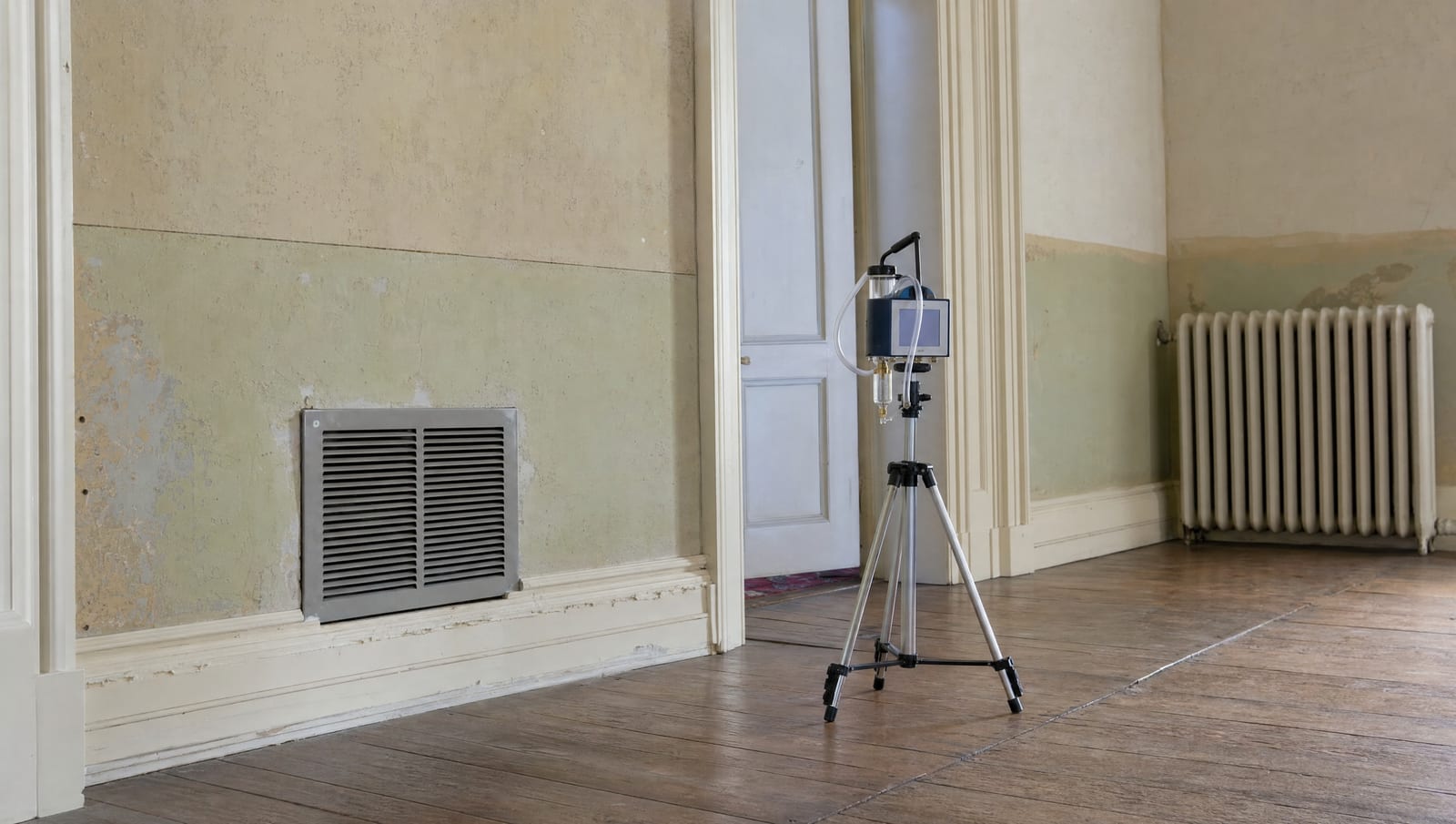
Picture an older Princeton home with replacement windows, a renovated kitchen, a finished basement, and a modern HVAC system dropped into a house that started life with plaster walls and a coal chimney. On paper it looks updated. In practice, a musty smell keeps showing up in one hallway, a tenant upstairs reports headaches, and no one can point to a single cause. That gap between how new the house feels and how old it really is behind the finishes is exactly where air quality questions start in Princeton.
Air quality testing in this kind of home is not about running one panel and getting a grade. It is about asking a clear question and reading the answer against the building's real history. An old house with new systems behaves differently than a brand-new build or a purely historic one, and the test should reflect that. This post walks through how historic materials, added mechanical systems, rental use, and recent renovations change what testing is useful and how to interpret it.
Why building history should drive the test
Before any sample is taken, the most important step is deciding what you actually want to know. The federal Environmental Protection Agency is clear that testing works best when it answers a defined question, not when it tries to prove a house is universally "safe." No single test can do that.
In an older Princeton home, that defined question almost always ties back to how the building was put together and how it has been changed since. A colonial-era or Victorian house near Nassau Street carries decades of layered repairs: added ductwork, a retrofitted air handler, spray foam in one section and old batt insulation in another, a basement that was finished over a foundation that still breathes moisture. Each of those changes can create a new pathway for humidity, odor, or dust that a generic test would miss.
That is why the starting point is history, not hardware. A useful assessment gathers the property's age and construction type, its renovation timeline, its occupancy and rental history, and any record of leaks, storms, or past remediation. The building tells you where to look before an instrument ever confirms it.
Hover or tap a row to highlight it.
| Factor | How it affects testing | Note |
|---|---|---|
| Historic materials | Plaster, masonry, chimneys, and concealed cavities hide moisture pathways, so inspection has to guide where samples go | Fragile finishes mean destructive investigation should be minimized and justified |
| Added HVAC | Retrofitted ducts and air handlers can move odors or humidity between rooms, so the system itself becomes part of the question | Carbon dioxide can be used as a ventilation indicator, not a mold measurement |
| Rental turnover | Frequent occupancy changes, heavy use, and varied maintenance shift humidity and complaint patterns | Common systems may need landlord or property-manager access to assess fully |
| Recent renovation | New paint, flooring, cabinetry, and adhesives raise questions about off-gassing and dust when odors persist | VOC or formaldehyde sampling answers a specific renovation question, not a general one |
| Possible lead or asbestos | Older paint and building materials may contain regulated hazards that are handled by separate, regulated testing | Air quality sampling does not clear a house for lead or asbestos |
Historic homes, rentals, and newer luxury builds are not the same job
Princeton's building stock is unusually varied, and that variety is the whole point. Treating every property as simply "old" or "new" is one of the most common mistakes in this work.
A historic home leans on source investigation. Older roofs, chimneys, masonry, plaster, and foundations create hidden moisture routes, and mechanical systems added over the years can throw off ventilation and pressure balance. The test has to respect fragile finishes and work around concealed chases rather than cutting into them.
A university-adjacent rental leans on documentation and coordination. Turnover is high, use is dense, and maintenance histories are uneven. Shared walls or shared systems can blur where a problem actually starts, so the plan often depends on getting the right people involved, not just the right instrument.
A newer luxury build or a heavily remodeled home leans toward ventilation and material questions. Tighter envelopes, larger HVAC systems, spray foam, and fresh finishes can hold odors in and raise the value of a ventilation check and targeted VOC testing when occupants report irritation. The same house can carry all three of these personalities at once, which is why one standard checklist rarely fits.
What retrofitted HVAC and a tightened envelope can change
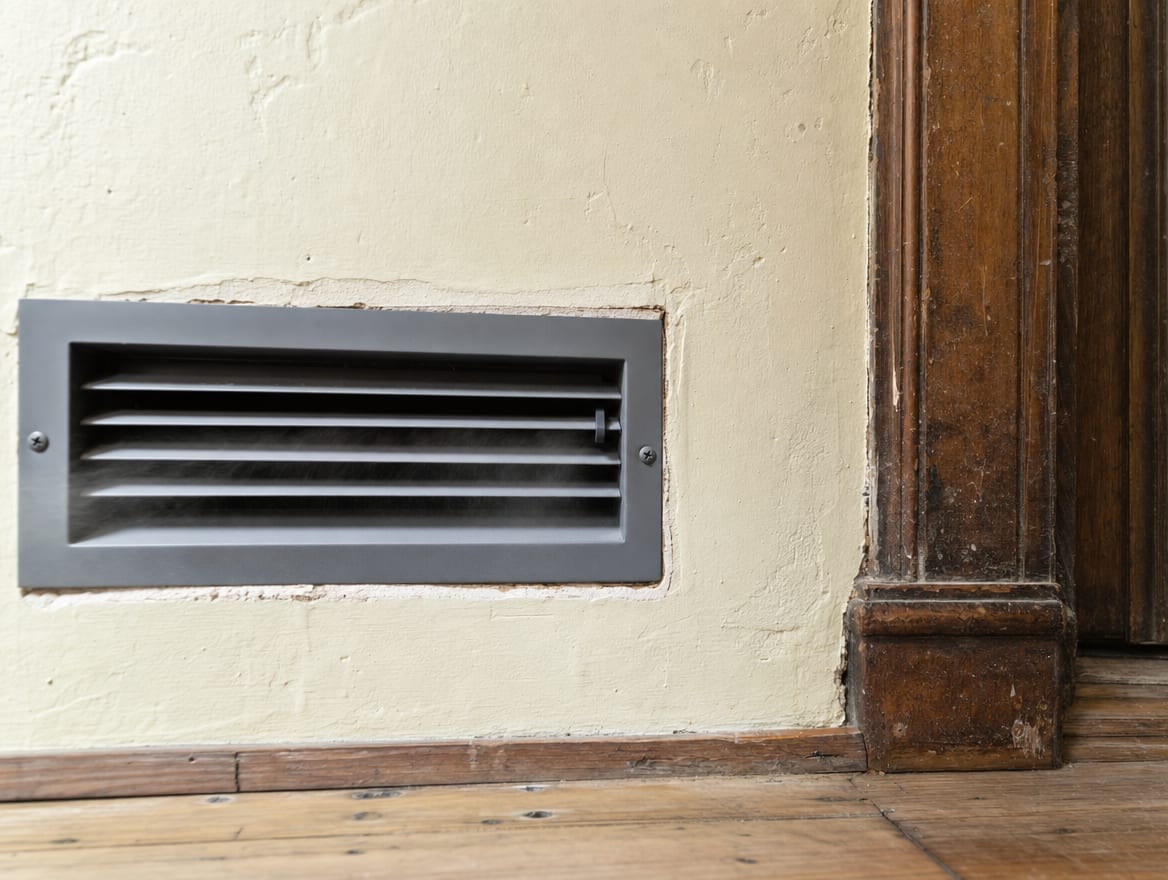
When a modern system is added to an old house, it does not just heat and cool more evenly. It changes how air moves through a building that was never designed for it. Ductwork threaded through old chases can pull air from a damp basement or a musty wall cavity and distribute it upstairs. A tighter, sealed envelope traps whatever is already inside instead of letting it leak out the way a drafty old house once did.
That is a good thing for energy bills and a complicating thing for air quality. It means an odor in one room might originate two floors away, carried by the same system meant to make the house comfortable. A careful assessment looks at the HVAC operation, filters, drain pans, and condensate, and it uses ventilation indicators like carbon dioxide to judge whether fresh air is actually reaching the occupied space. The system is not just plumbing for air. In an old-house-with-new-systems build, it is often the main suspect worth ruling in or out.
Moisture assessment comes before air sampling
Here is the step people most want to skip. Before collecting an air sample, the inspection should look for moisture. The reason is practical: moisture drives most indoor air problems in this climate, and where the water is tells you where to test.
Princeton sits inland among streams, wetlands, and older foundations. Humid summers raise indoor moisture when cooling or dehumidification falls short. Heavy rain feeds seepage, sump demand, and roof leaks. Winter freeze-thaw cycles crack seals and burst pipes, leaving hidden dampness that surfaces months later. A finished basement can conceal all of it behind drywall.
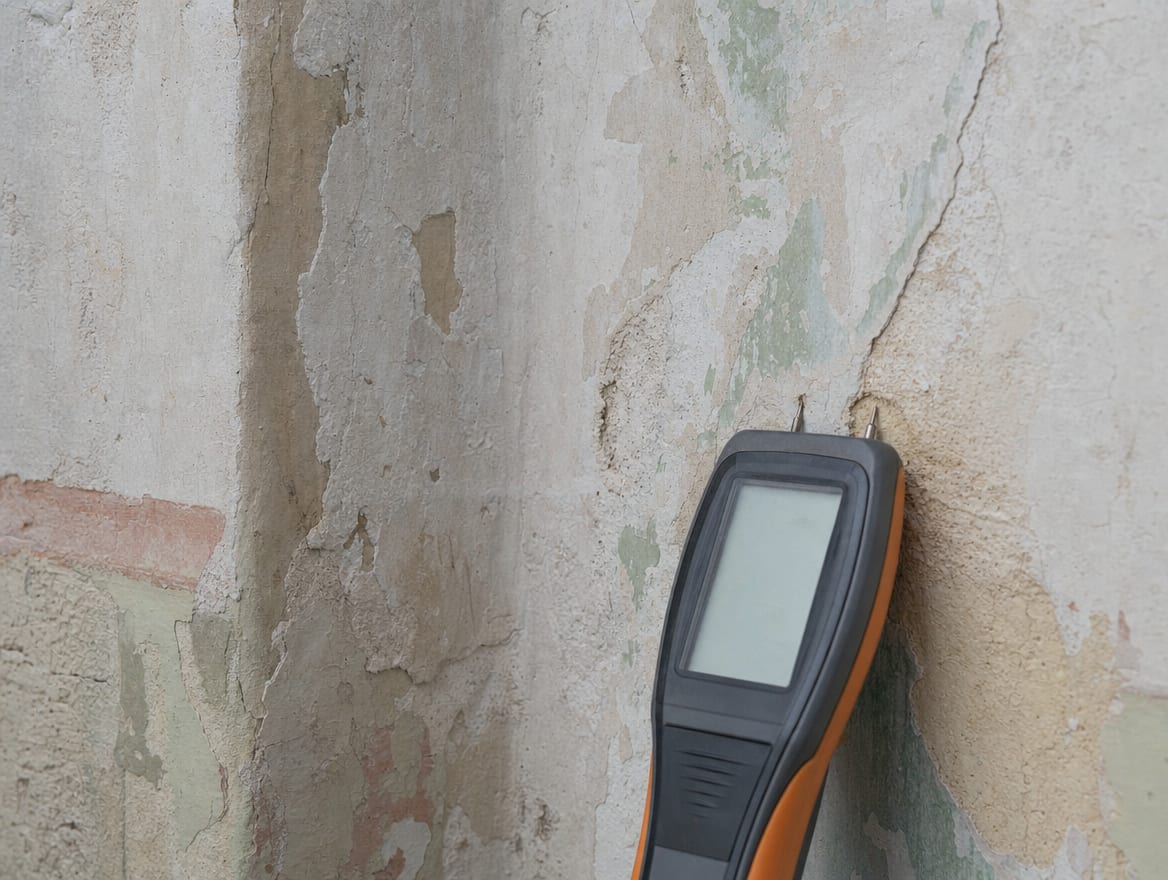
Because of that, the on-site work starts with a visual inspection, temperature and relative humidity readings inside and out, moisture-meter checks, and thermal imaging where conditions support it. That assessment is what decides whether air sampling is even needed and, if it is, where the sample belongs. Reversing the order, sampling first and inspecting later, produces data without direction.
Air Quality Signals in an Old Princeton Home
Musty odor
A persistent damp or earthy smell, often stronger after rain or in one room, is a prompt to inspect for moisture, not a diagnosis on its own.
Humidity in old cavities
Damp basements, wall cavities, closets, and mechanical rooms can hold moisture long after a leak, feeding conditions that affect the whole house.
HVAC added to old ducting or none
Retrofitted systems can move odors or humidity between floors, and a house with little original ventilation can trap what builds up inside.
Renovation dust
Fresh paint, flooring, cabinetry, and adhesives can raise VOC and dust questions when irritation or odors linger after the work is done.
Older-material concerns
Pre-1978 paint and older building materials may involve regulated hazards like lead or asbestos, which are handled by separate testing.
Tenant-reported symptoms
Headaches, irritation, or allergy-like complaints are worth documenting, but they point to conditions to investigate and cannot diagnose a medical condition.
Renovations raise VOC, dust, and ventilation questions
A recent renovation is one of the clearest reasons to consider testing, and one of the easiest to misread. New flooring, paint, cabinetry, adhesives, and furnishings can off-gas volatile organic compounds, and construction leaves fine dust that a tight, updated house holds onto. When occupants report irritation or odors that persist after the work wraps up, targeted VOC or formaldehyde sampling can answer a specific question about whether new materials are contributing.
The key word is specific. A renovation test is not a fishing expedition across every possible pollutant. It is aimed at the materials and the timeline: what was installed, when, and whether the complaints line up. Ventilation matters here too, because a tighter envelope can keep off-gassing indoors longer than an older, leakier house ever would. Reading a renovation result means weighing the material history and the airflow together, not comparing a number to a threshold that does not exist for most of these compounds.
Why one sample cannot represent a complex home
A large, layered house does not have one air quality condition. It has several. The basement, the renovated kitchen, the top-floor rental, and the room with the retrofitted air handler can each behave differently. Taking a single sample and treating it as the verdict for the whole property is how real problems get missed and how false comfort gets sold.
This is also where the honest limits of testing matter. There are no federal health-based limits for mold in indoor air, so a short-term mold sample cannot certify a building as safe, and a low panel of results proves less than it appears to. The EPA also notes that when mold is already visible, sampling is usually unnecessary. The priority becomes finding the moisture source and cleaning it up, not collecting a number to confirm what your eyes already show. A complex home earns a plan built around its distinct zones and its defined question, not a single grab sample.
Documenting complaints in rentals and managed properties
In university-adjacent housing and other managed properties, good documentation does more work than any single test. Tenant complaints are the raw signal, and they are far more useful when they are recorded with detail: which room, what time of day, whether it worsens after rain or when the HVAC runs, and how long it has lasted.
That record helps a consultant separate a building-source condition from an outdoor-air issue or a one-off. It also clarifies access. The occupied space can usually be assessed on its own, but common systems, roofs, plumbing, exterior walls, or an adjacent unit often need the landlord or property manager involved. Getting complaint history, occupancy details, and the right contacts lined up before the visit turns a vague "something smells off" into a question a test can actually answer.
Turning results into a plan
The point of testing is a decision, not a data sheet. A useful report explains what was inspected and tested, why each sample was chosen, the conditions during sampling, the results and their limits, the likely source, and the corrective actions. From there the path forward might be a repair, a ventilation improvement, a cleaning, or a remediation scope, matched to what the building actually needs.
Testing an Old House the Right Way
- 1
Inspect and gather history
Review the property's age, renovations, occupancy, and any past leaks or storms, then inspect for moisture and ventilation clues before deciding anything.
- 2
Decide the defined question
Name what you want to know, such as whether an odor ties to dampness, whether new materials are off-gassing, or whether the HVAC is moving contaminants.
- 3
Choose the right sampling
Match the method to the question, from moisture and ventilation checks to targeted mold, VOC, or particulate sampling, and skip tests that answer nothing.
- 4
Interpret against context, not a threshold
Read results alongside the building's history, weather, and occupancy, remembering there are no federal health-based indoor mold limits.
- 5
Act on the findings
Correct the moisture source, adjust ventilation, clean, or remediate based on what the assessment shows, prioritizing any immediate safety issue.
- 6
Verify after remediation
Confirm the work met its agreed criteria with follow-up checks so the result is documented, not assumed.
If your Princeton home falls into that old-house-with-new-systems category, the most reliable next step is an assessment that starts with the building itself. You can learn more about the full scope of air quality testing and, when the question centers on the living space, how indoor air quality testing is scoped and interpreted. For homes where the moisture story points toward cleanup, our mold remediation work in Princeton picks up where the diagnosis leaves off.
Frequently Asked Questions
Does my older Princeton home automatically need an air quality test?
Not automatically. Testing is worth considering when you have a defined question, such as a persistent odor, symptoms that seem tied to the house, or a concern after a leak or renovation. If nothing specific is prompting it, an inspection focused on moisture and ventilation often answers more than a broad panel of samples would.
Does a recent renovation call for testing?
It can, when odors, irritation, or ventilation concerns linger after new flooring, paint, cabinetry, adhesives, or furnishings go in. In that case targeted VOC or formaldehyde sampling answers a specific question about whether new materials are contributing. A tighter, updated house can hold off-gassing longer, so the material history and the airflow are read together.
Can an air quality test find lead or asbestos?
No. Lead-based paint and asbestos-containing materials are common in older homes, but they are handled by separate, regulated testing, not general air quality sampling. If you are disturbing pre-1978 paint or old materials during work, those hazards follow their own rules and should be evaluated on their own.
If mold is already visible, do I need a test first?
Usually not. The EPA notes that sampling is generally unnecessary when mold is visible. The priority becomes finding and correcting the moisture source and cleaning up the growth. Testing is more useful for a defined question, such as whether an unseen odor has a source or whether conditions meet agreed criteria after cleanup.
Can a test tell me if my tenant is sick?
No. Air quality testing answers questions about a building, not about a person's health. Symptoms like headaches or irritation are worth documenting because they point to conditions to investigate, but testing cannot diagnose a medical condition. If someone has health concerns, that is a conversation for a medical professional, while the testing focuses on what the building is doing.
Testing older Princeton homes well comes down to one idea: let the building's history set the question, then choose the test that answers it. When you are ready to move from a vague concern to a clear plan, our team at ExecPro Restoration & Cleaning is here to help. Reach out through our contact page or call (888) 300-3772, and we will start with the house itself, not a guess. You can also learn more about how we work at ExecPro Restoration & Cleaning.
Air-Quality Testing Terms
Tap a term to see what it means.
Indoor air quality. The condition of the air inside a building, shaped by moisture, ventilation, materials, and how the space is used.
Serving Princeton
ExecPro Restoration & Cleaning provides mold remediation services in Princeton, NJ, from inspection and testing through removal, drying, and post-remediation verification. Call (888) 300-3772 for 24/7 emergency response.
Related Articles
Reopening a Deal NJ Shore Home: When Air Quality Testing Answers a Real Question
Reopening a closed Deal NJ shore home? Learn when air quality testing helps after vacancy, humidity, a storm, or renovation, and what a test cannot tell you.
One Home, Many Air Zones: Designing Indoor Air Testing for Princeton Junction, NJ Properties
Indoor air is not one thing across a Princeton Junction, NJ home. Learn how to design air-quality testing per zone, per floor, and against an outdoor baseline.
Structural Mold Repair in Princeton, NJ: Clean, Reinforce, or Replace Historic Framing
Structural mold repair in Princeton NJ means deciding when historic framing can be cleaned, when it should be reinforced, and when a member must be replaced and matched.