One Home, Many Air Zones: Designing Indoor Air Testing for Princeton Junction, NJ Properties
Cal HewittPublished
- air quality testing
- indoor air quality
- mold remediation
- new jersey
- princeton junction
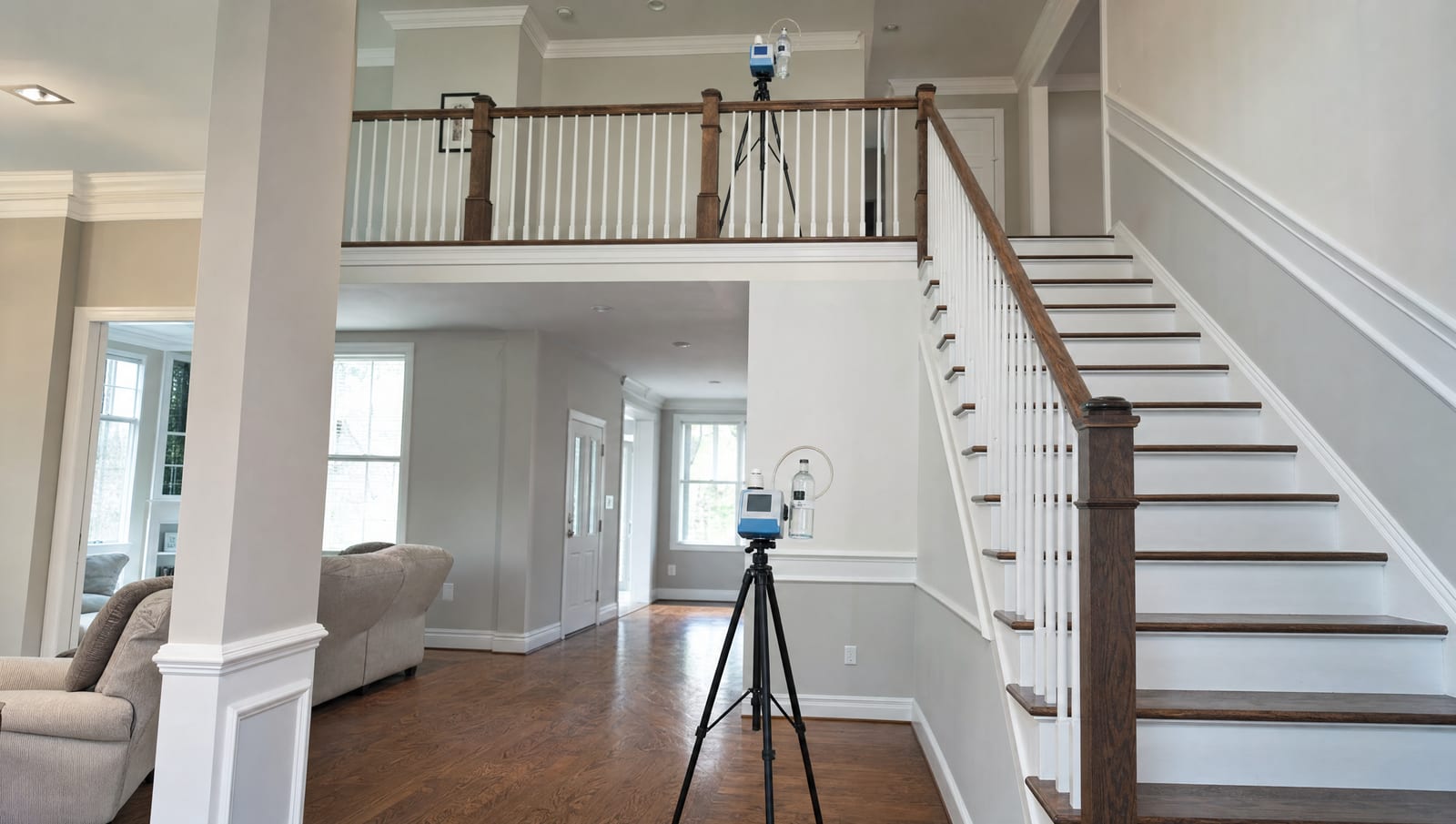
Picture three Princeton Junction homes on the same afternoon. In a large detached house, the finished basement smells faintly musty while the upstairs bedrooms feel fresh. In a townhouse, an odor drifts in near one wall but fades in the next room. In a newer condo, a chemical smell lingers weeks after new flooring went in, but only when the air handler runs. Three homes, three very different questions, and not one of them is answered by a single air sample taken in the middle of the living room.
That is the piece most homeowners miss. The air inside your home is not one uniform thing. It changes floor to floor, room to room, and system to system. A large home may run two or three separate heating and cooling zones that barely mix. Warm air rises through stairwells and shafts while cooler air settles low. A damp corner behined a closet can hold humidity that never reaches the thermostat upstairs. So when you decide to test indoor air, the real skill is not the sample itself. It is deciding where to sample, why, and what to compare each reading against. This post is about that sampling design across a home's air zones.
Why Indoor Air Is Not One Thing
Separate HVAC zones
A home split into two or three heating and cooling zones circulates air within each zone, so one zone can hold odor, humidity, or particles the others never see.
The stack effect
Warm air rises and escapes high in the house while replacement air is pulled in low, moving odors and moisture upward through stairwells, chases, and gaps all day.
Per-floor humidity differences
A basement or lower level often runs damper than an upper floor, so relative humidity and any related growth conditions vary by level, not by the whole house.
A suspected-source zone
The area near a musty smell, a past leak, or fresh renovation materials is sampled on purpose, because that is where a reading is most likely to mean something.
A clean comparison zone
A room with no complaint gives you a baseline inside the home, so a source-zone reading has something honest to be measured against.
An outdoor baseline
Outdoor air carries its own pollen, spores, and particles, so an outdoor sample tells you which indoor numbers are simply the outdoors coming inside.
Shared-air considerations
In attached units, ventilation paths and building systems can move air between spaces, so where the air comes from matters as much as what is in it.
Why One Sample Cannot Speak for a Whole Home
A single air sample answers a single question in a single spot at a single moment. That is genuinely useful when the question is narrow. It becomes misleading when someone stretches it to describe the entire property. A reading taken in a clean upstairs bedroom says almost nothing about a lower level that runs its own thermostat and holds its own moisture. A short sample taken while windows are open or the system is off may not reflect normal conditions at all.
This matters more in Princeton Junction than in many places because of how local homes are built and used. Larger planned-subdivision houses often carry multiple floors, finished basements, and more than one HVAC system. Many households commute, so homes sit lightly occupied during the day on programmed schedules, which lets rooms drift apart in humidity, carbon dioxide, and odor. Attached townhouses and condos add shared walls and central or semi-central ventilation, so an odor felt inside a unit may originate inside that unit, in an adjacent one, or in a building system. None of that is captured by one convenient sample. It is captured by a plan that treats the home as a set of connected air zones.
What Makes Air Behave Differently From Zone to Zone
Before you pick sample locations, it helps to understand what actually pushes air around a house. Three forces do most of the work.
The first is your mechanical system. A home divided into heating and cooling zones is deliberately keeping air separated so each zone can hold its own temperature. That same separation means each zone can also hold its own humidity, odor, and particle load. The return-air pathways decide what gets pulled where.
The second is the stack effect. Warm air is buoyant, so it rises and leaks out high in the house through ceilings, attic hatches, and framing gaps. To replace it, the house pulls air in low, often through the basement, crawl space, or lower level. That steady upward current can carry a damp or musty smell from a lower zone all the way to the top floor, which is why the room where you notice an odor is often not the room where it starts.
The third is simple moisture and level. Lower levels sit against cooler soil and tend to run damper, especially in humid New Jersey summers or after heavy rain, seepage, or a sump event. Relative humidity is a per-level condition, not a whole-house average. Map those three forces first, and the right places to sample tend to reveal themselves.
Choosing Your Zones and a Baseline
With the air pathways in mind, sampling design becomes a set of deliberate choices rather than a scatter of readings. You are not trying to sample every room. You are trying to sample the zones that will actually tell you something, plus the comparisons that make those numbers meaningful. The table below shows how the common zones in a Princeton Junction home each earn a place in a plan.
Hover or tap a row to highlight it.
| Zone | Why you sample it | What a reading there can indicate |
|---|---|---|
| Upper floor | Bedrooms and living space where people spend the most time, and the top of the stack effect current | Whether conditions in occupied space differ from the source zone, and whether rising air is carrying anything upward |
| Main floor | The everyday living level and the usual midpoint between lower and upper zones | A general sense of occupied-space conditions between the basement and the top floor |
| Basement or lower level | Damper by nature, closer to soil, and a frequent moisture and odor origin point | Elevated humidity or a possible moisture-related source that may be feeding air to zones above |
| Per HVAC zone | Each system circulates its own air, so each zone can differ from the next | Whether a specific system or its ductwork is holding or distributing a concern |
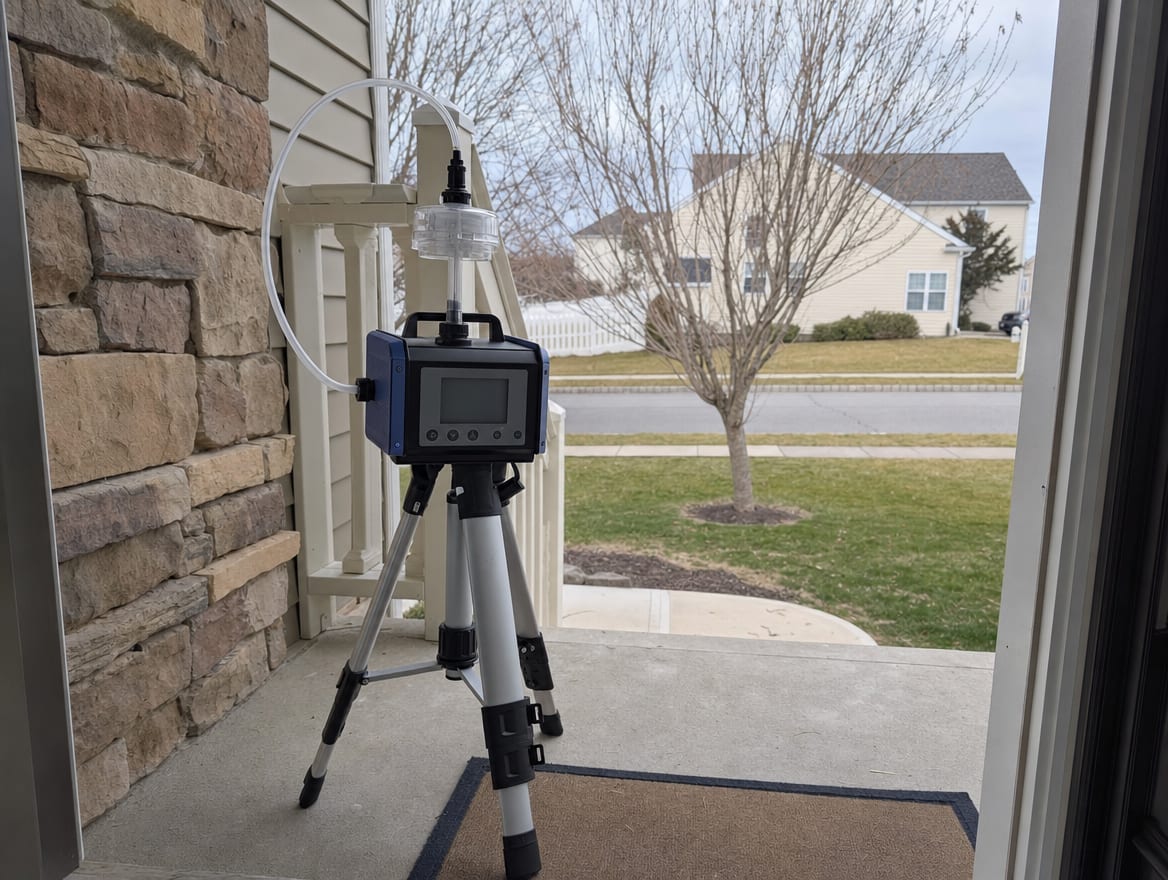
| Outdoor baseline | Outdoor air brings its own spores, pollen, and particles indoors | Which indoor readings are simply the outdoors present inside, and which are elevated beyond it |
The outdoor baseline deserves special attention. Many indoor particles and spores are just outdoor air that has come inside through doors, windows, and ventilation. Without an outdoor sample to compare against, an indoor number floats with no reference point. The comparison is what gives an indoor reading meaning. The same logic applies inside the home: a reading in a suspected-source zone is far more informative when you also have a reading from a clean zone that shares the same house.
Test the Moisture Story Before You Test the Air
Air sampling is not the first move. It is a step you take after you understand the building. Moisture, HVAC condition, ventilation, and possible sources should guide where samples go, because sampling before inspecting tends to produce data without direction.
A sound assessment usually starts with the questions and records: the home's age and type, the HVAC layout and zones, any recent leaks, storms, sump events, or plumbing failures, the history of renovations and new materials, and exactly where and when an odor or symptom shows up. From there comes a walk-through with real observation. Temperature and relative humidity indoors and out, moisture-meter readings on suspect surfaces, thermal imaging when conditions support it, and a look at filters, drain pans, and condensate lines. Often that walk-through answers the question on its own and makes elaborate sampling unnecessary.
This is also where the EPA guidance carries real weight. When mold is already visible, sampling is usually not needed to decide what to do next, because the priority becomes cleanup and correcting the moisture source, not identifying a species. Testing earns its place when it answers a defined question that inspection alone cannot, such as documenting a condition, comparing zones, or verifying results after work. If you want to understand how that fits into the broader service, our overview of air quality testing for New Jersey homes walks through when a sample plan is worth building and when it is not.
Matching the Test to the Question, Zone by Zone
Once you know your zones and your question, you can match a test to it rather than running a broad panel and hoping. Different concerns call for different tools. A musty smell and a damp lower level point toward moisture assessment and, if a defined question remains, mold air or surface samples read against an outdoor baseline. Odors after new flooring, paint, cabinetry, or adhesives point toward VOC or formaldehyde questions in the affected zone. Stale, stuffy rooms that improve when a system runs point toward carbon dioxide as a ventilation indicator. Allergy-like patterns point toward allergen sampling. Radon and combustion products, including carbon monoxide, follow their own established methods and are separate from a general comfort investigation.
The key discipline is that testing measures buildings, not bodies. Indoor air testing can describe conditions, compare zones, and flag things worth correcting. It cannot tell you whether a specific person is sick, and it cannot diagnose a medical condition. There are also no federal health-based limits for mold or mold spores in indoor air, so a result is interpreted against a defined question and an outdoor comparison, not against a national pass-or-fail threshold. A tester documents what the readings show and what they do not show. A tester does not adjudicate liability, guarantee safety, or promise a clean bill of health. For a closer look at how a targeted plan comes together, our indoor air quality testing page covers the sample types in more depth.
How Renovations and Newer Materials Change the Plan
Newer construction and fresh remodels shift the investigation. Tighter homes exchange less air with the outdoors, so anything that off-gasses indoors can build up rather than dilute. New paints, adhesives, flooring, cabinetry, insulation, and furnishings can release VOCs for a period after installation. If the question is about renovation materials, the sampling zone is the newly finished space, the timing accounts for how recently the work was done, and the comparison still includes a baseline. A tight home also makes ventilation assessment more valuable, because reduced natural air exchange is part of why a concern lingers in one zone.
Turning Zone Results Into a Correction Plan
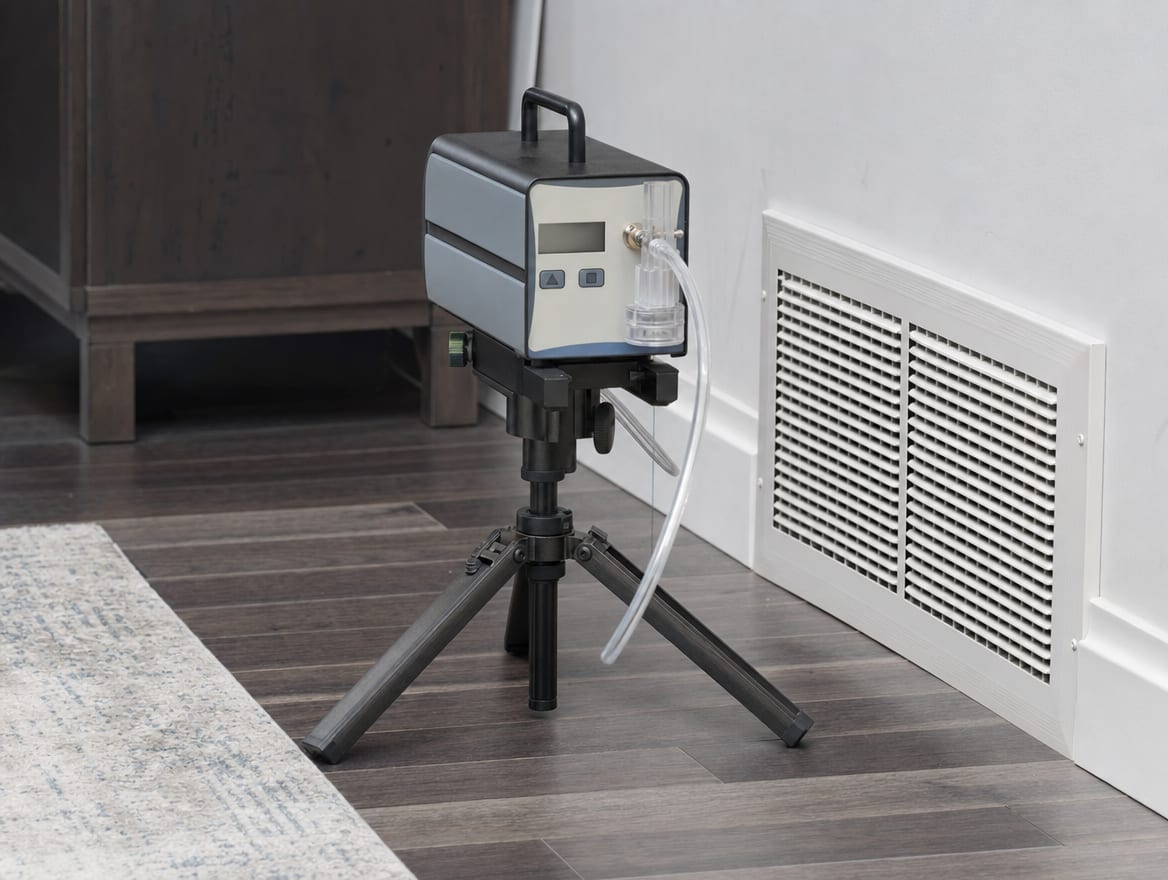
The point of all this design is a plan you can act on, not a folder of numbers. A useful report reads zone by zone. It says what was inspected and tested, why each sample was chosen, what the conditions were during sampling, what the results showed against the baseline, what the likely contributing source is, and what to do about it. When a source zone stands apart from a clean zone and an outdoor baseline, that contrast points toward where correction should focus.
From there the work follows the evidence. A moisture source gets found and fixed, whether that means addressing a leak, drying a damp lower level, or correcting an HVAC or ventilation issue. Where growth is present, cleanup and moisture correction come first. After corrective work, the honest way to confirm it worked is to test again with a plan, comparing the corrected zone against a baseline the same way you did at the start. That follow-up step is its own service, and it is why documentation matters throughout: a clear before-and-after record is what lets everyone see the change. Homeowners weighing all of this in the local market can also see how testing supports moisture work through our Princeton Junction mold remediation page.
Designing a Multi-Zone Air Test
- 1
Define the question
Decide what you actually need to know, such as whether a musty lower level is a moisture source, whether new materials are off-gassing, or whether post-work conditions have improved.
- 2
Walk the home and HVAC layout
Map the floors, the heating and cooling zones, the return-air pathways, and the basement, so you understand how air moves before you place a single sample.
- 3
Pick zones and a baseline
Choose a suspected-source zone, a clean comparison zone, the relevant HVAC zones, and an outdoor baseline, rather than trying to sample every room.
- 4
Sample with purpose
Collect readings under normal conditions, noting weather, occupancy, and whether systems were running, so each sample reflects real life in that zone.
- 5
Interpret zone by zone against the baseline
Read each zone in contrast to the clean indoor zone and the outdoor sample, since a number only means something next to a reference point.
- 6
Act and verify
Correct the source the evidence points to, then test again with a plan to confirm the corrected zone has genuinely improved.
Frequently Asked Questions
Why sample more than one spot in the same house?
Because the air in one room does not represent the whole building. Separate HVAC zones, the stack effect pulling air upward, and per-floor humidity differences mean a lower level can hold conditions an upstairs bedroom never sees. Sampling a suspected-source zone, a clean comparison zone, and an outdoor baseline gives each reading something honest to be measured against, which one convenient sample cannot do.
What is an outdoor baseline, and why does it matter?
An outdoor baseline is a sample of the outside air taken alongside the indoor samples. Many indoor particles and spores are simply outdoor air that drifted in through doors, windows, and ventilation. Without that outdoor reading, an indoor number has no reference point. Comparing indoor zones against the outdoor baseline is what shows whether an indoor result is elevated or just the outdoors present inside.
Do separate HVAC zones really change how a home should be tested?
Yes. A home divided into two or three heating and cooling zones circulates air within each zone and keeps them somewhat separate on purpose. That means one zone can hold odor, humidity, or particles the others do not. Each active zone is worth considering as its own sampling area, because a concern tied to one system or its ductwork may not appear elsewhere in the house.
If I can already see mold, should I test the air first?
Usually not. The EPA notes that when mold is visible, sampling is generally unnecessary to decide what to do, because the priority becomes cleanup and correcting the moisture source rather than identifying a species. Testing still has a role for a defined purpose, such as documenting conditions or verifying results after the work is finished, but visible growth by itself is a reason to act, not a reason to sample.
Can an air test tell me whether someone in my home is sick?
No. Indoor air testing measures the building, not the people in it. It can describe conditions in a zone, compare zones, and flag things worth correcting, but it cannot diagnose a medical condition or tell you a specific person's symptoms come from the air. There are also no federal health-based limits for indoor mold to test against. Health questions belong with a qualified healthcare professional, and a tester documents conditions rather than making health or liability judgments.
How do I know if a test plan is thorough enough?
Look at the written scope, not just the price. A sound plan names the zones it will sample and why, includes an outdoor baseline and a clean indoor comparison, accounts for the HVAC layout, and explains how results will be interpreted. A plan that samples one spot, skips the baseline, or ignores the moisture and ventilation picture is likely to produce numbers without direction.
When you want a clear read on what is happening across your home's air zones, our team at ExecPro Restoration & Cleaning is ready to help. We serve Princeton Junction, West Windsor, and the surrounding central New Jersey communities, and we build sample plans around your home's real layout, moisture history, and HVAC zones rather than a one-size guess. We document conditions zone by zone so you have honest, comparable results to act on. Call us at (888) 300-3772 or reach out online to design a testing plan that actually fits your property.
Air-Quality Testing Terms
Tap a term to see what it means.
Air zone. A part of a home whose air stays somewhat separate from the rest, shaped by floors, layout, and mechanical systems, so it can hold its own humidity, odor, or particles.
Serving Princeton Junction
ExecPro Restoration & Cleaning provides mold remediation services in Princeton Junction, NJ, from inspection and testing through removal, drying, and post-remediation verification. Call (888) 300-3772 for 24/7 emergency response.
Related Articles
Reopening a Deal NJ Shore Home: When Air Quality Testing Answers a Real Question
Reopening a closed Deal NJ shore home? Learn when air quality testing helps after vacancy, humidity, a storm, or renovation, and what a test cannot tell you.
Old House, New Systems: Air Quality Testing for Historic Homes and Rentals in Princeton, NJ
Older Princeton homes with modern HVAC, rentals, and renovations need a smarter air quality test. Here is how building history changes what to test and how to read it.
Air Quality Testing in Robbinsville, NJ: A Musty Smell After a Thunderstorm
A musty smell that shows up after heavy rain often means hidden moisture. See what air quality testing in Robbinsville, NJ can tell you and what to check.