
Storm Damage Restoration in Trenton, NJ: Temporary Fixes, Historic Facades and the Claim
Cal HewittPublished Updated
- storm damage restoration
- storm damage
- claim documentation
- trenton nj
- new jersey
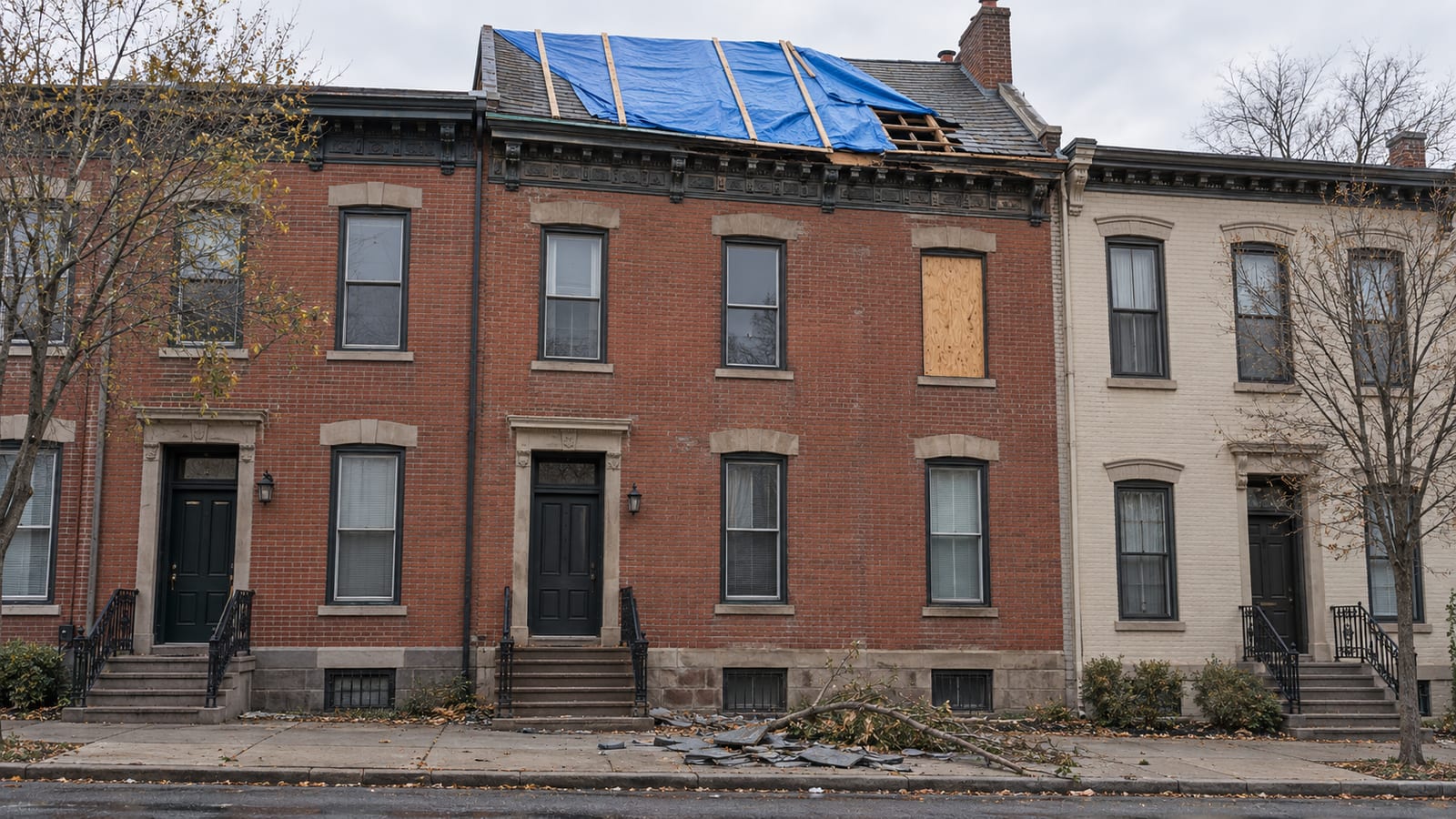
After the storm, a section of roof is peeled back, a window is broken, or the mortar on an old brick wall has let go, and water is getting in. More rain is coming, you want the opening closed tonight, and you are worried that a wrong move could cost you part of your insurance claim. If your house is older, or sits on a historic block, there is a third question waiting: does the city have to approve the permanent repair? Storm damage restoration in Trenton, NJ has an order that answers all three. Make the house safe, close the opening with a temporary measure, document everything, and then plan the permanent work around the claim and any review the property needs. The steps below keep the fast part fast and the slow part from being a surprise.
Key Takeaways
Temporary first, permanent later
Protect the opening with a safe temporary measure and photograph the damage before repairs; permanent exterior work on a designated historic property may need Landmarks review first.
Flood is a separate policy
New Jersey DOBI says standard homeowners, renters and commercial policies generally exclude flood, and flood insurance is separate with a generally 30-day waiting period, so check which policy covers which water before you call.
Dry within 24 to 48 hours when possible
EPA points to that window for wet materials, and the records you keep along the way (photographs, receipts, moisture readings) support the claim and the rebuild.
Stop the Next Rain Without Hurting the Claim
Start with safety, because a storm-damaged house can hold hazards that are easy to miss in the dark. Stay out of any area with standing water near electrical equipment, a gas odor, visible structural damage or downed utility lines. Turn power off only from a dry location, never by stepping into water to reach a panel, and have an electrician evaluate the system before power comes back on. Never run a generator indoors or near doors, windows or vents, because the exhaust can poison the people inside. For an immediate hazard, call emergency services or the utility.
Stay Out If You See
Standing water near electrical equipment
Turn power off only from a dry location, never by stepping into water.
A gas odor
Call emergency services or the utility.
Visible structural damage
Falls and unstable building components are real risks after a storm.
Downed utility lines
Keep people and pets away from the area.
Then close the opening with a safe temporary measure, such as a tarp over a damaged section of roof or a board over a broken window, and stop there. Temporary protection is meant to keep more water out until a permanent repair can be planned. If reaching the opening means climbing a wet or damaged roof, that is work for a roofer or a restoration crew, since falls and unstable building components are real risks after a storm.
The claim is protected by what you record. Before anything is discarded, photograph the rooms, the water lines, the damaged materials, the contents and the exterior openings. Report the loss to your insurer promptly, and keep the claim number, the adjuster's contact information, the receipts for the temporary repair and notes on every conversation. Move unaffected contents away from wet areas, and do not mix bleach with other cleaning products. Our storm damage restoration crew can place temporary protection and start documenting if you are not sure where to begin.
Records That Protect the Claim
Photographs
Rooms, water lines, damaged materials, contents and exterior openings, taken before anything is discarded.
Claim number and adjuster contact
Keep both where you can find them.
Receipts for the temporary repair
Keep every one.
Notes on every conversation
Record what you were told and when.
Know Which Policy Covers Which Water Before You Call
Water from a storm can arrive in several ways, and a policy may treat them differently: wind-driven rain through a damaged roof or window, roof damage itself, a sewer backup, a sump overflow and flooding from outside. Sorting out which one you have matters because the amount paid can change with the cause of loss and the policy language.
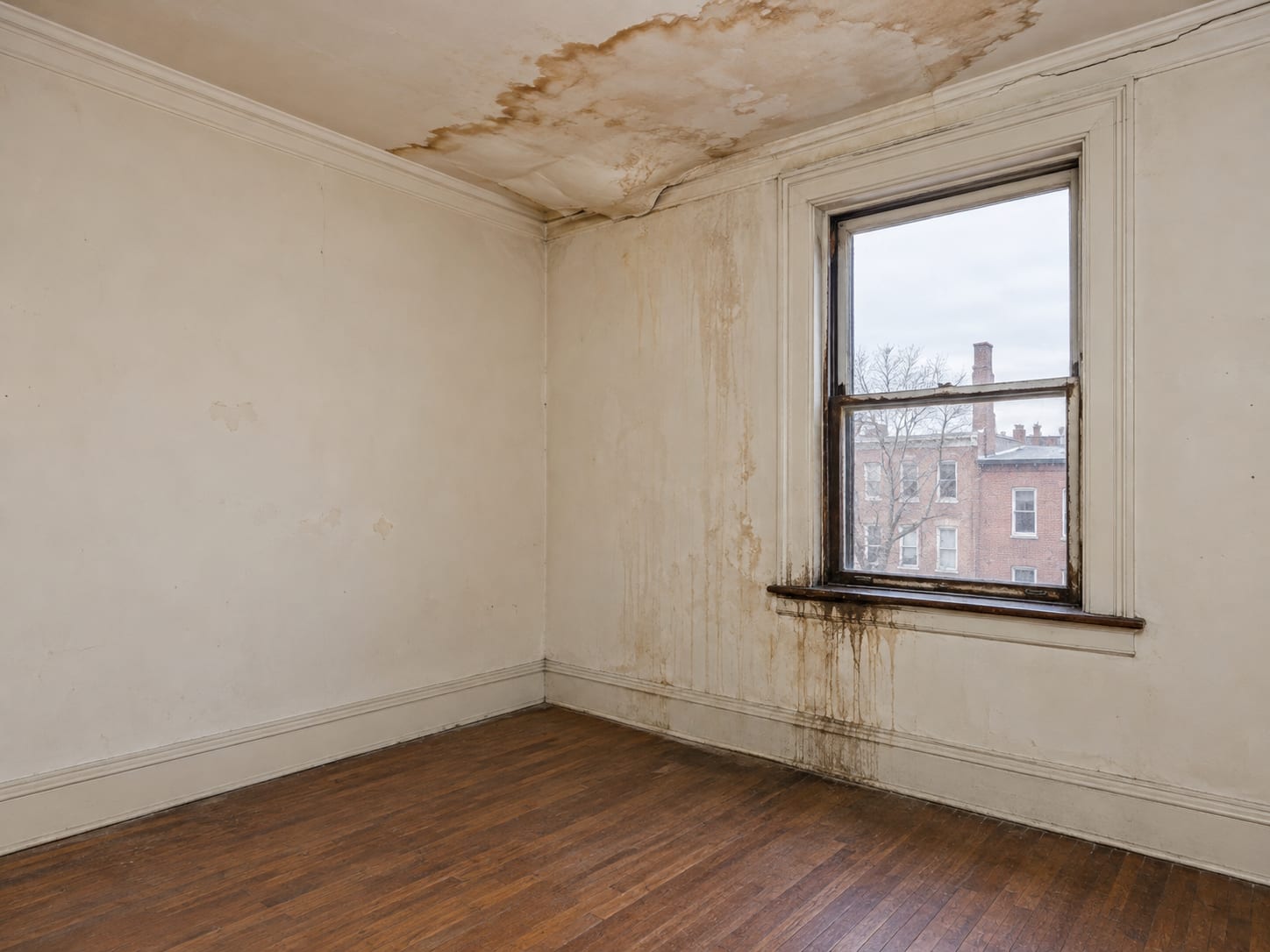
The state's guidance is specific on one point. New Jersey's Department of Banking and Insurance said in its July 18, 2025 storm release that standard homeowners, renters and commercial policies generally exclude flood damage, that flood insurance is separate, and that flood insurance generally has a 30-day waiting period before it takes effect. So, if water came in through the roof, tell your insurer that; if it came up from the ground or in from the street, ask what your policy says about flooding and about sewer backup. Ask the question plainly and write down the answer.
When wind damage and flooding happen in the same event, the two can be handled differently by the policy and by the cleanup, so describe each source separately in your notes and photographs.
Before the Permanent Repair: The Landmarks Check
Temporary protection comes first, and permanent exterior work comes after a check with the city. Trenton's Landmarks Commission reports 58 local historic landmarks and 8 historic districts. Exterior repairs to a designated property, including roofing details, windows, siding, masonry and trim, may need a Certificate of Appropriateness before the work starts. Trenton's historic-preservation code provides for minor and major work applications, and it states 45 days for a complete Certificate of Appropriateness application.
That review applies to designated properties, so the first question is whether your building is a landmark or sits in a historic district; if you are not sure, ask the Commission. Many older Trenton blocks have this history. The city's Trenton250 plan describes homes ranging from the colonial era and the industrial revolution through contemporary construction and calls historic neighborhoods a defining feature of the city.
If your property is designated, contact the Commission before the permanent repair, and ask specifically how the review treats storm repairs that cannot wait. Do not assume an answer in either direction. Ask about replacement windows, roofing details, masonry repointing and trim, which are visible repairs a review can affect, and keep the answer in writing. Your temporary tarp or board can stay up while that happens, and it should be documented like everything else.
Electrical, Plumbing and Structural Repairs Go Through the City's Permit Office
Some repairs need permits regardless of the block you live on. Trenton's Division of Technical Services enforces the New Jersey Uniform Construction Code and the Uniform Fire Code and issues building, plumbing, electrical and fire-protection permits. The city says many renovation projects need architectural or engineering plans before a permit is issued, and its code treats ordinary repairs differently from work involving structural elements, egress, plumbing, electrical or mechanical systems.
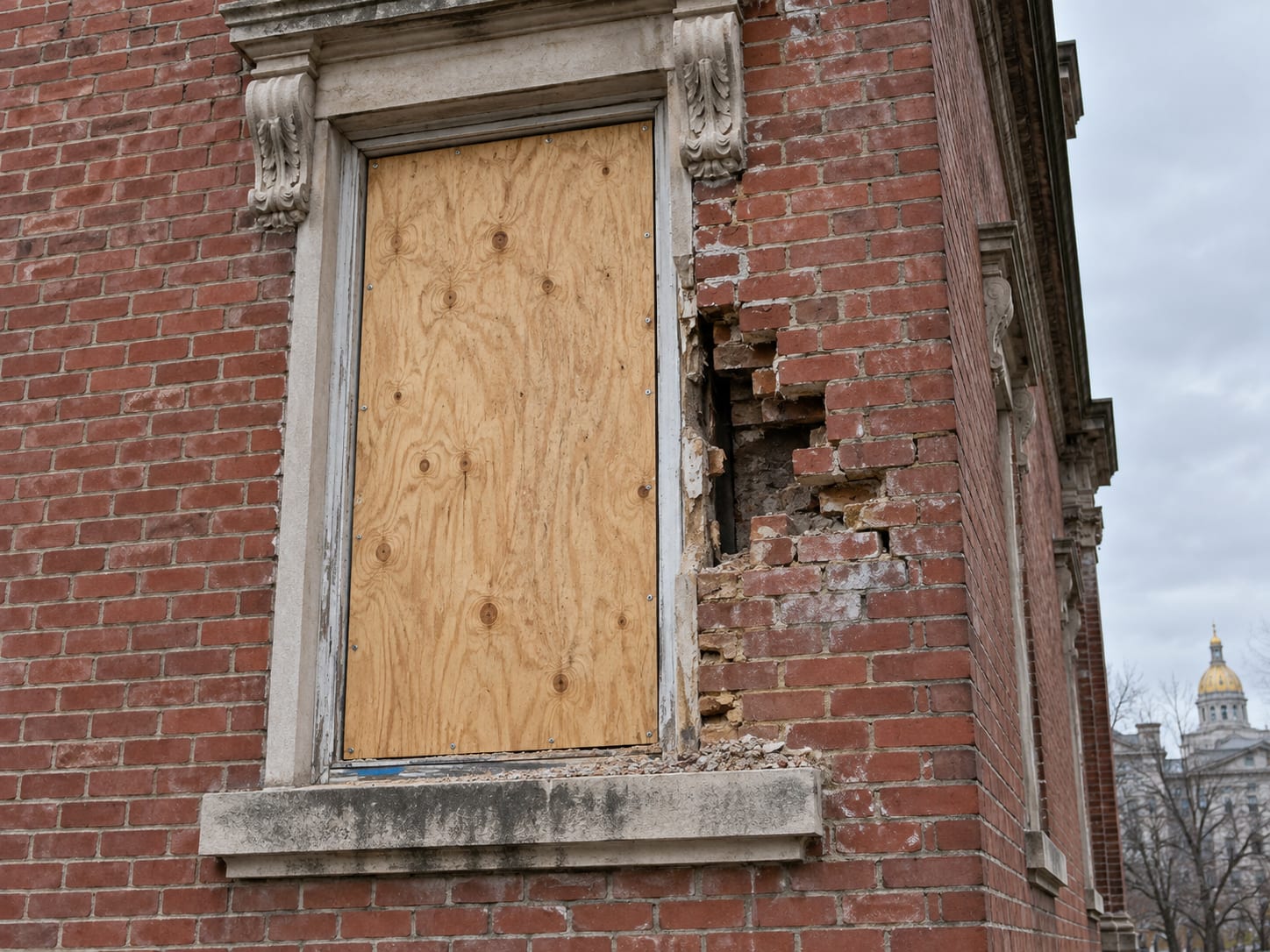
In practice, ordinary cosmetic repairs may be treated differently from structural alteration or replacement of regulated systems. Electrical work needs electrical permitting and inspection, and plumbing work needs plumbing permitting and inspection. Structural repairs may need plans and professional design documents, and demolition or major alteration can trigger further code requirements. Confirm the path for your scope with Technical Services before the work starts. The city also states that home-improvement contractors must be registered with New Jersey's Division of Consumer Affairs, so ask any contractor for the registration number.
Hover or tap a row to highlight it.
| Type of work | What applies |
|---|---|
| Exterior repairs to a designated historic property | May need a Certificate of Appropriateness from the Landmarks Commission before work starts; 45 days is stated for a complete application |
| Electrical work | Electrical permitting and inspection |
| Plumbing work | Plumbing permitting and inspection |
| Structural repairs | May need plans and professional design documents |
| Ordinary cosmetic repairs | May be treated differently from structural alteration or replacement of regulated systems |
| Hiring a contractor | Home-improvement contractors must be registered with New Jersey's Division of Consumer Affairs |
An Older, Denser Trenton Property Needs a Plan Built Around the Building
Storm water does not always come from above. In a low-lying basement it can enter through windows, foundation walls, doors and floor drains, and the Delaware River and Assunpink Creek both have flood-forecast and inundation maps through the Delaware River Basin Commission, which is a useful place to check when a river or creek is part of the story. Freeze-thaw cycles can also worsen weak roofs, masonry and pipes, so damage that looks new sometimes started earlier.
What your building is made of shapes the plan. Older detached and attached homes often have plaster, masonry, aging roof assemblies and concealed wall cavities that need to be opened and checked before anyone calls them dry. Dense blocks with smaller lots and narrow streets can limit where equipment sits and where debris goes. In rentals and multifamily buildings, drying and access have to be coordinated with occupants, and a commercial or institutional building needs a plan that keeps the business running. Foundation type varies from one property to the next, so have the crew confirm yours, along with the affected assemblies, during the inspection.
Restoration Runs From Stabilization Through Rebuild, and It Ends in a Dry House
After the site is safe and the opening is closed, the work moves in an order. The team assesses the source and extent of the water, which could be roof damage, wind-driven rain, surface flooding, groundwater or a failed sump system. It extracts standing water and removes materials that cannot be saved, since flood-contaminated drywall, insulation, carpet pad and porous contents may need to come out. Then it dries the structure with air movers and dehumidifiers, taking moisture readings to find out whether walls, floors, framing and insulation are dry. Mold or contamination work follows if it is needed, and then the rebuild covers whatever the storm took: drywall, insulation, flooring, roofing, trim, paint or masonry, ending with documentation and a final check.
From Stabilization to Rebuild
- 1
Assess the source and extent
Roof damage, wind-driven rain, surface flooding, groundwater or a failed sump system.
- 2
Extract standing water
Get the water out first.
- 3
Remove what cannot be saved
Flood-contaminated drywall, insulation, carpet pad and porous contents may need to come out.
- 4
Dry the structure
Air movers and dehumidifiers, with moisture readings to show whether walls, floors, framing and insulation are dry.
- 5
Address mold or contamination
Mold or contamination work follows if it is needed.
- 6
Rebuild
Drywall, insulation, flooring, roofing, trim, paint or masonry, whatever the storm took.
- 7
Document and check
A final check and the records that go with it.
Speed matters here. EPA says wet wood, drywall, carpet and furniture can support mold growth after more than 24 hours, and its cleanup guidance recommends drying the home and contents within 24 to 48 hours when possible. That window is a target for starting the drying. How long your project takes depends on the water category, the area affected, how much the materials absorbed, the temperature, ventilation, access and whether demolition or reconstruction is needed. In Trenton, permit review, historic review, narrow streets and dense lots, and coordination in occupied multifamily buildings can add time, so ask for a written sequence that covers stabilization, drying, permits and the rebuild. When the structure is dry, our build-back services handle the repairs.
Estimates Are Easier to Compare When You Know What Sets the Price
No single number covers storm restoration, because the loss decides the price. The main drivers are these:
- Source and contamination: The water's source and how contaminated it is.
- Extent: Standing-water depth and the total area, including the number of rooms, floors or units.
- Hidden moisture: Whether water reached walls, ceilings, subfloors, insulation or HVAC systems.
- Removal: How much drywall, flooring, insulation, carpet or cabinetry has to come out.
- Drying: The equipment used and how long the monitoring runs.
- Mold: Containment or remediation if growth is present.
- Exterior repairs: Roof, siding, window, masonry or foundation work, plus any engineering or specialized trades.
- Older buildings: Historically compatible materials and any review that applies.
- Permits and inspections: Plan review and inspection requirements.
- Contents and rebuild: Moving, cleaning, storing or disposing of belongings, and the rebuild scope after mitigation.
Ask for an itemized, written scope so each part of the work is priced on its own, and confirm with your insurer which causes and expenses your policy covers.
Safer Recovery Depends on Drying and Protection
Cleanup after a storm carries health risks, and a few habits reduce them. EPA advises an N95 respirator, goggles, gloves, long sleeves, long pants and appropriate boots for cleanup, and it advises that children, pregnant people, people with asthma and people with weakened immune systems stay out of flood cleanup. Do not use fans where visible mold may be spread. Floodwater may contain sewage, bacteria and chemicals, so heavily contaminated or extensive losses call for qualified help.
Cleanup Protection
N95 respirator
Wear one for cleanup.
Goggles and gloves
Protect your eyes and hands.
Long sleeves, long pants and boots
Cover your skin and wear appropriate boots.
Who should stay out
Children, pregnant people, people with asthma and people with weakened immune systems should not take part in flood cleanup.
Older buildings add a materials question. When plaster, old paint or insulation is opened up during demolition, exposure to lead or asbestos is possible, and New Jersey's asbestos guidance is where to start. Tell your restoration crew about the age of the building before demolition. If mold shows up after drying, the New Jersey Department of Health advises finding and correcting the moisture source before remediation, and our mold remediation in Trenton covers that separate scope.
Frequently Asked Questions About Storm Damage Restoration Trenton NJ
Is it safe to go inside after storm damage?
Stay out if there is standing water near electrical equipment, a gas odor, visible structural damage, rising water, sewage contamination or downed utility lines. If the main shutoff is reachable from a dry spot, you can turn power off, but do not enter water to reach it. Have an electrician evaluate the system before power is restored.
What should I do in the first hour?
Keep people and pets away from unsafe areas, call emergency services or the utility for immediate hazards, photograph the damage if it is safe, report the loss to your insurer and stop more water from entering with safe temporary measures. Never run a generator indoors or near doors, windows or vents.
Does homeowners insurance cover flooding from a storm?
Standard homeowners, renters and commercial policies generally exclude flood, according to New Jersey DOBI, and flood insurance is separate. Wind-driven rain, roof damage, sewer backup and sump overflow may also be treated differently, so ask your insurer about each.
Do I need city approval before I repair the roof or windows?
If the building is a designated landmark or in a historic district, exterior repairs may need a Certificate of Appropriateness, so contact the Landmarks Commission before the permanent repair. Electrical, plumbing and structural work goes through the city's Technical Services division.
How much does storm damage restoration cost?
It depends on the source of the water, how far it spread, how much material has to come out, how long drying takes, any mold work, exterior repairs, permits and the rebuild. Ask for a site-specific, itemized scope.
Test Your Storm Damage Knowledge
1. What should you do first about an opening in the roof or a broken window?
2. What does New Jersey DOBI say about standard homeowners policies and flood damage?
3. Within what window does EPA recommend drying the home and contents when possible?
4. What may exterior repairs to a designated historic property need before the work starts?
Pick an answer to begin.
What This Means for You
You can act quickly without hurting your claim if you keep the order straight. Make the house safe, close the opening with a temporary measure, photograph everything before it is discarded and report the loss promptly. Then find out which policy covers which water, check whether your building needs Landmarks review before the permanent exterior work, and confirm permits for electrical, plumbing and structural repairs.
Working in that order keeps the house dry sooner, leaves you with the records an adjuster and a future buyer will ask for, and avoids repairs that have to be redone because a review was skipped. The temporary fix buys time, and the paperwork protects the money.
If a storm has damaged a home or building in Trenton, ExecPro Restoration & Cleaning can protect the opening, extract water, dry the structure and rebuild once the claim and any reviews are settled. Our water damage restoration team works from the first call through reconstruction, and you can contact us or call (888) 300-3772 to get started.
Storm Damage Terms
Tap a term to see what it means.
Temporary protection. A tarp over a damaged section of roof or a board over a broken window, meant to keep water out until a permanent repair is planned.
Serving Trenton
ExecPro Restoration & Cleaning provides mold remediation services in Trenton, NJ, from inspection and testing through removal, drying, and post-remediation verification. Call (888) 300-3772 for 24/7 emergency response.
Related Articles
Commercial Storm Damage in New Jersey: The First 72 Hours for a Business
Commercial storm damage restoration in New Jersey: what to do in the first hour, day and 72 hours, from safe entry to drying and insurance records.
Storm Damage Restoration in Bridgewater, NJ: Roof, Trees and the Claim Clock
After roof, tree or window damage, the house needs protecting before the next rain. Who to call first, what protects your claim and what the township approves.
Storm Damage Restoration in Robbinsville, NJ: Downed Trees, Long Outages and Drying Without Power
Trees on the roof and the power out for days: see how storm damage restoration in Robbinsville, NJ closes the opening, dries without power and starts a claim.