
Storm Damage Restoration in Bridgewater, NJ: Roof, Trees and the Claim Clock
Cal HewittPublished Updated
- storm damage restoration
- storm damage
- claim documentation
- bridgewater nj
- new jersey
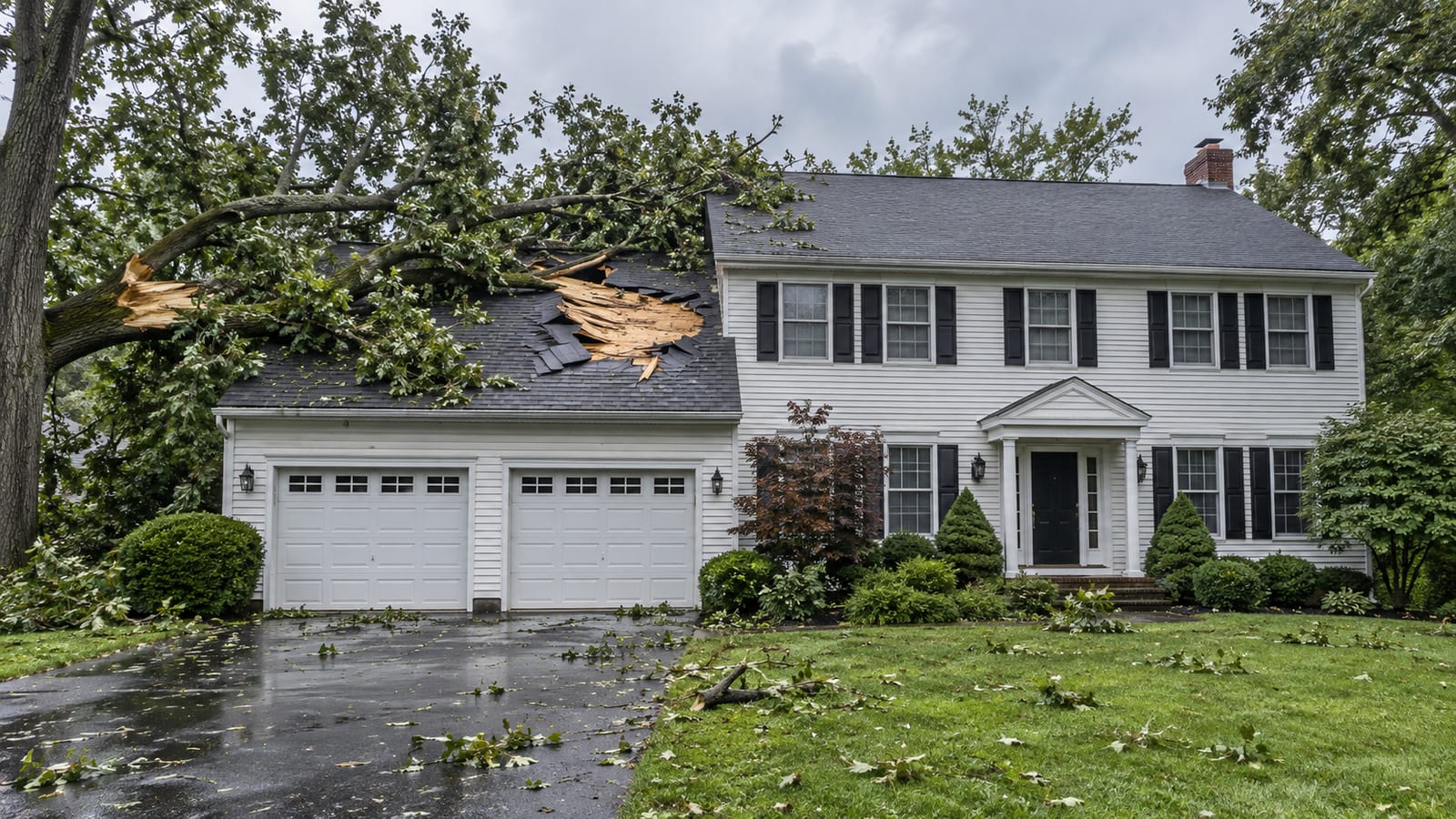
The storm has passed, but the roof is open, or a tree is down on the house, or water came through a window and into the walls. More rain may be coming, and you want the building protected tonight without doing anything that hurts your insurance claim. You may also be wondering whether a deadline is already running and whether the township has to approve a repair before it starts. Storm damage restoration in Bridgewater, NJ can feel like a dozen urgent tasks at once, yet they fall into a workable order. First come the calls that keep people safe and the building covered, then the stabilizing work, then the permanent repair. Start with who to call, because that decision shapes everything after it.
Key Takeaways
Three calls come first
Emergency services for any life-safety hazard, your insurer to report the loss, and a restoration company to stabilize the building.
Never run a generator indoors
Keep it out of the house, basement and garage and away from doors and windows, and do not turn power on in a wet area until the electrical system has been evaluated.
Check before you cut or rebuild
Bridgewater regulates private-property tree removal, requires permits for most structural, electrical, plumbing, mechanical and demolition work, and asks for a soil-disturbance permit above 5,000 square feet.
The 48-hour and 60-day figures belong to flood policies
They come from NFIP flood-insurance guidance, and a homeowners claim follows the timing in your own policy.
Roof Open, Tree Down or Water Through a Window: The First Calls
Make the calls in this order. First, if anyone is in danger, call emergency services. That includes downed power lines, active structural damage, a gas odor, unsafe floodwater or an official evacuation or access restriction, and if any of those are present, leave the building. Second, call your insurer or agent and report the loss. Third, call a restoration company to stabilize the building, which means stopping active water entry, protecting the opening and starting drying.
The CDC's storm and flood guidance and the EPA's flooded-homes advice also cover what to keep off your to-do list tonight:
- Do not turn on electricity in a wet area: Have the electrical system evaluated before power is restored.
- Do not use a generator inside a home, basement or garage, or near doors and windows: Generators produce carbon monoxide, and that is a hazard on its own.
- Do not stop the water unless it is safe: Shut off a source only if you can reach it without entering unsafe water or standing under a damaged ceiling.
- Do not disturb extensive mold or contaminated debris without protection: Keep children and pets away from floodwater and damaged materials.
What Not to Do Tonight
Do not turn on electricity in a wet area
Have the electrical system evaluated before power is restored.
Do not run a generator inside
Not in a home, basement or garage, and not near doors and windows, because generators produce carbon monoxide.
Do not stop the water unless it is safe
Shut off a source only if you can reach it without entering unsafe water or standing under a damaged ceiling.
Do not disturb extensive mold or contaminated debris
Not without protection, and keep children and pets away from floodwater and damaged materials.
While you wait for help, take wide and close photographs and video of the damage before anything is moved or thrown away, as long as it is safe to do so. Include the roof opening, the fallen tree, the wet ceilings and walls, and the contents. Those images are the start of your claim record. When you reach a restoration company, have the address, what is open to the weather, which rooms are wet and whether the power is off ready to tell them, and ask for an arrival estimate, since no single response time applies to every storm.
Stabilize the Building First, Then Plan the Permanent Repair
Storm restoration has two connected tracks, and keeping them in order saves money and trouble. The emergency track protects the building and stops the damage from spreading. The permanent track repairs and rebuilds it. Most mistakes come from starting the second track before the first one is finished.
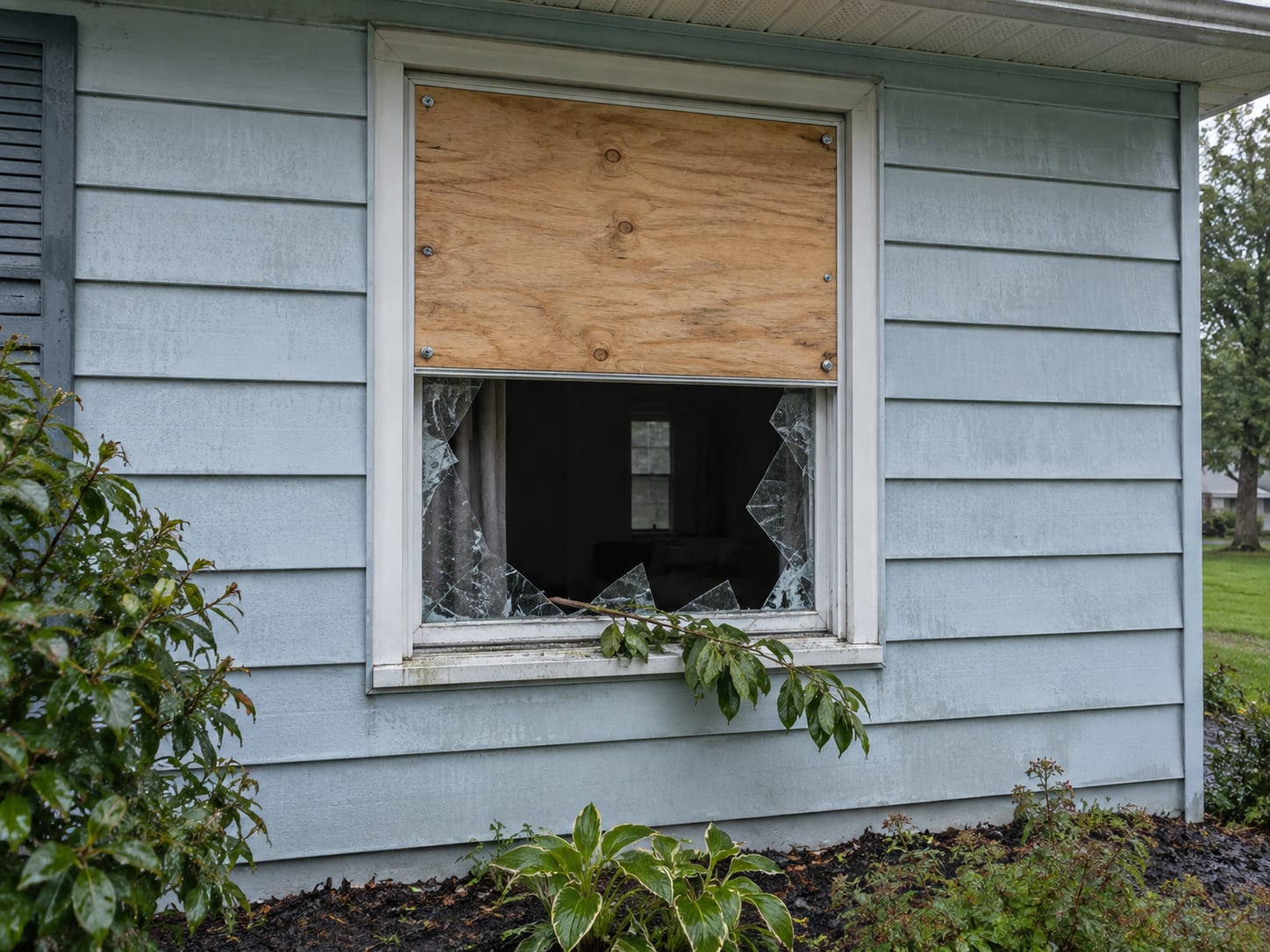
The emergency track covers these steps:
- Confirm the property is safe to enter: Check for electrical, gas and structural hazards before anyone goes in, and shut off electricity and gas when appropriate.
- Stop active water entry: Tarp or board the roof, window or wall opening so the next rain stays out, and do it when it is safe to do so.
- Document before disposal: Photograph and video the damage before anything is discarded or demolished.
- Extract standing water: Pump or extract water from floors and finished lower levels.
- Separate contents: Sort damaged contents from undamaged ones.
- Remove what cannot be dried: Take out materials that cannot be safely dried.
- Measure moisture: Check floors, walls, ceilings and contents with meters rather than by touch.
- Dry in a controlled way: Use dehumidification and air movement, then clean and treat affected surfaces.
- Record the drying: Log readings, equipment and the cleanup so the file shows what was done.
The Emergency Track
- 1
Confirm the property is safe to enter
Check for electrical, gas and structural hazards, and shut off electricity and gas when appropriate.
- 2
Stop active water entry
Tarp or board the roof, window or wall opening when it is safe to do so.
- 3
Document before disposal
Photograph and video the damage before anything is discarded or demolished.
- 4
Extract standing water
Pump or extract water from floors and finished lower levels.
- 5
Separate contents
Sort damaged contents from undamaged ones.
- 6
Remove what cannot be dried
Take out materials that cannot be safely dried.
- 7
Measure moisture
Use meters on floors, walls, ceilings and contents rather than touch.
- 8
Dry in a controlled way
Use dehumidification and air movement, then clean and treat affected surfaces.
- 9
Record the drying
Log readings, equipment and the cleanup.
The permanent track begins after the structure is dry and the scope is approved. It can include roofing, framing, ceilings, windows, insulation, drywall, flooring, electrical, plumbing and finishes. Our storm damage restoration service runs the two tracks in this order, and our water damage restoration work covers the extraction and drying when water has reached the interior.
The property type changes the details, not the order. A detached house may have roofing, siding, a finished basement and a sump system in play. A townhouse, condominium or apartment building adds shared walls, common mechanical systems and building-management decisions, so contact your association or property manager early and confirm what it requires before permanent work.
What the Water Did Decides How the Claim Runs
Where the water came from matters as much as how much there was. Wind-driven rain through a roof or window, a failed sump pump, runoff, groundwater, river flooding and sewer backup can involve different cleanup procedures, permits and insurance coverage. The state's homeowner insurance guidance says New Jersey homeowners policies exclude water damage caused by flood. Flood insurance through the National Flood Insurance Program (NFIP) or a private flood insurer is a separate policy.
So, when you report the loss, be specific about what happened. Say whether the water came through the roof, a window, a wall or the foundation, and whether you saw runoff or rising water. Ask your insurer which emergency work and temporary living expenses it covers, and ask which documents it wants and by when.
FEMA's NFIP claims checklist and its guidance on documenting damage recommend photographs, videos, serial numbers, material samples, receipts and written records, and they are good models for any storm claim. Keep small samples of removed carpet, flooring, drywall or insulation for the adjuster when practical. Begin reasonable drying and cleanup while you preserve that evidence, and follow your insurer's instructions.
The claim clock is the piece people worry about most. Under the NFIP, an assigned adjuster should contact a policyholder within 48 hours of the loss being reported, and documentation is generally due within 60 days of the flood or within the insurer's stated period. Those figures apply to a loss under a flood policy. If you have a homeowners claim, the timing is in your own policy, so ask your insurer what applies to yours, and write down the date and name of each person you speak with.
Hover or tap a row to highlight it.
| Type of claim | Timing |
|---|---|
| Flood policy under the NFIP | An assigned adjuster should contact you within 48 hours of the loss being reported |
| Flood policy under the NFIP | Documentation is generally due within 60 days of the flood or within the insurer's stated period |
| Homeowners claim | The timing is in your own policy, so ask your insurer what applies to yours |
Storm Repairs Run Into Township Rules Before the Work Starts
Bridgewater has its own rules for the work a storm creates, and knowing them before you start prevents rework. Three sets of rules can apply: Engineering for trees and site disturbance, Code Enforcement for construction, and, where your property is in a mapped flood-hazard area, the township's floodplain rules.
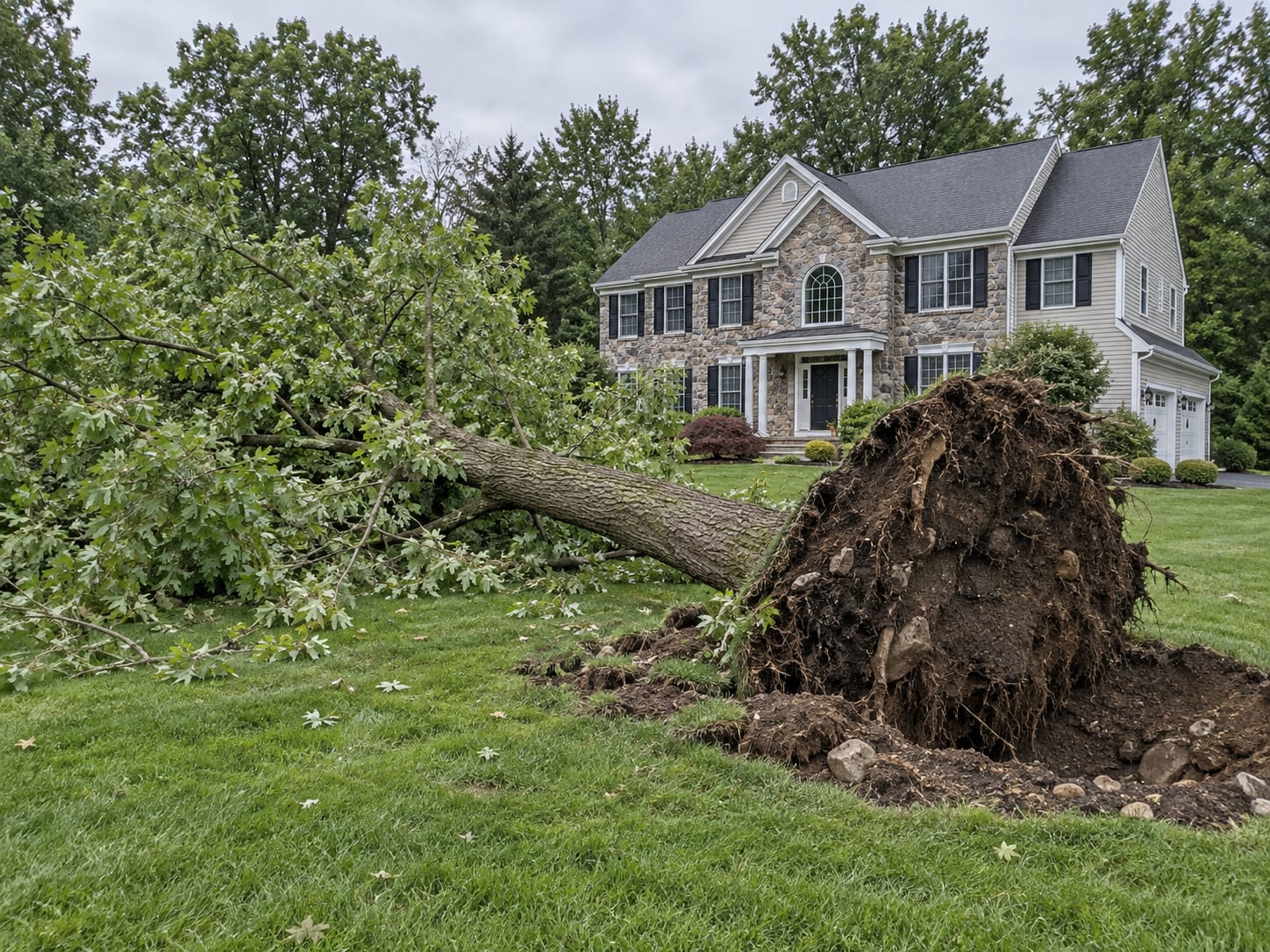
Trees. The township regulates private-property tree removal by ordinance. If a storm has damaged a tree on your lot, check with the township before you cut it. If the tree is an immediate danger to people, call emergency services first. The Engineering Department is the place to start.
Soil disturbance. Engineering identifies a soil-disturbance permit for disturbance over 5,000 square feet. Ask Engineering whether your cleanup or repair will disturb that much ground before the work begins.
Construction. Bridgewater's Code Enforcement department says a construction permit is generally required when you construct, enlarge, alter or demolish a structure, or when structural, electrical, plumbing or mechanical work is involved. It also says minor roofing and siding work may receive minimal plan review. Applications that need review take time, and different subcode officials may look at them, so build that time into your schedule rather than counting on a start date. Emergency stabilization and drying are one job; rebuilding is another, and the permit question belongs to the rebuild.
Floodplain. If your property is in a mapped flood-hazard area, the township's floodplain ordinance adds definitions and requirements, and state and federal rules can apply as well. Ask before you rebuild, not after.
Hover or tap a row to highlight it.
| Topic | Where to start | What it says |
|---|---|---|
| Trees | Engineering Department | The township regulates private-property tree removal, so check before you cut; if a tree is an immediate danger to people, call emergency services first |
| Soil disturbance | Engineering | A soil-disturbance permit applies to disturbance over 5,000 square feet |
| Construction | Code Enforcement | A permit is generally required to construct, enlarge, alter or demolish a structure, or for structural, electrical, plumbing or mechanical work; minor roofing and siding work may receive minimal plan review |
| Floodplain | The floodplain ordinance | In a mapped flood-hazard area it adds definitions and requirements, and state and federal rules can apply as well |
If you live in a condominium or a townhouse community, your association may have its own rules and approvals, and a master policy may change how a claim is handled. Confirm those with your association and municipal offices before permanent work begins.
Estimates Follow the Water Source, the Wet Area and the Rebuild
No published price schedule covers storm restoration in Bridgewater, so the useful move is to understand what drives an estimate. These are the main factors:
- Water source: Wind-driven rain, roof failure, a pipe break, sump failure, sewer backup, surface flooding and river flooding are handled differently.
- Water quality: Whether the water is clean, gray or contaminated floodwater.
- Size and duration: The area and depth affected, and how long materials stayed wet.
- Where it went: Finished basements, wall cavities, subfloors, insulation, HVAC systems and electrical components.
- Equipment: How much extraction and drying equipment the job needs, and for how long.
- Removal: Disposal of drywall, insulation, flooring, cabinetry or contents.
- Structural damage: Roofing, framing, ceilings, foundations, doors, windows or masonry.
- Trade repairs: Electrical, plumbing, HVAC and fire-safety work.
- Protection: Tarping, boarding and temporary pumping.
- Rebuild: Permits, inspections, code requirements, materials and finish level.
FEMA's NFIP claims manual treats structural drying as part of a flood-loss estimate and says the scope varies with building size, HVAC use, equipment and whether floors, subfloor or wall sheathing are involved. Ask for a written inspection, a moisture map and an itemized scope, and compare it with your insurer's estimate line by line. For commercial and multi-unit buildings, add access, tenant coordination, operating hours and shared systems to the list.
Hover or tap a row to highlight it.
| Factor | What it covers |
|---|---|
| Water source | Wind-driven rain, roof failure, a pipe break, sump failure, sewer backup, surface flooding or river flooding |
| Water quality | Clean, gray or contaminated floodwater |
| Size and duration | The area and depth affected, and how long materials stayed wet |
| Where it went | Finished basements, wall cavities, subfloors, insulation, HVAC systems and electrical components |
| Equipment | How much extraction and drying equipment the job needs, and for how long |
| Removal | Disposal of drywall, insulation, flooring, cabinetry or contents |
| Structural damage | Roofing, framing, ceilings, foundations, doors, windows or masonry |
| Trade repairs | Electrical, plumbing, HVAC and fire-safety work |
| Protection | Tarping, boarding and temporary pumping |
| Rebuild | Permits, inspections, code requirements, materials and finish level |
Drying to Moisture Readings Comes Before Any Rebuild
Drywall, insulation and flooring that stay wet can hold moisture long after the surface feels dry. The CDC advises cleaning and drying a home within 24 to 48 hours after a storm or flood when possible, to reduce mold growth. The EPA's guidance on damaged buildings warns that failing to remove contaminated materials and to reduce moisture and humidity can create long-term health risks from bacteria and mold. CDC also advises discarding materials that cannot be cleaned or dried quickly, including mattresses, carpet padding, upholstered furniture, pillows, paper products and certain children's items.
Drying is done when moisture readings say so, and the drying log becomes part of your claim file next to your photographs, receipts and estimates. Keep those records together, along with a log of each call you make. A full project takes longer when materials must be removed, permits are required, the structure is damaged or rebuilding is needed, so ask for a timeline after the water source, affected materials, permits and rebuild scope have been assessed. If a musty odor or visible growth appears, the New Jersey Department of Health says the moisture source should be identified and corrected before remediation, and our Bridgewater mold remediation page covers what that work involves.
Frequently Asked Questions About Storm Damage Restoration Bridgewater NJ
How much does it cost to clean up a flooded basement?
There is no reliable Bridgewater-wide price. It depends on water depth, contamination, basement size, contents, wall and floor materials, drying time, electrical or HVAC damage, disposal, mold, structural repair, permits and reconstruction. A written inspection and itemized scope give you a figure for your property.
How long does it take to clean up after a flood?
The CDC advises cleaning and drying within 24 to 48 hours when possible. Extraction can begin immediately, but the full project takes longer when materials must be removed, permits are required or rebuilding is needed.
How do you clean up after flood damage?
Wait until authorities or qualified professionals confirm that entry is safe. Document the damage, extract standing water, separate salvageable property, dry the structure and contents, remove materials that cannot be dried safely, clean and disinfect surfaces, and verify that moisture is down before rebuilding or moving back in.
Do I need a permit to repair storm damage in Bridgewater?
Permits are generally required for structural, electrical, plumbing, mechanical and demolition work, and minor roofing and siding work may receive minimal plan review. Confirm your exact scope with Code Enforcement before you start.
Storm Damage, Quick Check
1. What is the order of the first three calls?
2. Where should a generator never run?
3. Above what size does Bridgewater ask for a soil-disturbance permit?
4. Whose guidance do the 48-hour and 60-day figures come from?
5. How soon does the CDC advise cleaning and drying a home after a storm or flood, when possible?
Pick an answer to begin.
The Bottom Line
After a storm, the order is calls first, stabilizing second and permanent repair third. Report life-safety hazards, report the loss to your insurer, get the opening covered and the water out, and photograph everything before it moves. Then confirm the tree, soil-disturbance and construction rules with the township before you cut or rebuild.
Following that order protects your family, your building and your claim, and it keeps you from paying twice for work that has to be redone. A dry structure, a written scope and a complete record also give the repair a clear finish.
If a storm has damaged your Bridgewater, NJ home or building, call ExecPro Restoration & Cleaning at (888) 300-3772 or contact us. We handle emergency stabilization, extraction, structural drying, moisture documentation, mold remediation and rebuild coordination, and we will start with what is open, what is wet and what your insurer needs from you. Tell us what happened and send a few photos, and we will tell you what to do next.
Storm Restoration Terms
Tap a term to see what it means.
NFIP. The National Flood Insurance Program, one source of flood insurance, which is a separate policy from homeowners coverage.
Serving Bridgewater
ExecPro Restoration & Cleaning provides mold remediation services in Bridgewater, NJ, from inspection and testing through removal, drying, and post-remediation verification. Call (888) 300-3772 for 24/7 emergency response.
Related Articles
Commercial Storm Damage in New Jersey: The First 72 Hours for a Business
Commercial storm damage restoration in New Jersey: what to do in the first hour, day and 72 hours, from safe entry to drying and insurance records.
Storm Damage Restoration in Trenton, NJ: Temporary Fixes, Historic Facades and the Claim
Tarp first, photographs second, permanent repair after any Landmarks review. How to close up storm damage in an older Trenton house without hurting the claim.
Storm Damage Restoration in Robbinsville, NJ: Downed Trees, Long Outages and Drying Without Power
Trees on the roof and the power out for days: see how storm damage restoration in Robbinsville, NJ closes the opening, dries without power and starts a claim.