
How to Remove Mold From Wood, and When to Cut Out Damaged Wood
Cal HewittPublished
- mold removal
- moisture control
- structural mold repair
- new jersey
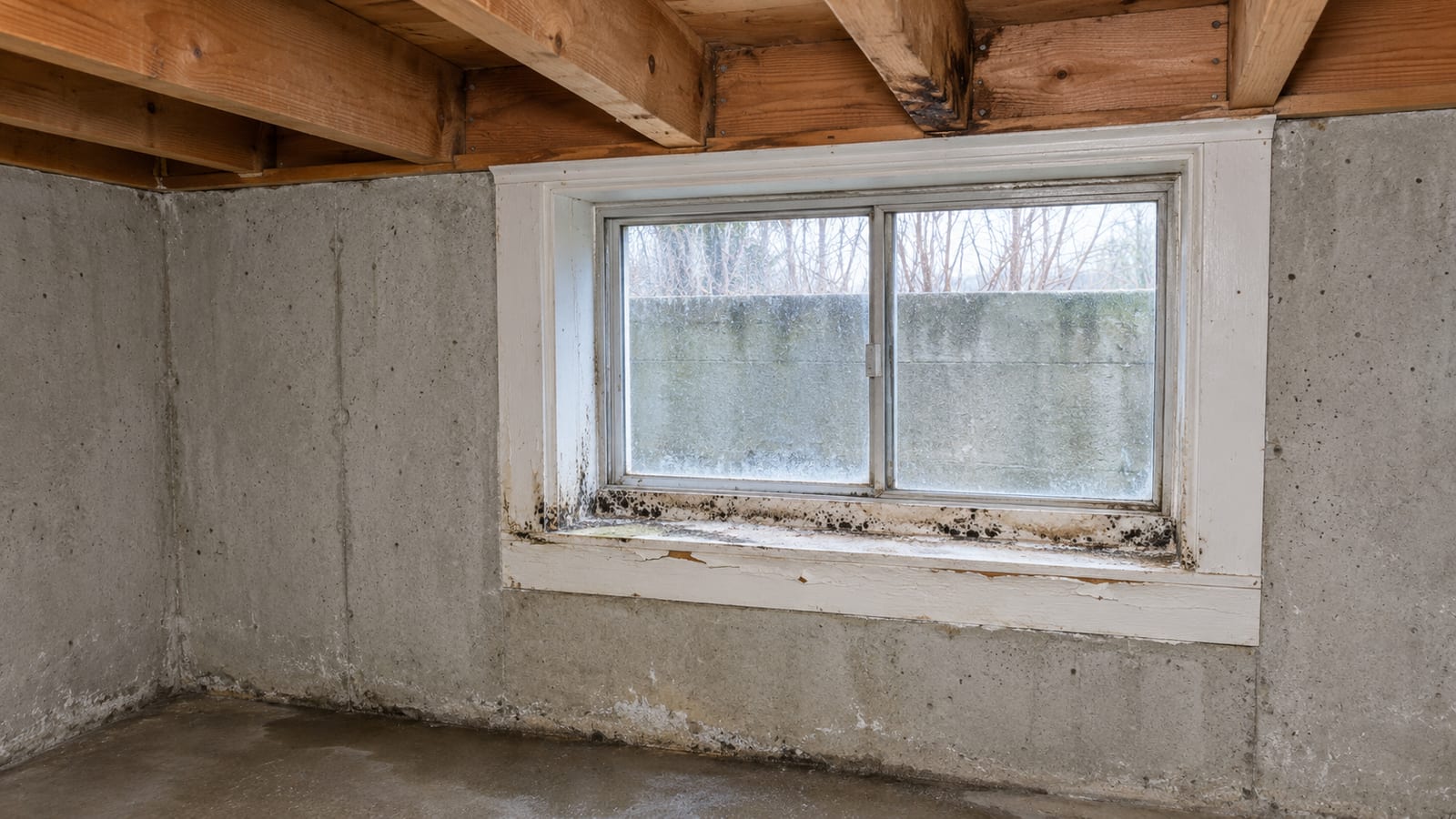
You have spotted mold on a joist, a window frame, a piece of trim or a deck board, and you need to decide tonight whether to clean it, sand it or cut it out. How to remove mold from wood depends on what the wood is, how far the growth has gone, and whether the water behind it has been stopped.
Start with the first hour. Stop the water if it is safe to do so, keep children and anyone with breathing concerns away from the area, and photograph the wood before you touch it.
After that, the wood sorts into two groups: wood that can be cleaned and dried, and wood that has to come out. Below, you will see how to tell them apart, what to clean with, why sanding is a bigger job than it looks, and when a structural professional should look at the wood.
Key Takeaways
Finished wood can often be cleaned
EPA says treated or finished wood can generally be cleaned with mild detergent and clean water, then dried, as long as it stays structurally sound.
Soft, crumbly or separating wood usually has to be replaced
Cleaning removes surface growth; it does not restore wood that has lost its strength.
Sanding creates dust you have to control
Dry sanding or wire brushing moldy framing needs containment, respiratory protection and a plan, and it is not a way to save wood.
No product guarantees a saved board
Antimicrobials are used only as their labels allow, and cleaning and drying do the real work.
Fix the water first
Mold returns while the moisture source remains, and EPA says to dry wet materials within 24 to 48 hours and keep indoor humidity below 60%.
Moldy Wood Can Often Be Saved When It Is Hard, Intact and Cleanable
EPA treats wood as porous or semi-porous, so whether a piece can be saved depends on three things: whether it can be cleaned, whether it can be dried, and whether it is still structurally sound. A varnished window sill that got damp from condensation is a very different problem from a floor joist that has been wet for months.
Size matters too. EPA's household guidance uses about 10 square feet as a line: growth smaller than that can often be handled by a property owner, while larger areas or substantial water damage call for the larger remediation guidance. The EPA remediation guide sorts jobs into under 10 square feet, 10 to 100 square feet and over 100 square feet.
Finished wood can lose its growth and still keep a stain. Raw wood is harder, because mold can reach into the pores and cracks. Look at the whole piece, including the back side and the joints, and press gently with a screwdriver tip to see whether it stays firm.
Can you permanently remove mold from wood?
Cleaning can remove the visible growth, but the result lasts only if the water or moisture condition is corrected. EPA and OSHA both say mold returns when the underlying moisture problem is left in place. Wood may also keep some staining or contamination in its pores and crevices after cleaning, so a clean, dry, firm board is the goal rather than a board that looks brand new.
The First Day Goes to Stopping Water, Keeping People Out and Taking Photos
In the next hour, your job is to avoid making the problem bigger. The EPA household guidance and the New Jersey Department of Health both start with the moisture, and these steps come first:
- Stop the water: Fix the leak, condensation or water entry if you can do it safely.
- Hold off on sanding, scraping, painting and caulking: Do not apply a spray that puts droplets in the air either.
- Keep people away: Children, infants, older adults, and anyone with asthma, severe allergies, a weakened immune system or breathing symptoms should stay out of the work area.
- Photograph everything: Take pictures of the wood, the surfaces around it and the moisture source before anything is disturbed.
- Leave the HVAC off if it may be contaminated: Running it can carry mold through the building.
If the damage followed a covered water event, contact your insurer promptly and keep the photographs and the damaged materials for inspection.
Over the next day, work out what you are dealing with. Is the wood finished or raw, solid or composite, decorative or structural? Was the water clean, contaminated or floodwater? Sewage and floodwater call for a qualified professional rather than a home cleanup. Set up dehumidifiers and air circulation where it is safe, since EPA says wet materials should ideally be dry within 24 to 48 hours.
Larger areas, hidden growth, structural deterioration and any HVAC involvement should be assessed by a qualified remediation professional. If anyone in the home has a medical concern, talk to a health professional before cleanup begins.
During the week, confirm that the moisture source is repaired. Ask for a written scope that says what will be cleaned, what will be removed, how dust will be contained, and how drying will be recorded. Keep photographs, moisture readings, estimates and insurer correspondence in one folder.
The First Hour, the First Day and the First Week
- 1
In the next hour
Stop the water if it is safe to do so, hold off on sanding, scraping, painting and caulking, keep children and anyone with breathing concerns away, and photograph the wood, the surfaces around it and the moisture source.
- 2
Over the next day
Work out whether the wood is finished or raw, solid or composite, decorative or structural, and whether the water was clean, contaminated or floodwater. Set up dehumidifiers and air circulation where it is safe, since EPA says wet materials should ideally be dry within 24 to 48 hours.
- 3
During the week
Confirm that the moisture source is repaired. Ask for a written scope that says what will be cleaned, what will be removed, how dust will be contained and how drying will be recorded.
Professionals Look Past the Surface Before Deciding What to Clean or Cut
When we look at moldy wood in a basement, attic or wall cavity, the first question is where the water came from. Roof leaks, plumbing leaks, groundwater, condensation, high humidity and poor ventilation all feed growth on joists, framing and attic sheathing, which is the layer of boards or panels under the roofing.
Surface growth tends to sit on wood that is still hard, intact and sound once the moisture is under control. Deeper trouble shows up in other ways. EPA warns that mold can enter porous spaces, crevices and voids, which can make complete removal difficult or impossible. These are the signs that the problem may go beyond the surface:
- Soft, punky or crumbly wood: A screwdriver sinks in or the surface breaks apart.
- Swelling or separation: Composite wood such as plywood or particleboard may delaminate or swell.
- A musty smell after cleaning and drying: The odor returns even though the surface looks clean.
- Growth in joints, cracks or hidden cavities: This includes the back side of a board.
- Long-term or repeated wetting: Leaks, flood exposure or condensation that returns season after season.
EPA notes that long-term mold growth tied to a roof leak can weaken floors and walls as mold feeds on wet wood. When the integrity of the building may be affected, EPA recommends a structural engineer or another qualified professional.
Hover or tap a row to highlight it.
| What you find | What it points to |
|---|---|
| Hard, intact, finished wood | Can generally be cleaned with mild detergent and clean water, then dried |
| Soft, punky or crumbly wood | Usually replaced, because a screwdriver sinks in or the surface breaks apart |
| Swelling or separation in composite wood | May delaminate or swell, which points past a surface problem |
| Growth in joints, cracks or hidden cavities | Mold can enter porous spaces, so complete removal can be difficult or impossible |
| A musty smell after cleaning and drying | The problem may go beyond the surface |
| Structural wood such as joists, sheathing or framing | A structural engineer or another qualified professional should judge it |
No depth or percentage of mold makes a board safe or unsafe, so the decision rests on whether the wood is cleanable and sound. We assess the moisture source, the affected wood and the materials around it, then document what we see so you have a record of what is cleaned and what is removed.
How do professionals remove mold from wood?
Professional remediation generally starts with correcting the moisture source, then assessing the extent. From there it can include containment where warranted, controlled cleaning or removal, sealed disposal of material that cannot be salvaged, drying, HEPA vacuuming after drying, and final documentation or verification when appropriate. A HEPA vacuum has a filter that captures very fine particles. Our mold removal service follows that kind of sequence for homes across New Jersey.
Finished Wood, Raw Wood and Solid Trim Each Get a Different Cleaning Plan
Cleaning only makes sense once the leak is stopped and the wood has started to dry. For finished or treated wood, EPA describes removing moisture promptly, using dehumidifiers, fans and gentle heat, then cleaning with mild detergent and clean water. Heat has to be used cautiously on hardwood floors. Wet paneling should be opened or pulled from the wall so it can dry.
For hard surfaces in general, EPA points to wiping or scrubbing with detergent and water, then drying quickly and thoroughly. On wood surfaces, its remediation table lists damp wiping with water or a wood-floor cleaner, and HEPA vacuuming after the wood has dried completely. EPA also warns against using a wet vacuum on porous materials when there is not enough liquid present.
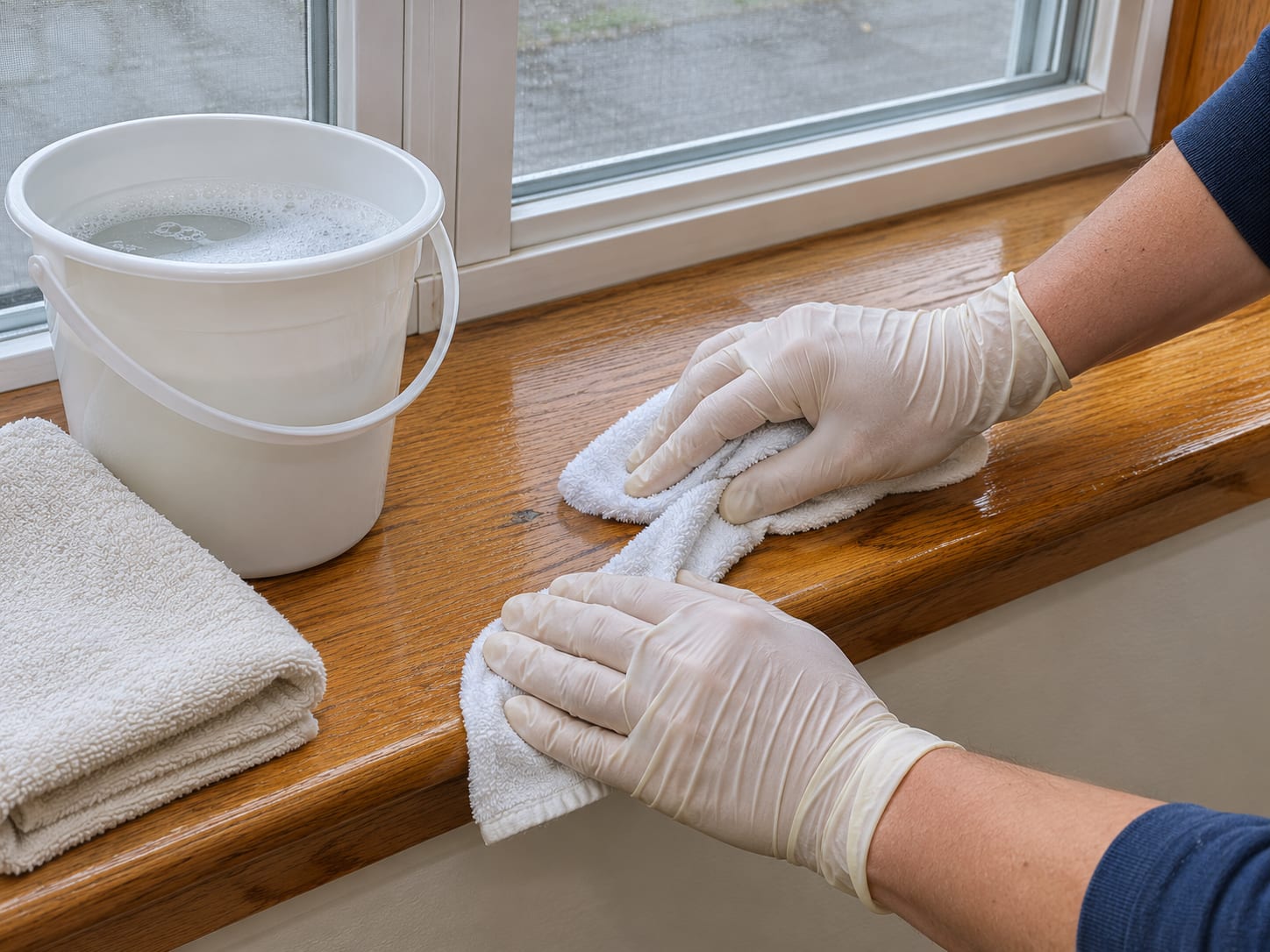
Solid-wood trim and wall finishes may sometimes be salvaged. The University of Minnesota Extension's flood cleanup guidance says solid woodwork can sometimes be saved with cleaning, disinfecting and refinishing, and that badly infected wood should be replaced and most paneling discarded. Those are flood recommendations, so they do not apply to every wood surface or finish.
How can I remove black mold from wood?
For a small, clean-water area on finished wood, the steps are the ones above: detergent and clean water, thorough drying, and HEPA vacuuming once the wood is dry. Larger areas, contaminated water, hidden growth, structural wood or dusty work need a professional assessment and controls.
Color does not tell you the species or how dangerous it is, so a dark patch is handled the same way as a light one. Size, material and water change the plan.
What is the best mold killer for wood?
No product is guaranteed to save a piece of wood. EPA says antimicrobial products must be used according to their labels, and many are not intended for surfaces that absorb water. Cleaning and drying come first, and a product does not replace fixing the moisture or removing wood that cannot be saved.
Will vinegar kill mold permanently on wood?
The EPA and New Jersey guidance does not present vinegar as a lasting fix, and it does not describe a no-scrub spray that removes mold from wood. If you use any cleaner, follow its label. A damp wipe with detergent, followed by complete drying, is what the guidance describes.
What should you not clean mold with?
Do not mix bleach with products that contain ammonia. Do not paint or caulk over moldy or wet wood, and do not use a wet vacuum on porous material. Skip any method that scatters spores, including a household vacuum that is not built for mold dust.
Sanding and Wire Brushing Make Dust, so Cutting Out Is Often the Safer Call
It is tempting to sand a stained board until the dark color is gone. Sanding, scraping and wire brushing disturb the material, and OSHA says remediation work that disturbs mold increases respiratory exposure. Abrasive work also produces a lot of dust.
Can you sand mold off wood?
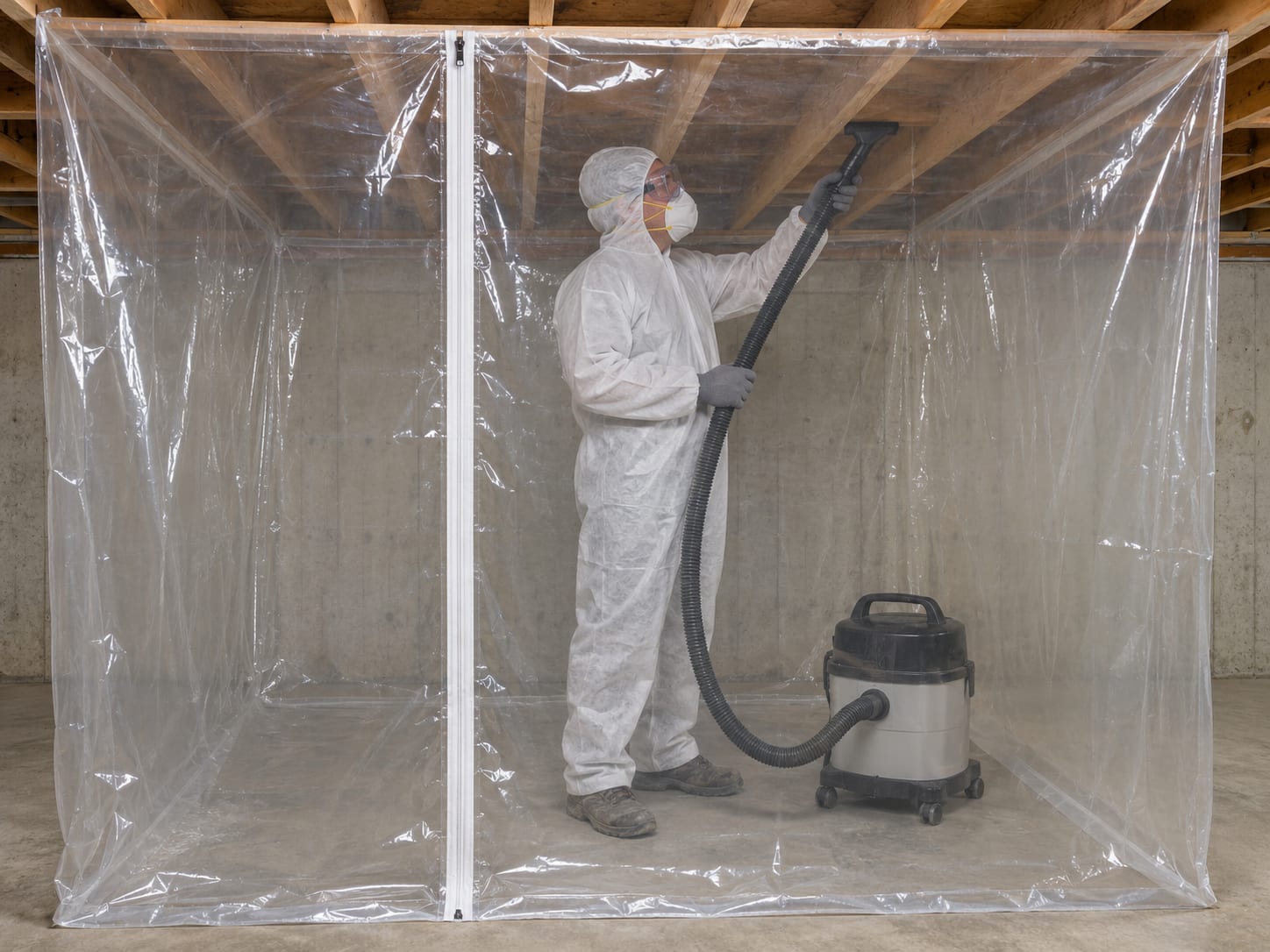
You can remove surface growth that way, but it is dust-producing work that needs a plan, and it is not a way to save wood. The OSHA guidance describes controls for this kind of job. Keep the area unoccupied. Wear gloves, protective clothing and properly fitted eye protection without vents. Use a NIOSH-certified respirator chosen for the hazard; in a workplace, that comes with medical clearance, fit testing and training.
Plastic sheeting or other containment keeps dust from spreading. Mist surfaces where appropriate without soaking them, and HEPA-vacuum the settled dust once everything is dry. Anything you remove should be sealed in impermeable bags or containers. OSHA's quick card describes stronger controls for areas under 30 square feet, 30 to 100 square feet and extensive contamination, and those size categories are guidance levels, not a promise that a particular sanding job is safe.
Controls for Dust-Producing Work
Keep the area unoccupied
Nobody who is not part of the work should be in the space.
Protect yourself
Wear gloves, protective clothing and properly fitted eye protection without vents, plus a NIOSH-certified respirator chosen for the hazard.
Contain the dust
Plastic sheeting or other containment keeps dust from spreading.
Mist, do not soak
Mist surfaces where appropriate without soaking them.
HEPA-vacuum once dry
Vacuum the settled dust after everything is dry.
Seal what you remove
Put removed material in impermeable bags or containers.
Moldy joists, sheathing and framing should not be sanded or wire-brushed without a plan for containment, respiratory protection, dust capture and a check of the wood's structural condition. For structural wood, a structural engineer or another qualified professional is the right person to judge it.
When does replacement become the better decision?
Replacement becomes the better path when the wood is soft, crumbly or separating, when growth sits in joints or hidden cavities, or when the musty smell comes back after you clean and dry. Paint is not a shortcut: EPA says not to paint or caulk moldy surfaces. Encapsulation, which means coating the wood with a sealing product, can be considered only after the wood has been cleaned, dried and judged suitable for that product, and it cannot restore wood that has lost structural strength.
If framing has to be replaced, our build-back services cover the rebuild once the area is clean.
Mold Returns to Wood Wherever the Moisture Stays
Repeat mold on wood usually means the wood or the materials around it never fully dried. EPA names leaks, seepage, condensation and indoor humidity as the moisture sources, and the New Jersey Department of Health says mold problems generally occur when there is excess water. In a New Jersey house, that can mean a basement that stays damp after storms, an attic with poor ventilation, or a bathroom fan that does not vent outdoors.
EPA's targets are short: dry wet materials as soon as possible, ideally within 24 to 48 hours, keep indoor relative humidity below 60%, and aim for 30% to 50% if you can. Relative humidity is the share of moisture the air holds compared with the most it could hold, and a humidity meter will show it.
Hover or tap a row to highlight it.
| Target | EPA figure |
|---|---|
| Dry wet materials | As soon as possible, ideally within 24 to 48 hours |
| Indoor relative humidity ceiling | Below 60% |
| Ideal indoor relative humidity | 30% to 50% |
Will black mold come back if you clean it?
It can, if moisture, condensation or leaks remain. EPA recommends fixing water problems promptly, drying materials completely and keeping humidity in range. Ask whoever does the work for moisture readings on your particular wood assembly and the drying criteria they are working toward.
New Jersey's mold guidelines describe measuring relative humidity and building-material moisture as part of a qualified investigation. When mold is visible, the guidance says additional testing is generally unnecessary.
New Jersey Insurance, Records and Remediation Companies
Insurance paperwork is easier when the wood is documented before it goes in a dumpster. The New Jersey Department of Banking and Insurance advises reporting losses promptly, photographing damaged property before disposal, and keeping it when possible until the insurer inspects it or authorizes disposal.
Temporary repairs to protect the property may be necessary, but permanent repairs should wait until the adjuster has reviewed the damage. Flood damage is excluded from most homeowners and renters policies, and flood insurance generally provides that coverage. Coverage depends on your policy and the cause of the loss, so take disputed questions to your insurer or a qualified attorney. Health questions belong with a doctor, especially for anyone with allergies, asthma or other lung conditions.
New Jersey does not certify companies that do mold or indoor-air work, and the state's company lists are a public service rather than an endorsement. Ask any company, including us, for a written scope covering cleaning, removal, containment, drying and verification. Permits depend on the repair or rebuild involved, and the state's construction codes govern that work through your municipality. Our mold remediation page lists what we handle, and you can see our other services too.
Frequently Asked Questions About Removing Mold From Wood
Can wood with mold be saved?
Often it can. Treated or finished wood can generally be cleaned with mild detergent and clean water and then dried, provided it stays structurally sound and the moisture problem is corrected. Soft, crumbly or separating wood is usually replaced, and solid trim sometimes survives cleaning and refinishing.
Do I need a mold test before I clean wood?
Usually not when the mold is visible. Testing can help when mold is suspected but not visible, when the extent has to be evaluated, or when documentation is required.
Can a structural engineer help with moldy joists?
Yes. EPA recommends a structural engineer or another qualified professional when mold and moisture may have weakened the building. Photographs, moisture readings and a written scope make that visit more useful.
Test Your Moldy Wood Knowledge
1. What can generally be used to clean treated or finished wood?
2. Which wood usually has to be replaced?
3. What does sanding moldy wood need?
4. How soon does EPA say wet materials should ideally be dry?
5. Who is the right person to judge moldy structural wood?
Pick an answer to begin.
Final Thoughts
Wood that stays hard and sound can often be cleaned with detergent and clean water, then dried completely. Wood that is soft, crumbly, separating or full of hidden growth usually has to be cut out. Sanding is dust-producing work that needs containment and protection, and no product replaces drying the wood and fixing the water that fed the growth.
Taking those steps in order protects your health and your home, and it keeps you from cleaning the same board again next season.
If the wood is structural, the area is large, or the mold keeps returning, call ExecPro Restoration & Cleaning at (888) 300-3772 or reach us through our contact page. We handle mold removal and water damage restoration for homes across New Jersey, and we can tell you whether your wood can be cleaned or has to come out.
Moldy Wood Terms
Tap a term to see what it means.
Sheathing. The layer of boards or panels under the roofing.
Related Articles
Vinegar on Mold in a Bathroom: Steps, Limits and Mixing Risks
Does vinegar kill mold? Lab evidence covers only two mold types, tested in a dish. Learn the EPA steps for a small patch and when to call a pro.
What is mold remediation?
What mold remediation involves: fixing the moisture source, removing contaminated materials, and verifying a safe space, plus the signs of mold and how to prevent it.
Mold in Washing Machines: Cleaning Gasket, Drawer and Drum
A musty smell or black gunk in the door gasket often comes from trapped water and residue. Learn how to clean each part and what never to mix with bleach.