Property Management Mold Services in Princeton Junction, NJ: A Repeatable Protocol for Managed Homes and Multifamily Units
Cal HewittPublished
- property management mold services
- property management
- mold remediation
- multifamily
- new jersey
- princeton junction
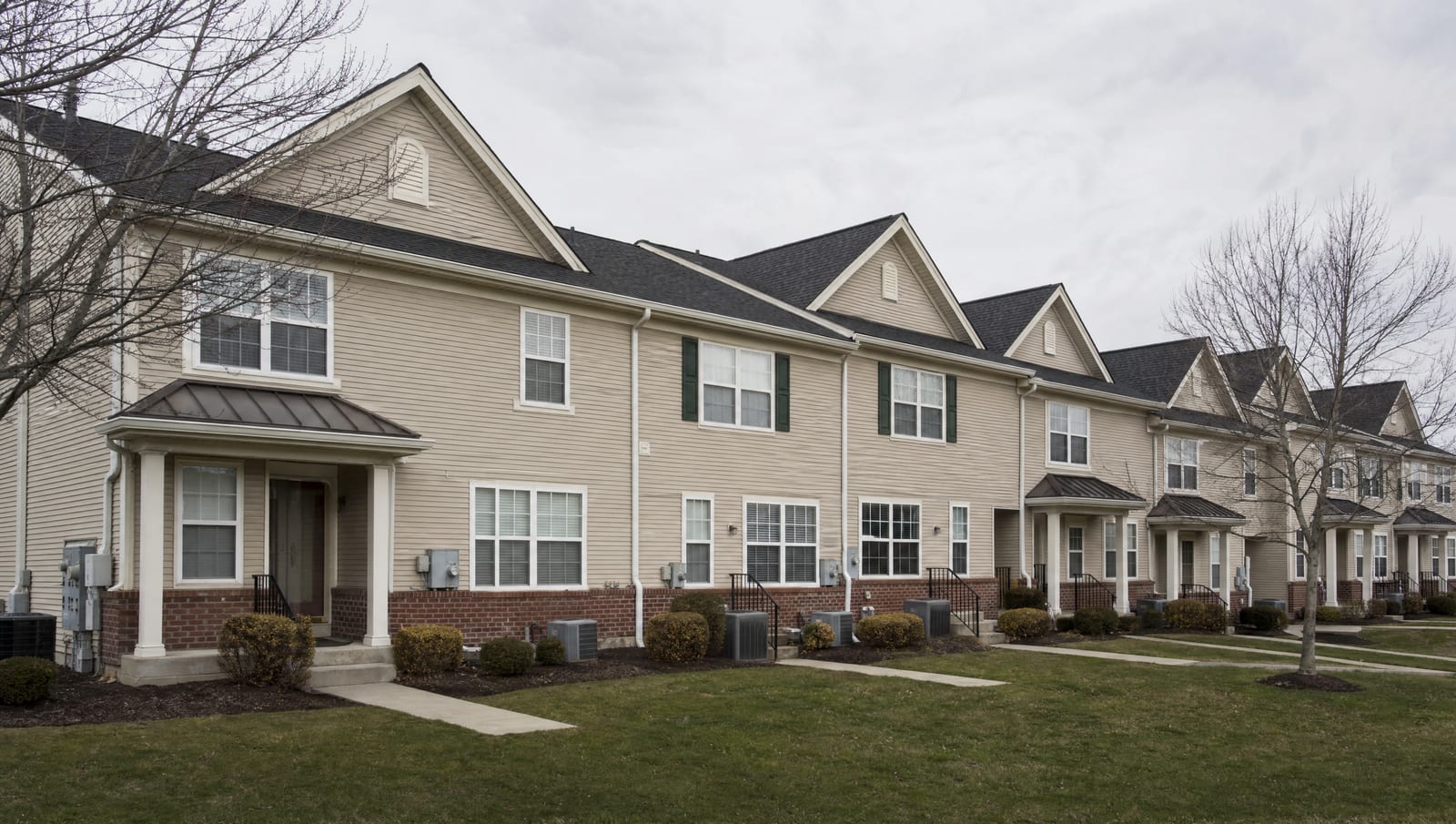
A tenant sends a photo of a damp closet ceiling on a Tuesday morning, then heads to the train and is gone until evening. If you manage homes or multifamily units in Princeton Junction, that message is not really about one closet. It is a test of whether your operation can respond the same way every time, across every address, without you standing in the unit to make each call. The single home is a project. A portfolio is a process. The difference between the two is a protocol you can run again and again.
This article is about that operation. Not how mold forms, and not how to win an insurance claim, but how a manager moves a report from a tenant's phone to a closed work order and a clean file, while residents commute, while access has to be arranged in advance, and while the same standard applies to every unit you oversee. The goal is a system that produces consistent decisions and consistent records, so a leak reported in one building looks, on paper, like a leak reported in any other.
Running Mold Response Across Managed Units
Pre-authorized emergency access
A signed clause and a documented entry method let a crew reach a wet unit fast, without waiting for a resident who is at work or unreachable.
Tenant and commuter scheduling
Response windows are planned around residents who leave early and return late, so access is arranged rather than assumed.
Standardized report intake
Every tenant report is logged the same way, with unit, symptom, date, and photos, so nothing is lost between the message and the visit.
Rapid triage
A first assessment separates a safety-and-water emergency from a routine follow-up, and sets the response speed for that unit.
Containment
Work areas are sealed so the disturbance during removal does not carry into occupied spaces or adjacent units.
Consistent closeout file per unit
Each job ends with the same document set, so a manager can show what was found, corrected, dried, verified, and rebuilt.
Recurrence tracking
Closed jobs are reviewed across the portfolio so a repeating leak point gets treated as a pattern, not a series of unrelated tickets.
Why Managed Properties Need a Standard Protocol
When you manage several units, the biggest risk is not any single leak. It is inconsistency. One unit gets a fast, documented response and another waits three days because the manager on duty handled it differently. One file has photos and drying records and another has a text thread and a memory. Over a portfolio, those gaps become disputes, missed carrier deadlines, and repairs that come back.
A protocol fixes this by making the response repeatable. The same intake form, the same triage questions, the same access method, and the same closeout file apply whether the report comes from a detached rental near a stream or a second-floor apartment. Princeton Junction is a community within West Windsor Township, not its own municipality, so the local review points are shared across your addresses too. That shared footprint is an advantage. Once you know how West Windsor construction and engineering offices, FEMA address-level flood mapping, and New Jersey environmental flood tools apply to your properties, you can build those checkpoints into the same process every time.
The protocol also protects the boundary of your role. A remediation provider documents what is found, corrects the moisture source, and records the work. It does not decide who is financially responsible for the loss. Keeping that line clear in your process, and putting it in writing, keeps the operation focused on facts and conditions rather than blame.
Building Pre-Authorized Emergency Access
Access is where most managed-unit responses stall. A crew is ready, water is spreading, and the resident is on a train with a phone on silent. In Princeton Junction, that commuter pattern is common, so access cannot be something you improvise after a report comes in. It has to be arranged in advance.
Pre-authorized emergency access means the right to enter a unit for a water or mold emergency is already established before anyone needs it. That usually lives in the lease or a signed addendum, along with a documented entry method, notice terms, and a record of who is allowed in. When a report arrives, the manager is not negotiating access from scratch. The authorization already exists, the notice requirement is known, and entry is logged.
Scheduling still matters around that authorization. Many residents leave early and return late, so the practical response window is planned, not assumed. Some visits are true emergencies where stopping active water comes first. Others are assessments that can be booked into an agreed window. Building both paths into your protocol, one for emergencies and one for scheduled work, keeps the response consistent whether the tenant is standing in the doorway or a commuter miles away.
The Leak-to-Remediation Escalation Path
An escalation path is the spine of the operation. It defines what happens at each stage of a report, who acts, and what note or notification goes with it. Without it, speed depends on who happens to catch the message. With it, every report climbs the same ladder.
The path starts at intake, when a tenant report is logged the same way every time: unit, symptom, date, and photos. Triage comes next, a first read that separates a safety-and-water emergency from a routine follow-up. Emergency stabilization can begin promptly once a crew has access, because the priority is stopping further water when it is safe to do so. From there the job moves through containment and remediation, then verification, then a closeout file. No fixed number of days is promised, because the real duration depends on the scope, on how far water traveled, on drying, and on any specialty work a unit needs.
Hover or tap a row to highlight it.
| Stage | Action | Timing and notification note |
|---|---|---|
| Report received | Log the tenant report with unit, symptom, date, and photos in a standard intake | Confirm receipt to the resident and record the timestamp |
| Triage | Assess whether this is a safety-and-water emergency or a routine follow-up | Set the response speed for that unit and note who is assigned |
| Emergency access | Use the pre-authorized entry method to reach the unit and stop further water when safe | Give required notice, log entry, and update the resident |
| Containment and remediation | Seal the work area, remove affected materials, correct the moisture source | Coordinate around the resident's schedule and note affected assemblies |
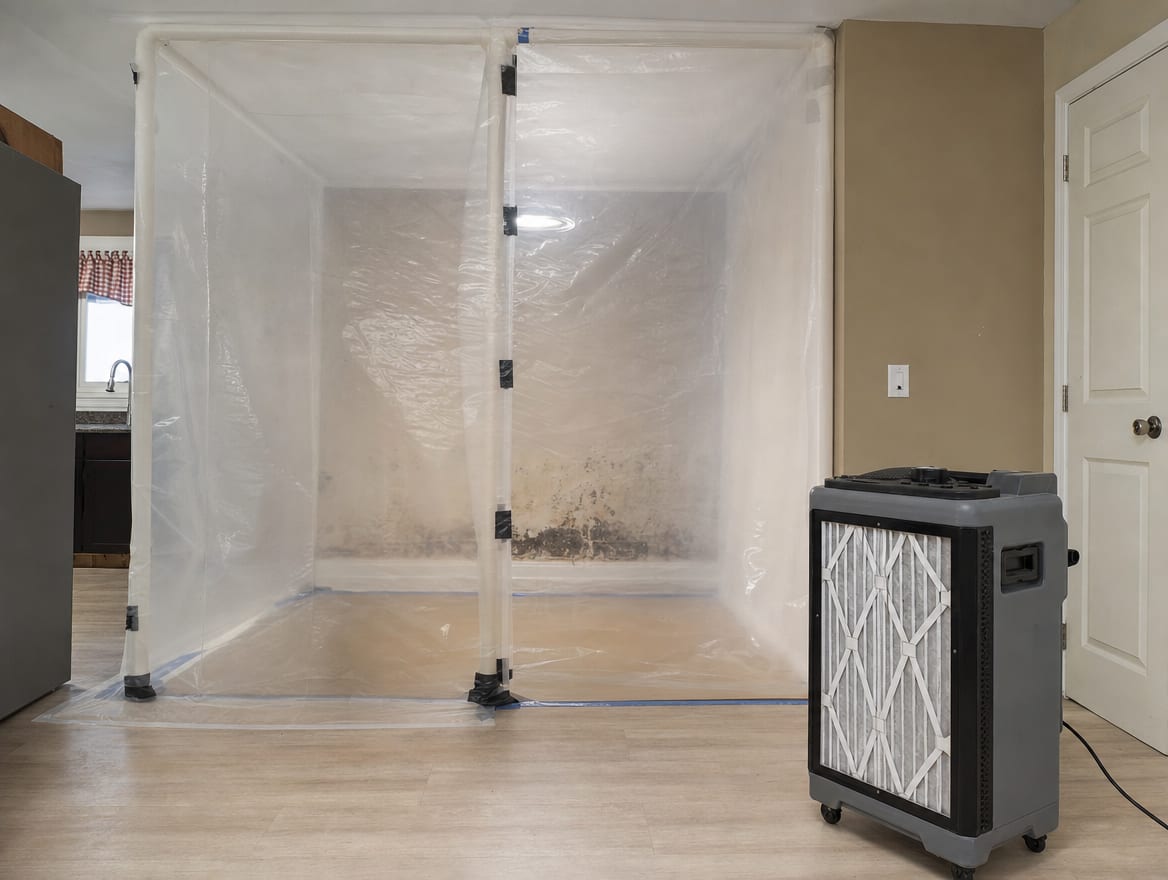
| Verify | Confirm drying, and use clearance testing only when a defined question calls for it | Record readings and any verification results |
| Closeout file | Assemble the standard document set and close the work order | Notify the resident of completion and note any recurrence flag |
Written this way, the path does two things at once. It tells the person on duty exactly what to do next, and it tells the file exactly what to record. The action and the documentation travel together.
Documenting Conditions in Every Unit
Documentation is not paperwork you add at the end. It is generated at each stage, because the record is only useful if it captures conditions as they were found. Pre-work photos, moisture readings, and source findings tell the story of what the unit looked like on day one. Scope and exclusions define what the work will and will not cover. Drying records, disposal records, permits, and inspection results track the work as it happens. Post-work photos and any verification reports show the finished state.
Two habits keep this consistent across a portfolio. First, capture the water source and the affected assemblies, not just the visible stain, since water can travel before it shows. Second, note the category of water, because floodwater, groundwater, rain entry, plumbing water, sewage, and condensation are different problems with different safety and handling needs. A record that names the source and the category is far more useful later than one that simply says the ceiling was wet.
Throughout, the documentation describes conditions. It does not assign responsibility. That distinction keeps your files clean and keeps the remediation role in its lane.
Local Checkpoints in Princeton Junction
Because Princeton Junction routes through West Windsor Township, your local checkpoints are consistent across managed addresses, which makes them easy to build into the protocol. Depending on the job, coordination can involve West Windsor construction and engineering offices, FEMA address-level flood mapping, and New Jersey environmental flood tools, plus any site-specific wetland or stream constraints near a given property. These are checked by parcel, since flood exposure and approval requirements are not the same at every address. Statewide weather trends do not establish a loss at any one unit, so the observed water pathway is documented on site, address by address. When a stage of the work needs a permit or review, confirm the requirement with the authority having jurisdiction before that work begins.
From Report to Closeout
The value of a protocol shows in how a single report moves from a tenant's message to a closed file. The steps below are the operation compressed into a line every unit can follow.
From Tenant Report to Closeout File
- 1
Tenant reports the issue
A resident sends a symptom and a photo, and the manager logs it into standardized intake with unit and date.
- 2
Manager triages
A first assessment sets whether this is an emergency or a scheduled follow-up and assigns the response.
- 3
Access is arranged
Pre-authorized emergency access is used for urgent water, or a visit is booked into the resident's window around their commute.
- 4
Conditions are documented
Pre-work photos, moisture readings, and the water source and category are recorded before anything is removed.
- 5
Containment and remediation
The area is sealed, affected materials are removed, and the moisture source is corrected.
- 6
Drying is verified
Readings confirm the space is dry, with clearance testing only when a defined question requires it.
- 7
Closeout file is assembled
The standard document set is compiled, the work order is closed, and any recurrence is flagged.
The Closeout File
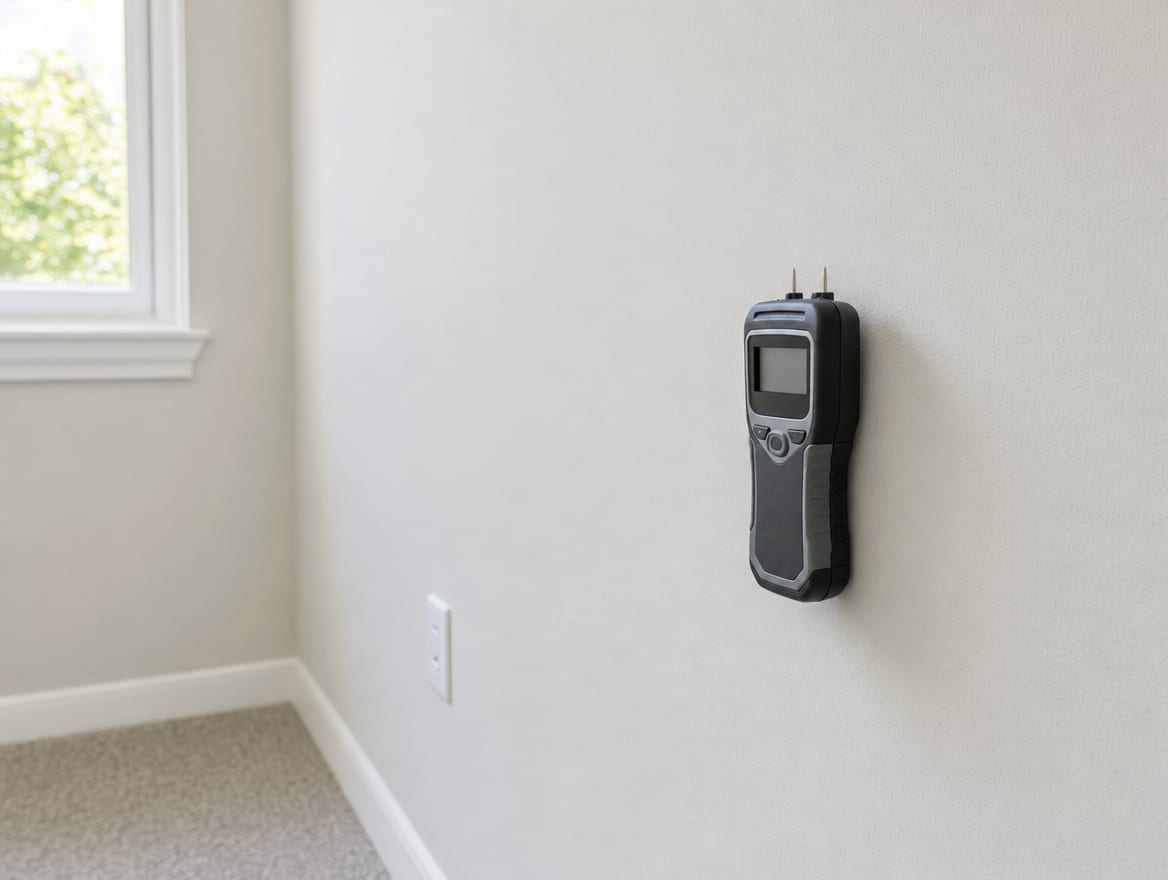
The closeout file is what makes the whole operation legible. It is the standard document set that ends every job, so any unit can be reviewed the same way. A complete file generally holds pre-work photos, moisture readings, the source findings, the scope and exclusions, change orders, drying and equipment records, disposal records, permits, inspection results, post-work photos, verification reports when required, invoices, and any carrier correspondence.
When every unit closes to the same file, a manager gains something valuable: the ability to show, on demand, what was found, corrected, removed, dried, verified, and rebuilt. That record supports handoffs between staff, answers a resident's questions, and gives a carrier a clear account if a claim is involved. It also keeps the boundary intact, because the file states conditions and work performed rather than conclusions about fault.
Tracking Recurrence Across the Portfolio
A closed job is not the end of the data. Recurrence tracking is the review that looks across units for repeat problems. If the same stack, the same roof plane, or the same low-lying unit keeps generating reports, the pattern deserves a durable fix rather than another round of cleanup. This is where managing a portfolio pays off over handling one-off jobs. The closeout files, read together, turn scattered tickets into a map of where moisture keeps finding its way in.
Correcting the moisture source is central here. A response that removes visible mold without fixing what let water in tends to come back, and a recurrence log makes that failure visible quickly. Treating a repeating leak point as a pattern, not a coincidence, is how a manager gets ahead of the next report instead of chasing it.
Insurance and Documentation
Managers often ask whether a mold or water loss will be covered. That decision belongs to the carrier, not to a remediation provider. Coverage depends on the policy language, the cause, exclusions, notice, and the documentation on file, and flood damage is generally handled under separate flood insurance rather than a standard homeowners or property policy. No contractor can guarantee that a claim will be paid.
What the protocol can do is make the record strong. Thorough documentation of conditions, source, scope, drying, and verification gives a carrier a clear account to evaluate. The remediation provider records what was found and what was done. It does not decide responsibility and it does not promise an outcome. Any statement about health effects sits in the same careful zone: damp indoor environments may affect some people and not others, and a resident with a health concern should be directed to appropriate medical advice rather than given a diagnosis. Remediation and restoration also cannot guarantee an increase in a property's value, though clear records do help demonstrate exactly what was addressed.
Frequently Asked Questions
How fast can you respond to a tenant report?
Emergency stabilization can begin promptly once a crew has access, with the first priority being to stop further water when it is safe. The exact speed depends on triage, since a safety-and-water emergency is handled faster than a routine follow-up. Drying wet materials within roughly 24 to 48 hours helps reduce mold risk, which is why a fast, consistent intake and triage step matters so much for managed units.
How does emergency access work when residents are at work?
Access is arranged before it is needed. A pre-authorized entry clause and a documented entry method let a crew reach a wet unit without waiting on a resident who is commuting or unreachable, while still honoring the notice terms in the lease. For non-urgent work, visits are scheduled into a window that fits the resident's day. Every entry is logged as part of the file.
What is in a closeout file?
A standard closeout file generally includes pre-work photos, moisture readings, source findings, the scope and exclusions, change orders, drying and disposal records, permits, inspection results, post-work photos, verification reports when required, invoices, and any carrier correspondence. The point is consistency, so every unit closes with the same document set and can be reviewed the same way.
How do you handle many units consistently?
By running the same protocol every time: standardized intake, the same triage questions, pre-authorized access, containment during removal, verification of dryness, and an identical closeout file. Recurrence tracking then reviews closed jobs across the portfolio so repeat problems get a durable fix. The process, not the individual on duty, sets the standard.
Will insurance cover the work?
That is the carrier's decision, and it cannot be guaranteed. Coverage depends on the policy, the cause, exclusions, notice, and documentation, and flood damage is usually covered under separate flood insurance rather than a standard property policy. The most useful thing a manager can do is keep thorough records so the carrier has a clear account to evaluate.
When you want a mold response your managed properties can run the same way every time, our team at ExecPro Restoration & Cleaning builds the protocol around your portfolio, from property management mold services and the rest of our commercial restoration offerings through post-remediation verification and local coverage for mold remediation in Princeton Junction. To set up access authorization, an escalation path, and consistent closeout files across your units, reach out to our team or call (888) 300-3772.
Property Management Mold Terms
Tap a term to see what it means.
Access authorization. A pre-established right and documented method to enter a unit for a water or mold emergency, so a crew can respond without waiting on a resident who is away.
Serving Princeton Junction
ExecPro Restoration & Cleaning provides mold remediation services in Princeton Junction, NJ, from inspection and testing through removal, drying, and post-remediation verification. Call (888) 300-3772 for 24/7 emergency response.
Related Articles
Property Management Mold Services in Deal NJ: A Seasonal-Home Protocol
A repeatable mold protocol for managers of seasonal Deal NJ homes: pre-arrival inspections, remote humidity monitoring, emergency access, and owner reporting.
Property Management Mold Services in Princeton, NJ: A Portfolio Protocol for Mixed-Age Buildings and Occupied Units
How Princeton property managers run mold response across a mixed-age portfolio: historic review, resident notice, containment, and recurrence tracking.
Mold Remediation in Trenton, NJ: Planning the Whole Job Around the People Living There
When tenants or family are still living in the house, mold remediation in Trenton, NJ has to be planned around them. See the steps, the scope and the records.