Mold Removal in Trenton, NJ: Which Plaster, Drywall and Trim Has to Go
Cal HewittPublished
- mold removal
- historic homes
- moisture source
- trenton nj
- new jersey
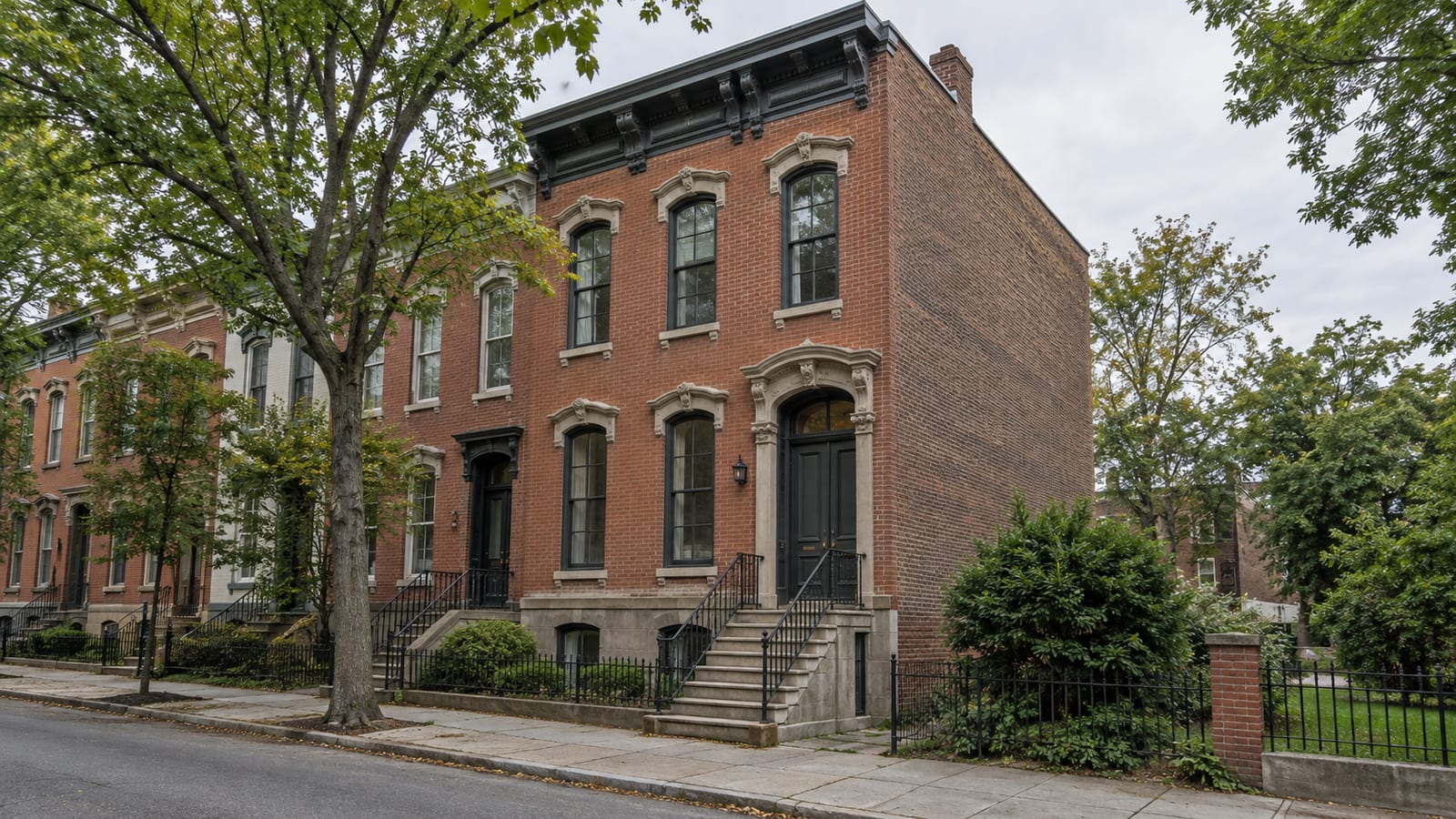
Mold removal in Trenton, NJ starts with a question most estimates never answer in plain words: what exactly is going to be torn out of my room? You have found growth on a wall, a ceiling or a floor in an older house, and you may be looking at plaster you cannot replace, woodwork that has been there for a century, or a ceiling that already sags. It is fair to worry about two things at once: losing original material that could have stayed, and paying to close a wall back up over growth nobody found. Which surfaces go and which stay depends on the material and on how far the moisture reached, and that can be described before anyone picks up a saw. What follows goes material by material, so you can ask a contractor which parts of your room would be cut out, cleaned or kept, and why.
Key Takeaways
Some materials come out, some are cleaned in place
Drywall, insulation, carpet and pad, and ceiling tile that cannot be reliably cleaned come out; concrete, masonry, tile, metal and finished wood may be cleaned where they are.
Old plaster and lath are decided by the assessment
How far moisture reached decides whether a wall is opened, not a blanket rule.
About 10 square feet is a practical line
EPA treats larger areas, hidden growth and extensive water damage as reasons for a professional assessment.
Ask for an itemized written estimate
It should say what is removed, what is cleaned, what is dried and what is rebuilt.
Old Plaster or Newer Drywall: How Each One Is Handled
Newer drywall is the simpler case. Its paper facing and gypsum core are porous, which means they soak up water and hold it, and EPA describes porous materials that cannot be reliably cleaned as the ones that get removed. Insulation, carpet and pad, and ceiling tile fall in the same group. When growth has taken hold in any of them, the affected piece is cut out, bagged and replaced after the room is dry.
Old plaster and lath are a different question, and no single rule answers it. Older properties can bring plaster or lath walls, concealed wall cavities, older insulation and historic materials, and each of those may call for selective demolition instead of surface cleaning. The deciding fact is how far moisture reached. A plaster wall that got wet from a small, recent leak is judged one way. A wall that has been damp for a long time, or that has moisture behind the lath, is judged another way. Which of those describes yours is something an assessment settles by measuring moisture in the wall and by looking at what is behind it, so ask the contractor to tell you what the readings showed and where.
Here is how the common materials sort out before an assessment changes the picture:
Selective demolition is the term to listen for. It means opening only the part of a wall that is affected and leaving the rest, instead of gutting the room. In older buildings it is often the better approach, because surface cleaning cannot reach growth in a concealed cavity. Ask the contractor to mark the proposed cut lines on the wall or on a sketch before work begins, and to explain why each line sits where it does. That one document answers the worry about paying to close up a wall over growth nobody found, because the cut lines follow the moisture and not the stain.
What to Ask the Contractor Before Anything Is Cut
Mark the cut lines
Ask for the proposed cut lines on the wall or on a sketch before work begins, with the reason each line sits where it does.
Sort every piece
Ask for each piece of trim, door casing and stair part to be sorted into cut out, cleaned or kept, with the evidence for each choice.
See the readings
Ask what the moisture readings showed and where.
Get the source in writing
Ask for the water source they identified and how it was corrected.
Get an itemized estimate
Ask for a written estimate that separates removal, cleaning, drying and rebuilding.
Check the company
New Jersey has no state certification for mold companies, so ask for references, a written scope and proof of insurance.
Cutting Out, Cleaning, Drying: The Order the Room Is Handled In
Once the scope is set, the room follows a short order. The crew protects the people in the building and isolates the work area when disturbing the growth could spread spores. Porous materials that cannot be reliably cleaned come out first. Salvageable hard surfaces are then HEPA vacuumed and cleaned; a HEPA vacuum uses a filter fine enough to hold the smallest particles, so dust is captured and not blown around the room. The structure is dried, and moisture is measured to confirm it is under control. Only then are removed assemblies repaired or rebuilt, and verification is done when the project, an insurer, a property manager or a sale calls for documentation.
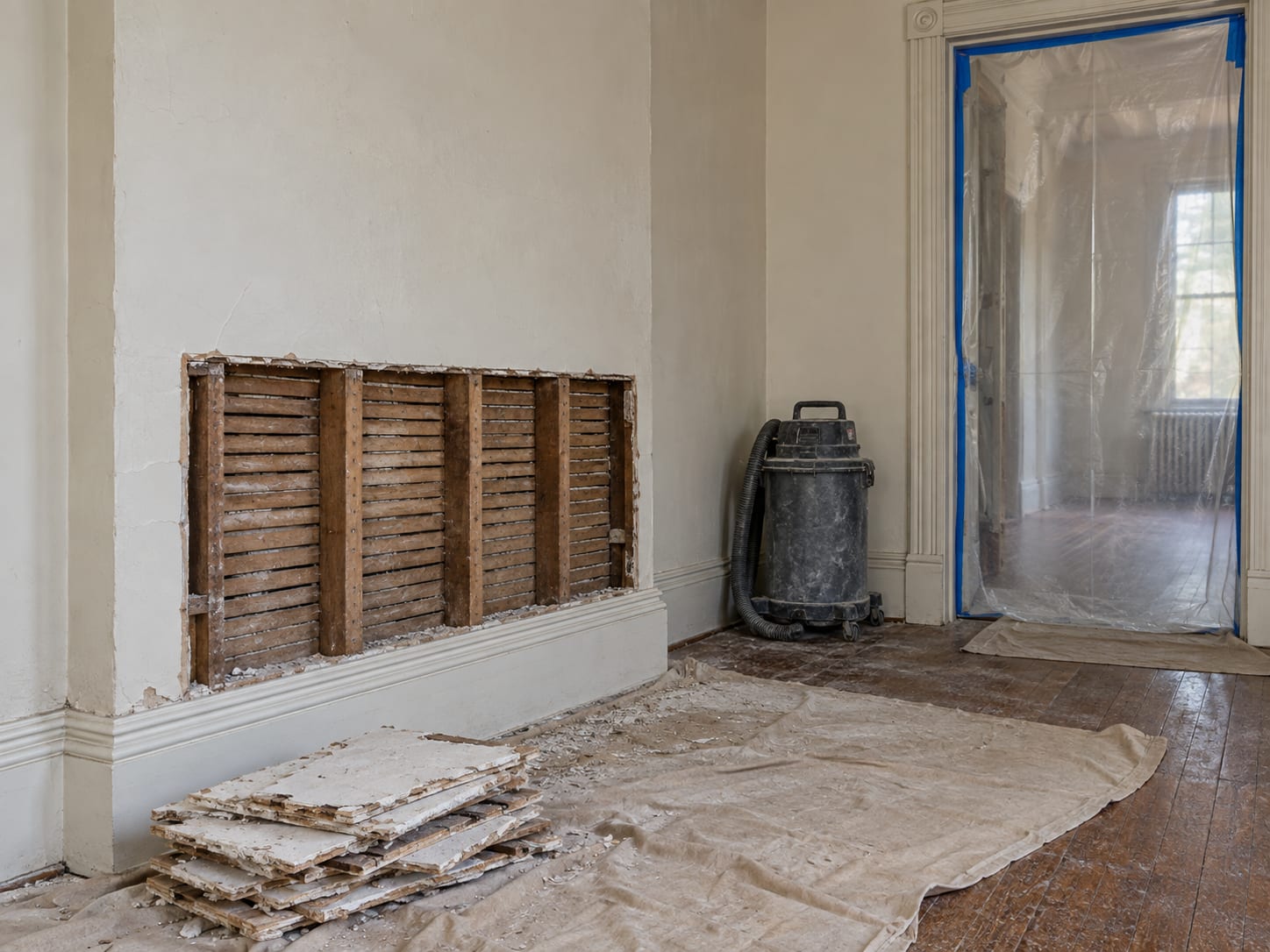
EPA recommends drying wet materials within 24 to 48 hours, and the EPA mold guide gives that window to prevent growth. It matters most after river, creek, storm, plumbing or basement water gets in. For timing, our own practice is that most residential removal projects take one to three days, with longer schedules when structural drying, extensive demolition or rebuilding is involved. That is how we work, not a promise about every Trenton building. The whole sequence, from the water source through the completion record, is on our Trenton mold remediation page, which is the place to read if you want every step.
The Order the Room Is Handled In
- 1
Protect and isolate
The crew protects the people in the building and isolates the work area when disturbing the growth could spread spores.
- 2
Remove what cannot be cleaned
Porous materials that cannot be reliably cleaned come out first.
- 3
HEPA vacuum and clean
Salvageable hard surfaces are HEPA vacuumed and cleaned.
- 4
Dry and measure
The structure is dried, and moisture is measured to confirm it is under control.
- 5
Repair or rebuild
Removed assemblies are repaired or rebuilt.
- 6
Verify when needed
Verification is done when the project, an insurer, a property manager or a sale calls for documentation.
The Trim, Masonry and Framing You Hope Will Stay
The worry about original woodwork is reasonable, and the honest answer is that it depends on the piece. EPA lists concrete, masonry, tile, metal and finished wood among the materials that may be cleanable in place, so a baseboard with a sound finish and light surface growth is a candidate for cleaning, while a piece of trim that has been soaked and softened may not be. Ask the contractor to sort each piece of trim, door casing and stair part into cut out, cleaned or kept, and to say what evidence supports each choice.
Masonry and concrete, such as a basement wall or floor, may be HEPA vacuumed and cleaned in place, so the crew is not tearing out the structure itself. Framing is assessed like anything else in the room, by looking at the moisture and the condition of the wood. If the framing needs replacement after removal, that belongs on the estimate as its own line.
If the work touches the outside of a building that is a designated landmark or sits in a historic district, such as historic windows, siding, masonry, trim or exterior drainage, check with Trenton's Landmarks Commission before starting. Interior mold removal by itself does not automatically need that review, but an exterior repair to stop the water may.
Ten Square Feet: Where a Small Job Ends and a Professional's Begins
EPA says a moldy area smaller than about 10 square feet can often be handled by a homeowner using appropriate precautions. That figure is a practical cleanup threshold and not a health limit. Larger areas, extensive water damage, hidden mold, contaminated water, HVAC involvement, sensitive occupants, and porous materials such as drywall and insulation all call for a professional assessment, and a mold inspection is often how that assessment begins.
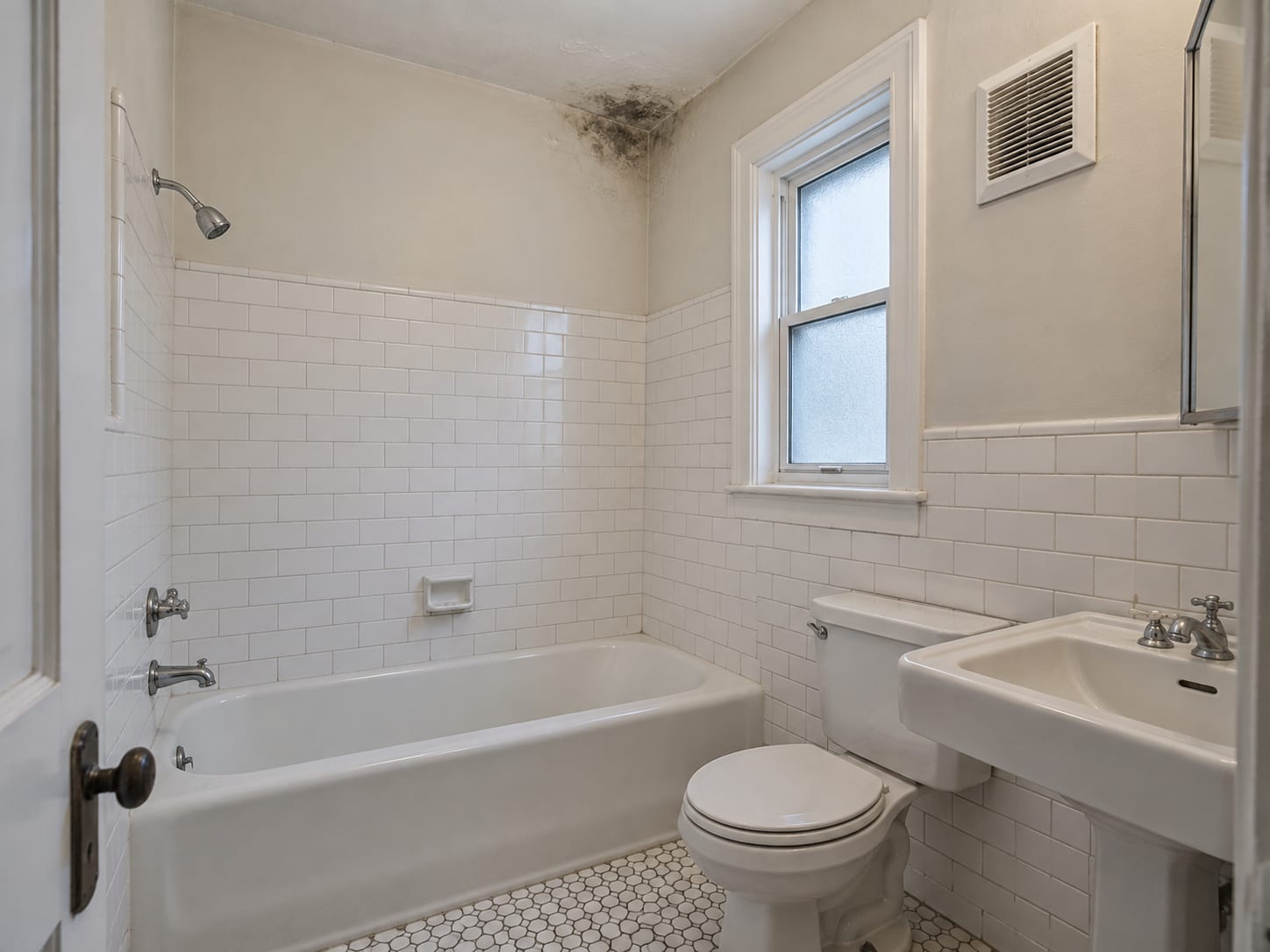
If you are looking at growth right now, these steps come first:
- Stop the water: If the source is safe to reach, shut it off.
- Keep people and pets away: Stay out of the affected area, and stay out entirely if electricity may have touched standing water.
- Photograph the condition: Take pictures before anything is touched, since removal changes what can be seen.
- Leave the growth alone: Do not paint or caulk over it, and do not scrub extensive growth without protection.
- Start drying: If the water is clean and electricity is safe, remove standing water and dry wet materials within 24 to 48 hours. Do not use fans when the water may contain sewage or other contaminants.
Over the next week, correct the moisture source, dry the structure, replace materials that cannot be cleaned and keep a written record. If you rent, notify the landlord or property manager in writing, and report unrepaired leaks to the local building-code office.
Hover or tap a row to highlight it.
| Situation | What EPA guidance points to |
|---|---|
| A moldy area smaller than about 10 square feet | Can often be handled by a homeowner using appropriate precautions |
| A larger area or extensive water damage | A professional assessment |
| Hidden mold or contaminated water | A professional assessment |
| HVAC involvement or sensitive occupants | A professional assessment |
| Porous materials such as drywall and insulation | A professional assessment |
An Itemized Estimate Shows What You Are Paying to Remove and What You Are Paying to Rebuild
No government source gives a reliable Trenton or New Jersey price for mold removal, so the useful comparison is a written estimate that itemizes the work. The main drivers are these:
- Area and rooms: A small surface-cleaning job differs from several rooms or a whole basement.
- Visible or hidden growth: Growth behind drywall, wallpaper, ceilings, flooring or insulation means more opening up.
- Materials removed: Porous materials that must be removed and disposed of, against hard surfaces cleaned in place.
- Water type: Contaminated or sewage-affected water changes the work.
- Containment and equipment: Containment, negative air pressure (fans that pull air out of the sealed area), HEPA filtration and protective equipment.
- Drying and repairs: Structural drying and dehumidification, plus plumbing, roof, foundation, drainage, HVAC or ventilation repairs.
- Historic material: Careful selective demolition of historic finishes, sometimes with preservation review.
- Occupied buildings: Phased work and tenant coordination in multifamily properties.
- Verification and rebuild: Post-remediation verification, laboratory testing, insurance documentation, and replacement of drywall, insulation, flooring, trim, paint, cabinetry or framing.
A cleanup does not automatically need a separate mold permit. Tear-out and rebuild may, because construction, alteration, repair, electrical, plumbing, mechanical or structural work falls under the New Jersey Uniform Construction Code, so confirm the scope with Trenton's construction-code office before demolition. The state's construction permit forms show which subcodes apply. New Jersey has no state certification program for mold-remediation companies, according to the New Jersey Department of Health, so ask any company for its references, its written scope and its insurance instead.
Rental and multifamily buildings add coordination. The crew needs access to the affected units, the owner needs documentation, and everyone needs a clear record of the moisture source and the affected materials. If you manage a building with tenants, ask for phased work and for the schedule to be shared with the people who live there before the first wall is opened.
Insurance depends on the policy and the cause of loss. Mold coverage may apply when the mold results from a covered sudden and accidental water loss, while long-term seepage, maintenance, pollution and flooding may be excluded or insured separately, as New Jersey insurance guidance describes. Report the loss promptly and keep photographs, moisture readings, affected-material lists, disposal records, drying logs and invoices.
Keeping Mold From Returning After the Wall Is Closed
Removal without a repair is a delay. EPA says mold is likely to return when the moisture problem remains, and that no product solves a moisture problem by itself. In an older house, that means finding where the water came in, whether that was a roof or window leak, a failed plumbing line, foundation seepage or a wet basement, and fixing it before the new drywall goes up. Ask the contractor to write down the water source they identified and how it was corrected, because that line is the one a future buyer, insurer or property manager will look for.
Check your address on the Mercer County floodplain map too, since flood status depends on the parcel and not on the street or the neighborhood. A basement that takes in river, creek or storm water needs a different fix from a roof leak, and the cleaned masonry will not stay clean if the water keeps arriving. Until the repair is finished, keep wet materials drying within 24 to 48 hours whenever water does get in, and keep a photograph and a date for each event. That record shortens the next assessment and gives the insurer what it asks for.
Frequently Asked Questions About Mold Removal Trenton NJ
What is the difference between mold removal and mold remediation?
Mold removal describes the physical removal or cleaning of contaminated materials. Mold remediation is the broader process: assessment, moisture-source correction, containment, removal, cleaning, drying, documentation and verification where appropriate.
Can I clean mold myself?
EPA says an area smaller than about 10 square feet can often be handled by a homeowner with appropriate precautions. Larger areas, hidden mold, contaminated water, HVAC involvement, sensitive occupants and porous materials call for a professional assessment.
What does mold removal cost in Trenton?
Cost depends on the affected area, the materials, access, containment, drying, source repair, testing and rebuild work. Ask for an itemized written estimate that separates those lines.
Will insurance pay for it?
It may, when the mold results from a covered sudden and accidental water loss. Review the policy, report the loss promptly, and ask the carrier what documentation and mitigation steps it requires.
Do I need mold testing?
EPA says sampling is usually unnecessary when visible mold is present, because no federal limits make a routine sample a pass or fail test. A mold test can help when the source is unclear, hidden contamination is suspected, or a sale or legal matter requires documentation.
What permanently kills mold?
No product does it alone. Mold control means removing the growth or contaminated material, drying the building and correcting the water or humidity source.
Mold Removal Quick Check
1. Which of these usually comes out when growth has taken hold?
2. What decides whether an old plaster and lath wall is opened?
3. What size of moldy area can a homeowner often handle with precautions, according to EPA?
4. Does a mold cleanup automatically need a separate mold permit?
5. Does New Jersey certify mold remediation companies?
Pick an answer to begin.
The Bottom Line
Mold removal is a set of material decisions: drywall, insulation, carpet and ceiling tile that cannot be cleaned come out, hard surfaces and some finished wood may stay, and old plaster and lath are decided by how far the moisture reached. An itemized estimate and marked cut lines let you see those decisions before the work starts.
When each cut follows the moisture and the source is repaired, you keep as much of an older room as can safely stay, and you avoid closing a wall over growth that was missed.
If you have mold in an older Trenton, NJ house, ExecPro Restoration & Cleaning can assess the walls, tell you which materials would be cut out, cleaned or kept, and put it in a written estimate. Call us at (888) 300-3772 or contact us to schedule an assessment, and see our full mold remediation services for how we handle the rest of the job.
Mold Removal Terms
Tap a term to see what it means.
Selective demolition. Opening only the part of a wall that is affected and leaving the rest, instead of gutting the room.
Serving Trenton
ExecPro Restoration & Cleaning provides mold remediation services in Trenton, NJ, from inspection and testing through removal, drying, and post-remediation verification. Call (888) 300-3772 for 24/7 emergency response.
Related Articles
Custom Carpentry in Trenton, NJ: Trim and Millwork for Federal, Italianate and Victorian Houses
For a Federal, Italianate or Victorian house, new trim must match the old. See how custom carpentry in Trenton handles profiles, lead and city review.
Basement Mold Remediation in Trenton, NJ: Old Masonry Cellars and Summer Rain
Finding growth on a masonry cellar wall starts with the water path. How old Trenton cellars are cleaned and dried, and what to fix so it does not return.
Mold Remediation in Trenton, NJ: Planning the Whole Job Around the People Living There
When tenants or family are still living in the house, mold remediation in Trenton, NJ has to be planned around them. See the steps, the scope and the records.